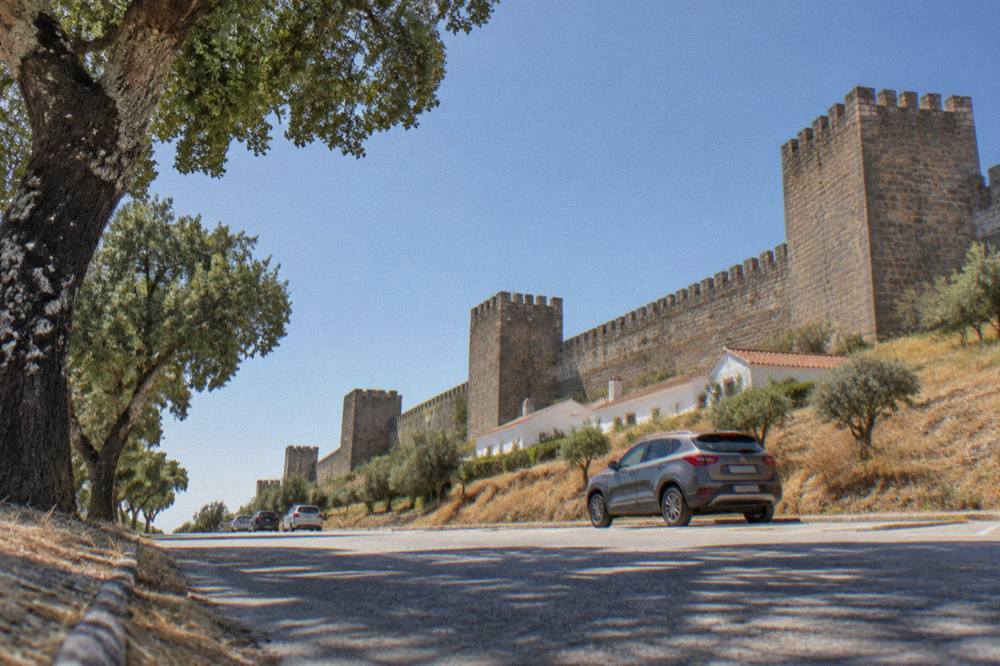
Alentejo Road Trip From Évora
Évora, the inland capital of Portugal's Alentejo, is the natural base for a road trip across the region's hill towns, megalithic sites and wine country.
Short answer
Base yourself in Évora for two or three nights, then loop south to Monsaraz and the Alqueva lake, east to Estremoz and Vila Viçosa, or north toward Marvão, using the rounded distances in this guide. April, May, late September and October have the most forgiving temperatures.
Évora, the capital of the Alentejo region of southern Portugal, sits in the middle of everything that makes this part of the country worth driving. The city is inland, on a plain of cork oaks, wheat fields and white hill towns, with Lisbon about 130 km away as the main gateway. A road trip from Évora puts you within a loop of megalithic stones older than any written history in the region, marble towns, walled border fortresses and one of Europe's largest artificial lakes. This guide lays out the routes, the stops, the seasons and the costs, all drawn from verified sources rather than folklore.
Why Évora Is The Best Base For An Alentejo Road Trip
Évora is the capital of the Évora district and of the Central Alentejo sub-region, a UNESCO World Heritage city of about 53,000 residents that sits roughly equidistant from the region's main clusters of attractions, which makes it the only base from which every classic Alentejo loop is a half-day drive or less. The Historic Centre of Évora was inscribed by UNESCO in 1986 under criteria (ii) and (iv); criterion (iv) calls it the finest example of a city of the golden age of Portugal, after the 1755 Lisbon earthquake, which Évora was largely spared. That concentration of monuments, plus working train links to Lisbon, means you can spend your evenings in a genuine city and your days in the countryside.
The practical logic is simple. Arrive by train at Évora station, pick up a car, and the whole region opens up without backtracking. The three days in Évora and Alentejo itinerary shows how the city itself fills a full day before you even leave the walls; the Évora travel guide covers the wider region. If you are still deciding whether the region justifies the drive at all, start with is Alentejo worth visiting.
How Many Days Do You Need For An Alentejo Road Trip From Évora?
Three to four days is the honest minimum for a satisfying loop: one full day for Évora's own monuments, one for the megalithic sites and cork country immediately west and south of the city, and one or two for the far towns such as Monsaraz, Estremoz and Vila Viçosa, which sit far enough apart that rushing them in a single day turns the trip into driving. With five to seven days you can add the border fortresses of Elvas and Marvão and still keep relaxed mornings. Anything under three days and you are really doing day trips, not a road trip.
Here is a realistic shape for the days, built around the rounded distances verified for this guide. Note that no drive time is published for any of these routes, so plan by distance and your own pace, not by a promised duration.
| Day | Base | Where you go | What the day is about |
|---|---|---|---|
| 1 | Évora | Historic centre: Sé, Capela dos Ossos, Templo Romano | UNESCO monuments, no car needed |
| 2 | Évora | Cromeleque dos Almendres, Guadalupe interpretation centre, cork forest roads | Megaliths and montado landscape |
| 3 | Évora or Monsaraz | Monsaraz and the Alqueva lake shore | Walled village, lake views, wine |
| 4 | Estremoz or Vila Viçosa | Estremoz about 45 km, Vila Viçosa about 60 km from Évora | Marble towns, palace and quarries |
| 5 | Elvas or Marvão | Elvas about 80 km, Marvão about 120 km | Border fortresses, high village views |
For travellers without a car, or for the megalith day specifically, guided options replace the driving. The Évora and Megaliths Full-Day Tour from Lisbon is an 8-hour private tour priced from $90.04 per person, rated 4.7 from 576 reviews, and it starts in Lisbon, so it suits a visitor who wants the stones before committing to a rental. From Évora itself, the archaeologist-led option below covers the same ground in half a day.
What Should Your Alentejo Road Trip Route Look Like?
The classic route is a loop: leave Évora westward for the Cromeleque dos Almendres and the megalithic cluster, swing south to Reguengos de Monsaraz and Monsaraz on the Alqueva lake, then return via Évora or push east to Estremoz and Vila Viçosa, finishing north toward Elvas and Marvão if you have the days. Driving it in one direction rather than out-and-back keeps every day fresh. Distances between the main stops are short by the standards of most road trips; the region's pleasure is stopping often, not covering ground.
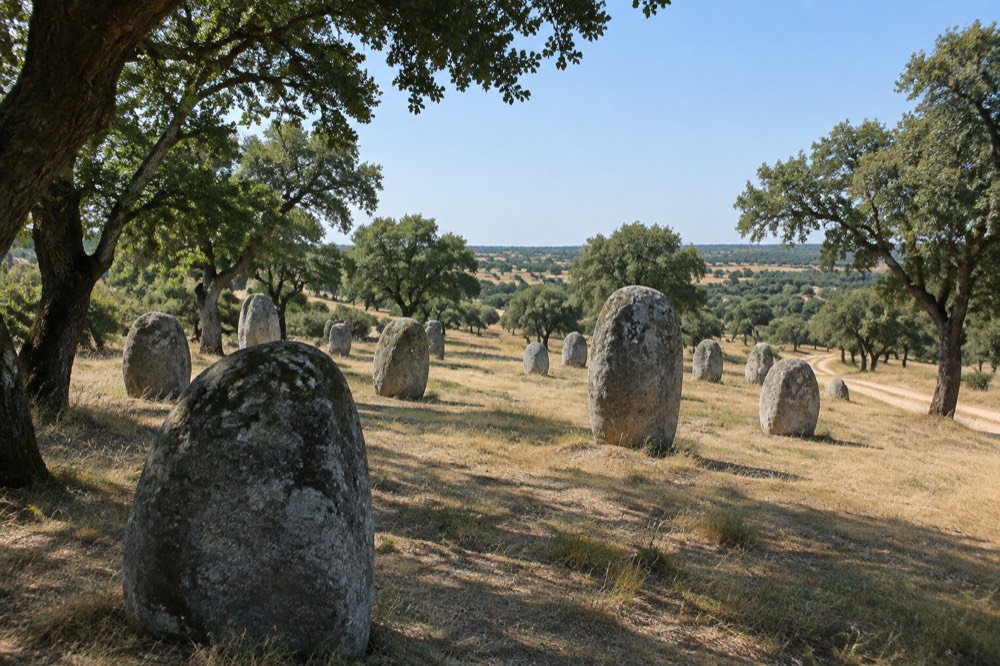
The Almendres Interpretation Centre, the municipality's partner centre in the village of Guadalupe, publishes its own hours: 10:00 to 18:00 in summer, meaning 1 May to 31 October, and 10:00 to 17:00 in winter, 1 November to 30 April. Its directions say to take the national road from Évora toward Lisbon and, after 8 km, follow the turn-off. The stones themselves stand in the open countryside. More of these guides are collected on Évora Travel Guide.
Two route variations are worth naming. A southern loop keeps you in wine and lake country: Évora, Reguengos de Monsaraz, Monsaraz, back. An eastern loop is marble and fortresses: Évora, Estremoz, Vila Viçosa, Elvas, back. Combining both in one sweep is possible with a week, and the best day trips from Évora page collects the individual destinations in more depth.
For the megalith day without a car, this half-day tour is led by archaeologists and runs from Évora, from $74.54 per person, rated 5 from 77 reviews:
If you would rather have someone else handle the whole day, the question below is the one most drivers ask first.
| Route | Main stops | Verified distance from Évora | Best with |
|---|---|---|---|
| Megalith loop | Almendres, Guadalupe, cork roads | 8 km to the Guadalupe turn-off | Half day |
| Southern wine loop | Reguengos, Monsaraz, Alqueva shore | Monsaraz about 40-45 km | Full day |
| Marble loop | Estremoz, Vila Viçosa, Borba | Estremoz about 45 km, Vila Viçosa about 60 km | Full day |
| Border fortress run | Elvas, Marvão | Elvas about 80 km, Marvão about 120 km | Two days |
Which Towns Should You Stop At Between Évora And Monsaraz?
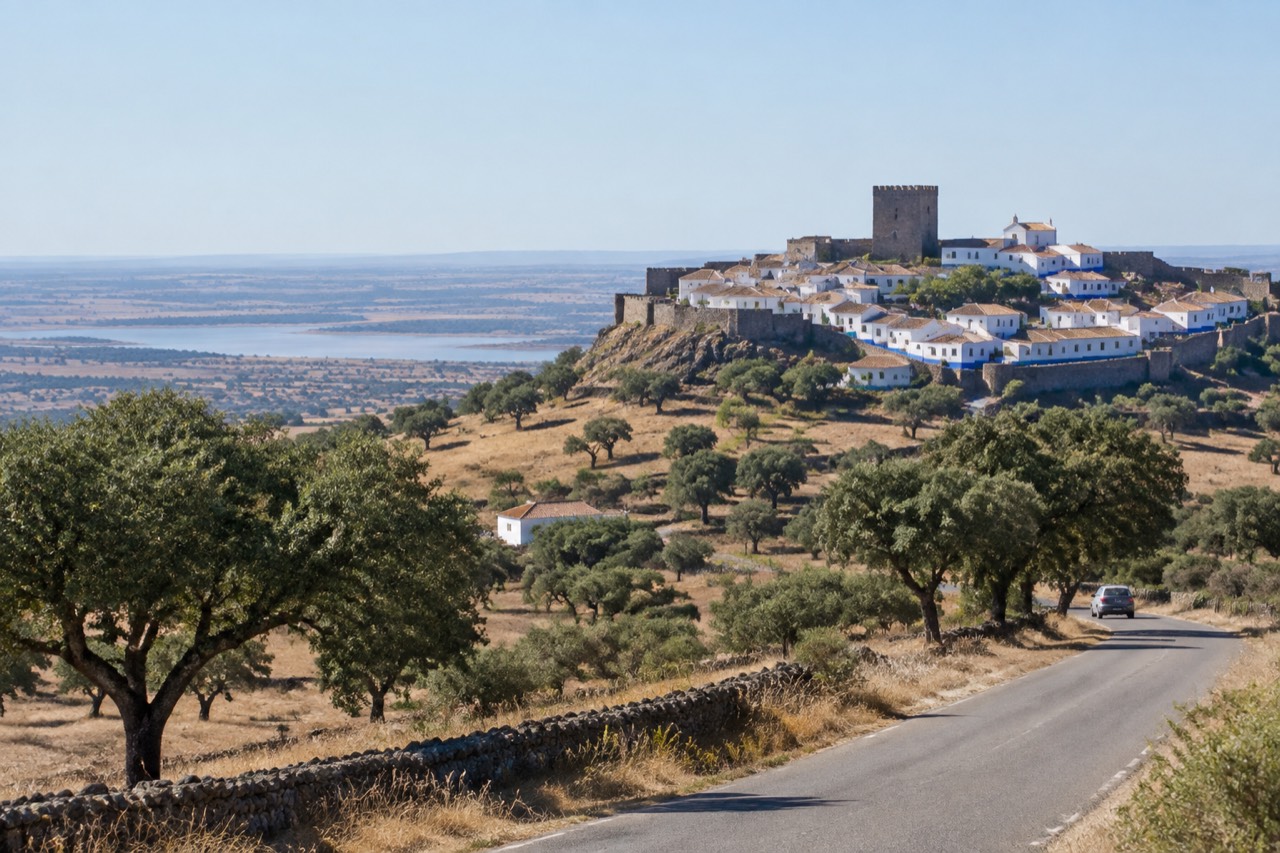
The essential stops are Reguengos de Monsaraz, the wine capital about halfway out, and Monsaraz itself, a walled village of white houses above the Alqueva lake about 40-45 km from Évora; the detour to São Pedro do Corval, a pottery village in the Monsaraz municipality, rewards anyone whose trip has room for crafts as well as views. The road between them crosses the montado, the cork oak and holm oak landscape that defines Central Alentejo. No opening hours, entry prices or drive times have been verified for any of these villages, so treat each as a stop to wander rather than a timed attraction.
Monsaraz pairs naturally with wine. The region around Reguengos de Monsaraz is one of the Alentejo's wine heartlands, and the Alentejo wine guide and the Reguengos wine route cover what is in the glass. For what is on the plate, the Alentejo food guide and the dishes to try pages name the region's classics.
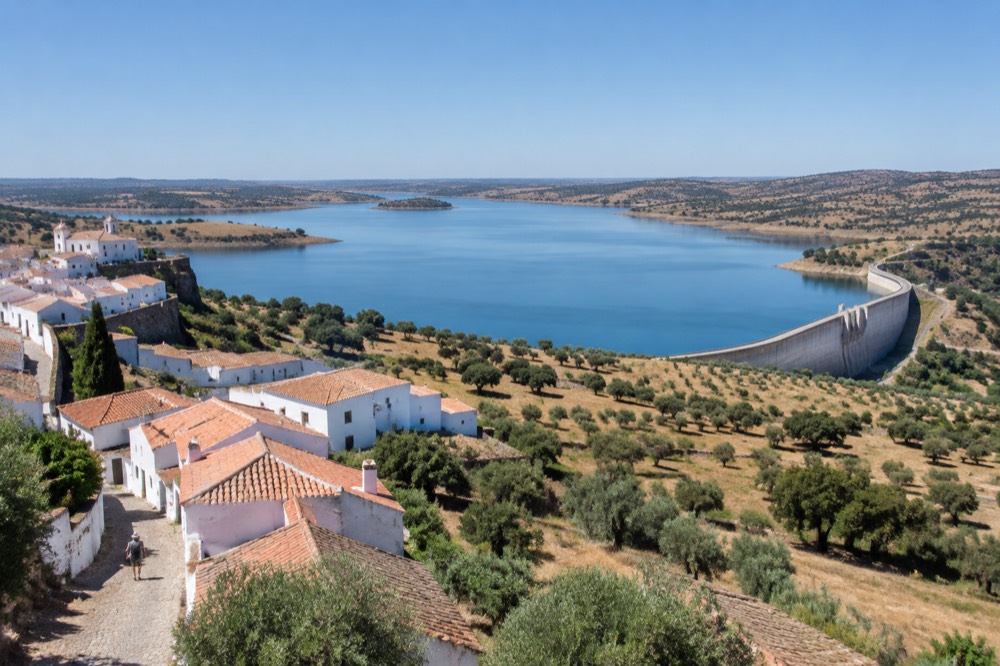
A guided version of the Monsaraz day runs from Évora, combining the village with a wine tasting, from $78.78 per person, rated 4.6 from 51 reviews:
Where Can You See Megaliths, Marble And Cork On The Same Trip?
The Alentejo around Évora stacks three landscapes within an hour's radius: the megalithic sites west of the city, headed by the Cromeleque dos Almendres and the Great Dolmen of Zambujeiro; the marble country east toward Estremoz, Vila Viçosa and Borba, where the stone is cut and sold; and the cork oak montado that stretches across the whole region, with working cork factories and farms reachable from Évora on a guided day out. No stone count, age, quarry detail or workshop hour has been verified, so this guide describes the sites rather than numbering them.
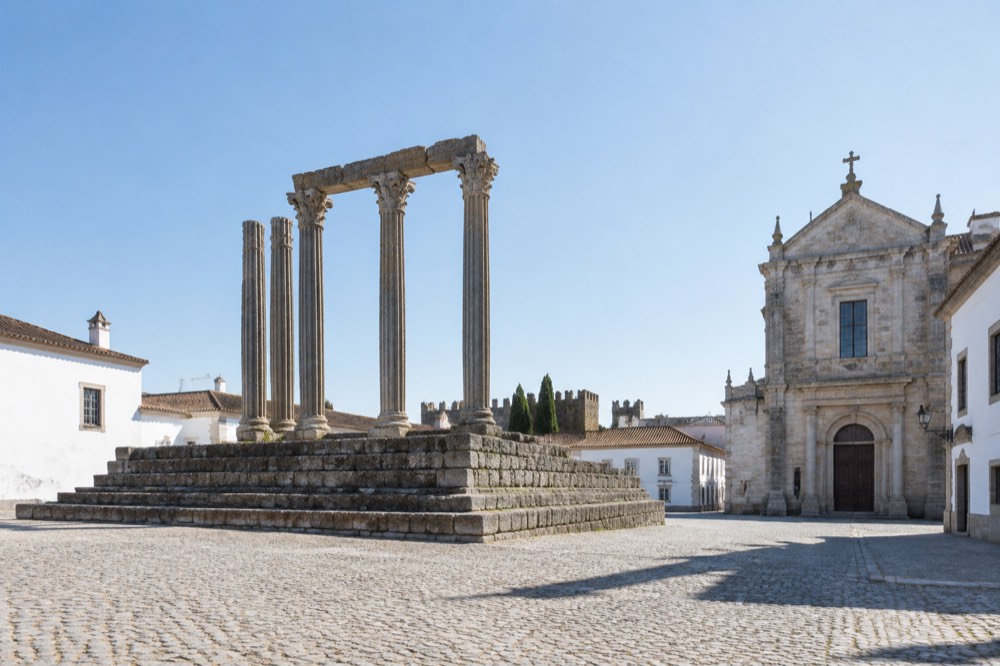
The megalithic cluster is the region's headline. The municipal Templo Romano page records that Évora's Roman past runs deep, and the stones around Almendres go back long before Rome; the interpretation centre in Guadalupe is the official starting point. The megalithic sites near Évora coverage collects the individual monuments.
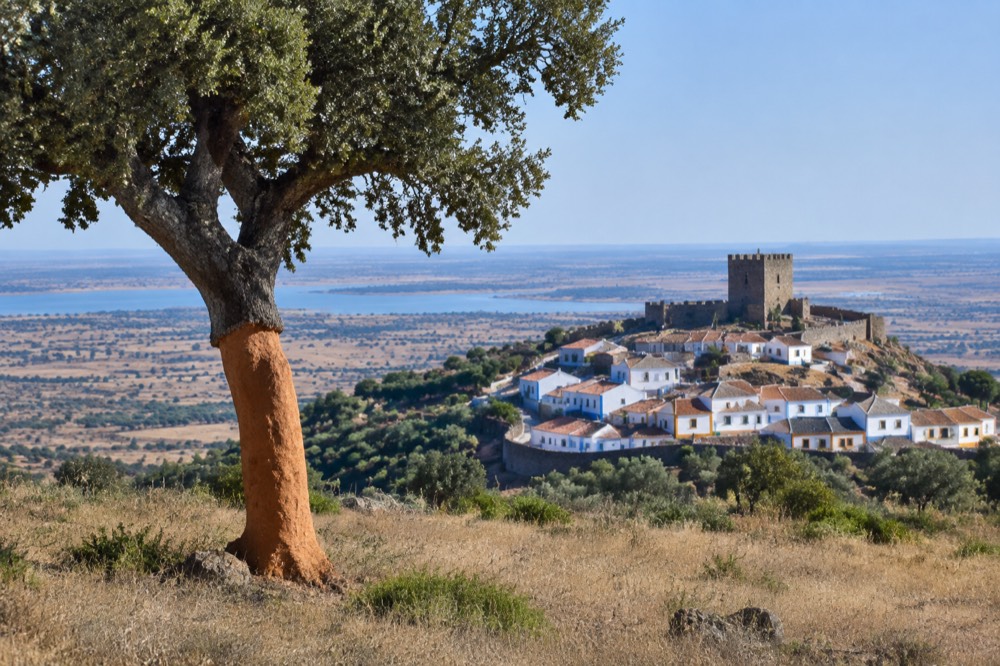
Cork deserves a full stop on the itinerary, not a drive-by. The cork and cork oak guide explains the montado system and the harvest. Two guided products make the landscape concrete: a 4-hour Megalithic and Cork Forest tour from Évora, from $50.65 per person, rated 4.9 from 41 reviews, and a full-day Cork Factory and Cork Farm visit with lunch included, from $112.55 per person, rated 4.8 from 26 reviews. The 3-hour Almendres and Zambujeiro dolmen tour, from $33.76 per person and rated 5 from 54 reviews, covers the stones alone.
| Landscape | Where | Guided option from the cards | Price per person |
|---|---|---|---|
| Megaliths | Almendres and Zambujeiro, west of Évora | 3-hour cromlech and dolmen tour | $33.76 |
| Megaliths plus cork | Guadalupe area and montado | 4-hour combo tour | $50.65 |
| Cork industry | Factory and farm near Évora | Full day with lunch | $112.55 |
| Monsaraz and wine | Reguengos and Monsaraz | 4-hour guided tour | $78.78 |
What Are The Roads And Driving Rules Like In The Alentejo?
The Alentejo's main roads are fast national roads and motorways connecting the towns, with narrower municipal roads and dirt tracks at the final approach to sites like the Almendres cromlech, and the verified guidance is simply the interpretation centre's own direction: from Évora take the national road toward Lisbon and after 8 km follow the turn-off. No toll cost, fuel price, parking fee or driving time for any route in the region has been verified, so this guide does not quote one. What is safe to say is that traffic is light by Portuguese standards and the main hazards are sun glare and the occasional farm vehicle.
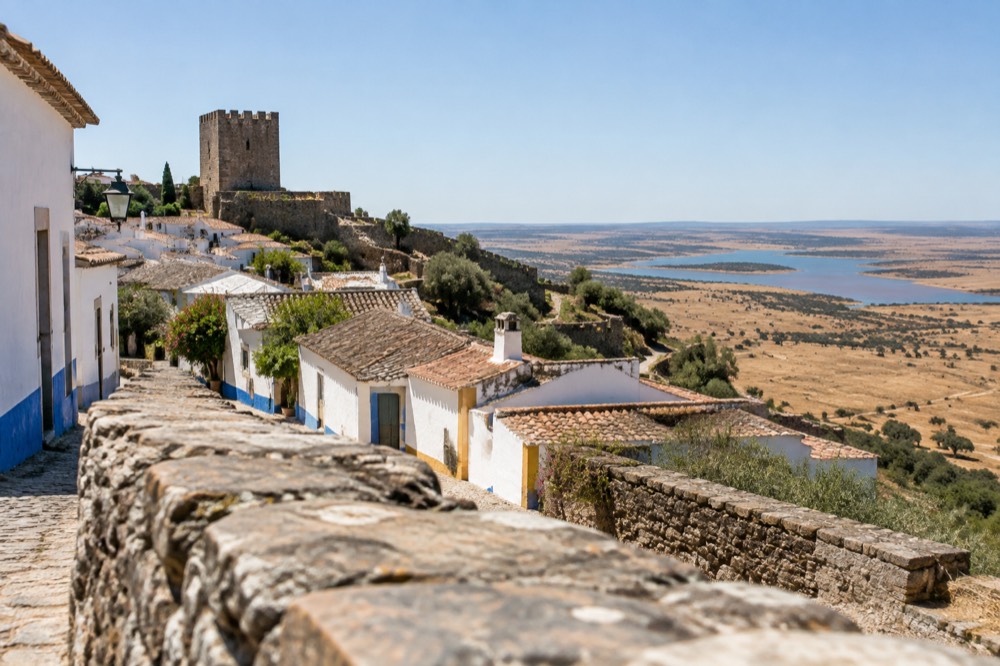
Practical notes that follow from the geography rather than from unverified claims: carry water, because July and August afternoons are genuinely hot, and fill the tank in towns, because rural stations are sparse. The name Alentejo is usually explained as meaning "beyond the Tagus", which tells you the region's whole logic: everything here lies south of that river, spread out and quiet. The where is Alentejo located page places the region on the map.
When Is The Best Time Of Year For An Alentejo Road Trip?
The best months are April, May, late September and October, when IPMA's 1991-2020 normals for the Évora station show mean daily maxima of 20.7 to 25.0 C in spring and 24.1 to 29.5 C in early autumn, against July and August means of 33.3 C and 33.5 C; the same normals count 31.9 days a year at 35 C or more, almost all of them in June through August. The station record is 45.4 C, set on 4 August 2018. Winter driving is easy and quiet, with January mean maxima of 14.1 C, but days are short and some rural sites feel abandoned.
The full monthly picture, from the IPMA 1991-2020 normals for station Évora, number 558:
| Month | Mean max (C) | Mean min (C) | Rain (mm) | Days at 30 C+ |
|---|---|---|---|---|
| March | 18.7 | 6.9 | 60.8 | 0.0 |
| April | 20.7 | 8.5 | 62.1 | 0.3 |
| May | 25.0 | 10.9 | 46.6 | 5.5 |
| June | 30.2 | 13.8 | 10.6 | 15.1 |
| July | 33.3 | 15.6 | 2.7 | 23.7 |
| August | 33.5 | 16.0 | 6.0 | 25.0 |
| September | 29.5 | 14.6 | 33.9 | 13.9 |
| October | 24.1 | 12.3 | 81.5 | 2.9 |
Rain barely exists in July, at 2.7 mm across the whole month on the 1991-2020 average, but that is precisely when the heat is at its worst. October is the sweet spot many drivers miss: the 81.5 mm monthly average falls on only 7.7 days with 1 mm or more. For a fuller discussion, see which month is best to visit Alentejo.
Where Should You Sleep On An Alentejo Road Trip?
The two sensible patterns are sleeping in Évora for the whole trip and radiating out by car each day, or splitting the trip between Évora and one southern or eastern town such as Monsaraz, Estremoz or Vila Viçosa so that the far loops do not become there-and-back drives; no hotel in the region has any verified detail in this guide's sources, so the choice below is about geography, not named properties. Évora's advantage is that its historic centre works as an evening destination in its own right, with the Praça do Giraldo and the university quarter a short walk from most central stays.
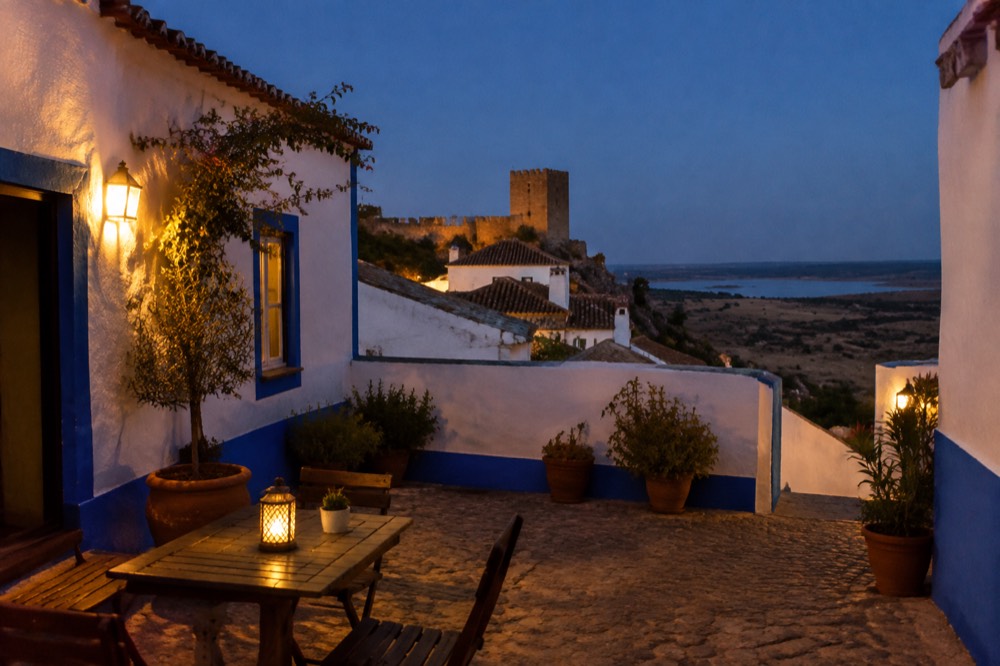
The town-splitting pattern suits anyone whose trip includes Monsaraz and the Alqueva lake, because the lake shore and the village are best at dawn and dusk. The Alentejo hotels page covers the region's accommodation types, and the where to stay in Évora guidance covers the city's own neighbourhoods. For a shorter visit before or after the drive, the one day in Évora and two days in Évora itineraries size the city correctly.
What Does An Alentejo Road Trip Cost?
The verified fixed costs are modest: the CP Intercidades fare from Lisboa Oriente to Évora is 13.90 EUR second class or 18.50 EUR first class, Évora's own headline monuments cost 5.00 EUR for the Sé's complete visit and 7.00 EUR for the Capela dos Ossos museum ticket, and the Évora Ticket city pass runs 8 EUR for one day, 10 EUR for two and 12 EUR for three, though it does not include the Sé, the Capela dos Ossos or the Museu de Évora. Guided tours from the cards on this page run from $33.76 to $112.55 per person in US dollars. A municipal tourist tax applies to overnight stays; check your hotel for the current amount.
Note the currency split, because it trips people up: official monument and train prices are in euros, while every tour card on this site is priced in US dollars. The Évora Ticket's inclusions matter: it covers the Cidade-Museu network's sites, not the three biggest draws, so budget the Sé and the chapel separately.
| Item | Verified price | Notes |
|---|---|---|
| CP Intercidades, Lisboa Oriente to Évora | 13.90 EUR second class, 18.50 EUR first | Timetable valid since 6 September 2026 |
| Sé de Évora complete visit | 5.00 EUR | Children up to 12 free |
| Capela dos Ossos museum ticket | 7.00 EUR adult | Youth to 25 and seniors over 65 at 5.00 EUR |
| Museu de Évora | 8 EUR adult | Closed Mondays |
| Évora Ticket | 8 EUR one day, 10 EUR two, 12 EUR three | Does not include Sé, Capela dos Ossos, Museu |
| Guided tours from the cards | $33.76 to $112.55 | US dollars, per person |
For the food budget, the Alentejo olive oil and cheese, bread and pastries pages give a sense of what the region's table costs; no individual restaurant price is verified here. The Évora cost and budget page does the same arithmetic for the city.
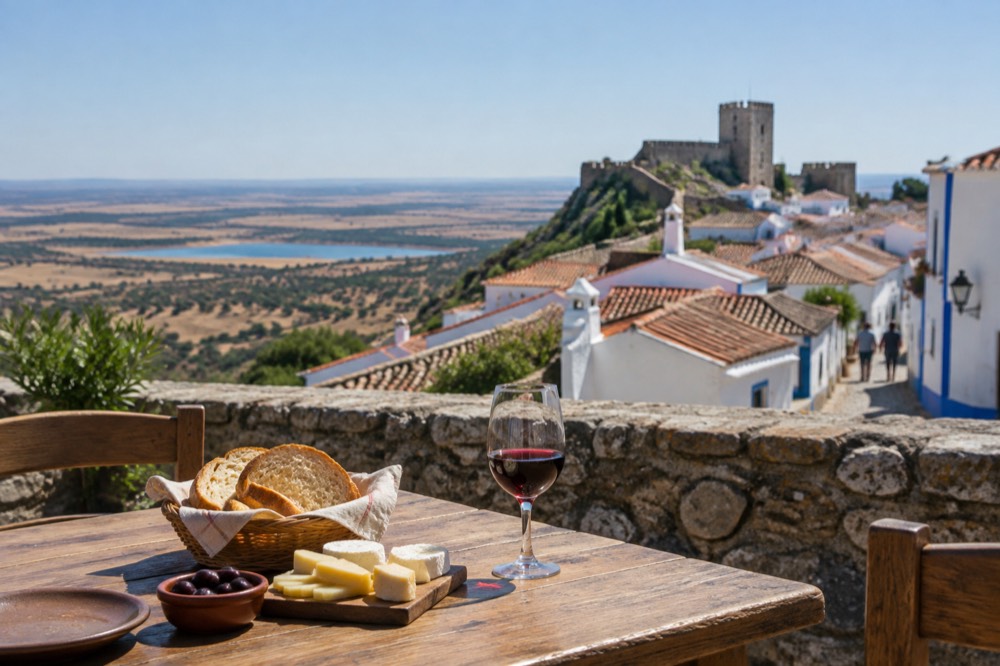
If the driving itself is the part you would rather skip, the guided options below cover the region's three signature themes, megaliths, Monsaraz and wine, with a driver-guide included.
Common Questions About Alentejo Road Trips
Can You Do An Alentejo Road Trip Without A Car?
Yes, partially: Évora itself is entirely walkable, and the region's three signature experiences, the megaliths, Monsaraz and the wine country, are all covered by guided tours that start in Évora, from the 3-hour cromlech tour at $33.76 per person to the 4-hour Monsaraz and wine tour at $78.78, plus a free tip-based GuruWalk covering the city centre. What a car adds is the freedom to stop at unnamed villages and the marble towns on your own clock. The Essential Free Tour of Évora on GuruWalk, rated 4.93 from 774 reviews, is a sound first orientation on foot.
How Far Is Évora From Lisbon?
Lisbon is about 130 km from Évora by road, and the CP Intercidades timetable valid since 6 September 2026 lists six through trains from Lisboa Oriente, arriving in about 1 hour 40 to 1 hour 45, at a fare of 13.90 EUR second class. The Évora day trip from Lisbon itinerary covers the train-first version of the trip.
Is The Alentejo Too Hot For A Summer Road Trip?
IPMA's 1991-2020 normals for the Évora station put July mean maxima at 33.3 C and August at 33.5 C, with 31.9 days a year reaching 35 C or more and a station record of 45.4 C on 4 August 2018. A summer road trip is possible if you drive early, rest at midday and sightsee after 17:00, but spring and autumn are measurably kinder.
What Is The Alentejo Famous For?
The region is famous for its whitewashed hill towns, cork oak landscapes, marble, megalithic monuments, full-bodied red wines and slow cuisine; the what is Alentejo famous for page gives the full answer, and the name itself is usually explained as "beyond the Tagus".
Do You Need To Book Alentejo Tours In Advance?
The tours on this page are small-group and private products, and the megalith and Monsaraz tours in particular run with limited seats, so checking availability ahead of your travel dates is the sensible move; every card links to the operator's live listing with current dates and prices.
An Alentejo road trip from Évora is, at heart, a short list of long views: stones on a hillside, a walled village above a lake, a marble square at dusk. Pick your season from the IPMA table, size your days to the distances, and the region does the rest.