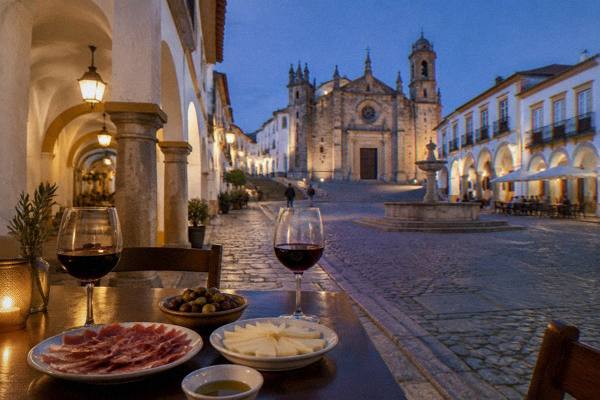
Alentejo Food In Évora, Portugal: What To Eat In The Alentejo Capital
Alentejo food is the bread-and-pork cooking of inland Portugal, and Évora is the region's capital and its natural base for eating it. This guide covers the dishes, the dining culture, the wine, and the bookable tastings.
Short answer
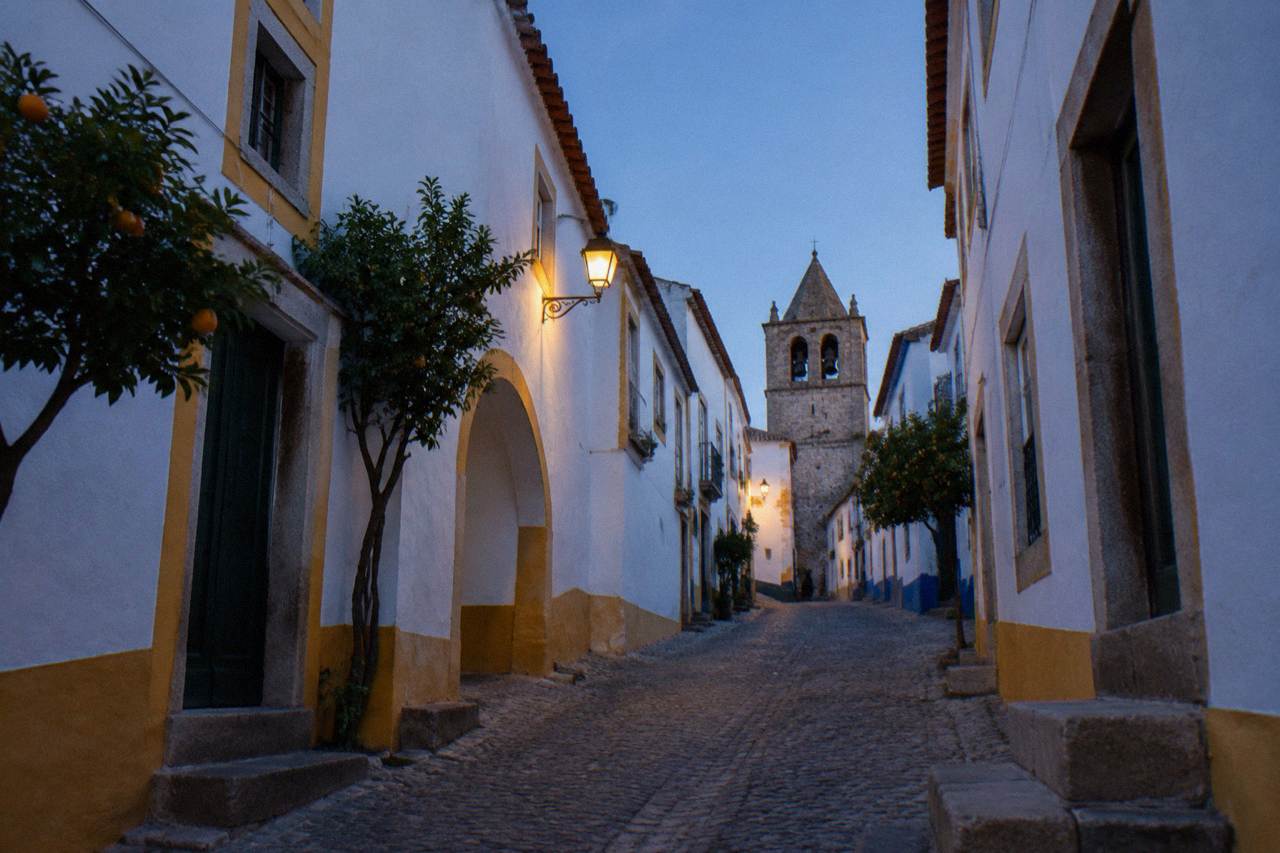
Alentejo food is hearty rural Portuguese cooking built on bread, pork, olive oil, garlic and coriander, with red Alentejo wine alongside. Évora, the capital of the Alentejo, is the best base for eating it: the historic centre holds the region's dining culture, and guided wine, cork and food experiences leave from the city.
Alentejo food is the cooking of inland southern Portugal, and Évora, the capital of the Alentejo region and of the Évora district, is where most visitors first meet it. The city of about 53,000 people sits on an inland plain, roughly 130 km from Lisbon, surrounded by the wheat fields, cork oak and holm oak montados and olive groves that supply its kitchens. The name Alentejo is usually explained as "beyond the Tagus", and everything about the food follows from that geography: it is a cuisine of bread, pork, olive oil and herbs, made to feed people who work the land, not to impress a coastal resort table.
This guide keeps to what can be checked. What the page does instead is explain the cuisine itself, the dining culture you will meet inside the walls of the UNESCO-listed historic centre, and the guided experiences that are bookable, with prices that come straight from the tour listings. For the broader region, start with the Alentejo travel guide and the question of what Alentejo is famous for.
What Is Alentejo Food?
Alentejo food is the rural cooking of inland southern Portugal, built on bread, pork, olive oil, garlic, coriander and wild herbs, with soup at the centre of most meals and red Alentejo wine alongside. It is slow food in the literal sense: many dishes are stews and bread-based preparations designed for wood fires and long afternoons. Évora, as the capital of the Alentejo, is the place where this cooking is most concentrated and most accessible to visitors.
The logic of the cuisine is scarcity turned into technique. Bread that goes stale is not wasted, it becomes the base of açorda and migas. The black Iberian pig that fattens on acorns in the montado becomes cured meats and slow-cooked shoulder. Olive oil is both a cooking medium and a finishing touch. Coriander, mint and pennyroyal do the work that coastal kitchens do with seafood.
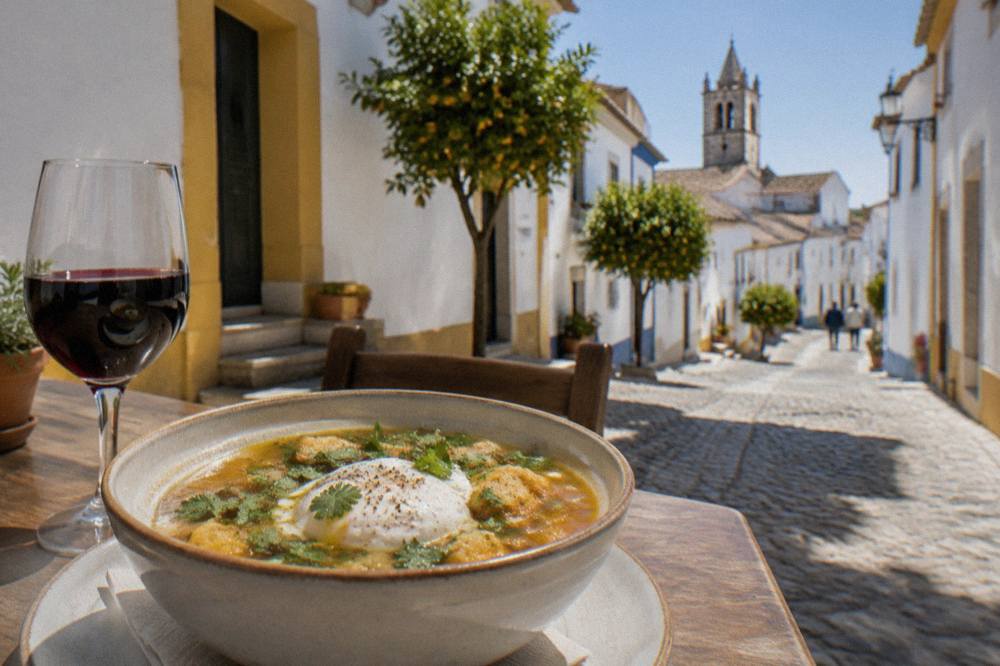
Wine belongs to the same landscape. Alentejo reds are the default table wine of the region, and the tasting culture around Évora is one of the most developed in Portugal. The details of grape varieties, classifications and producer comparisons are outside what this page can verify, so nothing of that kind is stated as fact; what is certain is that wine tasting is a core part of eating in the Alentejo, and that guided options exist. The Alentejo wine guide and the Évora food guide carry the wider picture.
The Dishes That Define Alentejo Cooking
The dishes that define Alentejo cooking are açorda, a bread and coriander soup often served with a poached egg; migas, breadcrumbs fried with garlic and meat fat; porco preto, cured and cooked black Iberian pork; and slow lamb and pork stews such as ensopado and carne de porco à alentejana. Cheese, olives, bread and orange-sweet desserts complete the picture. None of this is street food, it is table food, eaten slowly.
Açorda is the region's signature. Stale bread is soaked, worked with garlic, coriander and olive oil into a thick soup, and often finished with an egg dropped in at the table. It is a dish with a peasant origin that now appears on menus across Évora in refined versions. Migas is its partner: breadcrumbs moistened and fried, sometimes with greens, served alongside pork.
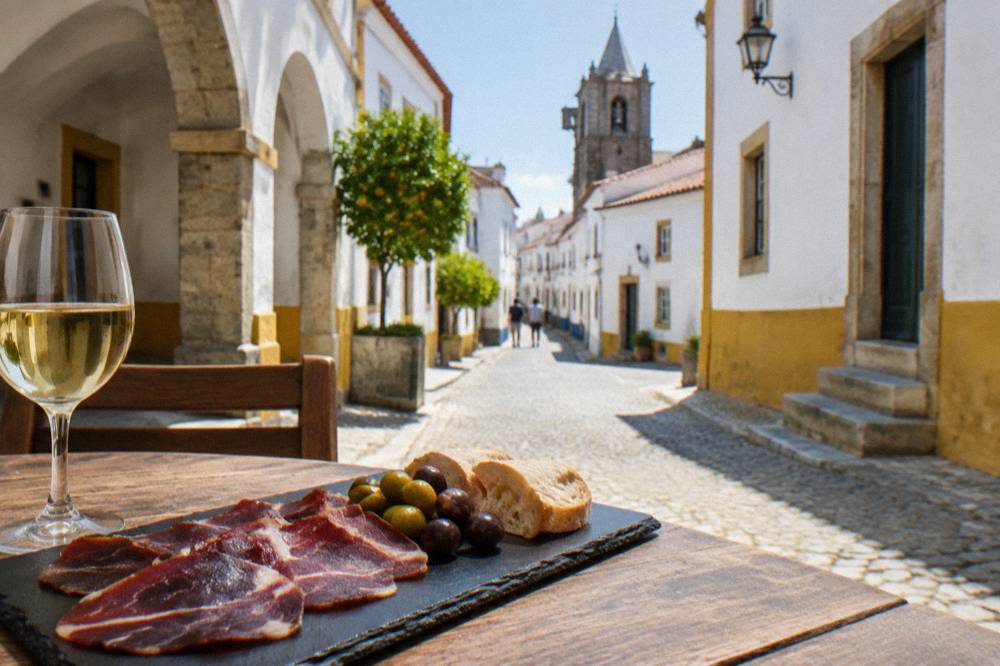
The pork of the region comes from the black Iberian pig, and it appears in two forms: cured, sliced thin like a ham, and cooked, in stews where the meat is the whole point of the plate. Lamb is the other celebratory meat. Fish reaches the Alentejo too, despite the region being inland: the Atlantic is roughly 90 km away, and salt cod has always travelled well. The classic combination of pork with clams is a coastal-Alentejo idea that has been adopted inland.
The table below is a plain glossary. Dishes are named only in general terms, with no producer, certification or figure attached, because none of that is verified for this page.
| Dish | What It Is | How It Is Usually Served |
|---|---|---|
| Açorda | Bread soup worked with garlic, coriander and olive oil | As a starter or light meal, often with a poached egg |
| Migas | Fried breadcrumbs with garlic, sometimes greens | As an accompaniment to pork or lamb |
| Porco preto | Black Iberian pig, cured or slow-cooked | Cured as a starter, cooked as a main |
| Ensopado | A meat stew, typically lamb, moistened with wine | As a family main course |
| Carne de porco à alentejana | Pork with clams, a pork-and-shellfish combination | As a main, with fried potato |
| Queijo do Alentejo | Regional sheep's cheese | With bread and olives before the meal |
| Bolo rançoso | A traditional almond-and-citrus cake | As a dessert or festival cake |
For a fuller dish-by-dish treatment, see the companion page on Alentejo dishes to try, and for the liquid half of the table, the page on Alentejo olive oil.
Where To Eat Alentejo Food In Évora
The honest answer is that no individual restaurant, tavern or café in Évora can be recommended from verified sources, so this page names none. What can be said with confidence is the shape of the dining city: the historic centre inside the walls is compact and walkable, traditional tascas and modern restaurants sit side by side around Praça do Giraldo and the lanes off it, and a guided evening food crawl is the most reliable way to sample several kitchens in one night.
That restraint is deliberate. A food guide that invents a "best taverna" is worse than one that tells you how the city eats. Évora's dining culture is concentrated in the historic centre, a UNESCO World Heritage site since 1986, where tables spill into small squares and the evening meal runs late by northern European habits. Lunch is often the better value and the more traditional meal of the day.
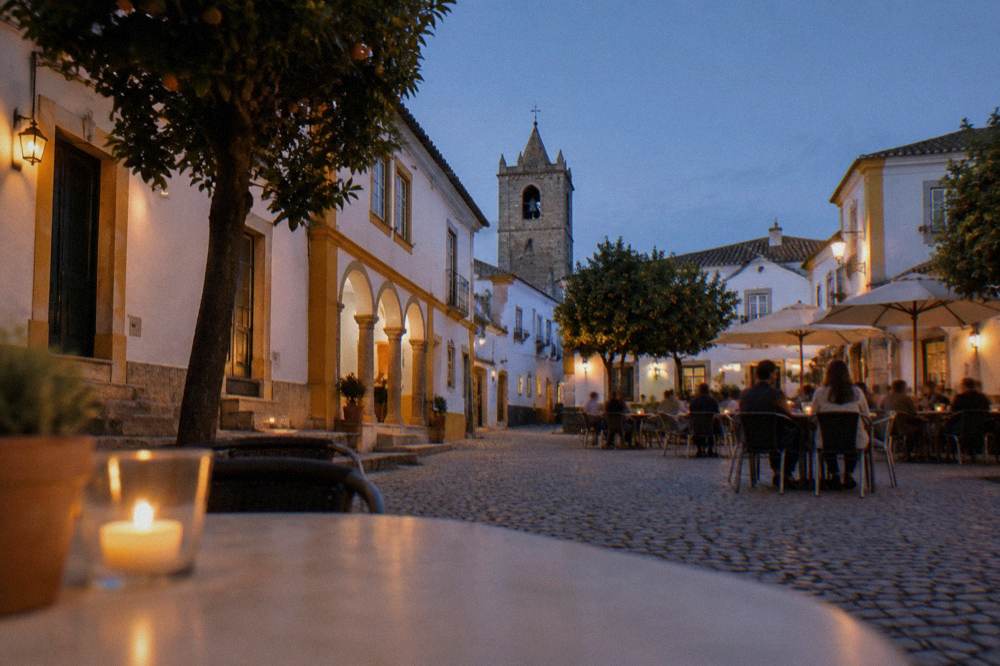
Two practical routes exist for visitors who want the food without the guesswork. The first is a guided evening crawl: the Évora Evening Food & Wine Crawl runs three hours from $83.28 per person, rated 4.6 from 19 reviews, moving between several stops with a guide who explains each dish. The second is a walking tour with monuments folded in, which pairs the food city with the monumental one.
The Évora: Small-Group Cultural Walking Tour & Chapel of Bones, from $77.66 per person and rated 4.9 from 141 reviews, is the option that combines the historic centre with the city's most famous monument, and it is a good fit for a first evening before you choose where to settle for dinner.
For planning the rest of the visit, the itineraries help: three days in Évora and the Alentejo and a dedicated Évora wine and food day both build the meals into a full schedule.
Alentejo Food And Wine: How Tastings Work Around Évora
Around Évora, wine tasting is an outing into the countryside rather than a cellar door in town: guided half-day tours leave from the city, visit vineyard and cork oak landscapes, and return within about four hours. The Alentejo Wine and Cork tour from Évora runs from $78.78 per person, rated 4.7 from 24 reviews, and is the clearest example. Cork is part of the same trip, because the montado that produces cork also pastures the pigs.
The pairing of wine and cork is not a marketing invention. The cork oak landscape and the vineyards sit on the same rolling plain, and a tour that shows you both is showing you the actual agricultural system behind the food on your plate. The cork story is covered in full on the cork and cork oak guide.
The related tour for this page is the Alentejo Wine and Cork from Évora experience: four hours, from $78.78 per person, rated 4.7 from 24 reviews on the operator's live listing. It starts in Évora itself, which matters if you are staying inside the walls and do not want to organise a car.
If you would rather cook than taste, the same countryside supplies the ingredients. Learn the Art of Alentejo Cuisine with Andre is a cooking class in Évora, from $166.29 per person, rated 3 from 3 reviews. The small review count is worth weighing honestly: this is a newer listing, and the rating reflects a handful of guests rather than a settled consensus. Check availability if a hands-on class appeals more than a tasting.
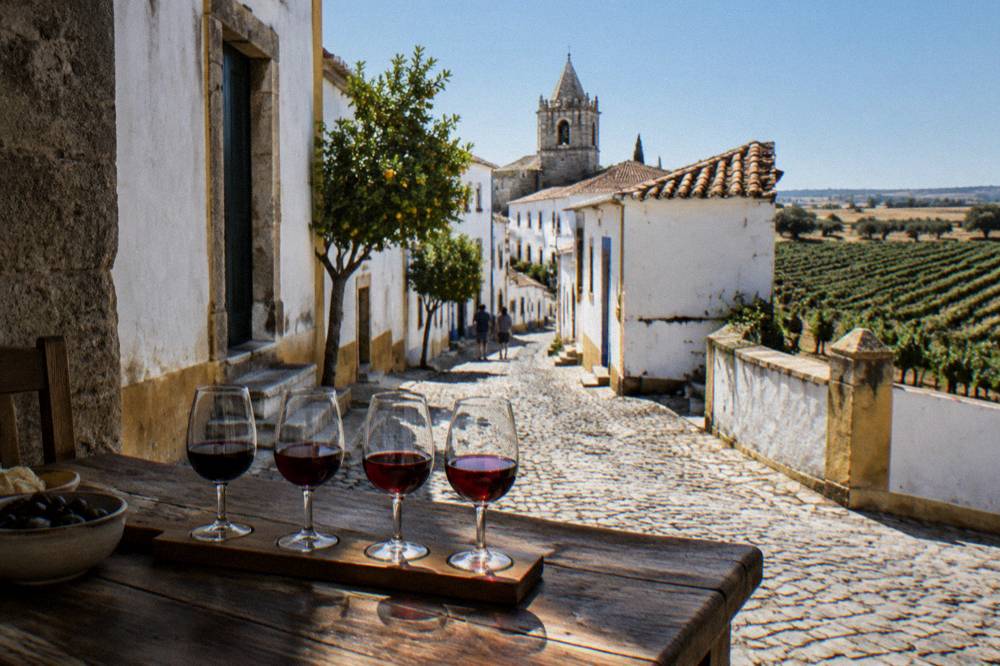
The bookable food-and-wine experiences around Évora, with prices exactly as the listings state them:
| Experience | Duration | From Price (USD) | Rating |
|---|---|---|---|
| Alentejo Wine and Cork from Évora | 4 hours | $78.78 | 4.7 from 24 reviews |
| Évora Evening Food & Wine Crawl | 3 hours | $83.28 | 4.6 from 19 reviews |
| Learn the Art of Alentejo Cuisine with Andre | Class | $166.29 | 3 from 3 reviews |
| 1 Day Wine Tour Around Évora | Full day | $321.11 | 5 from 11 reviews |
| Cork Factory and Cork Farm, lunch included | 8 hours | $112.55 | 4.8 from 26 reviews |
For the wine itself, what it tastes like and what it resembles, see what Alentejo wine is like and the companion comparison page; this article states no style comparison as fact, because none is verified here.
How Much Does A Food-Focused Trip To Évora Cost?
A food-focused trip to Évora has two cost layers: the bookable experiences, which run from about $24 for a walking tour with wine tasting to $321.11 for a full private wine day, and the official monument tickets, which are 5.00 EUR for the Sé complete visit, 7.00 EUR for the Capela dos Ossos museum and 8 EUR for the Museu de Évora. Meals themselves are not priced on this page, because no venue figure is verified.
The monument prices are worth knowing even on a food trip, because the classic Évora day mixes eating with the two or three monuments that define the city. The Sé de Évora's complete-visit ticket, 5.00 EUR, covers the cathedral, the cloister, the roof terrace and the museum, with children up to 12 free. The Capela dos Ossos, inside the Igreja de São Francisco, is a 7.00 EUR adult museum ticket, 5.00 EUR for youth up to 25 and seniors over 65, 15.00 EUR for a family. Other pages covering the same trip are gathered on Évora Travel Guide.
| Ticket | Price | Notes |
|---|---|---|
| Sé de Évora complete visit | 5.00 EUR | Cathedral, cloister, roof terrace, museum; children to 12 free |
| Capela dos Ossos museum | 7.00 EUR adult | Youth to 25 and seniors over 65: 5.00 EUR; family 15.00 EUR |
| Museu de Évora | 8 EUR adult | Closed Mondays |
| Évora Ticket | 8 EUR one day, 10 EUR two days, 12 EUR three days | Free to age 12; does not include the Sé, the Capela dos Ossos or the Museu de Évora |
One caution that saves visitors real money: the Évora Ticket does not include the three monuments most visitors most want, so check what it does cover before assuming it replaces the individual tickets. A municipal tourist tax applies to stays as well; the amount is not published on a source this page can verify, so check with your hotel at booking.
Getting To Évora For A Food Trip
The train is the simplest way to reach Évora for a food trip: CP's Intercidades timetable, valid since 6 September 2026, lists six through trains a day from Lisboa Oriente, taking about 1 hour 40 to 1 hour 45, with a second-class fare of 13.90 EUR and first class at 18.50 EUR. Departures from Oriente run at 07:02, 09:02, 09:58, 13:35, 17:02 and 19:02.
The six through trains arrive in Évora at 08:47, 10:45, 11:40, 15:13, 18:41 and 20:46 respectively. Check the CP timetable's weekday remarks before planning around any single departure, because this page does not assert that every train runs every day.
| Depart Lisboa Oriente | Arrive Évora | Fare (2nd Class) | Fare (1st Class) |
|---|---|---|---|
| 07:02 | 08:47 | 13.90 EUR | 18.50 EUR |
| 09:02 | 10:45 | 13.90 EUR | 18.50 EUR |
| 09:58 | 11:40 | 13.90 EUR | 18.50 EUR |
| 13:35 | 15:13 | 13.90 EUR | 18.50 EUR |
| 17:02 | 18:41 | 13.90 EUR | 18.50 EUR |
| 19:02 | 20:46 | 13.90 EUR | 18.50 EUR |
The morning trains are the ones that matter for eating: the 09:02 arrives before lunch, and lunch is the meal the Alentejo does best. Coach services also run the route, but no fare or timetable for them is verified, so none is printed. The full transport picture, including driving, is on the Lisbon to Évora guide, and travellers starting in the capital can also take a Lisbon-start day trip that visits Évora, described as such on the Alentejo tour from Lisbon page.
When To Visit Évora For Alentejo Food
The best months for a food-focused visit to Évora are April, May, late September and October, when the 1991-2020 IPMA averages for the Évora station show daytime highs of 20.7 to 25.0 C in spring and 24.1 to 29.5 C in early autumn, against July and August means of 33.3 C and 33.5 C. Summer eating is possible, but it happens indoors or late, because the Alentejo plain has 31.9 days a year at 35 C or more.
Those climate figures come from IPMA's 1991-2020 normals for the Évora station, and they are the reason the food calendar matters. Hearty stews belong to the cool half of the year. The summer table leans on the lighter end of the repertoire, bread soups, cured pork, cheese and tomatoes, and dinner shifts late into the evening.
| Month | Mean Max (C), 1991-2020 | Mean Min (C), 1991-2020 | Days With 1 mm+ Rain |
|---|---|---|---|
| April | 20.7 | 8.5 | 8.0 |
| May | 25.0 | 10.9 | 6.0 |
| June | 30.2 | 13.8 | 1.7 |
| July | 33.3 | 15.6 | 0.6 |
| September | 29.5 | 14.6 | 3.6 |
| October | 24.1 | 12.3 | 7.7 |
The record maximum for the Évora station is 45.4 C, set on 4 August 2018, which tells you what the plain is capable of in a heatwave. For the month-by-month detail, see which month is best to visit the Alentejo and the seasonal pages linked from the main guide.
Alentejo Food Beyond Évora: Day Trips Worth The Drive
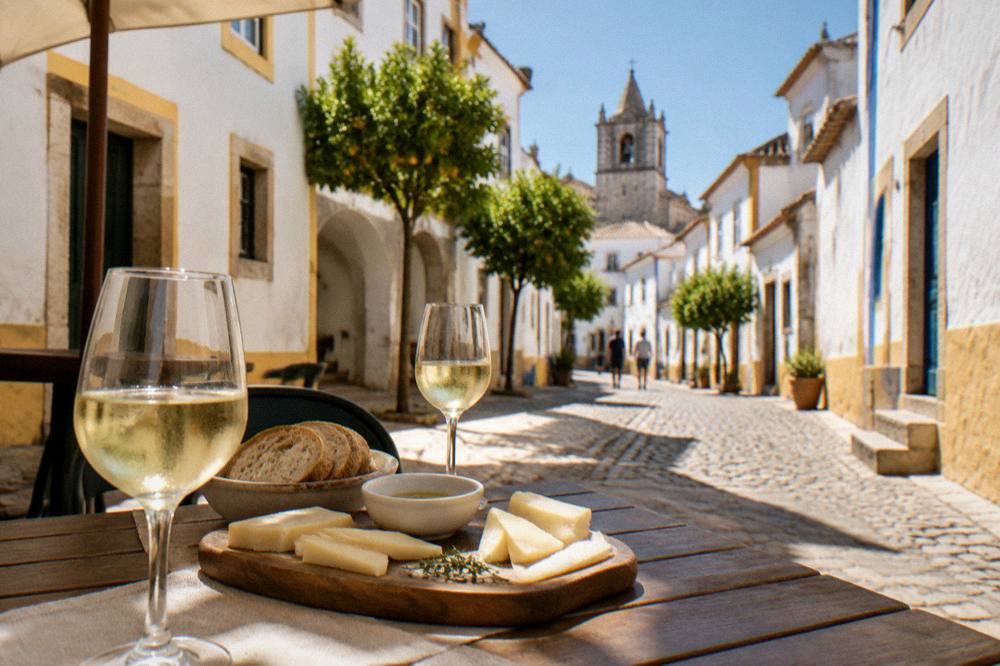
The food culture of the Alentejo does not stop at Évora's walls, and the towns around it each add something: Monsaraz, about 40-45 km away, pairs wine with a hilltop village setting; Estremoz, about 45 km, is marble country with its own market town cooking; Vila Viçosa, about 60 km, adds ducal-palace history; and Arraiolos, about 20 km, is the closest and the easiest half-day. All distances are rounded, and no drive time is stated because none is verified.
A food trip that stays only in Évora misses the reason the cuisine exists. The montado, the cork and holm oak pasture that covers the plain, is the landscape between these towns, and a drive through it is part of the meal. The Alentejo road trip itinerary and the guide to Alentejo castles and villages cover the routes; the best day trips from Évora page ranks the options.
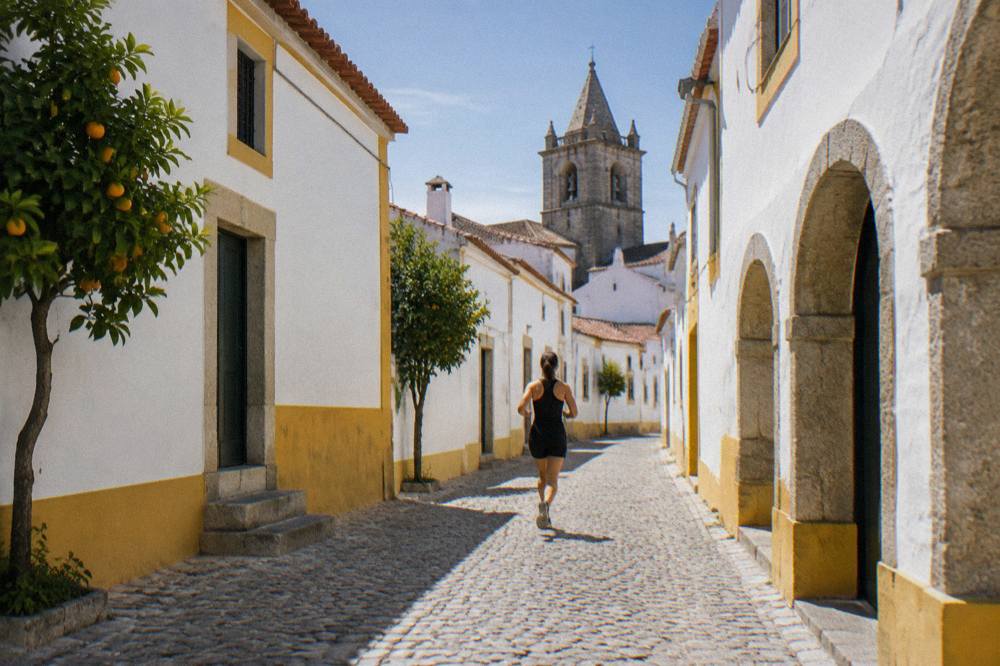
The Monsaraz and Wine guided tour from Évora, four hours from $78.78 per person and rated 4.6 from 51 reviews, is the bookable version of the nearest classic food-and-landscape day trip. For a fuller treatment of that village, see the Monsaraz guide.
Common Questions About Alentejo Food
Is Alentejo food spicy?
No. Alentejo cooking relies on garlic, coriander, bay, olive oil and paprika rather than chilli heat. It is a cuisine of slow cooking and strong simple flavours, not spice.
What is the most famous Alentejo dish?
Açorda, the bread soup worked with garlic, coriander and olive oil, is the region's signature dish, closely followed by migas and the cured and cooked black Iberian pork. None of these is a quick snack, they are all proper table food.
Is Alentejo food expensive?
No venue price in Évora is verified, so this page prints none. In general terms the Alentejo is one of Portugal's more affordable regions for eating out, and lunch is usually the better-value meal. Bookable experiences are the exception: the guided options listed above run from about $24 to $321.11 per person.
Can you take a food tour in Évora?
Yes. A guided evening food and wine crawl runs three hours from $83.28 per person, rated 4.6 from 19 reviews, and wine, cork and cooking-class experiences leave from the city as well.
What wine should you drink with Alentejo food?
Red Alentejo wine is the region's default table wine and pairs naturally with the pork and bread dishes. This page states no style comparison or grape detail as fact, because none is verified here; the Alentejo wine guide carries the fuller discussion.
Is Évora a good base for eating in the Alentejo?
Yes. Évora is the capital of the Alentejo, its historic centre concentrates the region's dining culture, and the wine, cork and food tours that show the wider countryside start from the city itself.
Planning A Food Weekend In Évora
A food weekend in Évora works best as two and a half days: arrive on a morning train, eat the first long lunch in the historic centre, spend the afternoon on the monuments inside the walls, take a wine and cork half-day into the countryside on day two, and finish with an evening crawl or a cooking class on the final morning before the train back. The bookable pieces cost from about $24 to $321.11 per person depending on what you choose.
The rhythm matters more than the checklist. The Alentejo rewards slowness, a fact the Évora 2027 programme has even built into its preparatory year under the concept of "Vagar", roughly the pleasure of taking one's time. A food trip that sprints between monuments misses the point of a cuisine whose flagship dish is bread soaked in olive oil and herbs.
For the practical layers around the food, the where to stay in Évora and Alentejo hotels pages cover beds, and whether the Alentejo is worth visiting answers the bigger question for anyone still deciding. However you build the trip, eat the bread soup, drink the local red, and give the table the time the region famously gives it.