Alentejo Hotels: Where To Stay In Évora, Portugal
Évora, the inland capital of Portugal's Alentejo region, packs its hotels into a small walled centre where every monument is a short walk away. This guide explains the quarters, the verified costs beyond the room rate, and the countryside towns worth sleeping in.
Short answer
Stay inside Évora's medieval walls if this is a first visit and you want the Sé, the Capela dos Ossos and the Praça do Giraldo on foot; stay outside the walls for easier parking and quieter nights. Beyond the city, Monsaraz, Estremoz, Vila Viçosa and Marvão each justify an overnight. A municipal tourist tax applies to stays, so check your hotel at booking.
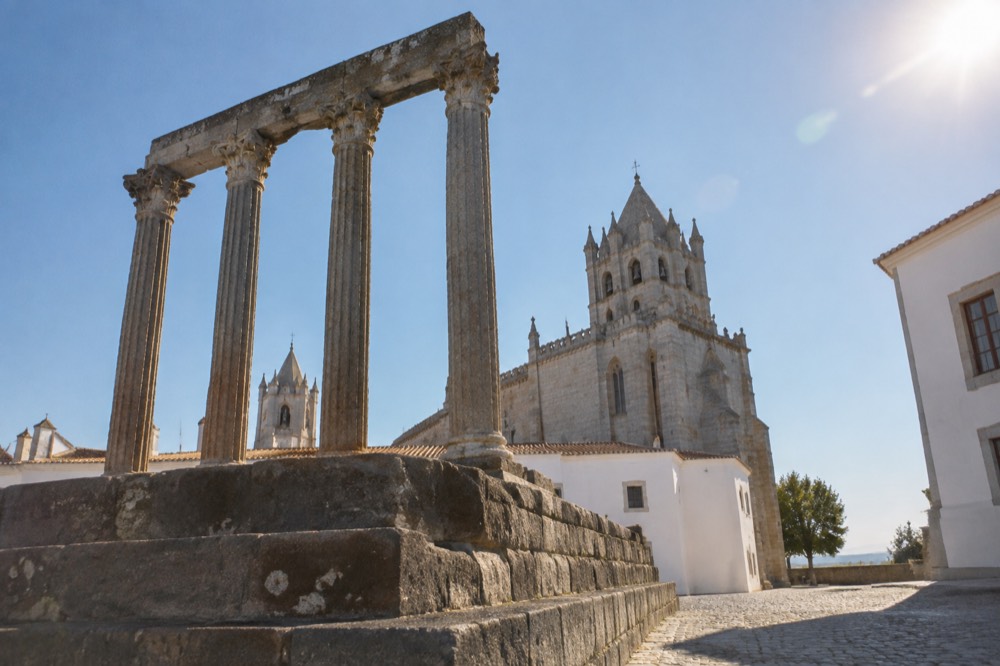
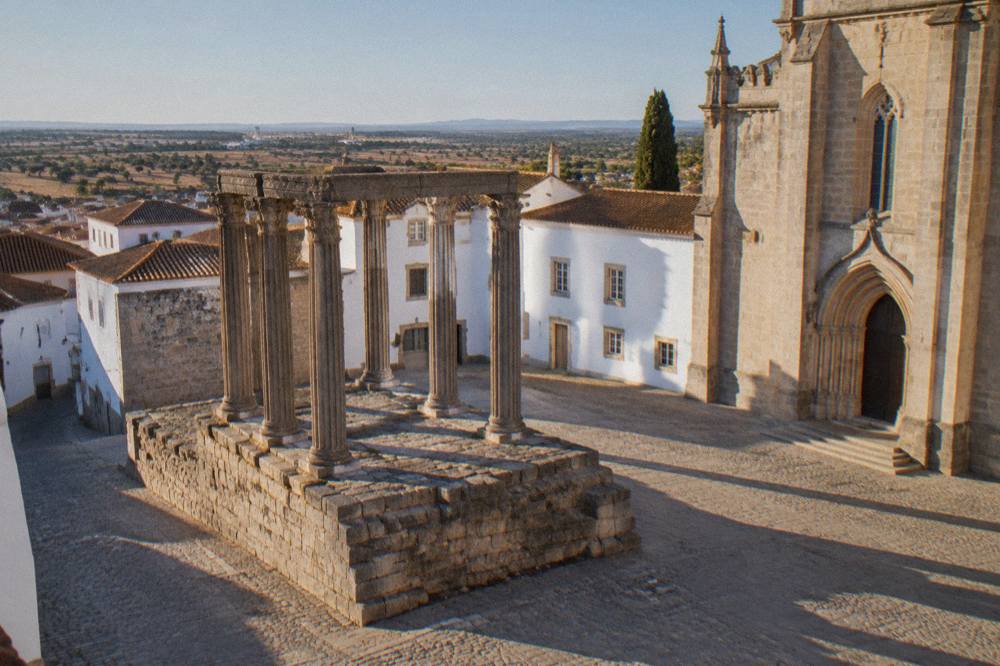
Évora, the inland capital of Portugal's Alentejo region, keeps almost everything a visitor needs inside a compact ring of medieval walls that UNESCO inscribed on the World Heritage list in 1986. The municipality counts about 53,000 residents, yet the historic centre folds a Roman temple, a cathedral with a roof terrace, a bone chapel and a university quarter into a space most people cross on foot in twenty minutes. That compactness shapes every hotel decision in the region: inside the walls you trade car access for atmosphere, and outside them you trade atmosphere for space. The Alentejo, whose name is usually explained as "beyond the Tagus", then spreads out around the city in cork oak plains, marble towns and whitewashed hilltop villages, each with its own case for an overnight stay.
This guide, written by the Évora Travel Guide editorial desk, works through the decision in the order a planner actually meets it: which quarter of Évora, what the verified costs beyond the room rate look like, which Alentejo towns justify a bed, and when to book. Hotel names and nightly rates change constantly, so the pages on where to sleep in Évora itself, budget and hostel options and spa hotels carry the property-level detail, while this page sticks to what holds true regardless of season.
Where Should You Stay In Évora: Inside The Walls Or Outside Them?
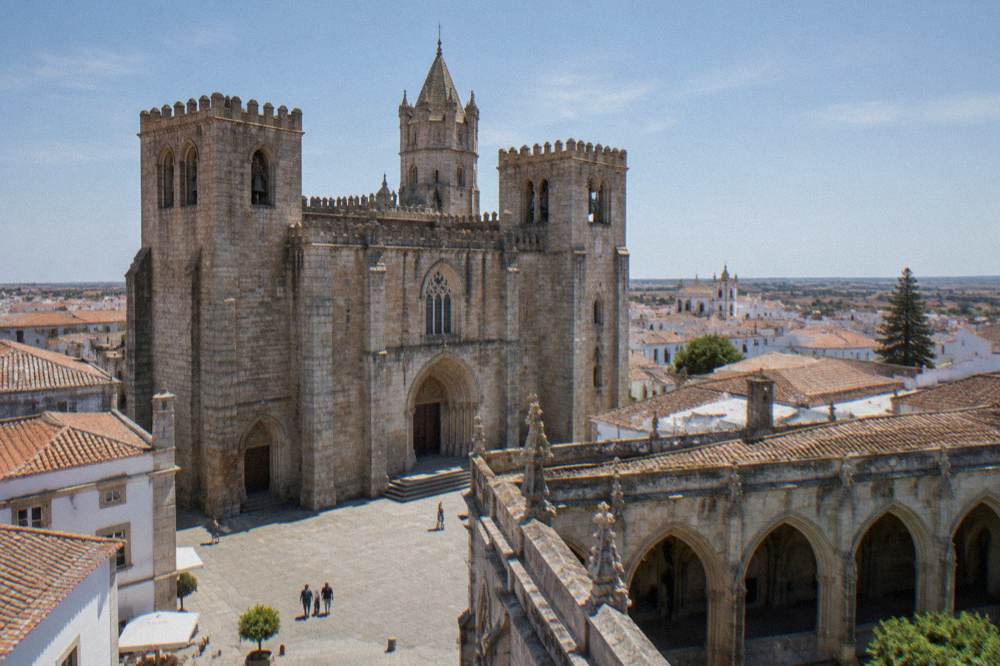
For a first visit to Évora, staying inside the medieval walls is the stronger choice, because the Sé, the Capela dos Ossos, the Praça do Giraldo and the Templo Romano all sit within the same small perimeter and the walls themselves are part of the UNESCO inscription. Outside the walls suits travellers arriving by car, since parking inside the historic centre is limited, and it suits anyone who prefers quieter nights. Both options put you in the same city, roughly a ten-minute walk apart at most.
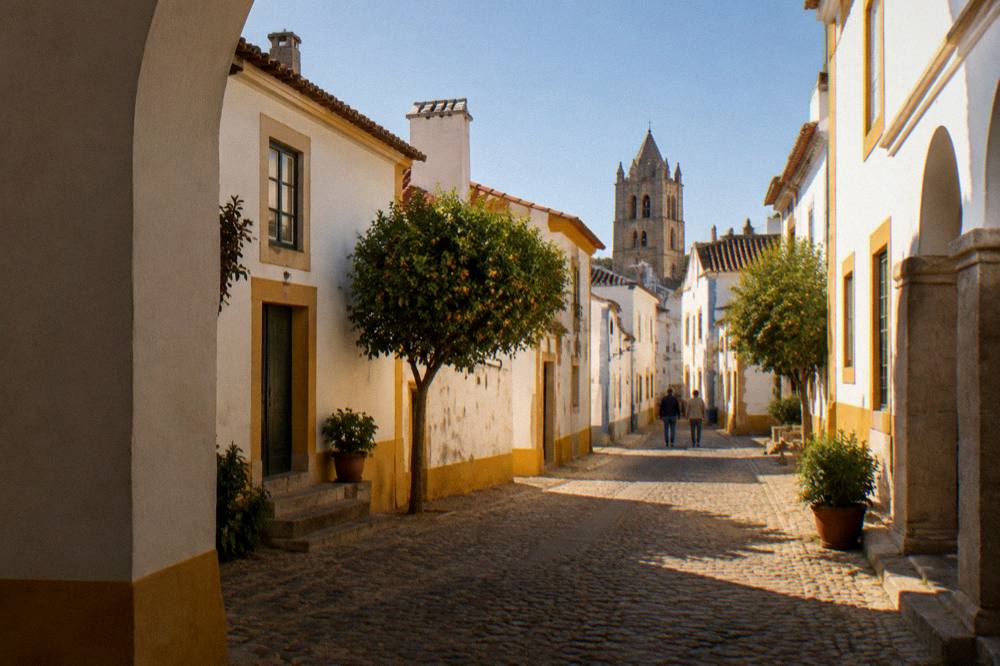
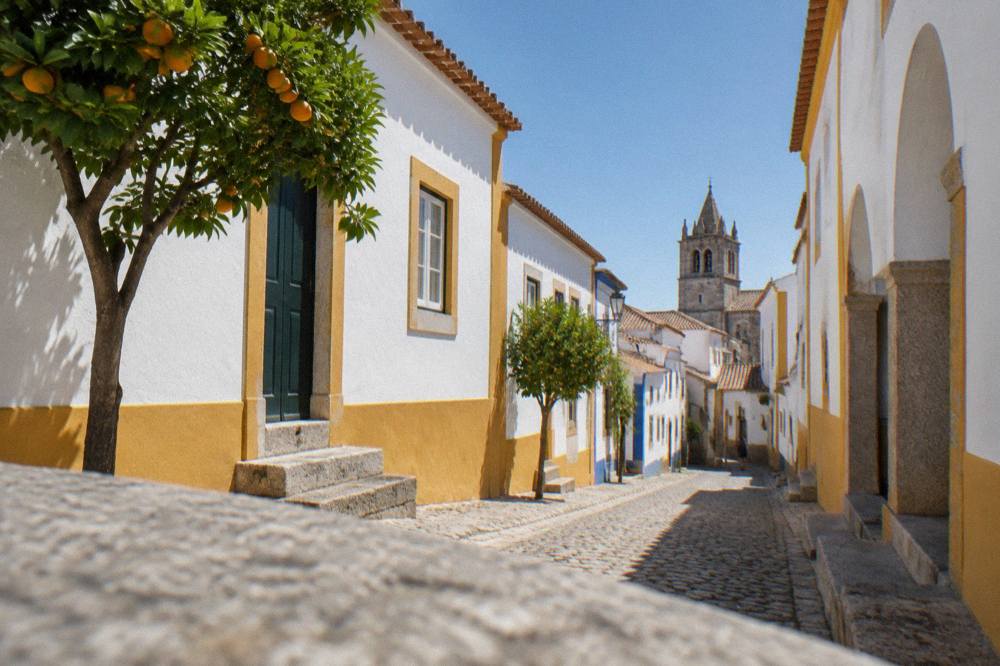
The walls are not a museum piece. They still define where the noise, the restaurants and the tour groups concentrate. Inside, streets are narrow, buildings lean close together, and the evening belongs to people on foot walking between dinner tables and church squares. The Igreja de São Francisco, whose own page lists summer opening from 9:00 to 18:30 and winter from 9:00 to 17:00, sits on one of the busiest inside-the-walls streets, so a room nearby puts you steps from the Capela dos Ossos but also in the middle of daytime foot traffic.
Outside the walls the character changes quickly. The area around the railway station and the modern avenues has wider streets, easier vehicle access and a more residential rhythm, while the quarter around the Rossio de São Brás, where the Feira de São João sets up each June, opens into a livelier public space used for markets and events. Neither side is far from anything. The trade is simply atmosphere against convenience, and the price of that trade varies with the season rather than with any fixed rule.
| Area of Évora | Character | Who It Suits |
|---|---|---|
| Inside the walls, near the Praça do Giraldo | Central square, cafés, the tourist office at number 73, shortest walk to every major monument | First-time visitors, travellers without a car |
| The university quarter | The Jesuit university buildings, calmer streets, scholarly atmosphere a short climb from the centre | Visitors who want quiet nights but central mornings |
| The Porta de Moura quarter | Renaissance square, narrower lanes, residential feel within the walls | Longer stays, repeat visitors |
| Outside the walls near the station | Wider avenues, easier parking, quick access to trains and buses | Car arrivals, road-trip itineraries |
| Outside the walls near the Rossio de São Brás | Open public space, event and market ground, more modern buildings | Families, anyone attending the June fair |
Which Quarter Of Évora Suits A First Visit Best?
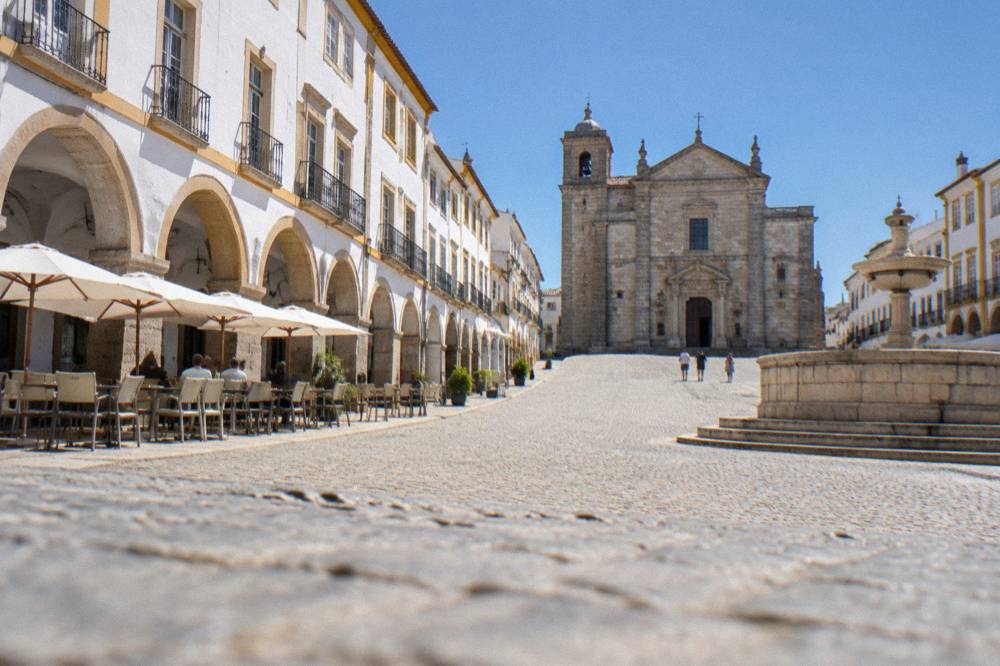
A first-time visitor to Évora should sleep inside the walls and as close to the Praça do Giraldo as the budget allows, because the square is the city's crossroads: the tourist office sits at number 73, the cathedral, the bone chapel and the Roman temple all stand within a few minutes' walk, and the evening restaurant life happens there. The university quarter is the strong second choice, quieter and slightly elevated, still inside the walls.
The practical reason is simple. Évora's monuments cluster. The Sé de Évora, whose ticket page lists a single 5.00 EUR complete-visit ticket covering cathedral, cloister, roof terrace and museum, and the Igreja de São Francisco with its Capela dos Ossos, whose museum ticket is 7.00 EUR for an adult, sit a few hundred metres apart. A base near the Praça do Giraldo turns the whole sightseeing day into a walking day, which matters in July, when IPMA's 1991 to 2020 normals for the Évora station show a mean daily maximum of 33.3 C and the middle of the day is better spent in the shade.
The tourist office is a useful anchor for any quarter. The Câmara Municipal's page for the Posto de Turismo gives its address as Praça do Giraldo 73, with winter weekday hours of 9:00 to 18:00. Treat the hours as indicative and confirm before relying on them. Starting there, on foot, with a map and the monument tickets sorted, is the pattern most first visits follow.
A guided walk makes the quarter legible fast. The Golden Era of Évora walking tour with a Portuguese wine tasting runs about two and a half to three hours from $23.92 per person and is rated 4.4 from 33 reviews, and it pairs the golden-age architecture the UNESCO citation praises with a tasting of regional wine, which is the fastest way to understand what the Alentejo puts in the glass. Check availability if that shape of morning suits your first day. For a fuller run of the guided options, the tours overview for Évora lists what runs in the city itself.
How Much Should You Budget Beyond The Room Rate In Évora?
Plan on roughly 20 to 28 EUR per person for the verified official entries in Évora: the Sé complete visit at 5.00 EUR, the Capela dos Ossos museum ticket at 7.00 EUR adult, the Museu de Évora at 8 EUR, and the Évora Ticket multi-site pass at 8 EUR for one day, 10 EUR for two or 12 EUR for three. A municipal tourist tax also applies to stays, so ask your hotel about it at check-in. Children up to 12 enter the Sé free.
The numbers above come from the official pages, and they attach to exactly those attractions, so treat them as the fixed costs of a sightseeing day rather than as a general Alentejo price level. The Évora Ticket covers the Cidade-Museu network, and the important catch is what it does not include: the Sé, the Capela dos Ossos and the Museu de Évora are outside it, so the pass and the individual monument tickets are separate purchases. A one-day visitor who buys the pass plus the Sé and the bone chapel spends 20 EUR on entries alone, before any food, which is the arithmetic most day-trip budgets miss.
The Convento dos Lóios is a special case worth knowing before you plan. The Câmara Municipal's page for the church and convent currently shows the ticket price as temporarily unavailable, so state nothing and check the notice before you go. The Museu de Évora, by contrast, is firmly priced at 8 EUR for adults, with 50% off for youth aged 13 to 24, seniors over 65 and families, free entry to age 12, and free Sundays and holidays for residents in Portugal; it closes on Mondays, 1 January, Easter Sunday, 1 May, 29 June and 25 December.
| Verified Official Price In Évora | Amount | What It Covers |
|---|---|---|
| Sé de Évora complete visit | 5.00 EUR | Cathedral, cloister, roof terrace and museum; children to 12 free |
| Capela dos Ossos museum ticket | 7.00 EUR adult, 5.00 EUR youth to 25 and seniors over 65, 15.00 EUR family | All museum areas of the Igreja de São Francisco complex |
| Museu de Évora | 8 EUR adult | Former Archbishop's Palace collections; 50% reductions apply; closed Mondays |
| Évora Ticket, one day | 8 EUR | Cidade-Museu network sites; does not include the Sé, the Capela dos Ossos or the Museu de Évora; free to age 12 |
| Évora Ticket, two days | 10 EUR | Same network, two consecutive days |
| Évora Ticket, three days | 12 EUR | Same network, three consecutive days |
For the fuller money picture, including what meals and a whole trip tend to cost, the pages on Alentejo food and Alentejo wine cover the table side of the budget, and the question of whether the Alentejo is worth visiting covers the value judgement.
Which Alentejo Towns Are Worth An Overnight Stay?
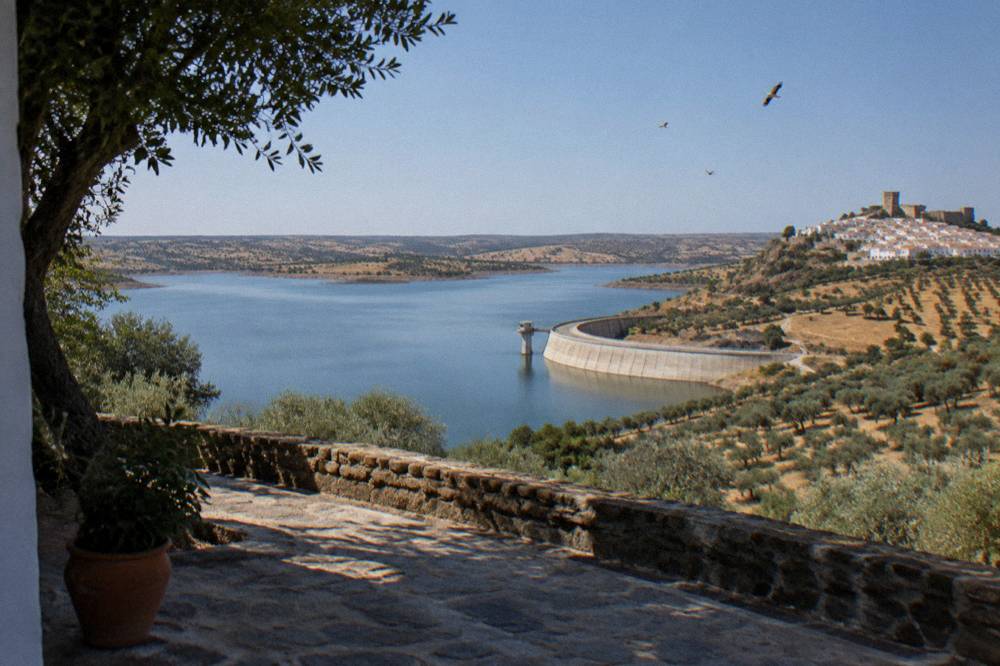
Monsaraz, Estremoz, Vila Viçosa and Marvão are the four Alentejo towns that most justify a hotel night in their own right: Monsaraz for its hilltop views over the Alqueva lake country about 40 to 45 km from Évora, Estremoz for its marble and castle about 45 km away, Vila Viçosa for its ducal palace about 60 km away, and Marvão for a walled fortress village about 120 km away. Elvas, about 80 km away, also rewards a stop.
Distances here are rounded estimates, always "about", and none of them comes with a drive time, because the point of an Alentejo hotel night is rarely the destination alone. The region rewards slow movement: a morning in one marble town, lunch in another, an evening back in Évora. The Alentejo road trip itinerary strings these towns together properly, and the three days in Évora and the Alentejo plan does the same on a shorter leash.
Monsaraz is the strongest single case for sleeping outside Évora. The village sits above the Alqueva reservoir, and the guided Monsaraz and Wine tours from Évora run about four hours from $78.78 per person, rated 4.6 from 51 reviews, which tells you the day trip is easy but also that the village empties of day visitors by evening, which is exactly when a room there pays for itself. The Alqueva area is also marketed for its dark skies, though specific observatory hours and boat prices are not verified, so check locally rather than booking on an assumption.
| Alentejo Town | Distance From Évora | Why Stay The Night |
|---|---|---|
| Arraiolos | about 20 km | Carpet-making town, easiest countryside half-day from Évora |
| Monsaraz | about 40-45 km | Hilltop village over the Alqueva, quiet after the day crowds leave |
| Estremoz | about 45 km | Marble town with a castle keep above the plain |
| Vila Viçosa | about 60 km | Ducal palace and marble quarries, the House of Bragança seat |
| Elvas | about 80 km | Fortified border town with bastion walls |
| Marvão | about 120 km | Walled village on a high ridge, best as an overnight before continuing north |
When Is The Best Month To Book A Hotel In The Alentejo?
May, June, late September and October are the best months for an Alentejo hotel stay, because IPMA's 1991 to 2020 normals for the Évora station show May at a 25.0 C mean maximum with only 6.0 days of 1 mm or more rain, and October at 24.1 C with 7.7 such days, while July and August average 33.3 C and 33.5 C. Book early if your stay overlaps the Feira de São João, which ran 23 June to 5 July in 2026.
The heat is the single biggest planning fact in this region, and it is inland heat: the Atlantic is roughly 90 km away and plays no role in Évora's evenings. The station record shows 45.4 C on 4 August 2018, and the normals count 31.9 days a year at 35 C or more, concentrated in June, July, August and September. A hotel with thick walls and good shutters, which most of the old buildings inside Évora's walls have, is not a stylistic preference here, it is equipment.
October carries a cultural bonus in the run-up to Évora's year as European Capital of Culture in 2027. The GUADIANA Festival of Afro-Ibero-American Literatures held its first edition from 9 to 11 October 2026 with 28 authors from nine countries, part of the Évora 2027 programme, and 2026 is officially a preparation year built on the concept of "Vagar". The full 2027 programme is not yet published, so treat 2027 as a reason to book early rather than as a schedule you can plan around today. The deeper month-by-month comparison sits in which month is best to visit the Alentejo.
| Month (IPMA 1991-2020, Évora Station) | Mean Maximum | Mean Minimum | Days With 1 mm+ Rain | Days At 30 C Or More |
|---|---|---|---|---|
| May | 25.0 C | 10.9 C | 6.0 | 5.5 |
| June | 30.2 C | 13.8 C | 1.7 | 15.1 |
| July | 33.3 C | 15.6 C | 0.6 | 23.7 |
| August | 33.5 C | 16.0 C | 0.7 | 25.0 |
| September | 29.5 C | 14.6 C | 3.6 | 13.9 |
| October | 24.1 C | 12.3 C | 7.7 | 2.9 |
Winter has its own case, and it is a quiet one. January averages a 14.1 C mean maximum and a 4.5 C mean minimum, with 8.6 days of 1 mm or more rain, which is walking weather rather than sitting-out weather, and the low season is when the inside-the-walls hotels are calmest. The Alentejo in winter perspective carries the seasonal detail for Évora itself.
How Do You Reach Your Évora Hotel From Lisbon?
Take the train: CP's Intercidades service from Lisboa Oriente to Évora, on the timetable valid since 6 September 2026, runs six through trains a day departing at 07:02, 09:02, 09:58, 13:35, 17:02 and 19:02 and arriving about 1 hour 40 to 1 hour 45 later, for 13.90 EUR in second class or 18.50 EUR in first. No change is needed on these services, and Évora's station sits just outside the historic walls.
Those six departures are the whole through-service picture, so build your arrival around them rather than assuming a shuttle rhythm. The 07:02 arrives at 08:47, which hands you a full first day; the 19:02 arrives at 20:46, which suits a dinner arrival and a first walk through the lit-up centre. Check the CP weekday remarks before locking a plan, because the timetable's own notes govern what runs. The fare table is valid for 2026 and applies to the Lisboa Oriente to Évora journey specifically.
Lisbon is the gateway for almost every Alentejo hotel trip, about 130 km away by road. Travellers starting from the capital without a car can also consider the Lisbon-start day tours that visit Évora, described as starting in Lisbon, though if Évora is your base the train is the direct answer. The full route comparison, including the bus and driving options, lives in the Lisbon to Évora guide, and the Alentejo tour from Lisbon page covers the guided alternative.
| CP Intercidades, Lisboa Oriente To Évora (Valid Since 6 September 2026) | Departure | Arrival In Évora |
|---|---|---|
| First through train | 07:02 | 08:47 |
| Second through train | 09:02 | 10:45 |
| Third through train | 09:58 | 11:40 |
| Fourth through train | 13:35 | 15:13 |
| Fifth through train | 17:02 | 18:41 |
| Sixth through train | 19:02 | 20:46 |
What Can You Do From An Évora Hotel Without A Car?
Évora's entire historic centre works on foot, and the car-free options cluster into three kinds: paid guided walks from $13.51 to $111.42 per person, free tip-based walks listed on GuruWalk, and the countryside half-days, by small-group tour, to the megaliths, the cork forests and the wineries.
The Cromeleque dos Almendres interpretation centre in Guadalupe, about 8 km from the city along the national road toward Lisbon, is the one megalithic stop with verified hours, 10:00 to 18:00 in summer and 10:00 to 17:00 in winter.
The budget end of the paid walks is genuinely cheap. The Personal and Flexible Walking Tour in the historic centre runs about three hours from $13.51 per person and carries a 4.8 rating from 105 reviews, which makes it the default car-free first morning for cost-conscious visitors. The free end is GuruWalk, where local gurus run tip-based walks including the Essential Free Tour of Évora, about two hours and free to join, and a History and Heritage walk of the same length; never expect a price on these, the tip is the model.
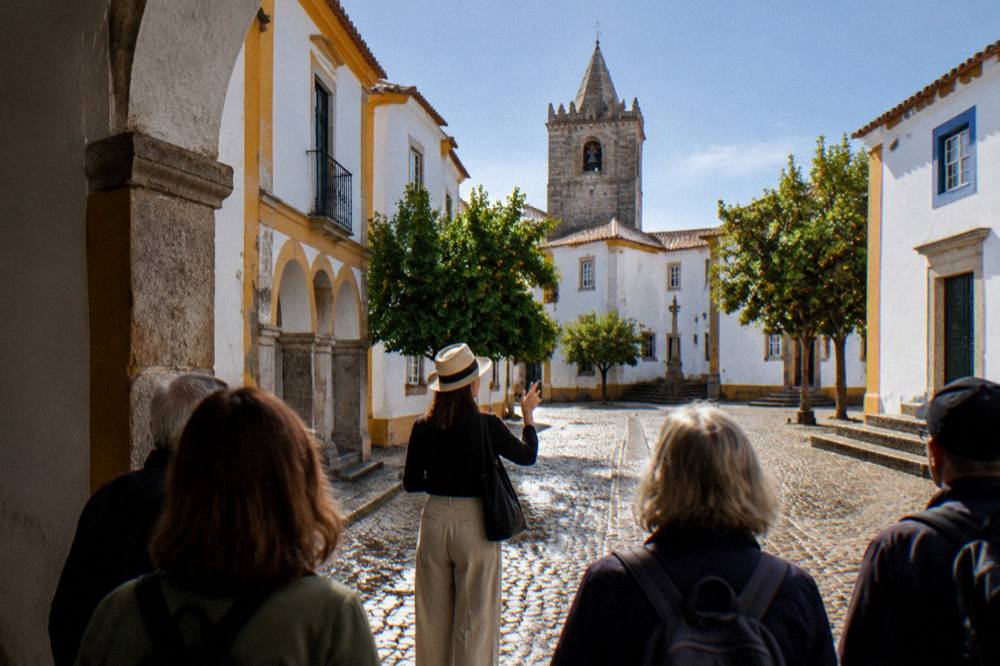
The middle ground is where Évora gets creative. A medieval tour of the city by sidecar with a wine tasting runs about three hours from $61.90 per person, rated 4.9 from 16 reviews, and covers the walled town in a way no bus tour can. The evening food and wine crawl, about three hours from $83.28 per person, turns dinner into the activity itself, which suits a first night inside the walls perfectly.
Beyond the walls, the megalithic circuit is the signature car-free excursion. A half-day cromlech tour led by archaeologists runs from $74.54 per person with a 5 rating from 77 reviews, and a three-hour Almendres and Great Dolmen of Zambujeiro visit starts from $33.76 per person, rated 5 from 54 reviews. The Almendres stones themselves are an open-air site, and the interpretation centre hours above are the verified anchor for planning. The megalithic sites near Évora page carries the detail.
Alentejo Hotels For Wine, Cork And Countryside Stays
The strongest countryside hotel bases around Évora are the wine and cork country immediately around the city and the Monsaraz and Alqueva belt about 40 to 45 km south, and the guided products that serve them run from $50.65 for a four-hour megalithic and cork forest combination to $321.11 for a full-day private wine tour with lunch and transport. Évora itself remains the practical hub, because every countryside tour starts there or in a nearby Alentejo town.
The wine country around Évora is the reason many people come to the Alentejo at all, and the Alentejo wine guide explains what is in the glass, while what Alentejo wine is like answers the comparison question most visitors ask next. Cork is the other regional crop, and the cork and cork oak page covers the montado landscape that produces it; the two often share an itinerary, since the cork forests and the vineyards sit in the same rolling country.
| Guided Option From Évora | Duration | From (Per Person) | Rating |
|---|---|---|---|
| Personal and flexible historic-centre walk | 3 hours | $13.51 | 4.8 from 105 reviews |
| Golden Era walk with Portuguese wine tasting | 2.5-3 hours | $23.92 | 4.4 from 33 reviews |
| Cromlech of Almendres and Great Dolmen of Zambujeiro | 3 hours | $33.76 | 5 from 54 reviews |
| Megalithic and cork forest guided tour | 4 hours | $50.65 | 4.9 from 41 reviews |
| Medieval sidecar tour with wine tasting | 3 hours | $61.90 | 4.9 from 16 reviews |
| Alentejo wine and cork tour | 4 hours | $78.78 | 4.7 from 24 reviews |
| Half-day megaliths cromlech tour by archaeologists | Half day | $74.54 | 5 from 77 reviews |
| Full-day private wine tour with lunch and transport | Full day | $321.11 | 5 from 11 reviews |
A hotel in Évora paired with one countryside half-day is the pattern that fits most first visits: sleep inside the walls, spend one morning on megaliths or cork, one afternoon in the museums, and one evening over regional wine and the dishes that define the region. Travellers with more time stretch the same logic along the Alentejo castles and villages route, sleeping a night in Marvão or Elvas and ending at the coast, though the coast is a separate story and the Comporta and Alentejo coast day trip page tells it.
Common Questions About Alentejo Hotels
Is it better to stay in Évora or in a smaller Alentejo town?
For a first visit, Évora: the city holds the UNESCO-listed centre, the main monuments and the transport links, and every countryside tour starts there or nearby. A night in Monsaraz, Marvão or Vila Viçosa rewards a second or third trip, or an itinerary moving north toward the border.
Do I need a car to enjoy Alentejo hotels around Évora?
No. Évora's historic centre is entirely walkable, CP's six daily through trains connect it to Lisbon, and the megalithic, cork, wine and Monsaraz excursions all run as guided small-group tours from the city. A car helps mainly for a multi-town road trip at your own pace.
Is there a tourist tax on hotel stays in Évora?
Yes, a municipal tourist tax applies to stays in Évora. The amount is not republished here, so check with your hotel at booking or check-in to see the current charge and how many nights it covers.
Does the Évora Ticket cover the main monuments?
No. The Évora Ticket, at 8 EUR for one day, 10 EUR for two and 12 EUR for three, covers the Cidade-Museu network but does not include the Sé de Évora, the Capela dos Ossos or the Museu de Évora, each of which sells its own official ticket.
How hot is it in summer for a hotel stay in Évora?
Very hot inland: IPMA's 1991 to 2020 normals for the Évora station put July at a 33.3 C mean maximum and August at 33.5 C, with 31.9 days a year reaching 35 C or more. Choose a hotel with thick walls, shutters and air conditioning, and plan sightseeing for mornings.
Will Évora be busy during the 2027 Capital of Culture year?
Évora and the Alentejo are European Capital of Culture in 2027, and 2026 is a preparation year, so demand is likely to rise. The full 2027 programme is not yet published, so book accommodation early and treat published 2026 events, like the GUADIANA festival of 9 to 11 October, as the signal of what is coming.
The Alentejo rewards exactly the kind of slow, room-centred travel its hotels are built for: one base inside Évora's walls, a couple of countryside half-days, and perhaps one night in a hilltop town to see the plain empty out at dusk. Choose the quarter for how you arrive, the month for how you handle heat, and the guided options for everything beyond walking distance, and the region opens up on its own unhurried terms.