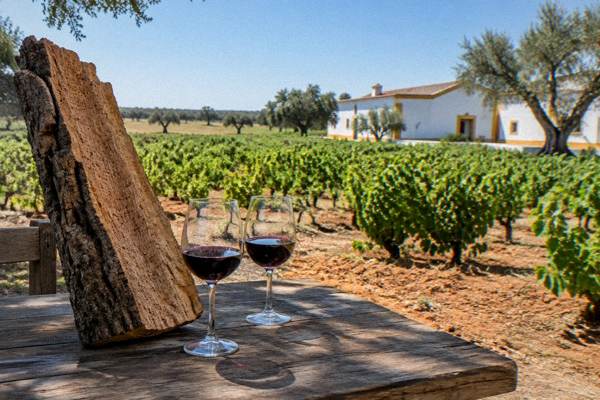
Alentejo Wine From Évora: A Complete Guide To Tasting Portugal's Inland Wine Country
Évora, the capital of Portugal's Alentejo region, sits in the middle of one of the country's most distinctive wine landscapes. This guide covers what Alentejo wine is commonly described as, how to taste it from Évora, and which tours leave from the city.
Short answer
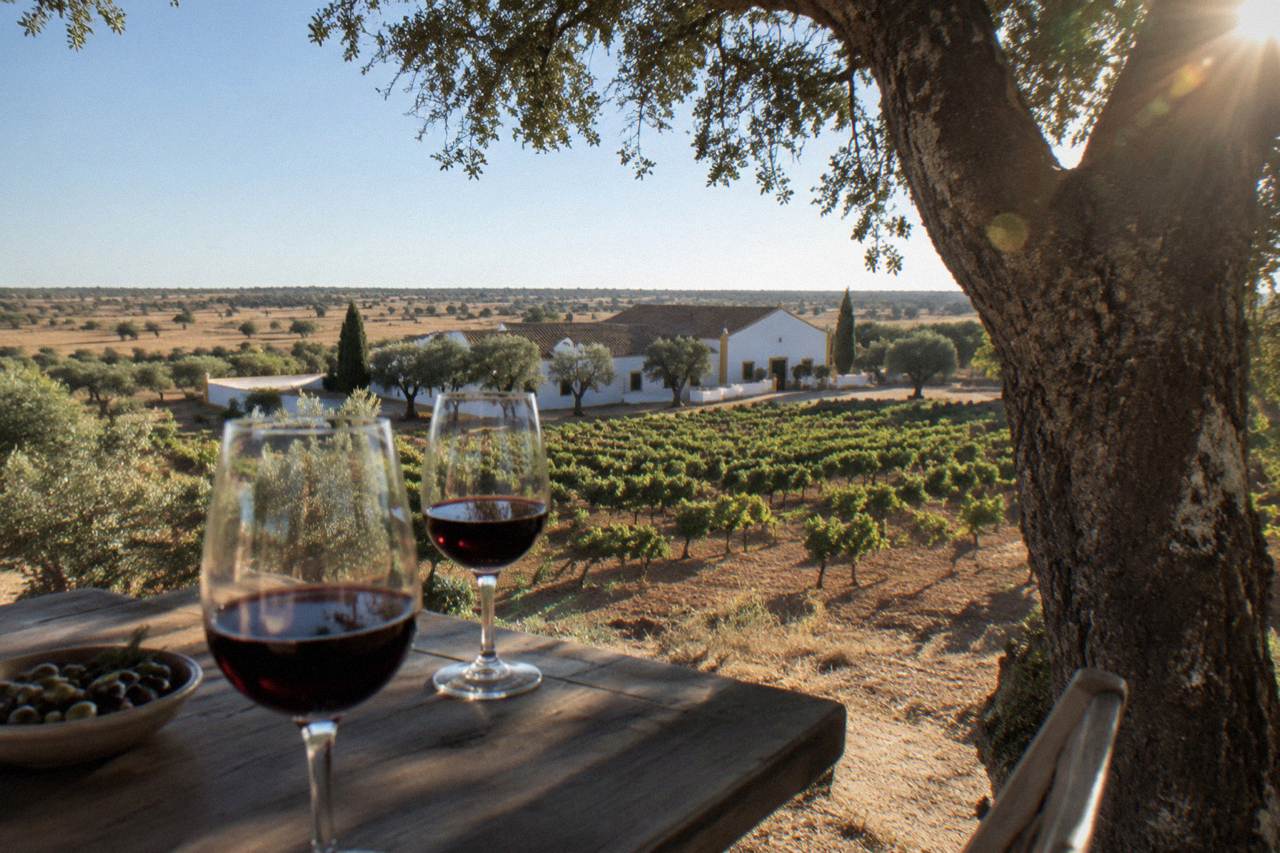
Alentejo wine is the wine of Portugal's inland southern region, and Évora is its natural base: wine and cork tours leave from the city, the Alentejo plains surround it, and the region's warm, dry climate shapes the style of what is in the glass.
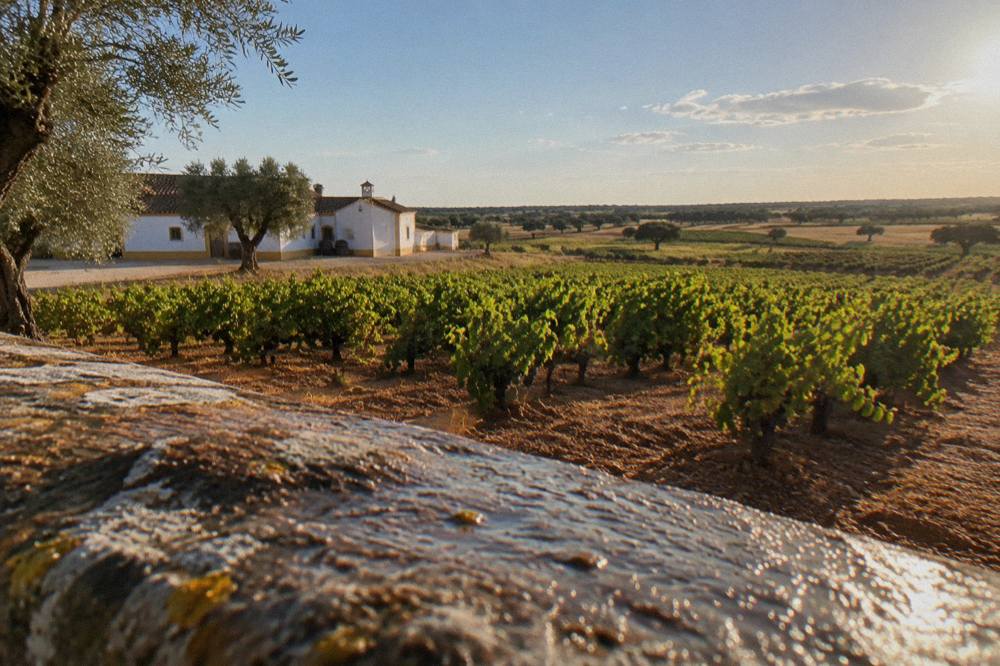
Évora is a city in the Alentejo region of southern Portugal, the capital of the district of that name, and the natural base for anyone whose Portuguese trip is built around wine. The name Alentejo is usually explained as meaning "beyond the Tagus", and everything about the landscape there is wide: plains of cork oak and holm oak, wheat fields, olive groves, and vineyards running to the horizon under a sky that IPMA's 1991 to 2020 normals for the Évora station show is hot and dry in summer, with a July mean maximum of 33.3 C and almost no rain in July or August. The city itself, a UNESCO World Heritage historic centre inscribed in 1986, gives you a walled museum town to sleep and eat in, and the wine country begins at the edge of town. This guide from the Évora Travel Guide editorial desk covers how the wines are commonly described, how to taste them from Évora, what to eat alongside them, and which wine towns sit within reach.
What Is Alentejo Wine?
Alentejo wine is the wine of Portugal's largest inland region, a hot, dry plateau south of the Tagus river where reds are commonly described as ripe, smooth and full-bodied and whites as fresh and often full-flavoured, and Évora, the region's historic capital, is the city most visitors use as a base for tasting it. The region's identity is tied to its climate: IPMA's 1991 to 2020 normals for the Évora station record an annual mean temperature of 16.6 C, only 596.1 mm of rain across the year, and 86.5 days a year reaching 30 C or more. Grapes that ripen fully in that heat produce the style the region is known for. The honest way to learn the style is to taste it, and the most efficient way to taste it from Évora is with a guide who handles the driving.
What the region's wines are not is a single thing. Alentejo is a large area, and the same summer heat that ripens one vineyard bakes another a valley away. Rather than a fixed style, think of a family of styles shaped by the same climate: generous reds that locals pour with the region's hearty food, and whites built to stay drinkable in serious heat. Describing any of it as "similar to" another country's famous wine region would be a claim this page cannot make as fact. What can be said is that the region's wines are made to be drunk with the food grown around them, which is the whole point of tasting them where they are made.
The landscape does half the explaining. Cork oak is the other great crop of the Alentejo, and a wine tour from Évora typically runs through country where vineyards and cork forests share the same soil. That combination is unusual in Europe, and it is why so many tours from the city pair a cellar visit with a walk among cork oaks, as the Alentejo cork and cork oak guide explains in more detail. For a fuller picture of the region as a travel destination, the Alentejo travel guide covers the towns, hotels and castles; this page stays on the wine.
Where Should You Taste Alentejo Wine From Évora?
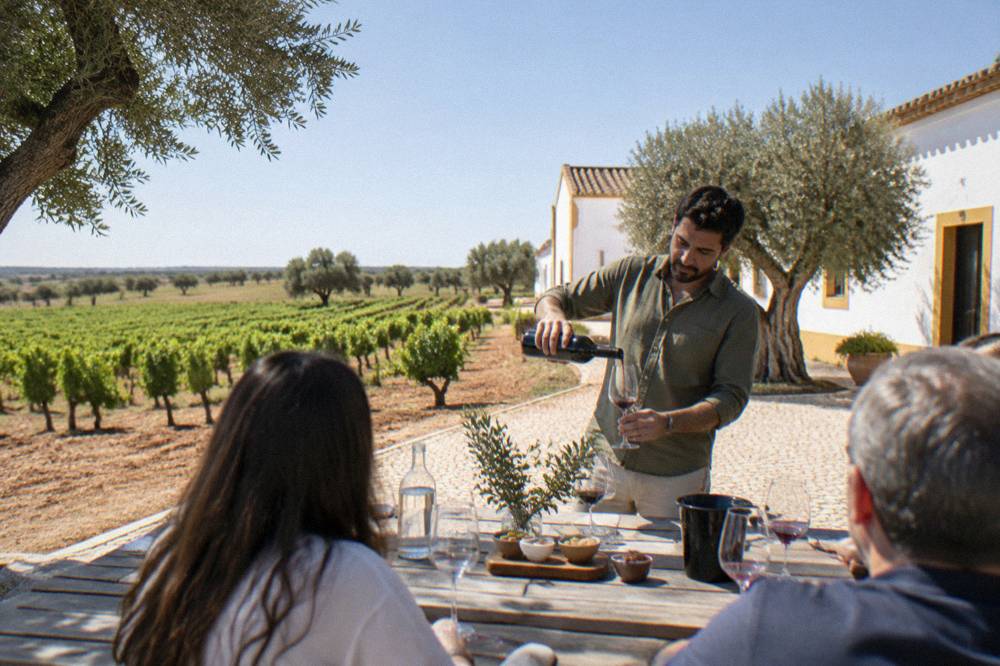
The practical answer is a guided tour that leaves from Évora, because the wineries and cork estates sit in open country with no regular public transport, and the best-established option is a four-hour wine and cork tour from the city, from $78.78 per person, rated 4.7 from 24 reviews on the operator's live listing. The Alentejo Wine and Cork from Évora tour combines the two landscapes the region is famous for in a single afternoon, and it is the featured pick of this guide because it answers the question most first-time visitors actually have: how do I taste Alentejo wine without renting a car and finding my own way along country roads?
The alternative is to build your own day. The wine route town of Reguengos de Monsaraz, covered in the Reguengos de Monsaraz wine route guide, is the region's best-known wine address, and a dedicated Évora wine tasting guide covers what a tasting in and around the city involves. Nothing was verified for this page about any individual winery, including the Cartuxa estate whose monastery is one of Évora's monuments, so no producer, price or address appears here as a recommendation. What can be said with confidence is the shape of the experience: a cellar walk, an explanation of how the heat and the soil shape what is in the bottle, and a tasting of several wines, usually with local bread, cheese and olive oil on the table.
For travellers who want a full day rather than an afternoon, there is a 1 Day Wine Tour Around Évora, from $321.11 per person and rated 5 from 11 reviews, which covers lunch and transport as well as the tastings. It is the premium end of the options from the city.
Which Alentejo Wine And Food Tours Leave From Évora?
The bookable options from Évora run from an evening food and wine crawl in the city itself, from $83.28 per person, to a full-day wine tour with lunch and transport at $321.11, with the mid-range choice being the four-hour wine and cork combination at $78.78, and every price here comes from the operator's live listing in US dollars. The table below sets out the guided options that start in or near Évora, with the figures exactly as the listings show them.
| Tour | What It Covers | Duration | From (USD) | Rating |
|---|---|---|---|---|
| Alentejo Wine and Cork from Évora | Cellar visit and cork estate | 4 hours | $78.78 | 4.7 from 24 reviews |
| 1 Day Wine Tour Around Évora | Multiple estates, lunch, transport | Full day | $321.11 | 5 from 11 reviews |
| Évora Evening Food & Wine Crawl | City taverns and tastings | 3 hours | $83.28 | 4.6 from 19 reviews |
| Megalithic and Cork Forest guided tour | Cork forest, megaliths, tasting | 4 hours | $50.65 | 4.9 from 41 reviews |
The crawl option deserves a line of its own, because it solves a real problem: you can taste Alentejo wine without leaving the city at all. The Évora Evening Food & Wine Crawl moves between the city's evening tables over three hours, pairing the region's wines with its food. It is the right choice for a visitor with only one evening in Évora, or for anyone who has already done a day in the countryside and wants the city version of the same story.
Between the countryside options and the city crawl, most visitors find their level: an afternoon among the vines, an evening among the taverns, or both stacked on consecutive days. Whichever shape the trip takes, the listings carry the current times and inclusions, so check the operator's live listing before committing to a date.
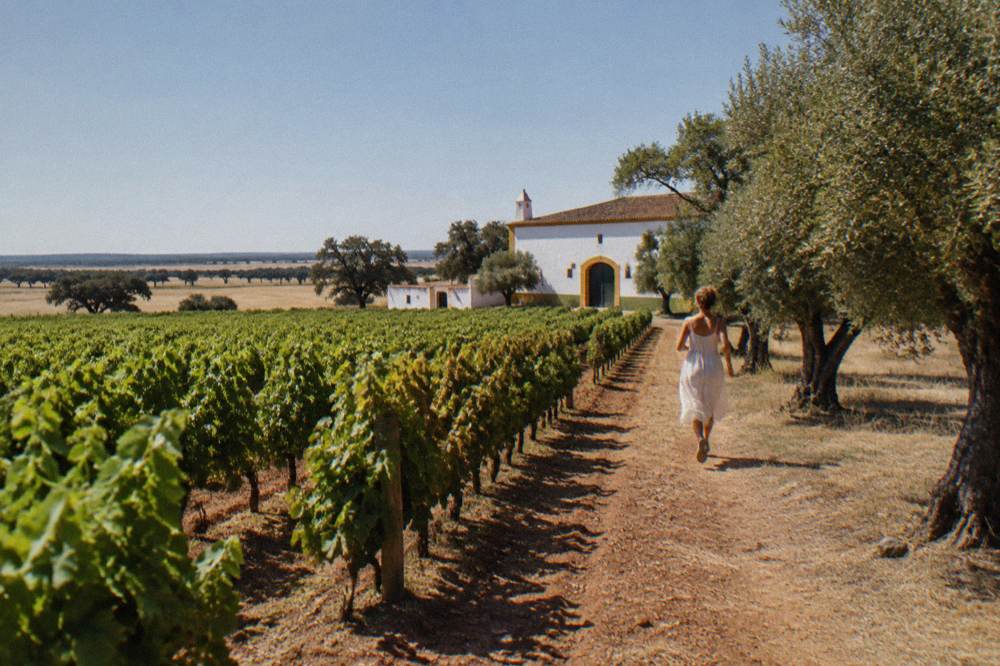
What Does Alentejo Wine Taste Like?
Alentejo reds are commonly described as ripe, smooth and generous, with the warmth of the climate in the glass, and the whites as fresh and often fuller-flavoured than northern Portuguese whites, but no comparison with any other country's wine region can be stated here as fact, because none was verified for this page. What is verifiable is the climate behind the style. IPMA's 1991 to 2020 normals for the Évora station show July with a mean maximum of 33.3 C and August with 33.5 C, and 31.9 days a year reaching 35 C or more, with an all-time record of 45.4 C on 4 August 2018. Grapes grown in that heat ripen differently from grapes grown near the Atlantic, which is roughly 90 km away: Évora is inland, and no part of the Alentejo wine country has a sea breeze.
The honest way to answer the taste question is hedged, and this page keeps it that way. Locals and the people who pour for visitors describe the region's reds as easy-drinking and food-friendly, made for the region's own cooking rather than for cellaring or ceremony. The whites are described as the surprise of the region for many visitors, fuller than expected and capable of standing up to garlic, herbs and grilled meat. If you want a comparison anchored in something checkable, the question "what is Alentejo wine similar to" is answered in general terms on the answers page for that question, and the question of what the wine is like in the glass is taken further at what Alentejo wine is like.
The best answer, though, is the one you get standing at a tasting table. A tasting costs nothing to imagine and an afternoon to do: the tour cards above each include one, and the guides who run them explain the region's styles while pouring them. That is worth more than any paragraph of description, because a wine region this warm produces surprises in both directions.
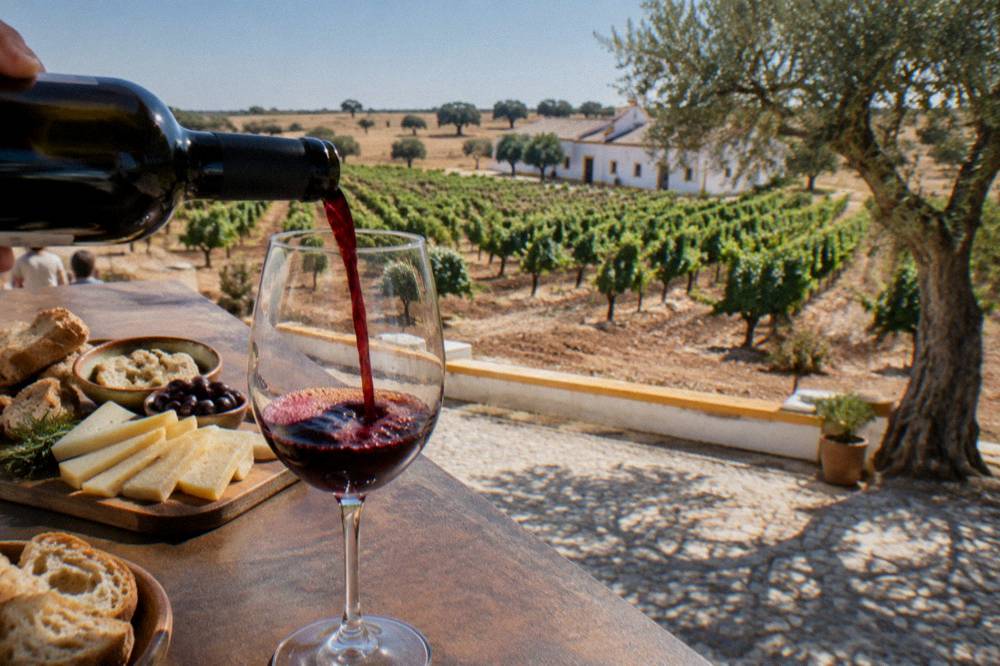
How Do Alentejo Wine And Alentejo Food Work Together?
Alentejo food is hearty, herb-heavy and built around bread, pork, cheese and olive oil, and the region's wines are made to sit beside exactly that: the practical pairing rule is red with the region's slow-cooked pork and lamb dishes, white with the soups, cheeses and fish-free lighter plates, and the local bread and olive oil with everything. No dish, cheese maker, olive-oil producer or restaurant was verified for this page, so nothing appears here as a named recommendation with an address or a price. What can be described is the pattern, and the pattern is the point.
| On The Table | Commonly Poured Alongside | Why It Works |
|---|---|---|
| Bread, olive oil and sheep's cheese | White, served cool | Freshness against richness |
| Slow-cooked pork with garlic and herbs | Red, generous style | Weight with weight |
| Lamb or grilled meats | Red | The classic match of the region |
| Alentejo soups and lighter plates | White | Heat-friendly and light |
The region's food culture is covered in depth on the Alentejo food guide and the dishes to try page, and the olive oil that anchors half the table has its own Alentejo olive oil guide. For travellers who want to go one step further than eating the food, there is a cooking option: Learn the Art of Alentejo Cuisine with Andre, a cooking class from $166.29 per person, where the region's dishes are cooked rather than ordered. It pairs naturally with a wine afternoon, either on the same trip or the day before.
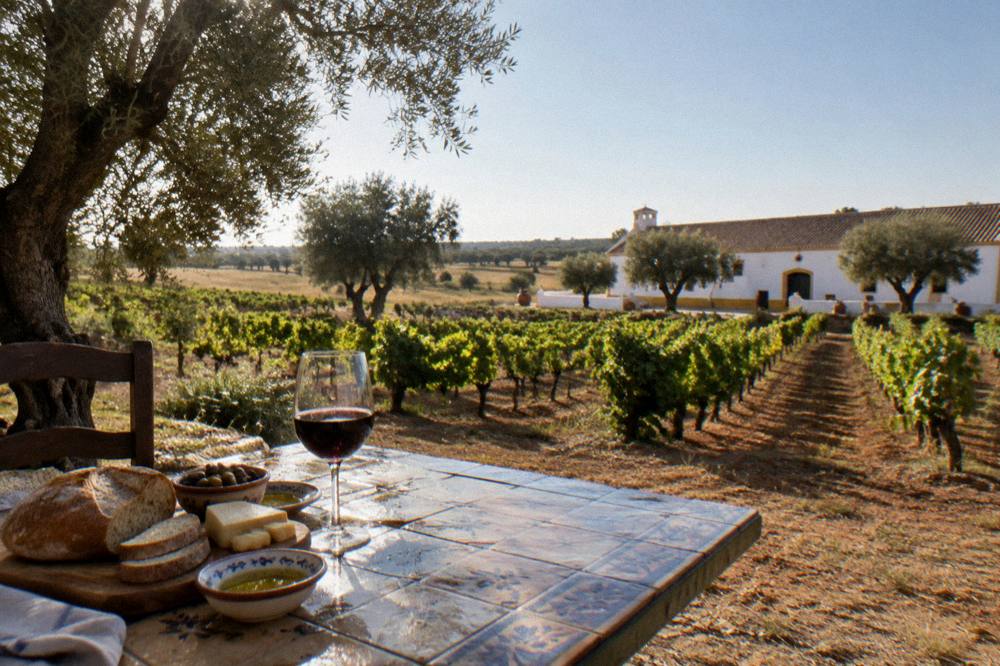
When Is The Best Time To Visit Alentejo Wine Country?
The best months for wine touring around Évora are spring and autumn, because IPMA's 1991 to 2020 normals for the Évora station show July and August averaging 33.3 C and 33.5 C as daytime maxima with almost no rain, while May averages a 25.0 C maximum with 46.6 mm of rain and October a 24.1 C maximum with 81.5 mm, and harvest activity fills the early autumn. The full picture from the normals is below, and it is the same data the region's farmers work with.
| Month | Mean Max (C) | Mean Min (C) | Rain (mm) | Days At 30 C Or More |
|---|---|---|---|---|
| March | 18.7 | 6.9 | 60.8 | 0.0 |
| May | 25.0 | 10.9 | 46.6 | 5.5 |
| July | 33.3 | 15.6 | 2.7 | 23.7 |
| August | 33.5 | 16.0 | 6.0 | 25.0 |
| September | 29.5 | 14.6 | 33.9 | 13.9 |
| October | 24.1 | 12.3 | 81.5 | 2.9 |
Two practical notes follow from the table. First, summer touring is possible but it is a morning-and-evening business: a four-hour tour starting in the afternoon in August is a hot experience, and the evening food crawl in the city is the more comfortable summer choice. Second, the shoulder months carry the region's calendar, and the Capital of Culture programme adds city events on top of it. The month-by-month question is answered in full at which month is best to visit Alentejo.
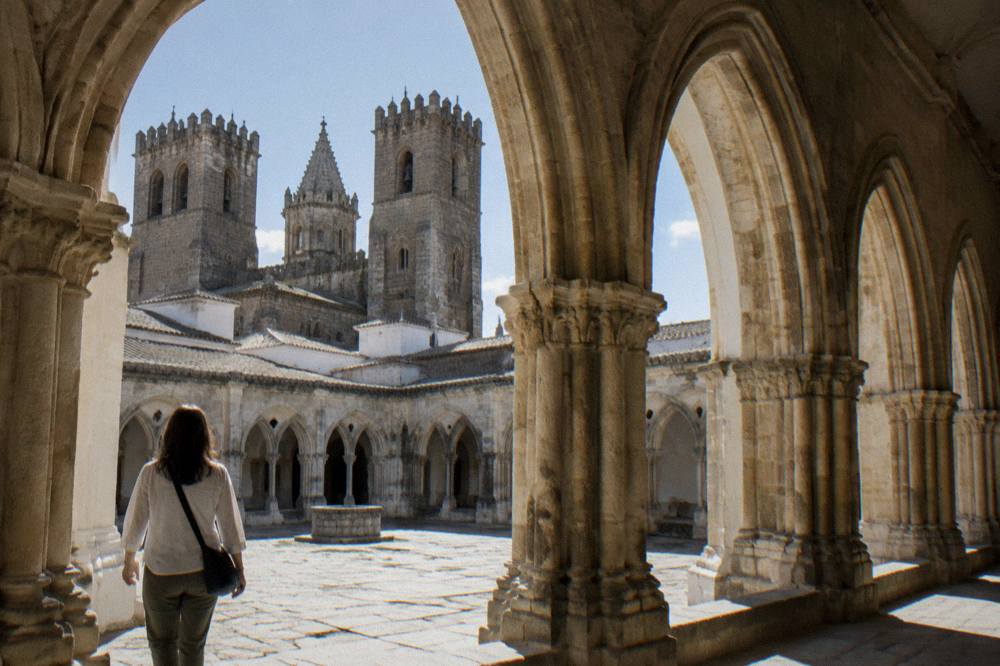
Can You Combine Évora'S Monuments With Wine Tasting?
Yes, and it is the standard Évora pattern: the city's sights are compact enough that a morning covers the Sé de Évora, whose complete-visit ticket is 5.00 EUR including the cloister, roof terrace and museum, and the Capela dos Ossos at the Igreja de São Francisco, whose museum ticket is 7.00 EUR for an adult, leaving an afternoon free for a four-hour wine tour. The two halves of the day complement each other, and several tours are built around exactly this combination. The Évora Private Walking Tour with Cathedral & Chapel of Bones, from $111.42 per person and rated 5 from 106 reviews, walks the historic centre with the monuments included, and pairs well with a countryside afternoon on a separate day.
| Évora Sight | Ticket | Hours | Closed |
|---|---|---|---|
| Sé de Évora, complete visit | 5.00 EUR adult, children to 12 free | 9:00-17:00 | 24 Dec afternoon, 25 Dec, 1 Jan |
| Capela dos Ossos, Igreja de São Francisco | 7.00 EUR adult, 5.00 EUR youth and senior, 15.00 EUR family | Summer 9:00-18:30, winter 9:00-17:00 | 1 Jan, Easter Sunday, 24 Dec afternoon, 25 Dec |
| Museu de Évora | 8 EUR adult | Tue-Sun 9:30-13:00 and 14:00-17:30 | Mondays |
| Évora Ticket, one day | 8 EUR, 10 EUR two days, 12 EUR three days, free to 12 | Varies by site | Varies by site |
One caution on the multi-site Évora Ticket: it does not include the Sé, the Capela dos Ossos or the Museu de Évora, so check what it does cover on its own page before buying it for a monuments-plus-wine day. The things to do in Évora overview and the three days in Évora and Alentejo itinerary both work through the combinations, and the Évora wine and food day itinerary is built around exactly this pairing.
Which Wine Towns And Estates Lie Within Reach Of Évora?
The wine country around Évora is a ring of small towns and estates rather than one famous valley: Reguengos de Monsaraz on the wine route, Estremoz about 45 km away, Borba and Redondo nearby, Vila Viçosa about 60 km, and Monsaraz about 40-45 km, all reachable as day trips from the city, though no drive times, winery addresses or opening hours can be stated here because none were verified for this page. The distances below are rounded estimates and should be used for planning shape, not for scheduling.
| Town From Évora | Rounded Distance | What It Adds To A Wine Trip |
|---|---|---|
| Arraiolos | About 20 km | carpets and hilltop views |
| Monsaraz | About 40-45 km | walled village above the plains and the great lake |
| Estremoz | About 45 km | marble town with a castle |
| Vila Viçosa | About 60 km | ducal palace and marble quarries |
| Elvas | About 80 km | fortified border city, UNESCO listed |
| Marvão | About 120 km | mountain village on the edge of the region |
The town guides cover each of these in depth: the marble towns of Estremoz, Borba and Vila Viçosa are strung together in the Alentejo castles and villages guide, and the walled villages of the south in the pages on the region's hill towns. Évora itself is inland, with the Atlantic roughly 90 km away, so the coast is a separate trip: the Comporta and Alentejo coast guide covers that shore. For the wine route specifically, the Reguengos de Monsaraz wine route guide is the page to read, and for a multi-town plan the Alentejo road trip itinerary strings the marble towns and the wine towns together. Travellers starting from the capital rather than from Évora can read the Alentejo tour from Lisbon page, and the Lisbon to Évora guide covers the journey itself: CP's Intercidades timetable valid since 6 September 2026 lists six through trains from Lisboa Oriente to Évora taking about 1 hour 40 to 1 hour 45, at 13.90 EUR second class or 18.50 EUR first class.
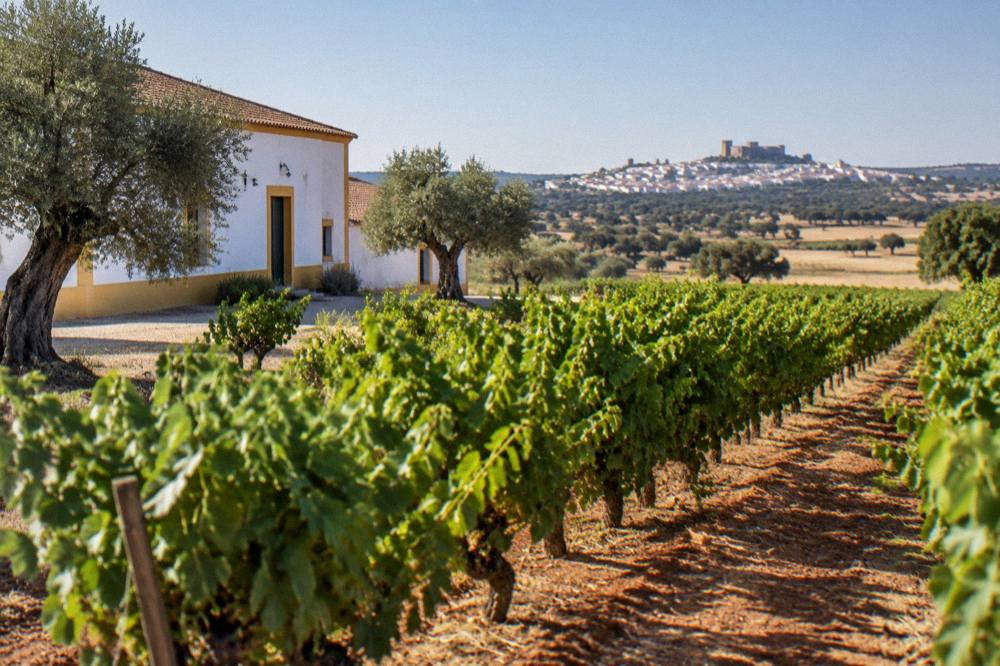
The guided options below cover the same ground with someone else driving, which on the Alentejo's long, straight roads is the difference between a holiday and a commute.
Common Questions About Alentejo Wine
What is Alentejo wine?
It is the wine of Portugal's large inland southern region, usually explained as the land "beyond the Tagus", made around hot, dry plains where IPMA's 1991 to 2020 normals for the Évora station show July averaging a 33.3 C daytime maximum. Reds are commonly described as ripe and generous, whites as fresh and often full-flavoured.
Where is the best place to taste Alentejo wine?
Évora is the practical base, because guided wine and cork tours leave from the city and the wine towns of the region sit within day-trip range. A four-hour wine and cork tour from Évora starts from $78.78 per person on the operator's live listing.
Can you visit Alentejo wineries without a car?
Yes, on a guided tour. The wineries sit in open country with no regular public transport, so the standard solution is a tour from Évora that includes transport, of which several are listed in the table above.
What food goes with Alentejo wine?
The region's own food: bread and olive oil, sheep's cheese, slow-cooked pork with garlic and herbs, and lamb. The pattern is described in the Alentejo food guide, and an evening food and wine crawl in Évora, from $83.28 per person, tastes the pairing in the city.
When is Alentejo wine harvest season?
Early autumn, when the heat has passed: September's mean maximum at the Évora station is 29.5 C against August's 33.5 C in the 1991 to 2020 normals. Exact harvest dates vary by estate and year, so check the operator's notice before booking a harvest-time visit.
Is Alentejo worth visiting for the wine alone?
Many visitors come precisely for that, combining cellar visits with the region's towns and food. The question is taken up in full at is Alentejo worth visiting, and the region's wider fame is covered at what Alentejo is famous for.
Alentejo wine is best understood standing in it: a glass poured in the shade of a cork oak an hour from Évora, with the plains running out to the horizon and the region's food on the table, says more about why this wine exists than any tasting note can.