Two Days In Évora
Two days is the right length for Évora, Portugal: one full day inside the UNESCO-listed walls, one day for the megaliths, marble towns and wine country of the Alentejo plain around it.
Short answer
Spend day one on the historic centre, the Sé de Évora and the Capela dos Ossos, and day two on the Cromeleque dos Almendres and a Alentejo town such as Estremoz or Monsaraz. Entry to the three main monuments costs 5.00 EUR, 7.00 EUR and 8 EUR, and the train from Lisboa Oriente takes about 1 hour 40.
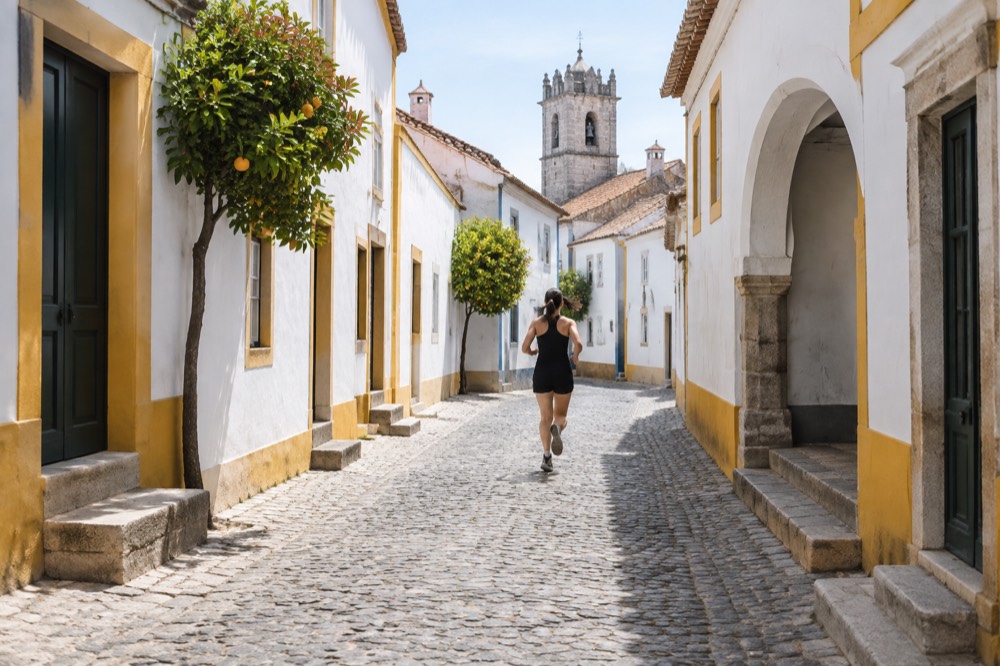
Évora, the capital of Portugal's Alentejo region, is a small walled city that rewards exactly two days: one for the UNESCO-listed historic centre and its monuments, one for the megalithic sites, marble towns and wine country of the plain that surrounds it. The Historic Centre of Évora was inscribed on the UNESCO World Heritage list in 1986 under criteria (ii) and (iv), and UNESCO's criterion (iv) calls it the finest example of a city of the golden age of Portugal, preserved because Évora was largely spared the 1755 earthquake that devastated Lisbon. That survival is why two days here feel dense rather than rushed: the Roman temple, the medieval cathedral, the bone chapel and the Jesuit university sit within walking distance of each other, and the cork and megalith landscapes begin a short drive beyond the walls.
What Can You Realistically See In Two Days In Évora?
Two days in Évora cover the entire historic centre, the three main ticketed monuments, an evening of Alentejo food and wine, and one half or full day outside the walls at the megaliths, a marble town such as Estremoz or Vila Viçosa, or the hill village of Monsaraz, which sits about 40 to 45 km away. Trying to add a second city such as Lisbon or the Algarve breaks the plan: Évora is inland, roughly 130 km from Lisbon, and every worthwhile detour lies across the Alentejo plain.
The split that works is simple. Day one stays on foot inside the walls, because the centre is compact and the monuments cluster together. Day two needs wheels: the Cromeleque dos Almendres, the region's flagship megalithic site, lies in open countryside, and the interpretation centre in the village of Guadalupe keeps summer hours of 10:00 to 18:00 from 1 May to 31 October and winter hours of 10:00 to 17:00 from 1 November to 30 April.
The plan below assumes arrival the evening before or on the first morning train, which reaches Évora at 08:47 under the CP timetable valid since 6 September 2026. Readers with only one day should follow the day-one plan and skip the second; the one day in Évora itinerary compresses that into a tighter sequence, and the half-day plan works for a lunchtime stop on a longer Alentejo road trip.
| Block | Day one | Day two |
|---|---|---|
| Morning | Sé de Évora, cloister and roof terrace, then Templo Romano and Praça do Giraldo | Drive or tour to the Cromeleque dos Almendres and the Almendres interpretation centre |
| Midday | Lunch in the historic centre, then the Convento dos Lóios and the University quarter | A marble town: Estremoz about 45 km, or Vila Viçosa about 60 km |
| Afternoon | Igreja de São Francisco and the Capela dos Ossos, then the Museu de Évora or the Jardim Público | Return through the cork and vine country of the plain |
| Evening | Praça do Giraldo at dusk and an Alentejo dinner | Slow evening, packing, or a night walk inside the walls |
How Should You Structure Day One Inside The Walls?
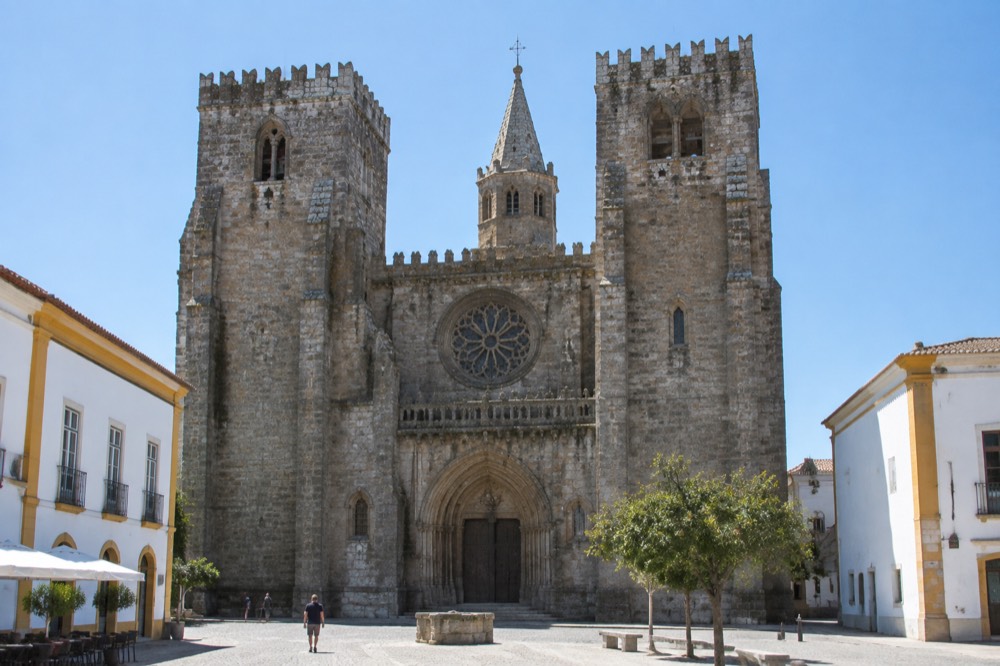
Start day one at the Sé de Évora when it opens at 9:00, because its single complete-visit ticket of 5.00 EUR covers the cathedral, the cloister, the roof terrace and the museum, and the roof terrace is the one viewpoint with a queue risk in high season.
The Sé's hours run 9:00 to 17:00, with the museum's last admission 30 minutes before closing, and it closes only on the afternoon of 24 December, 25 December and 1 January. Children up to 12 enter free with a parent or guardian. The official page lists no cheaper roof-only tier, so the complete-visit ticket is the only way up to the terrace.
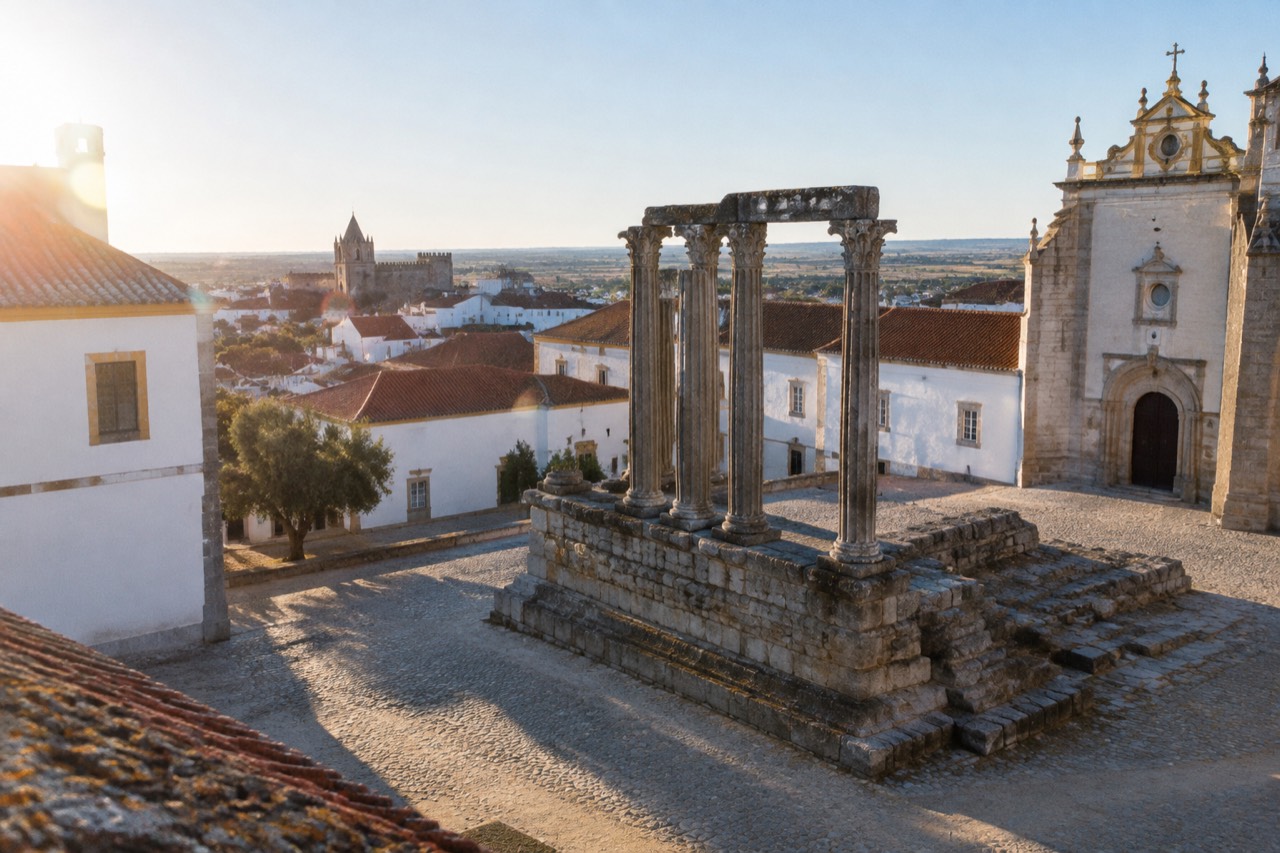
The Templo Romano, popularly called the Temple of Diana, stands a few minutes away. The municipal page says the temple was probably dedicated to the imperial cult rather than to the goddess Diana, a name applied only since the 17th century, that it measures 25 x 15 m, that it was reused as a municipal butcher's shop, and that its walls were freed in 1870. It is an open-air monument with no ticket and no listed hours, which makes it a natural pause between the cathedral and the square.
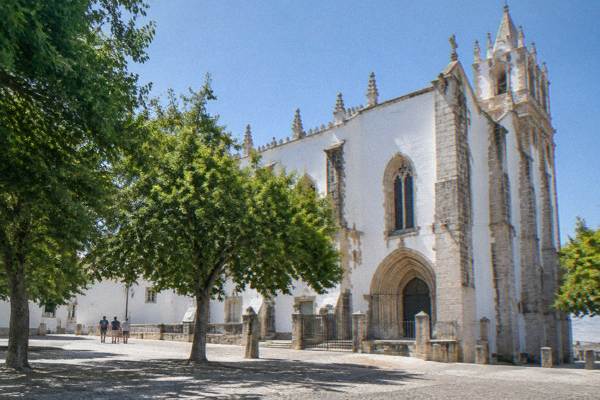
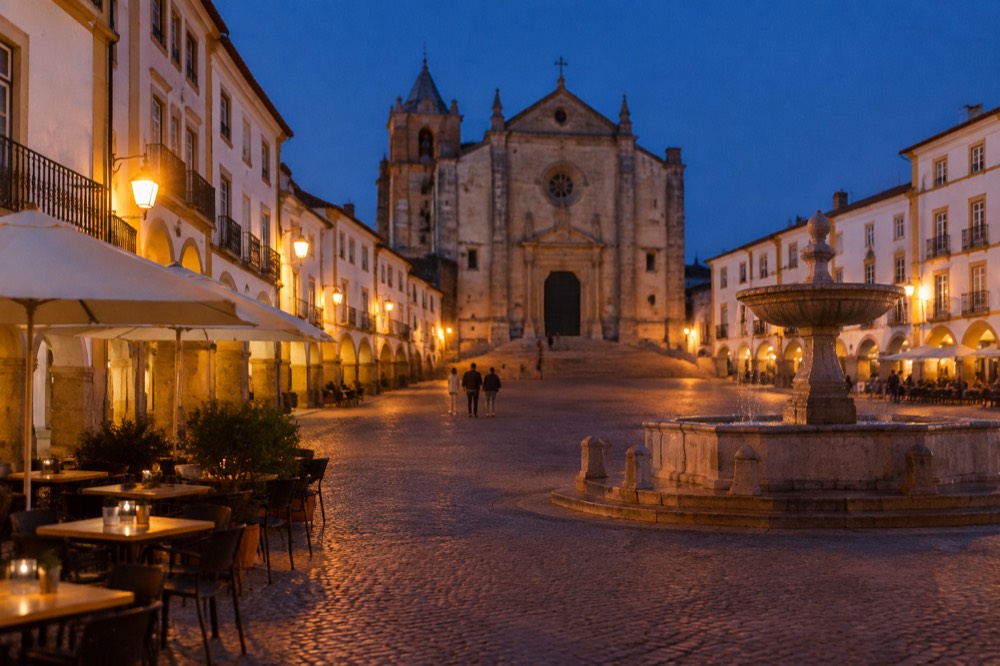
Praça do Giraldo, the main square, is a public space with no verified hours or price, and the tourist office sits at number 73. From there the walk drops toward the Igreja de São Francisco, whose museum areas hold the Capela dos Ossos. A single 7.00 EUR adult ticket covers all the museum areas: the chapel itself, the chapter house, the nativity collection, the sacred art nucleus and the terrace. Hours are 9:00 to 18:30 in summer legal time and 9:00 to 17:00 in winter, and the complex closes only on 1 January, Easter Sunday, the afternoon of 24 December and 25 December. The Chapel of Bones guide covers what the ticket includes in detail, and the Roman temple page does the same for the temple.
A guided walk is the efficient way to hold this sequence together, and the Golden Era of Évora walking tour with a Portuguese wine tasting pairs the Golden Age streets with a tasting stop, from $23.92 per person on the operator's live listing, rated 4.4 from 33 reviews over about 2.5 to 3 hours. Check availability if that shape suits your first afternoon.
The Museu de Évora closes the day. It opens Tuesday to Sunday, 9:30 to 13:00 and 14:00 to 17:30, and it is closed on Mondays, 1 January, Easter Sunday, 1 May, 29 June and 25 December. The adult ticket is 8 EUR, with 50% off for visitors aged 13 to 24, seniors over 65 and families, free entry to age 12, and free Sundays and holidays for residents of Portugal. The museum is housed in the former Archbishop's Palace and was officially founded in 1915. If the day runs long, the Évora museum guide explains what to prioritise, and the rainy-day itinerary moves the whole indoor half of this plan under cover.
What Are The Ticket Prices For Évora'S Main Monuments?
The three ticketed monuments cost 5.00 EUR for the Sé de Évora complete visit, 7.00 EUR for the Capela dos Ossos museum areas at the Igreja de São Francisco, and 8 EUR for the Museu de Évora.
The Évora Ticket multi-site pass costs 8 EUR for one day, 10 EUR for two days and 12 EUR for three days, is free to age 12, and does not include the Sé, the Capela dos Ossos or the Museu de Évora, so it does not replace those three tickets.
That last point is the one that catches visitors out. The Évora Ticket covers the Cidade-Museu network of smaller sites, and the three headline monuments sell their own tickets separately. On a two-day visit, the pass only makes sense if the second day includes several of the network's sites; the Évora tickets and passes guide lists which ones.
| Monument | Adult ticket | Concessions | Hours | Closed |
|---|---|---|---|---|
| Sé de Évora, complete visit | 5.00 EUR | Free to age 12 | 9:00-17:00 daily | 24 Dec afternoon, 25 Dec, 1 Jan |
| Capela dos Ossos, all museum areas | 7.00 EUR | 5.00 EUR youth to 25 and seniors over 65, 15.00 EUR family | 9:00-18:30 summer, 9:00-17:00 winter | 1 Jan, Easter Sunday, 24 Dec afternoon, 25 Dec |
| Museu de Évora | 8 EUR | 50% off ages 13-24, seniors, families; free to 12 | Tue-Sun 9:30-13:00, 14:00-17:30 | Mondays, 1 Jan, Easter Sunday, 1 May, 29 Jun, 25 Dec |
| Évora Ticket pass | 8 EUR 1 day, 10 EUR 2 days, 12 EUR 3 days | Free to age 12 | Network sites vary | Does not include the three above |
| Convento dos Lóios | Price temporarily unavailable on the official page | State none | State none | State none |
The Convento dos Lóios row is deliberately thin: the official municipal page shows its price as temporarily unavailable, so no figure appears here and none should be trusted elsewhere without checking the page. The same discipline applies to the Água de Prata aqueduct, the University of Évora, the Palácio de Dom Manuel, the Jardim Público and the Igreja de São Brás: none has verified hours or prices, and all are worth seeing from the street or grounds, which costs nothing.
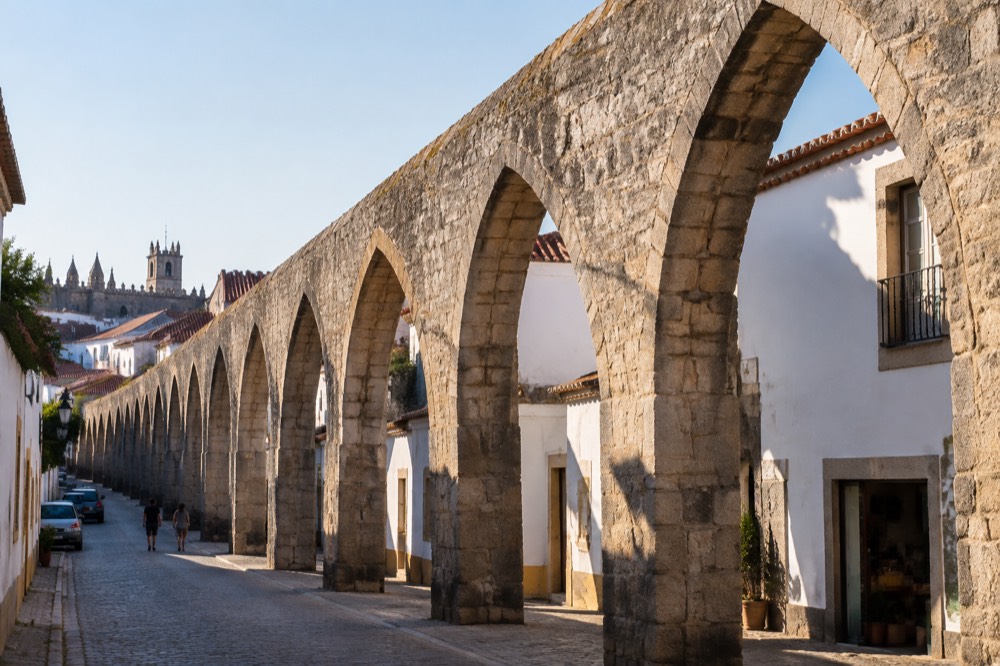
For travellers who want the monument logistics handled, the private walking tour with cathedral and Chapel of Bones entry is the strongest option on this plan: from $113.53 per person, rated 5 from 256 reviews, about 2.5 hours with a private guide and monument tickets included.
What Should Day Two In Évora Look Like?
Day two belongs outside the walls: the Cromeleque dos Almendres and its interpretation centre in the morning, then a marble or hill town in the afternoon, with Estremoz about 45 km away, Vila Viçosa about 60 km, Arraiolos about 20 km and Monsaraz about 40 to 45 km from Évora. The megalithic sites sit in open countryside with no fixed transit link, so day two needs a rental car, a guided tour or a private driver, and the interpretation centre's hours set the rhythm.
The Almendres Interpretation Centre stands in the village of Guadalupe, on Rua do Cromeleque, run as a partner of the municipality. The route from Évora follows the national road toward Lisbon for about 8 km before the turn-off. The cromlech stones themselves stand free to visit in the landscape, and the Almendres Cromlech guide explains the site, the walk between the two main groups and what the interpretation centre adds. Do not expect Stonehenge-style fencing or a ticket desk: this is working farmland with prehistoric stones standing in it, which is precisely why a guide adds value.
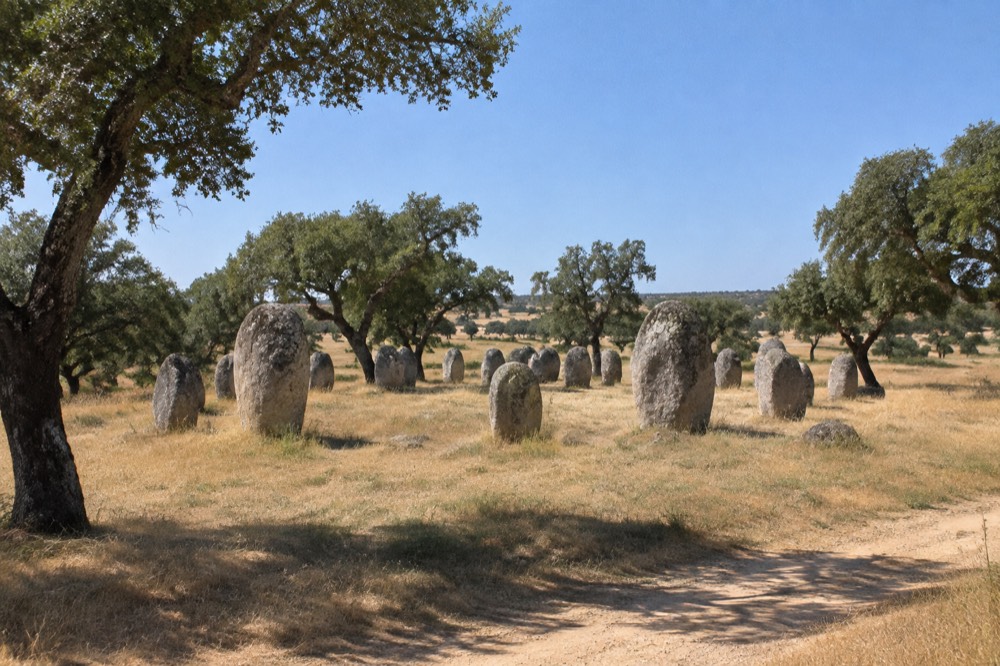
Two tours fit day two directly. The Cromlech of Almendres and Great Dolmen of Zambujeiro tour runs about 3 hours from $33.76 per person, rated 5 from 54 reviews, and the archaeologist-led half-day megaliths tour from Évora runs from $74.54 per person, rated 5 from 77 reviews. Either one leaves the afternoon free for a town, and the best day trips from Évora overview compares them all.
| Day-two option | Distance from Évora | Best for | Verified detail |
|---|---|---|---|
| Cromeleque dos Almendres | Interpretation centre about 8 km along the Lisbon road | Prehistory, open landscape | Centre hours 10:00-18:00 summer, 10:00-17:00 winter |
| Estremoz | About 45 km | Marble, castle quarter, market town | Walking tour from $28.67 per person, rated 4.8 from 19 reviews |
| Vila Viçosa | About 60 km | Ducal palace, marble quarries | Marble tour from $28.14 per person, rated 4.8 from 82 reviews |
| Monsaraz | About 40-45 km | Hilltop village, Alqueva lake views | Guided tour from Évora from $78.78 per person, rated 4.6 from 51 reviews |
| Arraiolos | About 20 km | Handmade carpets, short loop | Closest option, easiest half-day |
Monsaraz deserves the afternoon if the sky is clear: the village looks over the Alqueva reservoir, and the Monsaraz day-trip page covers the walk, the walls and the pottery village of São Pedro do Corval nearby, where a combined tour with a traditional pottery workshop runs 4.5 hours from $56.27 per person, rated 5 from 13 reviews. Families should weigh the Évora with kids itinerary, which swaps some monuments for the wider spaces children handle better.
Where Should Day Two Go If You Prefer Wine, Cork Or A Slower Pace?
If megaliths do not appeal, day two splits cleanly between wine and cork: a 4-hour Alentejo wine and cork tour from Évora from $78.78 per person, rated 4.7 from 24 reviews, or a combined 4-hour megalithic and cork forest walk from $50.65 per person, rated 4.9 from 41 reviews, both starting in the city and returning by mid-afternoon.
The evening food and wine crawl, from $83.28 per person over about 3 hours, rated 4.6 from 19 reviews, then turns the second night into the food half of the trip.
Cork is the Alentejo signature that most itineraries underuse. The montado, the cork oak landscape, begins at the edge of Évora, and a 2-hour walk in a cork forest from $71.10 per person, rated 4.7 from 43 reviews, or a 2-hour cork safari in a classic Land Rover from $102.07 per person, rated 4.8 from 33 reviews, shows how the bark is harvested and why the ecosystem matters. The full-day option, a cork factory and cork farm visit with lunch included, runs 8 hours from $112.55 per person, rated 4.8 from 26 reviews. The wine and food day itinerary builds a full day around the same theme, and the Cartuxa winery guide covers the region's best-known producer, whose monastery and estate sit just outside the walls.
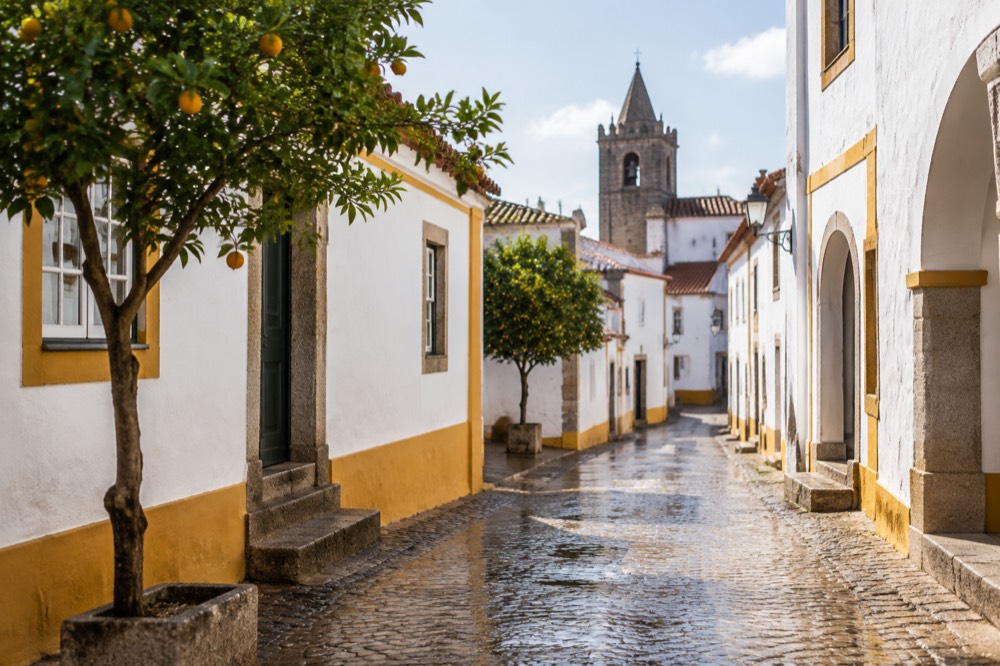
For a different tempo entirely, the medieval sidecar tour of Évora with wine tasting covers the city itself in about 3 hours from $61.90 per person, rated 4.9 from 16 reviews, which suits a second day when the morning is spent on foot and the afternoon needs something lighter. The Évora at night itinerary picks up where the crawl ends, and the things to do in Évora overview rounds out any gaps in the two days.
When Is The Best Time Of Year For Two Days In Évora?
The best months for two days in Évora are April, May, late September and October, when IPMA's 1991 to 2020 normals for the Évora station show mean maximums of 20.7 C, 25.0 C, 29.5 C and 24.1 C, against 33.3 C in July and 33.5 C in August.
The same normals count 31.9 days a year at 35 C or more, with the record maximum of 45.4 C set on 4 August 2018, so midsummer scheduling matters more here than on the coast, because Évora is inland and the Atlantic is roughly 90 km away. The full index of guides sits on Évora Travel Guide.
That heat budget shapes the itinerary itself. Rain barely enters the calculation in summer: the normals show 2.7 mm of precipitation in July and 6.0 mm in August, against 81.5 mm in October and 86.0 mm in November, which makes autumn the season to watch for showers rather than heat.
| Month | Mean max (C), 1991-2020 | Mean min (C) | Rain (mm) | Days at 30 C or more |
|---|---|---|---|---|
| April | 20.7 | 8.5 | 62.1 | 0.3 |
| May | 25.0 | 10.9 | 46.6 | 5.5 |
| June | 30.2 | 13.8 | 10.6 | 15.1 |
| July | 33.3 | 15.6 | 2.7 | 23.7 |
| August | 33.5 | 16.0 | 6.0 | 25.0 |
| September | 29.5 | 14.6 | 33.9 | 13.9 |
| October | 24.1 | 12.3 | 81.5 | 2.9 |
October carries an extra reason in 2026 and 2027. Évora and the Alentejo are a European Capital of Culture in 2027, with 2026 running a preparatory programme built on the concept of "Vagar", and the GUADIANA festival of Afro-Ibero-American literatures held its first edition on 9 to 11 October 2026 with 28 authors from nine countries. The full 2027 programme is not yet published, so no 2027 event date, price or venue can be stated here, but a two-day visit in a festival window should check the programme before locking the itinerary. The best time to visit guide and the events and festivals page carry the detail.
How Do You Get To Évora For A Two-Day Stay?
The train is the practical answer: CP's Intercidades timetable valid since 6 September 2026 lists six through trains a day from Lisboa Oriente to Évora, departing at 07:02, 09:02, 09:58, 13:35, 17:02 and 19:02 and arriving about 1 hour 40 to 1 hour 45 later, with a second-class fare of 13.90 EUR and first class at 18.50 EUR.
The 07:02 departure arrives at 08:47, which puts a two-day visitor at the Sé door as it opens at 9:00.
The through trains call at Entrecampos, Sete Rios, Pragal, Pinhal Novo, Vendas Novas and Casa Branca, and no change is needed on these services. Coach fares and times from Rede Expressos or FlixBus are not verified here, so check the operator's notice before booking one; the Lisbon to Évora guide, the by train and by bus pages carry the comparison, and the day trip from Lisbon itinerary covers the shorter version of the run.
| Lisboa Oriente departure | Évora arrival | Best for |
|---|---|---|
| 07:02 | 08:47 | Full first day, monuments from opening |
| 09:02 | 10:45 | Relaxed start, afternoon-first itinerary |
| 09:58 | 11:40 | Late start, lunch arrival |
| 13:35 | 15:13 | Evening arrival, two full days after |
| 17:02 | 18:41 | Evening arrival, dinner inside the walls |
| 19:02 | 20:46 | Night arrival, earliest possible start next day |
A municipal tourist tax applies to stays in Évora, and the figure is deliberately not printed here: check with your hotel at booking. For the second day's driving, the parking guide and car rental page cover the practical side, and the Alentejo road trip itinerary extends the same loop to a week.
How Much Does Two Days In Évora Cost?
A budget of roughly 60 to 120 EUR per person covers two days in Évora before accommodation: 20.00 EUR for the three main monument tickets, 13.90 EUR each way on the Intercidades train in second class, and the balance on meals, with the Évora Ticket at 10 EUR for two days only if the network sites fill the second day.
Guided tours sit on top of that in dollars, from $23.92 for the Golden Era walk with wine tasting to $113.53 for the private cathedral and Chapel of Bones tour.
The honest framing is that Évora's floor is low and its ceiling is optional. The monuments are cheap, the historic centre costs nothing to walk, and the free GuruWalk options, the Essential Free Tour of Évora rated 4.93 from 774 reviews over 2 hours, and the free history and heritage walk rated 5 from 9 reviews, cover the orientation for whatever you choose to tip the guru. The paid layer is what adds depth: archaeology at the cromlech, private access at the monuments, or the food and wine crawl in the evening.
| Cost line | Two-day figure | Notes |
|---|---|---|
| Train, Lisboa Oriente, 2nd class | 13.90 EUR each way | CP 2026 fare, first class 18.50 EUR |
| Sé de Évora complete visit | 5.00 EUR | Includes cloister, roof terrace, museum |
| Capela dos Ossos museum areas | 7.00 EUR | All museum areas, one ticket |
| Museu de Évora | 8 EUR | Closed Mondays |
| Évora Ticket, alternative | 10 EUR for two days | Does not include the three above |
| Guided layer, optional | From $23.92 to $113.53 per person | Dollar prices on the tour listings |
The cost and budget guide and the free things to do page stretch or trim the same two days, and the three days in Évora and the Alentejo itinerary is the natural next step if the second day keeps pulling outward.
Common Questions About Two Days In Évora
Is two days in Évora enough?
Yes. Two days cover the entire historic centre, the Sé de Évora, the Capela dos Ossos and the Museu de Évora on day one, and the Cromeleque dos Almendres plus one Alentejo town on day two. A third day, as in the three-day Alentejo itinerary, is only needed if you want to add Monsaraz, Elvas and the wine route at a slower pace.
What is the best order for the monuments on day one?
Start at the Sé de Évora at its 9:00 opening, when the roof terrace is quietest, then walk to the Templo Romano and Praça do Giraldo, and finish the monument sequence at the Igreja de São Francisco and the Capela dos Ossos. The Museu de Évora fits either late morning or the 14:00 to 17:30 afternoon slot, remembering it closes on Mondays.
Do I need a car for the second day?
For the megaliths and the marble towns, yes, or a guided tour that provides transport. The Cromeleque dos Almendres interpretation centre in Guadalupe lies about 8 km along the national road toward Lisbon with no fixed transit link listed, and tours from Évora to the cromlech run from $33.76 per person.
Does the Évora Ticket cover the main monuments?
No. The Évora Ticket costs 8 EUR for one day, 10 EUR for two days and 12 EUR for three days, is free to age 12, and does not include the Sé de Évora, the Capela dos Ossos or the Museu de Évora. Those three sell their own tickets at 5.00 EUR, 7.00 EUR and 8 EUR.
Is Évora too hot for two days in summer?
IPMA's 1991 to 2020 normals for the Évora station put the July mean maximum at 33.3 C and August at 33.5 C, with 31.9 days a year at 35 C or more and a record of 45.4 C on 4 August 2018. Two summer days work if the monuments take the 9:00 openings and the middle of the day goes indoors, but April, May, late September and October are more comfortable.
Can I do two days in Évora without a guide?
Yes, the historic centre is compact and every main monument sells its own ticket. The guided layer adds depth rather than access, from the free GuruWalk essential tour to the archaeologist-led megaliths half-day, and the Golden Era walk with a wine tasting is the lightest way to add one guided block.
Two days in Évora, one inside the walls and one across the plain, is the shape that fits the city: dense, walkable, priced in single-digit euros at the monuments, and open at both ends for a third day whenever the Alentejo pulls you further out.