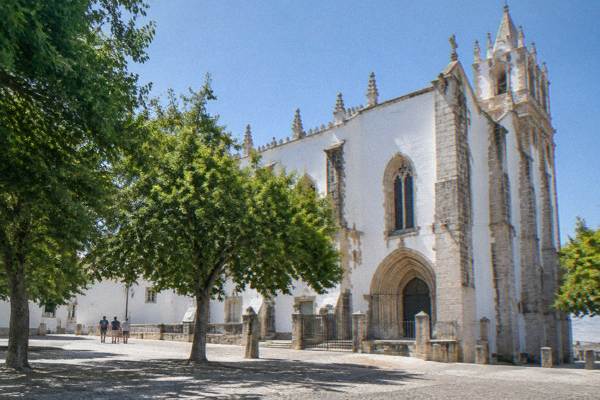
Is Alentejo, Portugal Worth Visiting?
A plain answer to whether Alentejo is worth visiting, with verified entry prices for Évora's monuments, IPMA climate normals, town distances and the 2027 Capital of Culture context.
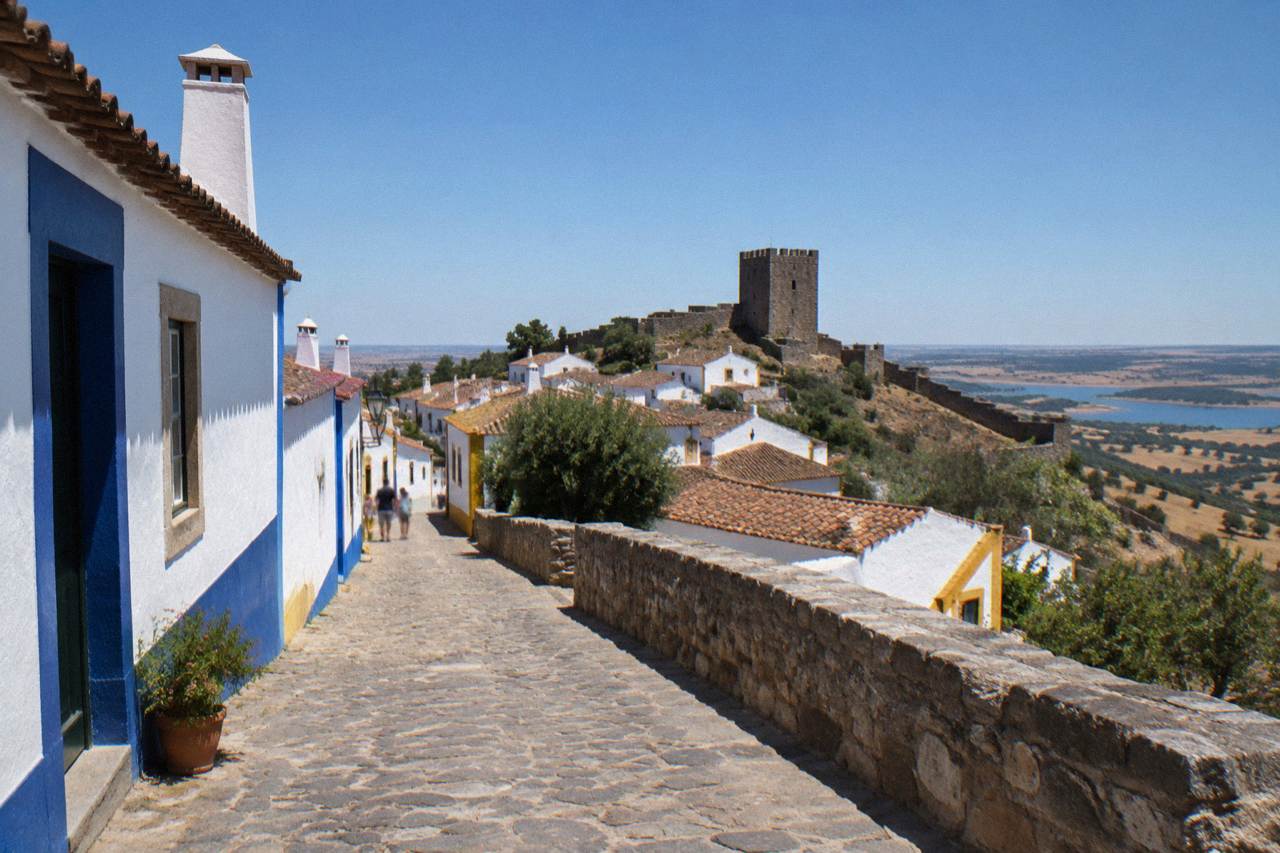
Alentejo is the great inland region of southern Portugal, and Évora, the capital of the district of that name and of the Central Alentejo sub-region, is its undisputed centre. The name is usually explained as "beyond the Tagus", the great river that separates this wide, wheat-and-cork plain from the Atlantic coast. There is no sea here, no beach, no coastline at all: the Atlantic is roughly 90 km away. What there is instead is a landscape of whitewashed towns, Roman temples, megalithic stone circles, cork oak montado and some of the most distinctive wine and food in Portugal, all gathered around a UNESCO World Heritage city that the 1755 Lisbon earthquake largely spared.
Is Alentejo, Portugal Worth Visiting?
Yes, Alentejo is worth visiting, and the case rests on substance rather than scenery alone: Évora has been a UNESCO World Heritage site since 1986, the region holds Europe's densest cluster of visitor-ready megalithic monuments, its wines and pork dishes define a cuisine found nowhere else in Portugal, and its towns are uncrowded, inexpensive by western European standards and easy to reach by train from Lisbon.
UNESCO's own inscription is the strongest single argument. The Historic Centre of Évora was inscribed in 1986 under criteria (ii) and (iv), and criterion (iv) calls it the finest example of a city of the golden age of Portugal after the 1755 Lisbon earthquake, a quake Évora was largely spared. That is why the golden core survives intact: the Templo Romano, the Sé, the Praça do Giraldo, the Convento dos Lóios and the Capela dos Ossos all stand within a walkable walled centre. The municipality counted about 53,000 residents at the 2021 Census, which keeps the historic centre quiet even in summer.
The region is also cheap to see once you arrive. The headline monuments in Évora cost very little, and the figures below come from the official ticket pages.
| Sight in Évora | Adult ticket | Notes |
|---|---|---|
| Sé de Évora (complete visit) | 5.00 EUR | Cathedral, cloister, roof terrace and museum; children up to 12 free |
| Capela dos Ossos and Igreja de São Francisco | 7.00 EUR | One ticket for all museum areas; youth to 25 and seniors over 65 pay 5.00 EUR |
| Museu de Évora | 8 EUR | Closed Mondays; youth, seniors and families 50% off |
| Évora Ticket (multi-site pass) | 8 EUR one day, 10 EUR two days, 12 EUR three days | Does not include the Sé, the Capela dos Ossos or the Museu de Évora |
Read the pass conditions before buying: the Évora Ticket covers a network of municipal sites, but the three biggest draws in the table above sit outside it, so many visitors end up buying the individual tickets anyway. For a fuller picture of what the region is known for, see what Alentejo is famous for.
What Makes Alentejo Different From The Rest Of Portugal?
Alentejo is different because it is Portugal's interior plain: a hot, dry, sparsely built landscape of cork oak, olive groves and wheat, dotted with fortified hill towns rather than resorts, and anchored by Évora, whose golden centre was inscribed by UNESCO in 1986 as the finest surviving example of a city of Portugal's golden age. The coast, the crowds and the package-holiday infrastructure are all somewhere else.
The depth of history here is unusual even by Portuguese standards. Moorish rule in Évora ended in 1165, the Jesuit University of the Holy Spirit dates from 1553, and the Jesuits were expelled in 1759; those layers sit on top of a Roman temple that the municipal page says was probably dedicated to the imperial cult rather than to the goddess Diana, a name only used since the 17th century. The Templo Romano measures 25 x 15 m, was reused for centuries as a municipal butcher's, and had its walls freed in 1870. It stands in the open air, in the middle of the city, with no ticket and no queue.
Beyond the walls, the Alentejo plain carries an older history still. The Cromeleque dos Almendres, the great stone circle a short drive from the city, and the dolmens scattered across the region around it form one of the largest concentrations of megalithic monuments in Europe. The Almendres Interpretation Centre in the village of Guadalupe, a municipal partner, opens 10:00-18:00 in summer (1 May to 31 October) and 10:00-17:00 in winter, and the municipal directions describe an 8 km turn-off from the national road toward Lisbon. This is not a replica or a theme park; it is an open landscape you walk into freely.
If you prefer to arrive with someone who can read the stones, a guided option is the sensible route. The tours below cover the city, the megaliths and the countryside from Évora itself.
The practical difference from the rest of Portugal is pace. Distances between towns are real, roads are fast and empty, and the day is structured around long lunches and early evenings rather than late nights. The Alentejo travel guide covers the region end to end for anyone planning more than a stopover.
Is Alentejo Worth Visiting For Food And Wine?
Yes, and food and wine are arguably the strongest reason to go: Alentejo has its own wine identity built on native grapes and hot-climate viticulture, a pork, bread and olive-oil cuisine that is distinct from coastal Portuguese cooking, and a tasting and tavern culture concentrated in Évora, Estremoz, Reguengos and the villages around them. The region eats and drinks as a destination, not as an afterthought.
The wine story is genuinely its own. Alentejo reds are typically ripe, warm and soft, built from grapes like Aragonez, Trincadeira and Alicante Bouschet, and the region's whites have moved decisively toward fresh, low-alcohol styles in the past decade. The guide to Alentejo wine unpacks the styles grape by grape, and the Cartuxa winery on Évora's edge, attached to the old monastery of the same name, is the best-known producer inside the city.
The food is peasant cooking raised to an art: bread soups like açorda, slow pork dishes, lamb, migas, sheep's cheese from the plain, and the region's olive oil, which is protected under its own designations. What that means on a plate is covered in detail in the Alentejo dishes worth ordering, but the short version is that the cuisine is hearty, cheap by the standards of western Europe, and impossible to confuse with the grilled-fish cooking of the coast.
Tastings and taverns cluster in Évora's historic centre, which is walkable end to end. For an evening structured around both, the Évora Evening Food & Wine Crawl moves between stops with a local lead, from $83.28 per person, rated 4.6 from 19 reviews.
What Is The Weather Like In Alentejo?
Alentejo is one of the hottest parts of Portugal: IPMA's 1991-2020 climate normals for the Évora station show a July mean maximum of 33.3 C and an August mean maximum of 33.5 C, with 31.9 days a year reaching 35 C or more and an all-time record of 45.4 C set on 4 August 2018. Winters are mild by day, cold by night, and the year averages 596.1 mm of rain, most of it between October and March.
The table below condenses the official normals for the Évora station (number 558, altitude 247.6 m). Every figure is a 1991-2020 average.
| Month | Mean max (C) | Mean min (C) | Rain (mm) | Days max 35 C or more |
|---|---|---|---|---|
| April | 20.7 | 8.5 | 62.1 | 0.0 |
| May | 25.0 | 10.9 | 46.6 | 0.7 |
| June | 30.2 | 13.8 | 10.6 | 5.6 |
| July | 33.3 | 15.6 | 2.7 | 11.5 |
| August | 33.5 | 16.0 | 6.0 | 10.9 |
| September | 29.5 | 14.6 | 33.9 | 3.1 |
| October | 24.1 | 12.3 | 81.5 | 0.1 |
Two practical conclusions follow. First, midsummer visits need to be planned around the heat: sightseeing before noon, a long lunch indoors, and the evening for walking, which is exactly how the region already organises its own day. Second, spring and autumn are the comfortable seasons, with May averaging a 25.0 C mean maximum and October 24.1 C, and October still carrying 81.5 mm of rain across the month, so a light rain layer belongs in the bag. For month-by-month guidance, see which month is best to visit Alentejo.
How Many Days Should You Spend In Alentejo?
Two days is the honest minimum and three is the comfortable standard: one full day for Évora's UNESCO-listed centre with the Sé, the Capela dos Ossos and the Templo Romano, and at least one more for the megalithic sites or a hill town such as Monsaraz. Travellers who also want wine estates, marble-country Vila Viçosa or the border fortress of Elvas should plan three days or a full week for a road trip.
A sample structure, using only distances the verified figures carry:
| Day | Base | What it holds |
|---|---|---|
| 1 | Évora | Sé de Évora (5.00 EUR complete visit), Capela dos Ossos (7.00 EUR), Templo Romano, Praça do Giraldo |
| 2 | Évora | Cromeleque dos Almendres and the Great Dolmen of Zambujeiro, or a wine estate with the Cartuxa monastery |
| 3 | Monsaraz or Estremoz | Hill village and lake country, about 40-45 km and about 45 km from Évora respectively |
| 4 to 7 | Road trip | Vila Viçosa about 60 km, Elvas about 80 km, Marvão about 120 km, returning via Arraiolos about 20 km |
The megalithic day is the one most visitors under-plan, because the stones sit on open ground with no signage that explains them. A guided half-day solves that: the Cromlech of Almendres and Great Dolmen of Zambujeiro tour runs 3 hours from $33.76 per person, rated 5 from 54 reviews. The rest of the planning pages sit on Évora Travel Guide.
For the city day itself, a private guide turns the monuments into a narrative rather than a checklist. The Évora Private Walking Tour with Cathedral & Chapel of Bones covers the historic centre with both headline monuments in 2.5 hours, from $113.53 per person and rated 5 from 256 reviews. Check availability
Longer circuits, including the drive across the whole region, are mapped out in the Alentejo road trip itinerary.
Which Alentejo Towns Are Worth The Trip?
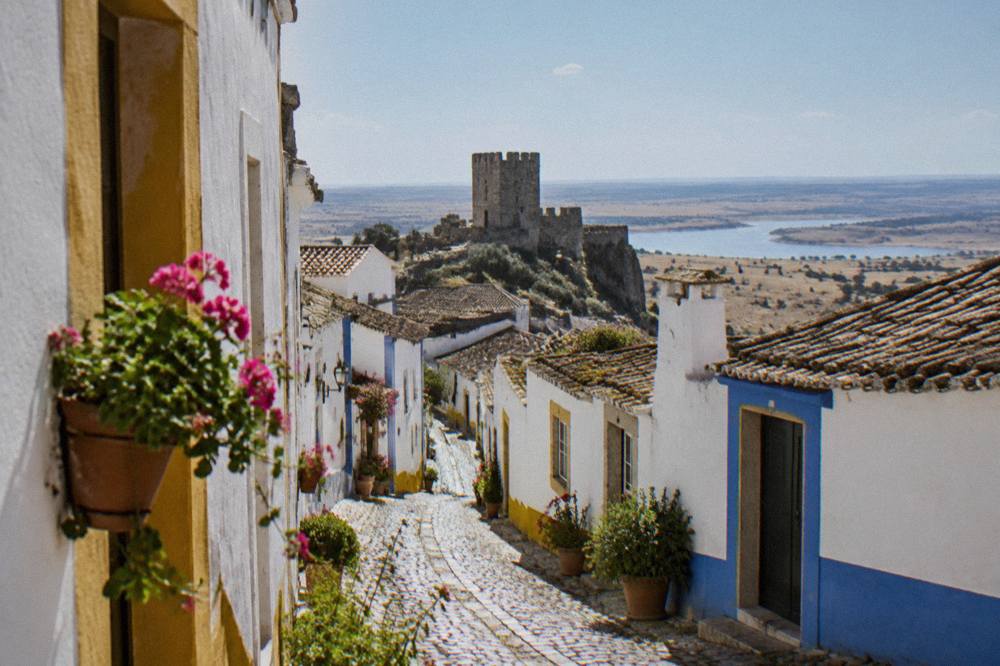
Monsaraz is the standout, a walled medieval village of white houses above the Alqueva lake about 40-45 km from Évora, but the region carries a chain of distinct towns: Estremoz with its marble and castle about 45 km away, Vila Viçosa with the ducal palace about 60 km, Elvas and its bastioned fortifications about 80 km, and Marvão, the eagle's-nest village on the Serra de São Mamede, about 120 km. Arraiolos, about 20 km, is the carpet town closest to Évora.
Each has a different character and none is a suburb of another. Elvas is a UNESCO-listed fortress town facing the Spanish border; Vila Viçosa was the seat of the House of Braganza and is built from its own marble; Estremoz is a working marble town with a medieval core; Arraiolos has been making its embroidered carpets for centuries. For the lake village specifically, whether Monsaraz is worth visiting covers it in full.
Getting between them is straightforward if you drive, and the region's roads are quiet by any European measure. Without a car it is harder: the train reaches Évora from Lisbon, but the smaller towns rely on buses whose timetables and fares need checking directly with the operator before you commit. Base yourself in Évora either way, because it has the accommodation, the restaurants and the rail link.
For choosing between the region's guided options, these are the strongest city-based tours.
Is Alentejo Worth Visiting In 2027?
Yes, and 2027 sharpens the case considerably: Évora and the Alentejo are a European Capital of Culture in 2027, the fourth Portuguese city after Lisbon, Porto and Guimarães, promoted by an executive board led by the Municipality of Évora. The full programme was not published as of October 2026, so the honest advice is to book around the city itself and treat the cultural programme as a bonus still being announced.
The preparation year is already visible. The 2026 programme is built on the concept of "Vagar", a word that carries the region's own idea of slowness, and it includes the GUADIANA Festival of Afro-Ibero-American Literatures, a first edition running 9 to 11 October 2026 with 28 authors from nine countries. The city's own calendar runs alongside it: the Feira de São João, the great annual fair on the Rossio de São Brás, ran 23 June to 5 July in 2026 under the theme "Évora: Capital Europeia ao Sul", and the late-June-into-July pattern is the one to plan around for 2027 once dates are confirmed on the municipal pages.
What that means practically is that 2027 will be the busiest year in the region's modern history, and the quiet Alentejo described above will be somewhat less quiet. The monuments will not change: the Sé will still cost 5.00 EUR for the complete visit, the Capela dos Ossos 7.00 EUR, and both close only on 1 January, Easter Sunday, the afternoon of 24 December and 25 December, with the Sé also closed 24 December afternoon. Book accommodation early, and check the operator's notice for any event-period changes before you go.
Common Questions About Alentejo
Is Alentejo, Portugal worth visiting without a car?
Partly. Évora is fully reachable without a car: CP's Intercidades timetable valid since 6 September 2026 lists six through trains a day from Lisboa Oriente taking about 1 hour 40 to 1 hour 45, at 13.90 EUR second class or 18.50 EUR first class. The smaller hill towns are harder, and their bus timetables and fares should be checked with the operator directly.
Is Alentejo too hot in summer?
It is genuinely hot: IPMA's 1991-2020 normals for the Évora station show a July mean maximum of 33.3 C and an August mean maximum of 33.5 C, with 31.9 days a year at 35 C or more and a record of 45.4 C on 4 August 2018. Plan sightseeing for the morning and evening, and keep the middle of the day for a long lunch.
How far is Alentejo from Lisbon?
Évora, the region's main city, is about 130 km from Lisbon by road, and the through train takes about 1 hour 40 to 1 hour 45 on the Intercidades service. The wider region spreads well beyond that in every direction.
What is the best month to visit Alentejo?
May and October sit at the comfortable edges of the heat: the 1991-2020 normals for Évora show a May mean maximum of 25.0 C and an October mean maximum of 24.1 C. Late June into early July brings the Feira de São João if you want the fair rather than the quiet.
Can you visit Alentejo's megalithic sites on your own?
Yes, the Cromeleque dos Almendres stands on open ground with free access, and the Almendres Interpretation Centre in Guadalupe opens 10:00-18:00 in summer and 10:00-17:00 in winter. A guided half-day adds the interpretation the stones themselves do not carry.
Is one day enough for Alentejo?
One day is enough for Évora's historic centre, its cathedral and the Capela dos Ossos, and nothing else. The megaliths, the wine country and the hill towns each need their own half-day or more, which is why two nights is the realistic minimum for a first visit.
The short version: Alentejo is worth visiting, the evidence for it is concrete rather than atmospheric, and the next window in which the region changes character, the 2027 Capital of Culture year, is now close enough to plan around.