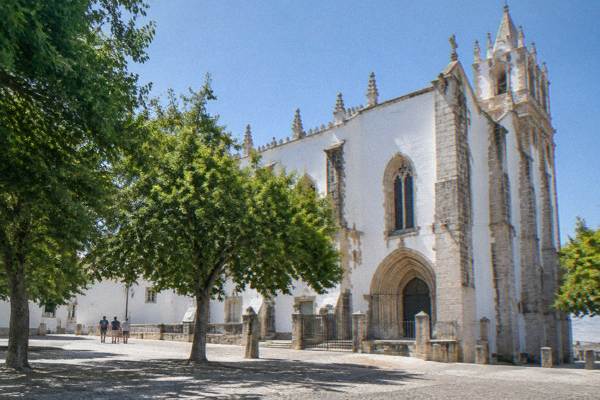
Three Days In Évora And Alentejo
Three days is the right length for Évora and the Alentejo: one day inside the walls, one among the megaliths and cork oaks, and one in the marble and hill towns beyond.
Short answer
Spend day one on Évora's walled centre and its three big monuments, day two on the Cromeleque dos Almendres and the cork country, and day three in the Alentejo towns such as Estremoz, Vila Viçosa or Monsaraz, all reachable from a single base in Évora.
Évora, the capital of Portugal's Alentejo region and of the district that carries its name, is a small walled city that rewards slow pacing rather than rushing. Three days is the natural length of a first visit: one day for the historic centre and its monuments, one for the megalithic landscape and cork country that surround it, and one for the Alentejo towns that sit within easy reach. The city is inland, on the open plain of the Central Alentejo, with the Atlantic roughly 90 km away, so this itinerary never touches a coast. The municipality counted about 53,000 residents at the 2021 Census, and the historic centre has been UNESCO-listed since 1986, inscribed under criteria (ii) and (iv); UNESCO's criterion (iv) calls it the finest example of a city of the golden age of Portugal, preserved because Évora was largely spared by the 1755 earthquake that devastated Lisbon.
Why Spend Three Days In Évora And The Alentejo?
Three days works because Évora splits cleanly into three different experiences: a walkable museum city, a prehistoric and cork landscape within a short drive, and a ring of marble and hill towns across the plain. Fewer days force a choice between the city and the region; more days are only needed if you want to push toward Elvas, Marvão or the Alqueva reservoir. The city itself is compact, the sights cluster inside the walls, and the Alentejo towns sit at rounded distances that suit a single base.
That structure is what makes the plan below work. Évora's centre holds the Sé, the Capela dos Ossos, the Templo Romano, the Museu de Évora and the Praça do Giraldo, all within a walk of a few hundred metres of each other, which is why one full day covers them properly rather than at a trot. The second day belongs to the countryside: the Cromeleque dos Almendres, the interpretation centre at Guadalupe, and the cork oak country that defines the Alentejo landscape. The third day reaches outward, to Estremoz about 45 km away, Vila Viçosa about 60 km, Monsaraz about 40 to 45 km, or further to Elvas about 80 km and Marvão about 120 km.
The region's name is usually explained as "beyond the Tagus", and that geography explains its character too: wide horizons, hot dry summers, wheat and cork oaks, marble in the east and wine almost everywhere. The editorial desk at Évora Travel Guide treats three days as the sweet spot because it is the shortest plan in which the Alentejo stops being a day trip from Lisbon and starts being a place you have actually seen. If you have only a single day, the one day in Évora plan covers the essentials, and a tighter two-day version exists as two days in Évora.
How Should You Structure Three Days In Évora And The Alentejo?
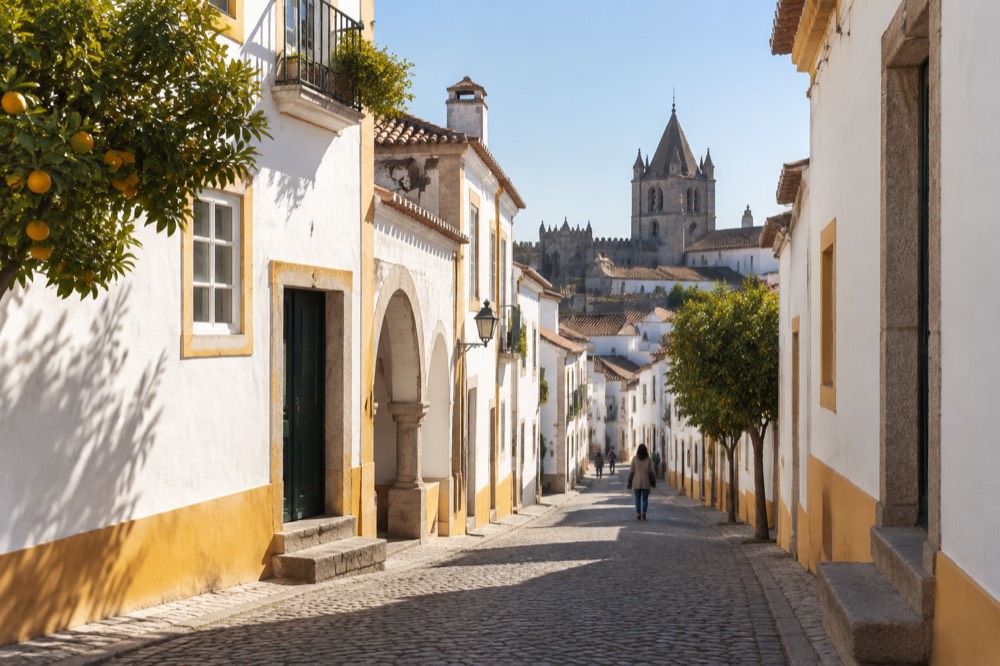
Base yourself in Évora for all three nights and organise the days as city, countryside and towns: day one inside the walls, day two among the megaliths and cork forests, day three in one or two Alentejo towns such as Estremoz and Vila Viçosa or Monsaraz. Keeping one base avoids repacking, keeps you inside the UNESCO centre in the evenings, and leaves every day-trip within a radius of about 120 km at the outer edge.
A car helps on days two and three but is not needed for day one.
The single-base approach is the standard one for good reason. Évora has the region's best choice of accommodation, the train station that connects it to Lisbon, and a centre that is genuinely pleasant in the evening, when the day-trippers from the capital have gone home. The Alentejo road trip guide suits travellers with a week or more; on three days, a hub-and-spoke plan wastes less time.
Here is the shape of the three days at a glance:
| Day | Base | Focus | Key stops |
|---|---|---|---|
| Day 1 | Évora | Walled city and monuments | Sé de Évora, Capela dos Ossos, Templo Romano, Museu de Évora, Praça do Giraldo |
| Day 2 | Évora | Megaliths and cork country | Cromeleque dos Almendres, Almendres interpretation centre, cork oak forest |
| Day 3 | Évora | Alentejo towns | Estremoz and Vila Viçosa, or Monsaraz, or Arraiolos |
A guided walk on the first morning is the most efficient way to absorb the city, and the range of options is wide. The private option that pairs the cathedral and the Capela dos Ossos with a guide is the strongest fit for this itinerary, and the small-group cultural walk and the general Évora walking tour are solid alternatives at lower price points.
What Should Day One In Évora Cover?
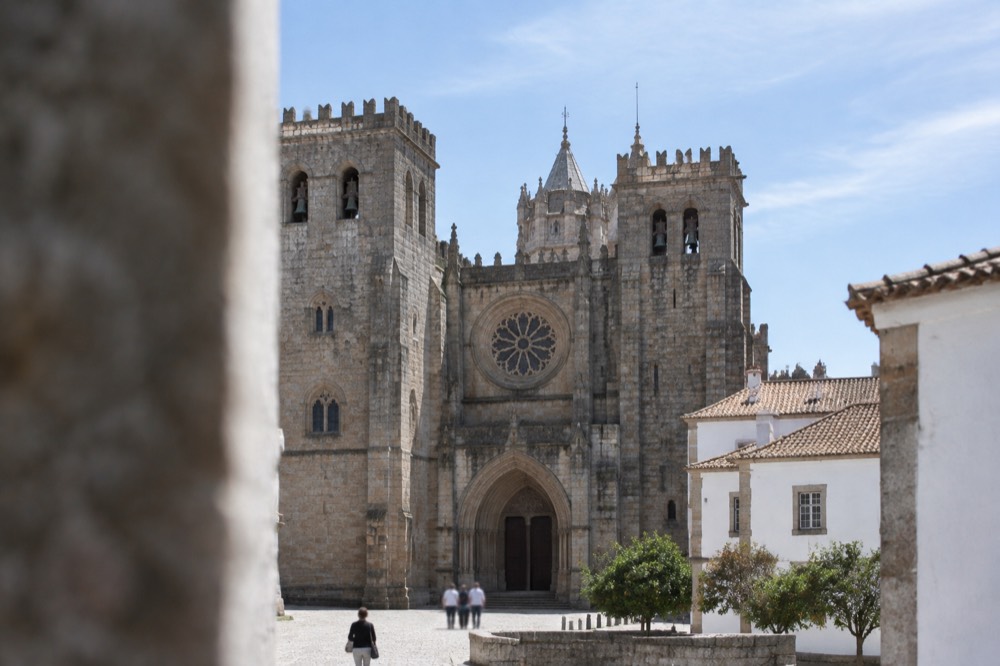
Day one belongs entirely to the walled centre: start on the Praça do Giraldo, take in the Sé de Évora with its cloister and roof terrace on the single 5.00 EUR complete-visit ticket, then the Capela dos Ossos at the Igreja de São Francisco on its 7.00 EUR museum ticket, the Templo Romano in the open air, and the Museu de Évora at 8 EUR if time allows. All of it sits within a short walk, and every price comes from the official pages.
The Sé's ticket covers the cathedral, the cloister, the panoramic roof terrace and the museum together; the cathedral's own page states there is no cheaper roof-only tier, so buy the complete visit and use it. Children up to 12 enter free with a parent or guardian. Hours are 9:00 to 17:00, with the museum's last admission half an hour before closing, and the cathedral closes on 24 December in the afternoon, on 25 December and on 1 January.
The Igreja de São Francisco complex works the same way: one museum ticket for the Capela dos Ossos and the other museum areas, 7.00 EUR for an adult, 5.00 EUR for youth up to 25 and seniors over 65, and a family ticket at 15.00 EUR. The church's page lists summer hours of 9:00 to 18:30 and winter hours of 9:00 to 17:00, open daily except 1 January, Easter Sunday, 24 December afternoon and 25 December. The church notes it is a private religious entity and does not apply state museum discounts, which matters if you hold one.
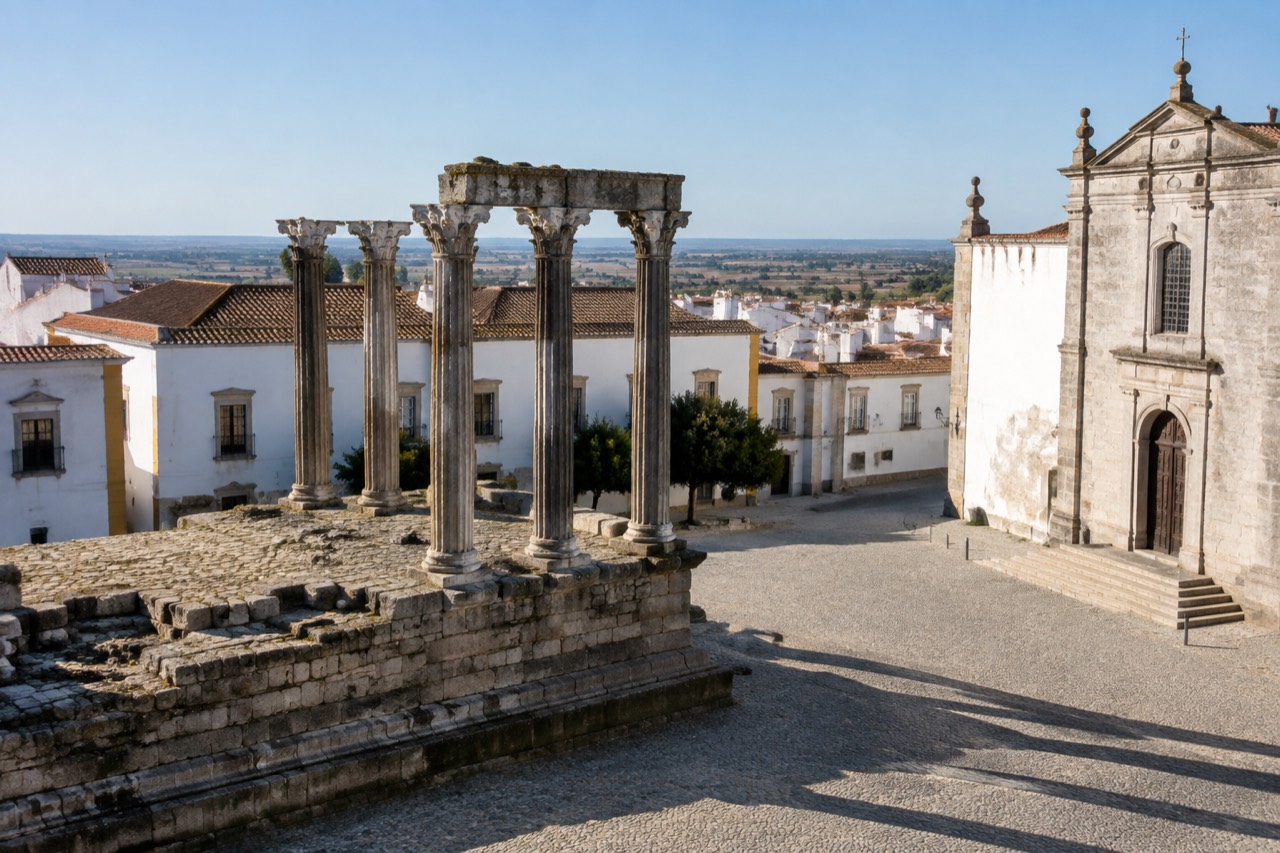
The Templo Romano, popularly called the Temple of Diana, sits in the open air and needs no ticket; the municipal page says it was probably dedicated to the imperial cult rather than to the goddess, a name that only took hold in the 17th century, and that its walls were freed in 1870. The Museu de Évora, in the former Archbishop's Palace, runs Tuesday to Sunday, 9:30 to 13:00 and 14:00 to 17:30, closed Mondays, with adults at 8 EUR and discounts for youth 13 to 24, seniors over 65 and families.
One decision worth making in advance is whether to buy the Évora Ticket, the multi-site pass for the Cidade-Museu network: 8 EUR for one day, 10 EUR for two, 12 EUR for three, free to age 12. The pass does not include the Sé, the Capela dos Ossos or the Museu de Évora, so on this itinerary it supplements rather than replaces the individual tickets below.
| Monument | Adult price | Covers | Source |
|---|---|---|---|
| Sé de Évora | 5.00 EUR | Cathedral, cloister, roof terrace, museum | Cathedral's official page |
| Igreja de São Francisco / Capela dos Ossos | 7.00 EUR | Capela and all museum areas | Church's official page |
| Capela dos Ossos, youth to 25 or senior over 65 | 5.00 EUR | Same areas | Church's official page |
| Capela dos Ossos, family | 15.00 EUR | Two adults plus youths | Church's official page |
| Museu de Évora | 8 EUR | Permanent collections | Municipality's museum page |
| Évora Ticket | 8 / 10 / 12 EUR | Cidade-Museu network, 1 / 2 / 3 days | Évora Ticket page |
For the first morning, the private walk that bundles the cathedral and the Capela dos Ossos with monument tickets takes the queueing and the ticket counter out of the day. It runs about 2.5 hours and is rated 5 from 106 reviews, and a second private option on the same route carries an even larger review base on its own listing. Booking either one means the first morning is spent looking at the city rather than standing at counters.
The same logic applies to the small-group version if a private guide is more than the budget allows. The two-hour small-group cultural walk, which also includes the Capela dos Ossos, is rated 4.9 from 141 reviews and covers the same core ground with a guide shared among a handful of visitors.
What Should Day Two In Évora'S Countryside Cover?
Day two goes out to the Cromeleque dos Almendres and the cork country around Évora, ideally with a guide or a car: the Almendres interpretation centre at Guadalupe keeps summer hours of 10:00 to 18:00 from 1 May to 31 October and winter hours of 10:00 to 17:00, and the megalithic circuit sits within a short drive of the city. A half-day megaliths tour led by archaeologists and a megalithic and cork forest combination are both available.
The Almendres circuit is the reason day two exists. The interpretation centre in the village of Guadalupe, a partner of the municipality, is the practical starting point, and its page describes the route from Évora: take the national road toward Lisbon and after 8 km follow the turn-off. The stones themselves stand in the open landscape, and no verified figure for their count or age exists on a primary page, so this guide prints none; what the site offers is the experience of a prehistoric landscape still sitting where it was raised, without a fence or a turnstile.
Cork is the other theme of the day. The Alentejo's cork oak landscapes are its signature, and a guided walk through a working cork forest explains how the bark is stripped and why the montado matters to the region's economy and ecology. The cork and cork oak guide covers the background, and a two-hour walk in a cork forest runs from $71.10 per person, rated 4.7 from 43 reviews. A fuller option combines the cork factory visit with a farm and lunch, from $112.55 per person over 8 hours.
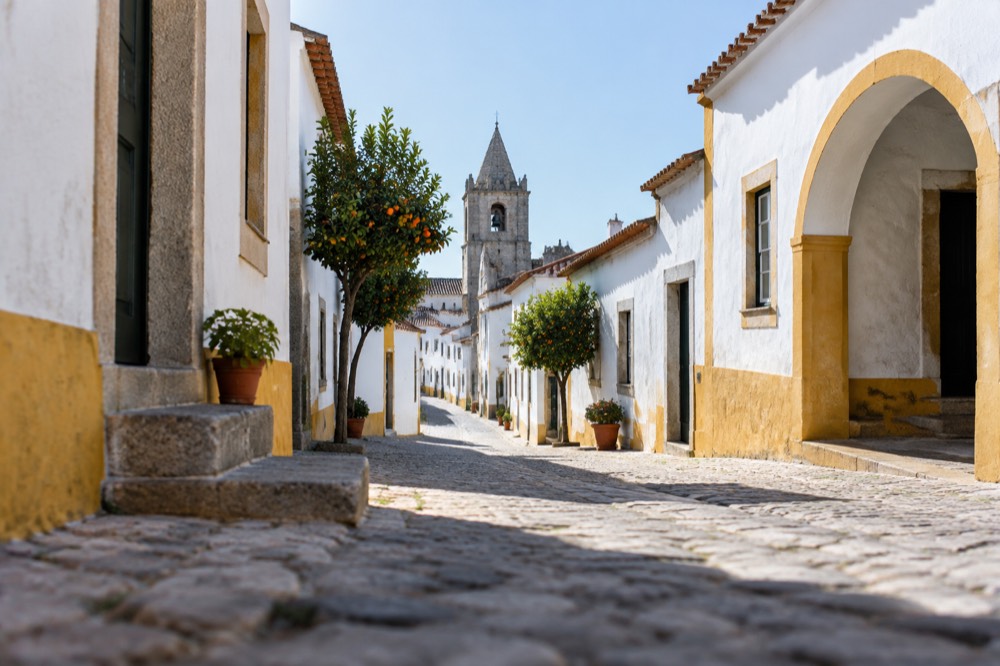
The guided options for this day are strong, and they solve the transport question at the same time. The archaeologist-led half-day costs from $74.54 per person and is rated 5 from 77 reviews; the three-hour Almendres and Great Dolmen of Zambujeiro tour runs from $33.76 per person, rated 5 from 54 reviews; and the four-hour megalithic and cork forest combination, from $50.65 per person, rated 4.9 from 41 reviews, is the best fit for a day that wants both landscapes. Each has its own page on the site, and the things to do in Évora overview lists the full range.
What Should Day Three In The Alentejo Towns Cover?
Day three picks one direction across the plain: either the marble axis of Estremoz about 45 km away and Vila Viçosa about 60 km, or the walled lake town of Monsaraz about 40 to 45 km away, or the quieter Arraiolos about 20 km, with Elvas about 80 km and Marvão about 120 km for travellers with a longer morning. Every distance is a rounded road figure, and no single route can take them all, so choose one axis and stay on it.
The marble axis is the classic choice. Vila Viçosa is the ducal seat of the Bragança dynasty and the heart of the Alentejo's marble country, and a two-hour marble tour there runs from $28.14 per person, rated 4.8 from 82 reviews, with a second marble trail option from $28.67 per person rated 4.9 from 324 reviews. Estremoz, about 45 km from Évora, rewards a heritage walking tour, from $28.67 per person and rated 4.8 from 19 reviews. Pair the two towns in one day and you have the region's aristocratic and quarrying face, quite different from Évora's ecclesiastical one.
The southern axis runs to Monsaraz, the tiny walled town above the Alqueva reservoir, about 40 to 45 km from Évora. A four-hour Monsaraz and wine tour from Évora runs from $78.78 per person, rated 4.6 from 51 reviews, and a morning small-group version runs from $80.28 per person, rated 4.9 from 31 reviews. A version that adds a pottery workshop in São Pedro do Corval, a village of potters on that road, runs 4.5 hours from $56.27 per person, rated 5 from 13 reviews. The Monsaraz guide covers the town itself.
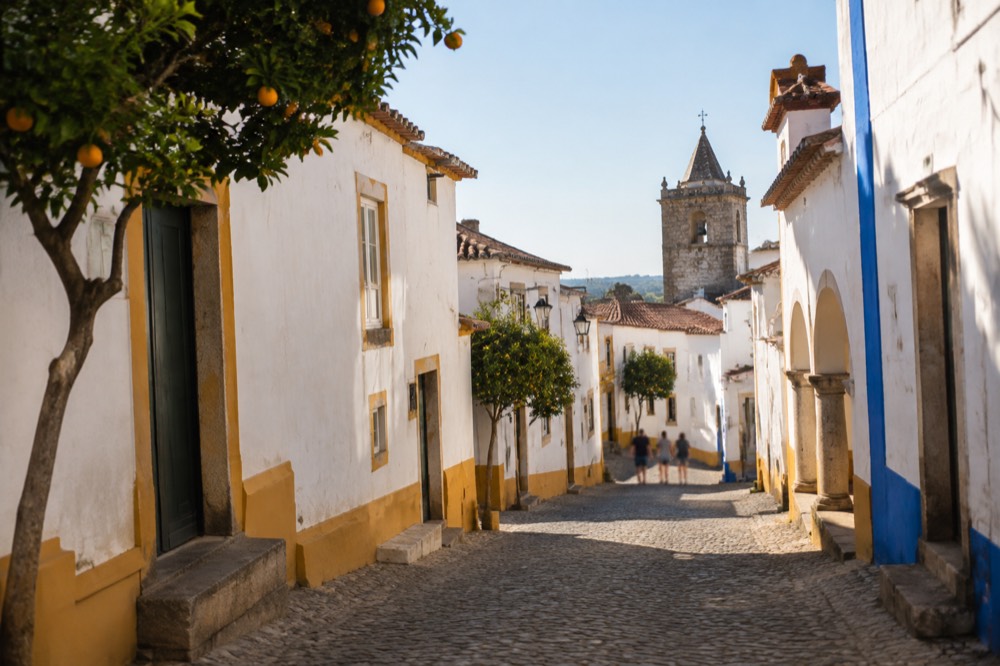
The distances below are rounded estimates and should be treated as planning figures, not promises; check your own route before committing to a day's shape.
| Town | Distance from Évora | Known for | Guided option |
|---|---|---|---|
| Arraiolos | about 20 km | Handmade wool carpets | Short drive, no listed tour |
| Monsaraz | about 40-45 km | Walled town above the Alqueva | Monsaraz and wine tour from $78.78 |
| Estremoz | about 45 km | Marble and a hilltop castle quarter | Walking tour from $28.67 |
| Vila Viçosa | about 60 km | Ducal palace and marble quarries | Marble tour from $28.14 |
| Elvas | about 80 km | Fortified border city | See the Elvas guide |
| Marvão | about 120 km | Mountain-top walled village | See the Marvão guide |
For travellers who arrive from the capital rather than drive, day three can also be swapped for a Lisbon-to-Évora itinerary in reverse, or for a broader Alentejo tour from Lisbon if the three days sit inside a longer Portugal trip.
What Should You Eat And Drink Across Three Days In Évora?
Plan every lunch and dinner around Alentejo staples rather than restaurant hunting: the region's table is built on bread soups such as açorda, pork, lamb, game, sheep's cheese, olive oil and the red wines of the Alentejo, and Évora's taverns and the surrounding towns all cook versions of the same repertoire. No specific restaurant on this itinerary is verified by a primary source, so this guide recommends dishes and drinks, not addresses, and points to the dedicated food pages for depth.
The regional cooking is one of the real pleasures of three days here, and it changes shape as you move: heavier and richer in winter, simpler and grill-driven in summer. The Alentejo food guide and the dishes to try list cover the repertoire in detail, from the bread-based soups to the pork and the slow lamb. The olive oil behind much of it has its own story, told in the Alentejo olive oil guide.
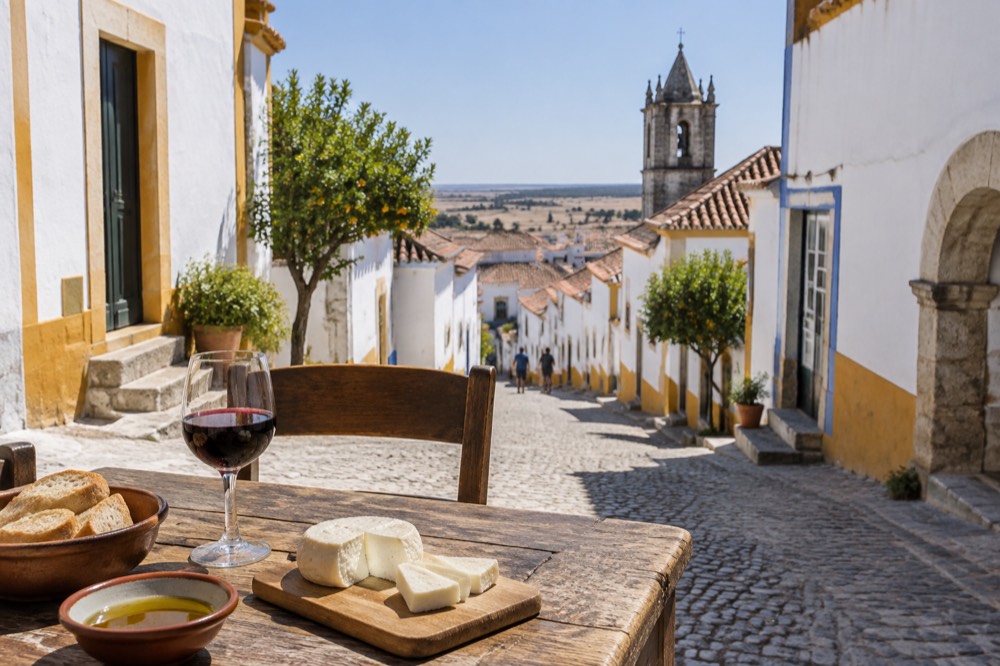
Wine deserves a slot in the plan, not just at dinner. The Alentejo produces the reds that dominate Portuguese restaurant lists at home, and the Alentejo wine guide explains what the region's wines taste like. If you want the wine experience built into day two or three rather than left to mealtimes, a four-hour Alentejo wine and cork tour from Évora runs from $78.78 per person, rated 4.7 from 24 reviews, and a full-day wine tour around Évora with lunch and transport runs from $321.11 per person, rated 5 from 11 reviews. An evening food and wine crawl in Évora, from $83.28 per person over 3 hours, rated 4.6 from 19 reviews, turns the first or second evening into the tasting itself.
What Will Three Days In Évora And Alentejo Cost?
Count on roughly 30 EUR per person in monument and museum tickets at the top end of the sightseeing, 13.90 EUR each way in second class on the Intercidades train from Lisboa Oriente, and guided tours priced in dollars from about $28 upward depending on length and privacy, with the balloon and full-day private options higher. Accommodation, food and a hire car sit on top of that, and a municipal tourist tax applies to stays, so check the amount with your hotel at booking.
The fixed costs are easy to state because the official pages state them. The train fare of 13.90 EUR second class and 18.50 EUR first class comes from CP's price table, and the timetable valid since 6 September 2026 lists six through trains from Lisboa Oriente, taking about 1 hour 40 to 1 hour 45, departing at 07:02, 09:02, 09:58, 13:35, 17:02 and 19:02. Check the timetable's weekday remarks before assuming every departure runs every day.
| Cost item | Figure | Notes |
|---|---|---|
| Train, Lisboa Oriente to Évora, second class | 13.90 EUR | CP Intercidades price table |
| Train, first class | 18.50 EUR | Same table |
| Sé de Évora complete visit | 5.00 EUR | Children to 12 free |
| Capela dos Ossos museum ticket | 7.00 EUR | Youth and seniors 5.00 EUR |
| Museu de Évora | 8 EUR | Closed Mondays |
| Évora Ticket, three days | 12 EUR | Does not include the three sights above |
| Small-group cultural walk | from $77.66 | 2 hours, rated 4.9 from 141 reviews |
| Private walk with cathedral and chapel | from $111.42 | 2.5 hours, rated 5 from 106 reviews |
| Marble tour in Vila Viçosa | from $28.14 | 2 hours, rated 4.8 from 82 reviews |
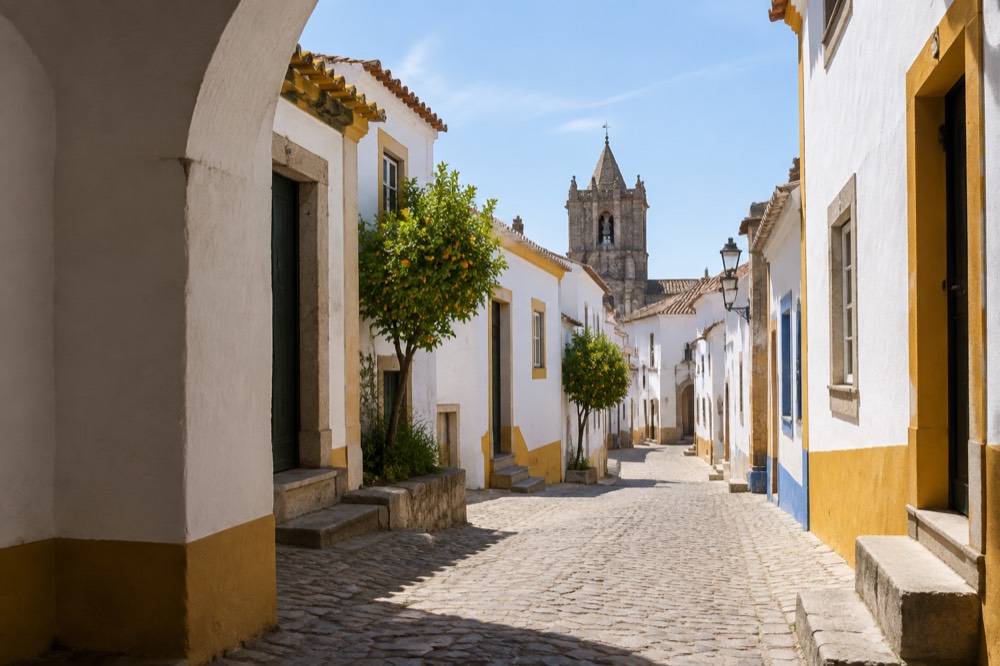
The budget question is mostly a question of how many guided days you buy. Done independently, with the train, the tickets and self-drive days two and three, three days here are cheap by western European standards. Done with a private guide each day, the tour line items dominate. The Évora cost and budget guide breaks this down in more detail, and the free things to do in Évora page shows how much of day one can be done for nothing, since the Templo Romano, the Praça do Giraldo and the walls all cost nothing.
When Is The Best Time Of Year For Three Days In Évora?
The best windows are late April to early June and September to mid-October, when the 1991-2020 IPMA normals for the Évora station show mean maxima of 20.7 to 25.0 C in spring and 24.1 to 29.5 C in early autumn, against July and August means of 33.3 and 33.5 C. Évora averages 31.9 days a year at 35 C or more, with a record of 45.4 C on 4 August 2018, so high summer is a real constraint.
The climate table is the honest way to choose. These are the 1991-2020 averages for station number 558, and they show how sharply the inland Alentejo swings: January mean maxima of 14.1 C and minima of 4.5 C, against August maxima of 33.5 C and minima of 16.0 C. Rain is concentrated from October to December, with 81.5, 86.0 and 85.1 mm respectively, while July averages just 2.7 mm and 0.6 days with 1 mm or more.
| Month | Mean max (C) | Mean min (C) | Rain (mm) | Days 35 C+ |
|---|---|---|---|---|
| April | 20.7 | 8.5 | 62.1 | 0.0 |
| May | 25.0 | 10.9 | 46.6 | 0.7 |
| June | 30.2 | 13.8 | 10.6 | 5.6 |
| July | 33.3 | 15.6 | 2.7 | 11.5 |
| August | 33.5 | 16.0 | 6.0 | 10.9 |
| September | 29.5 | 14.6 | 33.9 | 3.1 |
| October | 24.1 | 12.3 | 81.5 | 0.1 |
The best time to visit Évora and Évora weather pages expand on this, and the broader question of the region's seasons is covered in which month is best to visit Alentejo. One timing note that belongs to this itinerary specifically: the full 2027 Capital of Culture programme is not yet published, so a 2027 visit should be planned with that in mind rather than against a fixed calendar. A visit in a festival window changes the character of the evenings considerably, and the events guide tracks what is confirmed.
Do You Need A Car For Three Days In Évora?
You do not need a car for day one, you need one or a guided tour for day two, and you need one for day three unless you take a Monsaraz or marble-town tour: the megaliths, the cork forests and the Alentejo towns have no useful public transport links from Évora, while the historic centre is entirely walkable and the train from Lisbon arrives within walking distance of the centre. The practical compromise is to arrive by train and hire a car for days two and three only.
That compromise is what most three-day visitors land on. CP's timetable valid since 6 September 2026 puts six through trains a day on the Lisboa Oriente to Évora run, arriving at 08:47, 10:45, 11:40, 15:13, 18:41 and 20:46, which is enough frequency to make the train the obvious way in from the capital. The train guide, the bus guide and the car guide compare the three, and the Évora car rental and parking pages handle the driving questions once you are here.
For days two and three without a car, the guided tours are the substitute, and they are good ones. The archaeologist-led megaliths half-day, the Monsaraz and wine tours, and the marble tours all include transport from Évora or start in the towns themselves, and their prices sit between $28.14 and $80.28 per person. The trade is money for freedom: a hire car lets you linger at the cromlech at sunset or stop at a village café, while a tour hands you the interpretation, which for prehistoric stones is worth having.
For the evenings and the in-between hours, the walking tours below are the ones that fit this three-day shape best: a private monuments walk for day one, a small-group cultural walk as the lower-cost alternative, and the general walking tour for the arrival afternoon.
Common Questions About Three Days In Évora And Alentejo
Is three days in Évora too long?
No. One day covers the walled centre's monuments, but the megaliths, the cork country and the Alentejo towns each need a day of their own, and three days is the shortest plan that includes the region and not just the city.
Can you do this three-day Évora itinerary without a car?
Partly. Day one is fully walkable and the train from Lisbon needs no car. Days two and three need either a hire car or the guided tours that include transport, such as the megaliths half-day, the Monsaraz and wine tours and the marble tours in Vila Viçosa.
What tickets should you buy for day one in Évora?
The Sé's complete-visit ticket at 5.00 EUR, the Capela dos Ossos museum ticket at 7.00 EUR, and the Museu de Évora at 8 EUR if you want it. The Évora Ticket at 8 to 12 EUR covers the Cidade-Museu network but not those three sights.
Which Alentejo towns are best for day three?
Estremoz and Vila Viçosa as a marble-axis pair, Monsaraz for the walled town above the Alqueva, or Arraiolos for the closest option at about 20 km. Elvas and Marvão are superb but stretch a single day at about 80 and 120 km.
When is the hottest part of a three-day Évora trip?
July and August, with 1991-2020 IPMA normals showing mean maxima of 33.3 and 33.5 C and a record of 45.4 C on 4 August 2018. Late spring and early autumn are the comfortable windows for walking days.
Is Évora a good base for the whole Alentejo?
Yes for the central and eastern towns. Monsaraz, Estremoz, Vila Viçosa and even Elvas sit within a day's radius of about 80 to 120 km, though the region as a whole is larger than a three-day plan can cover.
Three days in Évora and the Alentejo, done in this order, gives you the UNESCO city, the prehistoric plain and the marble towns without ever changing hotels, and it leaves the Alentejo travel guide as the natural next step for a longer trip.