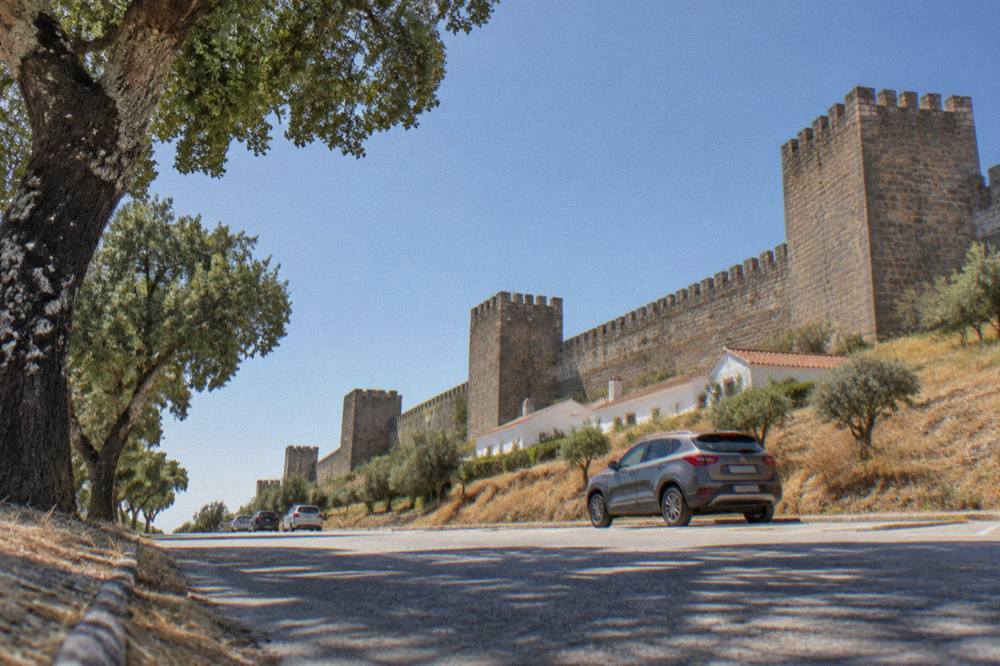
Coimbra To Évora
Coimbra sits on the Mondego in the centre of Portugal; Évora lies about 130 km east of Lisbon on the Alentejo plain. Here is how the two cities connect, and what to do once the Alentejo leg is done.
Short answer
There is no single published Coimbra to Évora timetable to quote here: the verified rail link is the CP Intercidades service from Lisboa Oriente to Évora, six through trains taking about 1 hour 40 to 1 hour 45, fare 13.90 EUR second class. A traveller starting in Coimbra connects with these trains in the Lisbon area and checks CP for the Coimbra leg.
Coimbra, the old university city on the Mondego, and Évora, the walled Alentejo capital inscribed by UNESCO in 1986, sit on opposite sides of Portugal's interior. The route between them crosses the country from its green centre onto the hot southern plain, and it almost always involves a connection, because the rail lines that serve Évora run toward Lisbon, not toward Coimbra.
For planning the wider trip, the companion pages on getting from Lisbon to Évora and whether Évora is worth visiting cover the questions this route raises most often, and the comparison piece on Évora versus Coimbra weighs the two cities against each other directly.
How Do You Get From Coimbra To Évora?
The journey runs in two legs: a Coimbra departure toward the Lisbon area, then the CP Intercidades service from Lisboa Oriente to Évora, which CP's timetable valid since 6 September 2026 lists as six through trains taking about 1 hour 40 to 1 hour 45, fare 13.90 EUR second class or 18.50 EUR first class. CP's own journey planner shows the Coimbra leg and the best connection; book each leg on the operator's pages.
The reason for the split is geography. Évora's railway is a branch of the line that runs out of Lisbon across the Alentejo, calling at Entrecampos, Sete Rios, Pragal, Pinhal Novo, Vendas Novas and Casa Branca before reaching Évora. Coimbra's trains run down the main Atlantic corridor toward Lisbon, so the two systems meet in the Lisbon region rather than in the middle. Every traveller making this trip changes trains once, usually at Lisboa Oriente, and the change is a normal, routine one rather than a hardship.
Practical advice follows from that shape. Check the Coimbra departure times on CP's site before committing to a date, because the connection window at Oriente decides how early the day starts. The six through trains toward Évora leave Oriente at 07:02, 09:02, 09:58, 13:35, 17:02 and 19:02, so a morning arrival in Évora means catching one of the first two. Allow a comfortable margin at Oriente rather than a tight one; the station is large, and the Intercidades platforms are a walk from the arrival platforms. Tickets for the Lisbon to Évora leg can be bought in advance on CP's site, and the fare table valid for 2026 prices the journey at 13.90 EUR in second class and 18.50 EUR in first.
One more border note for anyone combining this trip with wider European travel: the EU's Entry/Exit System has been fully deployed across the Schengen area since 10 April 2026, so non-EU visitors should expect biometric checks on first entry. Portugal remains in the Schengen area, and an internal trip from Coimbra to Évora involves no further border procedures.
What Trains Run From Lisboa Oriente To Évora?
CP's Intercidades timetable, valid since 6 September 2026, lists six through trains a day from Lisboa Oriente to Évora, departing at 07:02, 09:02, 09:58, 13:35, 17:02 and 19:02, and arriving at 08:47, 10:45, 11:40, 15:13, 18:41 and 20:46, a journey of about 1 hour 40 to 1 hour 45. The fare is 13.90 EUR second class, 18.50 EUR first class.
That is the complete set of departures this route can rely on, and it is worth reading the table rather than guessing at a pattern. The morning pair gets a traveller into Évora before noon, which is the difference between a full first day and a half of one. The midday and late-afternoon options suit a slower start or a later connection from Coimbra. The evening train arrives at 20:46, which works only if accommodation is already arranged and dinner is not urgent.
| Departure From Lisboa Oriente | Arrival In Évora | Second Class Fare | First Class Fare |
|---|---|---|---|
| 07:02 | 08:47 | 13.90 EUR | 18.50 EUR |
| 09:02 | 10:45 | 13.90 EUR | 18.50 EUR |
| 09:58 | 11:40 | 13.90 EUR | 18.50 EUR |
| 13:35 | 15:13 | 13.90 EUR | 18.50 EUR |
| 17:02 | 18:41 | 13.90 EUR | 18.50 EUR |
| 19:02 | 20:46 | 13.90 EUR | 18.50 EUR |
The trains call at Entrecampos, Sete Rios, Pragal, Pinhal Novo, Vendas Novas and Casa Branca on the way, and no change at Casa Branca is needed on these through services. For the Coimbra leg of the journey, CP's own timetable pages are the place to confirm departure times and fares, since the figures this page can state with confidence cover the Lisbon to Évora stretch. Ask at the ticket window in Coimbra or check the operator's site when booking, and the whole journey can be planned in one sitting.
Évora's station sits a short walk from the western edge of the historic centre, so arrival is simple: leave the platform area, and the walls and the Água de Prata aqueduct are close by. The walk into the old town passes through ordinary residential streets first, which is a fair introduction to a city that lives alongside its monuments rather than around them.
How Many Days Should You Give Évora After The Train?
One full day covers the core: the Sé de Évora, the Capela dos Ossos, the Templo Romano, the Praça do Giraldo and a long lunch, all inside a compact walled centre. Two days add the Museu de Évora, the university and an evening food crawl at an unhurried pace, and three days allow one Alentejo day trip, such as Monsaraz or the Cromeleque dos Almendres, without rushing anything.
The honest answer depends on what the Coimbra end of the trip has already delivered. Coimbra supplies a university, a library and a river; Évora supplies something else entirely, a dense, walled museum city of Roman, medieval and Manueline layers sitting on a hot plain. Travellers who give Évora only the tail end of a tired afternoon tend to leave with photographs of the Capela dos Ossos and little else. The city rewards the opposite approach: arrive on a morning train, sleep inside or near the walls, and spend the second day on the second tier of sights or a short excursion.
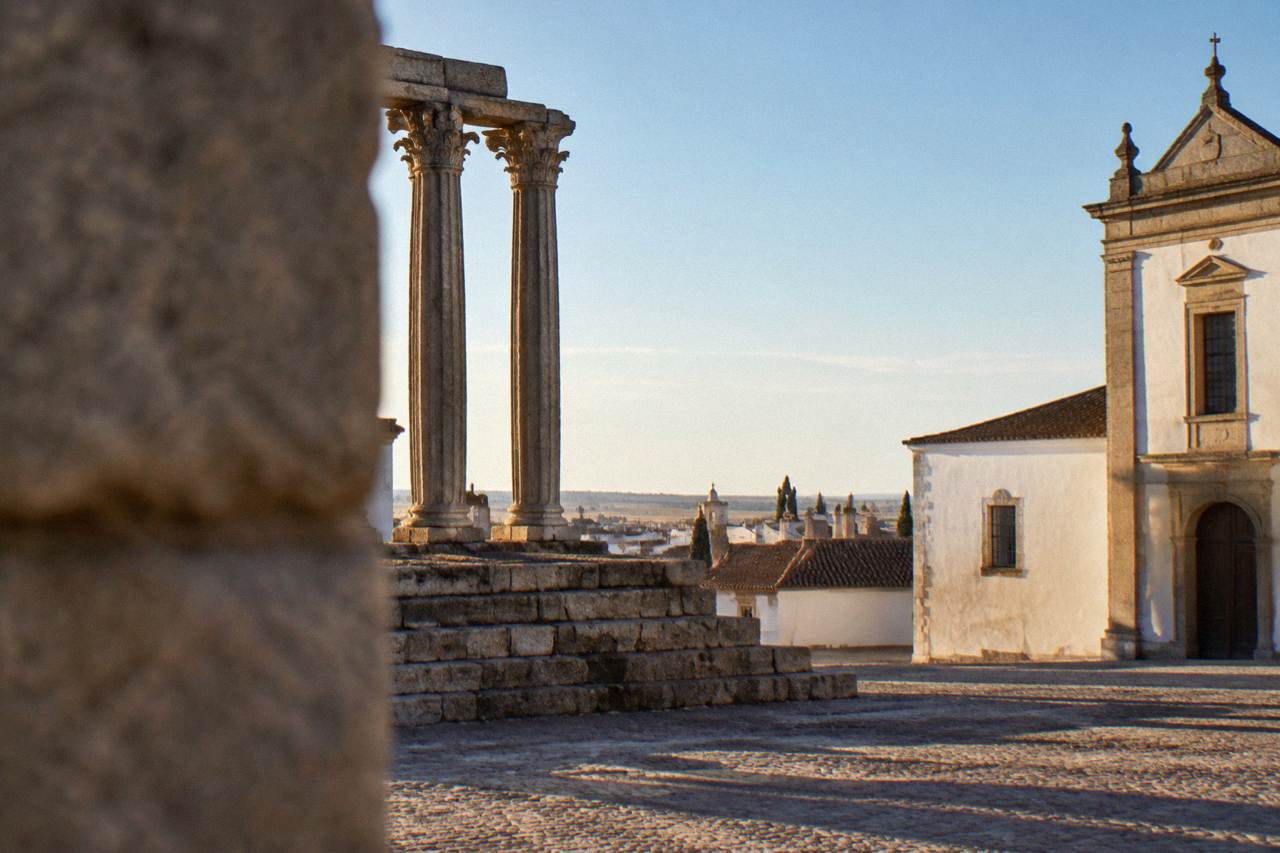
The first-day sequence that works best is chronological by accident of geography. The Sé, whose single complete-visit ticket at 5.00 EUR covers the cathedral, the cloister, the roof terrace and the museum, sits at the highest point of the old town, so it comes first while legs are fresh and the light is good for the rooftop view. The Templo Romano stands a few minutes downhill, an open-air monument with no ticket, its columns probably dedicated to the imperial cult rather than to Diana, whatever the popular name says. The Praça do Giraldo, the main square with its arcade of cafés, sits between them and everything else, and it is where the day pauses for coffee.
A guided walk on the first afternoon is a sound use of three hours, because Évora's story is not self-evident from its stones. The Golden Era of Évora walking tour with a Portuguese wine tasting, from $23.92 per person and rated 4.4 from 33 reviews, pairs the historic centre with a tasting, which suits an arrival day perfectly. Check availability alongside the full tour page.
What Should You See First In Évora?
The Sé de Évora, one ticket at 5.00 EUR covering the cathedral, cloister, roof terrace and museum, children up to 12 free, open 9:00 to 17:00, closed 24 December afternoon, 25 December and 1 January, is the single best first stop. The Capela dos Ossos at the Igreja de São Francisco follows, museum ticket 7.00 EUR adult, open 9:00 to 18:30 in summer and 9:00 to 17:00 in winter, closed 1 January, Easter Sunday, 24 December afternoon and 25 December.
Those two monuments carry the day, and their ticket structures are simpler than they look. The Sé sells one complete-visit ticket and nothing cheaper for the roof alone; the church's own page is explicit on that point. The Capela dos Ossos is part of a single museum ticket that also covers the chapter house, the nativity collection and the sacred-art nucleus at the Igreja de São Francisco, so the famous chapel is one room among several rather than a separate purchase. Youth up to 25 and seniors over 65 pay 5.00 EUR, and a family ticket for two adults and youths is 15.00 EUR.
The Museu de Évora, housed in the former Archbishop's Palace and founded officially in 1915, is the third of the great indoor sights, open Tuesday to Sunday from 9:30 to 13:00 and 14:00 to 17:30, closed Mondays, adult ticket 8 EUR. Between the museum and the cathedral stands the Templo Romano, 25 x 15 m of granite columns whose walls were freed in 1870, after centuries in which the building had been reused as a municipal butcher's shop. That detail, from the municipal page, is the best single sentence in Évora's history: the city's Roman temple spent generations wrapped in slaughterhouse walls.
| Monument | Ticket | Concessions | Hours | Closed |
|---|---|---|---|---|
| Sé de Évora, complete visit | 5.00 EUR | Children up to 12 free | 9:00-17:00 | 24 Dec afternoon, 25 Dec, 1 Jan |
| Capela dos Ossos museum ticket | 7.00 EUR | Youth to 25 and seniors over 65, 5.00 EUR, family 15.00 EUR | Summer 9:00-18:30, winter 9:00-17:00 | 1 Jan, Easter Sunday, 24 Dec afternoon, 25 Dec |
| Museu de Évora | 8 EUR | Youth 13-24, seniors over 65, family ticket 50% off, free to age 12 | Tue-Sun 9:30-13:00 and 14:00-17:30 | Mondays, 1 Jan, Easter Sunday, 1 May, 29 June, 25 Dec |
| Évora Ticket, one day | 8 EUR | Free to age 12 | Network of Cidade-Museu sites | Check the pass page |
| Templo Romano | Open-air monument, no ticket | None | Open precinct | None listed |
The Évora Ticket, at 8 EUR for one day, 10 EUR for two and 12 EUR for three, covers a network of Cidade-Museu sites, and it is worth reading the pass page's own list before buying, because it does not include the Sé, the Capela dos Ossos or the Museu de Évora. A traveller whose day is built around those three pays them individually and skips the pass; a traveller working through the smaller churches and convents may come out ahead with it. The pass question is answered on its own page, not by guesswork.
For the deeper background on each building, this site carries dedicated pages: the Capela dos Ossos guide, the Sé de Évora guide, the Roman temple and the Museu de Évora each carry the full detail. The Igreja de São Francisco page covers the church that owns the bone chapel.
How Different Is Évora'S Weather From Coimbra'S?
Évora is markedly hotter and drier in summer: IPMA's 1991-2020 normals for the Évora station show July averaging a maximum of 33.3 C and August 33.5 C, with 31.9 days a year reaching 35 C or more, against annual rainfall of just 596.1 mm. The same record shows a highest maximum of 45.4 C, set on 4 August 2018. Coimbra's Atlantic-moderated climate does not prepare a traveller for this.
The Alentejo plain is the reason. Coimbra sits close enough to the ocean for its summers to be softened; Évora stands inland, roughly 90 km from the Atlantic, on open ground that bakes. The practical consequences are specific. Sightseeing in July and August is a morning-and-evening activity, because the middle of the day belongs to shade. The Sé's roof terrace and the Templo Romano precinct are both best seen before noon or after five. Water, a hat and closed shoes for hot cobbles are not optional extras here. Other pages covering the same trip are gathered on Évora Travel Guide.
| Month | Mean Maximum, 1991-2020 Average | Mean Minimum | Rainfall | Days At 30 C Or More |
|---|---|---|---|---|
| April | 20.7 C | 8.5 C | 62.1 mm | 0.3 |
| May | 25.0 C | 10.9 C | 46.6 mm | 5.5 |
| June | 30.2 C | 13.8 C | 10.6 mm | 15.1 |
| July | 33.3 C | 15.6 C | 2.7 mm | 23.7 |
| August | 33.5 C | 16.0 C | 6.0 mm | 25.0 |
| September | 29.5 C | 14.6 C | 33.9 mm | 13.9 |
| October | 24.1 C | 12.3 C | 81.5 mm | 2.9 |
Spring and autumn are the forgiving seasons. May averages a maximum of 25.0 C with 5.5 days at 30 C or more, and October cools to 24.1 C while the first proper rain returns, 81.5 mm across the month on the 1991-2020 average. A traveller leaving Coimbra in either season will find Évora warmer but not punishingly so, and the light on the whitewashed walls in late afternoon is the thing photographers come for. The full breakdown, including winter figures, sits on the Évora weather page, and the seasonal trade-offs are weighed in the best time to visit Évora.
Where Should You Stay On Arrival Night?
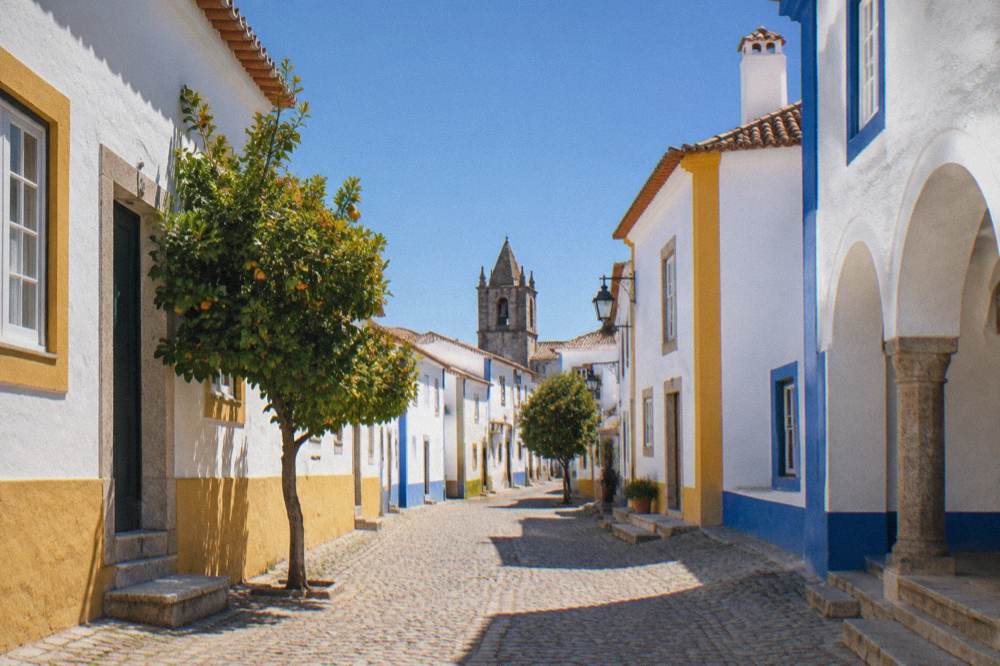
Inside the walls is the answer for a one or two-night stay: the historic centre is small enough that anywhere within it puts the Sé, the Praça do Giraldo and the Capela dos Ossos within a short walk, and evening is when Évora's old streets are at their best. A municipal tourist tax applies to stays, so check the amount with the hotel when booking.
The choice matters less in Évora than in bigger cities, because the walled centre is genuinely compact. What does matter is the trade between atmosphere and parking: a car inside the medieval streets is a nuisance, and the parking guide covers the options for anyone driving the route instead of taking the train. Train arrivals have no such problem, since the station sits on the edge of the centre and most hotels are a walk away with luggage.
Budget guidance for the whole stay, from beds to monument tickets to meals, is laid out in the Évora cost and budget page, and the neighbourhood-by-neighbourhood breakdown, including the quieter options just outside the walls, is in where to stay in Évora. The one thing worth deciding early is whether the trip includes a day trip, because that argues for two nights minimum rather than one.
What Day Trips Can You Add Around Évora?
Monsaraz, the walled hill village above the Alqueva lake, is about 40-45 km from Évora and is the classic add-on; Estremoz is about 45 km, Vila Viçosa about 60 km, Elvas about 80 km and Marvão about 120 km, while Arraiolos, the carpet-making town, is closest at about 20 km. All are inland Alentejo destinations, reachable by car or by guided tour.
The pattern these distances describe is a ring of small towns, each with one strong reason to visit: marble at Vila Viçosa and Estremoz, fortified border history at Elvas and Marvão, crafts at Arraiolos, the lake and the dark skies at Monsaraz and Alqueva. None of them needs more than a half or a full day. The guided options that leave from Évora handle the driving and the commentary, which matters for a traveller already carrying luggage and a train schedule from Coimbra.
| Day-Trip Destination | Distance From Évora | Known For |
|---|---|---|
| Arraiolos | About 20 km | Handmade needlework carpets |
| Monsaraz | About 40-45 km | Walled village above the Alqueva lake |
| Estremoz | About 45 km | Marble and a hilltop castle |
| Vila Viçosa | About 60 km | Ducal palace and marble quarries |
| Elvas | About 80 km | Star-fort border defences |
| Marvão | About 120 km | Mountain-village walls and views |
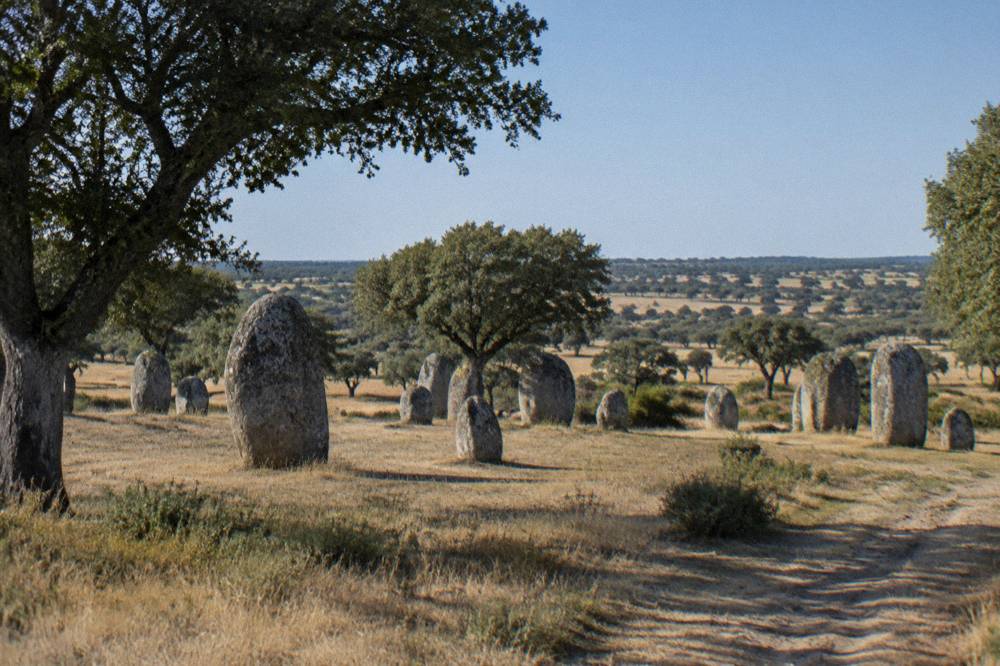
The megalithic circuit is the other add-on, and it is unlike anything Coimbra can offer. The Cromeleque dos Almendres, the great stone circle out on the plain, is reached by the national road toward Lisbon and a turn-off after 8 km, and the Almendres Interpretation Centre in the village of Guadalupe is open 10:00-18:00 in summer, 1 May to 31 October, and 10:00-17:00 in winter. Guided tours from Évora cover the cromlech and the Great Dolmen of Zambujeiro in a half day, with an archaeologist-led option rated 5 from 77 reviews at from $74.54 per person, and a shorter three-hour version at from $33.76, rated 5 from 54 reviews. The full detail sits on the megalithic sites near Évora page.
Which Guided Tours Make Sense After A Long Train Day?
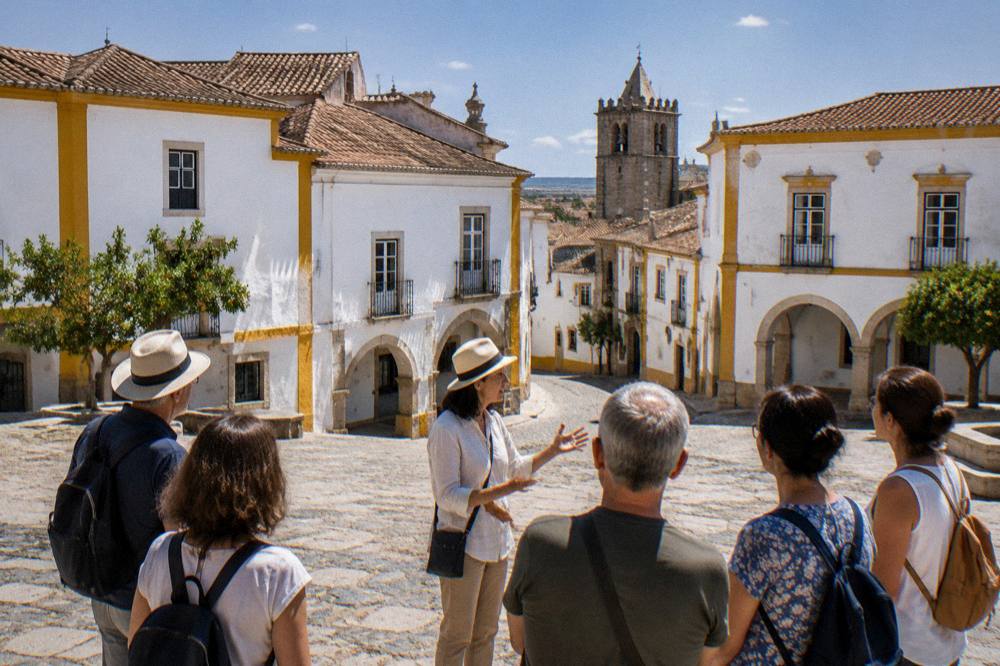
A short historic-centre walk is the right first booking: the Golden Era walk with wine tasting, from $23.92, rated 4.4 from 33 reviews, runs 2.5 to 3 hours and ends on a tasting note. The small-group cultural walking tour with the Chapel of Bones, from $77.66, rated 4.9 from 141 reviews, covers the famous chapel in two hours. The medieval sidecar tour with wine tasting, from $61.90, rated 4.9 from 16 reviews, rides the old streets in three hours.
The logic is energy management. A traveller who has changed trains in Lisbon and crossed the Alentejo arrives with a finite reserve, and a long walking tour spent standing at every doorway drains it. The two-and-a-half to three-hour format is the sweet spot: long enough to earn the guide's fee, short enough to leave the evening free. The sidecar option is the wildcard, a private vehicle that turns sightseeing into transport, and it suits a traveller whose feet have already done a Coimbra hill or two.
| Tour | Length | From, Per Person | Rating |
|---|---|---|---|
| Golden Era of Évora walk with wine tasting | 2.5-3 hours | $23.92 | 4.4 from 33 reviews |
| Small-group cultural walk with Chapel of Bones | 2 hours | $77.66 | 4.9 from 141 reviews |
| Medieval sidecar tour with wine tasting | 3 hours | $61.90 | 4.9 from 16 reviews |
| Personal and flexible historic-centre walk | 3 hours | $13.51 | 4.8 from 105 reviews |
The budget end deserves a word too. The Personal and Flexible Walking Tour in the historic centre, from $13.51 and rated 4.8 from 105 reviews, is the gentlest introduction on the books, and the free GuruWalk options cost nothing but the tip: the Essential Free Tour of Évora, rated 4.93 from 774 reviews, runs two hours with a local guru and is booked on GuruWalk's own page. A free walk is an honest first evening in any city, and Évora's gurus cover the streets the monuments stand on.
For the second day, the tours change character. The Monsaraz and Wine guided tour from Évora, from $78.78 and rated 4.6 from 51 reviews, and the Monsaraz pottery workshop option, from $56.27 and rated 5 from 13 reviews, both leave the city behind for the lake country. The cork-and-megaliths combination, from $50.65 and rated 4.9 from 41 reviews, is the Alentejo in one four-hour loop: stones, then cork oaks. The full range is collected on the Évora tours page.
What Should You Eat On A First Night In Évora?
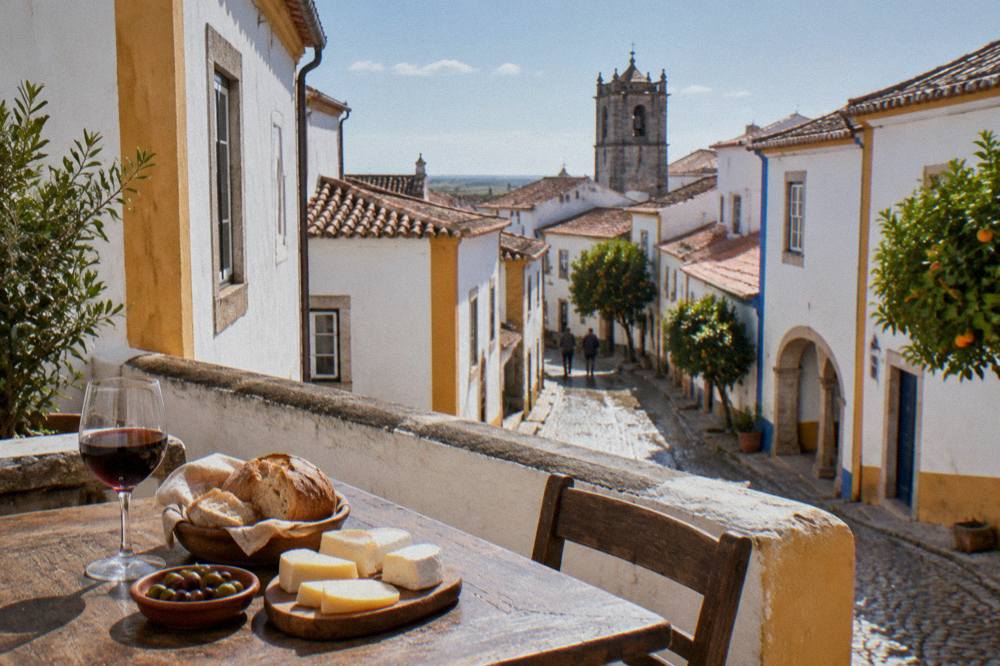
Alentejo food is the reason many travellers extend the stay: pork and bread-based dishes, Alentejo wine, sheep's cheese and the region's slow, generous lunches define the table, and an evening food and wine crawl, from $83.28 per person and rated 4.6 from 19 reviews, is the structured way to taste it. Otherwise, pick any tavern around the Praça do Giraldo and order what the waiter recommends.
The Alentejo table is a country table. It was built around bread, pork, olive oil and herbs, the things a hot plain produces, and it survives in Évora's restaurants unchanged in spirit. The Évora food guide and the wider Alentejo food page carry the detail, and the Évora restaurants page lists where to find each classic. The wine deserves equal attention: Alentejo reds are the region's flagship, and the Alentejo wine page explains why.
A first night wants simplicity. A long dinner near the square, a glass of the local red, a walk past the lit Templo Romano on the way back, and the day that started at a Coimbra platform ends properly. The food crawl option, three hours with a guide, suits the traveller who wants the introduction done properly rather than left to chance.
Is Évora A Good Add-On To A Coimbra Trip?
Yes, and the two cities complement rather than repeat each other: Coimbra offers a river, a university and Atlantic-moderated green, while Évora offers a UNESCO-inscribed walled centre, Roman remains, the Alentejo plain and a completely different table. The pairing works best with at least one night in Évora, since the train connection through Lisbon makes a there-and-back day unrealistic.
The comparison deserves more than a sentence, and it gets one on the Évora versus Coimbra page. In short: a traveller who has seen Coimbra's Biblioteca Joanina and the Mondego quays has seen the north-centre of Portugal at its most graceful, and Évora answers with something the Atlantic corridor cannot supply, a golden, walled, deeply southern city where the Roman temple still stands in the open air and the region's wines are poured at every meal. The two together make a fuller picture of Portugal than either alone.
The 2027 European Capital of Culture adds a forward-looking reason to go. Évora and the Alentejo hold the title in 2027, promoted by an executive board led by the municipality, with 2026 running as a preparation year built on the concept of "Vagar". The full 2027 programme is not yet published, so a trip planned around specific events should follow the official programme page as it fills.
Whichever of these three a traveller picks, the arrival-day logic holds: book the walk before the train, keep the evening free, and let the guide do the storytelling while the legs recover from the journey south.
Common Questions About Coimbra To Évora
Is there a direct train from Coimbra to Évora?
The through Intercidades services in CP's timetable valid since 6 September 2026 run between Lisboa Oriente and Évora, six trains a day. A journey starting in Coimbra connects with these in the Lisbon area; CP's journey planner shows the Coimbra leg and the best connection.
How much does the train from Lisbon to Évora cost?
The CP fare table valid for 2026 prices Lisboa Oriente to Évora at 13.90 EUR in second class and 18.50 EUR in first class. For the Coimbra leg, check CP's own fare pages when booking.
How long is the train from Lisboa Oriente to Évora?
About 1 hour 40 to 1 hour 45 on the through Intercidades trains, which call at Entrecampos, Sete Rios, Pragal, Pinhal Novo, Vendas Novas and Casa Branca on the way.
Is one day in Évora enough?
One full day covers the Sé, the Capela dos Ossos, the Templo Romano and the Praça do Giraldo. Two days add the Museu de Évora and an evening at leisure, and three allow a day trip to Monsaraz or the Cromeleque dos Almendres.
Does the Évora Ticket include the cathedral and the bone chapel?
No. The Évora Ticket, 8 EUR for one day, 10 EUR for two and 12 EUR for three, covers a network of Cidade-Museu sites and does not include the Sé, the Capela dos Ossos or the Museu de Évora, which are paid separately.
When is the best time to travel from Coimbra to Évora?
Spring and autumn. IPMA's 1991-2020 averages for Évora put the July maximum at 33.3 C and August at 33.5 C, with 31.9 days a year at 35 C or more, so May and October, at 25.0 C and 24.1 C average maximums, are the comfortable months.
The journey from Coimbra to Évora is a crossing of two Portugals, the green university north and the golden walled south, and it ends in the city UNESCO called the finest example of a city of the golden age of Portugal. Book the Lisbon connection early, give Évora the night it deserves, and the Alentejo does the rest.