Is Évora Worth Visiting
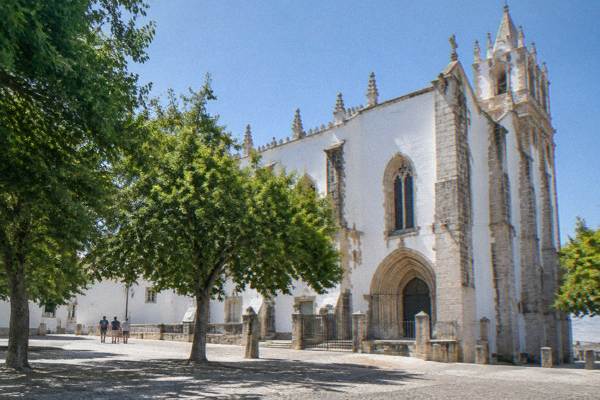
Évora is a UNESCO-listed walled city in the Alentejo plain of Portugal, an hour and three quarters from Lisbon by train, and the question of whether it deserves a visit has a short answer: for almost every traveller interested in history, food and quiet streets, yes.
Short answer
Yes. Évora packs a Roman temple, a Gothic cathedral with a roof terrace, a famous bone chapel and a walkable UNESCO-listed old town into a city of about 53,000 people, reachable from Lisbon in under two hours by train, with adult entry to its three headline monuments at 5.00, 7.00 and 8 EUR.
Évora, the capital of the Alentejo region of Portugal, is a walled city of about 53,000 people whose entire historic centre has been on the UNESCO World Heritage list since 1986. It sits inland on a hot, dry plain, roughly 130 km from Lisbon and about 90 km from the Atlantic, which means no beach and no sea breeze, but also none of the coastal crowds. The honest question a reader asks before committing a day or two of a Portugal trip is whether the city justifies the detour, and the answer depends on what the monuments, the prices, the train times and the weather actually look like on paper rather than in a brochure. This page lays those out, figure by figure, so the decision can be made on evidence.
What Makes Évora Worth Visiting?
The case rests on density: a Roman temple, a Gothic cathedral with a panoramic roof terrace, the Capela dos Ossos bone chapel, a national museum and the Jesuit University of the Holy Spirit, which dates from 1553, all inside one walkable walled centre that UNESCO inscribed in 1986 under criteria (ii) and (iv), which call it the finest example of a city of the golden age of Portugal after the 1755 Lisbon earthquake, an earthquake Évora was largely spared.
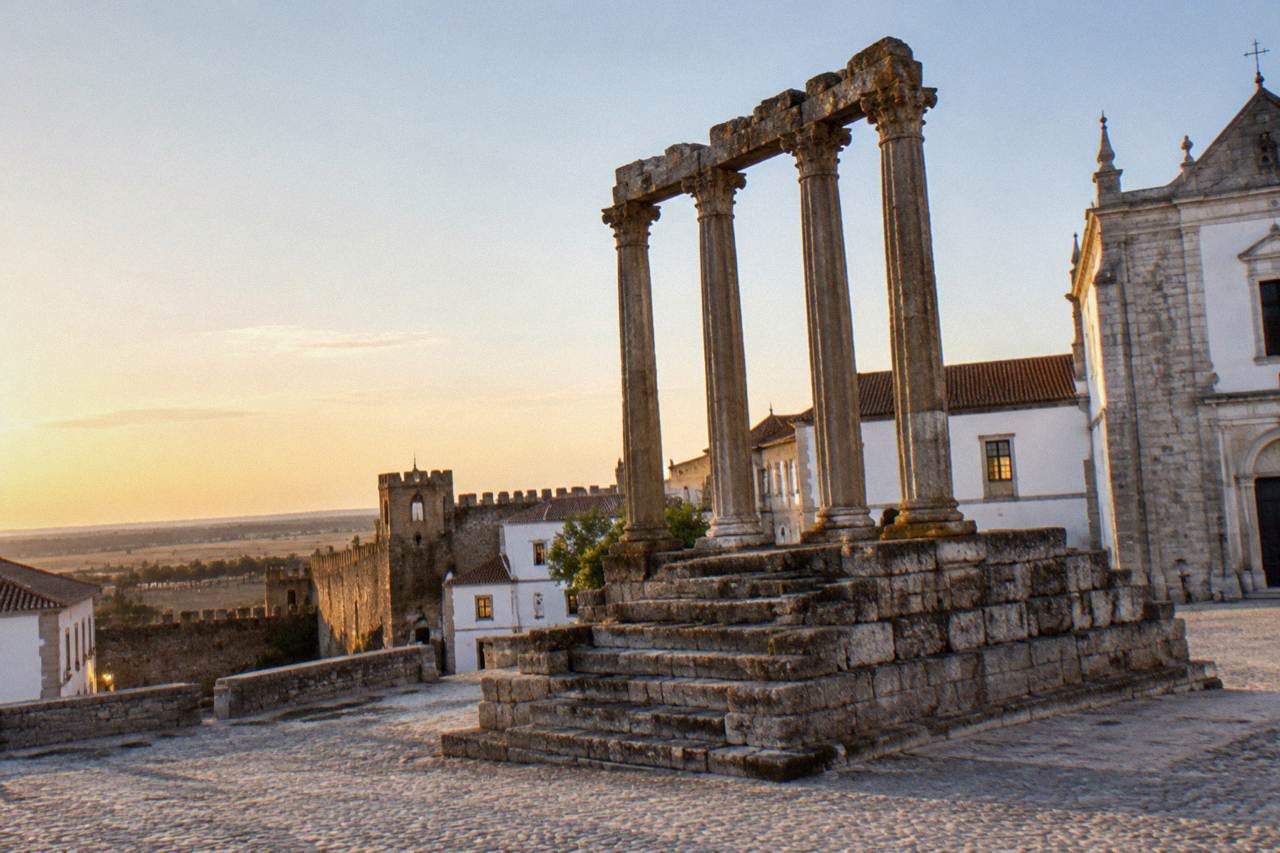
That last point matters more than it first appears. The quake that flattened central Lisbon left Évora's golden-age streetscapes standing, so the city centre reads as a continuous period piece rather than a reconstruction. The Templo Romano, popularly called the Temple of Diana, stands in the open air with no ticket barrier; the municipal page says it was probably dedicated to the imperial cult rather than to the goddess Diana, measures 25 x 15 m, was reused for centuries as a municipal butcher's shop, and had its walls freed in 1870. A monument of that age that you can walk around freely at any hour is rare in Western Europe.
The second argument is scale. Everything headline-worthy sits inside or just outside the medieval walls, so a visitor covers the city on foot without planning a single bus ride. The things to do in Évora run from the Sé de Évora to the megalithic sites scattered across the plain beyond the walls, but the core circuit is compact enough that two half-days do it justice.
Third, the city is a working Alentejo regional capital, not a museum piece. The Praça do Giraldo is a public square where locals sit under arcades, and the surrounding streets carry the bakeries, taverns and cork shops of a real district capital. That combination, UNESCO fabric plus everyday Portuguese life, is what most visitors say they came for, and it is what separates Évora from a pure open-air museum.
How Do You Get From Lisbon To Évora?
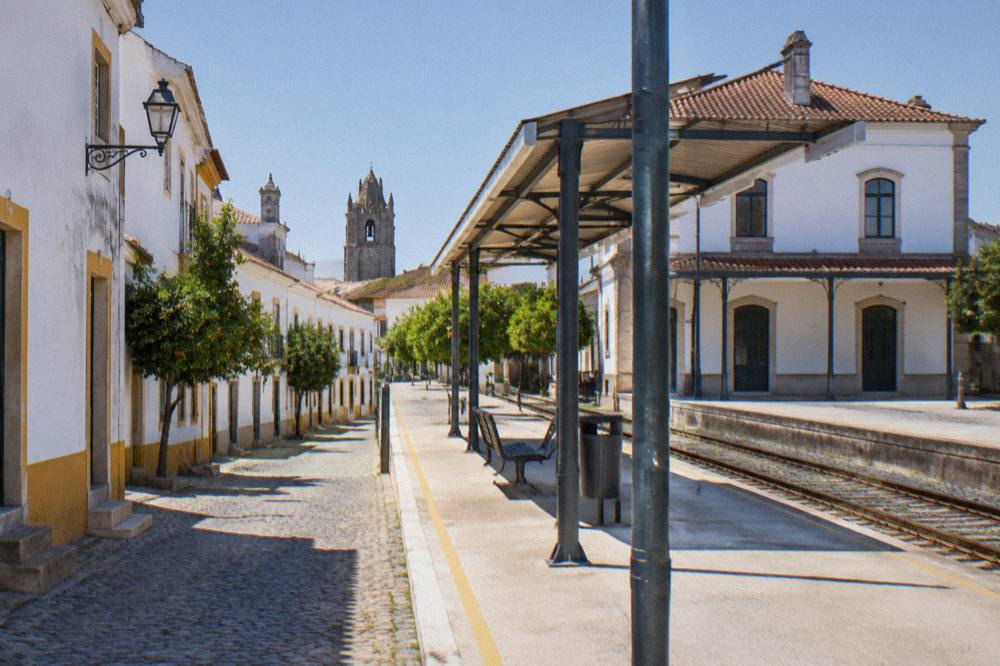
CP's Intercidades timetable, valid since 6 September 2026, lists six through trains a day from Lisboa Oriente to Évora taking about 1 hour 40 to 1 hour 45, with the second-class fare at 13.90 EUR and first class at 18.50 EUR, so the city is genuinely a short train ride from the capital rather than a full-day expedition.
The six departures from Lisboa Oriente are 07:02, 09:02, 09:58, 13:35, 17:02 and 19:02, arriving in Évora at 08:47, 10:45, 11:40, 15:13, 18:41 and 20:46. The trains call at Entrecampos, Sete Rios, Pragal, Pinhal Novo, Vendas Novas and Casa Branca, and on these services no change at Casa Branca is needed. Check the current PDF on CP's site before travelling, because the timetable's weekday remarks govern whether every listed service runs on every day of the week.
| Lisboa Oriente departure | Évora arrival | Journey time | Second class | First class |
|---|---|---|---|---|
| 07:02 | 08:47 | about 1 h 40 to 1 h 45 | 13.90 EUR | 18.50 EUR |
| 09:02 | 10:45 | about 1 h 40 to 1 h 45 | 13.90 EUR | 18.50 EUR |
| 09:58 | 11:40 | about 1 h 40 to 1 h 45 | 13.90 EUR | 18.50 EUR |
| 13:35 | 15:13 | about 1 h 40 to 1 h 45 | 13.90 EUR | 18.50 EUR |
| 17:02 | 18:41 | about 1 h 40 to 1 h 45 | 13.90 EUR | 18.50 EUR |
| 19:02 | 20:46 | about 1 h 40 to 1 h 45 | 13.90 EUR | 18.50 EUR |
That schedule makes both the day trip and the overnight stay realistic. The 07:02 or 09:02 arrivals put a walker in the old town before the midday heat, and the 17:02 and 19:02 returns allow a full day plus dinner. The Lisbon to Évora by train guide carries the detail, and the wider Lisbon to Évora page covers the coach and car alternatives, for which no verified fares or times exist on operator pages as of this writing.
One border note for non-EU visitors: the EU's Entry/Exit System has been fully deployed across the Schengen area since 10 April 2026, so passport processing at the external border works differently than it did in earlier years. ETIAS, the travel authorisation for visa-exempt visitors, was not yet in operation when this page was written, and no start date should be trusted until an official source carries one.
What Are The Must-See Monuments And What Do They Cost?
The three headline monuments cost 5.00 EUR for the Sé de Évora complete visit, 7.00 EUR for the Capela dos Ossos and the other museum areas of the Igreja de São Francisco, and 8 EUR for the Museu de Évora, so the full set of paid highlights comes to 20.00 EUR per adult, with children up to 12 free at the Sé and the museum.
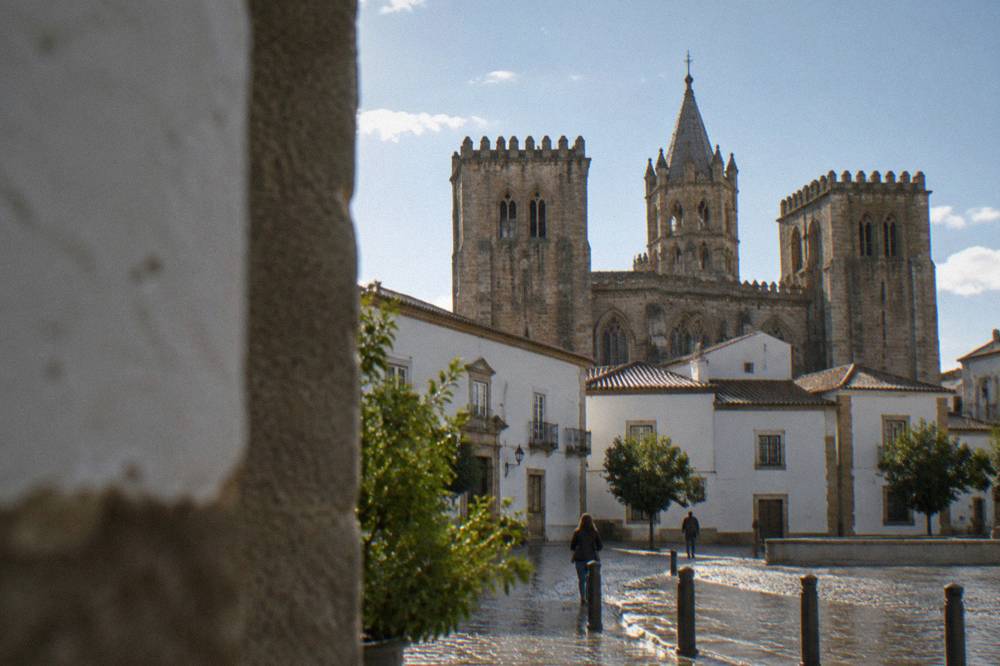
The Sé's single ticket covers the cathedral, the cloister, the panoramic roof terrace and the museum, with hours 9:00 to 17:00 and no cheaper roof-only tier on the official page. The Capela dos Ossos ticket covers the chapel itself plus the chapter room, the nativity collection, the sacred art nucleus, the tribune room and the terrace; the church notes it is a private religious entity and does not apply State Museum discounts. Youth to 25 and seniors over 65 pay 5.00 EUR there, and a family ticket is 15.00 EUR.
| Monument | Adult ticket | Reduced | Hours | Closed |
|---|---|---|---|---|
| Sé de Évora (complete visit) | 5.00 EUR | children up to 12 free | 9:00-17:00 | 24 Dec afternoon, 25 Dec, 1 Jan |
| Capela dos Ossos / Igreja de São Francisco | 7.00 EUR | 5.00 EUR youth to 25 and senior over 65, family 15.00 EUR | summer 9:00-18:30, winter 9:00-17:00 | 1 Jan, Easter Sunday, 24 Dec afternoon, 25 Dec |
| Museu de Évora | 8 EUR | 50% off youth 13-24, seniors, family | Tue-Sun 9:30-13:00 and 14:00-17:30 | Mondays, 1 Jan, Easter Sunday, 1 May, 29 June, 25 Dec |
| Templo Romano | open-air monument, no ticket listed | none | open precinct | none listed |
| Convento dos Lóios | price temporarily unavailable on the official page | none | none stated | none stated |
The Évora Ticket, the multi-site pass for the Cidade-Museu network, costs 8 EUR for one day, 10 EUR for two and 12 EUR for three, free to age 12. Read the pass page's network list before buying, because it does not include the Sé, the Capela dos Ossos or the Museu de Évora, the three monuments above. For a visitor whose list is exactly those three, separate tickets are the better arithmetic; for someone working through the smaller Cidade-Museu sites, the pass pays for itself quickly. The Évora tickets and passes comparison carries the full breakdown.
The bone chapel divides opinion, and honestly so: it is a small, intense room that some visitors find unforgettable and others find briefly interesting. The is the Chapel of Bones worth visiting answer page weighs both sides without sentimentality.
A guided visit changes the arithmetic of the monuments themselves, because a guide opens the closed doors and the stories the ticket alone does not. The Évora: Tales and Legends Guided Walking Tour, rated 4.8 from 40 reviews on the operator's listing at from $52.90 per person for 2.5 hours, walks the historic centre through its legends rather than its ticket lines: Check availability.
Is Évora Worth Visiting For Food And Wine?
Yes, and for many visitors the food is the reason they extend the stay: the Alentejo produces Portugal's most decorated red wines, its cork, its sheep's cheese and its bread-and-pork cooking, and Évora is the region's table capital.
The Alentejo diet is peasant cooking elevated: bread soups, slow pork, lamb, game, the region's sheep and goat cheeses, and the olive oil that carries the same protected status as the wine. The Évora food guide and the wider Alentejo food pages map the dishes worth ordering, and the Évora restaurants guide covers where to eat them, though no individual restaurant detail is verified here and none should be trusted from a page like this one.
Wine is the stronger draw. A visitor who flies into Lisbon and wants wine country without a rental car can equally take a Lisbon-start product such as the Lisbon: Évora, Chapel of Bones and Winery Small Group Tour, 10 hours at from $87.79 rated 4.7 from 50 reviews, described on its listing as starting in Lisbon.
| Food and wine experience | Length | From (USD) | Rating |
|---|---|---|---|
| Évora: Evening Food & Wine Crawl | 3 hours | $83.28 | 4.6 from 19 reviews |
| Alentejo Wine and Cork from Évora | 4 hours | $78.78 | 4.7 from 24 reviews |
| 1 Day Wine Tour Around Évora | full day | $321.11 | 5 from 11 reviews |
| Lisbon: Évora, Chapel of Bones & Winery Small Group Tour | 10 hours, starts in Lisbon | $87.79 | 4.7 from 50 reviews |
| Learn the Art of Alentejo Cuisine with Andre | cooking class | $166.29 | 3 from 3 reviews |
The cork story belongs to the same landscape. The Alentejo's cork oak forests supply most of the world's cork, and the Megalithic and Cork Forest guided tour from Évora, 4 hours at from $50.65 rated 4.9 from 41 reviews, pairs the stones with the trees in one loop. The cork museum and cork shops guide covers the city-side half of that story.
What Is The Weather Like In Évora?
IPMA's 1991 to 2020 normals for the Évora station show an inland climate with July and August mean maximums of 33.3 C and 33.5 C, 31.9 days a year reaching 35 C or more, and a record of 45.4 C set on 4 August 2018, so summer heat is the single biggest planning constraint and spring and autumn are the comfortable windows.
The same normals show the relief: mean minimums of 15.6 C in July and 16.0 C in August, so evenings cool even when afternoons do not, and rainfall collapses to 2.7 mm in July and 6.0 mm in August against 86.0 mm in November. October still averages a 24.1 C mean maximum with 7.7 days of 1 mm-plus rain, and April sits at 20.7 C with 62.1 mm, which is why the best time to visit Évora guides lean on the shoulder months.
| Month | Mean max (C) | Mean min (C) | Rain (mm) | Days 30 C or more |
|---|---|---|---|---|
| April | 20.7 | 8.5 | 62.1 | 0.3 |
| May | 25.0 | 10.9 | 46.6 | 5.5 |
| June | 30.2 | 13.8 | 10.6 | 15.1 |
| July | 33.3 | 15.6 | 2.7 | 23.7 |
| August | 33.5 | 16.0 | 6.0 | 25.0 |
| September | 29.5 | 14.6 | 33.9 | 13.9 |
| October | 24.1 | 12.3 | 81.5 | 2.9 |
All figures above are 1991 to 2020 averages for the Évora station, number 558, at 38.5365 N, 7.8880 W, altitude 247.6 m. The station sheet carries no sunshine-hour, wind, snow or humidity rows, so no page on this site states any of them. The Évora weather guide holds the full monthly table and the Évora in summer page deals with the heat practically.
For a July or August visit the pattern is simple: monuments early, shade at midday, the Sé's roof terrace or the Jardim Público later. The city is inland, so there is no sea breeze to count on, and the Atlantic is roughly 90 km away.
Is One Day Enough, Or Should You Stay Longer?
One long day covers the Templo Romano, the Sé, the Capela dos Ossos, the Praça do Giraldo and a long lunch, but two days are the honest minimum for the Museu de Évora, the megalithic sites on the plain and a wine or cork half-day, and three days let the city slow down the way the Alentejo intends.
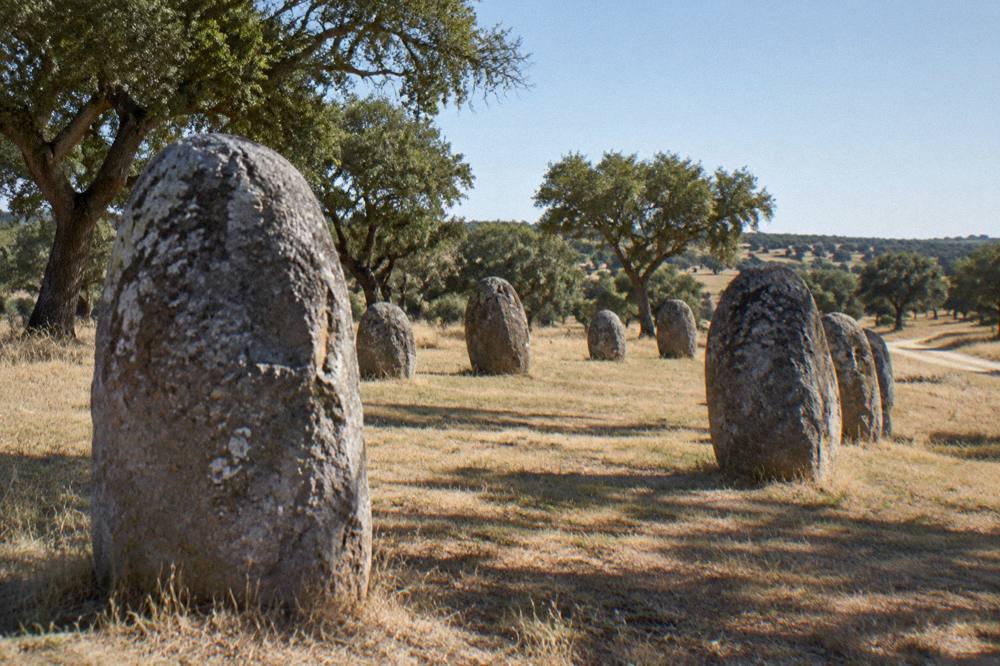
The one day in Évora and two days in Évora itineraries split the difference in practice. A day-tripper arriving on the 09:02 train gets roughly seven usable hours before the 17:02 return, enough for the three paid monuments plus the squares at a steady pace. The megalithic circuit, the Cromeleque dos Almendres and the Great Dolmen of Zambujeiro, sits outside the city and needs either a car or a tour; the Evora: Cromlech of Almendres and Great Dolmen of Zambujeiro tour runs 3 hours at from $33.76 rated 5 from 54 reviews, and the Half Day Megaliths Cromlech Tour from Evora by Archaeologists runs at from $74.54 rated 5 from 77 reviews.
The Almendres Interpretation Centre in the village of Guadalupe, a municipal partner, opens 10:00 to 18:00 in summer, meaning 1 May to 31 October, and 10:00 to 17:00 in winter, and lies about 8 km from Évora along the national road toward Lisbon with a signposted turn-off. The stones themselves stand in the open countryside.
Staying overnight changes the city. The evening is when the Praça do Giraldo fills and the food crawl above makes sense, and the where to stay in Évora guide maps the neighbourhoods inside and outside the walls. A municipal tourist tax applies to stays, and the amount is not published on a page this site could verify, so check your hotel's booking confirmation rather than any figure quoted online. The Évora cost and budget guide carries the rest of the arithmetic.
What Day Trips Can You Take From Évora?
Évora works as an Alentejo base because the region's headline towns sit within about two hours by road: Arraiolos about 20 km, Monsaraz about 40 to 45 km, Estremoz about 45 km, Vila Viçosa about 60 km, Elvas about 80 km and Marvão about 120 km, and guided products from Évora cover the Monsaraz and marble circuits directly.
These are rounded estimates, not measured distances, and no drive times, timetables or fares for these routes are verified on operator pages, so plan them from a map or a tour listing rather than a quoted figure. The best day trips from Évora guide ranks them properly.
| Destination | Distance from Évora (about) | Guided product from Évora | From (USD) |
|---|---|---|---|
| Arraiolos | 20 km | none | none |
| Monsaraz | 40-45 km | Monsaraz and Wine guided tour from Évora, 4 hours, 4.6 from 51 reviews | $78.78 |
| Estremoz | 45 km | Walking Tour in Estremoz, 4.8 from 19 reviews | $28.67 |
| Vila Viçosa | 60 km | Marble Tour in Vila Viçosa, 4.8 from 82 reviews | $28.14 |
| Elvas | 80 km | none from Évora; see the Elvas guide | none |
| Marvão | 120 km | none from Évora; see the Marvão guide | none |
Monsaraz deserves its own sentence: a walled hill village above the Alqueva reservoir, and the subject of its own is Monsaraz worth visiting answer. The Monsaraz and Wine from Évora morning small-group tour runs at from $80.28 rated 4.9 from 31 reviews, and the pottery-workshop variant, which adds a session in São Pedro do Corval, runs 4.5 hours at from $56.27 rated 5 from 13 reviews.
Who Should Skip Évora?
A traveller who wants beaches, nightlife or a packed daily itinerary of headline-famous sights should skip Évora: there is no coast, the Atlantic is roughly 90 km away, the evening scene is taverns rather than clubs, and the city's pace is deliberately slow, which is either its charm or its flaw depending on what the trip is for.
The honest negatives are few but real. Summer heat is severe, with those 31.9 days a year at 35 C or more concentrated in July and August. The paid monuments close by 17:00 or 17:30, so the city rewards early risers and punishes late ones. Anyone comparing Évora with Sintra or Porto should read the Évora vs Sintra and Évora vs Porto comparisons, because those places offer drama and scale that Évora deliberately does not.
The positives for the right visitor are equally clear. Families manage the city easily, as the Évora with kids guide shows, and the is Évora safe answer is unremarkable in the best way. History readers, food-motivated travellers and anyone burnt out on coastal crowds are the city's natural audience.
Is Évora Worth Visiting In 2027?
Évora and the Alentejo hold the European Capital of Culture title in 2027, the fourth Portuguese city after Lisbon, Porto and Guimarães, promoted by an executive board led by the Municipality of Évora, and while the full 2027 programme is not yet published, the preparatory 2026 programme built on the concept of "Vagar" is already running.
The word "Vagar" means taking one's time slowly, which is a fair description of how the city already works. The 2026 preparation year has produced real events: the GUADIANA literature festival on 9 to 11 October 2026 with 28 authors from nine countries, and open calls and community projects feeding the 2027 calendar. The Feira de São João, the city's traditional June fair, ran 23 June to 5 July 2026 at the Rossio de São Brás.
No 2027 event date, price or venue is published, so any page quoting a 2027 festival date is guessing, and this one will not. What can be said is structural: a Capital of Culture year puts money into venues, restoration and programming, and the Évora events and festivals guide tracks what is actually confirmed.
For a visitor choosing between 2026 and 2027, the trade-off is simple. Go now and get the city as it has always been, quieter and cheaper. Go in 2027 and get the festival programme, with crowds and prices that follow. Either way the monuments, the train link and the food are the same.
Common Questions About Visiting Évora
Can you do Évora as a day trip from Lisbon?
Yes. CP's timetable valid since 6 September 2026 lists six through trains from Lisboa Oriente taking about 1 hour 40 to 1 hour 45, with the 09:02 arriving 10:45 and the 17:02 return leaving time for the three headline monuments, squares and a proper lunch.
How many days do you need in Évora?
One day covers the core monuments and squares. Two days add the Museu de Évora and a megaliths, wine or cork half-day. Three days allow day trips to Monsaraz, Estremoz or Vila Viçosa from the city as a base.
Is Évora expensive?
The three headline monuments total 20.00 EUR per adult, and the Évora Ticket at 8, 10 and 12 EUR for one, two and three days covers the smaller Cidade-Museu sites but not those three. A municipal tourist tax applies to stays; check the amount with your hotel.
What is the best month to visit Évora?
By the IPMA 1991 to 2020 normals, April averages a 20.7 C mean maximum and October 24.1 C, against 33.3 C and 33.5 C in July and August. May, June and September sit between, with June the driest of them at 10.6 mm of rain.
Is Évora a good base for the Alentejo?
Yes. Arraiolos is about 20 km away, Monsaraz about 40 to 45 km, Estremoz about 45 km, Vila Viçosa about 60 km and Elvas about 80 km, and guided tours from Évora cover the Monsaraz, marble and megalith circuits directly.
The verdict, weighed on the evidence this page has laid out: Évora is worth visiting for anyone whose Portugal trip has room for a slow, food-rich, monument-dense inland city, and the Évora Travel Guide pages linked throughout carry each piece in the depth a real plan needs.