Where To Stay In Évora
Évora is small enough that almost nowhere in the city is far from anything, but the area you pick still shapes your trip: inside the walls puts the monuments at your door, outside them buys space and easier parking.
Short answer
Stay inside the historic walls if you want the Sé, the Capela dos Ossos and the Praça do Giraldo within a short walk; stay just outside the walls, around the train station or the northern avenues, if you are driving, want easier parking, or plan day trips across the Alentejo. The whole city is compact, so the choice is about character and convenience, not distance.
Évora, the capital of Portugal's Alentejo region and of the district that carries its name, is a walled city of roughly 53,000 people whose entire historic centre has been UNESCO-listed since 1986. That single fact does most of the work in answering the where-to-stay question. The city is compact, walkable and, unlike Lisbon or Porto, almost entirely flat inside its medieval walls, so the choice of neighbourhood matters less for distance than for character, parking and the kind of mornings you want.
The honest framing is this: there is no bad place to stay in Évora, only different trade-offs. This guide from the Évora Travel Guide editorial desk walks through each area's character, the practicalities of arriving with or without a car, the seasons, and the day trips that work from a base here. If you are still deciding whether the city deserves your nights at all, start with is Évora worth visiting and what Évora is known for.
Which Part Of Évora Should You Stay In?
Most visitors should stay inside the historic walls, within a ten-minute walk of the Praça do Giraldo, because that location puts the Sé, the Capela dos Ossos, the Templo Romano and the Museu de Évora all inside an easy stroll and turns evenings into part of the sightseeing. Drivers, families and anyone using Évora as a base for Alentejo day trips often do better just outside the walls, where parking is simpler and the ring roads are close.
The city is small enough that neither choice costs much time.
The walls themselves are the mental map to hold. Évora's historic centre sits inside a largely intact medieval circuit, and everything a first-time visitor comes to see, the Roman temple, the cathedral, the bone chapel, the university, is inside it. The areas outside, toward the train station to the southwest and the modern avenues to the north and east, are ordinary working Portuguese neighbourhoods: less romantic, cheaper, and often more practical.
Here is how the main areas compare in character. No area carries a safety warning worth printing, and none is far from anything; the differences are about atmosphere, noise, parking and walkability.
| Area | Character | Best For | Watch Out For |
|---|---|---|---|
| Around the Praça do Giraldo | Arcaded main square, cafés, the tourist office, the busiest evenings | First-time visitors who want everything on foot | Street noise in summer, thin walls in old buildings |
| Sé and Rua Cinco de Outubro | Cathedral quarter, narrow lanes, the highest concentration of monuments | Sightseeing on foot, photography | Deliveries and tour groups by day |
| University quarter | The Jesuit university, the Convento dos Lóios, calmer lanes | A quieter inside-the-walls base | Fewer restaurants right at the door |
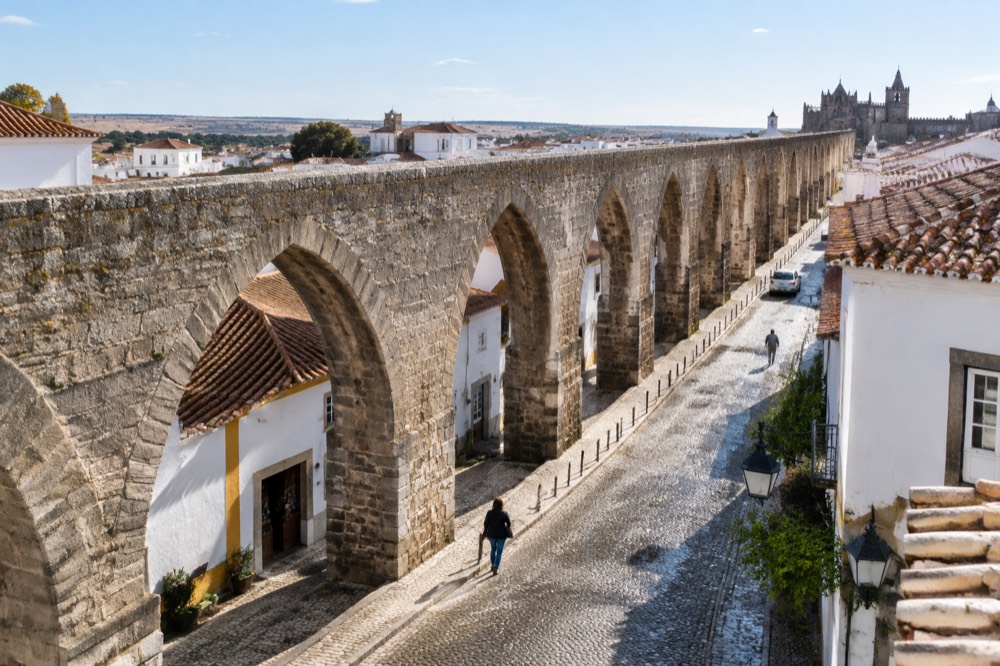
| Porta de Moura quarter | Residential lanes, the Água de Prata aqueduct arches, local pace | Longer stays, a lived-in feel | A slightly longer walk to the main square |
| Outside the walls, station side | Modern streets, the railway and bus terminals | Train arrivals, drivers, budget stays | A walk of roughly fifteen to twenty minutes to the centre |
| Outside the walls, northern avenues | Hotels with car parks, ring-road access | Road-trippers and day-trip planners | Nothing historic at the door |
A note on the tourist tax before moving on: a municipal tourist tax applies to stays in Évora, so expect it as a line on your hotel bill and check the amount with your accommodation when booking. It is charged per guest per night, not per room, and children are treated differently from adults, but the exact current figure is something your hotel will state; do not budget for it from a number you read online.
What Is It Like To Stay Inside The Historic Walls Of Évora?
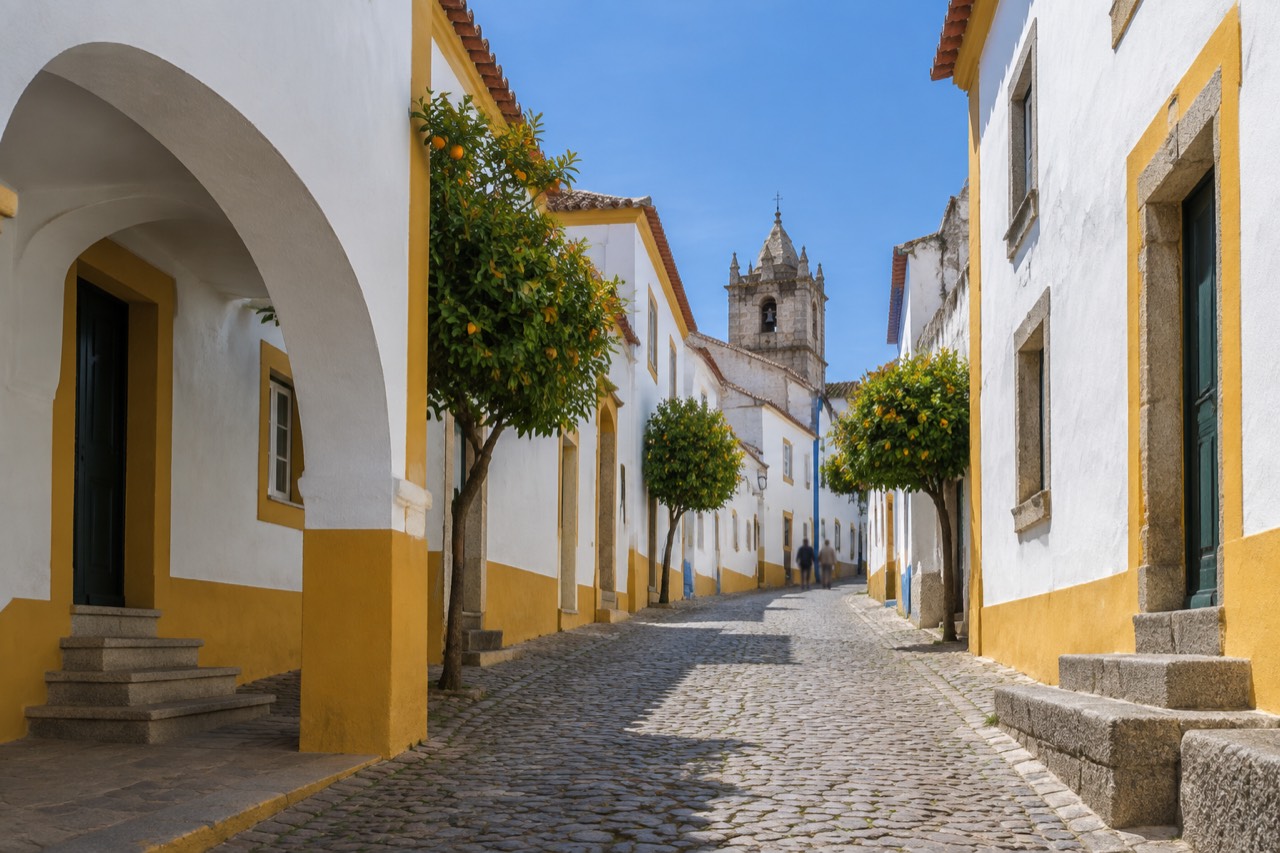
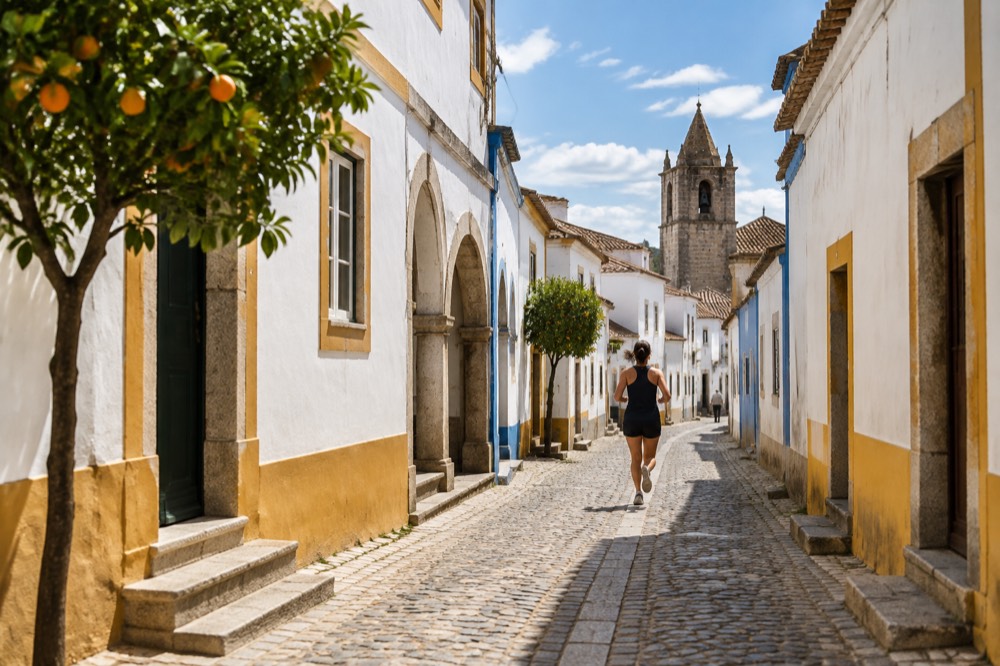
Staying inside the walls means waking up inside the UNESCO-listed ensemble itself, with whitewashed houses, yellow and blue trim, azulejo panels and the city's monuments on your doorstep, and it turns a stay into the main event rather than a bed at the end of it. The trade-offs are real: old buildings mean old plumbing and summer heat held by stone, streets are narrow and largely closed to traffic, and parking inside the walls is limited enough that most drivers give up on it.
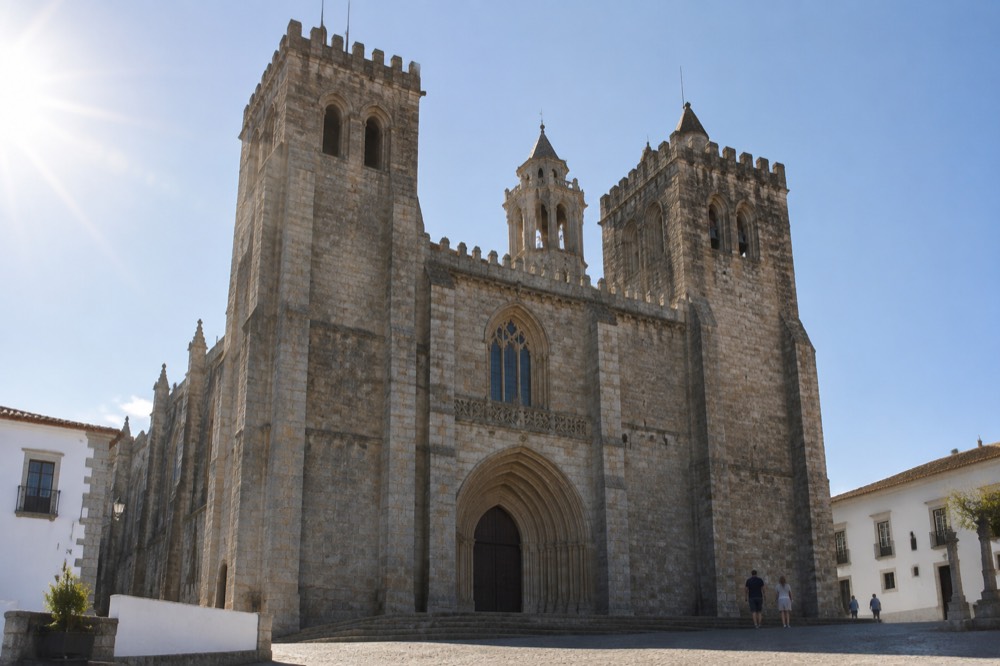
The centre rewards walkers. The Praça do Giraldo, the arcaded square that has served as the city's main meeting point for centuries, is the natural anchor: the tourist office sits at number 73, cafés run along the arcade, and every major monument lies within a short radius. The Sé de Évora, the granite cathedral whose complete-visit ticket at 5.00 EUR covers the church, cloister, roof terrace and museum, is minutes away in one direction; the Igreja de São Francisco and its Capela dos Ossos, with a 7.00 EUR adult museum ticket, is minutes in another.
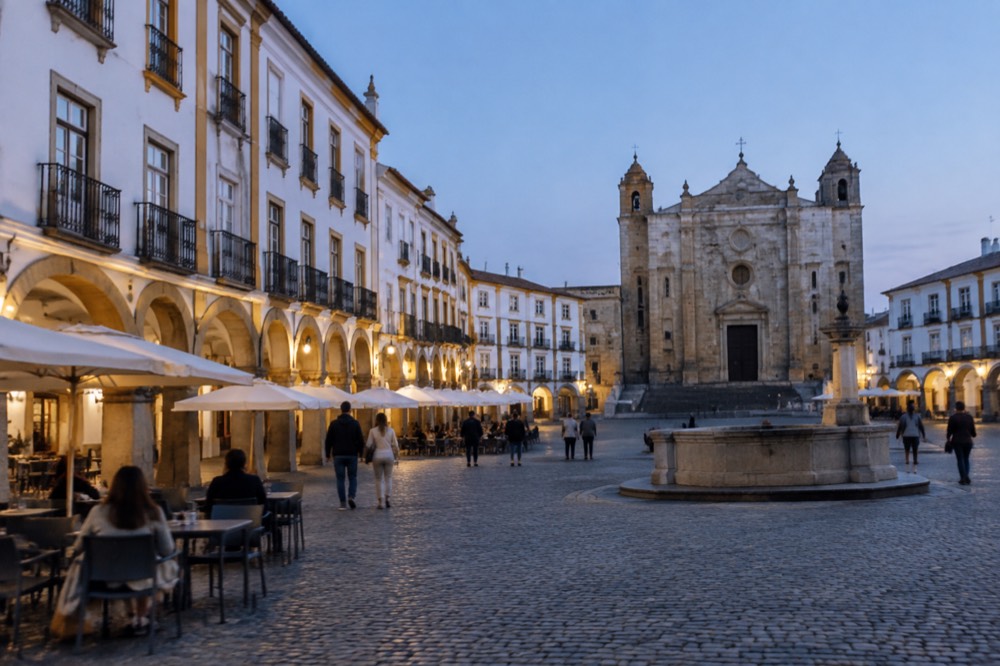
Evenings are the quiet argument for the inside. Once the day-trip coaches leave, the centre returns to its residents, the restaurants fill with people who are staying the night, and the lanes between the Giraldo and the aqueduct arches become the whole point of being here. The Évora restaurants and food guide pages cover where to eat; the short version is that inside-the-walls dining skews traditional Alentejo, and the best tables book out in summer.
One practical point that surprises drivers: the walls have a limited number of gates, and the streets inside are a maze of one-ways and pedestrian priority. If you are arriving by car and staying inside, ask your accommodation in advance which gate to use and whether they have arranged parking; the general rules, paid zones and the out-of-centre car parks are covered in the parking in Évora guide.
What Does The University Quarter Offer As A Base?
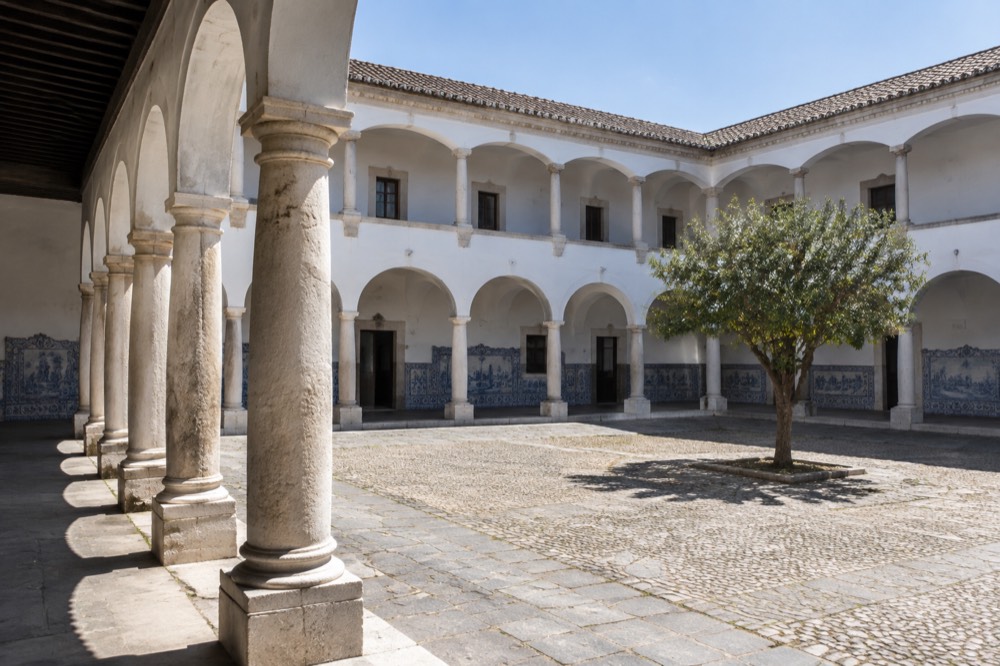
The university quarter, in the southeastern corner inside the walls around the Jesuit university and the Convento dos Lóios, offers the calmest inside-the-walls base: the same walkable distance to everything, noticeably fewer tourists at breakfast time, and some of the city's most photographed architecture at the end of your street. It suits couples and anyone who wants the historic setting without the Giraldo's evening noise, and it is a short walk downhill to the aqueduct and the Porta de Moura lanes.
The University of Évora, whose Jesuit college building with its azulejo-clad cloister is one of the city's defining images, gives this quarter its name and its rhythm. Term time brings students into the lanes; holidays give it back to the birds. The Convento dos Lóios sits beside the university, and its official page currently lists the ticket price as temporarily unavailable, so check before planning a visit rather than relying on any figure quoted elsewhere.
For a first-day orientation from this quarter, the private skip-line tour of the university, the cathedral and the Capela dos Ossos with a wine tasting is the strongest option on the books: it starts from $91.39 per person, runs about three hours, and holds a 5 rating from 48 reviews on the operator's live listing. It pairs naturally with a stay in this quarter because the university is one of its stops. Check availability if that first afternoon matters to you, and read more in the tours overview.
A different way to cover the same ground, with the wind in it, is the medieval sidecar tour: a three-hour ride through Évora's lanes on a motorcycle sidecar with a wine tasting at the end, from $61.90 per person and rated 4.9 from 16 reviews. It suits travellers who would rather sit than walk on a hot afternoon.
What Does Staying Outside The Walls Of Évora Offer?
Staying outside the walls trades atmosphere for logistics: the station-side streets southwest of the centre put you within walking distance of both the railway and bus terminals, the northern and eastern avenues give you hotels with car parks and instant ring-road access, and both areas cost less than comparable rooms inside. Nothing in Évora is far, so the walk to the walls is roughly fifteen to twenty minutes from most of these addresses, and you arrive each morning at the gates rather than at your window.
For train travellers this is the zero-stress option. CP's Intercidades service from Lisboa Oriente, on the timetable valid since 6 September 2026, runs six through trains a day taking about 1 hour 40 to 1 hour 45, at 13.90 EUR second class or 18.50 EUR first class each way. A station-side base means you step off the train, drop your bag, and are at the Praça do Giraldo before the next train leaves Lisbon. The full schedule and fare detail is in Lisbon to Évora by train, and the broader route comparison in Lisbon to Évora.
| Lisboa Oriente Departure | Évora Arrival | Service |
|---|---|---|
| 07:02 | 08:47 | Intercidades through train |
| 09:02 | 10:45 | Intercidades through train |
| 09:58 | 11:40 | Intercidades through train |
| 13:35 | 15:13 | Intercidades through train |
| 17:02 | 18:41 | Intercidades through train |
| 19:02 | 20:46 | Intercidades through train |
For drivers, the outside-the-walls case is even simpler. The A6 and IP2 approach the city from the north and east, and the ring roads deposit you at hotels whose car parks you can actually use. If your itinerary is a wider Alentejo road trip, or you are working through the best day trips from Lisbon in a rental car, an outside base saves you the daily argument with the medieval street plan. Drivers coming from the airport should also read Évora to Lisbon airport for the return leg.
How Much Do The Sights Cost Once You Are Staying In Évora?
The main paid monuments in Évora cost between 5.00 and 8.00 EUR per adult on their official tickets, and a multi-site pass, the Évora Ticket, covers a network of municipal sites for 8 EUR on one day, 10 EUR on two or 12 EUR on three, free for children to age 12. The pass does not include the three biggest paid sights, the Sé, the Capela dos Ossos or the Museu de Évora, so most short-stay visitors buy those individually and skip the pass.
The individual prices, all from the official pages: the Sé's complete visit is 5.00 EUR with children up to 12 free; the Capela dos Ossos museum ticket at the Igreja de São Francisco is 7.00 EUR adult, 5.00 EUR for youth to 25 and seniors over 65, 15.00 EUR for a family; the Museu de Évora is 8 EUR for adults, closed Mondays. The Capela dos Ossos runs 9:00 to 18:30 in summer legal time and 9:00 to 17:00 in winter, open daily except 1 January, Easter Sunday, the afternoon of 24 December and 25 December. The Sé keeps 9:00 to 17:00 and closes the same December and New Year days.
| Sight | Adult Ticket | Concessions | Closed |
|---|---|---|---|
| Sé de Évora, complete visit | 5.00 EUR | Children to 12 free | 24 Dec afternoon, 25 Dec, 1 Jan |
| Capela dos Ossos museum ticket | 7.00 EUR | 5.00 EUR youth to 25 and seniors over 65, 15.00 EUR family | 1 Jan, Easter Sunday, 24 Dec afternoon, 25 Dec |
| Museu de Évora | 8 EUR | Youth 13-24, seniors, family 50% off; free to 12 | Mondays, 1 Jan, Easter Sunday, 1 May, 29 June, 25 Dec |
| Évora Ticket, one day | 8 EUR | Free to age 12 | Site-specific |
| Évora Ticket, two days | 10 EUR | Free to age 12 | Site-specific |
| Évora Ticket, three days | 12 EUR | Free to age 12 | Site-specific |
For a fuller budget picture, including meals and the tourist tax, see Évora cost and budget. The pattern worth internalising is that Évora's paid sights are cheap by European city standards, and the expensive part of any Alentejo stay is usually the car and the restaurants, not the monuments.
When Is The Best Time Of Year To Stay In Évora?
Spring and autumn are the best seasons to stay in Évora, because IPMA's 1991 to 2020 normals for the Évora station show July and August averaging 33.3 and 33.5 C daytime highs with 31.9 days a year at 35 C or more, while April, May, September and October sit in the low to mid-twenties with far fewer extreme days. Winter is mild by day, around 14 C average highs, but nights drop to 4 to 5 C.
Summer stays are possible but should be planned around mornings and evenings.
The numbers deserve respect. Évora is inland on the Alentejo plain, roughly 90 km from the Atlantic, so there is no sea breeze to bail you out; the station record is 45.4 C, set on 4 August 2018. Rain is not the issue it is in northern Portugal: the 1991 to 2020 normals give July just 2.7 mm and August 6.0 mm, with the wettest months, October through December, at 81.5 to 86.0 mm. The Évora weather and best time to visit pages carry the full breakdown.
| Month | Mean Max (C) | Mean Min (C) | Rain (mm) | Days At 35 C+ |
|---|---|---|---|---|
| April | 20.7 | 8.5 | 62.1 | 0.0 |
| May | 25.0 | 10.9 | 46.6 | 0.7 |
| June | 30.2 | 13.8 | 10.6 | 5.6 |
| July | 33.3 | 15.6 | 2.7 | 11.5 |
| August | 33.5 | 16.0 | 6.0 | 10.9 |
| September | 29.5 | 14.6 | 33.9 | 3.1 |
| October | 24.1 | 12.3 | 81.5 | 0.1 |
One timing factor that belongs in any 2026 or 2027 planning conversation: Évora and the Alentejo are a European Capital of Culture in 2027, and the city's own programme page describes 2026 as a preparation year built on the concept of "Vagar". The full 2027 calendar is not yet published, but accommodation pressure in a small city during a Capital of Culture year is a real thing, so if your stay falls in 2027, book earlier than the season alone would suggest.
Which Day Trips Work From A Base In Évora?
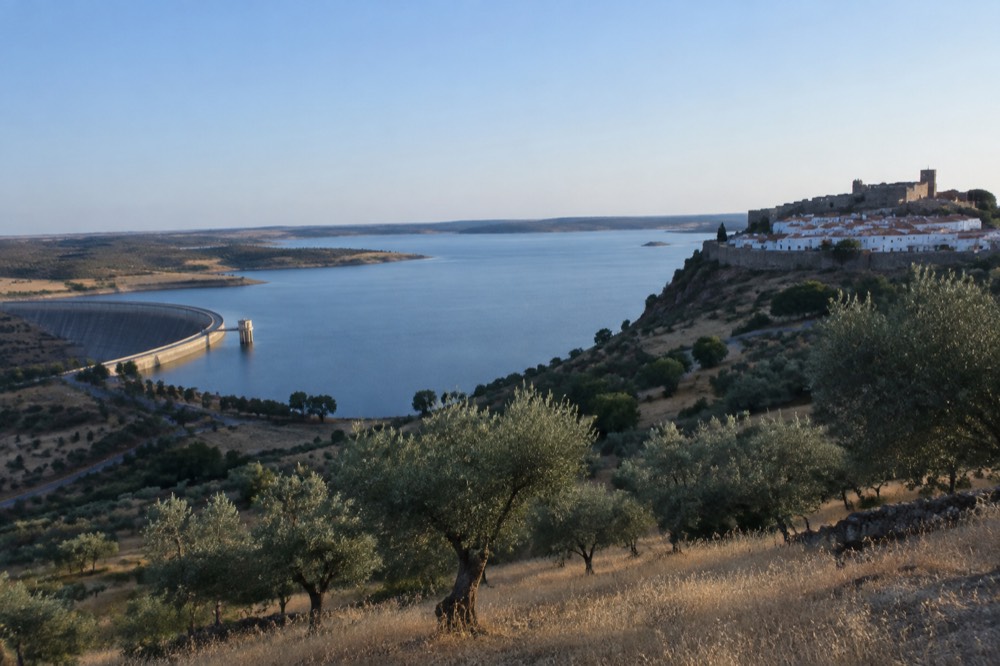
Évora works as a base for the whole Central Alentejo: Monsaraz and its lake are about 40 to 45 km away, Estremoz about 45 km, Vila Viçosa about 60 km, Elvas about 80 km and Marvão about 120 km, all reachable as day loops from an outside-the-walls base with a car. Lisbon is about 130 km away, close enough to reach by train in a morning. Without a car, guided day tours from Évora cover the Monsaraz and megaliths routes.
The distances are rounded estimates, but the pattern holds: everything worth seeing in the Central Alentejo sits within an hour or two of Évora, which is exactly why the city makes such a good base and why the outside-the-walls hotels fill up with road-trippers. Arraiolos, the carpet town, is the nearest at about 20 km and works as an easy half-day. The individual towns each have their own guide on this site, from Monsaraz and Estremoz to Vila Viçosa and Marvão.
For the prehistory that draws many visitors, the Cromeleque dos Almendres and the surrounding megalithic landscape lie about 12 km west of the city toward Guadalupe, where the interpretation centre, run by a partner of the municipality, keeps summer hours of 10:00 to 18:00 from 1 May to 31 October and winter hours of 10:00 to 17:00 from 1 November to 30 April. The stones themselves stand in the open countryside. A guided half-day with archaeologists, from $74.54 per person and rated 5 from 77 reviews, is the stress-free way to reach them, since the turn-offs are not well signed and the sites are scattered.
| Destination | Distance From Évora | Typical Visit |
|---|---|---|
| Arraiolos | about 20 km | Half day, carpets and hilltop |
| Monsaraz | about 40-45 km | Half or full day, village and lake |
| Estremoz | about 45 km | Half day, marble and castle |
| Vila Viçosa | about 60 km | Half day, ducal palace |
| Elvas | about 80 km | Full day, fortifications |
| Marvão | about 120 km | Full day, hilltop village |
| Lisbon | about 130 km | Train, about 1 h 40 to 1 h 45 |
Back in the city, an evening option that suits every area: the tales and legends walking tour, a 2.5-hour guided walk through the historic centre's stories, from $52.90 per person and rated 4.8 from 40 reviews. It runs after the day-trippers have gone, which makes it a natural fit for a first or second evening in the centre.
How Do You Fill The Days Between Day Trips In Évora?
A stay of two or three nights in Évora fills itself: the first day goes to the walled centre's monuments, the second to either the megaliths or a wine and cork excursion into the surrounding estates, and any remaining time to the museums, the Jardim Público and the food. The city's own sights need at least a full day, the Alentejo around it needs at least one more, and travellers who try to see Évora itself in a single rushed afternoon consistently under-rate the city.
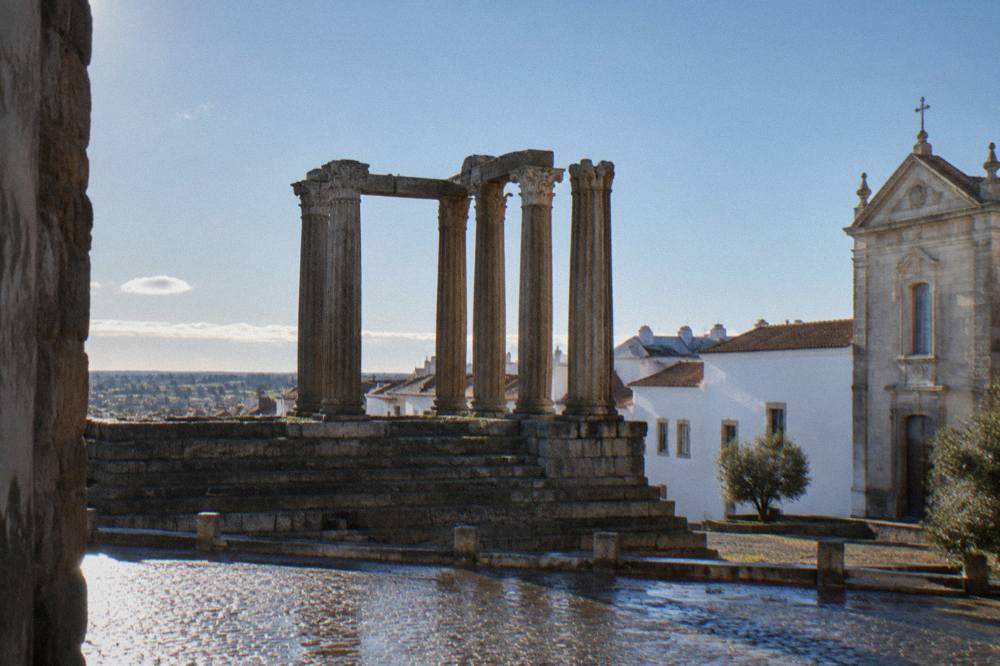
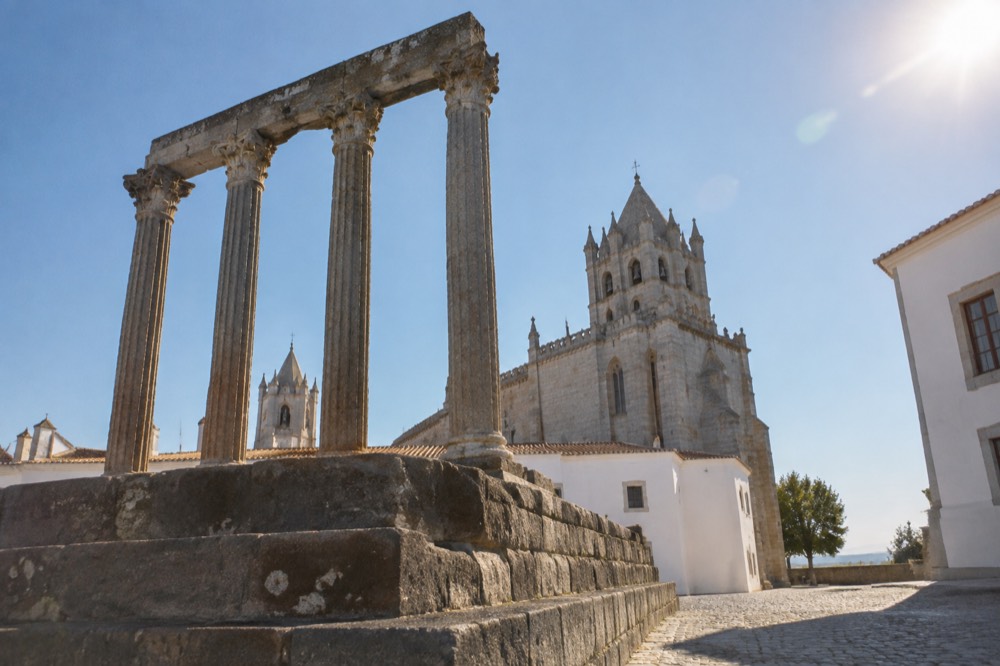
The classic inside-the-walls day is the one every guide describes, and it works: the Praça do Giraldo, the Sé with its roof terrace, the Templo Romano, whose municipal page notes it was probably dedicated to the imperial cult rather than to Diana, the Roman baths, and the Capela dos Ossos before it closes. The Museu de Évora, housed in the former Archbishop's Palace, deserves the leftover hours, and the things to do in Évora page sequences it all.
For the surrounding estates, wine and cork are the two themes. The Alentejo wine and cork tour from Évora, four hours from $78.78 per person and rated 4.7 from 24 reviews, covers both in one morning; the background on what is in the glass is in Alentejo wine and Alentejo food. A budget-friendly way to spend a flexible afternoon in the centre is the personal and flexible historic-centre walking tour, from $13.51 per person and rated 4.8 from 105 reviews, which adapts its route to whatever you have already seen.
Whichever of these you book, the same rule applies as for your bed: reserve the guided walks for the cooler end of the day in summer, since IPMA's normals put June through August at 30 C or more on most afternoons, and keep the middle hours for the museums and the shade of the Sé's cloister.
Common Questions About Staying In Évora
Where to stay in Évora for a first visit?
Inside the historic walls, within a short walk of the Praça do Giraldo. Every major monument, the Sé, the Capela dos Ossos, the Templo Romano and the Museu de Évora, sits inside the walls, and staying there puts them all on foot while giving you the centre's evenings once the day-trippers leave.
Where to stay in Évora with a car?
Outside the walls, on the northern or eastern avenues or the station side. Parking inside the medieval centre is limited and the streets are narrow, while the outside hotels offer car parks and immediate access to the ring roads toward Estremoz, Monsaraz and Lisbon. Read the parking guide before you arrive.
Is it better to stay in Évora or Lisbon?
They answer different questions. Lisbon is the gateway, about 130 km away, with CP Intercidades trains covering the distance in about 1 hour 40 to 1 hour 45 for 13.90 EUR second class. Évora rewards staying the night, because the centre changes character completely in the evening, and it is the natural base for the Alentejo's towns and megalithic sites. Many travellers split a trip between the two.
How many nights should you stay in Évora?
Two nights as a minimum: one for the walled centre, one for the megaliths or a wine and cork excursion. Three nights let you add a Monsaraz or Estremoz day trip without rushing, and the city's own sights, at 5.00 to 8.00 EUR per adult ticket, are cheap enough that a longer stay does not strain the budget.
Does Évora have a tourist tax on hotel stays?
Yes, a municipal tourist tax applies to stays in Évora. It is charged per guest per night rather than per room, and the current amount is best confirmed with your accommodation when booking, since it appears as a separate line on the bill.
Is everywhere in Évora walkable?
The historic centre is almost entirely walkable and largely flat, with the main sights clustered inside the walls. The walk from the train and bus stations to the centre takes roughly fifteen to twenty minutes, and the only times you need transport are for the megalithic sites and the Alentejo towns beyond the city.
The area you choose in Évora is a decision about character, not distance: inside the walls for the atmosphere and the evenings, outside them for the car, the train and the day trips, and either way you will be walking the same lanes by mid-morning.