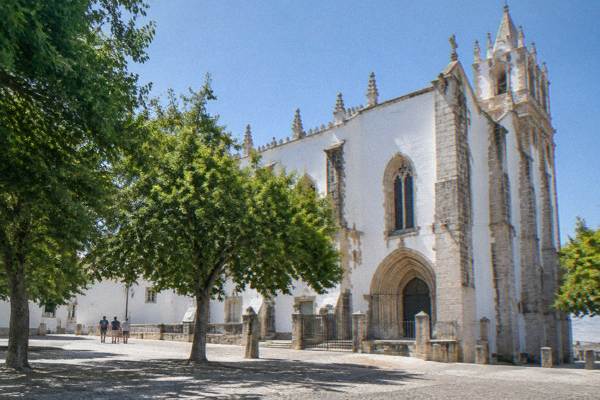
Évora Museum: A Complete Visitor Guide To The Museu De Évora
The Museu de Évora, officially the Museu Nacional Frei Manuel do Cenáculo, is Portugal's national museum for the city and the Alentejo, housed since its founding in the former Archbishop's Palace next to the Sé de Évora.
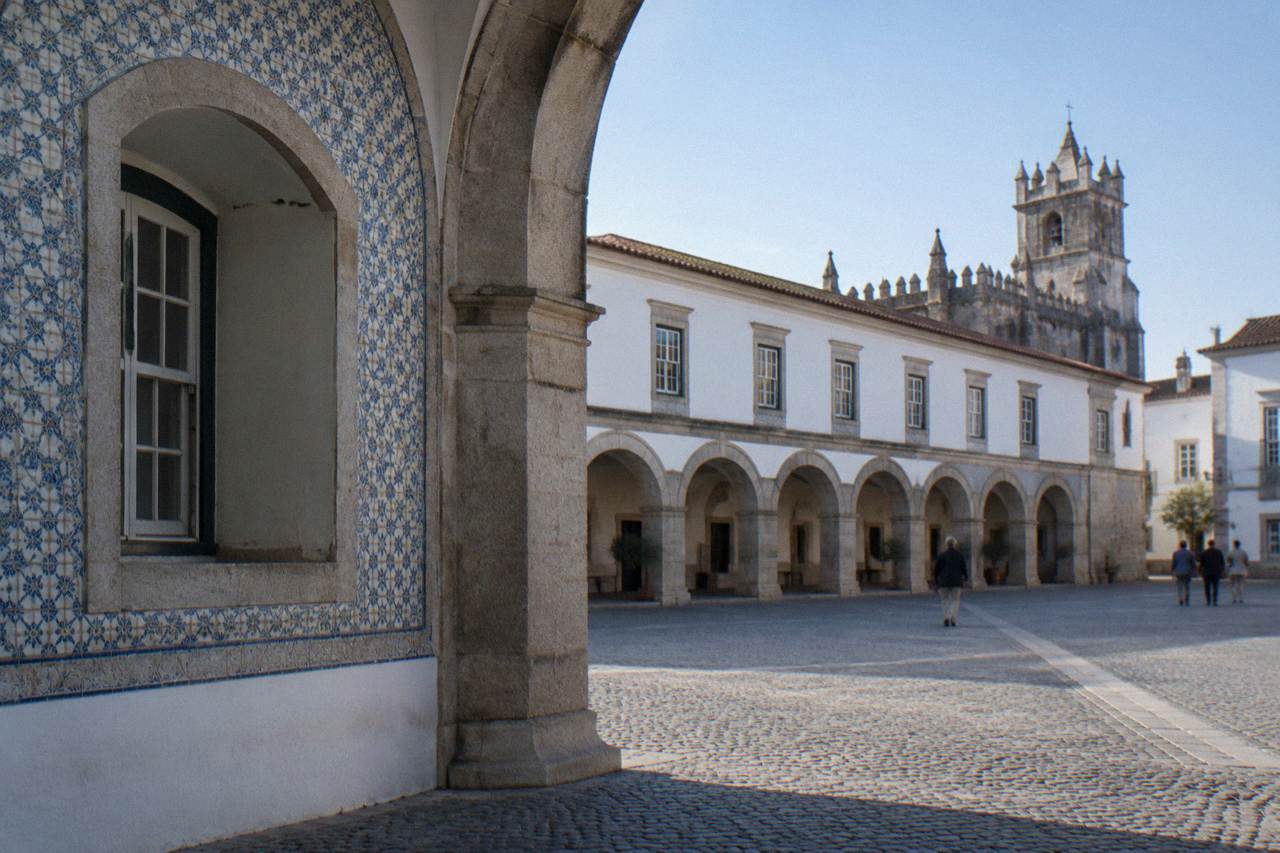
Short answer
The Museu de Évora is open Tuesday to Sunday, 9:30 to 13:00 and 14:00 to 17:30, closed Mondays, 1 January, Easter Sunday, 1 May, 29 June and 25 December. An adult ticket costs 8 EUR, with 50% off for visitors aged 13 to 24, seniors over 65 and families, and free entry for children up to 12.
The Museu de Évora, officially the Museu Nacional Frei Manuel do Cenáculo, is the national museum of Évora, Portugal, the inland capital of the Alentejo that UNESCO inscribed on its World Heritage list in 1986. The museum was founded officially in 1915 and has been housed ever since in the former Archbishop's Palace, a building that stands immediately beside the Sé de Évora, the city's cathedral, inside the historic centre. That address matters more than most museum addresses in Europe: a visitor standing at the museum's door is within a few minutes' stroll of the Roman temple, the Praça do Giraldo and the Convento dos Lóios, and the museum's own walls carry centuries of the city's ecclesiastical history before a single exhibit is considered.
The museum splits its day into two sessions, morning and afternoon, with a lunch closure in the middle, which is the single detail that catches out the most visitors. This page gathers everything needed for a visit: the hours and ticket prices, the discounts, the closure days, how the museum fits with the cathedral next door, and how to plan a morning around it.
What Is The Museu De Évora?
The Museu de Évora is Portugal's national museum for the city of Évora in the Alentejo, founded officially in 1915 and housed in the former Archbishop's Palace, the building beside the cathedral where the archbishops of Évora lived and worked. Its full official name is the Museu Nacional Frei Manuel do Cenáculo, and it is one of the institutions that anchors the UNESCO-inscribed historic centre.
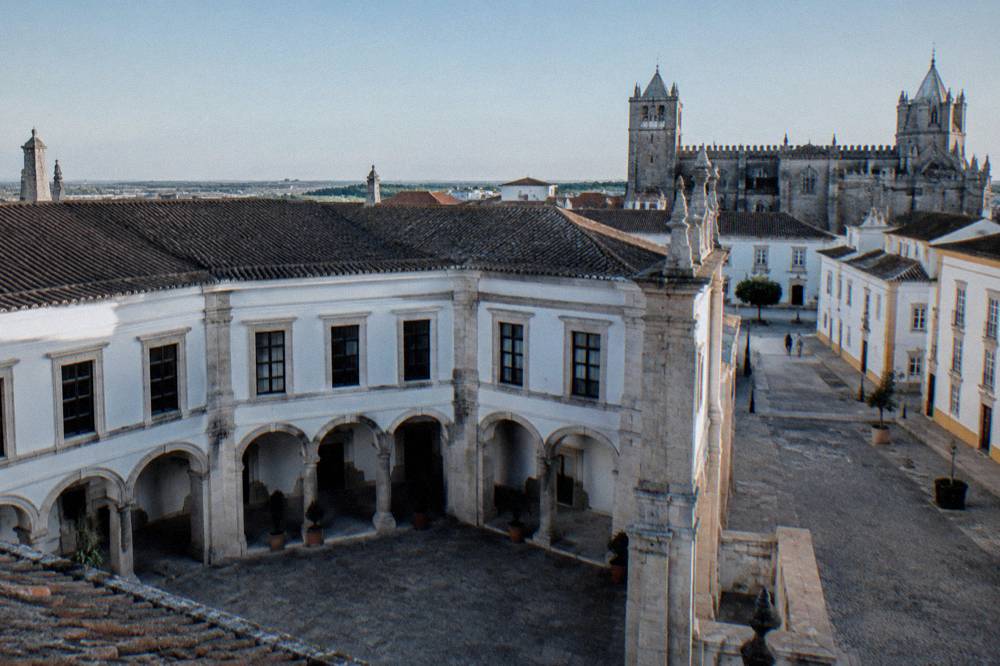
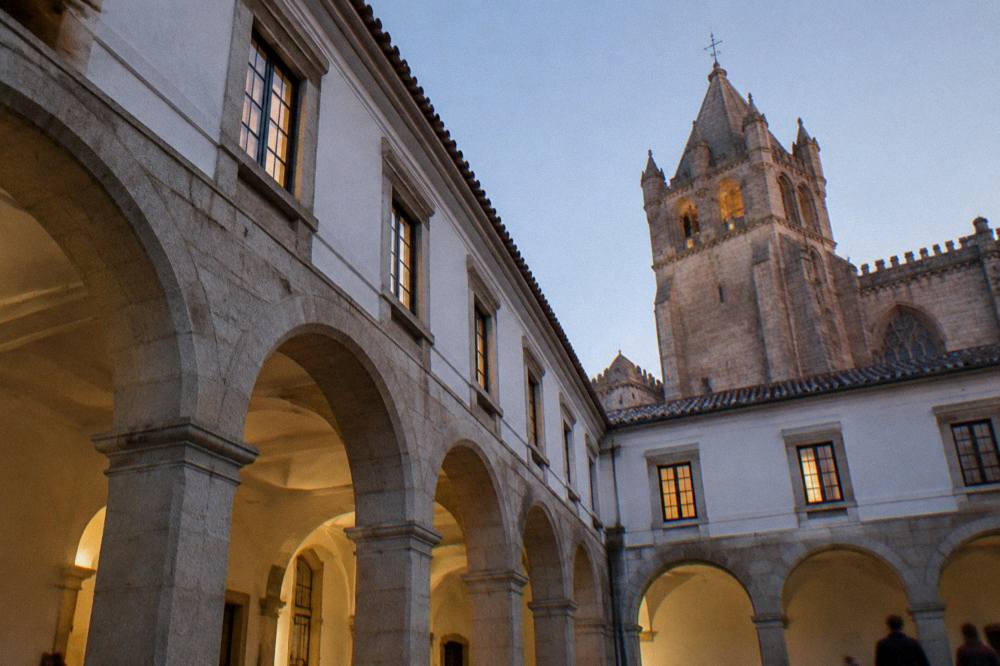
The building is as much the exhibit as anything inside it. An archbishop's palace is a working residence, a seat of administration and a statement of power at once, and the survival of the structure beside the Sé de Évora lets a visitor read the relationship between church and city directly off the walls. The palace grew in phases alongside the cathedral, and its position on the high ground of the old city, close to the Roman temple and the medieval walls, places it at the exact point where Évora's Roman, medieval and Renaissance layers sit closest together.
The founding date of 1915 is worth pausing on. Portugal created a network of national museums in the years before and after that founding, and the Évora institution was part of that movement, given a building whose religious function had ended and a collection drawn from the city and the surrounding region. For a modern visitor the practical consequence is that the museum is not a purpose-built gallery. It is a historic palace adapted for display, which shapes the visit: rooms of different periods, staircases, courtyards and thresholds, rather than a uniform set of white-walled galleries.
The museum's role in the city is also practical. On a hot Alentejo afternoon, when the IPMA 1991 to 2020 normals for the Évora station show a July mean maximum of 33.3 C, a museum is one of the few indoor refuges in the historic centre, and its two-session day means the cool morning session and the afternoon session can both be planned around. The same normals show 31.9 days a year reaching 35 C or more, so an indoor anchor for part of the day is not a luxury in this city between June and September.
What Are The Museu De Évora Opening Hours And Ticket Prices?
The Museu de Évora is open Tuesday to Sunday from 9:30 to 13:00 and again from 14:00 to 17:30, and it is closed on Mondays, 1 January, Easter Sunday, 1 May, 29 June and 25 December. An adult ticket costs 8 EUR, visitors aged 13 to 24 and seniors over 65 pay 50% off, the family ticket is also 50% off, and children up to 12 enter free. Residents in Portugal enter free on Sundays and public holidays.
The Câmara Municipal's page for the museum publishes those figures, and they are the ones to carry to the ticket window. The two-session day is the detail to plan around. The museum closes for lunch between 13:00 and 14:00, so a visitor arriving at 12:30 has half an hour inside before the doors shut for the break, and a visitor who plans the cathedral first in the morning can comfortably move to the museum for the afternoon session.
| Item | Figure | Notes |
|---|---|---|
| Adult ticket | 8 EUR | Full price at the ticket window |
| Youth 13 to 24 | 50% off | Discount on the adult price |
| Senior over 65 | 50% off | Discount on the adult price |
| Family ticket | 50% off | Discount rate for families |
| Children up to 12 | Free | No ticket required |
| Sundays and holidays, residents in Portugal | Free | For residents only |
The closure days deserve their own table, because two of them are not the ones visitors expect:
| Closure day | What it means for planning |
|---|---|
| Every Monday | Weekly closure, all year |
| 1 January | New Year's Day |
| Easter Sunday | Movable spring date |
| 1 May | Labour Day, a public holiday in Portugal |
| 29 June | São Pedro, the municipal day of Évora |
| 25 December | Christmas Day |
The 29 June closure is the one that surprises. That date is the city's municipal holiday, when Évora celebrates its own saint's day and much of the city is outdoors at festivities rather than in museums. A visitor who has only one day in Évora and lands on 29 June should plan that day around the streets, the Roman temple and the Praça do Giraldo rather than around the museum, and keep the museum for another visit or for a different day of a longer stay.
A second practical point follows from the hours. The afternoon session ends at 17:30, and the morning session at 13:00, so the last comfortable entry is well before those times in a building of this size. A visitor combining the museum with the Sé de Évora next door, which the cathedral's own page lists as open 9:00 to 17:00 with a 5.00 EUR complete-visit ticket, does the pair most easily by taking the cathedral in the first part of the morning, moving to the museum before lunch, and returning for the afternoon session if the collection deserves longer.
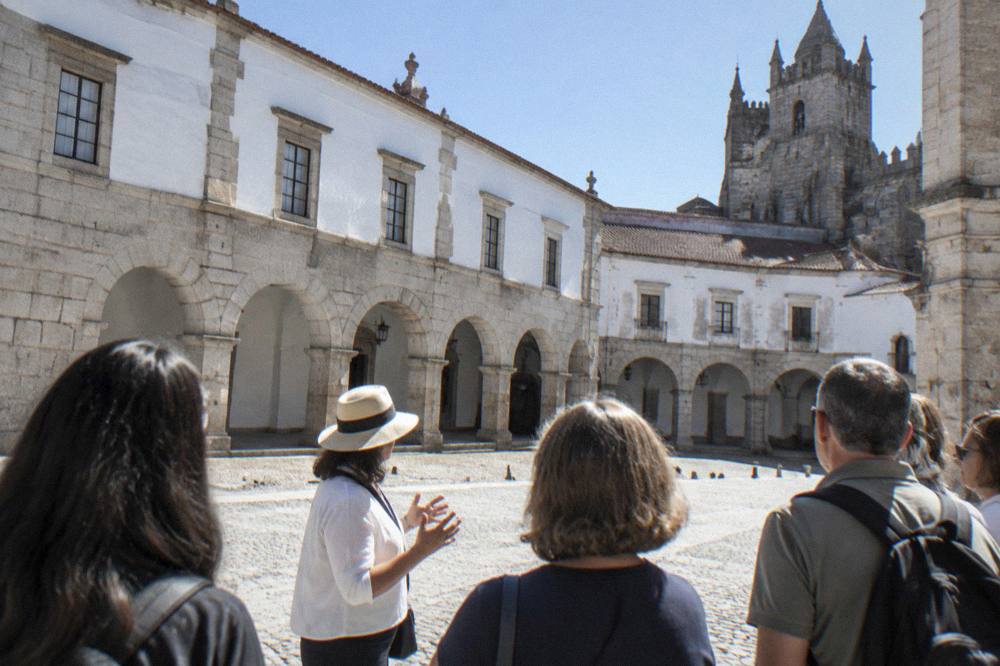
For visitors who prefer the city explained rather than read, a guided walk ties the museum's street to the rest of the historic centre. The Check availability link shows the current dates for the Évora walking tour, which covers the historic centre with a guide.
Where Is The Museu De Évora And How Does It Fit A Visit To The Sé?
The Museu de Évora stands in the former Archbishop's Palace immediately beside the Sé de Évora, the cathedral, on the high ground of the historic centre, a short walk from the Roman temple and inside the area UNESCO inscribed in 1986. The two buildings share a wall and effectively share a visit: the cathedral's complete-visit ticket at 5.00 EUR covers the church, the cloister, the roof terrace and the cathedral's own museum, while the Museu de Évora's 8 EUR ticket covers the palace collection.
The pairing is the most efficient museum morning in the Alentejo. The cathedral's own page states that one 5.00 EUR ticket buys the complete visit: the Sé itself, the cloister, the panoramic roof terrace and the cathedral museum, with children up to 12 free. The Museu de Évora sits beside it, so a visitor can do the cathedral's cloister and roof terrace first, when the light is good and the terrace is quiet, then step next door for the museum's morning session, and finish before the 13:00 lunch closure.
The wider neighbourhood matters too. The museum's doorstep is one of the oldest corners of a very old city. The Roman temple, which the municipal page says was probably dedicated to the imperial cult rather than to Diana, stands a short distance away, and the Roman temple guide covers that monument and its open, ticket-free precinct. The Praça do Giraldo, the city's main square, lies downhill within the walled centre, and the Giraldo square guide explains the arcaded space that has been the city's commercial heart for centuries.
For visitors building the day around the museum, the order that works is cathedral first, museum second, streets third. The IPMA 1991 to 2020 normals for the Évora station put the August mean maximum at 33.5 C, the hottest month of the year, so in summer the indoor hours should be the middle of the day and the open-air walking should be early morning and late afternoon. In the shoulder months the same normals show October mean maxima of 24.1 C and mean minima of 12.3 C, which makes the whole day walkable and lets the museum slot in wherever it suits.
What Can You See Inside The Museu De Évora?
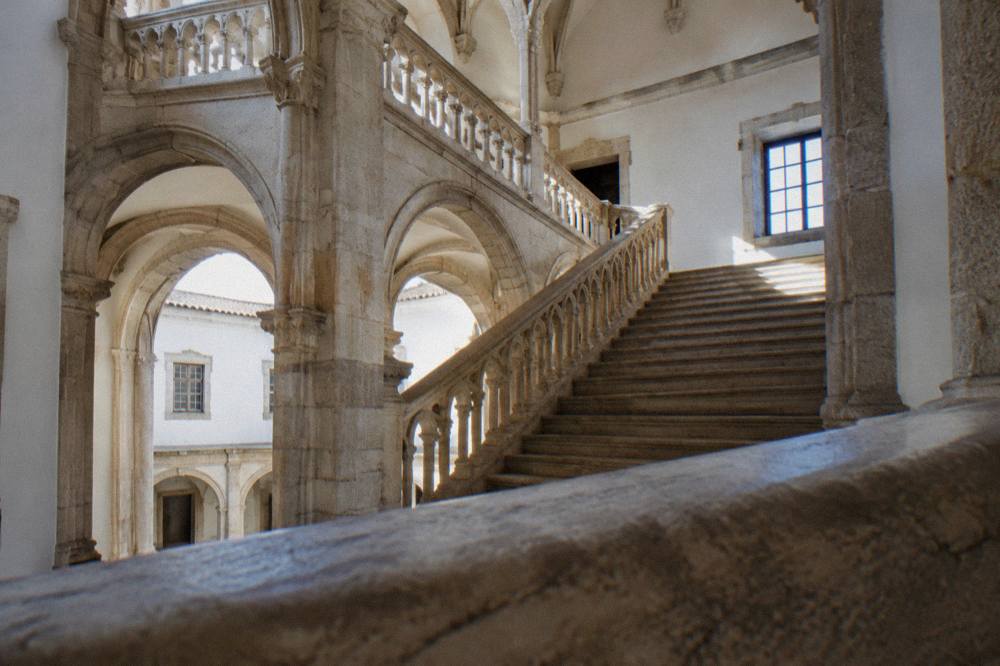
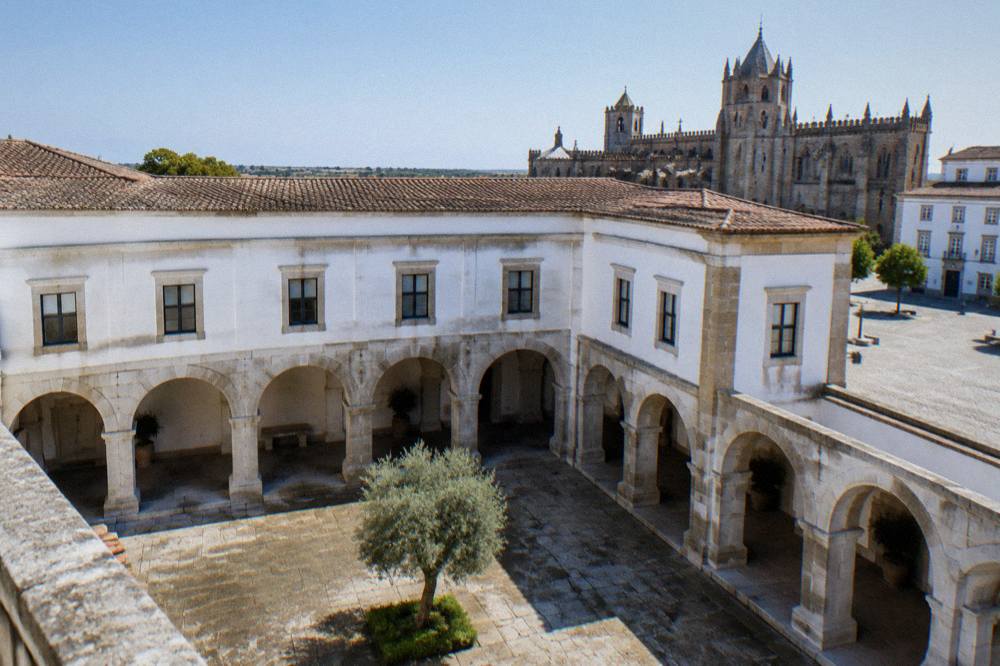
The Museu de Évora displays the archaeology, sculpture, painting and decorative arts gathered from Évora and the Alentejo region across the centuries of the city's life, from its Roman past through the medieval and Renaissance periods when Évora was a royal seat, inside the rooms and courtyards of the former Archbishop's Palace. The building itself, with its phases of construction alongside the cathedral, is part of what the visit shows, and the collection is displayed across the palace's historic rooms rather than in modern galleries.
Because the museum occupies a palace rather than a purpose-built gallery, the visit has a rhythm that suits the building. Thresholds, staircases and courtyards break up the display, and the visitor moves between the palace's own architecture and the objects placed within it. The collection's strength is regional: this is the museum where the Alentejo's material history is kept, and the exhibits connect directly to the monuments a visitor will have walked past to reach the door, including the Roman remains the city is known for and the religious art of the centuries when the archbishops and the court made Évora a centre of Portuguese life.
The palace setting also connects the museum to the city's broader story. UNESCO's inscription of the Historic Centre of Évora in 1986, under criteria (ii) and (iv), describes the city as the finest example of a city of the golden age of Portugal after the 1755 Lisbon earthquake, which Évora was largely spared. The museum's building survived that era intact, and so did the streets around it, which is why the exhibits and the city outside the windows explain each other.
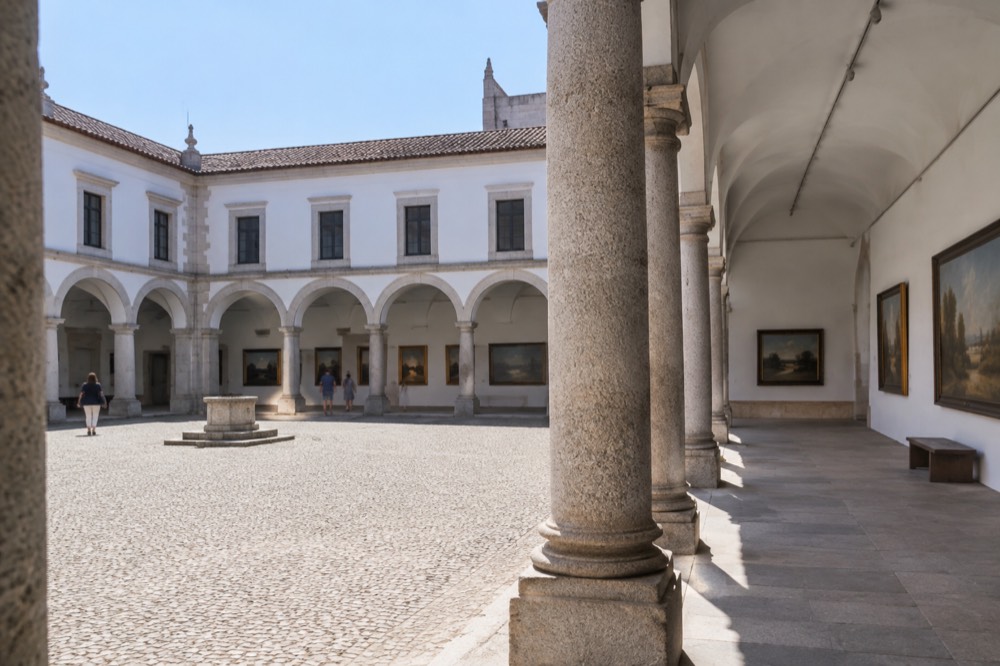
Visitors should not expect a blockbuster-gallery layout. The museum is a national institution on a human scale, and its two-session day and historic rooms make it a place to move through attentively rather than to sprint. Families will find the scale manageable: children up to 12 enter free, and the palace's staircases and courtyards give younger visitors something to look at between cases.
Is The Museu De Évora Worth The Ticket Price?
At 8 EUR for an adult, the Museu de Évora sits at the top of the city's individual monument prices, above the Sé de Évora's 5.00 EUR complete-visit ticket and the Capela dos Ossos museum ticket at 7.00 EUR, but it is the only one of the three that is a full regional museum. The discounts cut the price in half for visitors aged 13 to 24, seniors over 65 and families.
For a full day in Évora it earns its price; for a few hours, the cathedral and the Chapel of Bones come first.
The comparison is worth laying out side by side, because Évora's paid sights sit within a few minutes of one another and most visitors will buy two or three tickets in a day:
| Sight | Ticket price | What it covers |
|---|---|---|
| Museu de Évora | 8 EUR adult | Full regional museum in the former Archbishop's Palace |
| Sé de Évora | 5.00 EUR | Cathedral, cloister, roof terrace and cathedral museum |
| Capela dos Ossos and Igreja de São Francisco | 7.00 EUR adult | All museum areas of the church complex |
| Évora Ticket | 8 EUR one day, 10 EUR two days, 12 EUR three days | The multi-site Cidade-Museu network |
One caution belongs beside that table: the Évora Ticket does not include the Sé, the Capela dos Ossos or the Museu de Évora, so the multi-site pass and the three headline sights are bought separately. A visitor planning the museum, the cathedral and the Chapel of Bones in one day should budget for three individual tickets and check the Évora Ticket's own page for the network it does cover before assuming otherwise.
The discounts make the museum cheaper than it first looks. Half of 8 EUR is 4 EUR for a visitor aged 13 to 24, a senior over 65 or a family ticket, and children up to 12 pay nothing. A family with two adults and two children under 13 therefore pays for two discounted adult tickets, which makes the museum one of the better-value indoor hours in the city for that group.
For visitors who want the city's story told rather than displayed, the guided options below include a small-group cultural walk that takes in the Chapel of Bones, and a flexible historic-centre walk at a lower price point. Both start in Évora and both pass within sight of the museum's street.
How Does The Museu De Évora Fit Into One Day In Évora?
The museum works best as the late-morning anchor of an Évora day: take the Sé de Évora's cloister and roof terrace first from its 9:00 opening, move next door to the museum for the 9:30 to 13:00 session, use the 13:00 to 14:00 closure for lunch, and spend the afternoon on the Capela dos Ossos, the Roman temple and the streets of the historic centre. The museum is closed on Mondays, so the whole plan only works Tuesday to Sunday.
That schedule follows directly from the published hours. The cathedral opens at 9:00, the museum at 9:30, and the two stand beside each other, so the transfer between them costs no time at all. The museum's lunch closure at 13:00 is not a nuisance in this plan but a natural break, and the Capela dos Ossos, whose own page lists summer hours of 9:00 to 18:30 and winter hours of 9:00 to 17:00, open daily except 1 January, Easter Sunday, 24 December afternoon and 25 December, absorbs the afternoon easily.
A sample day built on the published hours:
| Time | Plan | Source of the hours |
|---|---|---|
| 9:00 | Sé de Évora, cloister and roof terrace | Cathedral's own page |
| 10:30 | Museu de Évora, morning session | Museum's published hours |
| 13:00 | Lunch in the historic centre | Museum lunch closure |
| 14:30 | Capela dos Ossos and Igreja de São Francisco | Church's published hours |
| 16:30 | Roman temple precinct and Praça do Giraldo | Open-air, no ticket |
The plan flexes with the season. In July and August, when the IPMA 1991 to 2020 normals show mean maxima of 33.3 C and 33.5 C, the indoor blocks should sit either side of the hottest hours and the open-air walking should shift to early morning and evening. In October, with a mean maximum of 24.1 C and 7.7 days of 1 mm or more of rain in the month, the same order works with an umbrella in the bag. The one day in Évora itinerary expands this schedule into a full route, and the things to do in Évora overview lists the whole set of sights with their practical details.
What Is Near The Museu De Évora?
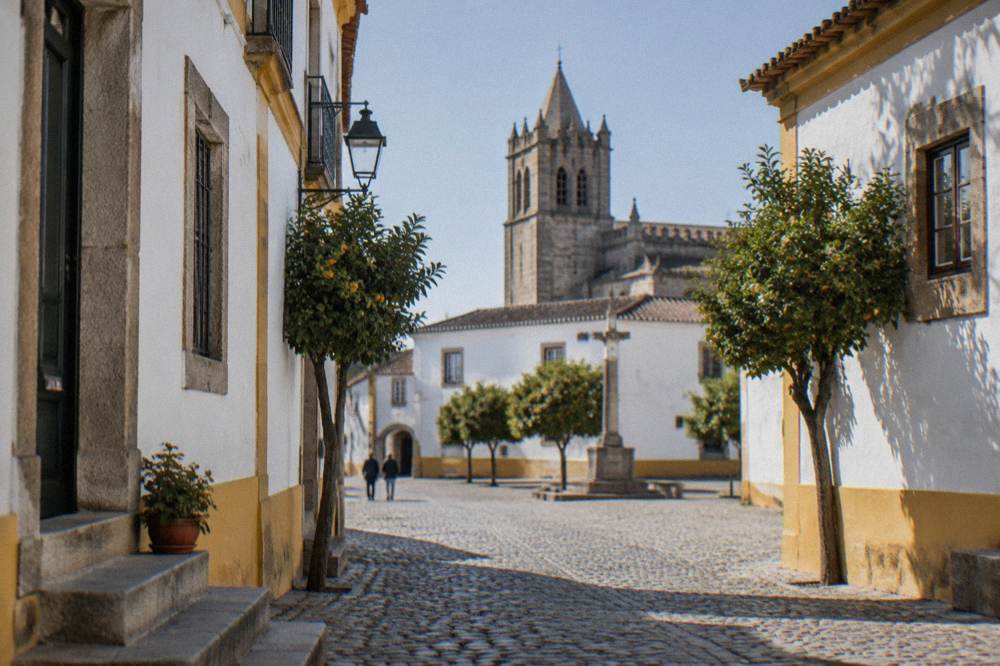
Everything in Évora's historic centre is near the Museu de Évora, because the museum stands beside the cathedral on the high ground at the centre of the UNESCO-inscribed area: the Roman temple, the Praça do Giraldo, the Convento dos Lóios, the Capela dos Ossos and the Água de Prata aqueduct all lie within the compact walled city, and a visitor can move between them entirely on foot without transport of any kind.
The immediate neighbours reward a slow circuit. The Sé de Évora guide covers the cathedral whose cloister and roof terrace share the museum's morning. The Chapel of Bones guide covers the Igreja de São Francisco's famous ossuary, whose 7.00 EUR museum ticket is separate from both the cathedral's and the museum's. The Convento dos Lóios guide covers the convent church whose official page currently shows its ticket price as temporarily unavailable, so its entry cost should be checked at the door rather than assumed.
A wider circuit of the centre:
| Neighbouring sight | Distance from the museum | Ticket situation |
|---|---|---|
| Sé de Évora | Beside the museum | 5.00 EUR complete visit |
| Roman temple | A short stroll downhill | Open-air, no ticket listed |
| Praça do Giraldo | Downhill in the centre | Public square, free |
| Capela dos Ossos | Within the walled centre | 7.00 EUR adult |
| Água de Prata aqueduct | Edge of the centre | No verified hours or price |
The Água de Prata aqueduct, which carries water into the city from the east, is listed in the aqueduct guide, but no hours or price are published for it and none should be assumed. The same applies to the University of Évora and the Palácio de Dom Manuel: the university guide describes the Jesuit college whose history UNESCO's inscription record dates to 1553, but its visiting arrangements should be checked on the day.
The compactness is the point. Évora's historic centre is small enough that a museum ticket, a cathedral ticket and a chapel ticket can all be used in a single day without transport, and the whole set sits inside walls a visitor can walk round. The historic centre guide maps the full circuit.
When Is The Best Time To Visit The Museu De Évora?
The best time to visit the Museu de Évora is on a weekday morning in spring or autumn, when the 9:30 opening gives a quiet first hour, the IPMA 1991 to 2020 normals show mild temperatures, and the city's coach crowds are thinner than in summer; the museum is closed on Mondays, and in July and August the morning session is the comfortable one, because the normals show 23.7 and 25.0 days respectively when the maximum reaches 30 C or more.
The monthly picture from the Évora station's 1991 to 2020 normals, the only figures to plan around:
| Month | Mean max (C) | Mean min (C) | Days 30 C+ | Days with 1 mm+ rain |
|---|---|---|---|---|
| April | 20.7 | 8.5 | 0.3 | 8.0 |
| May | 25.0 | 10.9 | 5.5 | 6.0 |
| June | 30.2 | 13.8 | 15.1 | 1.7 |
| July | 33.3 | 15.6 | 23.7 | 0.6 |
| August | 33.5 | 16.0 | 25.0 | 0.7 |
| September | 29.5 | 14.6 | 13.9 | 3.6 |
| October | 24.1 | 12.3 | 2.9 | 7.7 |
May and late September stand out. May averages a 25.0 C mean maximum with 6.0 days of meaningful rain in the month, and September 29.5 C with 3.6, so both months give walking weather without the summer extremes. The record maximum for the station, 45.4 C on 4 August 2018, is a reminder that the Alentejo summer can go far beyond the average, and the museum is the sensible place to be when it does.
Within the week, the Monday closure does the planning for you. Tuesday and Wednesday mornings are the quiet museum hours in most cities, and Évora follows the pattern. Weekends bring the Sunday free entry for residents in Portugal, which makes the Sunday sessions livelier, and the Feira de São João, which the municipal edital dates to 23 June to 5 July 2026 at the Rossio de São Brás, fills the late June streets with fairgoers and makes a museum hour a welcome retreat from the crowds.
Should You Take A Guided Tour Before Or After The Museu De Évora?
A guided walking tour of Évora works best before the museum visit, because a guide's overview of the city's Roman, medieval and Renaissance layers gives the palace and its collection a frame, and the museum then confirms and deepens what the walk introduced; the walks start in the historic centre, cost from $13.51 per person for a flexible historic-centre walk to $111.42 per person for a private tour with monument tickets, and run between two and three hours.
The order is a matter of what the museum is. A collection gathered from a city's own past reads differently when the visitor has just walked that city's streets, and the guided walks that pass the museum's door all cover the surrounding layers: the Roman temple, the cathedral, the medieval lanes and the aqueduct's entry into the city. The Évora walking tour covers the historic centre with a guide, and the private walking tours add the cathedral and the Chapel of Bones with tickets handled for you.
The sidecar option is the one that reframes the whole visit. The medieval sidecar tour rides the historic streets with a local driver and folds in a wine tasting, and it suits a visitor who wants the city's geography understood quickly before settling into the museum's slower rooms.
For visitors arriving from Lisbon, the guided day trips that visit Évora should be described honestly: they start in Lisbon, not in Évora, and they fit the city into a wider Alentejo day that often includes Monsaraz or a winery. A visitor on one of those trips will typically have a guided walk through the historic centre and free time, and the museum is a strong choice for that free time if the trip falls on a day the museum is open, which means any day but Monday.
How Do You Get To The Museu De Évora?
The Museu de Évora is reached on foot inside Évora's historic centre, which is compact and walled, and the city itself is reached from Lisbon by CP Intercidades train, with six through trains a day from Lisboa Oriente taking about 1 hour 40 to 1 hour 45 and costing 13.90 EUR second class or 18.50 EUR first class in the timetable valid since 6 September 2026, arriving at Évora station, from where the historic centre is a walk into the old city.
The train is the practical answer for most visitors. CP's timetable, valid since 6 September 2026, lists six through departures from Lisboa Oriente at 07:02, 09:02, 09:58, 13:35, 17:02 and 19:02, arriving in Évora at 08:47, 10:45, 11:40, 15:13, 18:41 and 20:46, with no change needed at Casa Branca on these services. The 07:02 departure arriving 08:47 is the one that puts a visitor at the museum's doorstep before its 9:30 opening, and the 09:02 arriving 10:45 still leaves a full museum morning. The fare is 13.90 EUR second class and 18.50 EUR first class.
The station sits outside the historic centre, and the walk in is part of the arrival. The Évora train station guide covers the station and the route into the old city, and the getting around Évora guide explains the centre's street layout, which is small enough that once inside the walls every sight in this article, the museum included, is reached on foot.
Visitors driving in should plan parking outside or at the edge of the centre and walk in, and the Évora parking guide covers the options. A municipal tourist tax applies to stays in the city, so check with your hotel at booking rather than assuming the room rate is the whole cost.
What Should You Know Before You Go To The Museu De Évora?
Before visiting the Museu de Évora, check three things: that the day is not a Monday or one of the five annual closure days, that the visit fits the 9:30 to 13:00 or 14:00 to 17:30 sessions rather than the lunch break, and whether any discount applies, because the 50% rate for visitors aged 13 to 24, seniors over 65 and families cuts the 8 EUR adult ticket in half. The palace setting beside the cathedral is there whenever the doors are open.
The short checklist, assembled from the published hours and prices:
| Check before you go | Where to check |
|---|---|
| Monday closure and holiday closures | The museum's published calendar |
| The 13:00 to 14:00 lunch closure | Plan the session, not just the day |
| Discount eligibility | Ticket window, with ID for youth and senior rates |
| Free Sunday entry for residents | Only applies to residents in Portugal |
| Convento dos Lóios ticket next door | At the door, its price is currently unavailable |
The last row is the one that catches visitors who assume the neighbouring convent church shares the museum's arrangements. It does not. The Convento dos Lóios's official page shows its price as temporarily unavailable, and the Museu de Évora's 8 EUR ticket applies only to the museum, so the convent's entry cost should be asked about at its own door.
Visitors with more than a day should read the two days in Évora itinerary, which gives the museum a full morning on one of its days, and the best time to visit Évora guide, which sets the museum among the city's seasonal rhythms. The Évora Travel Guide homepage gathers the whole set of attraction, itinerary and day-trip pages in one place.
Common Questions About The Évora Museum
How much does the Évora Museum cost?
An adult ticket to the Museu de Évora costs 8 EUR. Visitors aged 13 to 24, seniors over 65 and the family ticket all receive 50% off that price, and children up to 12 enter free.
What are the Évora Museum opening hours?
The Museu de Évora is open Tuesday to Sunday from 9:30 to 13:00 and from 14:00 to 17:30. It closes for lunch between 13:00 and 14:00, and it is closed all day on Mondays.
Is the Évora Museum open on Mondays?
No. The Museu de Évora is closed every Monday, and additionally on 1 January, Easter Sunday, 1 May, 29 June and 25 December. Plan a Monday in Évora around the outdoor sights instead.
Is the Évora Museum free?
Entry is free for children up to 12 and, on Sundays and public holidays, for residents in Portugal. For everyone else the adult ticket is 8 EUR, with 50% discounts for visitors aged 13 to 24, seniors over 65 and families.
Where is the Évora Museum located?
The Museu de Évora is housed in the former Archbishop's Palace immediately beside the Sé de Évora, the cathedral, on the high ground of the UNESCO-inscribed historic centre. The Roman temple and the Praça do Giraldo are both a short stroll away.
How long should I spend at the Évora Museum?
Most visitors will want the better part of one of the museum's sessions, either the 9:30 to 13:00 morning block or the 14:00 to 17:30 afternoon block. The palace building and its collection reward a slow pass, and pairing it with the cathedral next door fills a full morning comfortably.
The Museu de Évora is the city's keep, the place where the Alentejo's own past is held in the palace its archbishops built, and a morning spent between its rooms and the cathedral's cloister beside it is the clearest single introduction Évora offers.