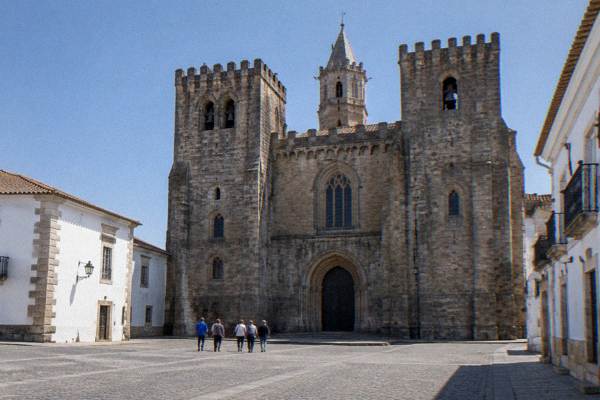
Évora Cathedral
The Sé de Évora is the largest cathedral in the Alentejo and the anchor of the UNESCO-listed historic centre. One 5.00 EUR ticket covers the church, the cloister, the roof terrace and the museum, and this page explains what that ticket buys, when to use it and how the building fits the rest of a visit to Évora, Portugal.
Short answer
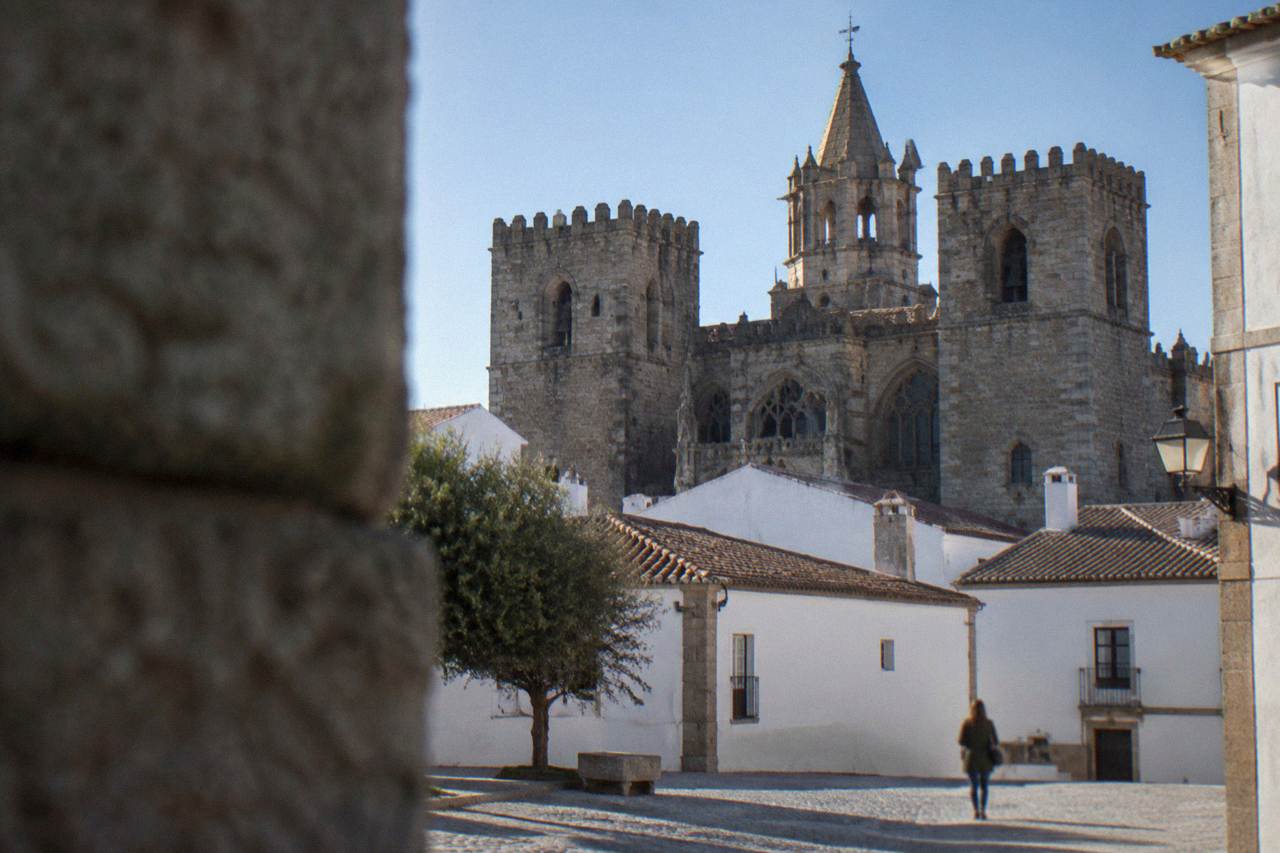
The Sé de Évora charges one 5.00 EUR adult ticket for the complete visit: cathedral, cloister, roof terrace and museum. Children up to 12 enter free with a parent or guardian. The cathedral is open 9:00 to 17:00, with museum admission closing 30 minutes before, and it closes only on the afternoon of 24 December, 25 December and 1 January.
The Sé de Évora, the cathedral of the Alentejo, stands at the highest point of the walled city, and its twin towers and crowning terrace define the skyline of Évora, Portugal. The Historic Centre of Évora was inscribed by UNESCO in 1986 under criteria (ii) and (iv), and UNESCO's criterion (iv) calls the city the finest example of a city of the golden age of Portugal, the golden age that followed the 1755 Lisbon earthquake, which Évora was largely spared. The cathedral sits at the centre of that ensemble, between the Roman temple, the Museu de Évora and the lanes that fall away toward the Praça do Giraldo. This page covers the practical core: what the one ticket includes, what each part of the complex is like, when to come and how the Sé fits the rest of a stay.
What Is The Évora Cathedral And Why Does It Anchor The Old City?
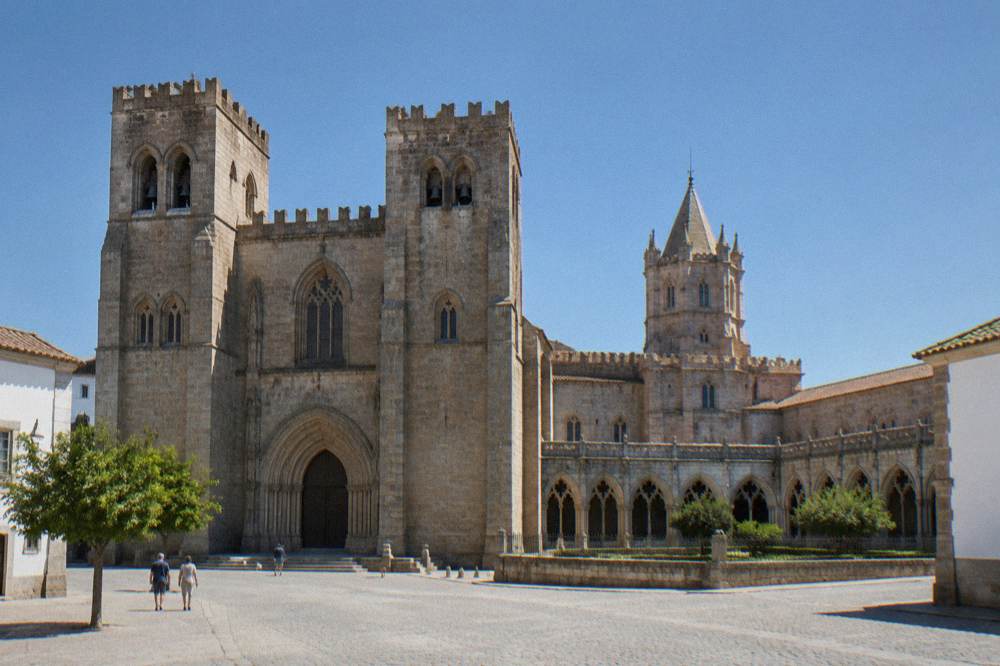
The Sé de Évora is the metropolitan cathedral of the Alentejo region, a fortified granite church whose west front, rose window and asymmetrical towers close the view up the hill from the Roman temple below it. It is the religious seat of the city and the single most prominent building inside the UNESCO Historic Centre of Évora, inscribed in 1986. Its terrace looks out over the whole walled town, the plain beyond and the spires of the Igreja de São Francisco.
The cathedral's position is not accidental. Évora rises on a low hill in the middle of the Alentejo plain, and the church was built on the high point of the ridge, where the Roman town of Ebora had stood before it. Moorish rule in Évora ended in 1165, and the Christian city that grew afterwards placed its cathedral at the summit of the ridge line, with the medieval walls looping around it. UNESCO's listing for the Historic Centre of Évora notes the density of monuments packed inside that loop: the Templo Romano, the Igreja de São Francisco, the former Jesuit university and the cathedral itself.
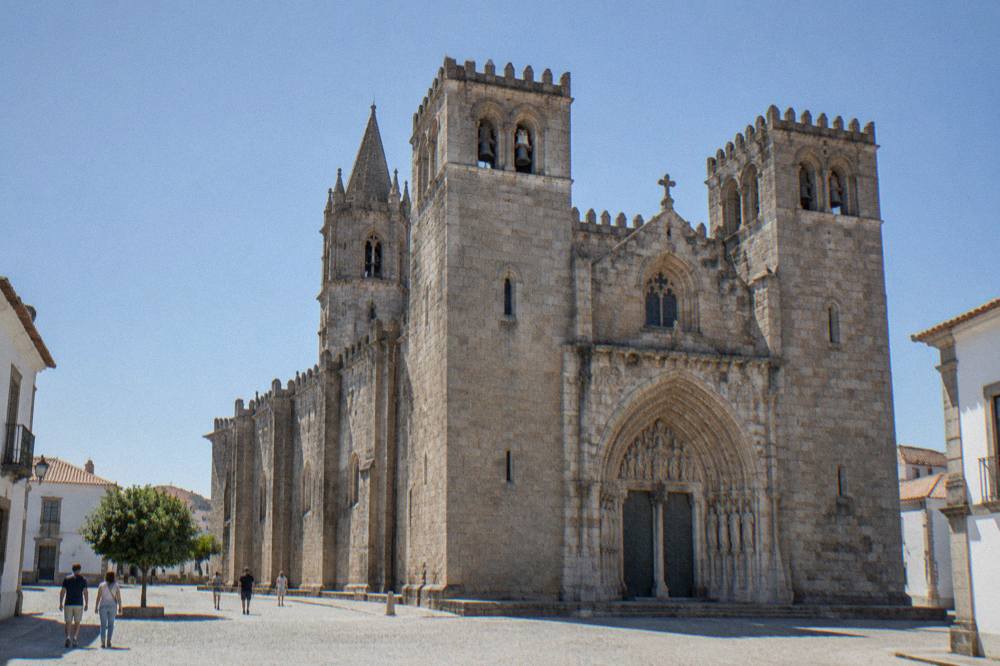
The building reads like a summary of Portuguese church architecture. The main body is Romanesque in its lower storeys, heavy and fortress-like, with a great west portal carved with apostles. Above it the rose window and the upper stages of the towers are Gothic, and the finishing touches, including the crossing that spans the nave, belong to later centuries. The church is built of the local grey granite that gives every old building in Évora its colour, and in the low afternoon light the whole west front glows the same amber as the Roman temple two minutes downhill.
What surprises many first-time visitors is the scale of the complex behind the facade. The cathedral is not one space but four: the nave and chapels, the cloister with its upper gallery, the roof terrace above the cloister, and a museum of religious art reached from inside the building. The official ticket page sells all four as a single "complete visit", and there is no way to buy the terrace alone.
How Much Do Évora Cathedral Tickets Cost?
One complete-visit ticket costs 5.00 EUR for an adult and covers the cathedral, the cloister, the panoramic roof terrace and the museum, all in a single entry. Children up to 12 enter free with a parent or guardian. The cathedral's own ticket page lists no other tier: there is no cheaper roof-only or church-only option, so the 5.00 EUR ticket is the only way in.
That single-ticket structure matters for planning, because it makes the Sé one of the least expensive of Évora's major ticketed monuments. The Capela dos Ossos at the Igreja de São Francisco charges 7.00 EUR for an adult museum ticket, and the Museu de Évora charges 8 EUR, so the cathedral's 5.00 EUR complete visit is the entry point of the big three. A family with two adults and children under 12 pays only for the adults here, while the same family at the Capela dos Ossos would pay the 15.00 EUR family rate.
The other pass worth knowing is the Évora Ticket, the multi-site pass for the Cidade-Museu network. It costs 8 EUR for one day, 10 EUR for two days and 12 EUR for three days, and it is free for children up to 12. The pass covers a network of municipal sites, but it does not include the Sé, the Capela dos Ossos or the Museu de Évora, which are ticketed separately. Anyone building a budget around the pass should check the network list on the pass's own page before assuming coverage.
| Ticket | Adult price | Children | What it covers |
|---|---|---|---|
| Sé de Évora complete visit | 5.00 EUR | Free up to 12 with parent or guardian | Cathedral, cloister, roof terrace, museum |
| Capela dos Ossos museum ticket (Igreja de São Francisco) | 7.00 EUR | Youth to 25 pay 5.00 EUR | Capela dos Ossos and the church's museum areas |
| Museu de Évora | 8 EUR | Free to 12; 13-24 and over-65 half price | Former Archbishop's Palace collections |
| Évora Ticket, one day | 8 EUR | Free to 12 | Cidade-Museu network sites only |
The pattern in that table is the one to remember: the three headline monuments of Évora are each sold on their own ticket, and the municipal pass covers a different set of buildings. A visitor who wants the Sé, the bones chapel and the museum should budget for three separate entries, and anyone mainly walking the streets, squares and the Roman temple needs none of them, since the Templo Romano is an open-air monument with no ticket listed.
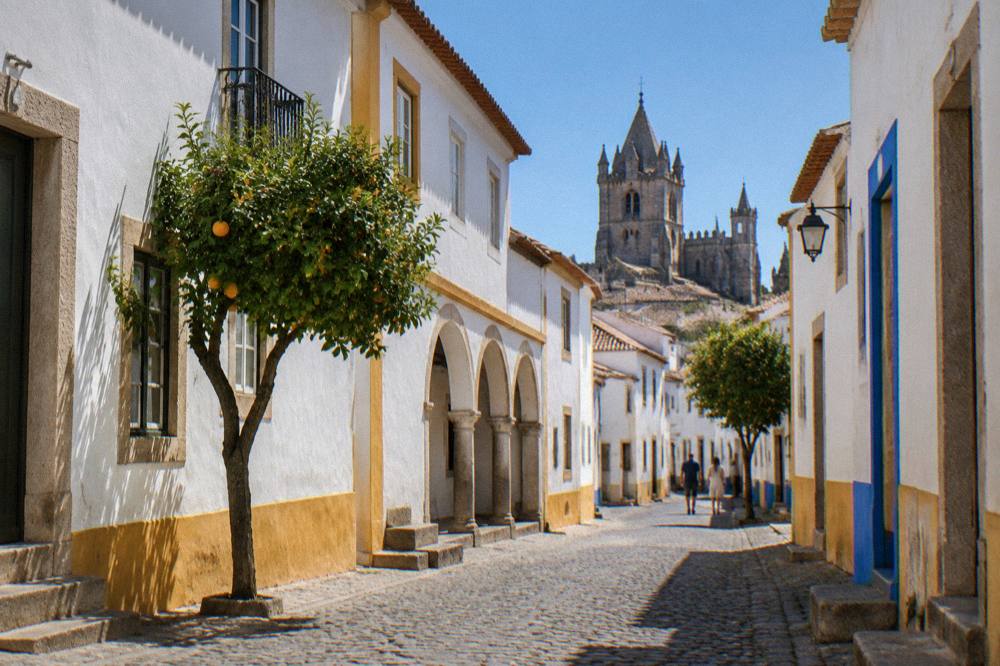
For travellers who prefer a guide to the logistics, the small-group cultural walking tour with Chapel of Bones entry is the natural pairing: it walks the historic centre and finishes at the bones chapel, and the Sé sits on the same hill between the two. The guided options below all start in Évora and cover the cathedral district in some form.
What Do You See Inside The Sé De Évora?
Inside, the complete visit runs through four experiences: the granite nave with its carved west portal and side chapels, the Gothic cloister with its upper walkway, the roof terrace with the widest panorama in the city, and the cathedral museum of religious art. The cathedral's page describes all four as one visit, and the museum's last admission is 30 minutes before the 17:00 closing, so the museum is the part to see first if you arrive late.
The nave is the sober heart of the building. Grey granite columns carry the vaults, daylight comes through the rose window and the clerestory, and the carved apostles of the west portal are the finest sculpture on the facade. The interior is dim, cool in the Alentejo summer and still in a way the streets outside never are. Side chapels hold gilded retables and carved stonework from across the cathedral's long life, and the whole space is scaled for a city that was once a royal seat, not for a country town.
The cloister opens off the nave. It is a square of Gothic arcading on two levels, with a garden at the centre and a walkway along the upper storey that leads toward the terrace stairs. The cloister's upper gallery is the transitional space of the visit: from its corners you look down into the garden, across the roofs of the old town and up at the cathedral's own towers, and it is where the building first starts to feel like a fortress, which in the medieval centuries it partly was.
The museum occupies the spaces around the cloister and holds the cathedral's treasury: religious art, vestments, metalwork and sculpture gathered from the diocese. It is a compact collection rather than a national one, and it rewards the half hour the ticket allows. The Museu de Évora nearby, in the former Archbishop's Palace, is the city's great museum, and the two make a natural pairing for anyone interested in religious art, but they are separate institutions with separate tickets.
When Is The Évora Cathedral Open?
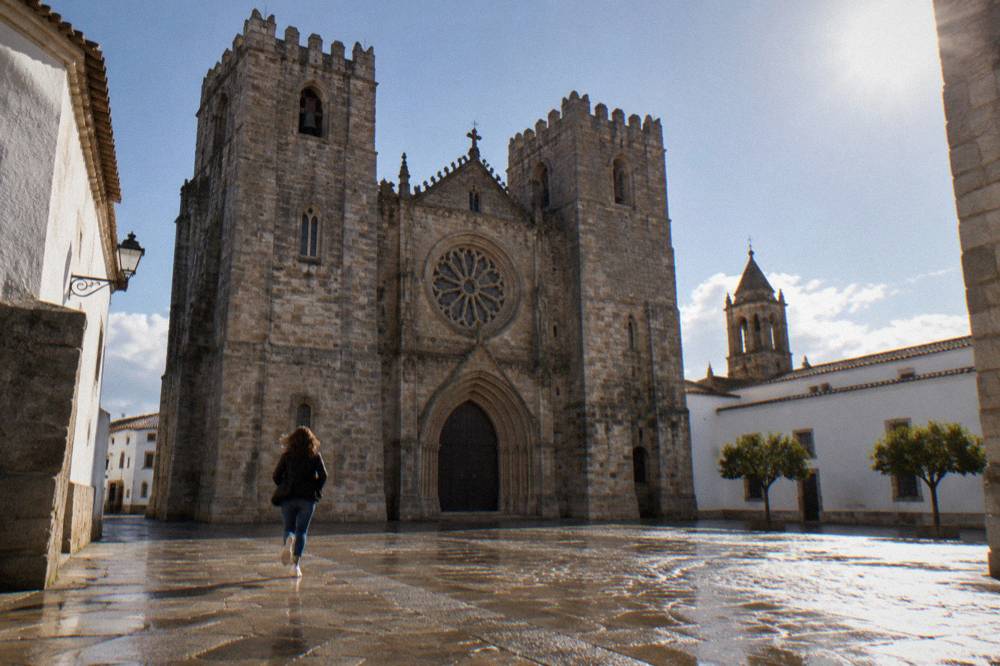
The Sé de Évora is open 9:00 to 17:00, with the museum's last admission 30 minutes before closing at 16:30. It closes only on the afternoon of 24 December, on 25 December and on 1 January. There is no weekly closing day, so unlike the Museu de Évora, which is closed on Mondays, the cathedral can be visited on any ordinary day of the week.
That seven-day week is genuinely useful for itinerary planning. The Museu de Évora runs Tuesday to Sunday, 9:30 to 13:00 and 14:00 to 17:30, and closes on Mondays as well as on 1 January, Easter Sunday, 1 May, 29 June and 25 December. The Igreja de São Francisco keeps long hours, 9:00 to 18:30 in summer legal time and 9:00 to 17:00 in winter, closing on 1 January, Easter Sunday, the afternoon of 24 December and 25 December. A Monday visitor to Évora therefore finds the Sé and the bones chapel open but the Museu de Évora shut, which makes Monday the day to do the two churches and the streets rather than the museums.
| Monument | Hours | Closed |
|---|---|---|
| Sé de Évora | 9:00-17:00, museum last admission 16:30 | Afternoon of 24 Dec, 25 Dec, 1 Jan |
| Igreja de São Francisco and Capela dos Ossos | Summer 9:00-18:30, winter 9:00-17:00 | 1 Jan, Easter Sunday, afternoon of 24 Dec, 25 Dec |
| Museu de Évora | Tue-Sun 9:30-13:00 and 14:00-17:30 | Mondays, 1 Jan, Easter Sunday, 1 May, 29 Jun, 25 Dec |
| Évora tourist office, Praça do Giraldo 73 | Winter weekdays 9:00-18:00, Sat-Sun 10:00-14:00 and 15:00-18:00 | Hours indicative, published by the Câmara Municipal |
One more closure detail belongs on any Évora planning page. The Feira de São João, the city's great June fair, ran from 23 June to 5 July in 2026 on the Rossio de São Brás under the theme "Évora: Capital Europeia ao Sul", and the fair's annual arrival reshapes the east end of town for its fortnight. The 2027 dates follow the same late-June-into-early-July pattern; anyone visiting in that window should expect the fairground atmosphere around the Rossio and check the Câmara Municipal's notice for the exact dates before booking.
Is The Roof Terrace Worth The Extra Steps?
The roof terrace is included in the same 5.00 EUR complete-visit ticket, so there is no extra charge and no separate decision to make: you buy the ticket, the terrace is yours. From it, the whole walled city lies below, from the Templo Romano and the Museu de Évora on one side to the Igreja de São Francisco, the university and the plain of the Alentejo beyond the walls.
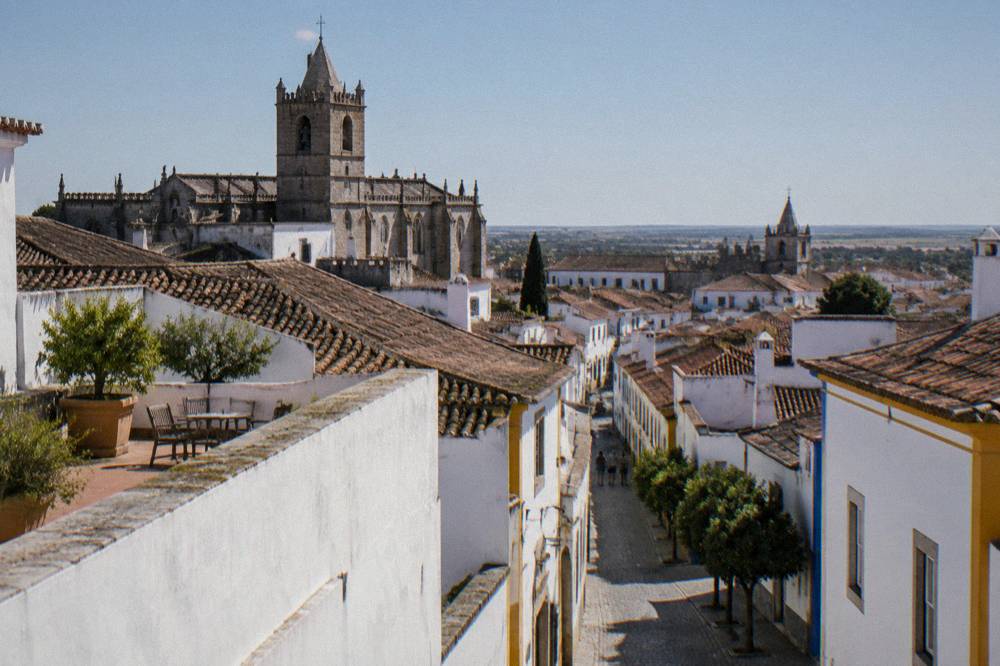
The terrace is the reason many visitors remember the Sé. Évora has few high viewpoints, and the cathedral's platform, reached through the cloister level, is the one that puts the entire UNESCO-listed ensemble in a single frame. The granite towers stand at either end, the roofline of the nave runs between them, and the parapets look down on the whitewashed cubes of the old town, the green of the Jardim Público district and, on clear days, the flat horizon of the plain in every direction. The rooftop views of Évora are a subject in their own right, and the Sé's terrace is the anchor of them.
Two practical notes. The stairs to the terrace are stone, narrow in places and unlit at the turns, so they ask for steady shoes and a little care, and the terrace is open to the sky, which in an Alentejo July means direct sun on stone. IPMA's 1991 to 2020 normals for the Évora station show a July mean maximum of 33.3 C and an August mean maximum of 33.5 C, with 31.9 days a year reaching 35 C or more, so the terrace belongs to the morning or the last hour before closing in high summer. The same normals give October a mean maximum of 24.1 C and only 2.9 days at 30 C or more, which is one reason autumn is the season the climate table below keeps pointing to. The full index of guides sits on Évora Travel Guide.
How Does The Sé Compare With Évora'S Other Big Monuments?
The Sé is the largest and, at 5.00 EUR, the cheapest of Évora's three headline ticketed monuments, and it is the only one that combines a church interior, a cloister, a roof panorama and a museum on one ticket. The Capela dos Ossos is the most famous single space, the Museu de Évora is the strongest art collection, and the Sé is the building that explains the city.
Each of the three answers a different question. The bones chapel, two minutes downhill inside the Igreja de São Francisco, is the emotional jolt: a chapel lined with human bones, visited on a 7.00 EUR museum ticket that also covers the chapter room, the nativity collection and the other museum areas of the complex. The Museu de Évora, in the former Archbishop's Palace beside the cathedral, is the cultural depth: a national museum founded officially in 1915, open Tuesday to Sunday for 8 EUR. The Sé is the architecture and the view, and it is the one of the three you can see whole, from portal to parapet, in a single visit of an hour or so.
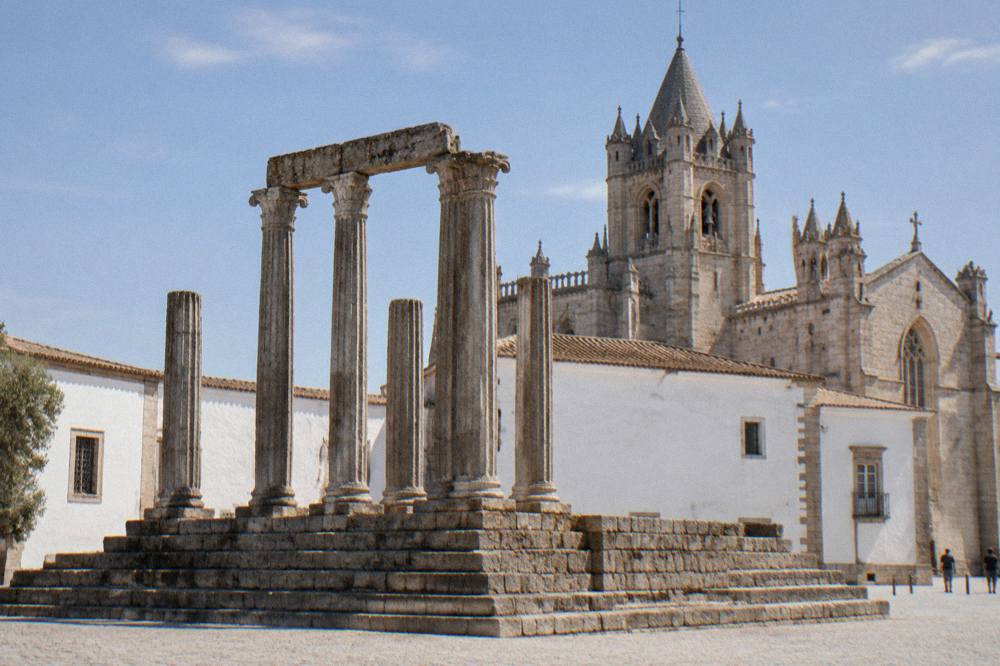
Around them sits a ring of monuments that cost nothing to stand in front of. The Templo Romano, popularly called the Temple of Diana, stands in the open air at the top of the hill; the municipal page says it was probably dedicated to the imperial cult rather than to the goddess, that it measures 25 by 15 m, that it was reused as a municipal butcher's shop and that its walls were freed in 1870. The Praça do Giraldo, the Água de Prata aqueduct and the Roman and medieval walls are all free public space. A full day in Évora can be built with the Sé as its one paid interior and everything else walked.
| Monument | Type | Entry | Position in a visit |
|---|---|---|---|
| Sé de Évora | Cathedral, cloister, terrace, museum | 5.00 EUR complete visit | The anchor: start here for the view and the architecture |
| Igreja de São Francisco and Capela dos Ossos | Church and bone chapel museum | 7.00 EUR adult, 5.00 EUR youth and senior | The famous interior, pair with the Sé on the same hill |
| Museu de Évora | National museum, former Archbishop's Palace | 8 EUR, closed Mondays | The art collection, pair with the Sé across the square |
| Templo Romano | Open-air Roman monument | No ticket listed | Free, five minutes from the cathedral portal |
| Praça do Giraldo | Public square | Free | The city's living room, downhill from the Sé |
When Is The Best Time Of Year To Visit The Évora Cathedral?
The most comfortable months for the Sé de Évora are April, May, June, September and October, when IPMA's 1991 to 2020 normals for the Évora station put mean maximum temperatures between 20.7 C and 30.2 C and the cathedral's terrace is pleasant in the middle of the day. July and August average 33.3 C and 33.5 C at the maximum, so in deep summer the terrace belongs to the morning or the final hour before the 17:00 closing.
The climate table is worth reading in full, because the Alentejo is the hottest part of Portugal and the numbers shape every itinerary. The 1991 to 2020 normals for station Évora, number 558, record 86.5 days a year with a maximum of 30 C or more and 31.9 days at 35 C or more, almost all of them between June and September. The record maximum for the station is 45.4 C, set on 4 August 2018. Rain, by contrast, is scarce in summer: July averages 2.7 mm and August 6.0 mm over the same 30-year window, while October through December average 81.5, 86.0 and 85.1 mm.
| Month | Mean max (C) | Mean min (C) | Rain (mm) | Days 30 C+ |
|---|---|---|---|---|
| April | 20.7 | 8.5 | 62.1 | 0.3 |
| May | 25.0 | 10.9 | 46.6 | 5.5 |
| June | 30.2 | 13.8 | 10.6 | 15.1 |
| July | 33.3 | 15.6 | 2.7 | 23.7 |
| August | 33.5 | 16.0 | 6.0 | 25.0 |
| September | 29.5 | 14.6 | 33.9 | 13.9 |
| October | 24.1 | 12.3 | 81.5 | 2.9 |
Figures are the 1991 to 2020 averages for the Évora station, published by IPMA. What the table says for the cathedral specifically is simple: in June, July and August, arrive at 9:00 when the doors open, do the nave and cloister while the stone is still cool, and take the terrace before noon or leave it to the last hour. In October, the single rainiest note is the 81.5 mm monthly total, but that still averages fewer than eight days with a millimetre or more, so a full day around the Sé is rarely written off. Winter, with a January mean maximum of 14.1 C and a mean minimum of 4.5 C, is cold, quiet and often bright, and the cathedral is one of the few interiors in Évora large enough to feel warm after a morning outside.
Can You See The Sé De Évora On A Guided Tour?
Yes: several guided tours of Évora's historic centre include the cathedral district, and the strongest fit is the small-group cultural walking tour that pairs the old town with the Chapel of Bones, from $77.66 per person. A private skip-line option covering the university, the cathedral and the bones chapel with a wine tasting runs from $91.39, and a sidecar tour of the medieval city with a tasting runs from $61.90.
Guided visits split into two kinds. Walking tours take the cathedral as one stop inside a circuit of the UNESCO centre, which suits a first day in the city: the small-group cultural walking tour with the Chapel of Bones is the related pick on this page, a two-hour small-group walk rated 4.9 from 141 reviews. The private skip-line tour of the university, cathedral and bones chapel with wine goes further, taking in the three big interiors in three hours with the wine tasting at the end, rated 5 from 48 reviews.
The third option is mechanical rather than pedestrian. The medieval sidecar tour with wine tasting carries two passengers through the walled city in a classic sidecar, a three-hour ride rated 4.9 from 16 reviews, and it is the version of Évora for travellers with limited walking appetite or a taste for the unusual. For anyone who wants only the essentials and a local's introduction, the free GuruWalk walks, including the Essential Free Tour of Évora, tip-based and rated 4.93 from 774 reviews, cover the cathedral square among the standard stops; the price of a GuruWalk is whatever you choose to tip the guru at the end.
| Tour | Length | From (per person) | Rating |
|---|---|---|---|
| Small-group cultural walking tour with Chapel of Bones | 2 hours | $77.66 | 4.9 from 141 reviews |
| Private skip-line: university, cathedral, bones chapel, wine | 3 hours | $91.39 | 5 from 48 reviews |
| Medieval sidecar tour with wine tasting | 3 hours | $61.90 | 4.9 from 16 reviews |
None of these replaces the ticket itself where entry fees apply, so read each listing's inclusions before booking; the skip-line product is the one built around monument entries. Prices shown are the operators' current card prices in US dollars, and every button below checks live availability without committing you to a date.
Where Should You Go After The Cathedral?
The natural circuit from the Sé runs downhill through the whole monument core: the Templo Romano beside the cathedral, the Museu de Évora next to it, the Convento dos Lóios and the Igreja de São Francisco with the Capela dos Ossos below, and the Praça do Giraldo at the bottom of the hill, all inside a few minutes' walk of one another.
Start with what shares the summit. The Roman temple of Évora stands on the terrace immediately below the cathedral's west front, its columns the most photographed stones in the city. The Museu de Évora occupies the former Archbishop's Palace alongside, closed Mondays but otherwise open through the middle of the day and the afternoon. The university of Évora, the former Jesuit college whose institution dates from 1553, lies a short walk south, its schist-and-marble cloister among the finest in Portugal.
Downhill, the choices multiply. The Igreja de São Francisco and Capela dos Ossos is the second ticketed interior of the hill, and the Giraldo square at the bottom is the city's café-lined heart, where the tourist office sits at number 73. The Água de Prata aqueduct marches into the town from the east, its arches absorbed into houses along its line, and the Roman walls and the medieval wall loop the whole ensemble. For a full plan, the things to do in Évora page assembles the complete set, and the Évora Travel Guide editorial desk keeps each monument page current with the official hours and prices.
Common Questions About The Évora Cathedral
How much does it cost to visit the Évora Cathedral?
One complete-visit ticket costs 5.00 EUR for an adult and covers the cathedral, the cloister, the roof terrace and the museum. Children up to 12 enter free with a parent or guardian. The cathedral's ticket page lists no other tier, so there is no separate roof-only or church-only price.
What are the Évora Cathedral opening hours?
The cathedral is open 9:00 to 17:00, with the museum's last admission 30 minutes before closing at 16:30. It closes only on the afternoon of 24 December, on 25 December and on 1 January, and it has no weekly closing day.
Is the Évora Cathedral included in the Évora Ticket?
No. The Évora Ticket, at 8 EUR for one day, 10 EUR for two and 12 EUR for three, covers the Cidade-Museu network of municipal sites, and it does not include the Sé de Évora, the Capela dos Ossos or the Museu de Évora. Those three monuments are ticketed separately.
Can you go up the Évora Cathedral towers or roof?
Yes, the roof terrace is part of the standard complete visit and needs no extra ticket. Reached through the cloister, it gives a panorama over the walled city, the Roman temple below and the Alentejo plain. The stairs are stone and narrow in places, so allow time and wear steady shoes.
How long does a visit to the Évora Cathedral take?
A full complete visit, nave, cloister, terrace and museum, fits comfortably inside about an hour, with the museum's last admission at 16:30 the only hard deadline inside the 17:00 closing. Arriving early in the day leaves the rest of the afternoon for the Museu de Évora, the bones chapel or the streets.
Is the Évora Cathedral the same as the Church of São Francisco?
No. The Sé de Évora is the cathedral at the top of the hill, on the 5.00 EUR complete-visit ticket. The Igreja de São Francisco, which contains the Capela dos Ossos, is a separate church a few minutes downhill, open longer hours in summer and ticketed at 7.00 EUR for an adult.
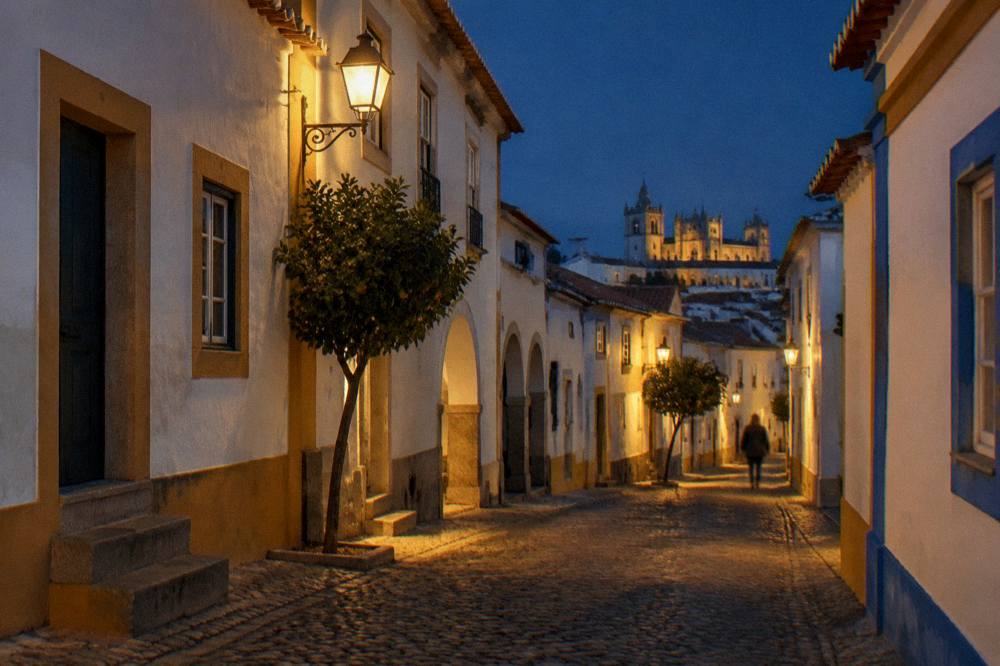
The Sé de Évora rewards the full circuit: buy the one 5.00 EUR ticket, climb to the terrace while the light is still moving across the plain, and come down through the cloister into a city that UNESCO has called the finest surviving example of Portugal's golden age.