Lisbon To Évora
Lisbon to Évora is one of Portugal's easiest inland journeys: a direct train of about an hour and forty minutes carries you from the capital into the heart of the Alentejo.
Short answer
CP lists six through Intercidades trains a day from Lisboa Oriente to Évora in its 2026 timetable, taking about 1 hour 40 to 1 hour 45 and costing 13.90 EUR in second class. Driving covers about 130 km, and guided day tours from Lisbon start at $64.09 per person.
Lisbon to Évora is the classic gateway route into the Alentejo: Évora is the capital of the district of that name in southern Portugal, a UNESCO-listed city of Roman temples, medieval walls and whitewashed squares about 130 km inland from the capital. The Atlantic coast is roughly 90 km away in the other direction, so nothing about this journey involves a beach. What it involves is a direct railway line, a fast motorway, and one of the most rewarding small cities in the country waiting at the end of it.
Every practical way of making the trip is laid out below: the train times CP publishes, the fares, the driving route, and the guided options for travellers who would rather not plan the day themselves. For the fuller picture of what waits at the other end, the Évora Travel Guide homepage collects the city's monuments, museums and day trips in one place.
How Far Is Lisbon From Évora, And Why Is The Trip Worth It?
Lisbon lies about 130 km northwest of Évora by road, and the train covers the distance in about 1 hour 40 to 1 hour 45. Évora repays the journey because its historic centre was inscribed by UNESCO in 1986, on criteria (ii) and (iv), and UNESCO's criterion (iv) calls it the finest example of a city of the golden age of Portugal after the 1755 Lisbon earthquake, which Évora was largely spared. Few day-trip destinations from the capital carry that weight of recognition.
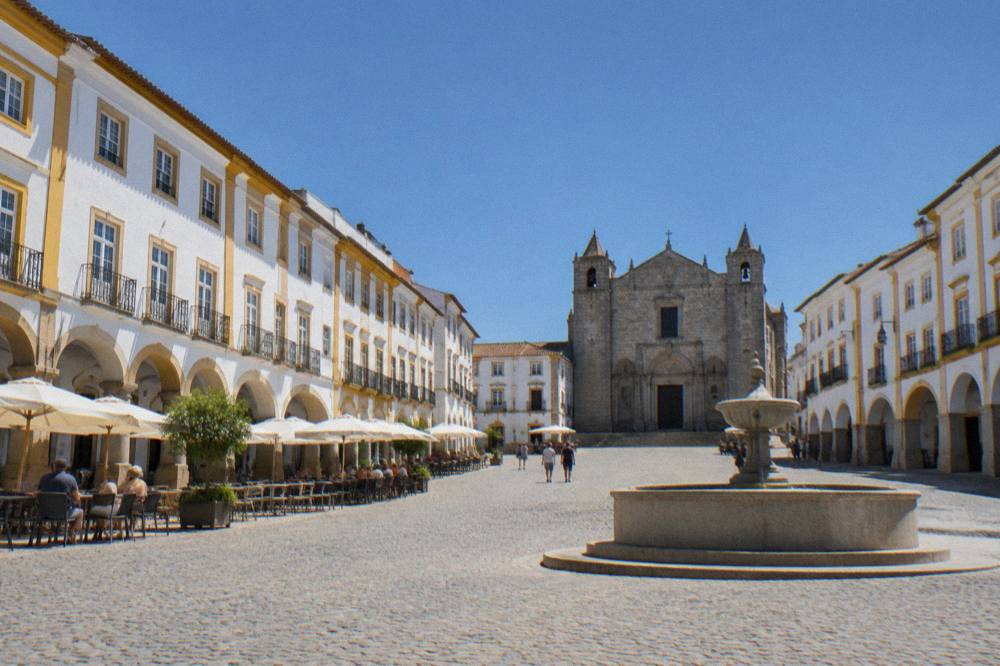
The distance is a rounded estimate rather than a surveyed figure, but every source agrees on the scale: it is a short hop. Two hours after leaving Lisbon you can be standing in the Praça do Giraldo, the main square that has served as the city's stage since medieval times, with an entire walled town around you.
What makes the trip unusually easy is that Évora is a genuine city rather than a village preserved for visitors. It is the capital of the Central Alentejo sub-region, home to a university and a working municipal life, so the infrastructure, restaurants and transport are built for residents first. Visitors simply benefit.
The city's history runs deeper than most first-time visitors expect. Moorish rule ended in 1165, the Jesuit University of the Holy Spirit dates from 1553, and the Jesuits were expelled in 1759. The Roman Templo Romano still stands in the centre of town, 25 x 15 m of granite columns that the municipal page says was probably dedicated to the imperial cult rather than to the goddess Diana, a name applied only since the 17th century. The Roman Temple of Évora guide covers it in detail.
| Day-trip destination from Évora | Approximate road distance |
|---|---|
| Arraiolos | about 20 km |
| Monsaraz | about 40-45 km |
| Estremoz | about 45 km |
| Vila Viçosa | about 60 km |
| Elvas | about 80 km |
| Marvão | about 120 km |
| Lisbon | about 130 km |
Those distances matter for planning: a trip to Évora can easily become a trip into the wider Alentejo, and the best day trips from Évora extend the reach of a single base.
Is There A Direct Train From Lisbon To Évora?
Yes. CP's timetable, valid since 6 September 2026, lists six through Intercidades trains from Lisboa Oriente to Évora, departing at 07:02, 09:02, 09:58, 13:35, 17:02 and 19:02 and arriving at 08:47, 10:45, 11:40, 15:13, 18:41 and 20:46, a journey of about 1 hour 40 to 1 hour 45 with no change of train needed. The fare is 13.90 EUR in second class and 18.50 EUR in first class.
That is the single most useful fact about this route, and it is worth dwelling on. Six through trains mean the railway is a real alternative to driving, not a token service. The trains call at Entrecampos, Sete Rios, Pragal, Pinhal Novo, Vendas Novas and Casa Branca before Évora, which also makes the line usable from several Lisbon-area stations besides Oriente.
The timetable's weekday remarks were not checked for this page, so treat the six departures as the listed pattern rather than a promise for every day of the year, and confirm your own date on cp.pt before booking. Return times from Évora to Lisbon are not reproduced here for the same reason: check the live timetable for the direction you need.
| Lisboa Oriente departure | Évora arrival | Journey length |
|---|---|---|
| 07:02 | 08:47 | about 1 h 45 |
| 09:02 | 10:45 | about 1 h 43 |
| 09:58 | 11:40 | about 1 h 42 |
| 13:35 | 15:13 | about 1 h 40 |
| 17:02 | 18:41 | about 1 h 40 |
| 19:02 | 20:46 | about 1 h 44 |
For a day trip, the 09:02 arrival at 10:45 gives you the fullest day in the city, and the 19:02 departure back from Évora at 20:46 is late enough for dinner in the old town. The Lisbon to Évora by train guide goes deeper on stations, tickets and the arrival walk, and the Évora train station page covers what waits at the other end.
The bus is the other scheduled option, and the Lisbon to Évora by bus guide covers it. No operator fare is reproduced on this page because none was verified on an operator's own site, so check the operator's live listing rather than any figure quoted elsewhere.
What Does The Journey From Lisbon To Évora Cost?
The train costs 13.90 EUR second class or 18.50 EUR first class each way, per CP's 2026 price table for the Lisboa Oriente to Évora Intercidades service. Once in Évora, the main monuments are inexpensive: the Sé complete-visit ticket is 5.00 EUR, the Capela dos Ossos museum ticket is 7.00 EUR, and the Évora Ticket pass costs 8 EUR for one day.
The fare table matters because it makes the arithmetic of a day trip transparent. Two second-class train tickets and the three big tickets inside the city come to less than a single dinner in Lisbon, which is why Évora consistently ranks among the best-value excursions from the capital. The Évora cost and budget guide expands on this.
| Item | Verified price |
|---|---|
| Train, Lisboa Oriente to Évora, 2nd class | 13.90 EUR |
| Train, Lisboa Oriente to Évora, 1st class | 18.50 EUR |
| Sé de Évora complete-visit ticket (cathedral, cloister, roof terrace, museum) | 5.00 EUR |
| Capela dos Ossos / Igreja de São Francisco museum ticket, adult | 7.00 EUR |
| Museu de Évora, adult | 8 EUR |
| Évora Ticket, one day | 8 EUR |
| Évora Ticket, two days | 10 EUR |
| Évora Ticket, three days | 12 EUR |
One detail saves people money and confusion: the Évora Ticket does not include the Sé, the Capela dos Ossos or the Museu de Évora. It covers the Cidade-Museu network's other sites, so if your day is built around the cathedral and the bone chapel, buy those tickets individually. The Évora tickets and passes page explains the network in full.
A municipal tourist tax applies to overnight stays in Évora; check your hotel for the current amount rather than relying on figures quoted in third-party guides.
Should You Drive From Lisbon To Évora?
Driving is the flexible option: the route covers about 130 km, almost entirely on the A6 motorway, and a car in Évora unlocks the megalithic sites and Alentejo towns that public transport reaches poorly or not at all. The trade-off is that Évora's historic centre is a walled, largely pedestrian zone, so the car's value is in the arrival region rather than in the city itself.
The Lisbon to Évora by car guide covers the route, and the Évora parking page explains where to leave the car. The short version: park outside the walls and walk in. The old centre is compact enough that a car inside it is a liability, and the walk from the peripheral car parks is part of the pleasure of arriving.
Where the car earns its keep is afterwards. The Cromeleque dos Almendres, the great stone circle on the plain west of the city, sits down rural roads that no scheduled bus serves. The Almendres Interpretation Centre in the village of Guadalupe keeps summer hours of 10:00-18:00 from 1 May to 31 October and winter hours of 10:00-17:00 from 1 November to 30 April, and the cromlech itself is reached by a turn-off about 8 km from Évora on the national road toward Lisbon.
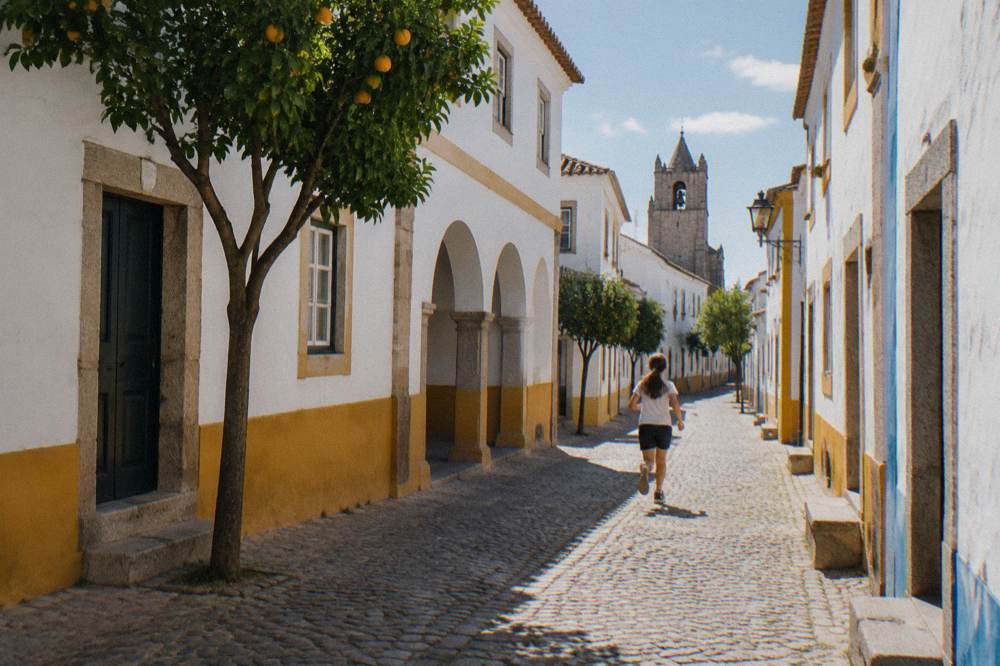
For travellers who want the megaliths without the hire car, a guided option exists: . It runs three hours from Évora and covers both the cromlech and the Great Dolmen of Zambujeiro, and the megalithic sites near Évora guide sets out the wider picture of what the region's stones are and are not.
Can You Visit Évora As A Day Trip From Lisbon?
Yes, comfortably. The 09:02 train arrives at 10:45 and the 19:02 return leaves at 20:46, which gives a day-tripper roughly ten hours on the ground, enough for the Sé, the Capela dos Ossos, the Templo Romano, the Praça do Giraldo and a long Alentejo lunch. Guided day tours from Lisbon start at $64.09 per person for a nine-hour Évora and Monsaraz itinerary with a regional wine tasting.
The question of whether that is enough time is answered in detail on the is Évora worth a day trip from Lisbon page, and the Évora day trip from Lisbon itinerary lays out an hour-by-hour plan. The honest summary: a day gives you the core of the UNESCO centre, but Évora rewards a night, when the coach parties have gone and the squares belong to the locals again.
For travellers who prefer a booked, guided day, the options split into two groups: tours that start in Lisbon and bring you to Évora, and tours that start once you have arrived under your own steam. The tours below are the strongest of the Lisbon-start options.
The Lisbon-start products range from about $64.09 to $223.63 per person depending on group size and inclusions, with the small-group winery tour at $87.79 and the private guided version at $160.55. All of them should be described honestly as what they are: days that begin in Lisbon, spend their middle in Évora, and return. The Alentejo tour from Lisbon page collects the wider region's options.
If you would rather build the day yourself, the arithmetic works like this: the morning train, the three monument tickets, an afternoon walk and the evening return, with the what to do in Évora for a day question answered in practice by the itinerary pages.
What Should You See Once You Arrive In Évora?
The four essentials inside the walls are the Sé de Évora, whose 5.00 EUR complete-visit ticket covers the cathedral, cloister, roof terrace and museum; the Capela dos Ossos at the Igreja de São Francisco, a 7.00 EUR museum ticket; the Templo Romano, an open-air monument with no ticket listed; and the Praça do Giraldo, the arcaded main square that needs nothing but your feet.
The Sé keeps hours of 9:00-17:00 and closes on the afternoon of 24 December, on 25 December and on 1 January. Children up to 12 enter free with a parent or guardian, and there is no cheaper roof-only tier on the official page, so the 5.00 EUR ticket is the ticket. The Évora Cathedral guide covers the building, and the Évora rooftop views page explains why the cloister terrace is the best vantage point in the city.
The Capela dos Ossos runs longer summer hours, 9:00-18:30 in summer legal time against 9:00-17:00 in winter, and closes only on 1 January, Easter Sunday, the afternoon of 24 December and 25 December. The single museum ticket covers the chapel, the chapter room, the nativity collection and the sacred-art nucleus among other areas. Youth up to 25 and seniors over 65 pay 5.00 EUR, and a family ticket is 15.00 EUR. The church notes that it is a private religious entity and does not apply state museum discounts.
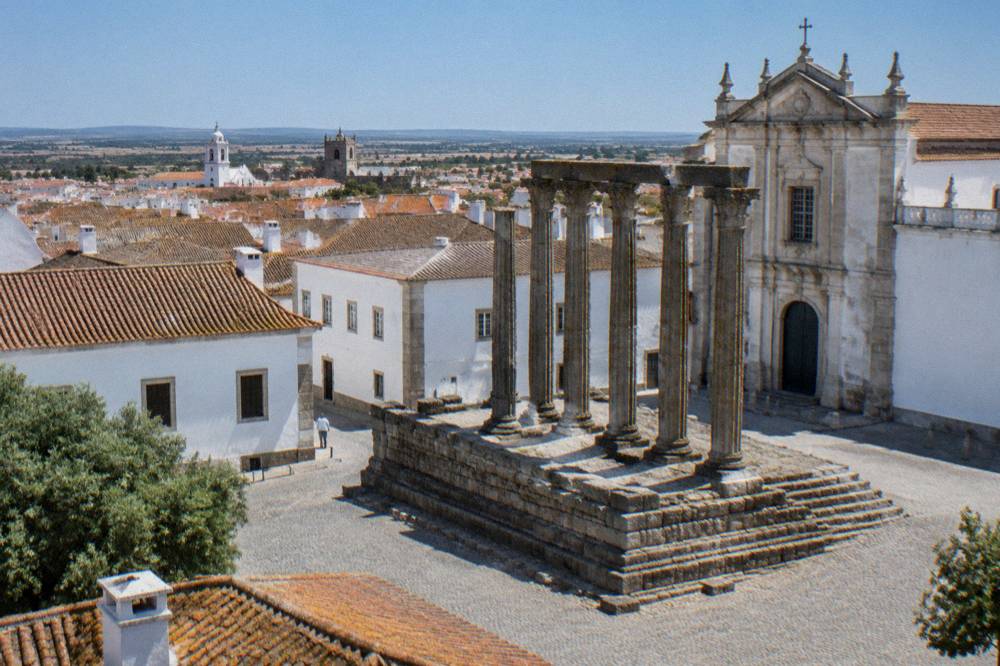
Beyond the essentials, the city spreads out into quarters that reward wandering: the Jewish quarter of Évora, the Água de Prata aqueduct whose arches march through the eastern streets, and the Évora public garden beside the old palace. The must-see attractions in Évora question is answered at length elsewhere; the point here is that none of them is more than a short walk from any of the others.
| Monument | Ticket | Hours | Closed |
|---|---|---|---|
| Sé de Évora (complete visit) | 5.00 EUR, under-12s free | 9:00-17:00 | 24 Dec afternoon, 25 Dec, 1 Jan |
| Capela dos Ossos / Igreja de São Francisco | 7.00 EUR adult | summer 9:00-18:30, winter 9:00-17:00 | 1 Jan, Easter Sunday, 24 Dec afternoon, 25 Dec |
| Museu de Évora | 8 EUR adult | Tue-Sun 9:30-13:00, 14:00-17:30 | Mondays, 1 Jan, Easter Sunday, 1 May, 29 June, 25 Dec |
| Templo Romano | open-air, no ticket listed | open-air precinct | none listed |
| Évora Ticket (Cidade-Museu network) | 8 EUR one day | varies by site | varies by site |
Once the monuments are done, the city's character comes out on foot. The Évora: Tales and Legends Guided Walking Tour, a 2.5-hour walk rated 4.8 from 40 reviews at from $52.90 per person, is the strongest of the city-based guided options for a first afternoon, because it threads the legends behind the stones rather than reciting dates at them. Check availability alongside the full tour page.
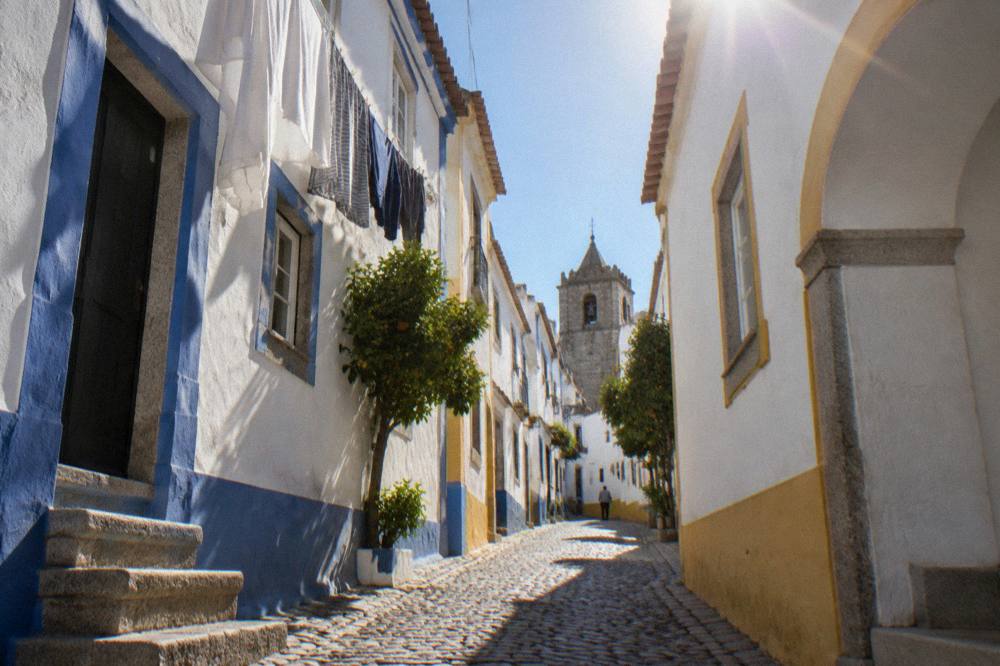
Budget travellers have an honest free option: GuruWalk's Essential Free Tour of Évora, a two-hour tip-based walk rated 4.93 from 774 reviews, led by a local guru on the pay-what-you-want model. It is not this site's product and no price belongs next to it; it is simply the cheapest structured introduction to the city that exists. The Évora walking tour guide compares it with the paid walks.
Where Should You Stay If The Day Trip Turns Into A Night?
The practical answer is inside or just inside the walls, where every guide to the city points first: the where to stay in Évora choices cluster around the Sé, the Praça do Giraldo and the Rua de Alcárcova, all within a ten-minute walk of each other. The strategic answer is that a night converts a rushed day into the Évora most visitors never see, the evening squares and the morning streets before the trains unload.
The hotel options are covered on the dedicated pages: the best hotels in Évora, the cheap hotels and hostels and the Évora Airbnb and apartments guides each break the city into honest price bands. What the transport pages add is this: staying inside the walls removes the parking question entirely, because you arrive by train, walk to your door, and never think about the car again until you leave.
A second consideration is the 2027 European Capital of Culture programme. Évora and the Alentejo hold the title in 2027, promoted by an executive board led by the municipality, and the full programme calendar was not yet published as of late 2026. Anyone planning a visit around the culture year should expect accommodation in the centre to tighten as the programme firms up, and should check the official Évora 2027 pages rather than second-hand summaries.
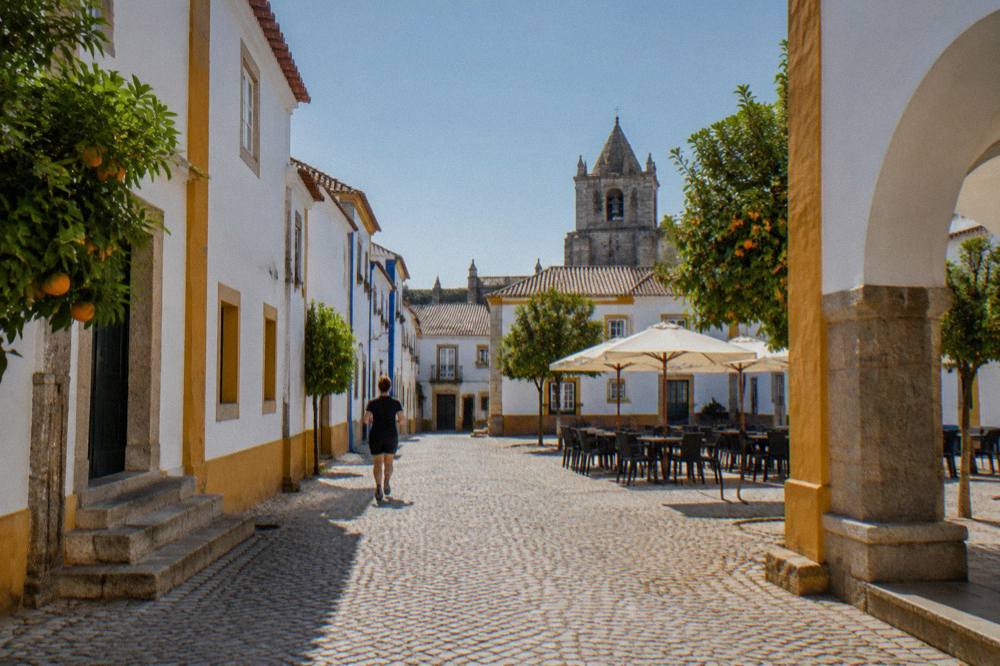
For eating, the Évora restaurants and Évora food guide pages cover the city's tables, and the Alentejo food and Alentejo dishes to try pages explain what the region's cooking actually is: bread soups, pork, sheep's cheese and red wine built for a hot plain. The evening food and wine crawl at from $83.28 per person, rated 4.6 from 19 reviews, packages that into a guided three-hour walk for travellers who want the introduction done for them.
When Is The Best Time To Make The Trip?
Spring and autumn are the best windows: IPMA's 1991-2020 normals for the Évora station show July averaging a maximum of 33.3 C and August 33.5 C, with 31.9 days a year reaching 35 C or more, while April and May sit between 20.7 C and 25.0 C mean maximum. The record high is 45.4 C, set on 4 August 2018, which tells you what an Alentejo summer peak can do.
The numbers deserve their context. Évora is inland: there is no sea breeze, no coast, and no cool current to take the edge off a July afternoon. The same table shows the compensation: July averages just 2.7 mm of rain across 0.6 days with 1 mm or more, and August 6.0 mm across 0.7 days. Summer is dry as well as hot, and winter is genuinely cool, with January mean minimums of 4.5 C.
| Month | Mean max (C), 1991-2020 | Mean min (C), 1991-2020 | Rain (mm) | Days max 35 C+ |
|---|---|---|---|---|
| March | 18.7 | 6.9 | 60.8 | 0.0 |
| April | 20.7 | 8.5 | 62.1 | 0.0 |
| May | 25.0 | 10.9 | 46.6 | 0.7 |
| June | 30.2 | 13.8 | 10.6 | 5.6 |
| July | 33.3 | 15.6 | 2.7 | 11.5 |
| August | 33.5 | 16.0 | 6.0 | 10.9 |
| September | 29.5 | 14.6 | 33.9 | 3.1 |
| October | 24.1 | 12.3 | 81.5 | 0.1 |
Every figure above is a 1991-2020 average for the Évora station, and that label matters: a single year can sit well outside it. The Évora weather and best time to visit Évora guides work through the seasons month by month, and the Évora in summer page is blunt about what 33 C feels like on stone.
The events calendar gives the timing question a second layer. The Feira de São João ran from 23 June to 5 July 2026 on the Rossio de São Brás under the theme "Évora: Capital Europeia ao Sul", and the GUADIANA festival of Afro-Ibero-American literatures held its first edition from 9 to 11 October 2026 with 28 authors from nine countries. Those are 2026 dates, stated as such; later editions follow the same season but their dates were not published when this page was written, so check the municipal and Évora 2027 pages rather than assuming.
Which Route From Lisbon To Évora Should You Actually Take?
Take the train if you are staying in Lisbon and want the city itself: the 09:02 from Oriente arrives at 10:45, the day is yours, and the 19:02 brings you back at 20:46. Drive, or take a driving tour, if the Alentejo beyond the walls is the point, because the cromlech, Monsaraz, Estremoz and the marble towns have no rail line. Book a guided day if you want the drive, the monuments and a winery handled in one transaction, from $64.09 per person.
That is the decision, reduced to three sentences. Everything else on this page is refinement. The how do you get from Lisbon to Évora question is answered route by route on the answers pages, and the reverse journey, including the airport connection, is covered on the Évora to Lisbon and Évora to Lisbon airport pages.
For travellers building a longer Portuguese itinerary, the Évora versus Lisbon comparison and the Portugal itinerary with Évora guide place the city in a national route rather than a single outing. The general verdict, offered as analysis rather than a decree: the two cities do different jobs, and the hour and forty minutes between them is short enough that you need not choose.
Common Questions About Travelling From Lisbon To Évora
Is there a direct train from Lisbon to Évora?
Yes. CP's timetable valid since 6 September 2026 lists six through Intercidades trains from Lisboa Oriente to Évora, taking about 1 hour 40 to 1 hour 45 with no change of train.
How much does the train from Lisbon to Évora cost?
CP's 2026 price table lists 13.90 EUR in second class and 18.50 EUR in first class for the Lisboa Oriente to Évora Intercidades service.
How far is Évora from Lisbon?
About 130 km by road, and the train covers the route in about 1 hour 40 to 1 hour 45.
Can I take a day trip from Lisbon to Évora?
Yes. The 09:02 train arrives at 10:45 and the 19:02 departure leaves Évora at 20:46, which gives roughly ten hours in the city. Guided day tours from Lisbon start at $64.09 per person.
Is Évora worth visiting from Lisbon?
The historic centre of Évora was inscribed by UNESCO in 1986 on criteria (ii) and (iv), and criterion (iv) calls it the finest example of a city of the golden age of Portugal after the 1755 Lisbon earthquake. The is Évora worth visiting page weighs the question in full.
Do I need a car in Évora?
Not for the city itself: the walled centre is compact and largely pedestrian, and the train arrives within walking distance of it. A car, or a driving tour, earns its keep for the megalithic sites and the Alentejo towns beyond the walls.
Whichever way you make the journey, the practical spine of it is short: one direct train line, one motorway, about 130 km of plain between two capitals, and a city at the end of it that UNESCO judged worth protecting more than a generation ago.