Évora Parking: Where To Leave The Car And How To Manage Without One
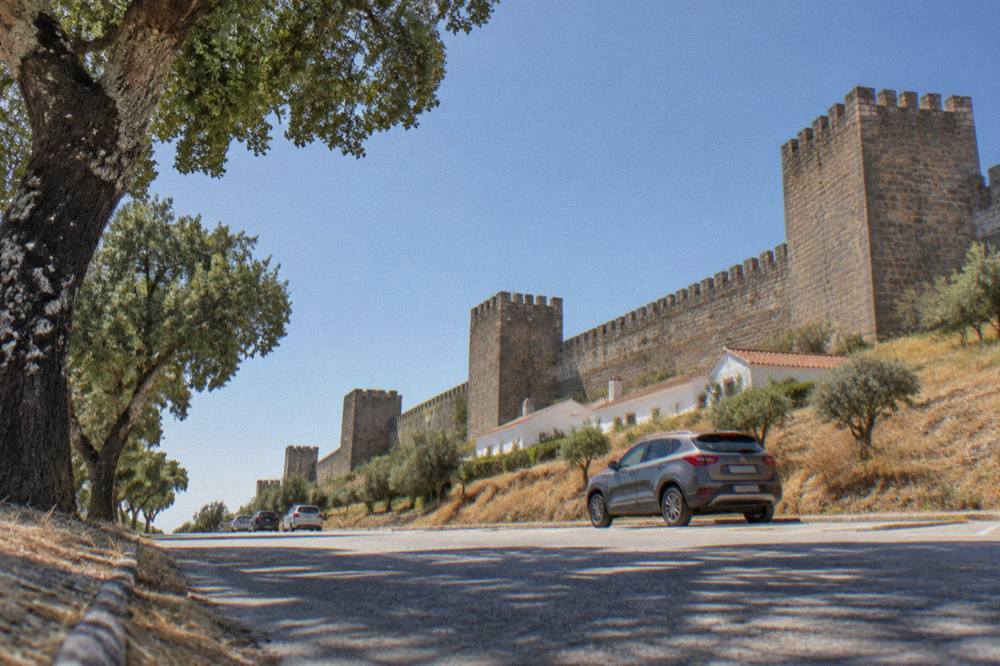
Évora is a small walled city in the Alentejo, and the question of where to leave a car shapes almost every visit. This guide sets out what matters: the historic centre is compact and walkable, the train from Lisbon is fast and cheap, and the car, if you bring one, belongs at the edge of the old town rather than inside it.
Short answer
Park at the edge of Évora's historic centre and walk in: the walled core is compact, its streets are narrow, and the main monuments sit within a short stroll of each other. If you are coming from Lisbon, the Intercidades train, 13.90 EUR second class, about 1 hour 40, removes the parking question entirely.
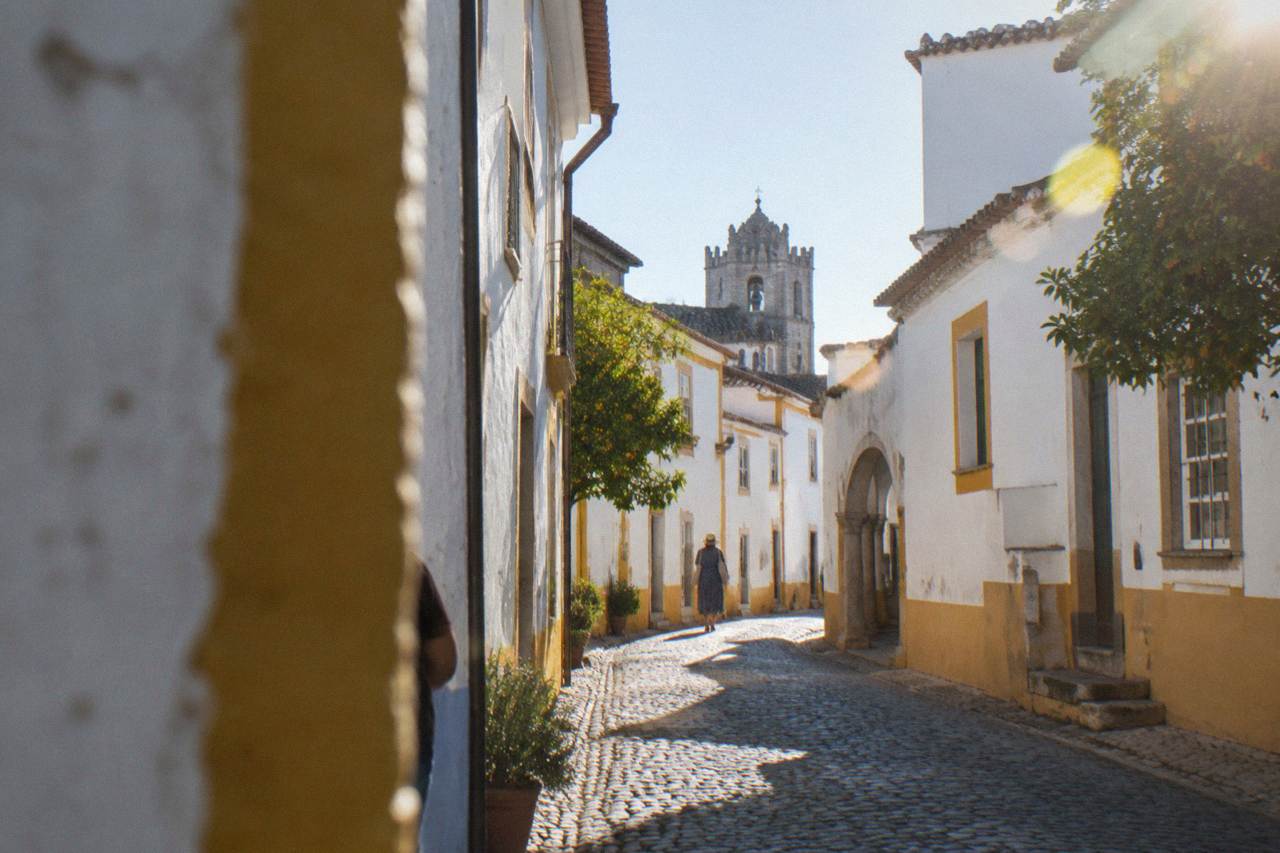
Évora, the capital of the Alentejo district of that name in Portugal, is a city built to be walked. Its historic centre, inscribed by UNESCO in 1986 under criteria (ii) and (iv), sits inside a largely intact medieval wall, and the streets within it were laid out long before the motor car. That single fact drives every sensible parking decision here. The Templo Romano, the Sé, the Praça do Giraldo and the Capela dos Ossos all sit close together inside the walls, and the question a visitor actually faces is rarely where to park so much as whether to bring a car at all. This guide works through both questions with the verified numbers that exist, and says plainly what to check where no number does.
Where Can You Park In Évora?
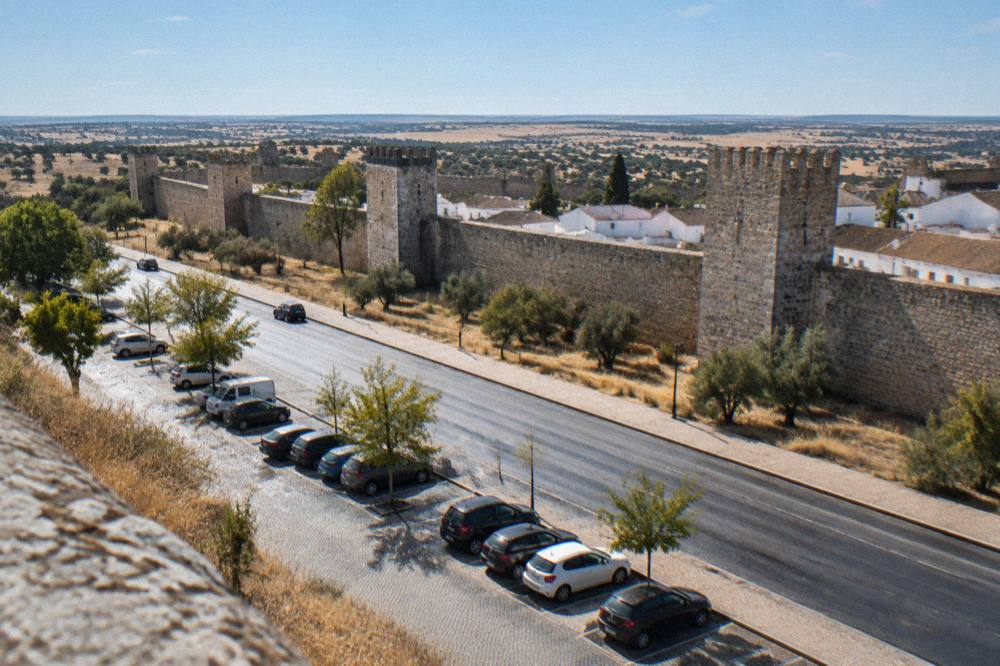
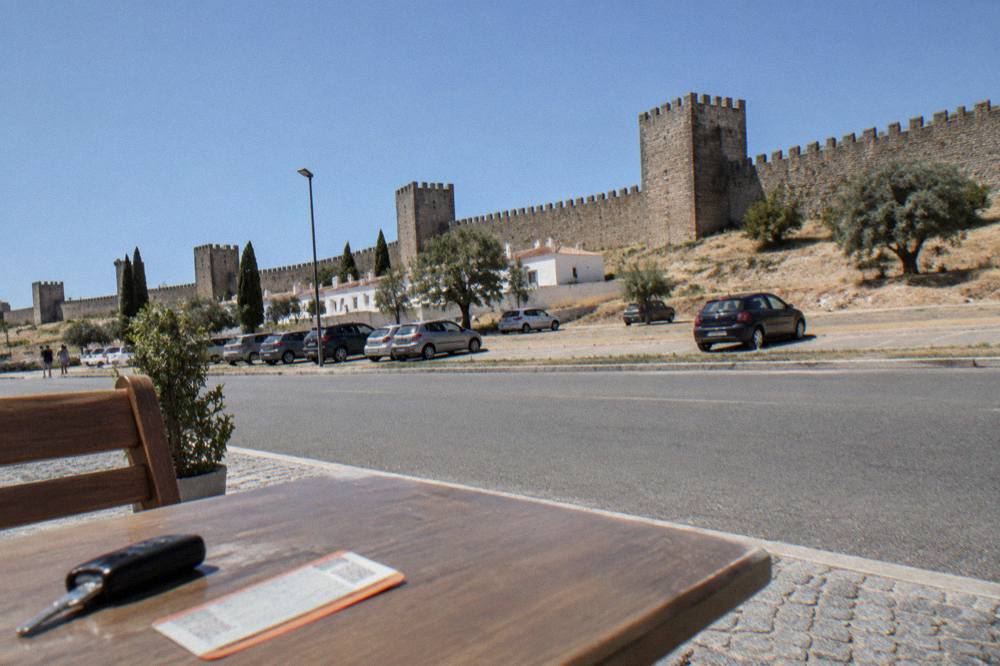
The workable approach in Évora is to leave the car at the edge of the historic centre and walk in, because the walled core is small, its lanes are narrow, and the main monuments cluster within a compact area no car improves. Évora's centre was never designed for vehicles, and the city's own visitor information treats the old town as a pedestrian-scale place. No specific car park, price or zone rule can be quoted here, so check the municipal visitor page or the signs on arrival.
That last sentence is not a hedge, it is the honest position. Parking prices, zone boundaries and capacity figures change, and none is stated on a page this guide can stand behind. What can be said with confidence is structural: the medieval wall marks a clear boundary, the ground inside it is the part worth seeing, and everything inside is reachable on foot from the outside edge in a short walk. Visitors arriving by car should plan to stop at or near that boundary and continue on foot.
The practical rhythm of an Évora visit supports this. You arrive, you stop the car, and then you do not need it again until you leave. The Évora Travel Guide pages on things to do in Évora list the main sights, and nearly all of them sit within the walls or just outside them. A car parked at the edge serves the whole day.
One more structural point deserves emphasis: Évora's streets inside the walls are cobbled, narrow and, in several places, steep enough that driving them is slower than walking them. The city's layout rewards the pedestrian at every turn. The car is a tool for getting to Évora, not for getting around it.
Is It Easy To Drive Into The Évora Historic Centre?
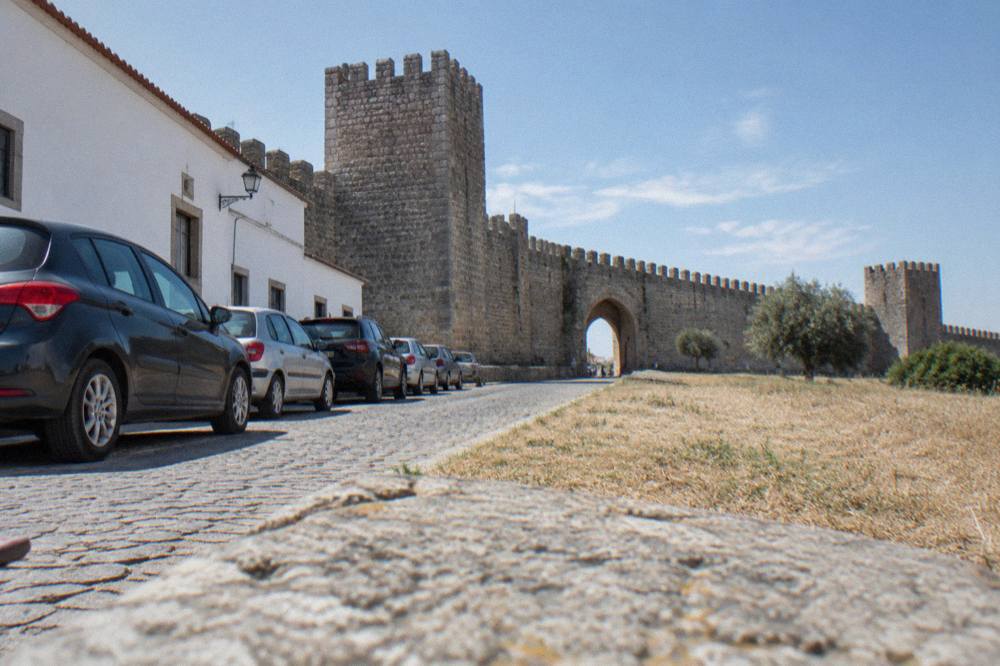
Driving into the historic centre of Évora is possible in places but rarely worth it: the streets are narrow, cobbled and laid out for a medieval town, the wall funnels traffic into a handful of entries, and once inside there is nothing a car helps you reach that is not faster on foot. The centre's role as a UNESCO World Heritage site since 1986 means the old fabric is protected, and the sensible pattern is to stop at the perimeter.
The wall itself is the mental map. It is one of the features the guide to the Roman and medieval walls covers, and it gives a visitor an unambiguous line: outside the wall, normal town; inside the wall, the part of Évora you came for. Drivers who treat that line as their parking boundary spend their day walking between monuments rather than circling lanes.
It also helps to understand what the centre actually contains. The Praça do Giraldo, the main square, is a public open space, and the streets around it are the busiest part of the old town. The Sé, the Igreja de São Francisco and the Capela dos Ossos, the Museu de Évora and the Templo Romano all sit within this same compact core. Nothing in that list is made easier by a car. The guide to the historic centre walks through the same geography on foot, and the distances it describes are strolling distances.
If you are staying inside the walls, ask your accommodation directly about arrival and luggage: hotels inside a walled centre deal with this every day and will tell you exactly what to do on the day. The where to stay in Évora guide separates the inside-the-walls options from those in the newer town, and that choice, more than any parking decision, determines how much the car matters to your trip.
Should You Bring A Car To Évora At All?
For most visitors coming from Lisbon, the car is unnecessary: CP's Intercidades trains run six through services a day from Lisboa Oriente to Évora, taking about 1 hour 40 to 1 hour 45, at 13.90 EUR second class or 18.50 EUR first class, according to the timetable valid since 6 September 2026. The train removes parking from the trip entirely, and Évora's centre is walkable from the station.
That is the strongest single fact in this whole discussion. The Lisbon to Évora by train guide carries the full detail, but the headline is simple: a fast, cheap, frequent rail link exists, it drops you in Évora itself, and the historic centre is reachable from the station on foot. For a visitor whose main goal is the old town, the train wins on every axis that matters.
The car earns its place in two situations. First, if you are touring the Alentejo region rather than visiting Évora alone: the Alentejo road trip and best day trips from Évora pages cover the towns that make a car genuinely useful, places like Arraiolos at about 20 km, Estremoz at about 45 km and Vila Viçosa at about 60 km. Second, if you are already driving through Portugal on a wider itinerary, such as the one in the Portugal itinerary with Évora, then Évora becomes one stop among several and the car simply comes along.
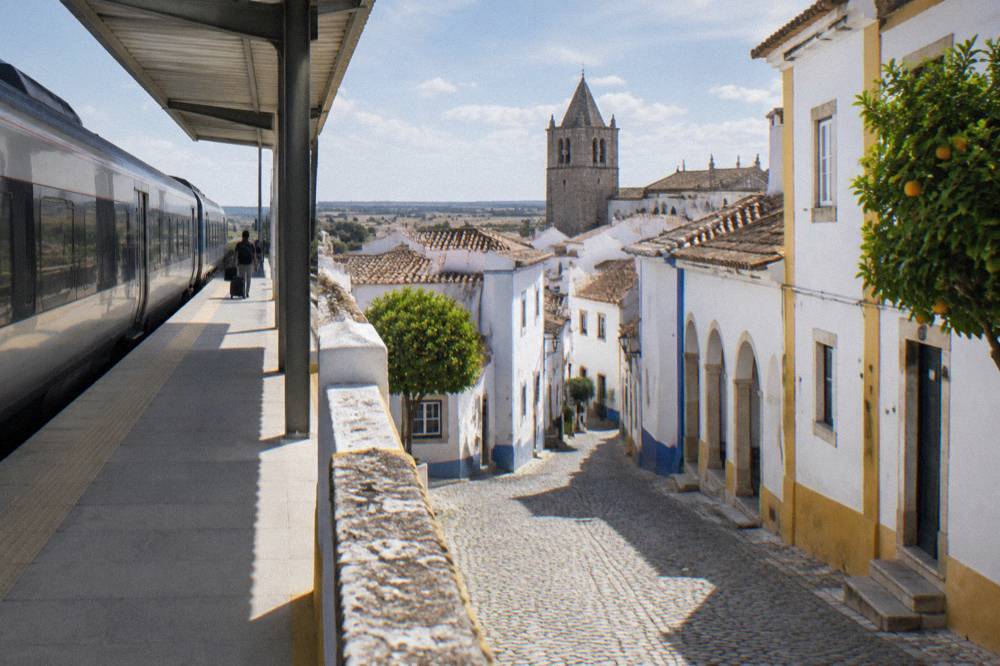
For everyone else, the comparison is not close. The train timetable below shows the six through departures; the fare table shows what they cost; and the rest of this guide shows what you gain by arriving without a vehicle. The Lisbon to Évora overview collects the alternatives, including the bus option, though no coach fare or journey time can be quoted here, so check the operator's own page for those.
The six through trains in the CP timetable valid since 6 September 2026:
| Lisboa Oriente departure | Évora arrival | Service |
|---|---|---|
| 07:02 | 08:47 | Intercidades through train |
| 09:02 | 10:45 | Intercidades through train |
| 09:58 | 11:40 | Intercidades through train |
| 13:35 | 15:13 | Intercidades through train |
| 17:02 | 18:41 | Intercidades through train |
| 19:02 | 20:46 | Intercidades through train |
The same timetable's fares, per the CP price table valid from 2026:
| Ticket | Fare |
|---|---|
| Second class, Lisboa Oriente to Évora | 13.90 EUR |
| First class, Lisboa Oriente to Évora | 18.50 EUR |
How Walkable Is Évora Once You Have Parked?
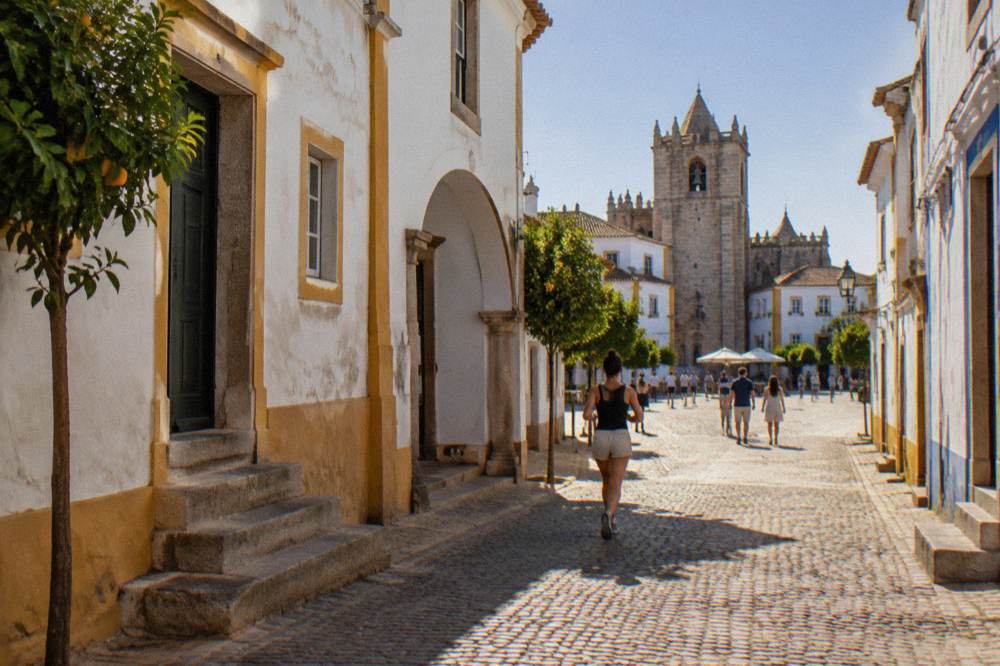
Évora is one of the most walkable cities in Portugal: the entire monumental core sits inside or just outside a single medieval wall, the main squares, churches and museums interlock within a compact grid, and a visitor on foot covers the whole set in a day without transport of any kind. The city's UNESCO inscription in 1986 rests partly on that intact, cohesive historic fabric, which is precisely what makes it a walking city.
The scale is the point. The Sé, with its one complete-visit ticket at 5.00 EUR covering cathedral, cloister, roof terrace and museum, the Igreja de São Francisco with its Capela dos Ossos at 7.00 EUR adult, and the Museu de Évora at 8 EUR all sit in the same small area. The Évora walking tour guide describes the classic route between them, and it is a route of strolls, not commutes.
This is also why a guided walk is such a natural fit for Évora. The Évora: Personal & Flexible Walking Tour in Historic Center, from $13.51 per person and rated 4.8 from 105 reviews, spends three hours in exactly the ground a car cannot serve, and its flexible format suits visitors who have just parked and want an orientation before exploring alone. Check availability if that matches your first afternoon.
For visitors who want the old town explained rather than just traversed, the storytelling options are strong. The Évora: Tales and Legends Guided Walking Tour, 2.5 hours and rated 4.8 from 40 reviews, works the same lanes at a storyteller's pace, and the free GuruWalk tours, including the Essential Free Tour of Évora led by a local guru, tip-based and rated 4.93 from 774 reviews, cover the essentials in two hours. The free walks are listed in the Évora tours overview alongside every paid option.
The monuments a walking visitor will pass, and their verified entry costs:
| Monument | Adult ticket | Key conditions |
|---|---|---|
| Sé de Évora, complete visit | 5.00 EUR | Cathedral, cloister, roof terrace and museum; children up to 12 free |
| Capela dos Ossos, Igreja de São Francisco | 7.00 EUR | Youth to 25 and seniors over 65 at 5.00 EUR; family 15.00 EUR |
| Museu de Évora | 8 EUR | Closed Mondays; youth, seniors and family 50% off |
| Évora Ticket, one day | 8 EUR | Multi-site pass; free to age 12 |
| Évora Ticket, two days | 10 EUR | Same pass, longer validity |
| Évora Ticket, three days | 12 EUR | Same pass, longest validity |
Note what the Évora Ticket does not include: the Sé, the Capela dos Ossos and the Museu de Évora are separate, so a visitor planning all three pays those individually. The Évora tickets and passes guide untangles this in full.
When Is Parking Tightest In Évora?
Parking pressure in Évora follows the calendar and the clock: the summer months bring the most visitors and the most heat, the middle of the day is when tour groups from Lisbon pass through, and the late-June-to-early-July Feira de São João fills the Rossio de São Brás, the fairground area just outside the old town, from 23 June to 5 July in the 2026 edition. Arriving early or late in the day, and outside the fair fortnight, makes everything easier.
The climate data explains the clock part. IPMA's 1991 to 2020 normals for the Évora station show a July mean maximum of 33.3 C and an August mean maximum of 33.5 C, with 31.9 days a year reaching 35 C or more and a station record of 45.4 C set on 4 August 2018. Day-trippers therefore concentrate their visit in the cooler morning hours, and the centre is at its busiest then. A car parked at the edge before the mid-morning rush serves you better than one hunted for late.
| Month | Mean maximum, 1991-2020 | Days at 30 C or more |
|---|---|---|
| May | 25.0 C | 5.5 |
| June | 30.2 C | 15.1 |
| July | 33.3 C | 23.7 |
| August | 33.5 C | 25.0 |
| September | 29.5 C | 13.9 |
| October | 24.1 C | 2.9 |
The best time to visit Évora and Évora weather guides carry the full picture, including the shoulder months, where the same normals show October still reaching a 24.1 C mean maximum with only 2.9 days at 30 C or more. Fewer people, milder air, and the same walkable centre.
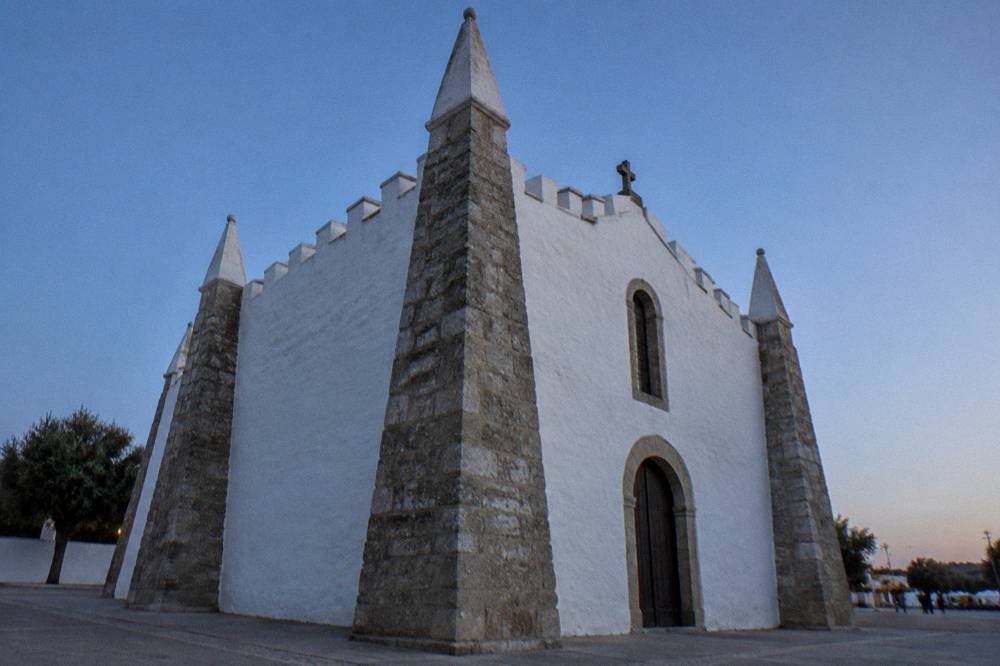
The calendar part centres on the Feira de São João, the annual fair that occupied the Rossio de São Brás from 23 June to 5 July 2026 under the theme "Évora: Capital Europeia ao Sul". That fortnight transforms the eastern edge of the town, the very area a driver might otherwise aim for, so check the municipal fair notice for the coming year's dates before planning a summer arrival by car. Beyond the fair, the Évora events and festivals guide tracks the annual rhythm, and the run-up to 2027, when Évora and the Alentejo hold the European Capital of Culture title, is adding preparatory programming through 2026.
What About Day Trips Around The Alentejo By Car?
The car comes into its own outside Évora: the Alentejo towns that ring the city, Arraiolos at about 20 km, Monsaraz at about 40 to 45 km, Estremoz at about 45 km, Vila Viçosa at about 60 km, Elvas at about 80 km and Marvão at about 120 km, are the reason to drive, and each is a small walkable core where the same park-at-the-edge logic applies. Évora functions as the base; the car is the tool for the ring around it.
These are rounded distances, and they are the only distance figures this guide will attach to those towns. Journey times, tolls and fuel costs are not stated because none is verified, so plan those with your own mapping and check current conditions before setting out. What the distances do show is the shape of the region: a cluster of historic towns within an hour or so of Évora, each worth a half day, and each, like Évora itself, best entered on foot after parking at the perimeter.
| Town | Distance from Évora, about | What draws visitors |
|---|---|---|
| Arraiolos | 20 km | Historic centre and the Arraiolos embroidery tradition |
| Monsaraz | 40-45 km | Walled hilltop village above the Alqueva lake |
| Estremoz | 45 km | Marble town with a castle and historic quarter |
| Vila Viçosa | 60 km | Ducal palace and marble heritage |
| Elvas | 80 km | Fortified border city with extensive bastions |
| Marvão | 120 km | Mountain-top walled village |
The dedicated guides to Monsaraz, Estremoz, Vila Viçosa, Elvas and Marvão cover each town's sights, and several guided tours from Évora cover the same ground without the car. The Monsaraz and Wine guided tour from Évora, from $78.78 per person and rated 4.6 from 51 reviews, runs four hours to the hilltop village and a winery, and the Monsaraz and Wine from Évora small-group morning tour, from $80.28 per person and rated 4.9 from 31 reviews, covers a similar route. The best day trips from Évora page collects them all.
There is even a way to see Évora itself from a vehicle without parking anxiety: the Medieval Tour of Évora on a Sidecar & Wine Tasting, from $61.90 per person and rated 4.9 from 16 reviews, moves through the old town in a classic sidecar with a wine tasting folded in. It is a three-hour experience, and it is the one motorised way to enjoy the lanes that a car merely obstructs.
What If You Are Driving To Évora From Lisbon Airport?
Lisbon is the main gateway for air travellers reaching Évora, about 130 km away by road, and the choice at the airport is between hiring a car and driving, taking a coach, or going into Lisbon and catching the Intercidades train from Lisboa Oriente, where the six through services cost 13.90 EUR second class and reach Évora in about 1 hour 40 to 1 hour 45. No airport-to-Évora transfer detail is verified, so compare the options on the operators' own pages.
The train deserves a serious look even from the airport, because it converts the whole question. Lisboa Oriente is on the same rail corridor, and the Lisbon to Évora by car guide covers the driving alternative for those who want the car for the Alentejo ring afterwards. The Évora to Lisbon and Évora to Lisbon airport pages cover the return leg, including the timing question for departure day.
For visitors flying in and touring widely, the honest summary is: hire the car if the Alentejo ring is the point of the trip, and skip it if Évora itself is the destination. A two- or three-day Évora visit, as sketched in the one day in Évora and two days in Évora guides, needs no vehicle at all, and the Évora cost and budget page shows how the train fare compares with a day's car costs once hire, fuel and parking are counted together.
Which Days Should You Plan Around When Parking In Évora?
The days that matter are the closing days of the monuments you are walking to, not the car parks: the Sé closes on 24 December afternoon, 25 December and 1 January, the Igreja de São Francisco and Capela dos Ossos close on 1 January, Easter Sunday, 24 December afternoon and 25 December, and the Museu de Évora closes every Monday plus 1 January, Easter Sunday, 1 May, 29 June and 25 December. A Monday arrival costs you the museum, and the December holidays cost you almost everything.
This matters for parking because a car-based day trip is usually a single fixed day, and a fixed day that lands on a Monday or a holiday wastes the drive. Train-based visitors can shuffle their itinerary; drivers often cannot. The table below collects the verified closing days so the drive can be planned around them.
| Site | Closed |
|---|---|
| Sé de Évora | 24 December afternoon, 25 December, 1 January |
| Igreja de São Francisco and Capela dos Ossos | 1 January, Easter Sunday, 24 December afternoon, 25 December |
| Museu de Évora | Every Monday, 1 January, Easter Sunday, 1 May, 29 June, 25 December |
| Almendres Interpretation Centre | Open daily; summer 10:00-18:00, winter 10:00-17:00 |
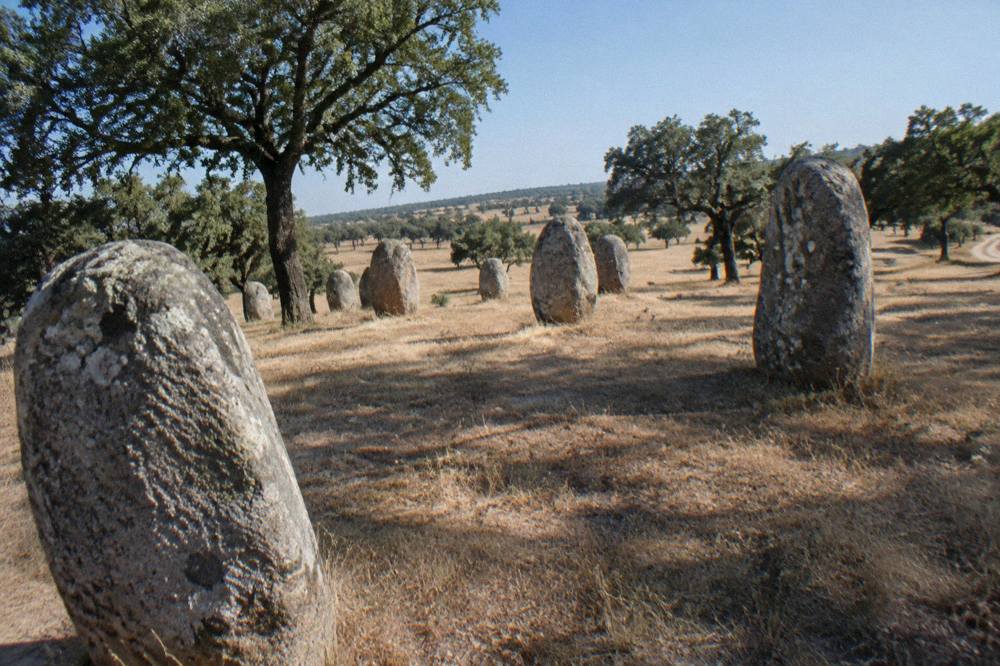
The Almendres Interpretation Centre, in the village of Guadalupe about 8 km along the national road toward Lisbon before the cromlech turn-off, is the megalithic exception worth driving to. Its hours are seasonal, 10:00 to 18:00 in summer from 1 May to 31 October and 10:00 to 17:00 in winter, and the cromlech itself stands in open country. The Cromeleque dos Almendres and megalithic sites near Évora guides cover the sites, and guided tours such as the Half Day Megaliths Cromlech Tour from Évora by Archaeologists, from $74.54 per person and rated 5 from 77 reviews, handle the driving and the interpretation in one booking.
Common Questions About Évora Parking
Is There Free Parking In Évora?
No specific free parking arrangement can be quoted for Évora, because no price, zone rule or car-park detail is published on a page this guide can stand behind. Treat parking as something to settle on arrival: read the signage at the spot you find, and ask at the tourist office on the Praça do Giraldo, which the municipal page lists at number 73, for current advice on where visitors are directed to leave cars.
Can You Drive Into The Évora Historic Centre?
Technically some streets inside the walls carry traffic, but the centre is a medieval grid of narrow cobbled lanes, and nothing inside it is easier by car than on foot. The UNESCO-inscribed old town, listed in 1986 under criteria (ii) and (iv), is compact enough that the whole monumental core is a walking proposition. Stop at the edge and walk in.
Do You Need A Car In Évora?
No. The train from Lisbon, six through Intercidades services a day at 13.90 EUR second class, delivers you to Évora, and the entire historic centre plus the main monuments are walkable from there. A car is only useful for the wider Alentejo ring, towns like Arraiolos, Monsaraz, Estremoz, Vila Viçosa, Elvas and Marvão, and even several of those are covered by guided tours from Évora.
Where Do You Park For The Capela Dos Ossos?
The Capela dos Ossos sits inside the Igreja de São Francisco complex within the historic centre, on the same walkable ground as the Sé and the Praça do Giraldo. The parking answer is the same as for the whole old town: leave the car at the perimeter of the walled centre and approach on foot. The chapel's museum ticket is 7.00 EUR for an adult, with youth to 25 and seniors over 65 at 5.00 EUR.
Is Évora Walkable From The Train Station?
Yes. Évora's railway station sits on the edge of town, and the historic centre is reachable on foot from it, which is why arriving by train removes the parking question entirely. The six through trains from Lisboa Oriente arrive between 08:47 and 20:46, so even the latest arrival leaves time to walk into the old town.
Is Parking Difficult During The Feira De São João?
The Feira de São João takes over the Rossio de São Brás, the fairground area at the eastern edge of the town, and the 2026 edition ran from 23 June to 5 July. That fortnight puts pressure on exactly the ground a driver might otherwise use, so if your visit overlaps the fair, expect the perimeter to be busier and plan to arrive early in the day.
Among the three guided options above, the storytelling walk is the one that turns a parking-free evening into the highlight of a trip. The tales-and-legends format, 2.5 hours and rated 4.8 from 40 reviews, moves through the same lanes after the day crowds have gone, and it pairs naturally with a first evening in the old town.
The pattern that runs through every answer on this page is the same: Évora rewards the visitor who arrives light and walks. The city's UNESCO inscription in 1986 recognised it as, in criterion (iv)'s words, the finest example of a city of the golden age of Portugal after the 1755 Lisbon earthquake, precisely because that old fabric survived intact, and intact old fabric means lanes built for people. Park at the wall, or better, step off the train, and spend your time in Évora the way it was made to be spent, on foot and unhurried.