What Is Alentejo Wine Similar To?
What Alentejo wine tastes like, how drinkers usually describe it, and where to taste it around Évora, the capital of Portugal's Alentejo wine country.
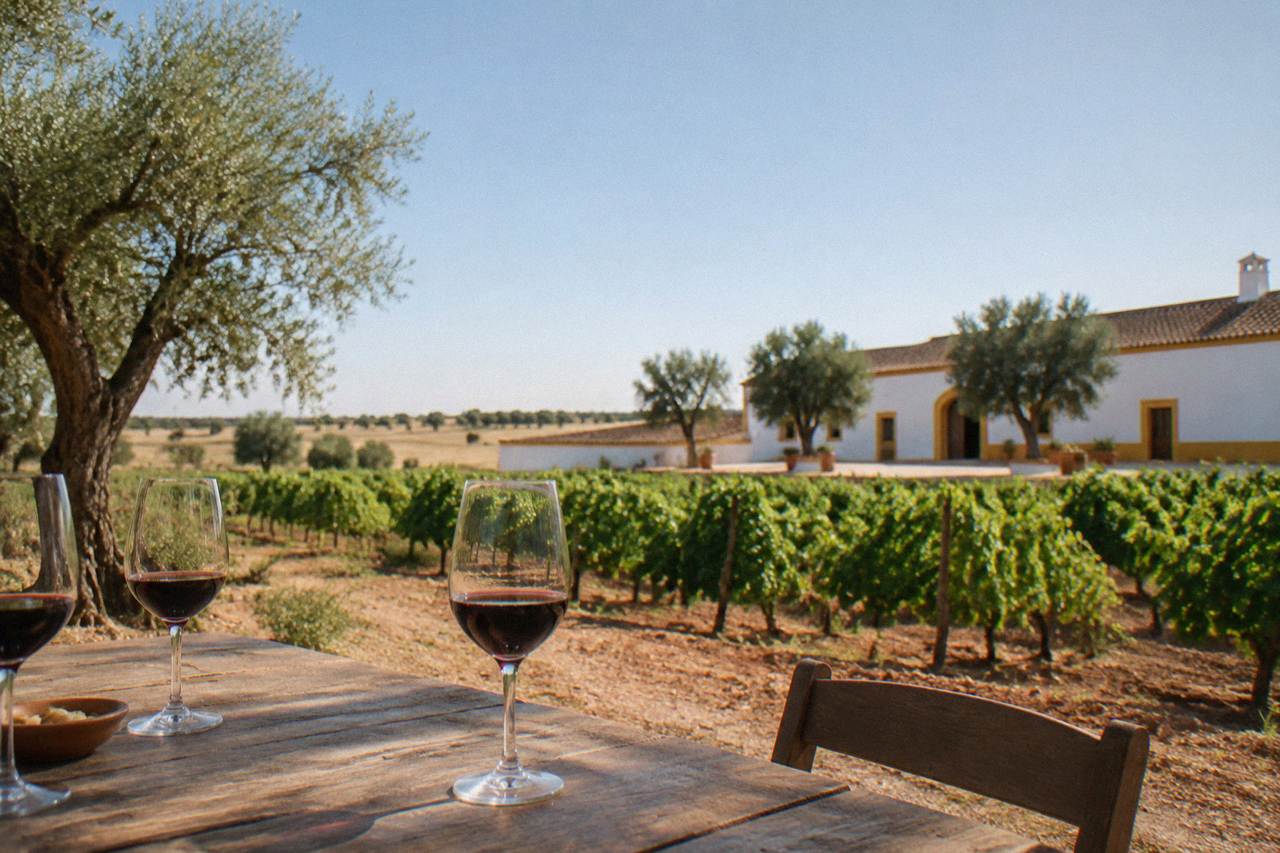
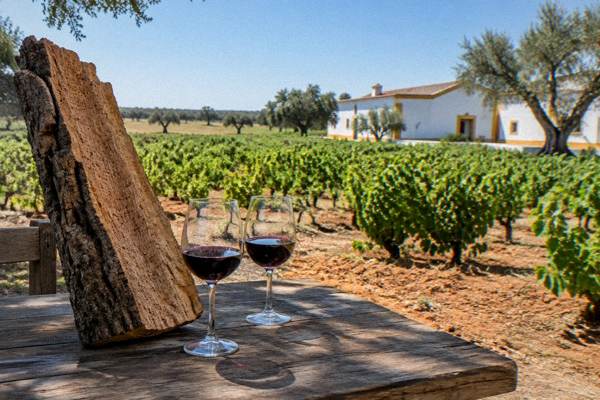
Alentejo wine comes from the hot, inland plains of southern Portugal, and Évora sits at the centre of them. The city is the capital of the Évora district and of the Central Alentejo sub-region, a UNESCO-listed historic town surrounded by cork oak, olive groves and vineyards, roughly 130 km from Lisbon and about 90 km from the Atlantic. That geography is the whole answer to the question in one line: this is warm-country wine, made inland, and it tastes like it.
What Is Alentejo Wine Similar To?
Alentejo wine is most often described as a full-bodied, ripe-fruited warm-climate style, and the comparisons drinkers reach for are other sun-driven reds rather than the leaner Atlantic styles of northern Portugal. Red is the region's signature: soft tannins, generous dark fruit and a rounded, easy finish. Whites run fuller and softer than the crisp coastal whites most visitors know from Vinho Verde country. No single foreign match is a settled fact, and honest sellers describe the style rather than name a twin.
The reason is climate. The Alentejo plain bakes in summer, and IPMA's 1991 to 2020 normals for the Évora station show a July mean maximum of 33.3 C and an August mean maximum of 33.5 C, with 31.9 days a year reaching 35 C or more. Grapes that ripen in that heat build sugar and body, which is why the wines lean generous rather than sharp.
So when people ask what the wine resembles, the useful answer is structural, not geographic. Think of the family of warm-climate reds: lots of ripe fruit, moderate acidity, alcohol that carries the flavour, and a texture made for food. Whites follow the same logic, rounder and more textured than the bracing whites of the Minho. If your reference points are the cool, Atlantic-influenced wines of northern Portugal, Alentejo will feel like a different country, which in wine terms it nearly is.
For a deeper look at the region's character, see What Is Alentejo Wine Like? and the Alentejo Wine Guide. The honest caveat stands: any specific "this equals that" comparison is a matter of taste, not a fact this page will assert.
Which Alentejo Wine Styles Will You Meet Around Évora?
Around Évora you will meet three broad styles: full, ripe reds that dominate every tasting list; textured, sun-grown whites that are fuller than coastal Portuguese whites; and rosés built on the same ripe fruit. Red is the style the region is known for, and it is what most tastings around the city pour first. Sparkling and fortified styles exist in the wider region, but a visitor tasting around Évora will mostly be offered the first three.
The reds are the headline. They are made to be drunk young and with food, which suits the Alentejo table, where bread, olive oil, cheese and slow-cooked pork dishes do the talking. The whites surprise people more: expect weight and warmth rather than the knife-edge freshness of a coastal white. Rosés sit between the two, fruity and easy.
What no honest page can do is hand you a list of grape varieties and DOC boundaries as settled fact. That detail belongs to the producers and the regional bodies, and it changes with vintage and fashion. What a visitor can rely on is the pattern: in Évora, red first, white second, and everything else a footnote.
The practical way to learn the style is to taste it where it grows. A guided tasting walk through the historic centre, such as the Golden Era of Évora walking tour with a Portuguese wine tasting, pairs the city's monuments with a pour at the end, which is a gentle introduction for a first visit.
Where Can You Taste Alentejo Wine Near Évora?
The practical options are a guided tasting in the city itself, a half-day wine and cork tour into the surrounding estate country, or a full-day wine route trip toward Reguengos de Monsaraz. Tastings inside Évora need no car and fit a short visit; estate visits need half a day or more. The choice comes down to time: a single afternoon favours the city, a full day favours the vineyards.
The city option is the easiest. Walking tours that end with a tasting, and evening food and wine crawls, keep everything inside the walls, so a visitor with one day in Évora can still taste the region's reds and whites between monuments. The trade-off is that you stay in town and see the wine, not the landscape that makes it. The full index of guides sits on Évora Travel Guide.
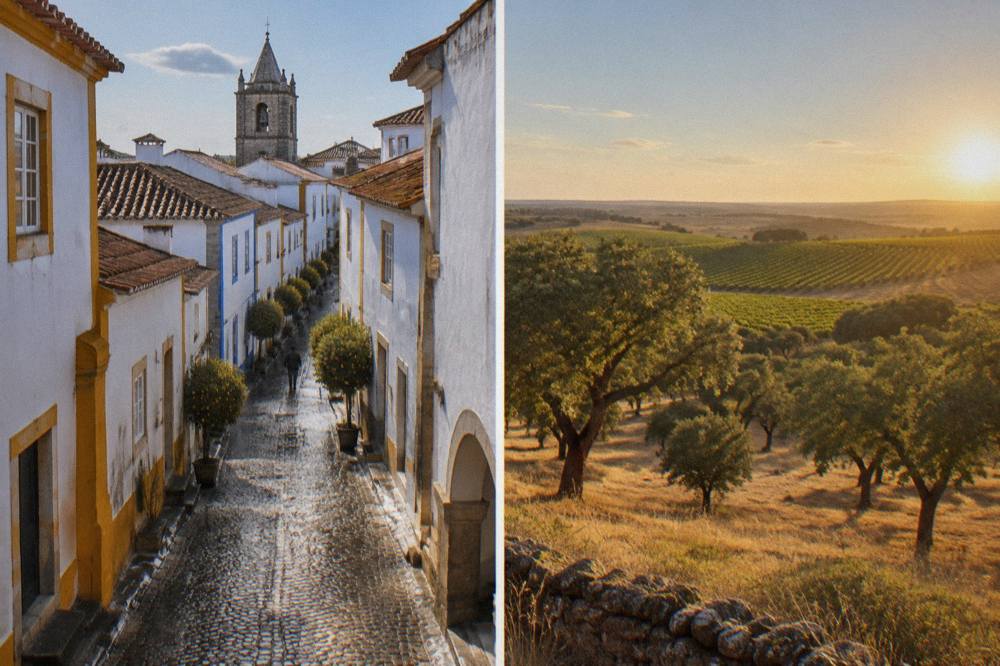
The estate option shows the other half. The countryside around Évora is cork oak country as much as vineyard country, and the two are often sold together, which is why the cork-and-wine combination tour is the region's signature product. The Reguengos de Monsaraz wine route is the classic full-day extension for visitors with a car or a guide.
For a structured version, the Alentejo Wine and Cork tour from Évora runs four hours from the city and puts both products in one afternoon; Check availability if that shape suits your dates. The Évora wine tasting guide covers the in-town options in more detail.
How Much Do Wine Tours From Évora Cost?
Guided wine experiences from Évora range from about $23.92 per person for a walking tour that ends with a tasting, to about $321.11 per person for a full-day private wine tour with lunch and transport. In between sit half-day combos around $78.78, an evening food and wine crawl at about $83.28, and a cooking class at about $166.29. Every figure below comes from the operator's live listing and can change.
The spread is wide because the products are different animals. A walking tour with a tasting at the end is a city experience with a pour attached. A half-day wine and cork tour adds a vehicle, a driver-guide and estate visits. A full-day private tour adds lunch, distance and exclusivity, and the price says so.
| Tour from Évora | Duration | From price (USD) | Rating |
|---|---|---|---|
| Golden Era of Évora walking and wine tasting | 2.5-3 hours | $23.92 | 4.4 from 33 reviews |
| Alentejo Wine and Cork from Évora | 4 hours | $78.78 | 4.7 from 24 reviews |
| Évora Evening Food and Wine Crawl | 3 hours | $83.28 | 4.6 from 19 reviews |
| Learn the Art of Alentejo Cuisine with Andre | class | $166.29 | 3 from 3 reviews |
| 1 Day Wine Tour Around Évora | full day | $321.11 | 5 from 11 reviews |
Visitors starting from Lisbon rather than Évora have a parallel set of options, all of them day trips that reach the city and its wine country in one move. They cost more than the train fare alone, 13.90 EUR second class on CP's Intercidades, but they bundle transport, guiding and tasting.
| Tour from Lisbon | Duration | From price (USD) | Rating |
|---|---|---|---|
| From Lisbon: Évora and Monsaraz with Regional Wine Tasting | 9 hours | $64.09 | 4.7 from 360 reviews |
| Small-Group Évora and Monsaraz Tour with Wine Tasting | day trip | $65.31 | 4.5 from 232 reviews |
| From Lisbon: Évora, Bones Chapel, Monsaraz and Alentejo Wines | 9 hours | $80.02 | 4.8 from 287 reviews |
| Lisbon: Évora, Chapel of Bones and Winery Small Group Tour | 10 hours | $87.79 | 4.7 from 50 reviews |
For travellers weighing the full picture of a visit, Is Alentejo Worth Visiting? covers the case for the region beyond the glass, and the Évora wine and food day itinerary shows how a tasting fits into a single day in the city.
What Should You Pair With Alentejo Wine?
Pair Alentejo wine with the Alentejo table: bread, olive oil, sheep's cheese, cured pork and slow-cooked meat dishes, which is exactly what the region has always eaten alongside it. The reds want protein and olive oil, the whites want bread, cheese and the lighter end of the regional repertoire. The safest rule is to drink the region's wine with the region's food, in the region.
This is not a coincidence of flavour. The wine and the cuisine grew up together on the same hot plain, and the pairing logic is structural: ripe, full-bodied reds stand up to rich pork and lamb dishes, while fuller whites carry bread, olive oil and cheese without being washed out. IPMA's 1991 to 2020 normals put the annual mean temperature at 16.6 C and annual rainfall at 596.1 mm for the Évora station, a climate that shapes both what grows and what gets cooked.
No named restaurant, tavern or producer appears here, and no price or ranking for any of them should be trusted from a page like this one. What a visitor can do is eat and drink locally and let the region make its own case. The Alentejo food guide and the dishes to try in Alentejo set out the repertoire in detail, and a cooking class or guided crawl is the structured route in.
Common Questions About Alentejo Wine
What is Alentejo wine similar to?
It is most often described as a full-bodied, warm-climate style: ripe, generous reds and fuller, softer whites, closer in feel to other sun-driven wines than to the crisp Atlantic styles of northern Portugal. Any single foreign comparison is a matter of taste rather than fact.
Is Alentejo wine only red?
No. Red is the region's signature and what most tastings pour first, but Alentejo whites are a real category, typically fuller and rounder than coastal Portuguese whites, and rosés are made from the same ripe fruit.
Can you taste Alentejo wine in Évora itself?
Yes. Walking tours that end with a tasting and evening food and wine crawls run inside the historic centre, so a visitor with a single day can taste the region's wines without leaving the city walls.
How long do wine tours from Évora take?
The shortest listed option is a 2.5 to 3 hour walking tour with a tasting, half-day wine and cork combos run about 4 hours, and full-day private wine tours run the whole day with lunch and transport included.
Do you need a car to visit Alentejo vineyards?
No. Guided tours from Évora handle the driving on half-day and full-day routes, and Évora itself is reachable by train, with CP's timetable valid since 6 September 2026 listing six through Intercidades services from Lisboa Oriente taking about 1 hour 40 to 1 hour 45.
What food goes with Alentejo wine?
The region's own table: bread, olive oil, sheep's cheese, cured pork and slow-cooked meat dishes. The reds suit rich, hearty plates and the whites suit bread, cheese and lighter fare.
The Évora Travel Guide editorial desk keeps this page, and the wider Alentejo travel guide carries the region's towns, castles and cork landscapes for anyone planning to stay longer than a glass.