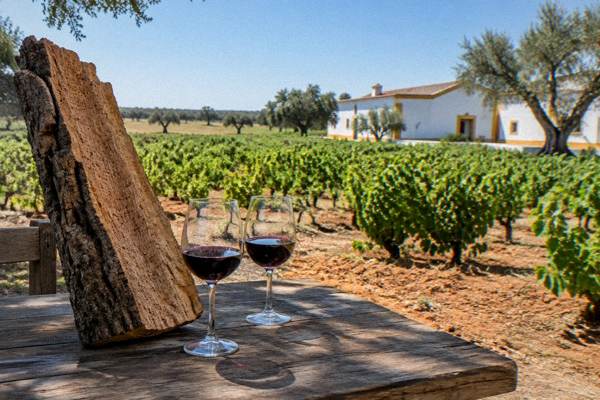
What Is Alentejo Wine Like?
A plain answer to what Alentejo wine is like: the typical styles, the hot inland climate around Évora that shapes them, where to taste them, and what guided wine experiences from Évora cost.
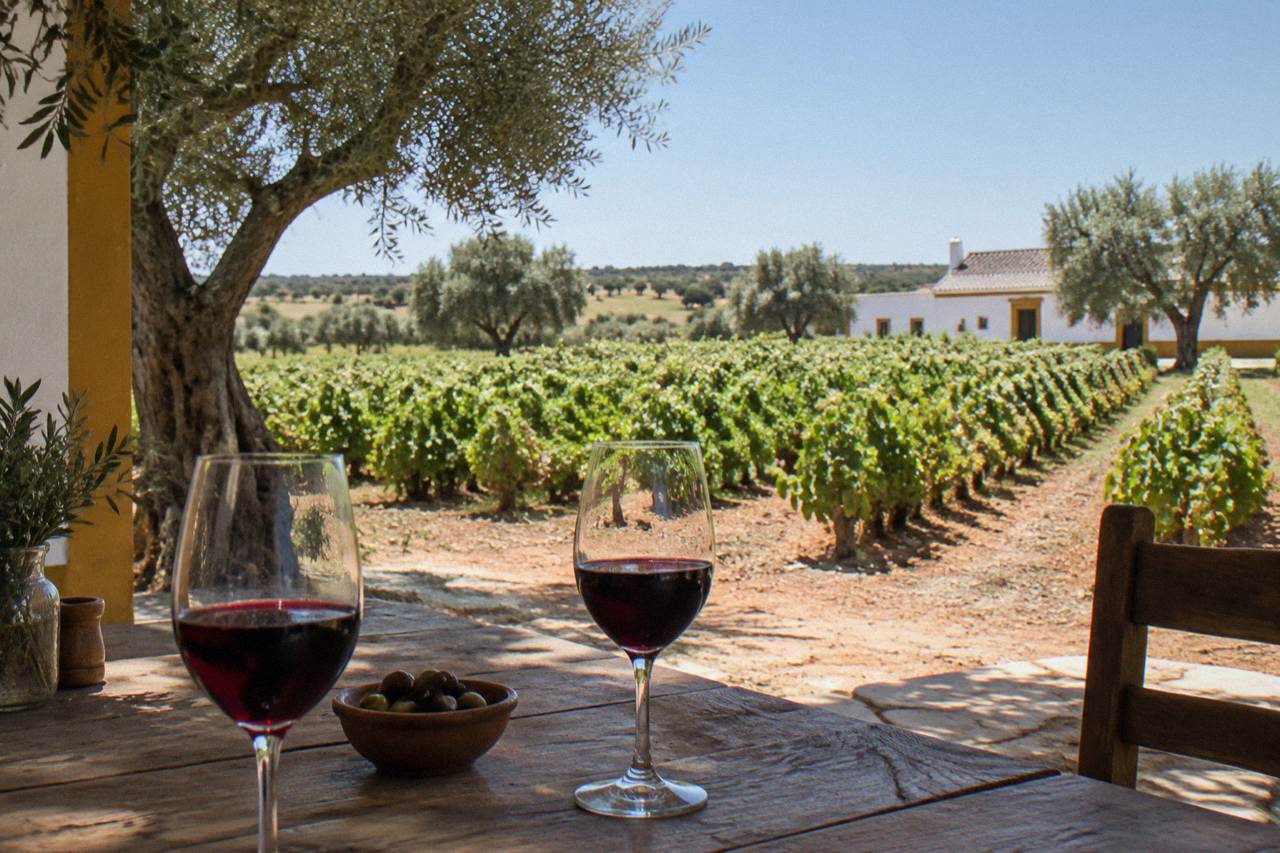
Évora, the capital city of the Alentejo region of southern Portugal, sits in the middle of one of the country's great wine landscapes. The name Alentejo is usually explained as "beyond the Tagus", and everything beyond that river here is inland plain: cork oak, olive groves, wheat fields and vines, with no coast anywhere near. Wine is not a side attraction in this part of Portugal. It is the reason many visitors base themselves in Évora's UNESCO-inscribed historic centre and spend their days out among the estates, and it is the thread that runs through the region's food, its taverns and its calendar of festivals.
What Is Alentejo Wine Like?
Alentejo wine is typically warm-climate table wine: reds that are full-bodied, soft and generous with ripe dark fruit, and whites that are fresh, light and easy rather than sharp or mineral. It is made to be drunk young with food, not laid down for decades, and its reputation rests on approachability rather than austerity. In and around Évora it is the default pour, served beside bread, olive oil, cheese and slow-cooked Alentejo dishes in taverns across the historic centre.
That character comes from the place. The Alentejo is a wide, hot, inland plain, and grapes ripen fully here in a way they rarely do in Portugal's cooler Atlantic zones. Reds from the region are therefore commonly described as round and smooth, with the warmth of the summer baked into them. Whites tend toward the opposite: picked early and kept light, they are the refreshing counterweight to a climate where summer afternoons are for shade.
It is also a wine culture of everyday drinking rather than ceremony. A glass of the regional red with lunch is normal, not an occasion. Visitors arriving from Lisbon, about 130 km away, often notice the pace change before they notice anything in the glass: meals take longer, portions are larger, and the wine arrives as part of the meal rather than as a separate event. For a fuller region-by-region introduction, the Alentejo wine guide covers the landscape in detail, and readers who already know the basics can compare notes in what Alentejo wine is similar to.
One honest caveat belongs here. This page describes the general style of the region's wine, because no individual producer, vintage or bottle was checked for this article. Tastes vary between estates and between years, and the only way to know what the current pours are like is to taste them, which is exactly what the guided options later in this page make easy.
How Does The Inland Alentejo Climate Shape The Wine?
The Alentejo around Évora is one of the hottest wine-growing corners of Portugal: IPMA's 1991 to 2020 normals for the Évora station put the July mean maximum at 33.3 C and the August mean maximum at 33.5 C, with 31.9 days a year reaching 35 C or more. That heat, on an inland plain with no sea to soften it, is what ripens Alentejo fruit so fully and what pushes the region's winemakers toward soft reds and early-picked, fresh whites.
The same record shows what visitors are actually up against. The highest temperature ever recorded at the Évora station is 45.4 C, on 4 August 2018, and the annual mean across the whole 1991 to 2020 window is 16.6 C. Rain is heavily concentrated outside summer: July averages just 2.7 mm and August 6.0 mm, while October through December each average more than 80 mm. Anyone planning vineyard days around Évora is really planning around this table.
| Month | Mean daily max (C) | Mean daily min (C) | Rain (mm) | Days reaching 30 C+ |
|---|---|---|---|---|
| April | 20.7 | 8.5 | 62.1 | 0.3 |
| May | 25.0 | 10.9 | 46.6 | 5.5 |
| June | 30.2 | 13.8 | 10.6 | 15.1 |
| July | 33.3 | 15.6 | 2.7 | 23.7 |
| August | 33.5 | 16.0 | 6.0 | 25.0 |
| September | 29.5 | 14.6 | 33.9 | 13.9 |
| October | 24.1 | 12.3 | 81.5 | 2.9 |
All figures are IPMA 1991 to 2020 climate normals for the Évora station, number 558, at 247.6 m altitude. The practical reading is simple. Late spring and early autumn offer warm days without the punishing peaks of July and August, and September in particular sits in the window when the harvest is on the plains. Summer tasting trips are still very doable, but the sensible shape of the day changes: cellar visits and long lunches in the middle of the day, sightseeing early and late.
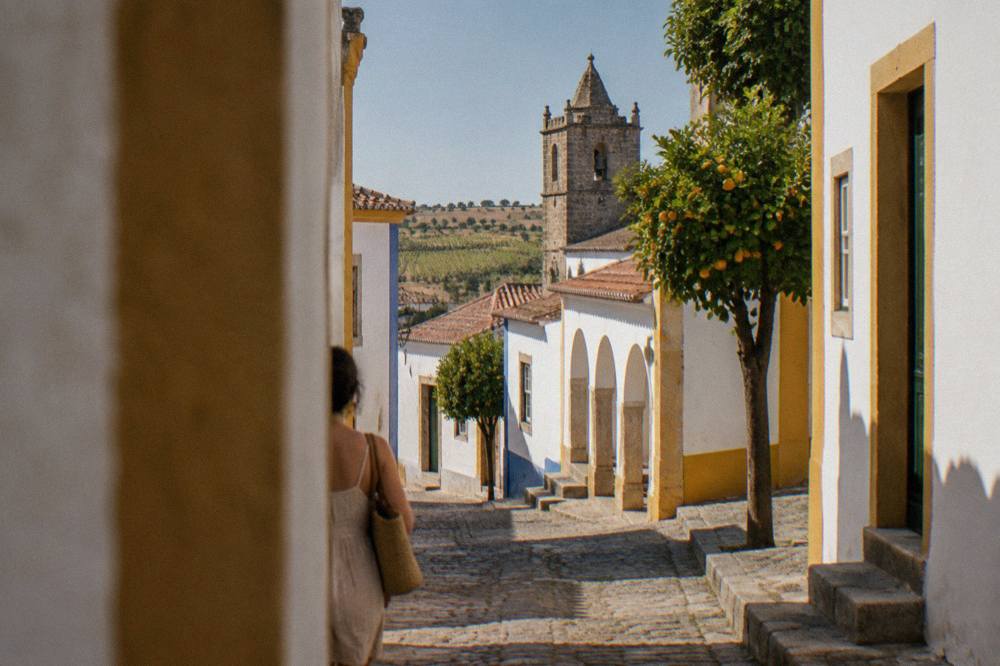
Wine is not the only thing the climate explains. The cork oak landscape that covers so much of the region is adapted to exactly this pattern of dry summers and mild, damper winters, and many guided experiences from Évora pair the two, visiting both a cork estate and a tasting room in a single morning. That combination is one of the most distinctive days out the Alentejo offers, and the tours below are the bookable versions of it.
Where Can You Taste Alentejo Wine From Évora?
The realistic options from Évora are guided tastings: half-day wine and cork tours that leave the city and return within about four hours, full-day private wine tours that build a whole itinerary around estates, and evening food and wine crawls that stay inside the historic centre and walk between stops. Prices on the live listings run from about $50 per person for a half-day group tour to $321.11 for a full-day private experience, all bookable in advance.
The half-day format is the workhorse. The featured option on this page, Alentejo Wine and Cork from Évora, runs four hours from $78.78 per person and is rated 4.7 from 24 reviews on its listing, combining a cork stop with regional tastings. For visitors who want the vineyards without giving up the whole day, it is the natural fit, and it can be checked here: Check availability.
Full-day tours go further afield and cost accordingly. A 1 Day Wine Tour Around Évora, from $321.11 per person and rated 5 from 11 reviews, is the fullest version, with lunch and transport built in. At the other end of the scale, the evening food and wine crawl, from $83.28 per person and rated 4.6 from 19 reviews, keeps everything within walking distance and suits anyone who has already spent the day among the monuments. The table below lines up the wine-centred options that start in Évora itself.
| Guided experience from Évora | From (per person) | Rating | Reviews | Length |
|---|---|---|---|---|
| Megalithic and Cork Forest guided tour | $50.65 | 4.9 | 41 | 4 hours |
| Alentejo Wine and Cork from Évora | $78.78 | 4.7 | 24 | 4 hours |
| Monsaraz and Wine guided tour | $78.78 | 4.6 | 51 | 4 hours |
| Évora: Evening Food & Wine Crawl | $83.28 | 4.6 | 19 | 3 hours |
| 1 Day Wine Tour Around Évora | $321.11 | 5 | 11 | Full day |
Every figure above comes from the operator's live listing, in US dollars, and each listing carries its own cancellation terms; check the panel before booking rather than assuming. What no listing can promise is a specific estate, a specific pour or a specific vintage, and none should be expected to. The value of a guided tasting day is the driving, the explanations and the structure, not a guaranteed bottle list.
How Do Food And Wine Fit Into A Day In Évora?
In the Alentejo, wine and food are planned as one meal, not two bookings: the region's wines are built for its slow-cooked pork and lamb dishes, its bread-based soups, its sheep's cheese and its olive oil, and the guided experiences from Évora reflect that by pairing tastings with cooking classes, crawls and long lunches. A cooking class with a local cook runs from $166.29 per person on its listing, and an evening food and wine crawl from $83.28.
The cooking option deserves more attention than it usually gets. Learn the Art of Alentejo Cuisine with Andre, from $166.29 per person, puts the region's dishes in the visitor's own hands, and it pairs naturally with an evening crawl afterwards for anyone who wants the full arc of an Alentejo day: market ingredients in the afternoon, wine with dinner, and a walk back through the lit streets of the historic centre. The Alentejo food guide covers what lands on the table, and the Évora wine and food day itinerary sequences a whole day around both.
For visitors with only one day and a serious interest in wine, the dedicated full-day option is the deepest of the lot.
The middle ground is a morning of monuments and an afternoon among the vines, which is the shape most first visits to Évora take. The city's own sights are compact: the Sé de Évora's complete-visit ticket is 5.00 EUR, the Capela dos Ossos museum ticket is 7.00 EUR, and both sit within a few minutes' walk of each other inside the walls. A tasting tour that leaves in the early afternoon slots neatly after them, and the Évora wine tasting guide lays out the choices in town for anyone preferring to stay put.
Which Towns And Seasons Pair Well With Alentejo Wine?
The wine country around Évora spreads across several easy day-trip towns: Monsaraz sits about 40-45 km away above the Alqueva reservoir, Estremoz about 45 km, Vila Viçosa about 60 km, and the Reguengos de Monsaraz wine route is the region's dedicated wine corridor. On the climate record, the comfortable seasons are spring and autumn: April and May average mean maxima of 20.7 C and 25.0 C, and October 24.1 C, against 33.3 C in July.
Monsaraz is the classic pairing, because the drive out crosses exactly the landscape the wine comes from, and several tours combine the village with a tasting. The Monsaraz and Wine guided tour from Évora runs four hours from $78.78 per person, rated 4.6 from 51 reviews, and there is a small-group morning version from $80.28 rated 4.9 from 31 reviews. Further afield, marble-town Vila Viçosa and Estremoz each make a full day in themselves; the Alentejo road trip itinerary strings them together, and the Reguengos wine route guide covers the dedicated wine corridor.
The season matters more here than in most wine regions, purely because of the heat. A September visit lands around the harvest on the plains, with a 1991 to 2020 mean maximum of 29.5 C, while a July visit means planning tastings around the middle of the day. The trade-off is that summer is when the Alentejo's festival calendar fills up, and the run-up to the 2027 Capital of Culture year is adding events to it. Anyone weighing the months against each other can start with which month is best to visit the Alentejo and the wider Alentejo travel guide.
Common Questions About Alentejo Wine
These are the questions visitors ask most often about the region's wine, answered in brief: Alentejo wine is typically soft, full-bodied red and fresh, light white, made for food; it can be tasted from Évora on half-day, full-day and evening guided tours; prices on the live listings run from about $50 to $321.11 per person; and the best seasons are spring and autumn, when the 1991 to 2020 climate normals put daytime maxima in the low twenties rather than the mid-thirties.
What is Alentejo wine like?
Typically a warm-climate table wine: reds that are full-bodied, soft and generous with ripe fruit, whites that are fresh and light. It is made to be drunk young with food, and around Évora it is the standard pour beside the region's slow-cooked dishes.
Is Alentejo wine only red?
No. Reds are the region's best-known style, but fresh, light whites are a long-standing part of the picture, and rosé appears in the regional mix as well. The balance at any individual tasting depends on the estate and the season.
Can you visit Alentejo wineries from Évora without a car?
Yes, through guided tours. Half-day wine and cork tours, full-day wine tours and evening food and wine crawls all start in Évora and include transport, so no rental car is needed. Check each operator's listing for pickup details before booking.
How much does a wine tour from Évora cost?
On the live listings, from about $50.65 per person for a four-hour megalithic and cork forest tour to $321.11 for a full-day private wine tour with lunch and transport. A half-day wine and cork tour sits at $78.78, and an evening food and wine crawl at $83.28.
When is the best month for wine country around Évora?
Spring and autumn. IPMA's 1991 to 2020 normals for the Évora station put April at a 20.7 C mean maximum and October at 24.1 C, against 33.3 C in July and 33.5 C in August. September, at 29.5 C, falls around the harvest.
Is Alentejo wine sweet?
Mostly not. The region's reputation rests on dry table wines, red and white, meant for the meal. As with any wine region, other styles exist, but sweetness is not what Alentejo is known for.
The short version is that Alentejo wine is the taste of a hot, inland, generous countryside, and Évora is the place it is easiest to reach. For more on the region as a whole, see what the Alentejo is famous for and the Évora Travel Guide itself.