Évora Archaeological Sites: Roman Temples, Megaliths And Museum Treasures
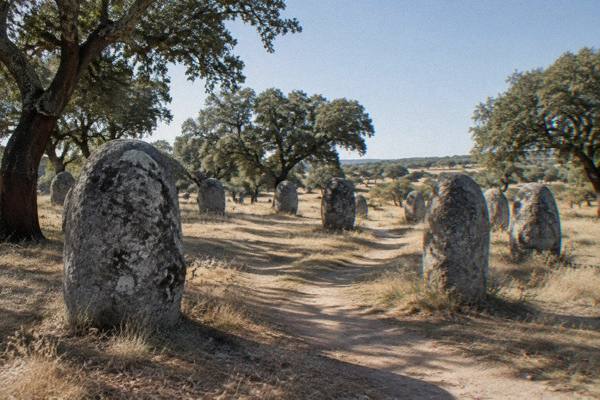
Évora, the inland capital of Portugal's Alentejo, keeps its archaeology in plain sight: a Roman temple beside the cathedral, bath remains inside the old wall, and a prehistoric stone circle on the plain outside town.
Short answer
The core archaeological sights of Évora are the Templo Romano in the historic centre, the Roman bath remains, the old city wall, the Museu de Évora collection, and, about 8 km out along the national road toward Lisbon, the Cromeleque dos Almendres stone circle with its interpretation centre in Guadalupe.
Évora, the inland capital of Portugal's Alentejo, keeps its archaeology in plain sight. A Roman temple rises on the high ground beside the cathedral, the remains of Roman baths surface inside the old walled centre, and the plain south of the city holds a prehistoric stone circle of standing menhirs that draws comparison with far more famous monuments. Few cities of this size pack three such distinct archaeological layers into a walkable core and a single short drive.
The city's UNESCO inscription recognises exactly this density. The Évora Travel Guide attraction pages break down each monument individually, from the Roman temple to the Cromeleque dos Almendres; this page pulls them together into one archaeological itinerary. Read it alongside the fuller things to do in Évora overview and the dedicated ancient and Roman sites guide.
What Archaeological Sites Can You See In Évora?
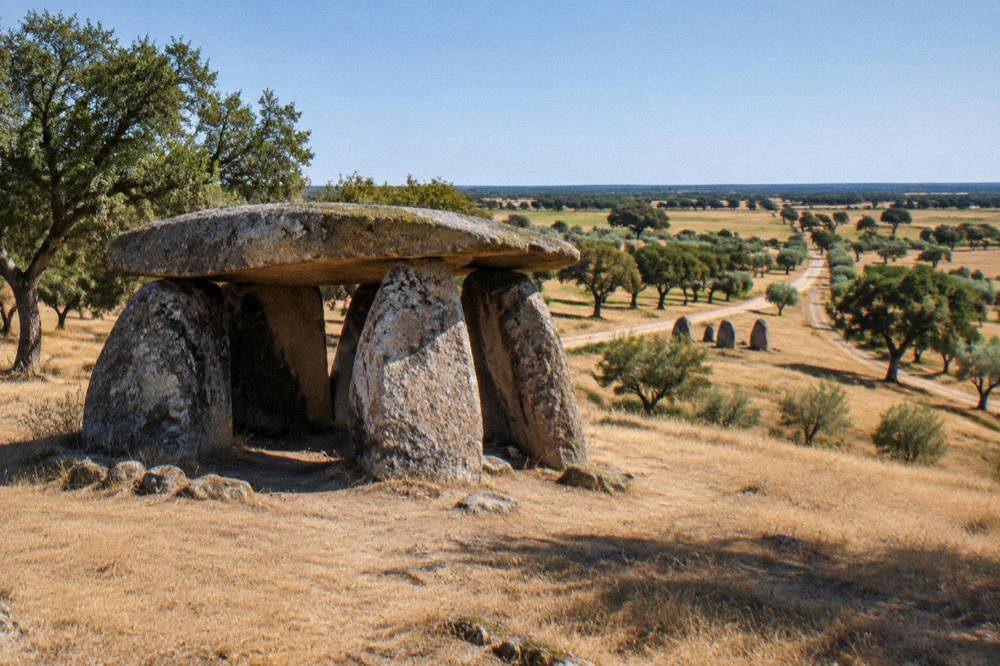
The archaeological sites of Évora fall into three layers: Roman monuments inside the walled historic centre, led by the Templo Romano and the remains of the Roman baths; prehistoric megaliths on the open plain outside the city, above all the Cromeleque dos Almendres stone circle and the Anta Grande do Zambujeiro dolmen; and the Museu de Évora, founded in 1915, which holds excavated finds from the region in the former Archbishop's Palace.
The layers sit surprisingly close together. The Roman material is all inside or on the edge of the medieval wall, so a morning on foot covers it. The megalithic monuments need a vehicle or a guided tour, since they stand in open countryside with no rail link and no town around them. The museum knits the two together, and its collection is the one place where the small finds, the ceramics and the stonework that never made it into a monument photograph can be studied at leisure.
Here is the full set at a glance, with the practical notes that matter for each one:
| Place | What You See | Notes For Visitors |
|---|---|---|
| Templo Romano | A standing Roman temple platform and columns, 25 x 15 m | Open-air monument, no ticket or listed hours |
| Roman bath remains | Surviving bath structures inside the historic centre | Street-level sight, no published ticket or hours |
| Old city wall | Stretches of the walled circuit around the centre | Walk the outside line freely |
| Água de Prata aqueduct | A long arcade carrying water toward the city | Visible from many points, no published access details |
| Cromeleque dos Almendres | A stone circle of standing menhirs on the plain | Open countryside; interpretation centre in Guadalupe |
| Anta Grande do Zambujeiro | A great chambered dolmen | Reached by the same country lanes as the cromlech |
| Museu de Évora | Regional archaeology and art in the Archbishop's Palace | Tue-Sun, closed Mondays, adult 8 EUR |
Two of these, the temple and the cromlech, anchor most visitors' itineraries, and the sections below treat each in turn. The baths, the wall and the aqueduct reward the slower walker, because they surface in corners of the city that a racing tourist misses.
Why Is Évora A UNESCO World Heritage City?
The Historic Centre of Évora was inscribed by UNESCO in 1986 under criteria (ii) and (iv). Criterion (iv) calls it the finest example of a city of the golden age of Portugal after the 1755 Lisbon earthquake, an earthquake Évora was largely spared, which is why its historic fabric survived so intact. The inscription record also notes that Moorish rule ended in 1165, that the Jesuit University of the Holy Spirit dates from 1553, and that the Jesuits were expelled in 1759.
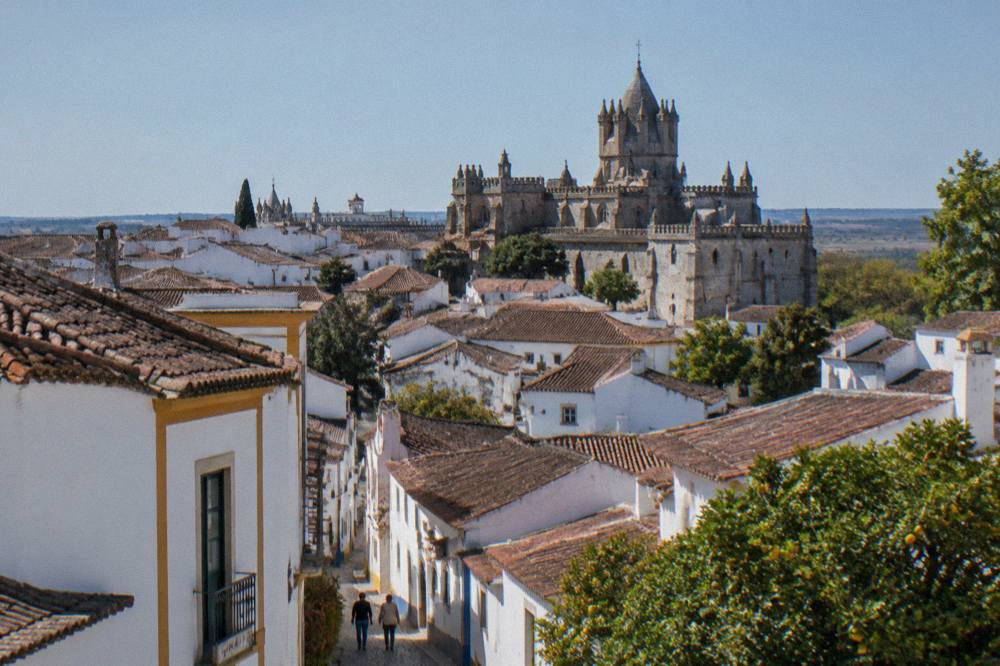
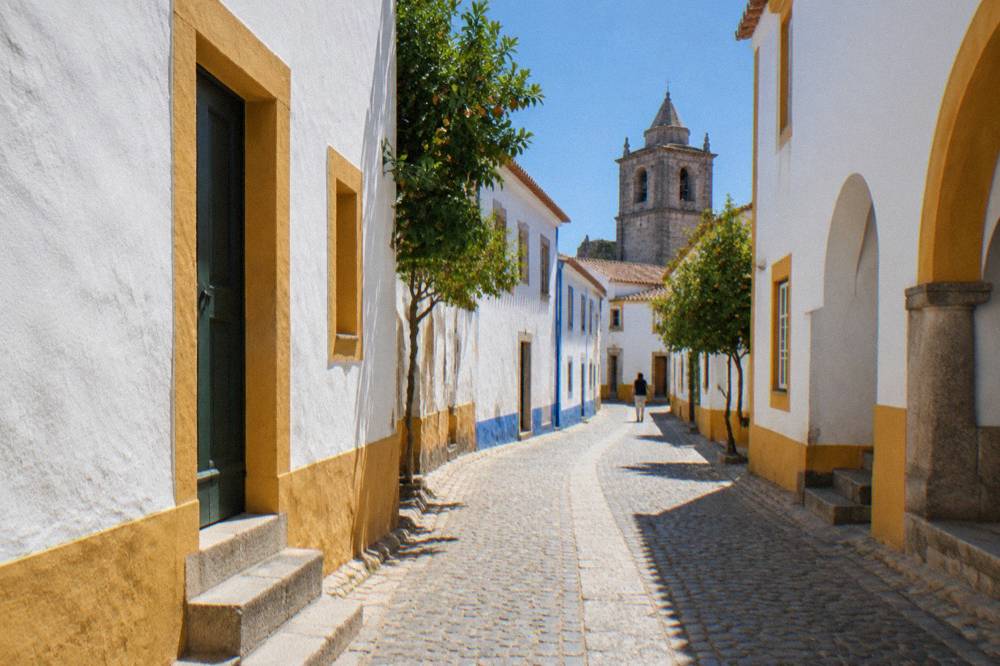
That survival is the archaeological story of the city in one paragraph. The earthquake that levelled Lisbon left Évora's golden-age streets, churches and temples standing, so the historic centre reads as a layered site in itself. Roman columns beside a medieval cathedral, a Renaissance university college inside a wall whose line is older still: the sequence is visible on a single walk, which is precisely what the UNESCO citation rewards.
The verified milestones make a useful timeline to carry with you:
| Year | Event |
|---|---|
| 1165 | Moorish rule in Évora ends |
| 1553 | Jesuit University of the Holy Spirit founded |
| 1759 | The Jesuits are expelled |
| 1870 | The Templo Romano's walls are freed under Cinatti |
| 1915 | The Museu de Évora is officially founded |
| 1986 | UNESCO inscribes the Historic Centre of Évora |
A guided walk is the most efficient way to absorb this sequence, and the guided options below cover the historic centre with the monuments threaded into a single route:
Is The Templo Romano Really The Temple Of Diana?
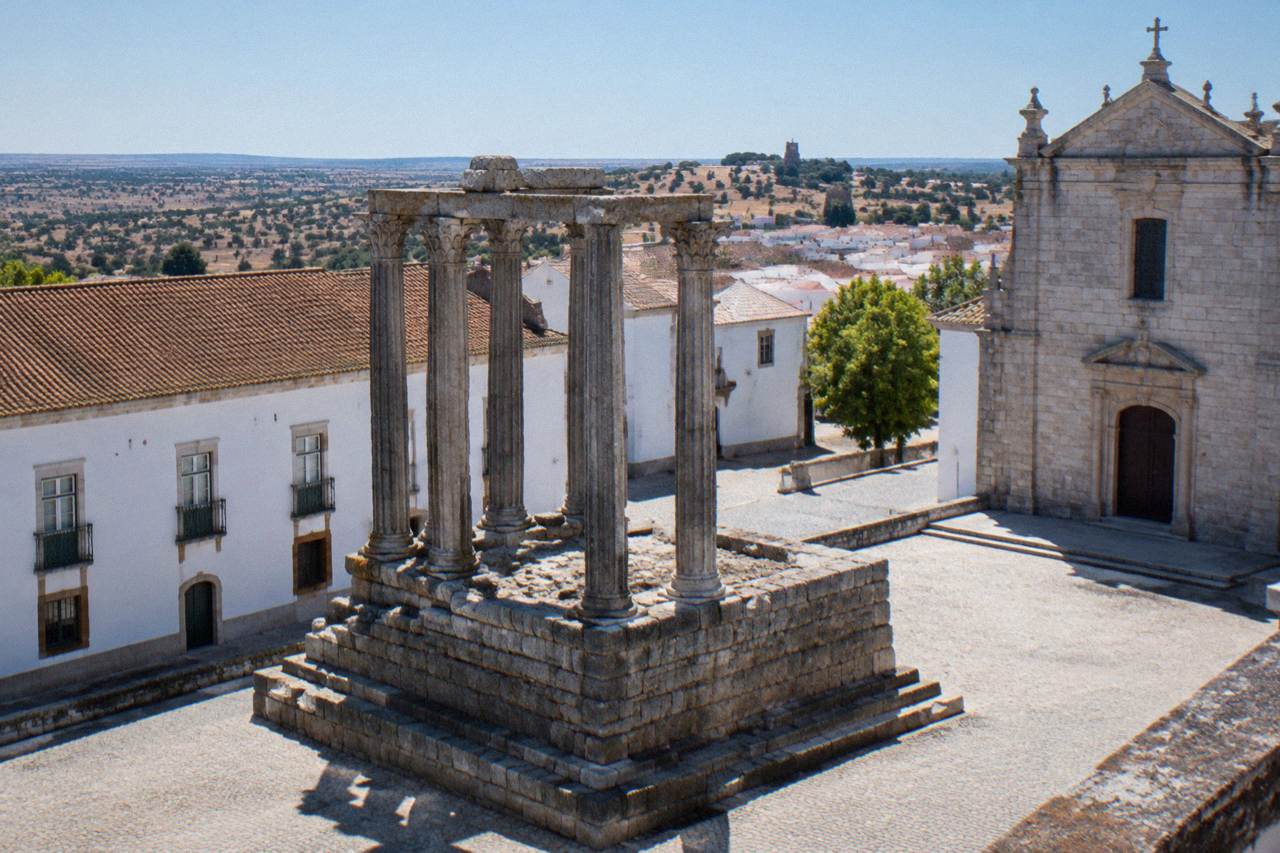
The Templo Romano is a genuine Roman temple, but the municipal page says it was probably dedicated to the imperial cult rather than to the goddess Diana, and the name Temple of Diana has only been in use since the 17th century. The monument measures 25 x 15 m, was later reused as a municipal butcher's shop, and had its walls freed in 1870 under Cinatti. It is an open-air monument with no ticket and no listed hours.
That chain of uses is the temple's real interest. A building erected for Roman worship became a butcher's premises in the medieval city, was cleared in 1870 under Cinatti, and now stands as the most photographed structure in the Alentejo. The probable dedication to the imperial cult matters too, because it reframes the monument: this was civic Roman architecture, a statement of the empire's presence in Ebora, rather than a sanctuary of a single goddess.
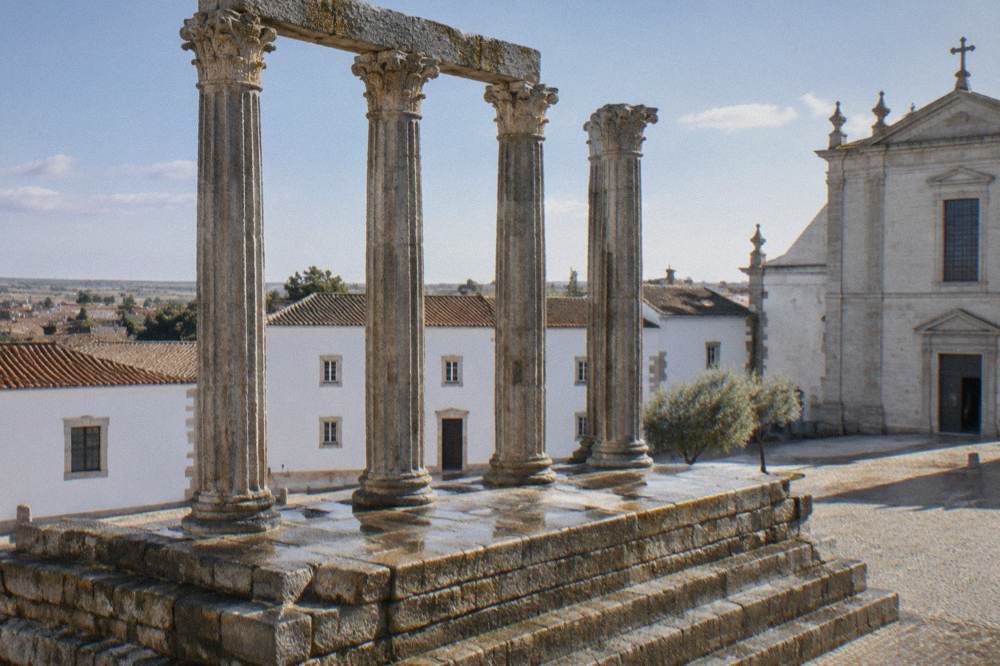
Practically, the temple asks nothing of you. There is no queueing, no ticket window and no closing time to plan around, because the monument stands in the open air beside the cathedral. Pair it with the Évora Cathedral next door, whose complete-visit ticket at 5.00 EUR covers the cloister, the roof terrace and the museum, and you have the architectural heart of the city in one stop.
If a guided route appeals, the Golden Era of Évora walking and wine tasting tour threads the temple and the golden-age monuments into a 2.5 to 3 hour route with a Portuguese wine tasting at the end, from $23.92 per person.
Where Are The Megalithic Sites Near Évora?
The great megalithic concentration sits on the plain around Guadalupe, reached from Évora by taking the national road toward Lisbon and following the turn-off after 8 km. The Cromeleque dos Almendres stone circle and the Anta Grande do Zambujeiro dolmen stand in this same stretch of open countryside. The Almendres Interpretation Centre in Guadalupe village, on Rua do Cromeleque, opens 10:00-18:00 from 1 May to 31 October and 10:00-17:00 from 1 November to 30 April.
The cromlech is the Alentejo's answer to the question every visitor eventually asks: is there a Stonehenge in Portugal? The honest comparison is structural rather than literal. Almendres is a stone circle of standing menhirs, arranged on a gentle slope among cork oaks, and it is visited on foot, in silence, usually with nobody else in sight. The dolmen at Zambujeiro is a chambered tomb of massive stones, and the two are close enough to combine in one excursion.
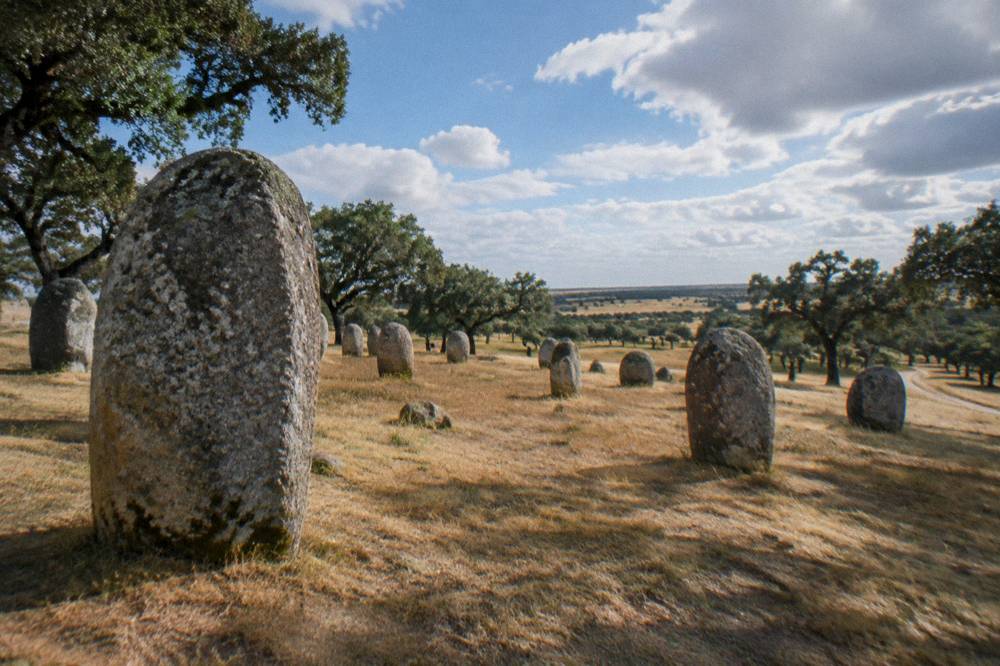
The interpretation centre is the practical anchor for the trip, and its seasonal hours are worth writing down:
| Season | Dates | Hours | Location |
|---|---|---|---|
| Summer | 1 May to 31 October | 10:00-18:00 | Guadalupe village, Rua do Cromeleque |
| Winter | 1 November to 30 April | 10:00-17:00 | Guadalupe village, Rua do Cromeleque |
Driving yourself is straightforward on the route described above, but the lanes are unmarked in places and the monuments are easy to miss. The guided alternative removes that friction entirely, and the 3-hour Cromlech of Almendres and Great Dolmen of Zambujeiro tour, from $33.76 per person and rated 5 from 54 reviews, covers both monuments with a guide who knows the ground.
For a deeper cut, the half-day megaliths cromlech tour run by archaeologists, from $74.54 per person and rated 5 from 77 reviews, brings professional excavation experience to the same landscape. The fuller megalithic sites near Évora guide lists the smaller monuments in the same area for anyone wanting a whole day among the stones.
What Roman Remains Survive Beyond The Temple?
Beyond the Templo Romano, Roman Évora survives in the bath remains that surface inside the historic centre, in the line of the old city wall and its gates, and in stones reused across the centre's churches and palaces. None of these carries a published ticket price or opening hours, so treat them as street-level sights encountered while walking, and ask at the tourist office on Praça do Giraldo about anything you specifically want to enter.
The Roman baths of Évora are the surprise of the set. Visitors arrive expecting the temple and discover that bath structures still exist within the fabric of the city, visible rather than reconstructed. The Roman walls and medieval wall tell the same story of continuity: the medieval circuit grew over and around older defences, and walking the outside of the wall is the best way to read how the city grew.
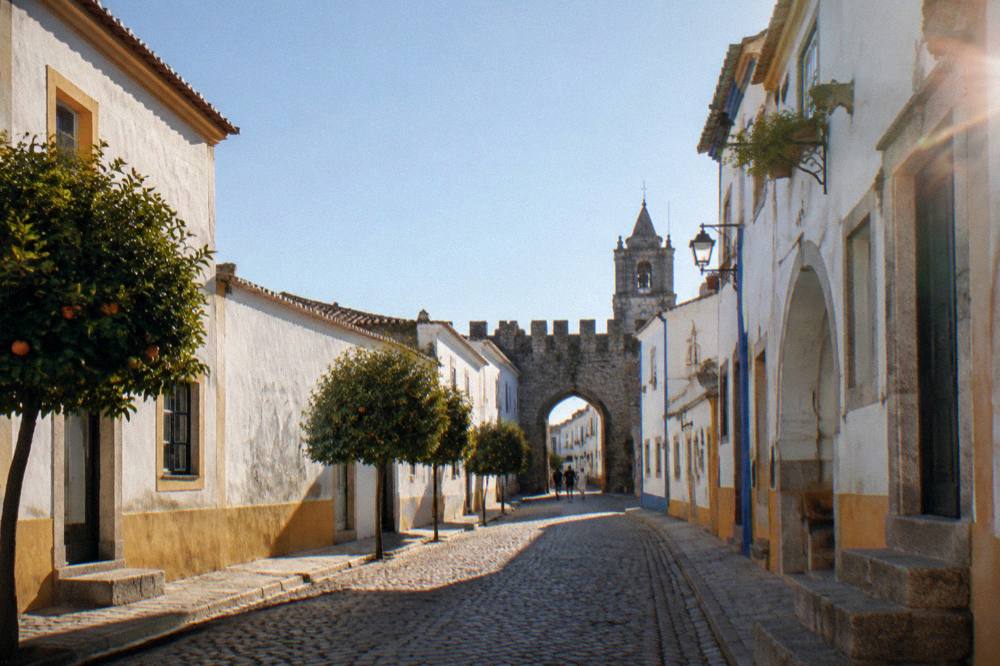
The Água de Prata aqueduct belongs to the same conversation about water, engineering and urban form, its arcade marching into the city and houses built into its arches. The University of Évora completes the architectural sequence, its Jesuit college standing on the site the UNESCO record ties to the 1553 foundation. None of these publishes hours or prices on an official page, so the walking itinerary is the right frame: see them from the street, in sequence, and reserve paid entry for the museum and the cathedral.
Which Évora Museums Hold The Archaeological Finds?
The Museu de Évora, officially the Museu Nacional Frei Manuel do Cenáculo, holds the main archaeological collection. It is housed in the former Archbishop's Palace, was founded in 1915, and opens Tuesday to Sunday from 9:30-13:00 and 14:00-17:30, closed on Mondays. An adult ticket is 8 EUR, with youth aged 13-24, seniors over 65 and the family ticket at 50% off, free entry to age 12, and free Sundays and holidays for residents in Portugal.
The museum is the connective tissue of every itinerary on this page. The temple and the cromlech show you the monuments; the museum shows you what was found beneath and around them. Its split-day opening, with a lunch closure between 13:00 and 14:00, is the detail that catches visitors out, so plan it for a morning or a late afternoon rather than midday.
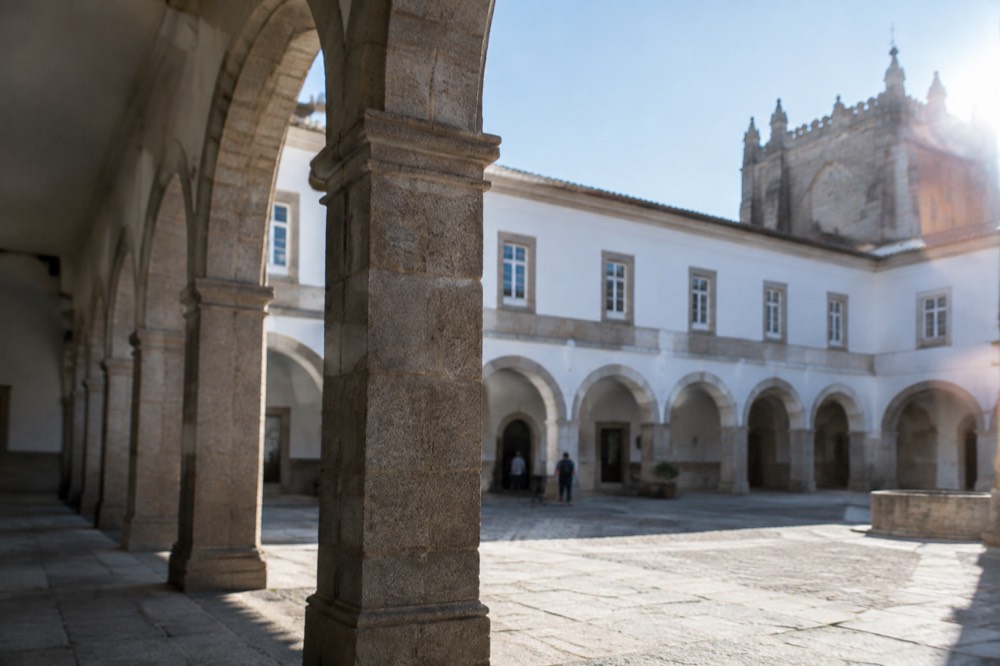
The other ticketed sites that pair naturally with an archaeology-focused day are the cathedral and the Capela dos Ossos, and the multi-site Évora Ticket covers a different network from all three:
| Site | Adult Ticket | Concessions | Hours |
|---|---|---|---|
| Museu de Évora | 8 EUR | Youth 13-24, seniors over 65, family 50% off; free to 12 | Tue-Sun 9:30-13:00 and 14:00-17:30, closed Mondays |
| Sé de Évora complete visit | 5.00 EUR | Children to 12 free | 9:00-17:00 |
| Capela dos Ossos museum ticket | 7.00 EUR | Youth to 25 and seniors over 65 5.00 EUR, family 15.00 EUR | Summer 9:00-18:30, winter 9:00-17:00 |
| Évora Ticket, one day | 8 EUR | Free to 12; 10 EUR for two days, 12 EUR for three | Cidade-Museu network sites |
One caution on the Évora Ticket: it does not include the Sé, the Capela dos Ossos or the Museu de Évora, so check its network list against your actual itinerary before buying. The Museu de Évora page covers the collection in detail. Next door, the Convento dos Lóios currently shows no bookable price, so ask at the entrance if you want to see its cloister.
Which Guided Tours Cover Évora'S Archaeology?
Guided coverage splits into two families: historic-centre walking tours that take in the temple, the wall and the museum quarter, from $23.92 per person for the Golden Era walk to $53.90 for the standard Évora walking tour, and megalith-focused excursions from $33.76 for the 3-hour Almendres and dolmen tour to $74.54 for the archaeologist-led half-day. Ratings across the group run from 4.4 to a perfect 5, and the megalith tours include transport out of the city.
The walking tours suit a first day, when the city itself is the subject and a guide's commentary turns stones into a story. The megalith tours suit the second day, when the destination is the plain and the value is in not having to find unmarked lanes. The comparison table below uses each operator's live listing figures:
| Tour | Duration | From (USD) | Rating |
|---|---|---|---|
| Golden Era of Évora walking and wine tasting | 2.5-3 hours | $23.92 | 4.4 from 33 reviews |
| Évora Tales and Legends guided walking tour | 2.5 hours | $52.90 | 4.8 from 40 reviews |
| Évora Walking Tour | walking tour | $53.90 | 4.8 from 37 reviews |
| Cromlech of Almendres and Great Dolmen of Zambujeiro | 3 hours | $33.76 | 5 from 54 reviews |
| Megalithic and Cork Forest guided tour | 4 hours | $50.65 | 4.9 from 41 reviews |
| Half-Day Megaliths Cromlech Tour by Archaeologists | half day | $74.54 | 5 from 77 reviews |
The cork-and-megaliths combination deserves a special mention, because it stitches the prehistoric plain to the living landscape of the Alentejo: the same countryside that produced the menhirs now produces cork, and the 4-hour tour reads both at once, from $50.65 per person.
For the city itself, these three walks cover the historic core from different angles:
How Do You Plan An Archaeological Day Around Évora?
A workable archaeological day runs the city in the morning and the plain in the afternoon: start at the Templo Romano and the cathedral, walk the wall line and pass the bath remains, then visit the Museu de Évora before its 13:00 lunch closure. In the afternoon, drive the national road toward Lisbon and take the turn-off after 8 km to reach the Almendres Interpretation Centre and the cromlech, or take a guided half-day and let someone else handle the lanes.
The sequencing matters more than the sights themselves. The museum closes for lunch, the interpretation centre keeps one schedule across the whole afternoon, and the cromlech is at its best in the lower light after the midday heat. Anyone visiting in summer should also reckon with the climate: IPMA's 1991-2020 normals for the Évora station show a July mean maximum of 33.3 C and August 33.5 C, with 31.9 days a year reaching 35 C or more, so the plain is genuinely hot at midday and the morning city walk is the comfortable half of the day.
If the megaliths catch your interest and a single afternoon is not enough, the wider Alentejo rewards a second day outward:
| Destination | Distance From Évora | What Draws You |
|---|---|---|
| Arraiolos | about 20 km | Hilltop ring and the famous embroidered carpets |
| Monsaraz | about 40-45 km | Walled medieval village above the Alqueva lake |
| Estremoz | about 45 km | Marble town with a castle keep |
| Vila Viçosa | about 60 km | Ducal palace and marble quarries |
| Elvas | about 80 km | Fortified border city with bastion walls |
| Marvão | about 120 km | Mountain-top walled village |
All distances are rounded road figures, so treat them as planning estimates rather than measurements. Rest a moment in the Praça do Giraldo before setting out; the tourist office at number 73 is the place to ask about anything in this guide whose current access you want to confirm on the day.
Common Questions About Évora Archaeological Sites
Is the Templo Romano in Évora actually Roman?
Yes. The Templo Romano is a Roman temple, though the municipal page says it was probably dedicated to the imperial cult rather than to Diana, a name only in use since the 17th century. It measures 25 x 15 m, was reused as a municipal butcher's, and stands in the open air with no ticket.
Is there a Stonehenge in Portugal?
The closest equivalent near Évora is the Cromeleque dos Almendres, a stone circle of standing menhirs on the plain around Guadalupe, reached by taking the national road toward Lisbon and the turn-off after 8 km. The comparison is structural rather than literal, but the circle is the most striking prehistoric monument in the region.
Can you visit the Almendres Cromlech without a tour?
Yes, by car on the route described above. The Almendres Interpretation Centre in Guadalupe village opens 10:00-18:00 from 1 May to 31 October and 10:00-17:00 from 1 November to 30 April, and the stones stand in open countryside nearby. The lanes are quiet and partly unmarked, which is why many visitors take a guided tour instead.
Where can you see Roman objects in Évora?
The Museu de Évora holds the main collection, in the former Archbishop's Palace. It opens Tuesday to Sunday, 9:30-13:00 and 14:00-17:30, closed Mondays, with an adult ticket at 8 EUR and concessions at 50% off.
Does the Évora Ticket cover the archaeological sites?
Not the main ones. The Évora Ticket costs 8 EUR for one day, 10 EUR for two and 12 EUR for three, and covers the Cidade-Museu network, but it does not include the Sé de Évora, the Capela dos Ossos or the Museu de Évora, each of which sells its own ticket. Check the pass's network list against your itinerary before buying.
How much time do you need for Évora's archaeology?
One full day covers the core: a morning walking the Templo Romano, the bath remains, the wall and the Museu de Évora, then an afternoon at the Cromeleque dos Almendres and the Zambujeiro dolmen. Add a second day only if you want to push out to Monsaraz, Estremoz or the wider Alentejo towns.