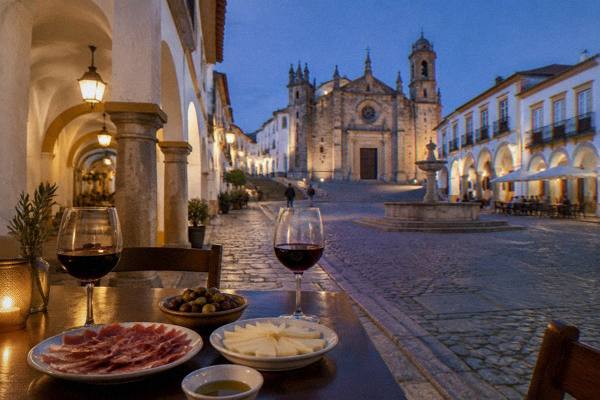
Évora Food Guide: What To Eat And Drink In Portugal's Alentejo
Évora, the inland capital of Portugal's Alentejo, is one of Europe's most rewarding small cities to eat in. This guide covers the dishes that define the region's cooking, the food and wine tours you can book, and what a food-focused visit costs.
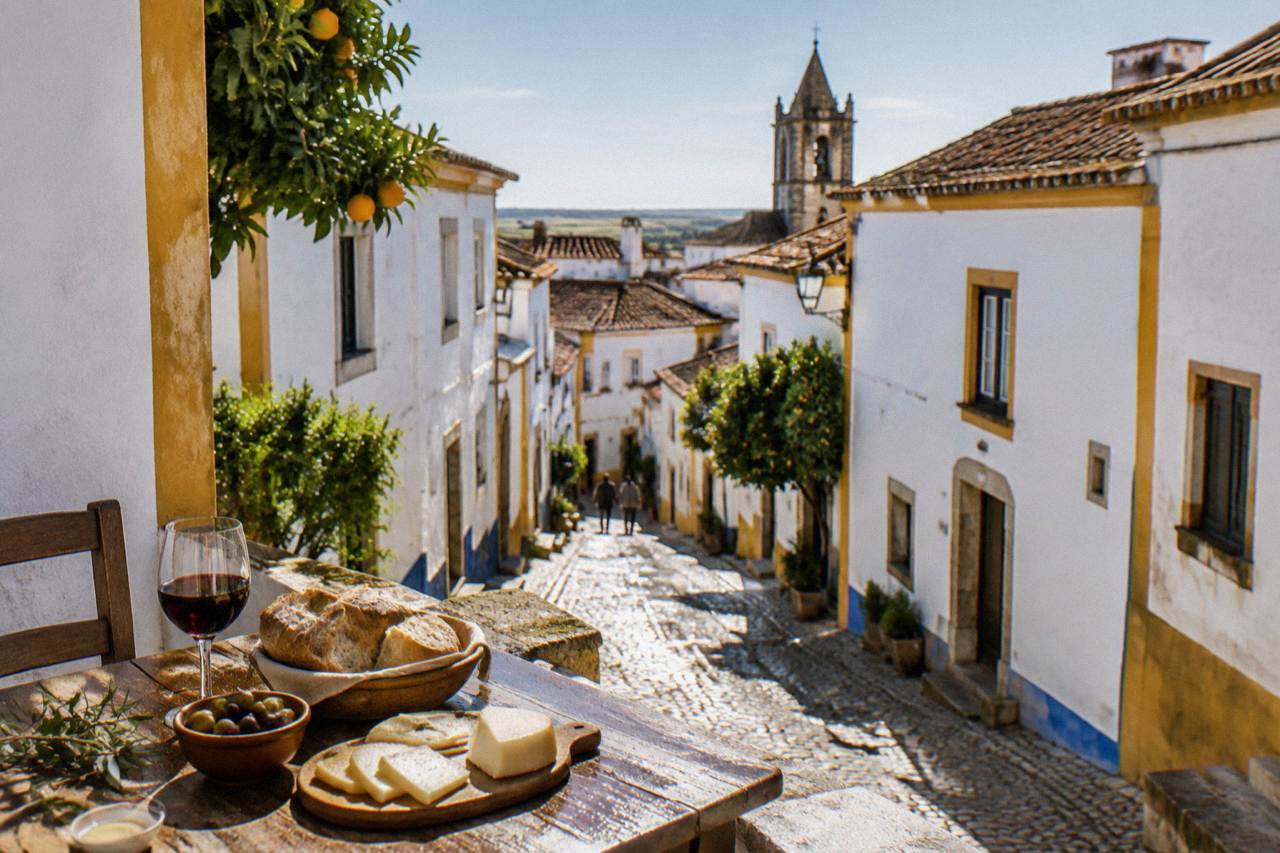
Short answer
Évora's food is Alentejo food: bread-based dishes like açorda and migas, black-pig pork, lamb stews, sheep's cheese, olive oil and full-bodied red wine, served in small taverns inside a UNESCO-listed old town. Book a guided evening food and wine crawl or a cooking class to taste the region without guessing.
Évora, the inland capital of Portugal's Alentejo region, is a city built on bread, pork, olive oil and red wine. The old town, a UNESCO World Heritage site since 1986, holds barely a few thousand residents inside its walls, yet its taverns, tascas and pastry counters carry the cooking of an entire sub-region: the Central Alentejo, a flat, hot, wheat-and-cork landscape roughly 130 km from Lisbon and about 90 km from the Atlantic. There is no seafood tradition here to speak of. What there is instead is one of the most distinctive regional kitchens in Portugal, and a growing set of guided food and wine experiences built around it.
This guide walks through the dishes, the drinking, the seasons and the bookable experiences. For the wider regional picture, start with the companion page on Alentejo food; for restaurant-hunting tactics, see where to eat in Évora. The two overlap, but this page is about what the food is and how to taste it well.
What Food Is Évora Known For?
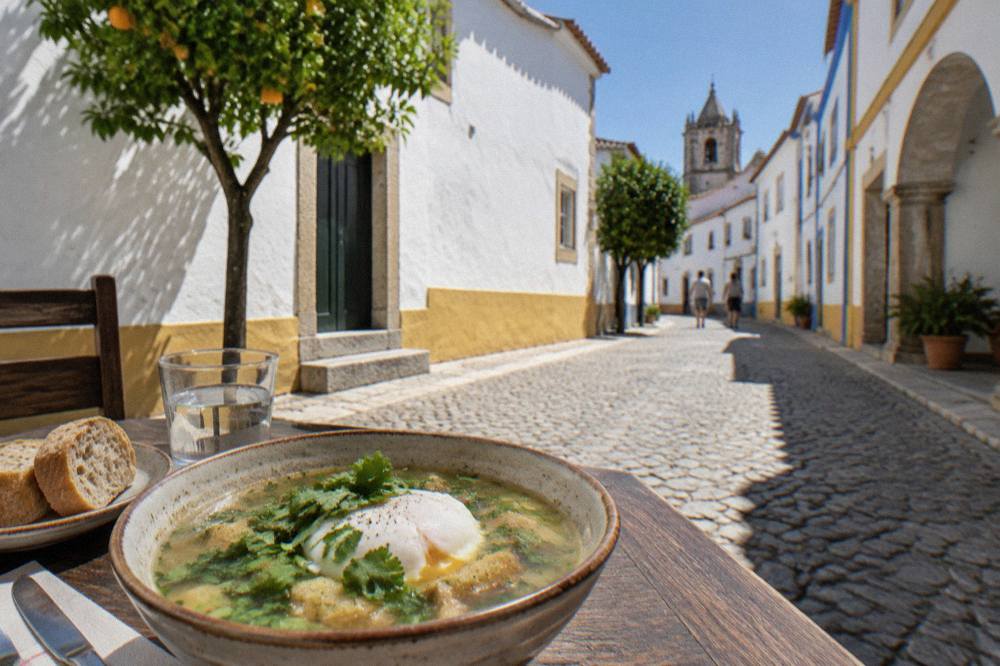
Évora is known for the hearty, bread-based cooking of the Central Alentejo: açorda, a bread-and-garlic soup thickened with coriander and often an egg; migas, a side of bread fried with garlic and pork fat; black-pig pork and lamb stews; sheep's milk cheeses; and strong regional red wines. It is peasant cooking refined, built on olive oil, coriander, pork and bread rather than fish or butter, and it survives in the city's small taverns much as it does in the villages around them.
The Alentejo is Portugal's agricultural interior, and its cooking reflects the land's limits. Summers are brutally hot: IPMA's 1991 to 2020 normals for the Évora station show a July mean maximum of 33.3 C and August 33.5 C, with 31.9 days a year reaching 35 C or more. Historically that heat shaped a kitchen of preserved pork, dry bread turned into dishes, olive oil in place of dairy, and herbs like coriander and pennyroyal. Nothing goes to waste, and almost everything can be stretched.
The black Iberian pig deserves its own word. The Alentejo's pigs are raised in the cork-oak landscape, and their meat, cured into hams and sausages or cut fresh for grilling, is the region's signature product alongside its cheese. Order it plainly and you will understand why the region is proud of it. A warning worth carrying: this is heavy food, and portions are generous. Two dishes plus a dessert genuinely feed two people in most taverns.
What Should You Eat In Évora: The Dishes To Order?
Order açorda alentejana first, the bread soup with coriander, garlic and olive oil that anchors the whole regional kitchen, then migas with pork, a black-pig cut or sausage, a sheep's milk cheese board, and a slice of sericaia or another egg-and-cinnamon dessert. Add a glass of regional red wine at every step. That single list covers the four pillars of Alentejo cooking: bread, pork, cheese and eggs.
Here is the short glossary, dish by dish. Nothing below is a restaurant recommendation, because no venue in Évora has been verified for hours, price or quality on this build; it is a menu-decoding table so you can order with confidence anywhere.
| Dish | What it is | How it arrives |
|---|---|---|
| Açorda alentejana | Bread, garlic, coriander and olive oil worked into a soup, often with a poached egg | As a starter or a light main |
| Migas | Day-old bread fried with garlic and fat until it holds together like a dumpling | As a side, usually with pork |
| Carne de porco preto | Cuts from the black Iberian pig, grilled or braised | As a main, often with migas |
| Ensopado de borrego | Lamb stewed with bread, coriander and white wine | As a Sunday-style main |
| Gaspacho alentejano | Cold bread-and-tomato soup, thicker than the Andalusian version | In summer heat |
| Queijo de ovelha | Sheep's milk cheese, from soft and buttery to hard and sharp | As a starter or dessert |
| Enchidos | Cured sausages of pork, including the region's blood sausage | On a petiscos board |
| Sericaia | Baked egg custard dusted with cinnamon, often with stewed plums | As dessert |
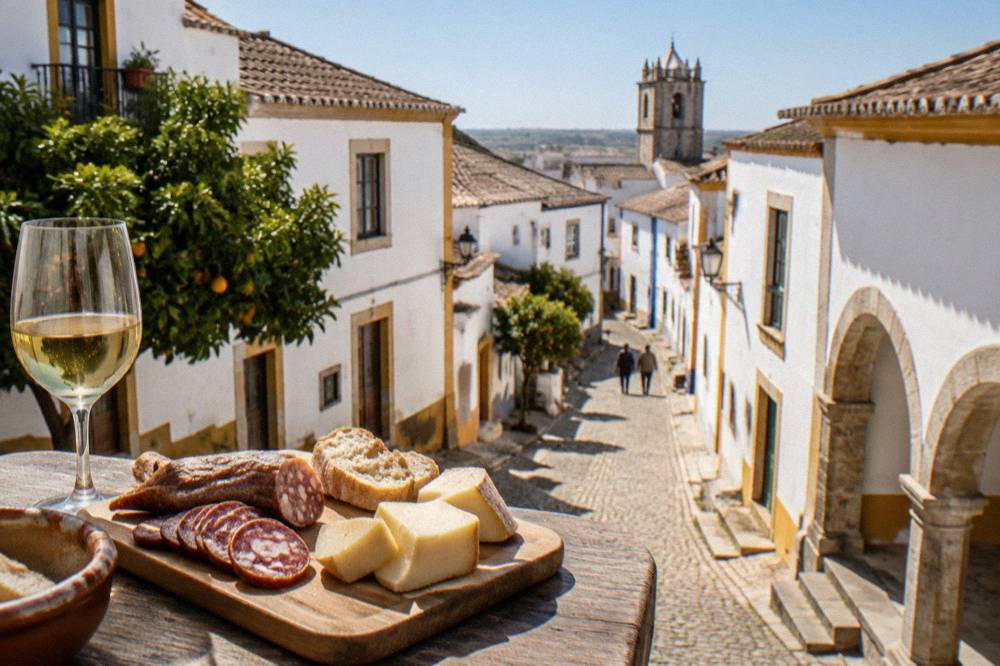
Two habits make eating in Évora better. First, lunch is the serious meal: taverns fill between 12:30 and 14:00 and the day's dishes are at their freshest. Second, ask for the house wine by the jug, or ask what the waiter drinks. Regional reds are built for this food, and the local pour rarely disappoints. For a deeper background on the region's wines, see the Alentejo wine guide.
Which Food And Wine Tours In Évora Are Worth Booking?
The strongest all-round choice is an evening food and wine crawl through the old town, which pairs tavern stops with regional wines and costs from $83.28 per person for about three hours with a rating of 4.6. For hands-on cooking, a class with a local cook runs from $166.29 per person. A guided walk with a wine tasting, from $23.92 per person, is the budget option that still ends with a glass in hand.
A guided evening solves the two real problems of eating in a small foreign city: you cannot read the menu, and you do not know which doorway to choose. The Évora evening food and wine crawl does exactly that, moving between stops with a guide who orders for the group. Check availability. The listing shows from $83.28 per person, rated 4.6 from 19 reviews, running about three hours.
For a different angle, the cooking class route teaches the dishes above instead of just serving them. Learning to make açorda and migas with a local cook turns a recipe you cannot read into one you can repeat at home, which is the whole point of a food trip to a region this specific.
| Experience | What it covers | From (USD) | Rating | Length |
|---|---|---|---|---|
| Evening food and wine crawl | Multiple tavern stops with wine pairings | $83.28 | 4.6 (19 reviews) | 3 hours |
| Alentejo cooking class | Hands-on regional dishes with a local cook | $166.29 | 3 (3 reviews) | See card |
| Golden Era walk with wine tasting | Historic-centre walk ending in a tasting | $23.92 | 4.4 (33 reviews) | 2.5 to 3 hours |
| Alentejo wine and cork tour | Winery visit plus cork-oak landscape | $78.78 | 4.7 (24 reviews) | 4 hours |
| Full-day wine tour | Multiple estates with lunch and transport | $321.11 | 5 (11 reviews) | Full day |
How Much Does Eating In Évora Cost?
No restaurant price in Évora has been verified on an official source, so no per-plate figure belongs on this page; what can be stated is the fixed context around the meal: the train from Lisbon costs 13.90 EUR second class, the Sé cathedral complete ticket is 5.00 EUR, the Capela dos Ossos museum ticket is 7.00 EUR, and the Évora Ticket multi-site pass runs 8 EUR for one day. Food itself is best budgeted from the tour cards, which list real prices in dollars.
That answer is deliberately careful, and it should make you trust the rest of this page more, not less. Restaurant prices in Évora move with the season and the street, and printing a number nobody verified would be a guess dressed as a fact. What the verified record does fix is everything around the table, and that context is genuinely useful for planning a food-focused day or weekend.
| Fixed cost around eating in Évora | Verified price | Notes |
|---|---|---|
| CP Intercidades, Lisboa Oriente to Évora, 2nd class | 13.90 EUR | Timetable valid since 6 September 2026 |
| CP Intercidades, same journey, 1st class | 18.50 EUR | About 1 hour 40 to 1 hour 45 |
| Sé de Évora complete visit ticket | 5.00 EUR | Cathedral, cloister, roof terrace, museum |
| Capela dos Ossos museum ticket, adult | 7.00 EUR | All museum areas of the Igreja de São Francisco |
| Museu de Évora, adult | 8 EUR | Closed Mondays |
| Évora Ticket pass, one day | 8 EUR | Does not include the Sé, Capela dos Ossos or Museu de Évora |
| Évora Ticket pass, two days | 10 EUR | Free to age 12 |
| Évora Ticket pass, three days | 12 EUR | Multi-site Cidade-Museu network |
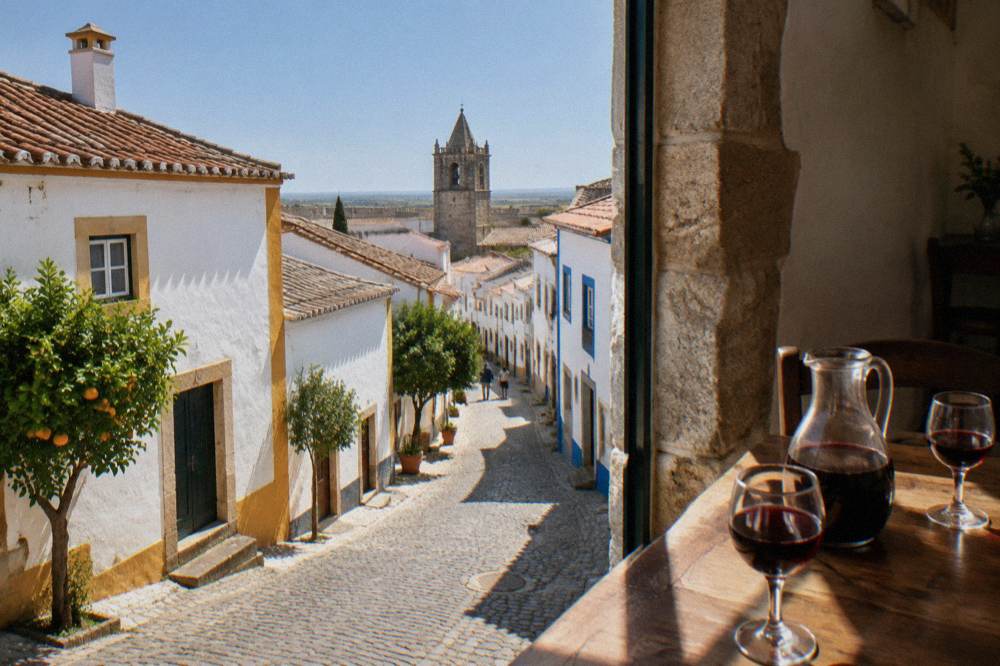
For the food itself, the honest planning approach is the tour-card approach. A guided crawl sits at $83.28 per person; a cooking class at $166.29; a walk with a tasting from $23.92. Those are real, listed prices in dollars, and they bracket what an organised food evening in Évora costs. For independent eating, budget by course rather than by restaurant: bread, olives and cheese arrive at the table as covers, mains are the serious spend, and dessert is cheap. The full cost picture, including hotels and transport, is laid out in the Évora cost and budget guide.
When Is The Best Season To Eat In The Alentejo?
Spring and autumn are the best eating seasons in Évora: IPMA's 1991 to 2020 normals for the Évora station show October with a mean maximum of 24.1 C and only 7.7 days of rain, and April at 20.7 C, which is lamb-stew weather without summer's furnace. July and August average 33.3 C and 33.5 C respectively, which pushes the kitchen toward cold gaspacho and pushes diners late into the cool evening.
The seasonal logic of Alentejo food is worth internalising, because it changes what you should order. In the hot months the kitchen leans cold and quick: gaspacho, salads, grilled pork, fresh cheese. In the cool months the braises come out: ensopado de borrego, migas with everything, and the long Sunday lunches the region is famous for. The table below pulls the verified climate normals for the months that matter most to a food trip. Other pages covering the same trip are gathered on Évora Travel Guide.
| Month | Mean max (C), 1991-2020 | Days with 1 mm+ rain | What the kitchen does |
|---|---|---|---|
| March | 18.7 | 7.5 | Braises and lamb season begin |
| April | 20.7 | 8.0 | Peak spring eating, mild days |
| May | 25.0 | 6.0 | Grilling starts, cheese at its best |
| June | 30.2 | 1.7 | Evening meals move outdoors |
| July | 33.3 | 0.6 | Cold dishes, very late dinners |
| August | 33.5 | 0.7 | Cold dishes, festival season |
| September | 29.5 | 3.6 | Grape harvest, wine-country visits |
| October | 24.1 | 7.7 | Comfort food returns comfortably |
| November | 17.6 | 8.8 | Full braise season |
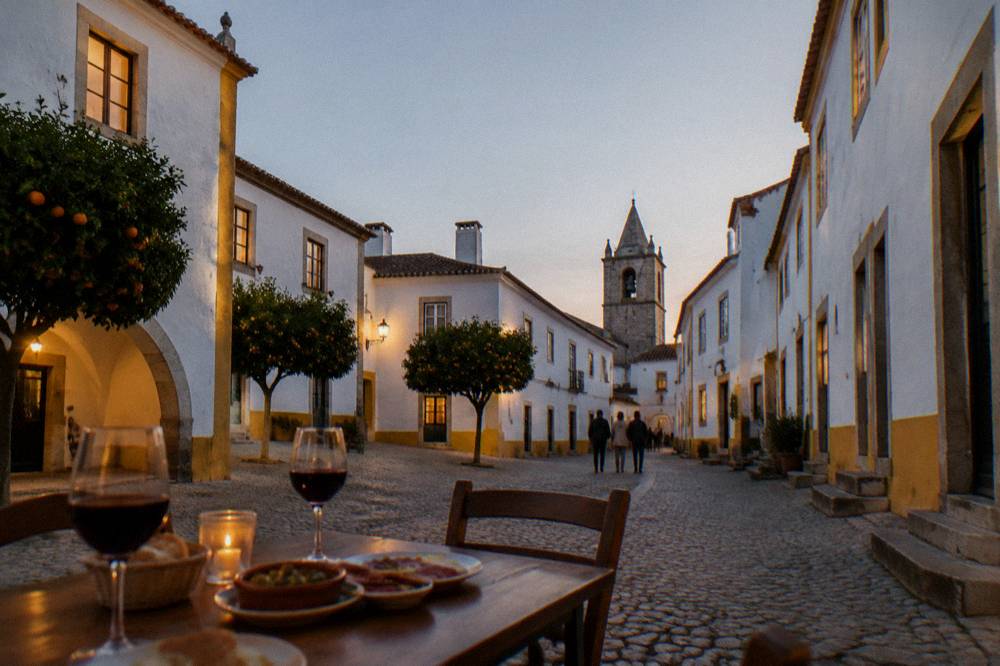
September carries a special argument: it is the grape harvest across the Alentejo, and a wine-centred day trip or tasting in and around Évora lands at the moment the region's defining product is being made. The trade-off is that late-summer heat can linger into the month, so pack for both. The month-by-month detail, including the Feira de São João window of late June into early July, is in the best time to visit Évora and Évora weather guides.
How Do You Find Good Taverns And Food Without A Recommendation List?
You find them by structure, not by name: eat inside the walled centre where the streets are narrow, look for short handwritten menus in Portuguese rather than long laminated ones in four languages, order whatever the waiter points to first, and time lunch for the 12:30 to 14:00 window when local tables fill. A city of about 53,000 people cannot sustain a bad tavern for long, so a busy room of locals is the only recommendation you need.
That is a genuinely load-bearing method, and it is the honest answer this page can give. The method above works everywhere in the Alentejo and costs nothing to apply.
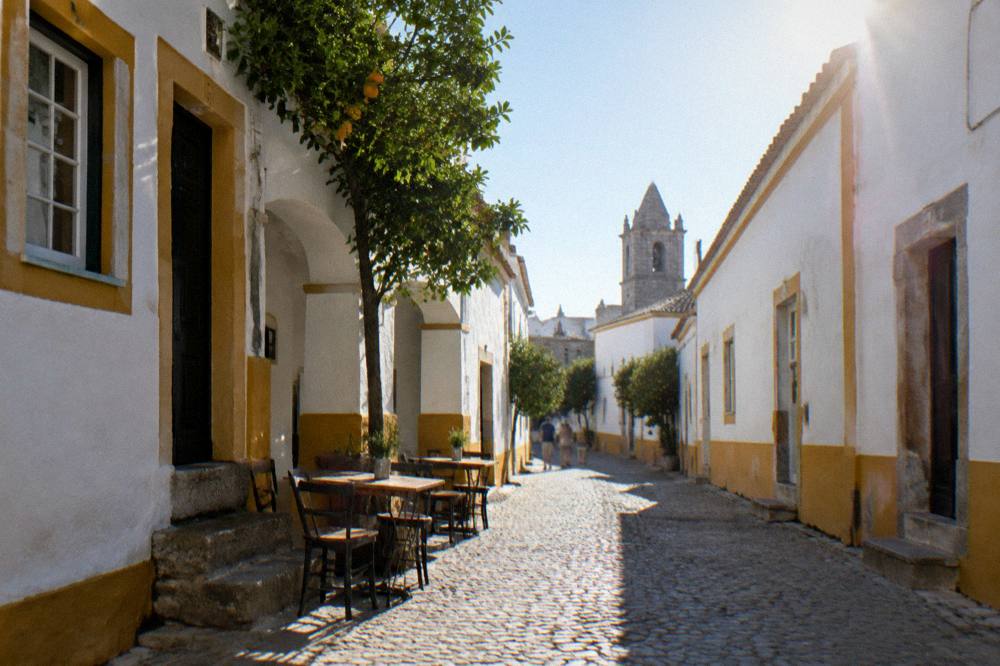
Three refinements. First, the petiscos habit is your friend: ordering several small plates, the Portuguese answer to tapas, lets you taste açorda, enchidos and cheese in one sitting instead of gambling on one main. Second, the tourist office on Praça do Giraldo 73 is the place to ask about market days and food events during your stay; its published hours are winter weekdays 9:00 to 18:00 and weekends 10:00 to 14:00 and 15:00 to 18:00, though the page itself notes the hours are indicative. Third, if you want the tavern experience without the guesswork, that is precisely what a guided crawl sells. The dedicated Évora food tour page compares those options in detail.
Can You Learn To Cook Alentejo Food In Évora?
Yes, and a cooking class is one of the best food purchases in the city: the Alentejo cuisine class with a local cook runs from $166.29 per person and teaches regional dishes hands-on, while the evening crawl at $83.28 and the wine-and-cork tour at $78.78 cover the tasting side. A class is the only format that sends you home with the recipe for açorda and migas rather than just the memory of them.
The class listing shows a rating of 3 from 3 reviews, which is a thin base; read the listing's own recent reviews before booking, and treat it as a small-group, personal-kitchen experience rather than a polished product. What it offers is something no restaurant meal can: the chance to learn how bread becomes migas, how the coriander goes in at the last minute, and why the olive oil matters more than anything else in the pot.
For travellers who prefer their food history on foot, the Tales and Legends guided walking tour, from $52.90 per person and rated 4.8 from 40 reviews over about 2.5 hours, tells the old town's stories and ends with a tasting, pairing the eating with the city's layered past. The full range of guided options is collected in the Évora tours guide.
What About Wine: Tasting Alentejo Around Évora?
Alentejo wine tasting from Évora runs from $78.78 per person for a four-hour wine and cork tour rated 4.7, up to $321.11 for a full-day, multi-estate tour with lunch and transport rated 5 from 11 reviews, and the region's reds are the classic match for the pork-and-bread kitchen you will have been eating. No specific winery, vintage or style claim is verified on this page, so the tour cards are the reliable route to a tasting.
The pairing logic is simple: the Alentejo's full-bodied reds are made for black-pig pork and sheep's cheese, and tasting them where they are made, in the cork-oak landscape that defines the region, explains both the wine and the scenery at once. The wine and cork tour from Évora combines a winery visit with the montado, the cork-oak woodland that is the Alentejo's signature ecosystem, in one four-hour loop.
| Wine experience from Évora | From (USD) | Rating | Length | What it adds |
|---|---|---|---|---|
| Alentejo Wine and Cork from Évora | $78.78 | 4.7 (24 reviews) | 4 hours | Winery plus cork-oak landscape |
| Megalithic and Cork Forest guided tour | $50.65 | 4.9 (41 reviews) | 4 hours | Cork forest with prehistoric sites |
| 1 Day Wine Tour Around Évora | $321.11 | 5 (11 reviews) | Full day | Multiple estates, lunch, transport |
| Monsaraz and Wine guided tour | $78.78 | 4.6 (51 reviews) | 4 hours | Hilltop village plus tasting |
| Full food and wine itinerary (self-guided) | Free to plan | Not rated | Your call | See the wine and food day page |
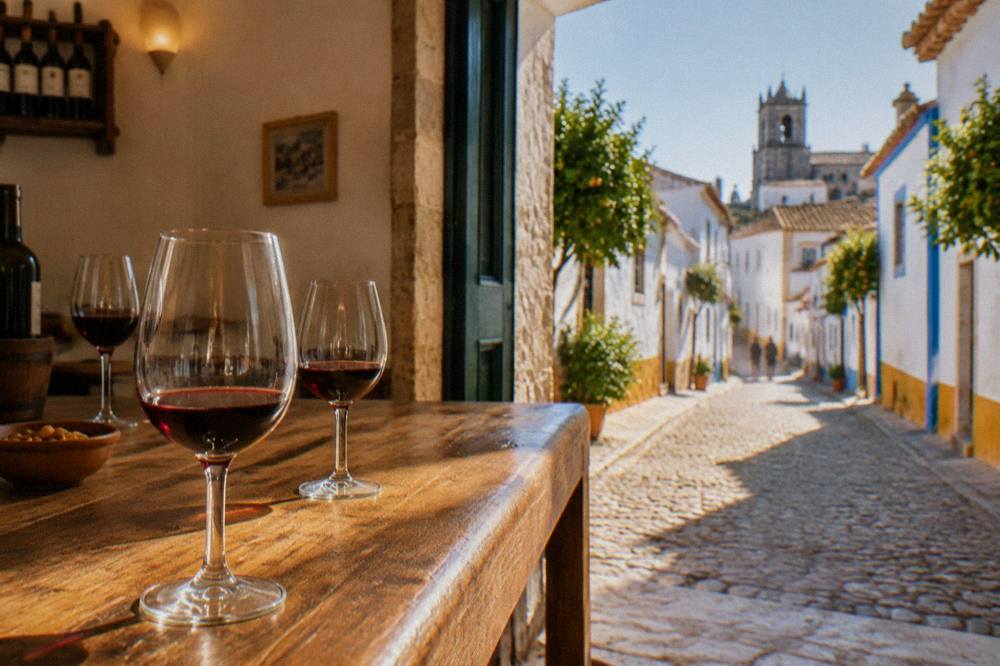
If you would rather build the day yourself, the Évora wine and food day itinerary lays out a full route combining the two. And if the whole trip is food-motivated, read the wider Alentejo travel guide before committing to dates; the region rewards slow travel and punishes a rushed August circuit.
How Do You Build A Perfect Food Day In Évora?
Start with a mid-morning coffee and pastry inside the walls, walk the old town before the heat, take a long tavern lunch between 12:30 and 14:00 with a jug of red wine, rest or visit one ticketed monument in the afternoon, then book the evening food and wine crawl from $83.28 per person so dinner is guided, paired and walked off through the UNESCO-listed streets. That single day covers pastry, petiscos, a full regional lunch and a guided evening.
The morning pastry stop is a real institution rather than a tourist habit; the Alentejo has its own egg-and-cinnamon sweets, and sericaia is the one to look for. Between lunch and evening, the fixed monuments slot in neatly: the Sé's complete ticket at 5.00 EUR covers the cathedral, cloister and roof terrace, and the Capela dos Ossos at 7.00 EUR is the city's most famous interior. Both are inside the walled centre, minutes from any tavern.
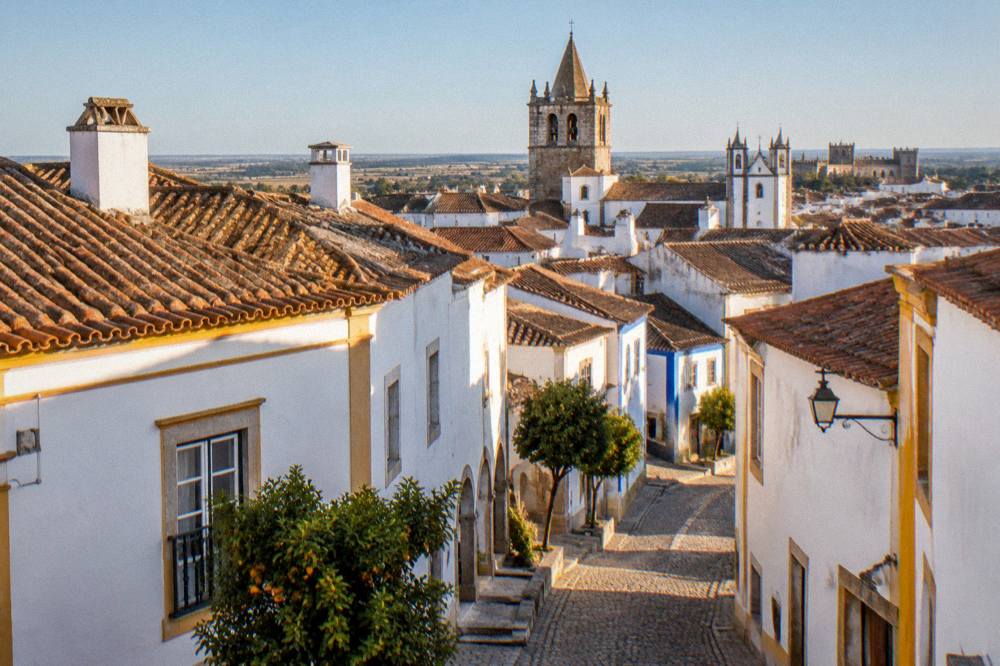
For a second food day, add an out-of-town layer: a wine and cork morning, a megaliths-and-cork combo at $50.65 per person rated 4.9 from 41 reviews, or a Monsaraz and wine half-day. The one day in Évora page sequences the monuments, and where to stay in Évora puts you inside the walls so the evening crawl ends a short walk from your door.
Getting there is the easy part: CP's timetable valid since 6 September 2026 lists six through Intercidades trains from Lisboa Oriente, taking about 1 hour 40 to 1 hour 45, with a second-class fare of 13.90 EUR. The details, including arrival logistics, are in the Lisbon to Évora by train guide.
Common Questions About Évora Food
What food is Évora famous for?
Évora is famous for Central Alentejo cooking: açorda, a bread, garlic and coriander soup with olive oil; migas, fried bread sides; black Iberian pig pork; lamb stews; sheep's milk cheese; cured sausages; and egg-and-cinnamon desserts like sericaia, all matched with regional red wine.
Is Évora good for a food trip?
Yes. The city is compact, the regional kitchen is one of Portugal's most distinctive, and guided options cover every angle: an evening food and wine crawl from $83.28 per person, a cooking class from $166.29, and wine tours from $78.78, all listed in dollars on their cards.
What should I drink with Alentejo food?
Regional red wine, ideally by the jug at lunch and by the glass at dinner. The Alentejo's reds are built for the pork-and-bread kitchen. No specific producer, vintage or style comparison is verified on this page, so a tasting tour is the reliable way to learn what you like.
How expensive is eating in Évora?
No restaurant price has been verified on an official source, so no per-plate figure is published here. Organised food experiences bracket the cost: a walk with wine tasting from $23.92 per person, the evening crawl at $83.28, and a full-day wine tour at $321.11, all from the tour cards.
When should I eat in Évora: lunch or dinner?
Lunch is the serious meal, served roughly 12:30 to 14:00, when taverns fill with locals and the day's dishes are freshest. In summer, when IPMA's 1991 to 2020 normals show July and August mean maxima above 33 C, dinner shifts late into the cooler evening.
Can I do a food tour of Évora in one evening?
Yes. The evening food and wine crawl runs about three hours, from $83.28 per person, rated 4.6 from 19 reviews, moving between tavern stops with a guide who orders and pairs the wines for the group.
Évora rewards eating the way the Alentejo has always eaten: slowly, in the middle of the day, with bread on the table and red wine in the jug, and a guided evening or a cooking class is the most reliable way into that rhythm on a short visit.