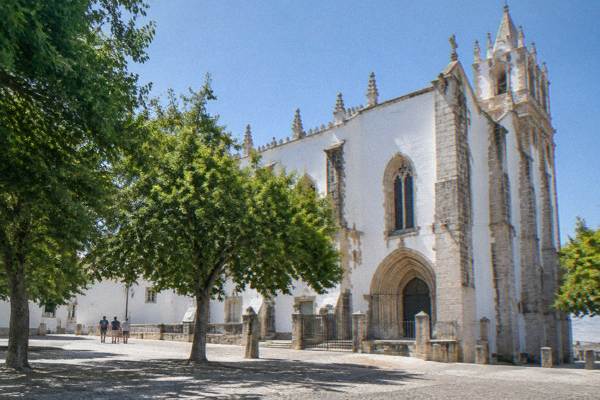
Évora Vs Seville And Toledo
Three UNESCO-listed cities, three very different trips. Here is how Évora, Seville and Toledo actually compare when you are planning.
Short answer
Évora is the smallest and quietest of the three, a walkable Alentejo university town about 130 km from Lisbon with a Roman temple, a bone chapel and a cathedral for 5.00 EUR. Seville is the grand Andalusian capital with the biggest monuments and the biggest crowds. Toledo is a dense hill city near Madrid. Choose Évora for calm, wine and megaliths; Seville for spectacle; Toledo for a packed day from Madrid.
Évora, the capital of Portugal's Alentejo region, gets compared with Seville and Toledo more often than any other pair of cities, and for good reason: all three are UNESCO-listed historic centres built on layers of Roman, Moorish and Christian rule, all three are inland, and all three promise a day of dense monumental sightseeing. But they are not interchangeable. Seville is a large Andalusian capital with a metro-scale population and some of the most visited monuments in Europe. Toledo is a hill city that functions largely as a day trip from Madrid. Évora is a small university town of about 53,000 people, an hour and three quarters by train from Lisbon, where the biggest queue you are likely to meet is at the pastelaria.
This guide compares the three honestly. Every Évora figure below comes from official sources: cathedral and chapel ticket pages, the national rail operator's timetable, the national weather service's climate normals. For Seville and Toledo, no prices, hours or journey times are stated, because none were verified for this comparison; their sides of the table are described in character terms so you can choose by what you want from a trip, not by a number nobody can stand behind.
How Do Évora, Seville And Toledo Compare At A Glance?
Seville is the biggest and most spectacular, Toledo is the densest and most day-trip-friendly, and Évora is the smallest, calmest and easiest to see on foot in a day. Évora's historic centre was inscribed by UNESCO in 1986 on criteria (ii) and (iv), and the three cities share a Roman-to-Renaissance layering. The difference is scale and pace: Évora holds a cathedral, a bone chapel and a Roman temple close together, Seville spreads its monuments across a full city, and Toledo stacks them on one hill.
UNESCO's own criterion (iv) wording for Évora calls it the finest example of a city of the golden age of Portugal after the 1755 Lisbon earthquake, which Évora was largely spared. That spared-ness is the physical fact behind the comparison: the centre is intact golden-age fabric, Moorish rule ended here in 1165, and the Jesuit University of the Holy Spirit dates from 1553. Toledo's story runs through Visigothic capital and El Greco; Seville's through the Alcázar and the cathedral bell tower built on a former minaret. All three are genuinely layered cities. The honest difference is that Évora's layers sit in a town you can cross on foot in twenty minutes, and the other two do not.
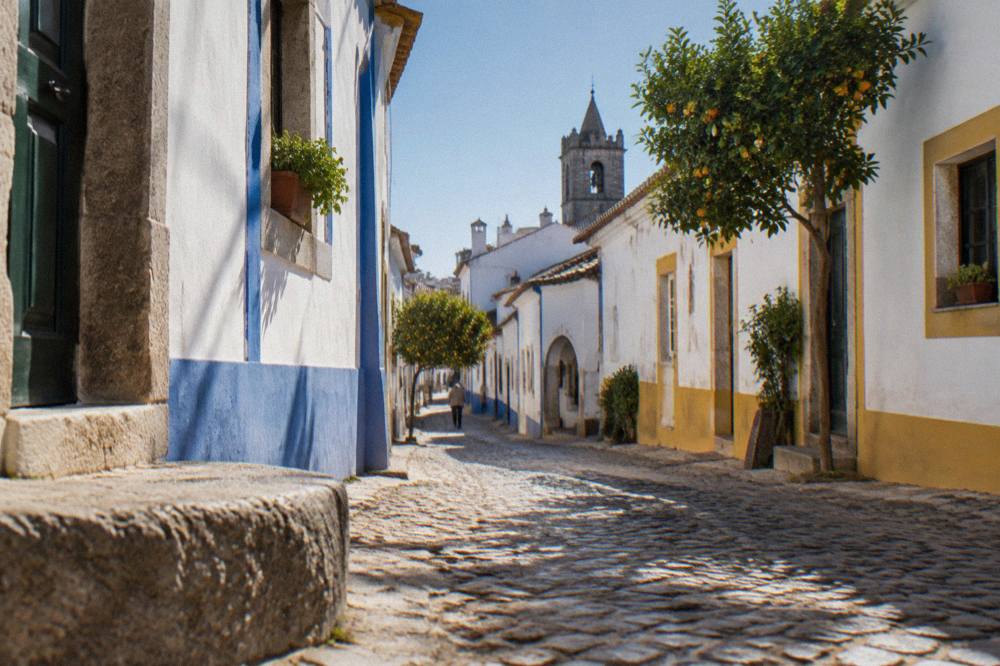
Here is the comparison in outline, with figures only where they were verified for Évora:
| Évora | Seville | Toledo | |
|---|---|---|---|
| Country and region | Portugal, Alentejo | Spain, Andalusia | Spain, Castile |
| UNESCO inscription | 1986, criteria (ii) and (iv) | Listed historic centre | Listed historic city |
| Scale | Town of about 53,000 | Large regional capital | Hill city, day-trip scale |
| Main gateway | Lisbon, about 130 km away | Its own major rail and airport links | Madrid, nearby |
| Defining monument | Sé de Évora and Capela dos Ossos | Cathedral and royal palace complex | Cathedral and hilltop walls |
| Signature drink | Alentejo red wine | Sherry culture | Castilian wine country |
| Best for | Calm, wine, megaliths | Spectacle, flamenco, gardens | Density, one packed day |
If you are choosing between all three, the question is not which is best. It is what kind of trip you want, and the rest of this page works through that question one piece at a time.
Which City Has The Most Impressive Historic Centre?
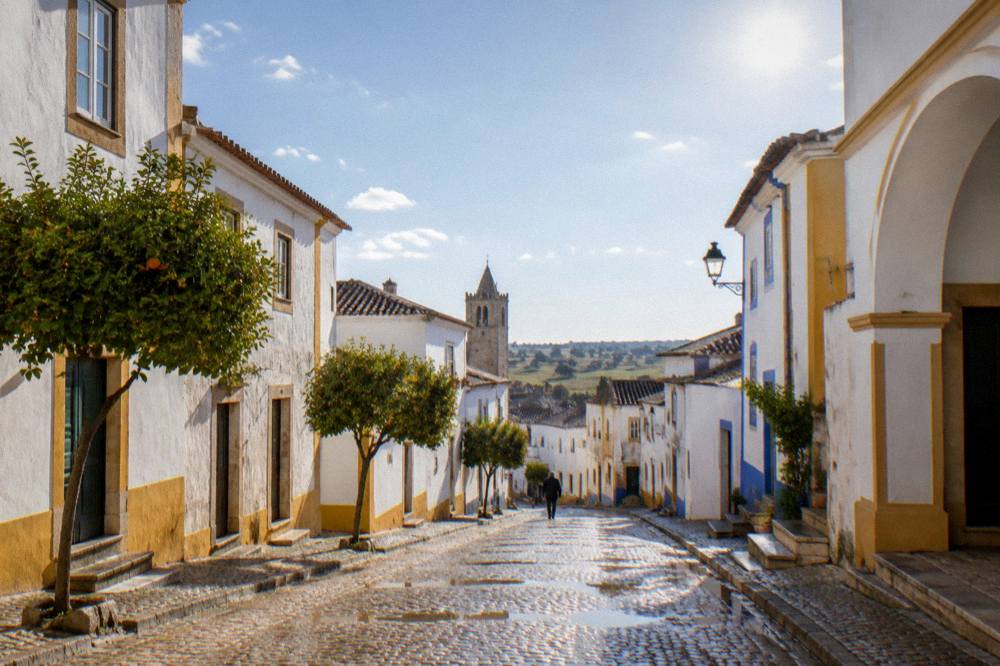
All three are UNESCO-listed, but they impress differently: Seville overwhelms with single monuments of national-spectacle scale, Toledo impresses with its hilltop silhouette and density, and Évora impresses with completeness, an intact golden-age centre inside Roman and medieval walls where the Sé, the Templo Romano and the Capela dos Ossos sit within a short walk of each other. UNESCO's criterion (iv) calls Évora the finest example of a city of Portugal's golden age after the 1755 earthquake, which it was largely spared.
Start with what Évora actually holds, because the verified specifics matter. The Sé de Évora, the largest cathedral in Portugal's interior, sells one complete-visit ticket for 5.00 EUR covering the church, the cloister, the roof terrace and the museum, with children up to 12 free; it opens 9:00 to 17:00 and closes only on the afternoon of 24 December, 25 December and 1 January. The Igreja de São Francisco complex, which contains the Capela dos Ossos, sells one museum ticket for 7.00 EUR adult, 5.00 EUR for youth up to 25 and seniors over 65, 15.00 EUR for a family, and opens 9:00 to 18:30 in summer legal time and 9:00 to 17:00 in winter, every day except 1 January, Easter Sunday, the afternoon of 24 December and 25 December. The Museu de Évora, in the former Archbishop's Palace, is 8 EUR for adults and closes on Mondays.
A private tour that bundles the university, the cathedral and the bones chapel with skip-the-line entry and a wine tasting at the end runs 3 hours and is rated 5 from 48 reviews, from $91.39 per person. That is the efficient way to see Évora's three headline interiors in one morning.
Seville's centre works on the opposite principle. Its cathedral is one of the largest church buildings in the world, and the royal palace complex beside it is a continuous working palace with Mudéjar interiors that draws a volume of visitors Évora never sees. The scale is the attraction and also the constraint: you plan Seville around timed entries and long walks between quarters. Toledo is dense rather than vast: a walled hill with a cathedral, synagogues and El Greco's house packed into lanes that climb steeply from the river. It rewards a full, structured day and punishes a rushed one.
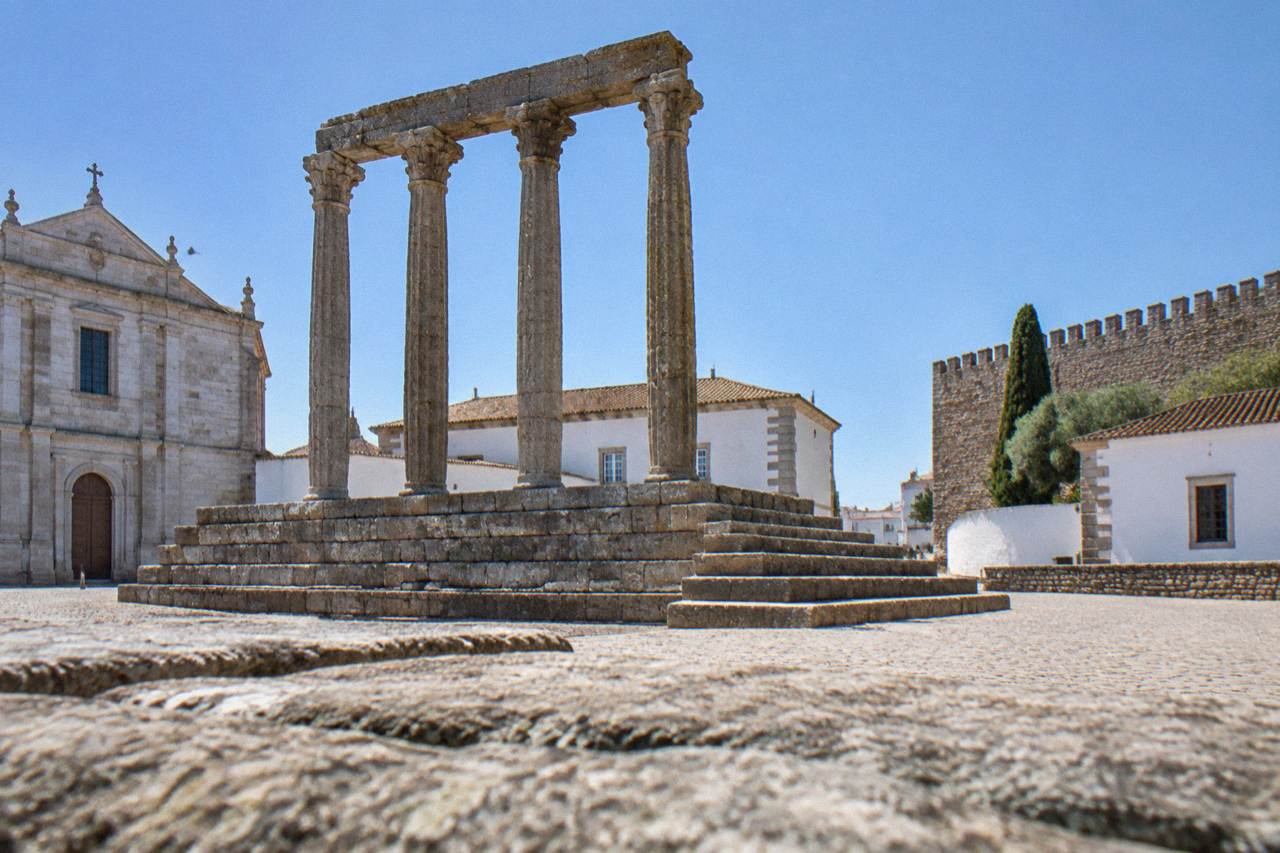
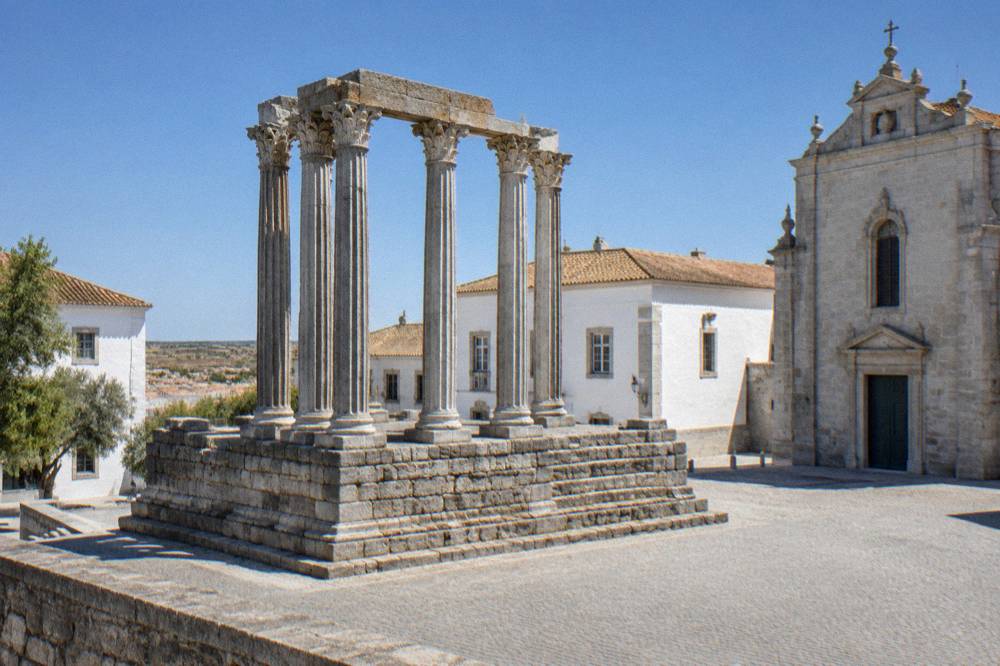
The Templo Romano is Évora's answer to both, and it is free: an open-air Roman temple, 25 x 15 m, probably dedicated to the imperial cult rather than to Diana according to the municipal page, later reused as a municipal butcher's shop before its walls were freed in 1870. You walk up to it on a normal street. That is the Évora pattern: monumentality without monumentality's logistics. For the full monument-by-monument breakdown, see what Évora is known for and the things to do in Évora overview.
How Easy Is Each City To Reach From Lisbon?
Évora is the only one of the three reachable from Lisbon by a direct train with a verified timetable: CP's Intercidades service, valid since 6 September 2026, runs six through trains a day from Lisboa Oriente to Évora in about 1 hour 40 to 1 hour 45, at 13.90 EUR second class or 18.50 EUR first class. Seville and Toledo are reached through Spain's own network from Spanish bases, not from Lisbon on any schedule verified here.
The train block is worth reading in full, because it is the one hard logistics fact in the whole Évora-versus-Spain conversation. Departures from Lisboa Oriente are at 07:02, 09:02, 09:58, 13:35, 17:02 and 19:02, arriving in Évora at 08:47, 10:45, 11:40, 15:13, 18:41 and 20:46. The through trains call at Entrecampos, Sete Rios, Pragal, Pinhal Novo, Vendas Novas and Casa Branca, and no change is needed at Casa Branca on these services. Check the operator's weekday remarks before planning around a specific departure.
| Lisboa Oriente departure | Évora arrival | Second class | First class |
|---|---|---|---|
| 07:02 | 08:47 | 13.90 EUR | 18.50 EUR |
| 09:02 | 10:45 | 13.90 EUR | 18.50 EUR |
| 09:58 | 11:40 | 13.90 EUR | 18.50 EUR |
| 13:35 | 15:13 | 13.90 EUR | 18.50 EUR |
| 17:02 | 18:41 | 13.90 EUR | 18.50 EUR |
| 19:02 | 20:46 | 13.90 EUR | 18.50 EUR |
Every one of these runs takes about 1 hour 40 to 1 hour 45, which makes the table the strongest single argument for Évora as a Lisbon add-on. A 09:02 departure puts you in Évora before 11:00 with a full day ahead, and the 17:02 return leaves after a full afternoon of sightseeing. The Lisbon to Évora by train page carries the full planning detail, and the general Lisbon to Évora guide covers the alternatives.
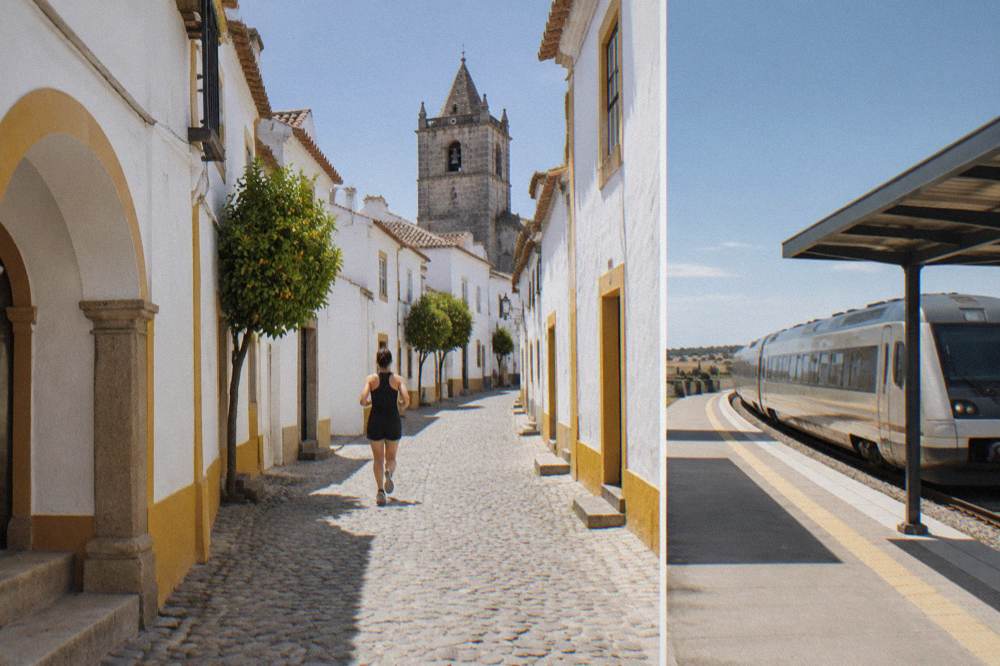
For Seville and Toledo, no comparable figures are stated here, because none were verified for those routes. In character terms: Seville is a major node in Spain's high-speed network, so it is a destination in its own right rather than a side trip from Portugal; Toledo sits close to Madrid and is planned as a Madrid excursion. If your base is Lisbon, Évora is the day trip that fits the geography; if your base is Madrid, Toledo is; if you are touring Spain properly, Seville earns its own two or three days. The Seville to Évora page covers the crossing between the two in planning terms.
How Do The Three Compare On Food And Wine?
Évora's food identity is Alentejo: pork, bread-based dishes, sheep's cheese and the red wines of the surrounding Alentejo region, tasted at cellar doors within a short drive of the Roman walls. Seville is the capital of tapas culture, small plates and sherry. Toledo is Castilian: game, stews and the marzipan the city is famous for. All three eat well; Évora is the only one where the wine region is the countryside you are standing in.
The Alentejo difference is structural. Évora sits in the middle of a wine region whose reds carry the regional identity, and the tasting rooms, the cork forests and the marble towns are all day-trip distance: Arraiolos about 20 km away for its rug-making tradition, Estremoz about 45 km, Vila Viçosa about 60 km, Monsaraz about 40 to 45 km. The Alentejo food and Évora food guide pages carry the detail, and the evening food and wine crawl in Évora, 3 hours from $83.28 per person and rated 4.6 from 19 reviews, is the guided way into the taverns.
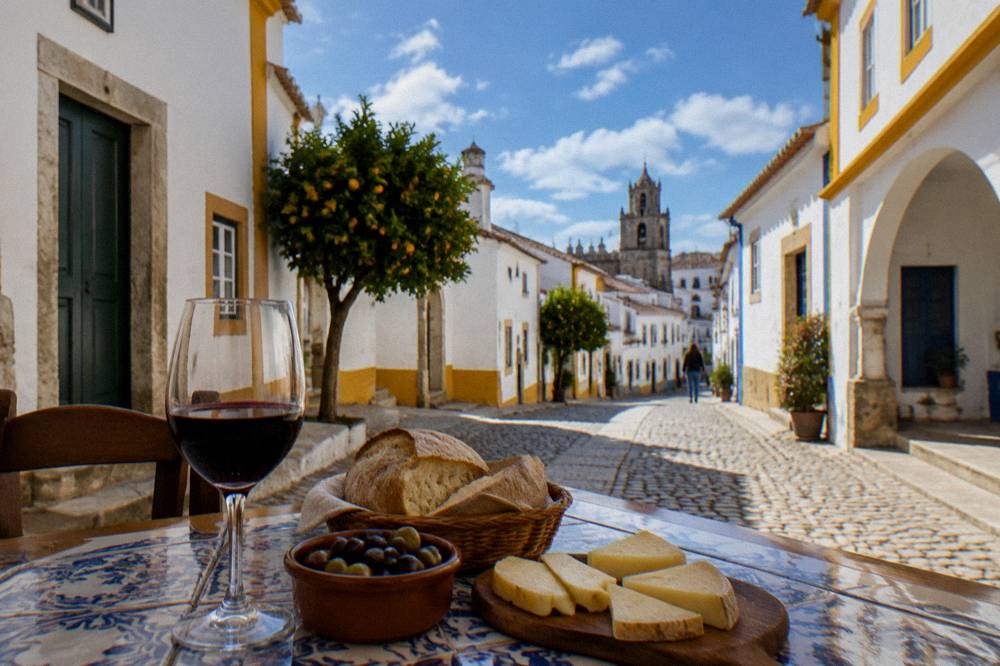
Seville's food culture is the opposite of a sit-down regional menu: it is bar-to-bar, standing, with sherry poured from the barrel and fried fish as the local signature. It is one of Europe's great eating cities and it demands energy rather than relaxation. Toledo's cuisine is built for a hilltop winter: stews, game and the convent-sweet marzipan sold in every shop near the cathedral. Évora's taverns, by contrast, are slow: a glass of red, a plate of cheese, the Praça do Giraldo arcades overhead, and no next bar to get to.
What About Crowds, Size And Pace?
Évora is the quietest of the three by a wide margin: a town of about 53,000 people whose monuments take minutes, not hours, to enter, and whose streets empty by dinner time. Seville is the most crowded, with world-famous monuments that draw peak-season queues and timed entries. Toledo sits between them, dense with day-trippers from Madrid through the middle of the day and calmer in the evening. If you want spectacle, accept the crowds; if you want calm, Évora is the clear pick.
The honest framing is that crowd levels for Seville and Toledo were not measured for this comparison, so nothing numeric is claimed for either. But the structural facts are safe. Évora's whole centre fits inside its walls; the one day in Évora itinerary is realistic because the Sé, the Capela dos Ossos, the Templo Romano, the Praça do Giraldo and the university are all inside a compact rectangle. Seville's cathedral and palace complex are individually half-day commitments in high season. Toledo's hill means everything is uphill from the river, and the day-trip wave from Madrid arrives and departs on a rhythm of its own.
Pace is where Évora wins outright for some travellers and loses for others. There is no flamenco district, no royal palace queue, no evening spectacle on Seville's scale. What there is: a 2.5-hour tales-and-legends walking tour from $52.90 per person, rated 4.8 from 40 reviews; a small-group cultural walk with the Chapel of Bones included, 2 hours from $77.66, rated 4.9 from 141 reviews; and a flexible historic-centre walk from $13.51 per person, rated 4.8 from 105 reviews. There is also a free, tip-based essential walking tour on GuruWalk, rated 4.93 from 774 reviews over 2 hours, plus free GuruWalk history walks and a free Roman Ebora walk. The paid options are below; the free ones are worth booking too. The full index of guides sits on Évora Travel Guide.
How Do Prices Compare Between The Three Cities?
Évora's verified numbers are small: the cathedral's complete visit is 5.00 EUR, the Capela dos Ossos museum ticket is 7.00 EUR, the Museu de Évora is 8 EUR, and a multi-site Évora Ticket costs 8 EUR for one day, 10 EUR for two and 12 EUR for three, free to age 12, though it does not include the Sé, the Capela dos Ossos or the Museu de Évora. No comparable prices for Seville or Toledo are stated here, because none were verified for this comparison.
The Évora Ticket detail matters more than it looks. The pass covers the Cidade-Museu network's sites, but the three monuments most visitors come for are sold separately by their own operators, so the arithmetic is: cathedral 5.00 EUR, bones chapel 7.00 EUR, museum 8 EUR, or 20.00 EUR for all three at adult rates, with discounts for youth and seniors at the chapel and the museum. A family of two adults and two children under 12 pays 12.00 EUR at the chapel (15.00 EUR family ticket) and nothing at the cathedral for the children.
| Évora site | Adult ticket | Concessions | Hours | Closed |
|---|---|---|---|---|
| Sé de Évora, complete visit | 5.00 EUR | children to 12 free | 9:00-17:00 | 24 Dec pm, 25 Dec, 1 Jan |
| Igreja de São Francisco / Capela dos Ossos | 7.00 EUR | youth to 25 and over 65: 5.00 EUR; family 15.00 EUR | summer 9:00-18:30, winter 9:00-17:00 | 1 Jan, Easter Sunday, 24 Dec pm, 25 Dec |
| Museu de Évora | 8 EUR | youth 13-24, over 65, family 50% off | Tue-Sun 9:30-13:00, 14:00-17:30 | Mondays, 1 Jan, Easter Sunday, 1 May, 29 June, 25 Dec |
| Évora Ticket, one day | 8 EUR | free to 12 | network sites | does not include the three above |
| Évora Ticket, two days | 10 EUR | free to 12 | network sites | does not include the three above |
| Évora Ticket, three days | 12 EUR | free to 12 | network sites | does not include the three above |
For the fuller budget picture, the Évora cost and budget page breaks down a day, and is Évora worth visiting addresses the value question directly. A municipal tourist tax applies to stays in Évora; check the amount with your hotel at booking, since no verified figure is printed here.
How Does The Weather Compare?
Évora's climate is the verified one: hot, dry inland summers with a July mean maximum of 33.3 C and August at 33.5 C in the IPMA 1991-2020 normals, 31.9 days a year reaching 35 C or more, and a record of 45.4 C set on 4 August 2018. Winters are cool, with January mean maxima of 14.1 C. Seville is famously one of Europe's hottest cities and Toledo has a continental Castilian swing, but no figures are claimed for either here.
The full monthly picture for Évora, from the IPMA 1991-2020 normals for station 558:
| Spring (Mar-May) | Summer (Jun-Aug) | Autumn (Sep-Nov) | Winter (Dec-Feb) | |
|---|---|---|---|---|
| Mean maximum | 18.7 to 25.0 C | 30.2 to 33.5 C | 29.5 falling to 17.6 C | 14.1 to 15.7 C |
| Mean minimum | 6.9 to 10.9 C | 13.8 to 16.0 C | 14.6 falling to 7.9 C | 4.5 to 5.3 C |
| Rain | 60.8 to 62.1 mm per month | 2.7 to 10.6 mm per month | 33.9 to 86.0 mm per month | 52.3 to 68.6 mm per month |
| Days at 35 C or more | 0.0 to 0.7 | 5.6 to 11.5 | 0.1 to 3.1 | 0.0 |
The planning consequence is simple. Summer sightseeing in Évora means a cathedral roof terrace before noon and the 9:00 opening of the Capela dos Ossos, because the afternoon is genuinely hot, with August averaging 10.9 days at 35 C or more in the 1991-2020 normals. The best time to visit Évora and Évora weather pages carry the month-by-month detail, and the seasonal guides cover Évora in summer and the shoulder months.
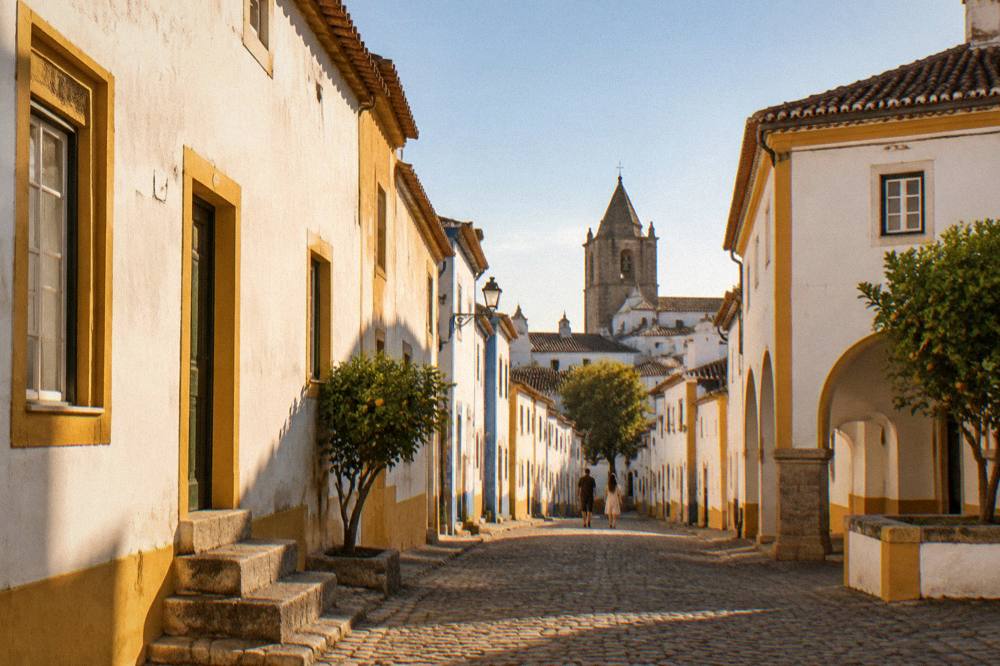
Seville's summer heat is legendary and shapes the whole rhythm of the city, with late dinners and shaded patios. Toledo's hill makes its summers slightly less punishing and its winters sharper. None of the three is a beach city: Évora is roughly 90 km from the Atlantic, and the comparison is between three inland historic centres, not between a city and a coast.
Which Should You Choose For A Short Trip From Lisbon?
If your base is Lisbon, choose Évora: it is the only one of the three reachable on a verified direct train, about 1 hour 40 to 1 hour 45 from Lisboa Oriente for 13.90 EUR, and its whole monumental core is walkable between a morning arrival and an evening return. Toledo only makes sense from Madrid, and Seville deserves a multi-night stay of its own. Évora also pairs with the Alentejo's megaliths, wine towns and cork forests in a way the other two cannot.
The decision tree is really about where you are sleeping. Lisbon-based, with one or two free days: Évora, twice if you can, once for the centre and once for the Cromeleque dos Almendres and the megalithic circuit, where a half-day tour led by archaeologists runs from $74.54 per person, rated 5 from 77 reviews. Madrid-based: Toledo, it was built for exactly that trip. Touring Andalusia properly: Seville, with the time it needs.
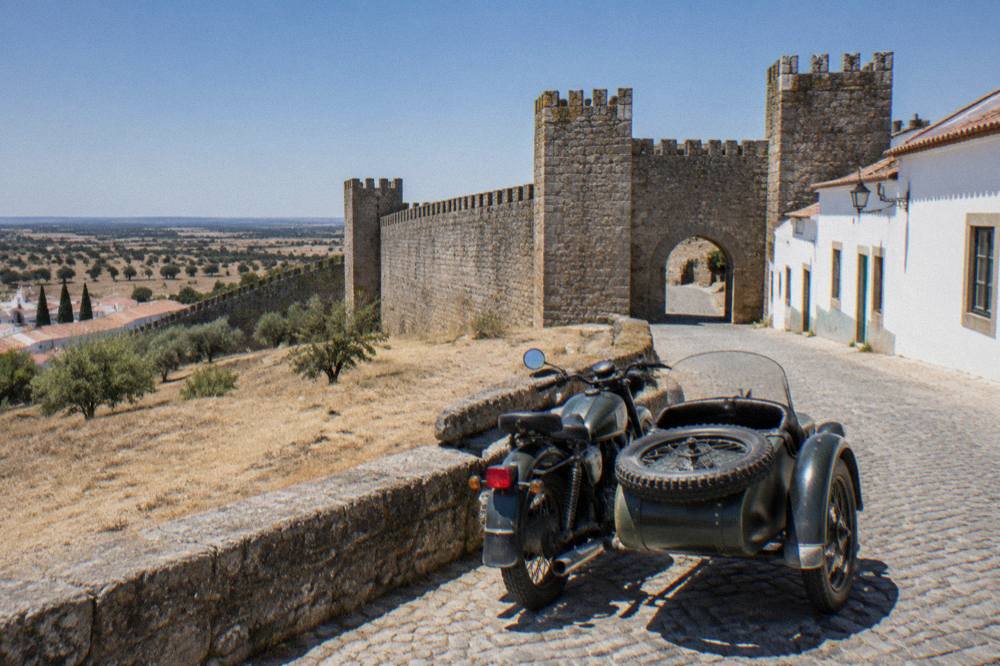
A different way to see the same centre: a medieval Évora tour by motorcycle sidecar with a wine tasting, 3 hours from $61.90 per person, rated 4.9 from 16 reviews. It covers the walls and quarters on a loop that walking tours do not.
For the deeper comparisons within Portugal, Évora vs Sintra, Évora vs Óbidos and Évora vs Coimbra cover the domestic alternatives, and Évora vs Lisbon the city-pair question. The honest summary across all of them: Évora is not trying to be Seville. It is a golden-age Portuguese town that the 1755 earthquake missed, sitting in wine country, an hour and three quarters from the capital by a train you can catch after breakfast.
Can You Combine Évora With Seville Or Toledo In One Trip?
Yes, and the natural order is Lisbon, Évora and the Alentejo first, then east into Spain, but no cross-border journey times are verified here so none are stated: plan the connections with the operators. What is verified is the Évora side: six through trains a day from Lisbon at 13.90 EUR second class, and the Alentejo day-trip ring, with Elvas about 80 km toward the border and Marvão about 120 km to the north. Évora works as the Portuguese half of a two-country week.
The geography makes the point. Évora's verified day-trip distances run from Arraiolos at about 20 km to Marvão at about 120 km, all of them Alentejo towns: Monsaraz, Estremoz, Vila Viçosa, Elvas, Évoramonte. Elvas, the garrison town nearest the border, is the natural last stop before Spain on an eastward route. The best day trips from Évora and Cáceres and Badajoz from Évora pages cover that ring in full.
The golden-age theme has its own walk: a 2.5 to 3 hour walking tour of Évora's golden era with a Portuguese wine tasting, from $23.92 per person, rated 4.4 from 33 reviews. It is the cheapest guided way to connect the golden-age centre this whole comparison is about with the wine that region produces.
One timing note worth planning around: Évora is a European Capital of Culture in 2027, with a preparatory 2026 programme built on the concept of Vagar, and the GUADIANA festival of Afro-Ibero-American literatures held its first edition on 9 to 11 October 2026 with 28 authors from nine countries. The full 2027 programme is not yet published. A 2027 visit will see a city in festival mode, which changes the calculus: more going on, and more people. The Évora events and festivals page tracks what is confirmed.
Common Questions About Évora, Seville And Toledo
Is Évora better than Seville?
Neither is better as a fact; they serve different trips. Évora is a small, calm Alentejo town with a 5.00 EUR cathedral ticket and a 7.00 EUR bone-chapel ticket, walkable end to end. Seville is a large Andalusian capital with monument-scale sights and the crowds that come with them. Choose Évora for pace and wine, Seville for spectacle.
Is Évora or Toledo better for a day trip?
It depends entirely on your base. From Lisbon, Évora: six through Intercidades trains a day, about 1 hour 40 to 1 hour 45, 13.90 EUR second class. From Madrid, Toledo. Neither works well as a day trip from the other's base city.
How far is Évora from Seville?
No journey time or distance between Évora and Seville is verified for this comparison, so none is stated. Lisbon, the verified gateway, is about 130 km from Évora by road. Plan the Évora to Seville crossing with the rail and coach operators directly.
Is Évora cheaper than Seville and Toledo?
Évora's verified entry prices are modest: 5.00 EUR for the cathedral's complete visit, 7.00 EUR for the Capela dos Ossos, 8 EUR for the Museu de Évora. No verified prices for Seville or Toledo are stated here. The bigger cost difference is length of stay: Évora is realistically a one or two-day city, Seville a multi-night one.
Is Évora too hot in summer compared with the Spanish cities?
All three are hot-summer inland cities. Évora's verified figures: July mean maximum 33.3 C, August 33.5 C, 31.9 days a year at 35 C or more, and a record of 45.4 C on 4 August 2018, all from the IPMA 1991-2020 normals. No figures are claimed for Seville or Toledo; spring and autumn are the comfortable months in all three.
Can I visit Évora and Toledo in the same day?
No, and no journey time is claimed for it. Évora is about 1 hour 40 to 1 hour 45 by train from Lisbon, and Toledo sits near Madrid on the Spanish network. Seeing both properly means an overnight in at least one country, and more sensibly two.
The comparison comes down to this: Seville for the biggest sights, Toledo for the densest day, and Évora for the city you can actually finish, with a glass of Alentejo red left over at the end of it.