Évora Vs Sintra: Which Portuguese City Fits Your Trip
Évora is an inland Alentejo city of Roman temples and bone chapels; Sintra is a hill town of palaces in the hills above Lisbon. Here is how the two compare on access, cost, weather and pace.
Short answer
Évora suits travellers who want a slow, food-and-history city break about 130 km from Lisbon, reached by a train of about 1 hour 40 from Lisboa Oriente at 13.90 EUR second class. Sintra suits a palace-and-hills day out directly on Lisbon's commuter rail. They are different trips, not rivals.
Évora, the capital of Portugal's Alentejo region, and Sintra, the hill town of palaces above the Lisbon coast, are the two destinations most often weighed against each other by travellers with limited days around Lisbon. They are not really competitors. Évora is a walled museum city on a hot inland plain, about 130 km from Lisbon, where the attractions are a Roman temple, a cathedral you can climb, a chapel lined with bones and a food culture built on bread, pork and wine. Sintra is a romantic hill town of palaces and gardens, reached quickly from Lisbon, where the day is spent moving between hilltop sites. This comparison lays out what each offers in general terms, gives the verified Évora figures where they exist, and helps you choose, or decide to do both.
The honest starting point is that this page can quote hard numbers for Évora, because the official sources for Évora publish them, and cannot quote them for Sintra. Where a Sintra figure would go, the guide below describes character instead, and tells you what to check before you commit. For a deeper look at the Alentejo side, start with what to do in Évora or the question-and-answer piece on which is better, Sintra or Évora.
What Kind Of City Is Évora Compared With Sintra?
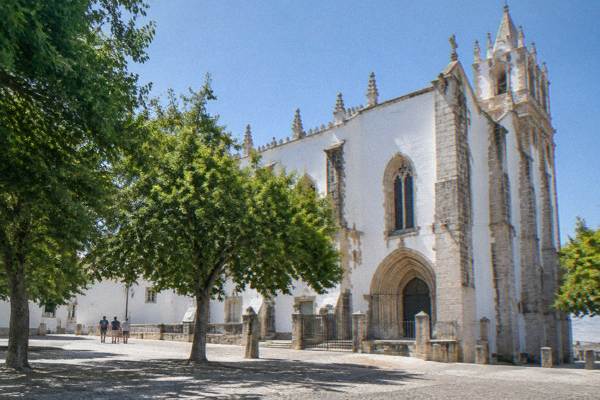
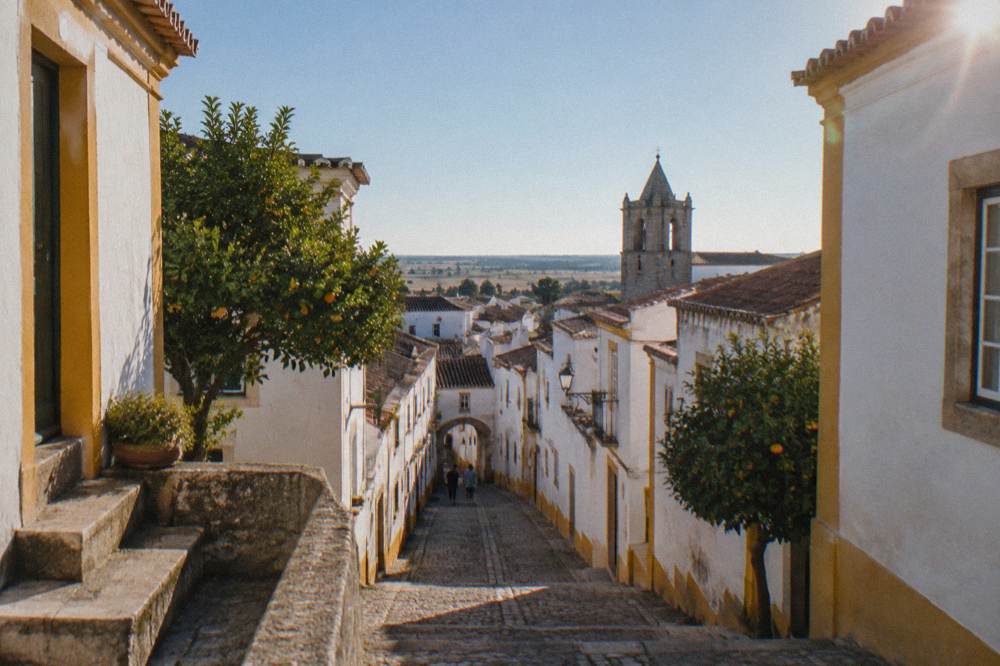
Évora is a compact, walkable inland city of golden stone, enclosed by medieval walls and inscribed by UNESCO in 1986 under criteria (ii) and (iv), while Sintra is a small hill town in wooded hills near the Atlantic coast, known above all for its concentration of palaces and gardens. Évora's sights sit inside a historic centre you cross on foot in under half an hour; Sintra's are scattered up and down a steep hillside connected by roads, paths and shuttle services.
UNESCO's criterion (iv) wording calls Évora the finest example of a city of the golden age of Portugal, after the 1755 Lisbon earthquake, which Évora was largely spared. That is the key to its character: the historic fabric survived, so the Templo Romano, the Sé, the Praça do Giraldo and the Convento dos Lóios sit within a few streets of each other, ringed by walls. The city is also a university town, which gives it a year-round population of bars, bookshops and cafés rather than a day-trip rhythm.
Sintra's character is the opposite shape. It is a town of individual monuments in a landscape: palaces on ridgelines, gardens in ravines, fog rolling in from the sea. Its setting is green and coastal-hilly; Évora's is a dry, flat plain of cork oaks and wheat, roughly 90 km from the Atlantic. If your image of Portugal is misty forests and tiled facades, Sintra matches it. If your image is golden stone, wide skies and slow Alentejo lunches, Évora does.
A useful framing for the choice: Sintra is a day-trip town that most visitors do from Lisbon in a rush, while Évora rewards an overnight. The is Évora worth visiting guide covers that question in detail, and the comparison table below sums up the character difference.
| Évora | Sintra | |
|---|---|---|
| Setting | Inland Alentejo plain, walled city, about 130 km from Lisbon | Wooded hills above the Lisbon coast |
| Core sights | Templo Romano, Sé, Capela dos Ossos, Praça do Giraldo, Museu de Évora | Palaces and gardens spread across a hillside |
| UNESCO status | Historic Centre inscribed 1986, criteria (ii) and (iv) | A cultural landscape, best known for its palaces |
| Pace | Slow, flat, walkable in a loop | Steep, shuttle and bus dependent |
| Best trip length | One night or two | A long day, or two easier days |
| Food identity | Alentejo: bread soups, pork, sheep cheese, red wine | Hill-town cafés and pastries |
Which Is Easier To Reach From Lisbon, Évora Or Sintra?
Sintra is closer to Lisbon and sits on a suburban rail line, so it is the shorter and cheaper hop, while Évora is about 130 km away on the Alentejo plain and is served by CP Intercidades trains that take about 1 hour 40 to 1 hour 45 from Lisboa Oriente, at 13.90 EUR second class or 18.50 EUR first class. Six through trains a day make the run under the timetable valid since 6 September 2026.
That Évora figure is the one hard number in this whole comparison, because CP publishes it. The trains leave Lisboa Oriente at 07:02, 09:02, 09:58, 13:35, 17:02 and 19:02, arriving in Évora at 08:47, 10:45, 11:40, 15:13, 18:41 and 20:46, calling at Entrecampos, Sete Rios, Pragal, Pinhal Novo, Vendas Novas and Casa Branca on the way. Check the current CP timetable before you travel, because the pattern can change with each timetable revision.
Sintra, by contrast, is a short rail hop from central Lisbon on the commuter network, frequent through the day, and it is also a common coach and tour destination. The guide to Lisbon to Évora compares the train with the bus and car options for the Alentejo run, and Lisbon to Évora by train covers the rail route station by station. For Sintra's equivalents, check the Lisbon transport pages before you go, because no Sintra fare or frequency is quoted here.
The practical consequence is simple. If you have one free day in Lisbon and no appetite for booking, Sintra is the default. If you can free a night, Évora turns from a sprint into a proper stay, with an evening food scene and a morning of monuments before the day-trippers arrive.
For anyone arriving in Évora and wanting the centre explained quickly, the Golden Era of Évora walking tour with Portuguese wine tasting is a good fit: it walks the golden-age quarter and ends with a tasting, which is exactly the two things Évora does best.
How Do The Ticket Prices Compare For Évora'S Monuments?
Évora's headline monuments cost 5.00 EUR for the Sé's complete visit, 7.00 EUR for the Capela dos Ossos and Igreja de São Francisco museum ticket, and 8 EUR for the Museu de Évora, with an Évora Ticket covering the Cidade-Museu network at 8 EUR for one day, 10 EUR for two and 12 EUR for three. No Sintra prices are stated here; check each palace's own page before you go.
The Évora figures come from the official pages. The Sé's single 5.00 EUR ticket covers the cathedral, the cloister, the roof terrace and the museum, with children up to 12 free. The Capela dos Ossos ticket, sold by the Igreja de São Francisco, is 7.00 EUR for adults, 5.00 EUR for youth up to 25 and seniors over 65, and 15.00 EUR for a family, and it covers all the museum areas including the chapter room and the nativity collection. The Museu de Évora charges 8 EUR for adults, is free to age 12, and closes on Mondays.
| Évora monument | Ticket | What it covers |
|---|---|---|
| Sé de Évora | 5.00 EUR | Cathedral, cloister, roof terrace, museum; children up to 12 free |
| Capela dos Ossos / Igreja de São Francisco | 7.00 EUR adult | All museum areas; youth and seniors 5.00 EUR, family 15.00 EUR |
| Museu de Évora | 8 EUR | Former Archbishop's Palace collections; closed Mondays |
| Évora Ticket | 8 EUR one day | Cidade-Museu network sites; 10 EUR two days, 12 EUR three days |
| Templo Romano | Open-air monument | No ticket listed on the municipal page |
Two warnings matter. First, the Évora Ticket does not include the Sé, the Capela dos Ossos or the Museu de Évora, so budget those separately. Second, the Convento dos Lóios currently shows its price as temporarily unavailable on the official page, so ask at the ticket window rather than assuming. The full pass detail is in Évora tickets and passes.
For Sintra, the palaces each sell their own tickets and the popular ones queue in high season. That is a general characterisation, not a figure: check each palace's official page for current prices and timed-entry rules before you plan a route around them.
Which Has More To See, Évora Or Sintra?
Sintra has the larger number of headline monuments packed into a small area, which is why it draws bigger crowds and needs a full, well-sequenced day, while Évora has fewer individual showpieces but a deeper, more continuous historic fabric: a Roman temple, a medieval cathedral, a bone chapel, an aqueduct entering the streets, megaliths in the countryside and a food culture that fills the evenings.
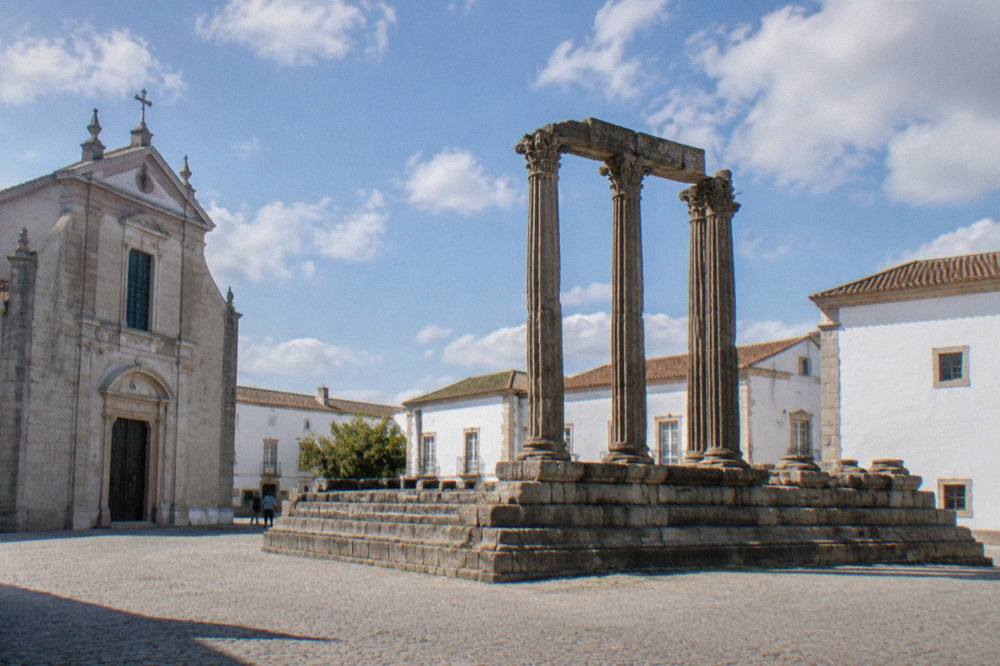
The honest measure is not a count but a shape. Sintra's day is a logistics exercise: you pick two or three sites, accept that you will not see them all, and move between them by bus, tram or taxi. Évora's day is a walk. The Templo Romano, a 25 x 15 m temple the municipal page says was probably dedicated to the imperial cult rather than to Diana, stands in an open square you simply pass through. The Sé's roof terrace gives you the whole plain. The Capela dos Ossos is a ten-minute visit beside a working church.
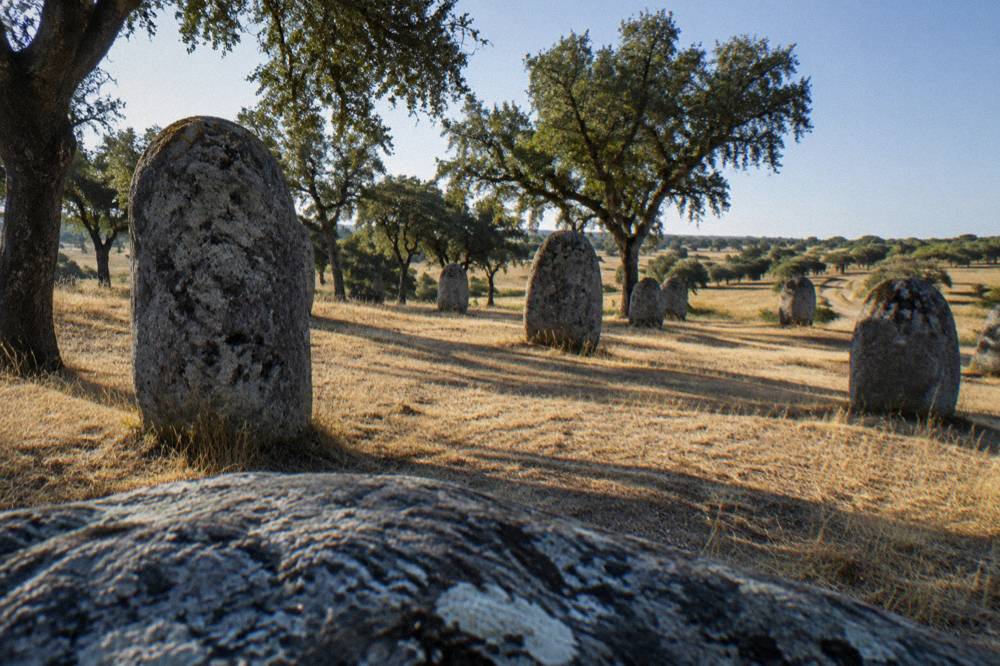
Beyond the walls, the Cromeleque dos Almendres sits in the cork-oak country outside the city, and the Almendres Interpretation Centre in Guadalupe keeps summer hours of 10:00 to 18:00 from 1 May to 31 October and winter hours of 10:00 to 17:00 from 1 November to 30 April. That megalithic landscape is something Sintra simply has no equivalent of, and it is covered in megalithic sites near Évora.
For the city itself, the one day in Évora itinerary sequences the centre by foot, and the comparison with other small Portuguese destinations continues in Évora vs Óbidos and Évora vs Coimbra.
When Is The Best Time Of Year To Visit Each?
Évora is best in spring and autumn, because IPMA's 1991 to 2020 normals for the Évora station show July averaging a maximum of 33.3 C and August 33.5 C, with 31.9 days a year reaching 35 C or more, while Sintra's coastal hills stay milder in summer but foggier and wetter in the cooler months, so its shoulder seasons are less sharply defined.
The Évora numbers deserve their label: they are the 1991 to 2020 averages for the Évora station, number 558, at 38.5365N, 7.8880W, altitude 247.6 m. The record maximum is 45.4 C, set on 4 August 2018. Rain is heavily seasonal: 2.7 mm in July against 86.0 mm in November, with only 0.6 days of 1 mm or more of rain in July. What that means for planning is that an Évora summer day starts early, pauses at lunch, and reopens in the evening, and a winter day is mild by northern European standards but can fall to a mean minimum of 4.5 C in January. Other pages covering the same trip are gathered on Évora Travel Guide.
| Month | Mean max (C) | Mean min (C) | Rain (mm) | Days 1 mm+ rain |
|---|---|---|---|---|
| January | 14.1 | 4.5 | 68.6 | 8.6 |
| April | 20.7 | 8.5 | 62.1 | 8.0 |
| July | 33.3 | 15.6 | 2.7 | 0.6 |
| August | 33.5 | 16.0 | 6.0 | 0.7 |
| October | 24.1 | 12.3 | 81.5 | 7.7 |
| December | 14.6 | 5.3 | 85.1 | 8.7 |
All figures are IPMA 1991 to 2020 normals for the Évora station. The month-by-month detail, including the days above 30 C and 35 C rows, is in Évora weather and the seasonal breakdowns in best time to visit Évora.
Sintra's hill-and-sea position gives it a different rhythm: cooler, damper air through the year, which is precisely why its gardens are so lush. That is character, not a figure. If your trip falls in July or August and heat is the deciding factor, the coast-facing hill town is the safer bet; if it falls in May, June, September or October, Évora is at its best and the Alentejo light is the reason photographers go.
Where Should You Stay Overnight, Évora Or Sintra?
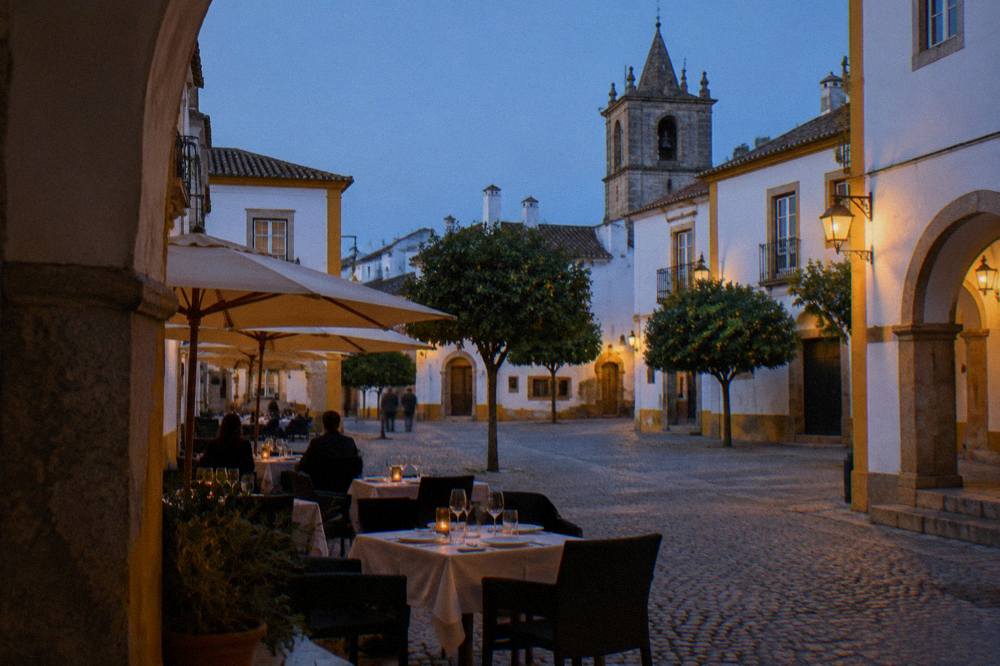
Évora is the stronger overnight base of the two for this comparison, because its evening is part of the product: the historic centre empties of day visitors after the last trains leave, the restaurants serve late Alentejo dinners, and a night buys you the monuments at opening time, while Sintra's evenings are quieter and many visitors return to Lisbon rather than stay on the hill.
That is a characterisation, not a ranking. What can be said concretely is on the Évora side: the last through train back to Lisbon under the current timetable leaves Évora in the early evening, so a day trip is entirely possible, but the city's value compounds after the day crowd goes. The where to stay in Évora guide covers the neighbourhoods inside and outside the walls, and two days in Évora shows what a second morning adds: the megaliths, a winery, or a day trip to one of the Alentejo towns.
A municipal tourist tax applies to stays in Évora; check the amount with your hotel when you book, because no figure is quoted here. For the full cost picture, including the monument tickets and typical meal ranges, see Évora cost and budget.
If you do stay in Sintra instead, the argument for it is being on the hill at opening time before the day visitors arrive, which is the same logic that favours an Évora overnight. The difference is that Évora's evening has a city's worth of life around it, and Sintra's is a small town that closes early.
Can You Combine Évora And Sintra In One Trip?
Yes, and the combination works well, because Sintra and Évora sit on opposite sides of Lisbon and solve different problems: give Sintra one or two days at the start or end of a Lisbon stay, then take an Intercidades train from Lisboa Oriente to Évora, about 1 hour 40, and give the Alentejo at least a night, ideally two, with the cromlech or a winery filling the second day.
The sequence matters less than the pacing. A common shape is: Lisbon with a Sintra day attached, then the morning train to Évora, a full day and a night there, and either a return to Lisbon or a continuation deeper into the Alentejo toward Estremoz, Vila Viçosa or Marvão. The distances are real but short by Alentejo standards: Estremoz about 45 km, Vila Viçosa about 60 km, Marvão about 120 km from Évora. The Alentejo road trip guide strings them together.
| Trip shape | Days | Who it suits |
|---|---|---|
| Lisbon plus Sintra day trip | 3 to 4 | First-time visitors, short stays |
| Lisbon plus Évora overnight | 4 to 5 | Food and history travellers |
| Lisbon, Sintra, then Évora | 5 to 7 | The full contrast: coast hills then inland plain |
| Évora base with Alentejo day trips | 4 to 6 | Slow travellers, wine and megaliths |
For the Alentejo leg, a guided day from Évora is the low-friction option if you would rather not drive. The Monsaraz and Wine guided tour from Évora pairs the walled village above the Alqueva reservoir with a regional tasting in four hours.
Travellers starting in Lisbon rather than Évora can also take a Lisbon-start day trip that visits Évora; those are described in the Alentejo tour from Lisbon guide and always begin in Lisbon, so plan them for the Lisbon end of the trip, not the Évora end.
Which Should You Choose For Food And Wine?
Évora wins this comparison on substance, because Alentejo cuisine is one of Portugal's regional cooking traditions with its own bread soups, pork dishes, sheep cheeses and a major wine region behind it, and the city's restaurants and tasting rooms serve it all within the walls, while Sintra is a day-trip town whose food offer is built around cafés, pastries and the needs of visitors on a schedule.
The Alentejo kitchen is the reason many people stay the night. The dishes to look for are covered in Alentejo food and the Évora food guide, and the restaurant shortlist is in Évora restaurants. The wine side is equally local: the Alentejo is one of Portugal's most awarded red-wine regions, and the Cartuxa winery on Évora's edge is covered in its own guide. Tasting fees vary by producer; check the room before you commit to a visit.
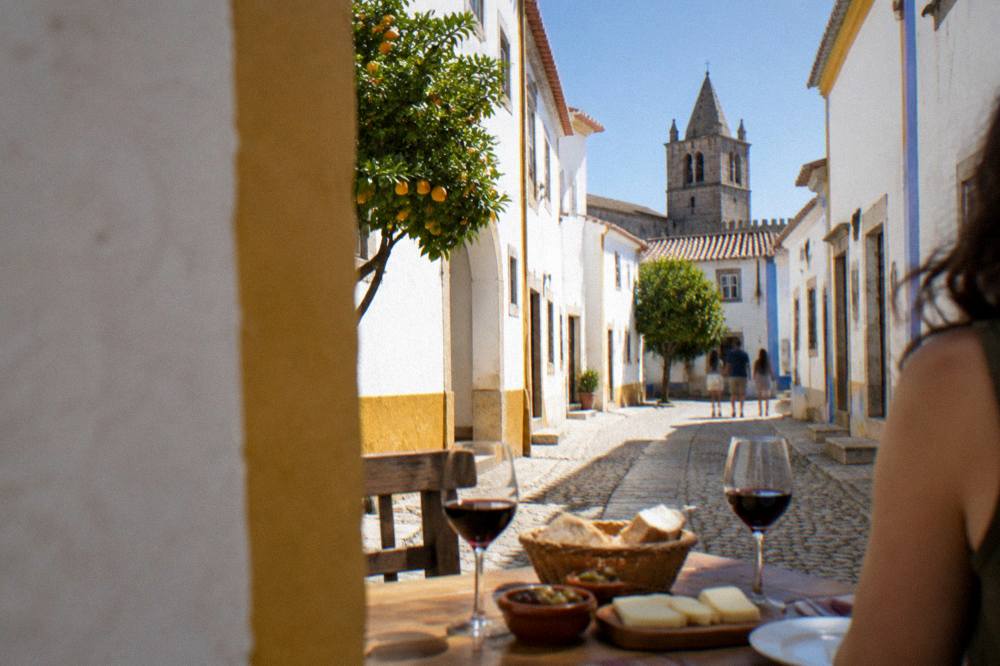
Two guided options fit the food-and-wine brief directly. The Alentejo Wine and Cork tour from Évora combines a winery visit with the cork-oak landscape that defines the plain. And for the budget end of the city walks, the Essential Free Tour of Évora on GuruWalk, a tip-based walk of about two hours, is a way to get the historic centre's layout before you spend anything on tours at all.
For a fuller treatment of the wine question, see Évora wine tasting and Alentejo wine.
Common Questions About Évora Vs Sintra
Is Évora or Sintra better for a day trip from Lisbon?
Sintra is the easier day trip because it is closer to Lisbon on a frequent rail link, while Évora is about 130 km away on a train of about 1 hour 40 from Lisboa Oriente. Neither is better as a fact: Sintra suits palaces and gardens, Évora suits a walled museum city and a long Alentejo lunch. If you can only spare one day and want monuments, Sintra is the lower-effort option.
Can you visit both Évora and Sintra on the same trip?
Yes. They sit on opposite sides of Lisbon, so a common shape is a Sintra day during a Lisbon stay followed by a train to Évora for one or two nights. The CP Intercidades service from Lisboa Oriente takes about 1 hour 40 to 1 hour 45.
Is Évora cheaper than Sintra?
Évora's main monument tickets are verified: 5.00 EUR for the Sé's complete visit, 7.00 EUR for the Capela dos Ossos and 8 EUR for the Museu de Évora, with an Évora Ticket at 8 EUR for one day. No Sintra prices are stated here, so compare against each palace's own page before deciding.
Which is hotter, Évora or Sintra?
Évora is hotter in summer. IPMA's 1991 to 2020 normals for the Évora station show a July mean maximum of 33.3 C and an August mean maximum of 33.5 C, with 31.9 days a year at 35 C or more and a record of 45.4 C on 4 August 2018. Sintra's coastal hills run milder, though no Sintra figure is quoted here.
How many days do you need in Évora compared with Sintra?
One full day and a night covers Évora's historic centre; two days add the Cromeleque dos Almendres, a winery or an Alentejo town. Sintra is usually done as one long day from Lisbon, or two relaxed days if you want more than the headline palaces.
Do you need a car in Évora?
Not for the historic centre, which is compact and walkable. A car or a guided tour helps for the megalithic sites and the surrounding towns such as Estremoz, about 45 km away, and Vila Viçosa, about 60 km. Parking inside the walls is limited, so the Évora parking guide is worth reading before you drive in.
The choice between Évora and Sintra is really a choice between two Portugals: the green romantic hills above the coast, and the golden, food-centred plain of the Alentejo. Travellers with a week can have both, and the Évora Travel Guide's pages on getting there, staying and eating are built to make the Alentejo half of that trip easy to plan.