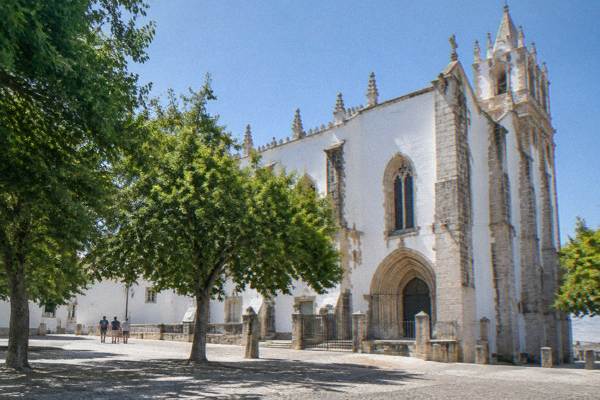
Évora In Summer
Summer in Évora, the capital of Portugal's Alentejo, is hot, dry and built around a simple rhythm: monuments in the cooler hours, shade at midday, and long golden evenings. Here is what the climate record actually says, and how to plan around it.
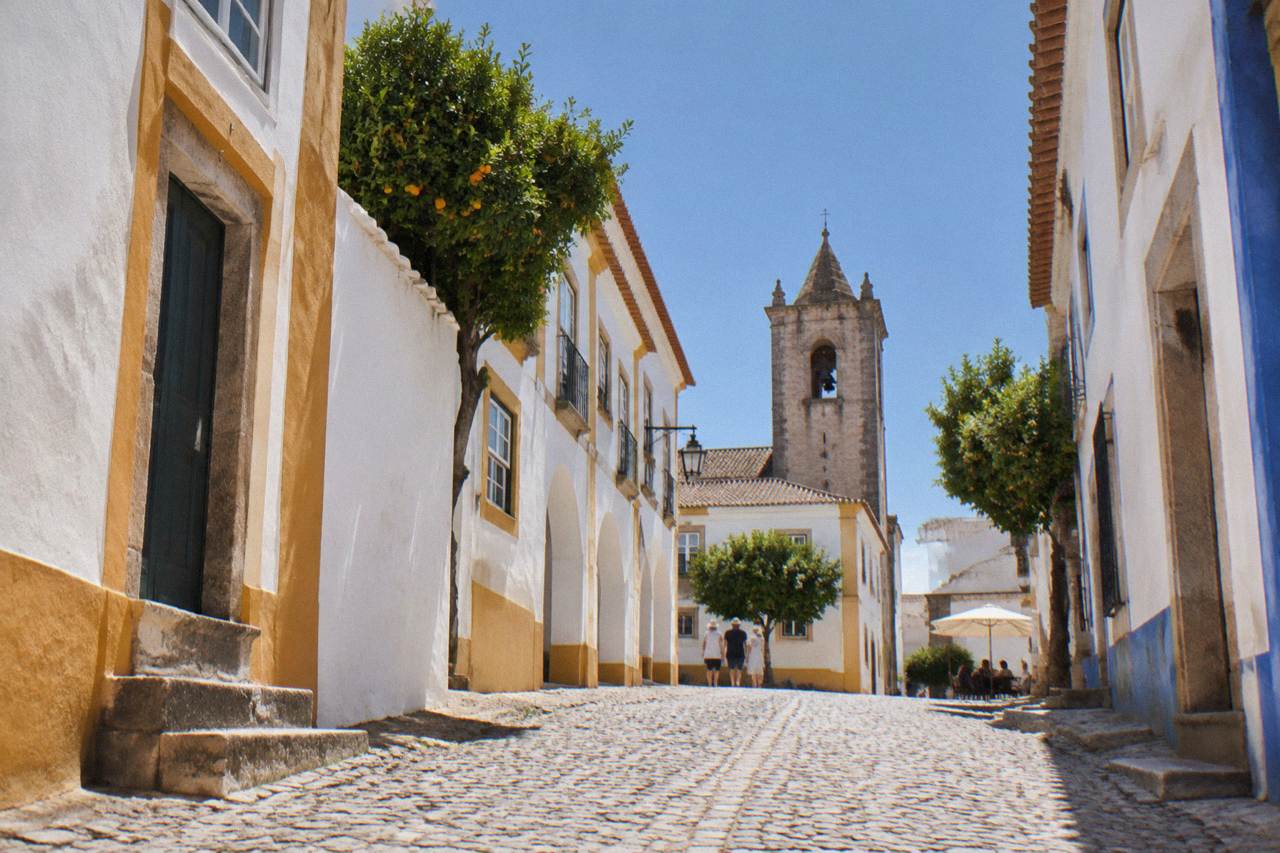
Short answer
July and August average 33.3 C and 33.5 C daytime highs, with almost no rain. Visit monuments in the morning, rest through the afternoon, and use the long evenings. The Sé, the Capela dos Ossos and the Museu de Évora all keep summer hours, and the city is a walkable, compact place once the heat is respected.
Summer in Évora, the inland capital of Portugal's Alentejo region, is the season the city's climate record is really about. The IPMA 1991-2020 normals for the Évora station show a place that is genuinely hot, dry and rain-free for months at a stretch, not a mild Atlantic resort. That heat shapes everything worth doing here: the hours monuments keep, the streets people walk, the way the whole city shifts its life toward the evening.
How Hot Does Évora Actually Get In Summer?
The IPMA 1991-2020 normals for the Évora station put the July mean daily maximum at 33.3 C and August at 33.5 C, with June at 30.2 C and September at 29.5 C. Rain is close to irrelevant: July averages 2.7 mm across the whole month and August 6.0 mm, with 0.6 and 0.7 rain days respectively.
The station's record maximum is 45.4 C, set on 4 August 2018, and Évora is inland, with no sea breeze to soften any of it.
Those are 30-year averages, not freak years, and they describe a serious summer. The same normals count 23.7 days at 30 C or more in an average July and 25.0 in August, of which 11.5 and 10.9 respectively reach 35 C or more. Across a whole year Évora averages 31.9 days at 35 C or above, and nearly all of them fall between June and September. Nights offer real recovery: the July mean minimum is 15.6 C and August 16.0 C, so evenings outdoors are genuinely pleasant rather than a continuation of the afternoon.
| Month | Mean max (C) | Mean min (C) | Rain (mm) | Days 1 mm+ | Days 30 C+ | Days 35 C+ |
|---|---|---|---|---|---|---|
| June | 30.2 | 13.8 | 10.6 | 1.7 | 15.1 | 5.6 |
| July | 33.3 | 15.6 | 2.7 | 0.6 | 23.7 | 11.5 |
| August | 33.5 | 16.0 | 6.0 | 0.7 | 25.0 | 10.9 |
| September | 29.5 | 14.6 | 33.9 | 3.6 | 13.9 | 3.1 |
September is the quiet sleeper of the table. The mean maximum drops to 29.5 C, rain returns only modestly at 33.9 mm, and the number of 35 C days falls to 3.1. Anyone flexible on dates gets most of the light with meaningfully less of the furnace. For the full monthly picture, including the winter months for contrast, see Évora weather month by month.
Is Summer A Good Time To Visit Évora?
Summer is a good time to visit Évora if you plan around the heat rather than through it, and it carries real advantages: near-zero rain, long evenings, the Feira de São João filling the Rossio de São Brás from 23 June to 5 July, and a city compact enough that no sight requires more than a short walk between shaded stops. The trade-off is the 33 C-plus afternoons of July and August, which rule out the midday marathon approach to sightseeing.
The honest comparison is with May, June and September rather than with winter. May averages a 25.0 C maximum and just 5.5 days at 30 C or more, and June before the last week is similar, so the shoulder edge of summer is close to ideal. Deep July and August belong to a different style of travel: early starts, a real lunch, a closed-door afternoon, and the city again after 19:00, when the light on the whitewash is at its best and the temperature is falling toward the evening mean minimum.
Summer 2026 also carries a cultural weight no previous Évora summer has had. Évora and the Alentejo are a European Capital of Culture in 2027, and the 2026 programme is the preparation year, built on the concept of "Vagar". The GUADIANA festival of Afro-Ibero-American literatures, its first edition, runs 9 to 11 October 2026 with 28 authors from nine countries, which lands just after the heat breaks and is a reason to think about early autumn. The full 2027 programme is not yet published.
A private guide is one of the better summer buys precisely because heat punishes indecision. The private best-of walking tour, from $113.53 per person and rated 5 from 256 reviews, bundles the cathedral and the Chapel of Bones into one efficient morning, which is exactly the shape a July day in Évora wants. Check availability
What Hours And Prices Do The Main Monuments Keep In Summer?
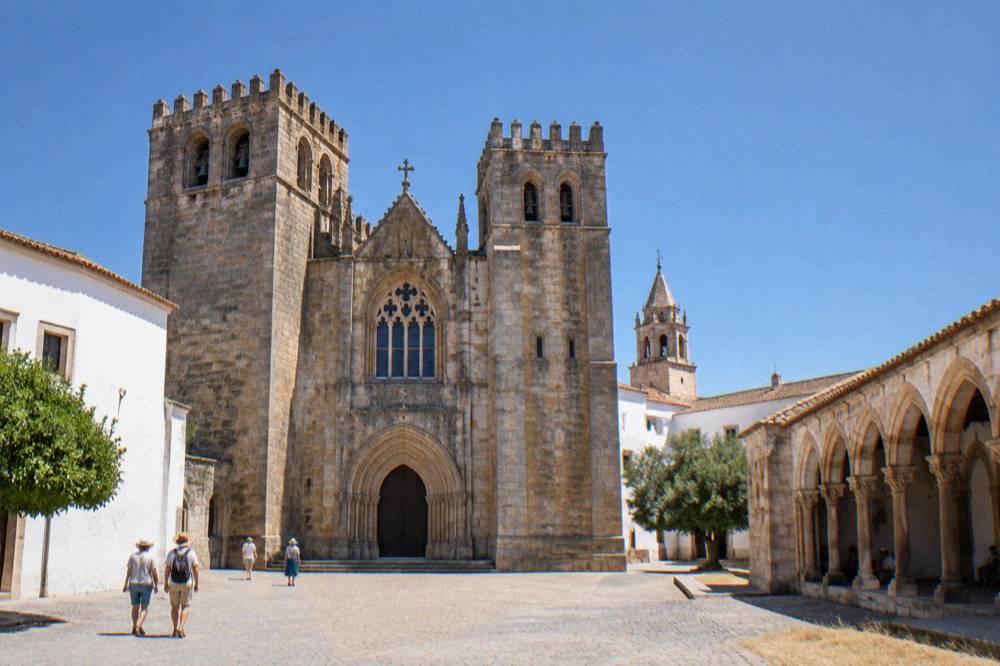
The Sé de Évora charges one 5.00 EUR complete-visit ticket covering cathedral, cloister, roof terrace and museum, open 9:00-17:00. The Capela dos Ossos and Igreja de São Francisco complex charges 7.00 EUR adult, open 9:00-18:30 in summer legal time. The Museu de Évora is 8 EUR, Tuesday to Sunday 9:30-13:00 and 14:00-17:30, closed Mondays. The Évora Ticket costs 8 EUR for one day and covers none of those three.
Those are the three anchors of a monument day, and their hours reward an early start. The Capela dos Ossos runs until 18:30 in summer, the latest closing of the set, which makes it the natural late-afternoon stop when the day cools. The Sé's roof terrace is the one place where the heat needs a second thought: it is open stone with no shade, and the official page gives 9:00-17:00 with last museum admission 30 minutes before closing. The church of São Francisco is open daily except 1 January, Easter Sunday, the afternoon of 24 December and 25 December.
| Monument | Summer hours | Adult ticket | Closed |
|---|---|---|---|
| Sé de Évora (complete visit) | 9:00-17:00 | 5.00 EUR | 24 Dec afternoon, 25 Dec, 1 Jan |
| Capela dos Ossos / Igreja de São Francisco | 9:00-18:30 (summer legal time) | 7.00 EUR | 1 Jan, Easter Sunday, 24 Dec afternoon, 25 Dec |
| Museu de Évora | 9:30-13:00, 14:00-17:30 | 8 EUR | Mondays, 1 Jan, Easter Sunday, 1 May, 29 June, 25 Dec |
| Évora Ticket (multi-site pass) | Per site | 8 EUR one day, 10 EUR two, 12 EUR three | Per site |
The Évora Ticket is worth a careful look rather than an automatic buy: at 8 EUR for one day it matches the Museu de Évora's single ticket, but it does not include the Sé, the Capela dos Ossos or the Museu de Évora. If your day is built on those three, the pass saves nothing. Children up to 12 enter the Sé free with a parent or guardian, and the Capela dos Ossos charges 5.00 EUR for youth up to 25 and seniors over 65, with a 15.00 EUR family option. The Convento dos Lóios currently lists no ticket price at all, so ask at the door rather than assume.
How Do You Structure A Summer Day In Évora?
Start at 9:00 at whichever major monument opens first, do the roof terrace and any unshaded walking before 12:00, take a long shaded lunch through the hottest hours, return to the streets after 17:00 when the Capela dos Ossos is still open until 18:30, and give the evening to Praça do Giraldo and dinner outdoors. That single rhythm, morning monuments and evening streets, is what makes a 33 C day in Évora not just bearable but good.
The logic is arithmetic. Between roughly 13:00 and 17:00 the mean maximum is at or near its peak, the whitewashed streets hold the heat, and the one thing you cannot buy in Évora in July is shade on demand. Before 12:00 the temperature is typically still climbing from the morning mean minimum of 15.6 C in July, and after 18:00 it is falling back toward it. The Alentejo lunch exists for exactly this: it is the heat strategy of an entire region, not a tourist inconvenience.
| Time | Temperature logic | What to do |
|---|---|---|
| 8:00-9:00 | Coolest useful hour | Coffee in Praça do Giraldo, walk before opening |
| 9:00-12:00 | Still climbing | Sé and roof terrace, Museu de Évora, Templo Romano |
| 12:00-13:00 | Approaching peak | Shaded lunch, book ahead in July |
| 13:00-17:00 | Peak heat, 33 C-plus likely | Rest, or one cool interior such as the Capela dos Ossos |
| 17:00-18:30 | Falling, monuments still open | Capela dos Ossos, Igreja de São Francisco |
| 19:00 onward | Toward the 15.6 C evening minimum | Squares, dinner outdoors, rooftop views |
The Templo Romano deserves its morning slot even though it is an open-air monument with no ticket: the municipal page records it at 25 x 15 m, probably dedicated to the imperial cult rather than to Diana, and standing in full sun at 15:00 adds nothing to the experience. A guided option that compresses the hot hours efficiently is the private walking tour with cathedral and Chapel of Bones, from $111.42 per person and rated 5 from 106 reviews, which moves the whole monument block into one guided stretch. For the broader picture of what the city holds, see things to do in Évora.
What Is An Évora Summer Evening Like?
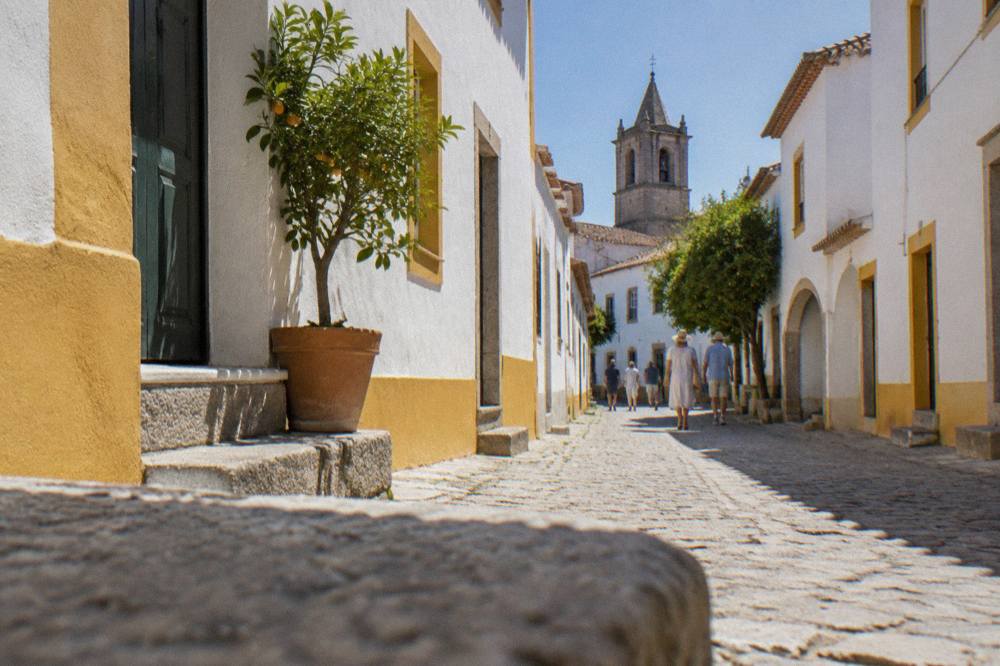
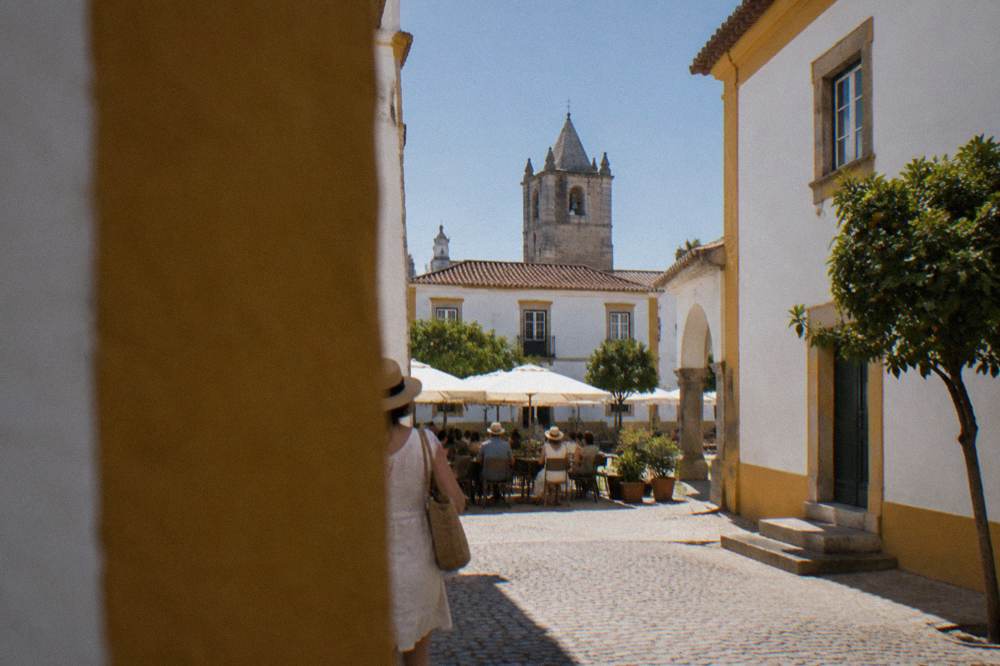
An Évora summer evening is the payoff for the afternoon: the July mean minimum of 15.6 C and August's 16.0 C mean the hours after sunset are mild, the historic centre's squares fill with people who spent the afternoon indoors, and dinner outdoors in Praça do Giraldo or on the streets off it is the normal way the city eats in summer. Sunset comes late, and the light on the whitewashed walls of the UNESCO-listed centre is the reason photographers plan whole trips around it.
The UNESCO inscription, from 1986 under criteria (ii) and (iv), calls Évora the finest example of a city of the golden age of Portugal after the 1755 Lisbon earthquake, which the city was largely spared. In summer that golden-age architecture earns the phrase literally: low sun on limestone and whitewash, with the Templo Romano's columns in silhouette and the Sé's bulk closing the view down the ridge. The rooftop viewpoints of the centre are at their best in the last hour of light, and the evening food and wine crawl, from $83.28 per person and rated 4.6 from 19 reviews, turns that hour into a moving dinner. Everything else covered here is indexed on Évora Travel Guide.
Evenings are also when the free walking tours come into their own. GuruWalk's Essential Free Tour of Évora, tip-based and rated 4.93 from 774 reviews over 2 hours, runs the kind of evening slot that suits a hot day's schedule, and the same platform's Évora through history walk, rated 4.88 from 74 reviews, covers how the city's past shaped its streets. Both are pay-what-you-want walks with a named guru leading them, which is the honest way to see a city when the daytime budget has gone on monument tickets.
Which Day Trips Work From Évora In Summer?
The day trips that work best from Évora in summer are the ones with water, wine cellars or hilltop shade rather than open archaeological ground: Monsaraz on the Alqueva lake about 40 to 45 km away, Estremoz about 45 km, Vila Viçosa about 60 km and Arraiolos about 20 km, all close enough that the drive itself is not a heat exposure. The Cromeleque dos Almendres is reachable but is an exposed site, so it belongs to the early morning or the shoulder months.
Monsaraz is the standout summer choice, a walled village above the great Alqueva reservoir, and the guided Monsaraz and Wine tours from Évora run about 4 hours, from $78.78 per person. The marble town of Vila Viçosa, about 60 km, is compact enough to see in the cooler half of a day, and its marble tour runs from $28.14 per person. Estremoz, about 45 km, has a heritage walking tour from $28.67 per person. Arraiolos, about 20 km, is the shortest hop of all and famous for its needlework carpets.
| Day trip | Distance from Évora | Summer character |
|---|---|---|
| Arraiolos | about 20 km | Shortest hop, carpet town, easy half day |
| Monsaraz and Alqueva | about 40-45 km | Lake shore, hilltop village, wine tours |
| Estremoz | about 45 km | Marble and castle hill, guided walk available |
| Vila Viçosa | about 60 km | Ducal palace and marble quarries |
| Elvas | about 80 km | Fortified border city, mostly open ground |
| Marvão | about 120 km | Spectacular hilltop village, longest drive |
The Almendres Interpretation Centre in the village of Guadalupe keeps summer hours of 10:00-18:00 from 1 May to 31 October, which tells you the megalithic country is set up for visitors in the hot months, but the stones themselves stand in open ground with no shade. The cromlech tours from Évora, including the archaeologist-led half-day at $74.54 per person, rated 5 from 77 reviews, generally run morning departures, which is the right call. For the fuller list of options see the best day trips from Évora guide, and for the megaliths specifically the megalithic sites near Évora page.
How Do You Get To Évora In Summer?
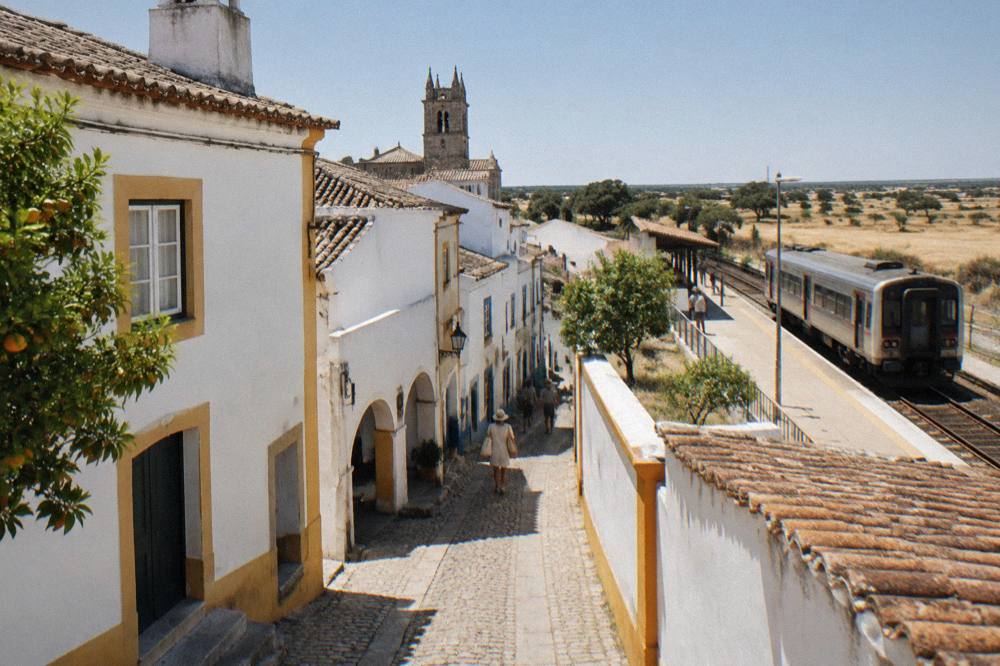
CP's Intercidades timetable, valid since 6 September 2026, lists six through trains a day from Lisboa Oriente to Évora, departing 07:02, 09:02, 09:58, 13:35, 17:02 and 19:02 and arriving roughly 1 hour 40 to 1 hour 45 later, with a second-class fare of 13.90 EUR and first class at 18.50 EUR. The 07:02, arriving 08:47, is the summer train: it puts you at the monuments before the heat builds.
That early departure is the single most useful summer fact in the whole transport picture. Arriving at 08:47 gives a full cool morning in the city, and the 17:02 return, leaving Évora at 17:02 from the station, suits a day built on morning monuments and an afternoon wind-down. The trains call at Entrecampos, Sete Rios, Pragal, Pinhal Novo, Vendas Novas and Casa Branca, and on these through services no change is needed. Check the CP page for weekday remarks before locking a plan, and see the detailed Lisbon to Évora by train guide for the full picture.
| Lisboa Oriente departure | Évora arrival | Summer use |
|---|---|---|
| 07:02 | 08:47 | The summer day trip: monuments before the heat |
| 09:02 | 10:45 | Relaxed start, shorter city morning |
| 09:58 | 11:40 | Late start, afternoon-heavy plan |
| 13:35 | 15:13 | Arrive for the evening, hottest arrival |
| 17:02 | 18:41 | Evening arrival, dinner in the city |
| 19:02 | 20:46 | Night arrival, stay overnight |
Coach services also run the route, but no fare or timetable for them is stated here: check the operator's page before booking. Driving from Lisbon, about 130 km, puts you on the A6 across open plain with no shade at service stops, so the same early-start logic applies. The Évora parking guide covers where to leave the car, and getting around Évora explains why, inside the walls, you will not need it again.
What Should You Pack For A Évora Summer?
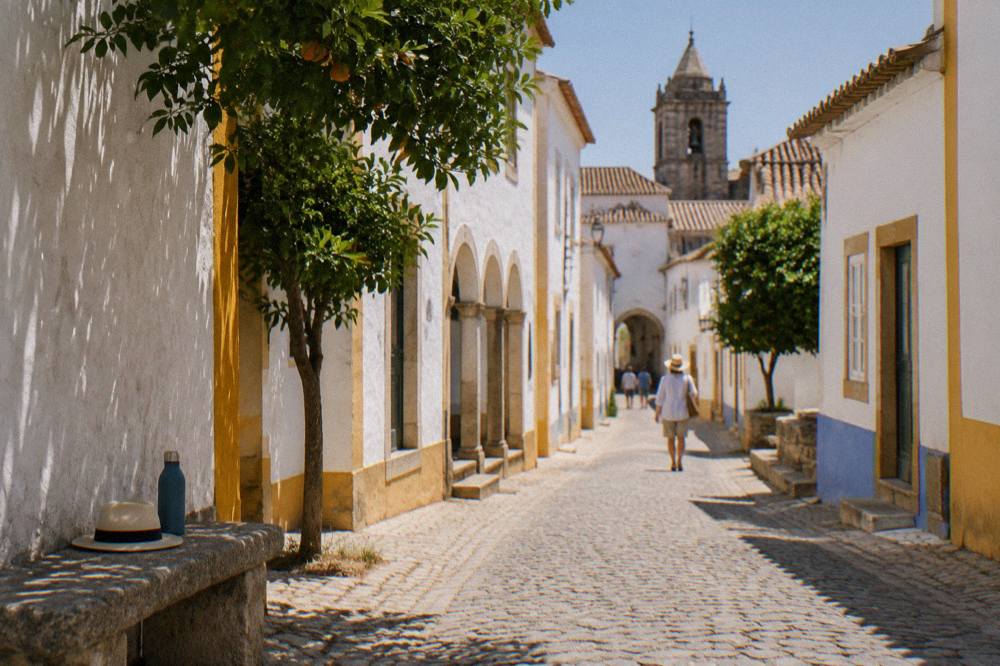
Pack for a hot, dry, high-sun inland city: a real hat and sunglasses for the 33 C-plus afternoons, closed shoes rather than sandals for the stone and cobbled streets, a refillable bottle because tap water is drinkable, and a light layer for evenings that average 15.6 C to 16.0 C at the minimum but start warmer than that at dinner time. Sunscreen is not optional, and modest cover for shoulders and knees matters for the working churches, including the Igreja de São Francisco.
The streets of the historic centre are limestone and calçada, which hold and reflect heat; the whitewash that keeps the houses cool does the opposite for anyone standing in the open. A day pack with water is the difference between a pleasant morning at the monuments and a shortened one. The Alentejo is also wine country, and the Alentejo wine guide covers what to taste, while Évora restaurants handles where the long shaded lunch actually happens.
One summer-specific note on money: a municipal tourist tax applies to stays in Évora, so check your hotel's total rather than the room rate alone. The Évora cost and budget guide breaks down what a day realistically costs, and where to stay in Évora covers the neighbourhoods, including which ones put you within a short shaded walk of the evening squares.
What If You Want A Guided Summer Experience?
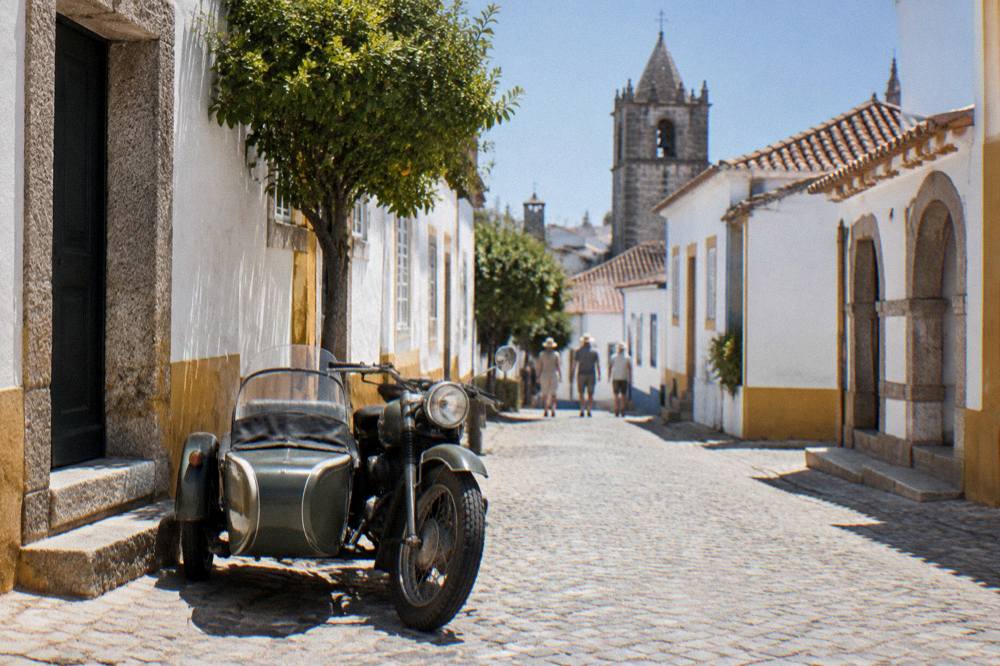
The guided options that suit an Évora summer best are the private walking tours that compress the monuments into the cool hours, the evening food and wine crawl that turns the best hours of the day into the itinerary itself, and the sidecar tour, from $61.90 per person and rated 4.9 from 16 reviews, which covers the medieval city in 3 hours with a breeze that walking does not provide. All three start in Évora itself, so no hot transfer is wasted.
The sidecar deserves a special mention for summer logic alone: an open vehicle moving through the streets of a city whose golden-age centre UNESCO inscribed in 1986 is about the most efficient way to see architecture while generating your own airflow. The medieval sidecar tour with wine tasting pairs the ride with a tasting, which slots neatly into the late-afternoon gap between the Capela dos Ossos and dinner.
For a fuller survey of what is available, the Évora tours overview sorts the options by type, and the Évora walking tour page compares the guided walks, including the free GuruWalk options, against the private ones. The Évora Travel Guide editorial desk's summary advice for summer: spend on the morning, spend nothing on the afternoon, and let the evening be free.
Common Questions About Évora In Summer
Is Évora too hot in summer?
The IPMA 1991-2020 normals put the July mean daily maximum at 33.3 C and August at 33.5 C, with 11.5 and 10.9 days respectively reaching 35 C or more. It is genuinely hot, but mornings average a 15.6 C to 16.0 C minimum in July and August, and evenings cool toward those figures, so a day planned around the heat works well.
What is the hottest month in Évora?
August edges July in the 1991-2020 normals, with a mean maximum of 33.5 C against 33.3 C, and 25.0 days at 30 C or more against 23.7. The station's record maximum, 45.4 C, was also set on 4 August 2018.
Does it rain in Évora in summer?
Barely. July averages 2.7 mm across the whole month and August 6.0 mm, with 0.6 and 0.7 days of 1 mm or more respectively. June averages 10.6 mm and September 33.9 mm as the first autumn systems arrive.
Is September a good time to visit Évora?
Yes, and it is arguably the best of the warm months. The September mean maximum is 29.5 C against August's 33.5 C, days at 35 C or more fall to 3.1, and the GUADIANA literature festival runs 9 to 11 October 2026 as part of the Évora 2027 programme, just after it.
What should you avoid in Évora at midday in summer?
Open, unshaded ground: the Sé's roof terrace, the Templo Romano precinct, and long stretches of the cobbled streets. The mean maximum in July and August is above 33 C, the stone holds that heat, and the shaded lunch is the Alentejo's own answer to it.
Are the monuments open in summer in Évora?
Yes. The Sé runs 9:00-17:00, the Capela dos Ossos and Igreja de São Francisco complex 9:00-18:30 in summer legal time, and the Museu de Évora Tuesday to Sunday 9:30-13:00 and 14:00-17:30, closed Mondays. Tickets are 5.00 EUR, 7.00 EUR and 8 EUR respectively.
Évora in summer is not a city to be conquered between noon and three; it is a city that rewards the early train, the shaded table and the long evening, and thirty years of climate data say exactly why. Plan the day around the 33 C afternoon instead of through it, and the Alentejo capital in its hottest season becomes one of the most pleasant city breaks Portugal offers.