Évora Vs Porto
Évora is the inland museum city of the Alentejo plain; Porto is the northern port on the Douro. This comparison sticks to what is verified for Évora and describes Porto in general terms, so the choice stays honest.
Short answer
Choose Évora for a compact, walled, UNESCO-listed historic core of Roman, medieval and golden-age monuments reached in under two hours from Lisbon; choose Porto for a larger riverside city of port wine cellars and northern Atlantic character. The two suit different trips, and many travellers do both.
Évora, Portugal, is the capital of the Alentejo district of that name, a walled city of golden limestone on an inland plain about 130 km from Lisbon, and its historic centre has been on the UNESCO World Heritage list since 1986. Porto sits at the other end of the country: a larger Atlantic port city on the Douro estuary in the north, famous for port wine cellars and a riverside historic core that is itself a World Heritage site. Comparing the two is a fair question for anyone planning a Portugal trip, because they answer different needs, and this guide keeps the comparison honest by sticking to what is verified for Évora and describing Porto only in general terms.
The short version: Évora rewards a slower, smaller, monument-dense visit built around walking, wine and megaliths, reached from Lisbon in about 1 hour 40 by train. Porto rewards a longer city break with river scenery, wine lodges and northern cooking, and it is a destination in its own right rather than a stop on a Lisbon loop. Travellers with a week often do both; travellers with two or three days usually pick one.
What Kind Of City Is Each One?
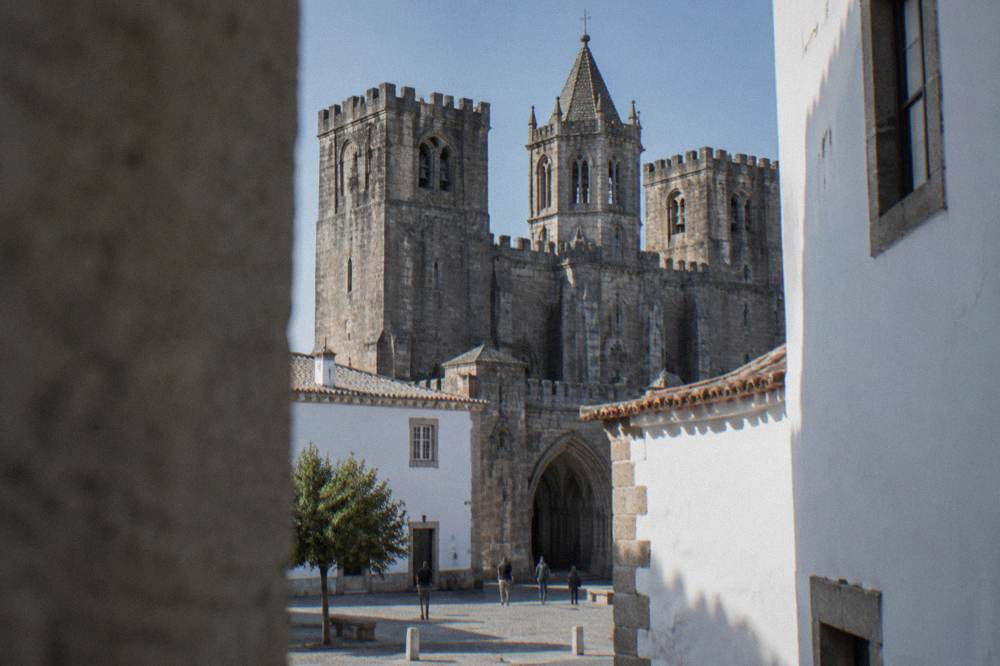
Évora is a small inland Alentejo city of about 53,000 people whose entire monumental core, Roman temple, medieval walls, cathedral, chapel of bones and Renaissance university, sits inside walkable medieval walls, while Porto is a much larger northern port city spread across steep hills above the Douro, where the attraction is the riverfront, the wine cellars of Vila Nova de Gaia and a big-city cultural life. One is a museum you can cross on foot in half an hour; the other is a working Atlantic city with a historic heart.
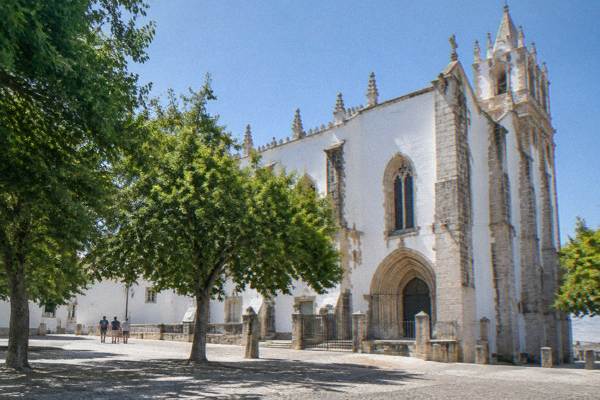
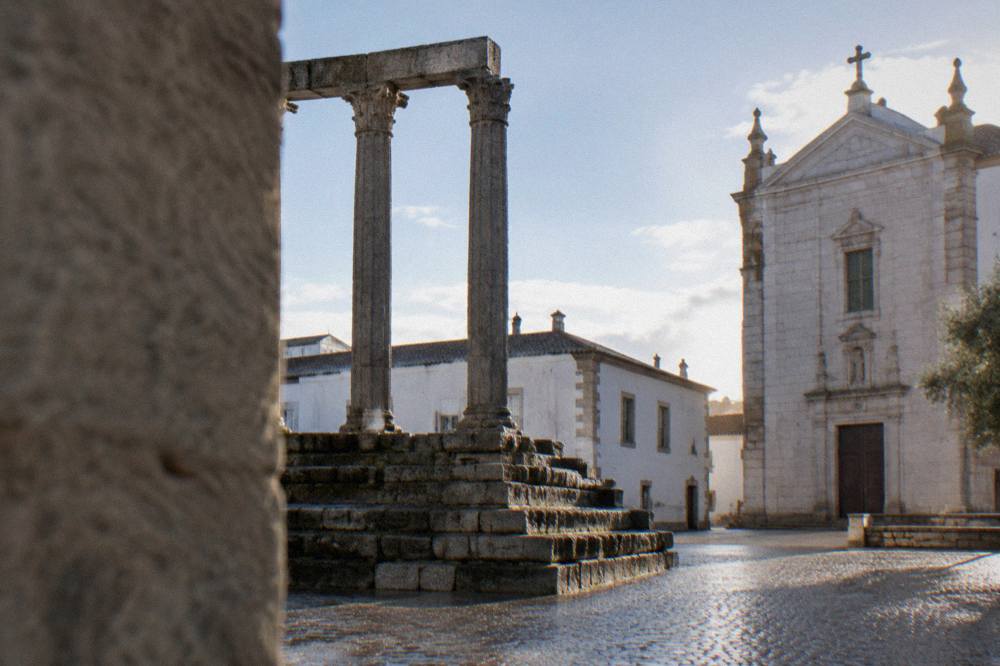
The UNESCO inscription tells the Évora side of the story precisely. The Historic Centre of Évora was inscribed in 1986 under criteria (ii) and (iv), and criterion (iv) calls it the finest example of a city of the golden age of Portugal, preserved because Évora was largely undamaged by the 1755 Lisbon earthquake that destroyed so much of the capital. Moorish rule ended in 1165, the Jesuit University of the Holy Spirit dates from 1553, and the Jesuits were expelled in 1759. That layered history is compressed into a core small enough that the Templo Romano, the Sé, the Praça do Giraldo and the Capela dos Ossos are all within a few minutes of one another.
Porto's character, by contrast, is northern and maritime. It is a city of granite rather than limestone, of steep lanes dropping to a river lined with port wine lodges, and of a scale that means choosing neighbourhoods rather than crossing the whole city on foot. Nothing about Porto is verified in this comparison's research, so no price, hour or ranking is stated for it here; what can be said is that it is bigger, coastal-feeling and built around the Douro rather than around a walled plain.
For a sense of how Évora compares with other southern alternatives, the Évora vs Sintra comparison and the Évora vs Óbidos comparison cover two other common pairings, and the guide to what Évora is known for lists the monuments one by one.
How Do Évora And Porto Compare For A First Visit?
For a first visit to Portugal, Évora works as a concentrated one or two day immersion in monuments, food and wine within a single walled core, reached from Lisbon in about 1 hour 40 to 1 hour 45 on a through Intercidades train, while Porto works as a two to four day city break in its own right, with the port cellars, the river and day trips into the Douro valley as the anchors. The choice is really about how much of Portugal one trip can hold.
Évora's density is its argument. A single day covers the Sé de Évora, whose one complete-visit ticket at 5.00 EUR includes the cathedral, the cloister, the roof terrace and the museum, the Capela dos Ossos at the Igreja de São Francisco with its 7.00 EUR adult museum ticket, the Templo Romano, which is an open-air monument with no ticket listed, and the Praça do Giraldo, a public square. A second day opens the Museu de Évora, closed Mondays, and the megalithic sites outside the city such as the Cromeleque dos Almendres. The guided options below show how much a local guide can add to that core.
Porto asks for more time and gives more city. The port wine lodges across the river, the historic centre's lanes and churches, and the riverside itself fill two days comfortably, and the Douro valley beyond it is a separate excursion. Neither city is a suburb of the other: they are roughly the full length of Portugal apart, and the practical route between them runs through Lisbon or through the interior, a connection covered on the Porto to Évora route page.
A useful framing question is what the trip is for. Monument depth, Roman and megalithic history, Alentejo wine and a slow pace point to Évora. River scenery, port wine, northern city energy and a longer stay point to Porto. The is Évora worth visiting guide works through the Évora side of that decision in detail.
Which Is Easier To Reach From Lisbon?
Évora is the easier and cheaper reach from Lisbon on verified numbers: CP's Intercidades timetable valid since 6 September 2026 lists six through trains a day from Lisboa Oriente to Évora taking about 1 hour 40 to 1 hour 45, at 13.90 EUR second class or 18.50 EUR first class, while no Lisbon to Porto journey detail is verified here, so the Porto side must be checked with the operators. Only the Évora side of this comparison carries verified figures.
The CP timetable gives the full Évora picture. Departures from Lisboa Oriente are at 07:02, 09:02, 09:58, 13:35, 17:02 and 19:02, arriving in Évora at 08:47, 10:45, 11:40, 15:13, 18:41 and 20:46, calling at Entrecampos, Sete Rios, Pragal, Pinhal Novo, Vendas Novas and Casa Branca. These are through trains, so no change at Casa Branca is needed on them. The timetable's weekday remarks should be checked before assuming every service runs every day.
| Lisboa Oriente departure | Évora arrival | Journey shape | Second class fare | First class fare |
|---|---|---|---|---|
| 07:02 | 08:47 | Through Intercidades | 13.90 EUR | 18.50 EUR |
| 09:02 | 10:45 | Through Intercidades | 13.90 EUR | 18.50 EUR |
| 09:58 | 11:40 | Through Intercidades | 13.90 EUR | 18.50 EUR |
| 13:35 | 15:13 | Through Intercidades | 13.90 EUR | 18.50 EUR |
| 17:02 | 18:41 | Through Intercidades | 13.90 EUR | 18.50 EUR |
| 19:02 | 20:46 | Through Intercidades | 13.90 EUR | 18.50 EUR |
That short hop is exactly why Évora works as a day trip or an overnight from a Lisbon base, and the Lisbon to Évora by train guide and the Lisbon to Évora overview cover it in full. Porto from Lisbon is a longer mainline journey, and no fare or time for it is stated here because none was verified; the operator's own timetable is the place to check. The same rule applies to driving: Lisbon is about 130 km from Évora by road, but no drive time or distance for Porto is stated on this page.
For travellers already in Porto, the Porto to Évora guide sets out the route options without inventing a single figure for them.
How Do The Costs Compare?
On the Évora side, the verified costs are low and precise: the main monument tickets run 5.00 EUR at the Sé, 7.00 EUR at the Capela dos Ossos museum and 8 EUR at the Museu de Évora, and the Évora Ticket bundles other city sites at 8 EUR for one day, 10 EUR for two or 12 EUR for three, while no Porto price is verified on this page, so any Porto budget must be built from current listings.
The Évora monument table is the concrete part of that answer. Children up to 12 enter the Sé free with a parent or guardian, and the Évora Ticket is free to age 12 as well. Note what the Évora Ticket does not include: the Sé, the Capela dos Ossos and the Museu de Évora are outside it, so the pass and the individual tickets are complements rather than rivals. A municipal tourist tax applies to stays, with no amount printed here.
| Évora site or pass | Adult price | Concessions | Key condition |
|---|---|---|---|
| Sé de Évora complete visit | 5.00 EUR | Children up to 12 free | One ticket covers cathedral, cloister, roof terrace, museum |
| Capela dos Ossos museum ticket | 7.00 EUR | Youth to 25 and seniors over 65 at 5.00 EUR, family 15.00 EUR | Covers all museum areas of the Igreja de São Francisco |
| Museu de Évora | 8 EUR | Youth 13-24, seniors over 65, family ticket 50% off | Closed Mondays; free Sundays and holidays for residents in Portugal |
| Évora Ticket, one day | 8 EUR | Free to age 12 | Does not include the Sé, the Capela dos Ossos or the Museu de Évora |
| Évora Ticket, two days | 10 EUR | Free to age 12 | Same network of sites |
| Évora Ticket, three days | 12 EUR | Free to age 12 | Same network of sites |
Guided touring in Évora also spans a wide and honest range, in dollars on the tour listings. The flexible historic-centre walking tour starts at $13.51 per person, the small-group cultural walk with the Chapel of Bones at $77.66, the private walking tour with cathedral and chapel tickets at $111.42, and the sidecar tour with wine tasting at $61.90. Those are listing prices, and the Évora cost and budget guide puts the whole spending picture together.
Porto's costs cannot be tabled here honestly, because this build verified nothing for Porto. What can be said in general terms is that Porto is a major city with major-city pricing in its most visited riverside strips and cheaper quarters away from them, and that a Porto budget should be built from current listings rather than from any number carried over from Évora or from memory.
What Is The Weather Like In Évora Compared With Porto?
Évora is inland and hot in summer: IPMA's 1991 to 2020 normals for the Évora station show a July mean maximum of 33.3 C and an August mean maximum of 33.5 C, with 31.9 days a year reaching 35 C or more and a record of 45.4 C set on 4 August 2018, while Porto, on the Atlantic in the north, is generally described as milder and more humid in general terms, with no verified Porto figure stated here.
The Évora numbers deserve their own table, because they drive the whole seasonal planning question. The station is number 558, at 38.5365N, 7.8880W, altitude 247.6 m, and every figure below is the 1991 to 2020 average. The wider set of guides lives on Évora Travel Guide.
| Month | Mean temperature | Mean maximum | Mean minimum | Rainfall | Days at 35 C or more |
|---|---|---|---|---|---|
| April | 14.6 C | 20.7 C | 8.5 C | 62.1 mm | 0.0 |
| May | 18.0 C | 25.0 C | 10.9 C | 46.6 mm | 0.7 |
| June | 22.0 C | 30.2 C | 13.8 C | 10.6 mm | 5.6 |
| July | 24.5 C | 33.3 C | 15.6 C | 2.7 mm | 11.5 |
| August | 24.7 C | 33.5 C | 16.0 C | 6.0 mm | 10.9 |
| September | 22.1 C | 29.5 C | 14.6 C | 33.9 mm | 3.1 |
| October | 18.2 C | 24.1 C | 12.3 C | 81.5 mm | 0.1 |
The planning consequence is direct. Évora's summer heat is a dry, plain-land heat with almost no rain in July and August, so spring and autumn are the comfortable seasons for walking the walled core and the megalithic sites, and the best time to visit Évora guide and the Évora weather guide work the calendar through month by month. Porto's Atlantic position gives it a different, milder and damper pattern in general terms, though again no Porto figure is verified here, and any traveller sensitive to heat should weigh Évora's 33 C summer averages against that general difference rather than against an invented Porto number.
Évora Vs Porto For Food And Wine?
Évora is the table of the Alentejo: regional restaurants serve pork, bread soups, cheeses and Alentejo wines inside and just outside the walls, the surrounding region holds the Cartuxa winery and the Reguengos de Monsaraz wine route, and guided wine and cork tours from the city start at $50.65 per person, while Porto's food and drink identity is built around port wine cellars, northern seafood and francesinha-style hearty cooking, described here only in general terms because no Porto food detail is verified.
The Évora side can be made concrete. The Alentejo wine and cork tour from Évora runs from $78.78 per person, the megalithic and cork forest combination from $50.65, the full-day wine tour around Évora from $321.11 with lunch and transport, and the evening food and wine crawl from $83.28. Those are listing prices in dollars, and each attaches to a real product card. The Évora food guide, the Alentejo food overview and the Évora restaurants guide cover what to eat in the city itself, without any restaurant recommendation being printed on this page.
| Évora food or wine experience | Kind | Listing price | Length |
|---|---|---|---|
| Megalithic and cork forest guided tour | Cork and wine | From $50.65 per person | 4 hours |
| Alentejo wine and cork from Évora | Wine | From $78.78 per person | 4 hours |
| Evening food and wine crawl | Food | From $83.28 per person | 3 hours |
| 1 Day wine tour around Évora | Wine | From $321.11 per person | Full day |
| Cork factory and cork farm with lunch | Cork and wine | From $112.55 per person | 8 hours |
Porto's pull in this category is real but different in kind. Port wine lodges line the south bank of the Douro, tasting rooms are the city's signature experience, and the cooking of the north is heavier and more Atlantic than the Alentejo's land-based table. A wine-motivated traveller chooses between the cellars of a great port house and the estate-and-cork landscape of the Alentejo, and both are good answers to different appetites.
Which Suits A Short Trip Or A Day Trip?
Évora is built for short trips: the whole monumental core is walkable, the first through train from Lisboa Oriente arrives at 08:47 and the last return departure window fits a full day, and the one-day Évora Ticket at 8 EUR covers a network of city sites, while Porto is better treated as a multi-day destination than a day trip, since its attractions spread across a river, two banks and steep hills.
The day-trip arithmetic for Évora is straightforward on the verified timetable. A 07:02 departure from Lisboa Oriente lands at 08:47, the morning covers the Sé, the Templo Romano and the Praça do Giraldo, the afternoon covers the Capela dos Ossos and a late lunch, and the 17:02 or 19:02 trains return to the capital. The can a day trip from Lisbon to Évora work question is answered in full on the Lisbon day-trip pages, and the one day in Évora itinerary sequences the stops hour by hour.
A guided day makes the train arithmetic easier still, because a private walking tour that includes the cathedral and the Chapel of Bones compresses the two ticketed highlights into one linked visit with the story between them. For travellers who want the monuments explained rather than just seen, that is the single highest-value upgrade to an Évora day.
Porto as a day trip is a different proposition. The distance from Lisbon is far greater than Évora's, the city's sights are not concentrated in one walkable core, and the honest advice is to give it two nights at least. Travellers trying to squeeze both cities into one short trip usually do better picking Évora for the short leg and saving Porto for its own visit.
Évora Vs Porto With Kids Or For A Slow Pace?
Évora suits a slow pace and family walking well: the core is flat enough between walls, the Sé is free to children up to 12, the Évora Ticket is free to the same age, and the megalithic sites and cork landscapes give children an outdoor counterpoint to churches, while Porto's steep hills and bigger-city spread make it more demanding on small legs, a general characterisation only since no Porto family detail is verified.
The child pricing at Évora's main sites is verified and generous. At the Sé, children up to 12 enter free with a parent or guardian on the 5.00 EUR complete-visit ticket. At the Capela dos Ossos museum, the family ticket is 15.00 EUR for two adults plus youths, with youth to 25 and seniors over 65 at 5.00 EUR. The Museu de Évora is free to age 12, and the Évora Ticket is free to 12 as well. The Évora with kids guide builds a full family day around those numbers.
For slow travellers, Évora's scale is the point. Two unhurried days inside the walls, a morning at the Cromeleque dos Almendres, a long Alentejo lunch, and an evening glass of local wine is a complete and restful itinerary, and the two days in Évora guide paces it out. The where to stay in Évora guide covers the neighbourhoods inside and just outside the walls.
The sidecar option deserves a mention for slow or family-adjacent trips: a three-hour medieval tour of Évora by sidecar with a wine tasting, from $61.90 per person, covers the historic streets without the walking, and pairs the ride with a tasting. It is one of the more unusual ways to see a compact city whose lanes reward being looked at slowly.
How Do The Two Cities Compare At A Glance?
The honest at-a-glance comparison keeps numbers only on the Évora side: a UNESCO core inscribed in 1986 under criteria (ii) and (iv), a through-train time of about 1 hour 40 to 1 hour 45 from Lisboa Oriente at 13.90 EUR second class, main monument tickets from 5.00 to 8 EUR, and a hot dry summer with July and August mean maxima above 33 C, while Porto enters the table only as character: larger, northern, riverside and port-wine centred.
| Question | Évora, verified | Porto, general character only |
|---|---|---|
| Scale | Municipality of about 53,000; walled core walkable end to end | Much larger northern city spread over steep hills |
| Signature sights | Templo Romano, Sé, Capela dos Ossos, Praça do Giraldo, Cromeleque dos Almendres nearby | Douro riverfront, port wine lodges, historic centre |
| Heritage status | UNESCO Historic Centre inscribed 1986, criteria (ii) and (iv) | Historic riverside city of international standing |
| Reach from Lisbon | About 1 hour 40 to 1 hour 45 by through Intercidades train, 13.90 EUR second class | Longer mainline journey; check the operator's timetable |
| Summer heat | July mean maximum 33.3 C, August 33.5 C, 1991 to 2020 normals | Milder Atlantic pattern in general terms |
| Best trip shape | One to two days, or a day trip from Lisbon | Two to four days as a destination |
| Wine identity | Alentejo wines, cork estates, Cartuxa and Reguengos routes | Port wine cellars across the river |
That table is the whole comparison in one screen, and its asymmetry is deliberate.
How To Choose Between Évora And Porto?
Choose Évora if the trip is short, Lisbon-based or history-dense: a walled UNESCO core, Roman and megalithic sites, Alentejo food and wine, and a train connection of about 1 hour 40 from the capital at 13.90 EUR second class. Choose Porto for a longer northern city break built around the Douro, the port cellars and big-city energy, checking all Porto details with the operators. Many Portugal itineraries simply include both.
A week split between Lisbon, Évora and Porto is a classic shape, and the Portugal itinerary with Évora guide shows how the pieces fit. A shorter trip that must choose should ask three questions. How many days are there? Évora wins under three. Is the priority monuments or river-and-wine city life? Monuments point to Évora. Is the trip anchored in Lisbon? Évora is the natural inland leg; Porto is a separate journey north.
Whichever way the choice goes, Évora rewards the guided hour. The tales and legends walking tour, from $52.90 per person, runs two and a half hours through the historic core telling the city's stranger stories, and it pairs well with an evening in the things to do in Évora list rather than competing with it.
Common Questions About Évora Vs Porto
Is Évora or Porto better for a short trip from Lisbon?
Évora is the verified short option: about 1 hour 40 to 1 hour 45 from Lisboa Oriente on a through Intercidades train at 13.90 EUR second class. Porto is a longer journey north and suits a multi-day stay rather than a short hop, with its own details to be checked with the operators.
Can you visit Évora and Porto on the same trip?
Yes, and many travellers do. The two cities sit at opposite ends of Portugal, so the usual shape is Lisbon and Évora first, then travel north to Porto, or the reverse. The Porto to Évora route page covers the connections without inventing times for them.
Is Évora cheaper than Porto?
On verified Évora numbers, the main monument tickets run 5.00 EUR at the Sé, 7.00 EUR at the Capela dos Ossos museum and 8 EUR at the Museu de Évora, and the Évora Ticket starts at 8 EUR for one day. No Porto price is verified here, so build the Porto side of the budget from current listings.
Which city is hotter in summer?
Évora is hot and dry: IPMA's 1991 to 2020 normals for the Évora station show a July mean maximum of 33.3 C and an August mean maximum of 33.5 C, with 31.9 days a year at 35 C or more. Porto, on the Atlantic in the north, is generally milder, though no verified Porto figure is stated here.
Is Évora a UNESCO site like Porto's historic centre?
The Historic Centre of Évora was inscribed by UNESCO in 1986 under criteria (ii) and (iv), with criterion (iv) calling it the finest example of a city of the golden age of Portugal, preserved because Évora was largely spared the 1755 earthquake.
Which is better for wine, Évora or Porto?
They answer different appetites. Évora is the gateway to Alentejo wine estates, cork landscapes and the Reguengos de Monsaraz route, with wine tours from the city starting at $50.65 per person. Porto is the home of the port wine cellars across the Douro.
The choice between Évora and Porto is really a choice between a small walled city of golden stone, reached in under two hours from Lisbon and dense with Roman, medieval and golden-age monuments, and a great northern port built on the Douro and its wine. Both belong on a serious Portugal itinerary, and the traveller with a week does not have to choose at all.