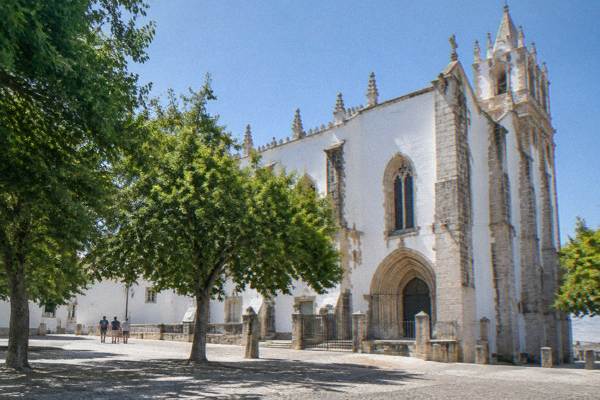
Évora Vs Obidos
Évora is the inland capital of the Alentejo, a UNESCO-listed city of Roman temples and bone chapels about 130 km from Lisbon, while Óbidos is a small walled village built for a half-day of wandering. This comparison sets out what the verified Évora facts say and where each place suits a different kind of trip.
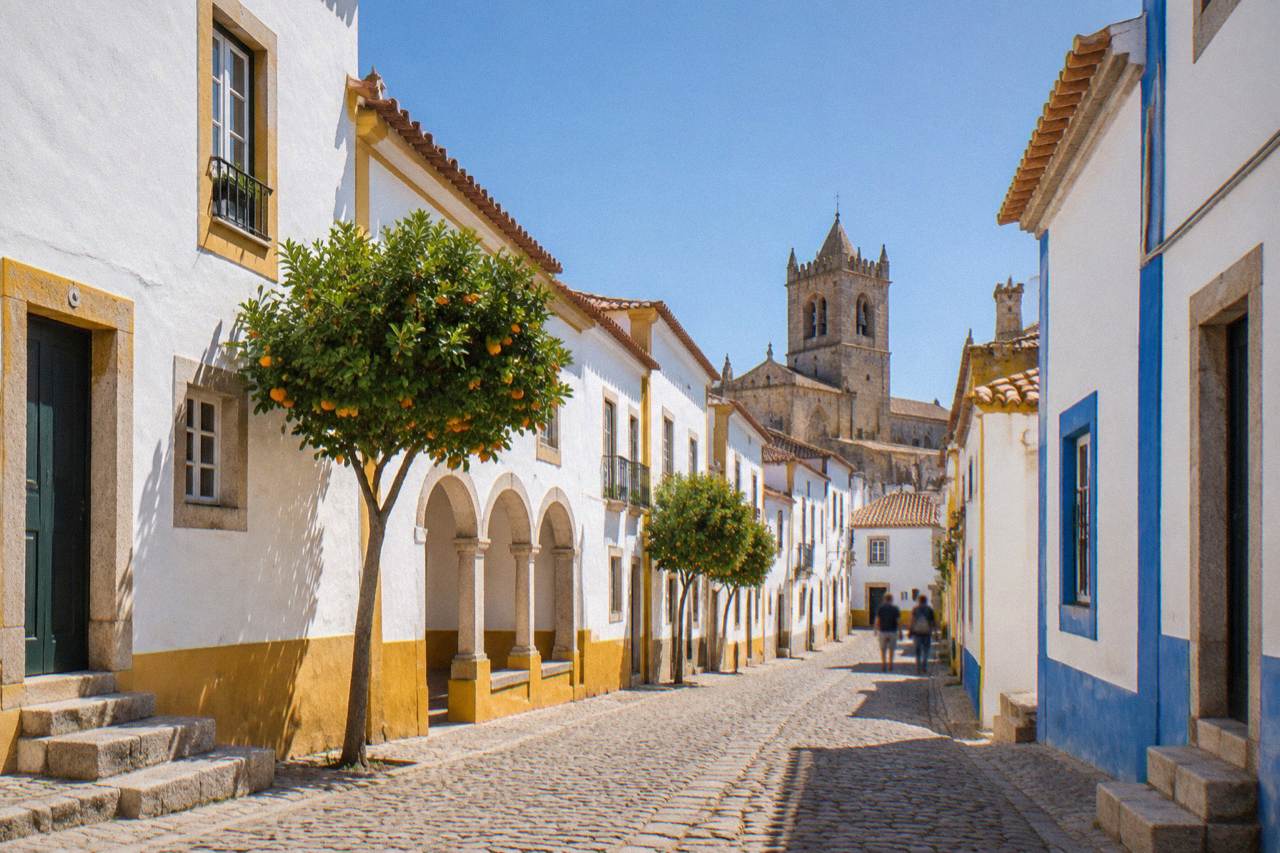
Short answer
Choose Évora for a full day or two of monuments, food and Alentejo wine country, reached by a direct Intercidades train from Lisbon in about 1 hour 40; choose Óbidos for a shorter, slower stroll through walled lanes. Both can be combined in one Portugal itinerary.
Évora, Portugal, is the capital of the Alentejo and of the Évora district, an inland city on the plain whose historic centre was inscribed by UNESCO in 1986 under criteria (ii) and (iv). Óbidos is a different animal altogether: a small walled village to the north of Lisbon, built around a castle keep and a single main street, and best known as a short scenic stop rather than a base. Travellers building a Portugal itinerary often ask which of the two deserves the limited days they have, and the honest answer is that the question is really about trip length and appetite. This comparison lays out what the verified sources say about Évora, describes Óbidos only in the general terms this site can stand behind, and leaves the choice where it belongs, with the reader.
Évora Vs Obidos: Which Suits Your Trip?
Évora suits a trip of one full day or more, with a cathedral, a bone chapel, a Roman temple, a museum and surrounding wine and megalith country that rewards a second day; Óbidos suits a half-day stroll through walled lanes and shrinks quickly once the walls have been walked. Évora is the Alentejo's capital, about 130 km from Lisbon by road, and its historic centre carries UNESCO World Heritage status, inscribed in 1986. Óbidos is a walled village of much smaller scale.
The scale difference is the first thing to get straight. Évora's protected centre holds a working cathedral with a roof terrace, the Igreja de São Francisco with its Capela dos Ossos, a Roman temple standing in an open square, a national museum in the former Archbishop's Palace, and a university college whose Jesuit foundation dates from 1553. Óbidos, by contrast, is essentially one long climbed street inside walls, with a castle at the top. That is not a criticism. A walled village of that kind delivers a concentrated medieval atmosphere in two or three hours, and many Lisbon itineraries use it exactly that way.
| Évora | Óbidos | |
|---|---|---|
| Setting | Inland city on the Alentejo plain, no coast | Walled hill village in the centre-west of Portugal |
| UNESCO status | Historic Centre inscribed 1986, criteria (ii) and (iv) | No World Heritage inscription |
| Signature sights | Sé de Évora, Capela dos Ossos, Templo Romano, Museu de Évora | Castle keep, walls and medieval lanes |
| Natural trip length | One to three days | Half a day to a full day |
| Surrounding region | Wine, cork and megalith country, towns like Estremoz and Monsaraz | Farmland and small towns between Lisbon and the Atlantic coast |
The surrounding region matters as much as the towns themselves. From Évora, day trips reach the Almendres cromlech, the marble town of Vila Viçosa about 60 km away, Monsaraz about 40 to 45 km away, and Estremoz about 45 km away, all rounded distances quoted as approximations. From Óbidos, the natural extensions run toward the Atlantic coast rather than inland. A traveller who wants plains, cork oaks, megaliths and wine cellars is choosing the Alentejo, and Évora is its capital. A traveller who wants walls, a castle and a quick return to Lisbon is choosing the village. For a deeper look at how the Alentejo capital stacks up against a different kind of day trip, see Évora Vs Sintra, and for the broader question of whether the city repays the journey, Is Évora Worth Visiting covers it in full.
How Do You Get To Évora And Óbidos From Lisbon?
Lisbon is the gateway for both, and Évora has the verified rail link: CP's Intercidades timetable, valid since 6 September 2026, lists six through trains a day from Lisboa Oriente to Évora, taking about 1 hour 40 to 1 hour 45, with a second-class fare of 13.90 EUR and first class at 18.50 EUR. Departures from Oriente run at 07:02, 09:02, 09:58, 13:35, 17:02 and 19:02. No comparable verified timetable or fare for Óbidos appears on this site.
The train is the reason Évora works as an independent base. The six through services arrive at 08:47, 10:45, 11:40, 15:13, 18:41 and 20:46, which puts a visitor in the city centre early enough for a full first day. The CP fare table prices the Lisboa Oriente to Évora journey at 13.90 EUR in second class and 18.50 EUR in first, figures that attach to that exact journey and that journey only. The timetable's weekday remarks should be checked in the CP PDF before locking a plan, because the facts here do not license the word "daily". For the Óbidos leg, check the operator's own pages before planning, since no verified timetable or fare for that route exists here.
| Depart Lisboa Oriente | Arrive Évora | Journey time | Fare |
|---|---|---|---|
| 07:02 | 08:47 | about 1 h 40 to 1 h 45 | 13.90 EUR second class, 18.50 EUR first |
| 09:02 | 10:45 | about 1 h 40 to 1 h 45 | 13.90 EUR second class, 18.50 EUR first |
| 09:58 | 11:40 | about 1 h 40 to 1 h 45 | 13.90 EUR second class, 18.50 EUR first |
| 13:35 | 15:13 | about 1 h 40 to 1 h 45 | 13.90 EUR second class, 18.50 EUR first |
| 17:02 | 18:41 | about 1 h 40 to 1 h 45 | 13.90 EUR second class, 18.50 EUR first |
| 19:02 | 20:46 | about 1 h 40 to 1 h 45 | 13.90 EUR second class, 18.50 EUR first |
For the road option, Lisbon To Évora By Car and Évora Parking cover the drive and where to leave the car inside or near the walls, while Lisbon To Évora By Train goes deeper on rail practicalities. Óbidos also sits on the rail network north of Lisbon, but this site verified no times or fares for that route, so the honest advice is to check the operator's timetable directly. What can be said is directional: Évora lies east-southeast of the capital into the Alentejo plain, Óbidos lies north, so combining both from Lisbon means two separate legs rather than one line.
Once in Évora, the historic centre is compact enough that almost everything in this comparison's monument list sits within a short walk of Praça do Giraldo, the main square. The tourist office at Praça do Giraldo 73 publishes winter hours of 9:00 to 18:00 on weekdays and 10:00 to 14:00 plus 15:00 to 18:00 at weekends, hours the municipal page itself labels as indicative, so treat them as a planning guide rather than a promise.
What Do The Official Évora Tickets Cost?
The Sé de Évora complete-visit ticket, covering cathedral, cloister, roof terrace and museum, costs 5.00 EUR with children up to 12 free; the Capela dos Ossos museum ticket costs 7.00 EUR for an adult, 5.00 EUR for youth to 25 and seniors over 65, and 15.00 EUR for a family; the Museu de Évora charges 8 EUR; and the Évora Ticket pass runs 8 EUR for one day, 10 EUR for two and 12 EUR for three. None of these prices carries over to Óbidos.
These are official-site prices, quoted in euros because that is how the institutions publish them. The Sé's single ticket is the only tier on the cathedral's page; there is no cheaper roof-only option. The Capela dos Ossos ticket covers all the museum areas of the Igreja de São Francisco complex, and the church notes on its own page that it is a private religious entity and does not apply State Museum discounts. The Museu de Évora, housed in the former Archbishop's Palace and officially founded in 1915, offers 50% off for youth aged 13 to 24, seniors over 65 and families, with free entry on Sundays and holidays for residents in Portugal.
| Site | Adult price | Concessions | Hours (official) |
|---|---|---|---|
| Sé de Évora, complete visit | 5.00 EUR | Children up to 12 free | 9:00-17:00 daily, closed 24 Dec afternoon, 25 Dec, 1 Jan |
| Capela dos Ossos, Igreja de São Francisco | 7.00 EUR | Youth to 25 5.00 EUR, seniors over 65 5.00 EUR, family 15.00 EUR | Summer 9:00-18:30, winter 9:00-17:00, closed 1 Jan, Easter Sunday, 24 Dec afternoon, 25 Dec |
| Museu de Évora | 8 EUR | Youth 13-24, seniors over 65, family 50% off, free to age 12 | Tue-Sun 9:30-13:00 and 14:00-17:30, closed Mondays |
| Évora Ticket | 8 EUR one day, 10 EUR two days, 12 EUR three days | Free to age 12 | Validity measured in days from first use |
One trap worth flagging: the Évora Ticket does not include the Sé, the Capela dos Ossos or the Museu de Évora, even though its 8 EUR one-day price sits at exactly the figure the Museu charges. The pass covers the Cidade-Museu network's other sites, so read its own network list before assuming it bundles the headline monuments. For a fuller breakdown, Évora Tickets And Passes and Évora Cost And Budget carry the detail.
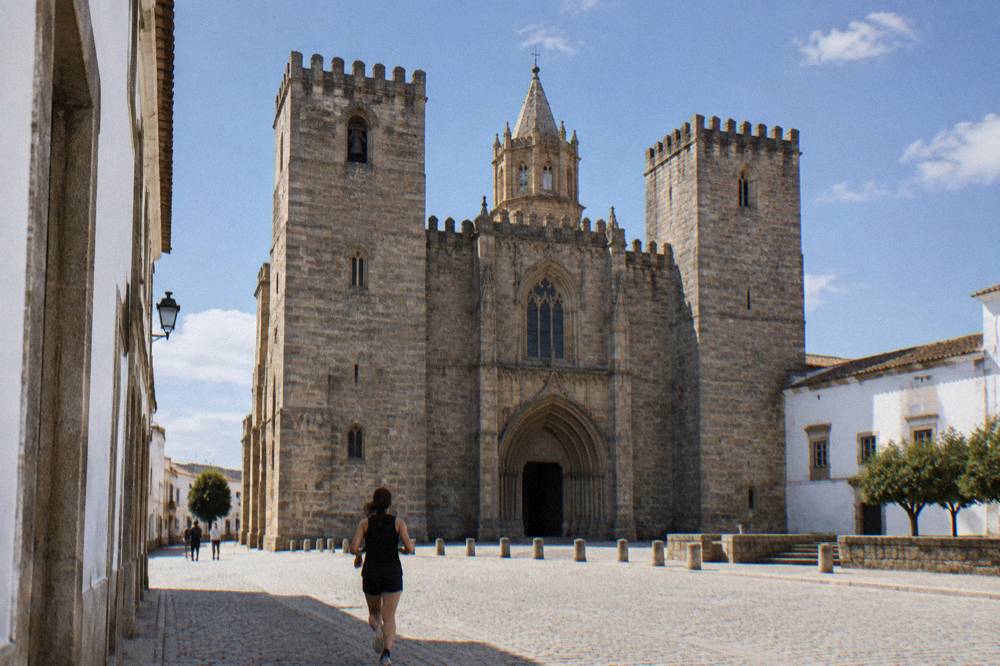
A private guide changes the arithmetic on these tickets. The Évora Private Walking Tour with Cathedral & Chapel of Bones, from $113.53 per person and rated 5 from 256 reviews on the operator's live listing, folds the two headline monuments into one guided walk, which suits a first visit where the pacing matters more than the last few euros. The same logic applies to the small-group cultural walking tour that also ends at the Chapel of Bones, from $77.66 per person with a 4.9 rating from 141 reviews.
What Does Each Town Feel Like On The Ground?
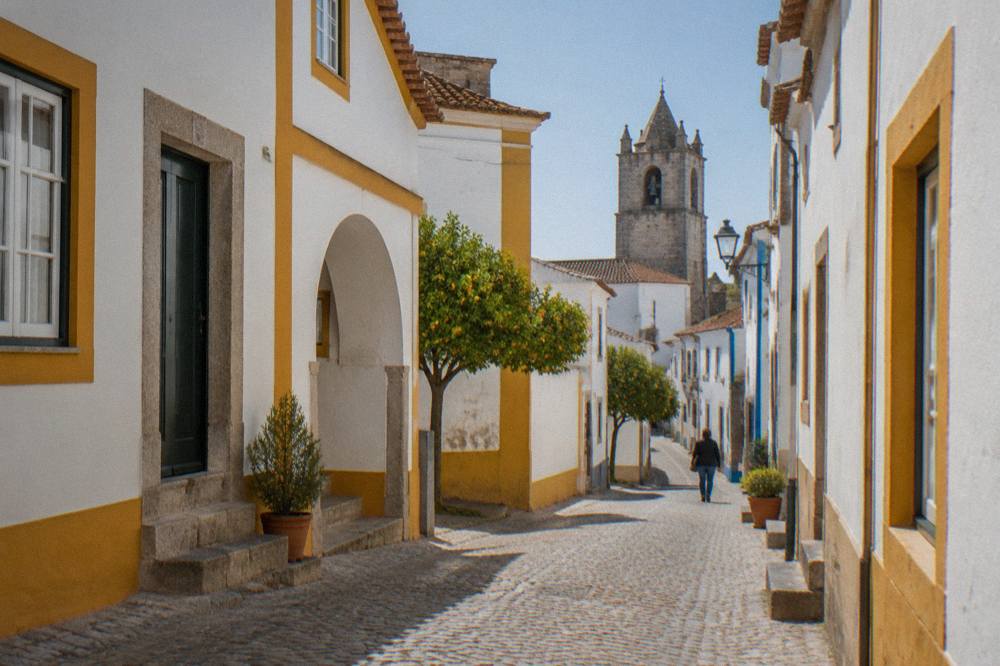
Évora feels like a lived-in regional capital: a university city of about 53,000 people in its municipality, where golden stone streets hold butchers, bookshops, student bars and a busy morning market life alongside the monuments; Óbidos feels like a preserved stage set, a walled lane of whitewashed houses and flowers built for visitors to walk up and down. The UNESCO citation calls Évora's centre the finest example of a city of the golden age of Portugal after the 1755 Lisbon earthquake, which Évora was largely spared.
That UNESCO wording, from criterion (iv) of the 1986 inscription, is the sharpest single sentence in this whole comparison. It explains why Évora's centre reads as complete: Moorish rule ended here in 1165, the Jesuit University of the Holy Spirit dates from 1553, the Jesuits were expelled in 1759, and the city's golden-age fabric survived. Walking from the Templo Romano, whose municipal page says it was probably dedicated to the imperial cult rather than to Diana and whose walls were freed in 1870, to the Praça do Giraldo, the layers sit visibly on top of each other.
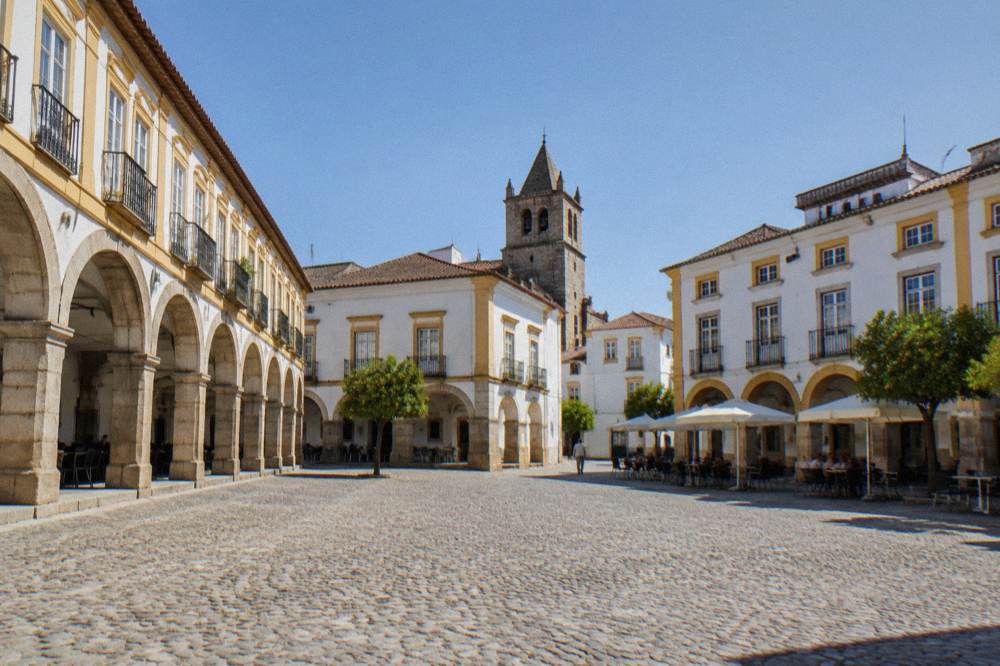
Óbidos delivers atmosphere of a different, more concentrated kind. A walled village of one principal street, it trades everyday life for a distilled medieval impression, and that trade is exactly what some travellers want. What it cannot offer is the depth: Évora holds a full day of distinct monuments, an evening food and wine scene, and a surrounding region of cork forests and megaliths. The Évora Evening Food & Wine Crawl, from $83.28 per person and rated 4.6 from 19 reviews, exists because the city has enough taverns and cellars to sustain one, a claim no village of Óbidos's scale could support.
The Templo Romano's own history makes the point about lived layers: the municipal page records that it was reused as a municipal butcher's shop before its walls were freed in 1870. A monument that has been a temple, a butcher's and a landmark in turn belongs to a working city. For more on the city's character, What Is Évora Known For and the Évora Food Guide cover the ground in detail.
How Hot Does Évora Get Compared With The Coast?
IPMA's 1991 to 2020 climate normals for the Évora station (number 558) show a July mean maximum of 33.3 C and an August mean maximum of 33.5 C, with 31.9 days a year reaching 35 C or more and a station record of 45.4 C set on 4 August 2018; Évora is inland, roughly 90 km from the Atlantic, so it has no sea to moderate its summers, and any coastal comparison with Óbidos's side of Portugal should be made in those general terms only.
The numbers deserve their window label. These are 30-year averages from the IPMA normals, not a forecast, and they describe the Alentejo plain honestly: hot, dry summers and mild, damper winters. July averages just 2.7 mm of rain and 0.6 days with 1 mm or more, while November carries 86.0 mm over 8.8 rain days. The record low of -4.2 C, recorded on 4 December 1998 and again on 23 January 2000, is a reminder that the plain swings both ways. The full index of guides sits on Évora Travel Guide.
| Month (1991-2020 normals, station Évora 558) | Mean max | Mean min | Rainfall | Days 30 C or more |
|---|---|---|---|---|
| January | 14.1 C | 4.5 C | 68.6 mm | 0.0 |
| April | 20.7 C | 8.5 C | 62.1 mm | 0.3 |
| July | 33.3 C | 15.6 C | 2.7 mm | 23.7 |
| August | 33.5 C | 16.0 C | 6.0 mm | 25.0 |
| October | 24.1 C | 12.3 C | 81.5 mm | 2.9 |
For trip timing, the practical reading is that spring and autumn sit in the comfortable band and high summer demands a siesta rhythm, with mornings at the monuments and the middle of the day indoors. Best Time To Visit Évora and Évora Weather work through the months in full. No comparable verified normals exist here for Óbidos, so no temperature, rainfall or sunshine figure for that side of the country appears on this page, and none should be inferred from Évora's.
Which Guided Tours Work In Évora?
The strongest guided options in Évora are the private walking tour with cathedral and Chapel of Bones at $113.53 per person, rated 5 from 256 reviews, the Medieval Tour of Évora on a sidecar with wine tasting at $61.90 per person, rated 4.9 from 16 reviews, and the Personal & Flexible Walking Tour in the Historic Center at $13.51 per person, rated 4.8 from 105 reviews; all three start in Évora, and equivalent guided depth does not exist in a village of Óbidos's scale.
The spread matters. At the budget end, the flexible historic-centre walk covers the core streets for less than the price of a museum ticket, and at the premium end the private tour bundles the two paid monuments with a guide's commentary. The sidecar tour is the unusual one: a three-hour ride through the medieval streets with a wine tasting, from $61.90 per person, rated 4.9 from 16 reviews. There is also a genuinely free option, The Essential Free Tour of Évora on GuruWalk, a tip-based walk rated 4.93 from 774 reviews over two hours, where the tip sets the price rather than a ticket.
| Tour | Duration | Price | Rating |
|---|---|---|---|
| Évora Private Walking Tour with Cathedral & Chapel of Bones | 2.5 hours | from $113.53 per person | 5 from 256 reviews |
| Medieval Tour of Évora on a Sidecar & Wine Tasting | 3 hours | from $61.90 per person | 4.9 from 16 reviews |
| Évora: Personal & Flexible Walking Tour in Historic Center | 3 hours | from $13.51 per person | 4.8 from 105 reviews |
| Évora: Small-Group Cultural Walking Tour & Chapel of Bones | 2 hours | from $77.66 per person | 4.9 from 141 reviews |
| The Essential Free Tour of Évora (GuruWalk) | 2 hours | free, tip based | 4.93 from 774 reviews |
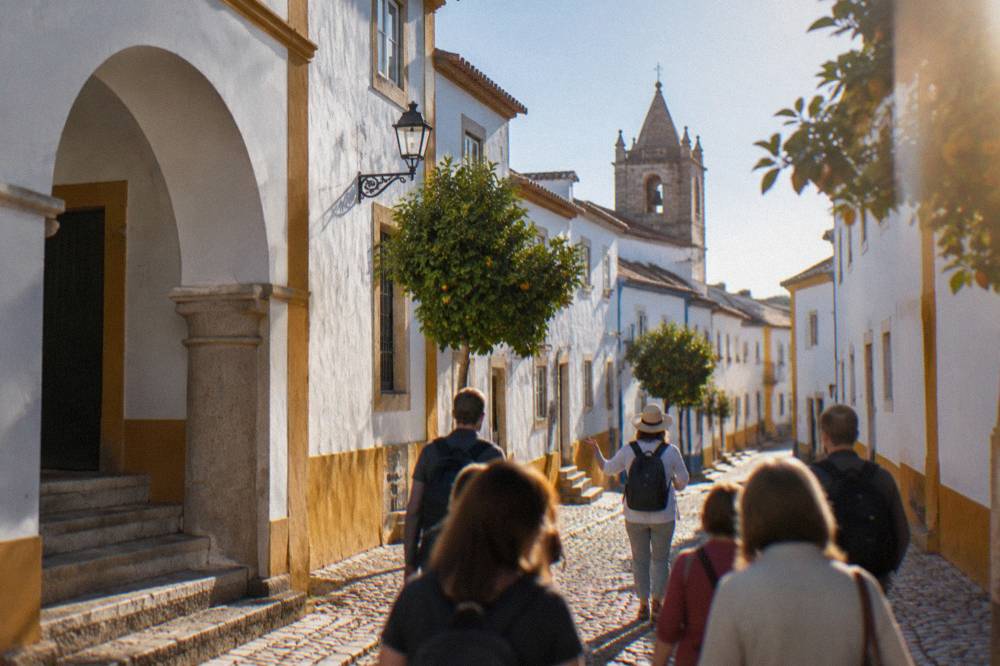
The private best-of walk deserves its place at the top of that table. It suits the traveller whose Évora day is the centrepiece of the trip rather than a stop on a route, because a private guide can pace the cathedral, the cloister and the bone chapel around the midday heat and the opening hours above. The full range of options, including the free GuruWalk walks led by named gurus, is laid out in Évora Tours and Évora Walking Tour.
Can You Combine Évora And Óbidos In One Trip?
Yes, and the cleanest shape is Lisbon as the hub, with Óbidos as a shorter stop on a coastal-ward leg and Évora as a full one- or two-day inland stay reached on the six-train Intercidades service; the two towns lie in opposite directions from the capital, so the plan works best as two separate outings rather than one loop, and Évora rewards the overnight because its monuments, museum hours and evening food scene fill more than a day.
The geometry drives the advice. Lisbon sits at the corner, Évora east-southeast into the Alentejo, Óbidos to the north. A traveller with four nights could give Lisbon two, take the morning train to Évora, overnight there for the museums and an evening crawl, return the next evening, and slot Óbidos into a coastal day on another leg. A traveller with only two or three nights total should pick one, and the choice falls back on the earlier sections: monument depth and Alentejo country versus walls and a castle.
| Itinerary block | Where | What it holds |
|---|---|---|
| Day 1, morning | Évora | Sé complete visit, cloister and roof terrace, Templo Romano |
| Day 1, afternoon | Évora | Capela dos Ossos and the Igreja de São Francisco museum areas |
| Day 2, morning | Évora region | Almendres cromlech and the interpretation centre at Guadalupe |
| Day 2, afternoon | Évora region | Monsaraz, about 40 to 45 km away, or wine country toward Estremoz |
| Separate leg | Óbidos | Walls, castle keep and the main lane, as a half-day stop |
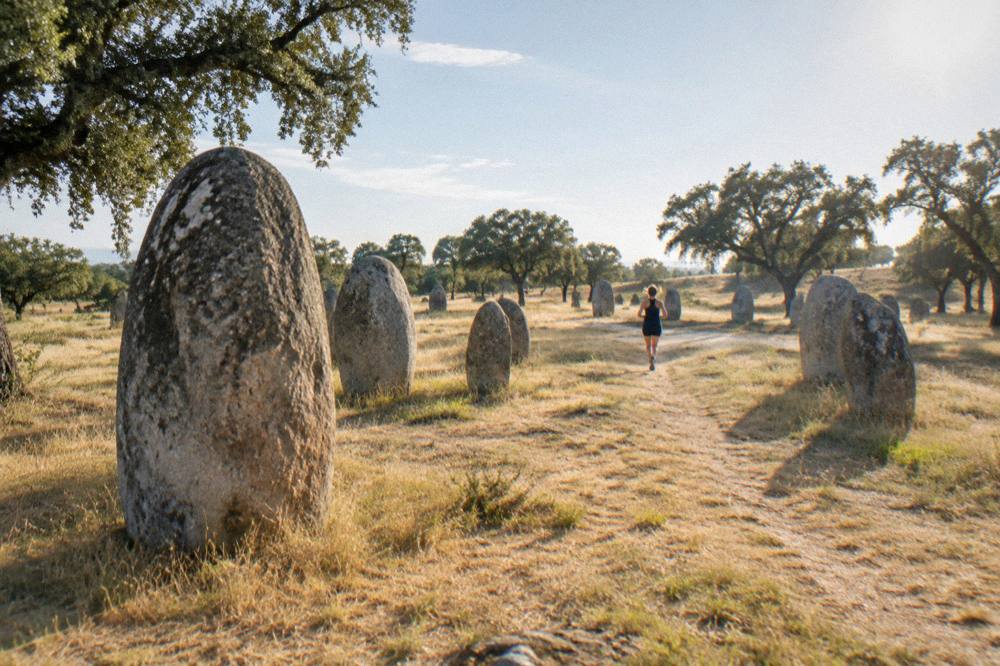
For sleeping arrangements, Where To Stay In Évora maps the neighbourhoods inside and outside the walls, and the Two Days In Évora itinerary builds the overnight case in full. The Almendres Interpretation Centre in the village of Guadalupe publishes summer hours of 10:00 to 18:00 from 1 May to 31 October and winter hours of 10:00 to 17:00 from 1 November to 30 April, which anchors a megalith morning neatly, and the municipal partner page describes the route as the national road toward Lisbon with a turn-off after 8 km.
How Do Évora And Óbidos Compare For A Day Trip From Lisbon?
For a day trip from Lisbon, Évora is the defensible full-day choice on verified numbers: a direct Intercidades train takes about 1 hour 40 each way, costs 13.90 EUR in second class, and delivers a cathedral, a bone chapel, a Roman temple and a national museum inside a walkable centre; Óbidos works as a shorter stop, and this site holds no verified times, fares or entry figures for it, so its day-trip case rests on character rather than data.
The morning train out of Oriente at 07:02 lands in Évora at 08:47, which is early enough for the Sé at its 9:00 opening and leaves a full day before the 17:02 or 19:02 return. That is the arithmetic that makes the Alentejo capital a genuine day trip rather than a dash, and it is why the Évora Day Trip From Lisbon guide and the One Day In Évora itinerary both assume the full span. A short private walk such as the flexible historic-centre tour, from $13.51 per person, slots into the first morning to orient the centre before the paid monuments.
Óbidos's day-trip case is real but rests on different logic. A walled village of its size can be seen comfortably in half a day, which makes it a natural pairing with something else on its side of the country rather than a destination in itself. The honest framing for a reader choosing between the two on a single spare day: Évora offers more verified substance per hour travelled, Óbidos offers a more compressed medieval impression, and neither statement crowns a winner as fact.
What About Food, Wine And The Alentejo Side?
Évora sits in the middle of Alentejo wine and cork country, and its food scene runs on regional staples, tavern dining and a guided evening food and wine crawl at $83.28 per person, rated 4.6 from 19 reviews; the surrounding region adds wine tours from $78.78 per person and a full-day wine option at $321.11 per person, figures that attach to specific tours on their live listings, while Óbidos's food offer is on a village scale and carries no verified figures here.
The Alentejo is the reason many travellers extend an Évora stay beyond the monuments. The Alentejo Wine and Cork tour from Évora runs from $78.78 per person with a 4.7 rating from 24 reviews, and the full-day wine tour around Évora, with lunch and transport, starts at $321.11 per person on its listing. Cork is the other thread: the Megalithic and Cork Forest guided tour from Évora, from $50.65 per person and rated 4.9 from 41 reviews, pairs the standing stones with the montado landscape that defines the region. Alentejo Wine and Évora Wine Tasting cover the cellar side, and the Alentejo Cork And Cork Oak guide explains the landscape those tours drive through.
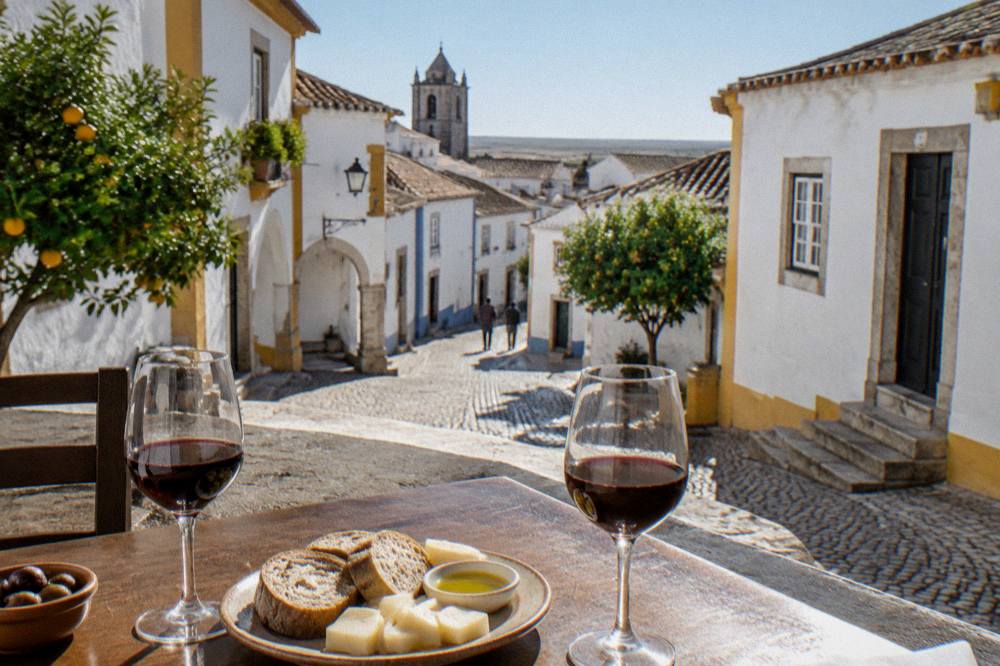
None of this transfers to Óbidos, and that is the final practical difference. A village built for strolling sells its impression in its walls and lanes; a regional capital sells its food, its wine road and its megaliths alongside its monuments. The Évora Travel Guide editorial desk's honest summary, from sources rather than sentiment: give Évora the days if the trip allows it, take Óbidos as the atmospheric stop it is, and let the length of the trip make the choice.
Common Questions About Évora Vs Obidos
Is Évora better than Óbidos?
Neither is better as a fact. Évora offers a UNESCO-listed historic centre, a cathedral, a bone chapel and a national museum, with a direct train from Lisbon taking about 1 hour 40; Óbidos offers a compact walled village best seen in half a day. The choice depends on trip length and appetite, not a ranking.
Can you visit both Évora and Óbidos from Lisbon?
Yes. They lie in different directions from the capital, so the clean plan is two separate outings: the CP Intercidades train to Évora for a full day or an overnight, and a shorter leg to Óbidos on another day. Verified times and fares exist on this site only for the Évora leg.
How many days do you need in Évora?
One full day covers the Sé, the Capela dos Ossos, the Templo Romano and the centre. Two days add the Museu de Évora, which closes on Mondays, and a trip to the Almendres cromlech or the surrounding wine country. Three days fit Monsaraz or the marble towns comfortably.
What does the Évora Ticket include?
The Évora Ticket costs 8 EUR for one day, 10 EUR for two and 12 EUR for three, free to age 12, and covers the Cidade-Museu network's sites. It does not include the Sé de Évora, the Capela dos Ossos or the Museu de Évora, so read its network list before buying.
Is Évora or Óbidos easier without a car?
Évora is fully workable without a car: six through trains a day from Lisboa Oriente, a walkable centre, and guided tours that depart from the city to the megaliths and wine country. Óbidos is also reachable by rail, but this site holds no verified timetable or fare for that route, so check the operator directly.
Which has more to see, Évora or Óbidos?
Évora has more distinct monuments by any measure this site can verify: a complete-visit cathedral ticket at 5.00 EUR, the bone chapel museum at 7.00 EUR, a Roman temple in an open square and a national museum at 8 EUR. Óbidos concentrates its appeal in its walls and castle, which suits a shorter visit.