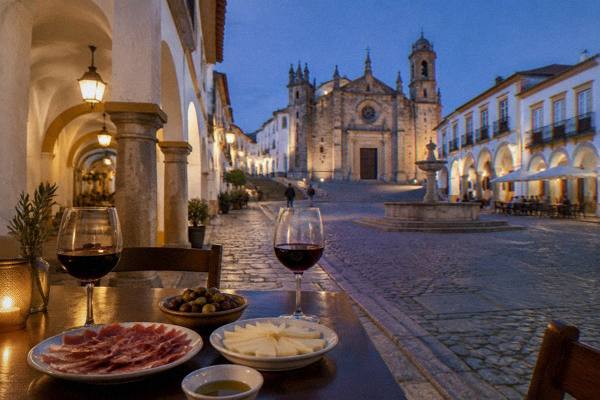
Best Restaurants In Évora: How To Eat Well In Portugal's Alentejo Capital
Évora, the capital of Portugal's Alentejo, is a small walled city where the food is country cooking at city scale: bread soups, black pork, lamb, sheep's cheese and wine from the plains. This guide explains what the tables serve, how to find the good ones, and which bookable experiences replace the guesswork.
Short answer
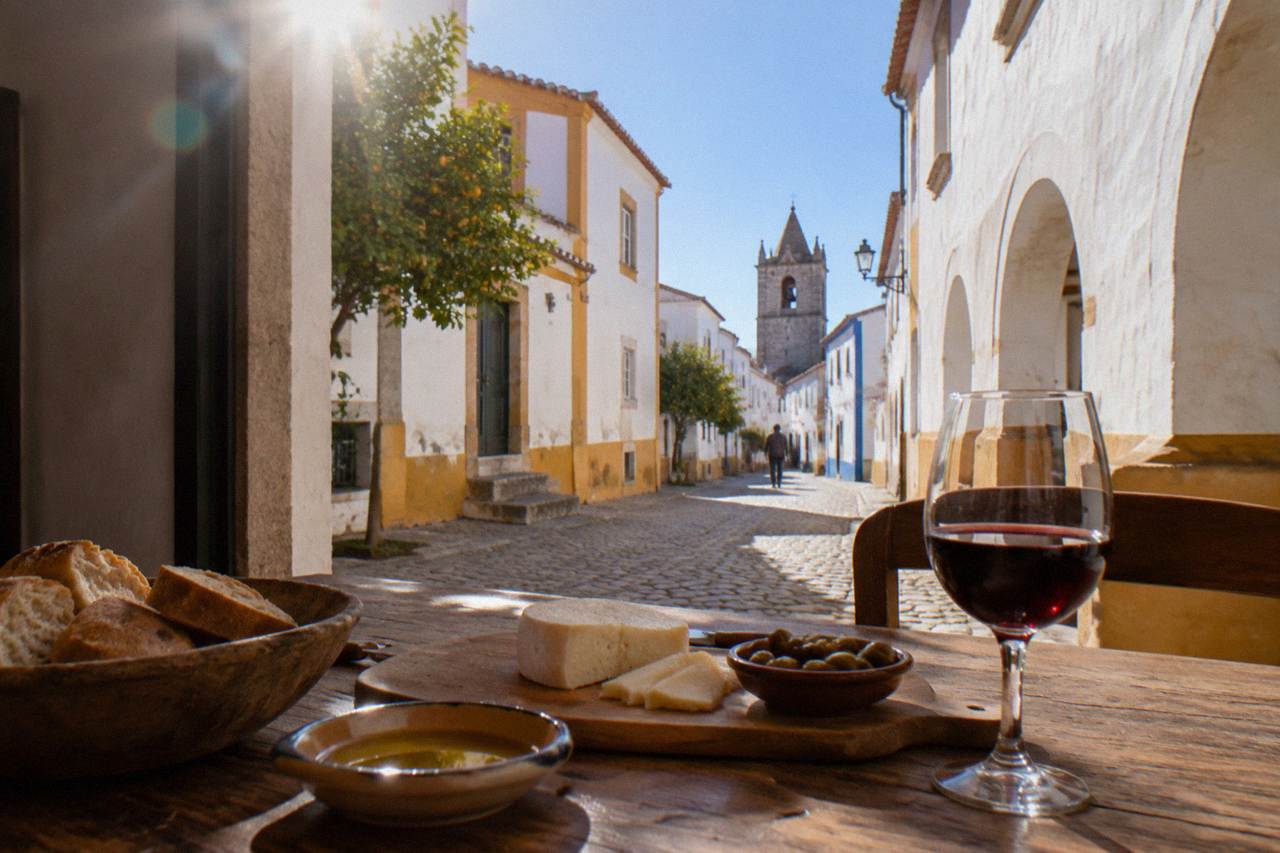
Évora's restaurants serve Alentejo country cooking, bread soups such as açorda and migas, black pork, lamb and sheep's cheese, inside a UNESCO-listed walled centre where lunch is the main meal. No individual venue is ranked on this page; guided food and wine experiences, from $83.28 for an evening crawl to $166.29 for a cooking class, are the reliable way in.
Évora, the capital of Portugal's Alentejo region, is a walled city of about 53,000 people where eating is treated as a serious civic activity rather than a break between sights. The historic centre, inscribed by UNESCO in 1986, holds the tables; the plains around it supply them. This page takes a different approach from most restaurant guides: because nothing about any individual restaurant, tavern, café or winery in Évora was verified for publication, it names no venue, prints no menu price and awards no ranking. What it does instead is explain what the Alentejo kitchen actually serves, how to recognise the dining rooms worth your evening, and which bookable food and wine experiences carry verified prices and ratings. The Évora Travel Guide food coverage starts here and branches into the full Évora food guide and the wider Alentejo food guide.
What Food Is Évora Known For?
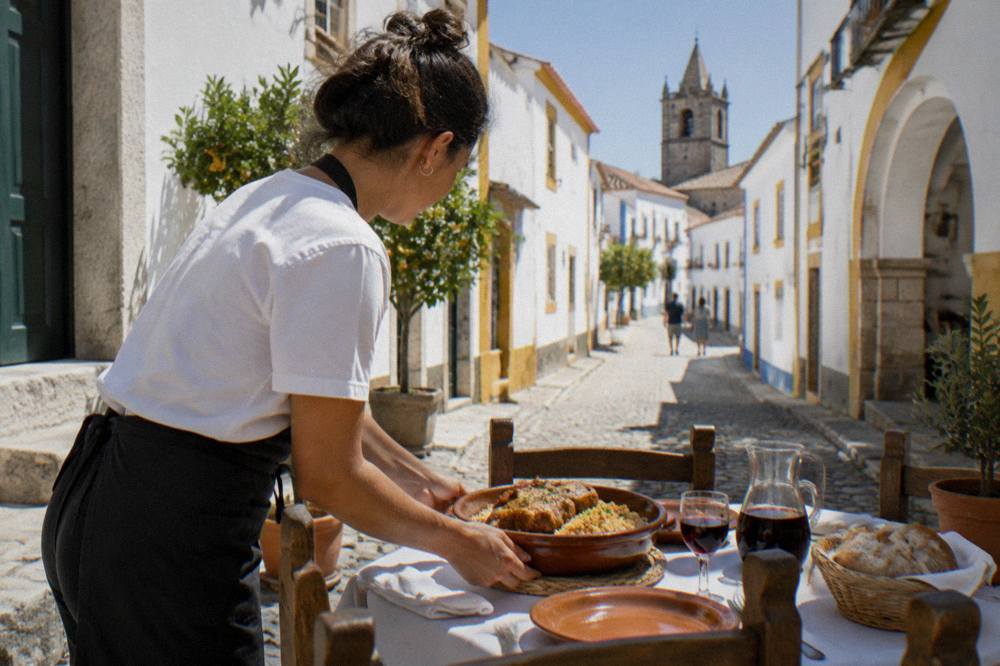
Évora's kitchens cook the Alentejo way: bread soups such as açorda and migas, black pork, slow-roasted lamb, simple salt-cod and river-fish dishes, sheep's cheese and cured sausages, with wine from the plains around the city. The dining rooms sit inside a UNESCO-listed historic centre of medieval lanes and arcaded squares, and lunch is the serious meal of the day, when the prato do dia fills the tables around Praça do Giraldo and families eat late on Sundays.
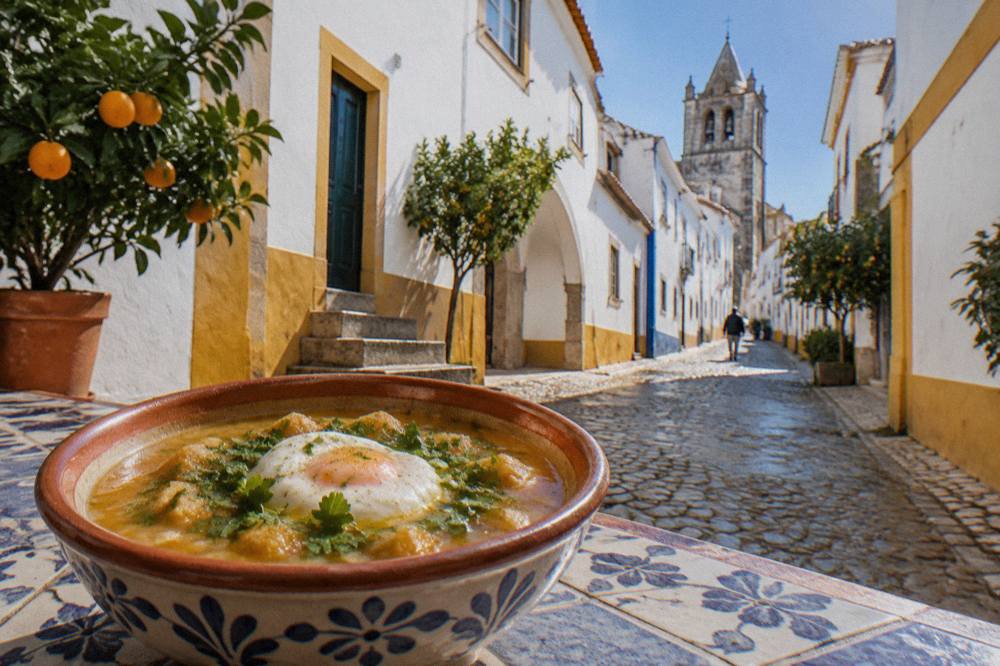
The Alentejo is Portugal's bread-and-pork country, and Évora is its capital in every sense, administrative and culinary. The region's cooking was built to feed farm workers through hot, dry summers, which is why so much of it starts with stale bread, garlic, olive oil and coriander rather than with expensive cuts. Açorda, a bread soup usually opened with an egg, and migas, bread fried with garlic and often served alongside pork, are the two dishes that tell you immediately whether a kitchen is cooking for locals or adapting for visitors. Black Iberian pork, raised on acorns in the region's montado woodland, is the headline meat, and lamb slow-cooked in a clay pot is its Sunday rival.
Cheese and cured sausage arrive before almost every proper meal here, usually unasked, sometimes as a cover charge. The Alentejo produces sheep's and goat's cheeses with a sharp, salty character, and the regional sausages run from the smoky to the fiercely garlicky. Sweets are a convent legacy: Évora's pastry counters carry egg-and-sugar convent sweets whose names are older than the restaurants selling them, and a mid-afternoon pastry stop with a coffee is as much a part of the eating day as dinner.
None of this is secret, and that is the point. The food in Évora is not a hidden cuisine waiting to be discovered; it is a working regional kitchen that has been on these tables for generations. The guide to what Évora is known for covers the monuments; this page covers the other reason people come.
How Do You Find The Best Restaurants In Évora?
The tables worth booking in Évora are the ones serving Alentejo food the local way: a written prato do dia at lunch, bread-based starters, pork and lamb from the region, and wine by the carafe from Alentejo producers. Look for dining rooms inside the medieval walls that list their dishes in Portuguese first, fill with families at the Sunday lunch hour, and keep short menus built around what the market sold that week. That pattern finds good food here better than any ranking.
Why no rankings? Because a restaurant guide that invents a "top ten" from memory is worse than useless, it is actively misleading, and this site publishes only what was verified. Instead, apply the local filters. A dining room that changes its prato do dia daily is cooking from the market. A menu with a dozen dishes rather than fifty is a kitchen that preps rather than reheats. A carafe of house wine on the table, if the room offers one, is usually the region's own wine at the price locals pay.
The other honest filter is time. Lunch in the Alentejo runs early by Spanish standards but late by northern European ones, and the good rooms fill in the middle of the day rather than at night. Sunday lunch is the week's centrepiece, a family affair that can stretch across the whole afternoon. Dinner service starts later than most visitors expect, and kitchens that look closed at eight in the evening may only be warming up.
If you would rather not do the filtering yourself, the guided options above do it for you: a food and wine crawl in the evening, a cooking class that teaches the techniques, or a walking tour that ends in a tasting. Each carries a verified price and rating on its listing, in US dollars, and each is described honestly below.
What Does A Guided Food Or Wine Experience In Évora Include?
A guided evening in Évora typically pairs several small tasting stops with local wines over about three hours: the Evening Food & Wine Crawl runs from $83.28 per person, is rated 4.6 from 19 reviews, and moves between tables a visitor would be unlikely to find alone. A cooking class goes further back up the supply chain: Learn the Art of Alentejo Cuisine with Andre costs from $166.29 per person and puts the region's techniques in your own hands rather than in front of your camera.
The Evening Food & Wine Crawl is the natural first pick for anyone whose trip is built around eating. It runs about three hours in the evening, which in Évora means it catches the city at the hour the tables fill, and it combines tasting stops with the local wines that go with them. Because a guide who knows the rooms does the choosing, it solves exactly the problem this page refuses to solve with a ranking. You can also Check availability on the operator's live listing before you commit.
For travellers who want to take the food home rather than just eat it, the cooking class is the deeper option. It is priced from $166.29 per person, which is more than a crawl, but a class buys you the method: how the bread soups are built, how the pork is treated, how the Alentejo kitchen turns cheap ingredients into the dishes the region is proud of. Check the listing for what is included and for the cancellation terms before booking.
Between the two, a crawl suits a first visit and a class suits a return, or a longer stay built around the two days in Évora itinerary. Neither needs a car, which matters: both start in the city centre, and Évora's dining life is entirely walkable.
Where Should You Eat: Inside The Walls Or Outside?
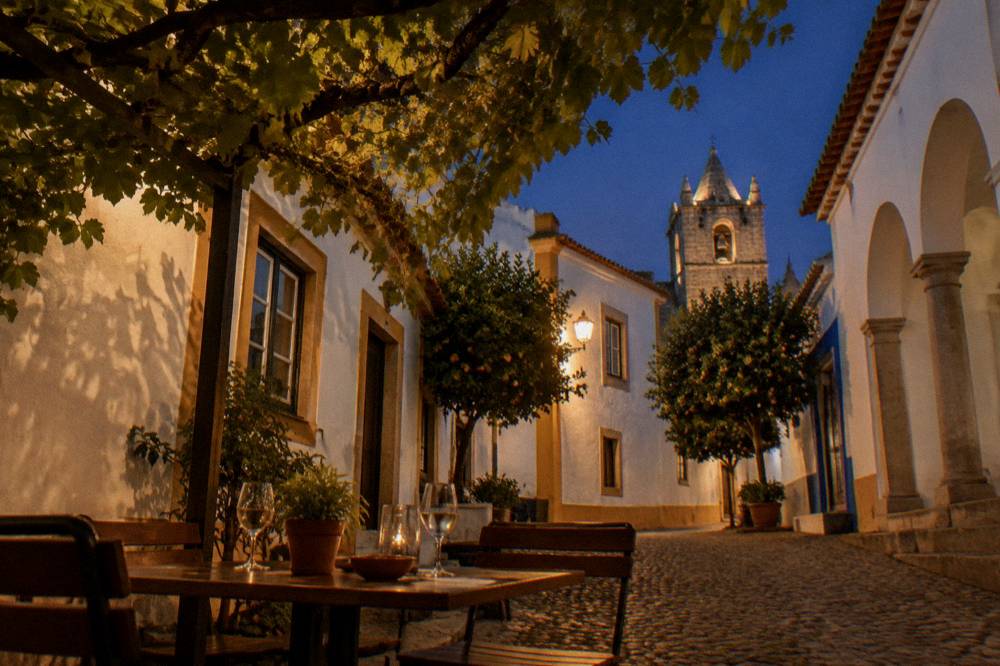
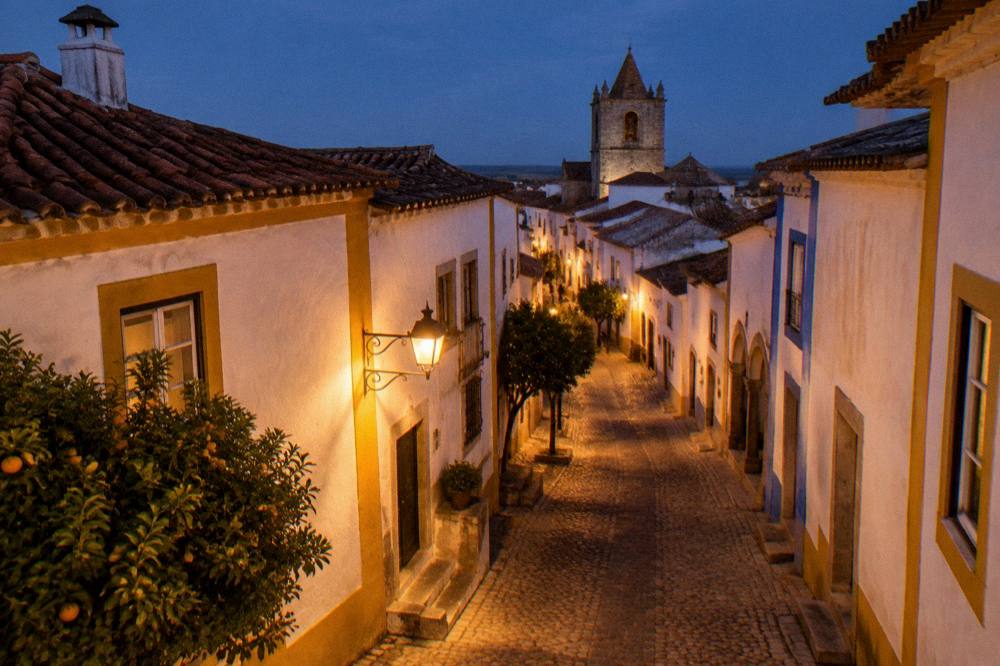
The walled centre holds most of the dining action, clustered around Praça do Giraldo, the lanes running down toward the Igreja de São Francisco, and the small squares between them, while the area around Rossio de São Brás and the streets beyond the walls carry more local, less visitor-facing tables. Inside the walls the setting is medieval stone, whitewash and arcades; outside, the pace is slower and the rooms more neighbourhood-minded. Both sides are worth a meal.
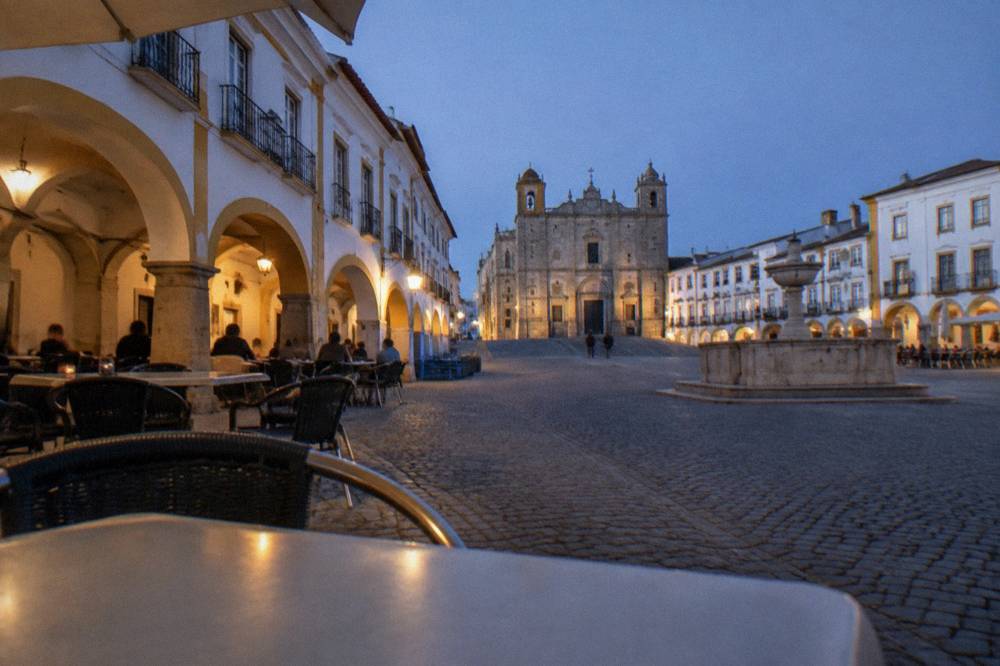
Praça do Giraldo is the city's dining crossroads, an arcaded square where café tables sit under the arches and everything in the centre is a short walk away. From there the lanes drop toward the Igreja de São Francisco and the Capela dos Ossos, and that slope, from the square down to the church, is the band where most visitors eat. It is also where prices are most visitor-shaped, so the filters from the previous section matter most here: written daily specials, short menus, Portuguese first.
Outside the walls, around Rossio de São Brás and along the roads leading out of the centre, the character changes. These are the rooms where the city eats when it is not entertaining, and the food is the same cuisine with less ceremony. The trade-off is setting: you give up the medieval backdrop and gain a more local table. On a food-focused trip the smart structure is to mix both, one dinner inside the walls for the atmosphere and one outside for the kitchen.
The where to stay in Évora guide maps the neighbourhoods in detail, and the getting around Évora page confirms what the compact centre already tells you: no car is needed for dinner.
What Should You Know About Alentejo Wine On An Évora Menu?
Alentejo wine on an Évora menu is mostly red, made for food, generous and warm-fruited, with whites that have become a genuine strength of the region and rosé everywhere in summer. House wine poured by the carafe is still normal in the region's taverns and is often the smartest order on the table. What this page cannot honestly do is rank producers or vintages: none of that was verified, so the reliable route into the Alentejo's cellars is a guided tasting booked through a tour with a published price.
The Alentejo is one of Portugal's most productive wine regions, and Évora sits in the middle of it, so the wine lists here are local by default rather than by choice. Reds dominate and are built for the food: they carry the meal rather than compete with it. Whites have improved dramatically across the region in recent years and are the right call in the hot months. Rosé appears everywhere from late spring. The general Alentejo wine guide covers the region's character in depth.
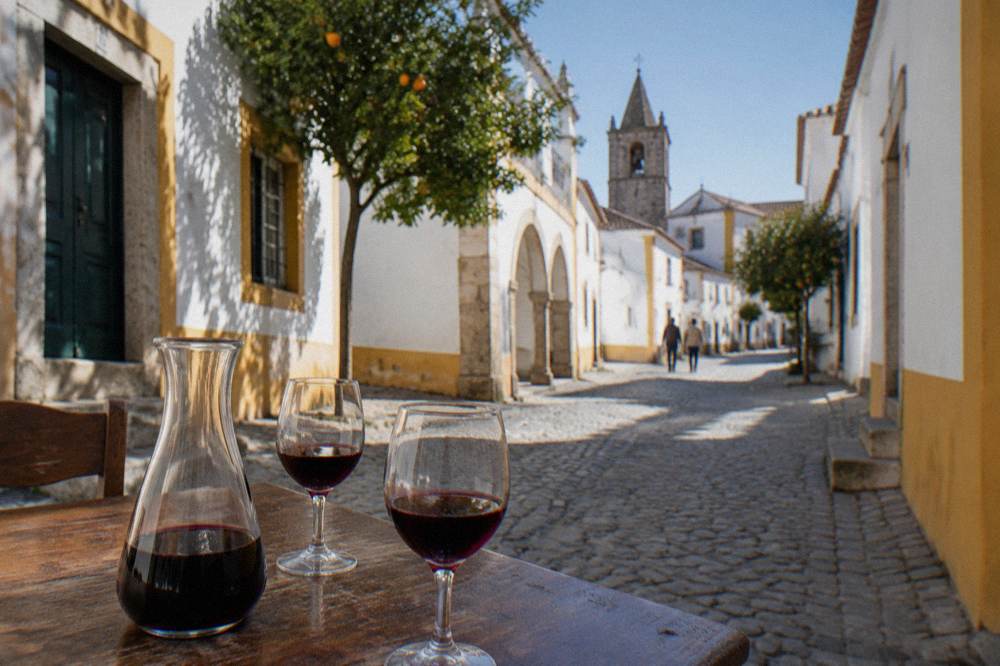
The honest gap, again, is at the level of the individual producer. The bookable alternatives carry real figures instead: the Alentejo Wine and Cork tour from Évora runs from $78.78 per person, is rated 4.7 from 24 reviews and lasts about four hours, pairing cellar visits with the cork oak landscape that shapes the region's agriculture. The full tour page has the details.
For a deeper dive, the Évora wine tasting and Évora wine and food day guides lay out the options, and the Cartuxa monastery and winery, whose story is covered separately, is the region's most famous name, though nothing about its visiting arrangements is published on this page.
When Is The Best Time Of Year To Eat Out In Évora?
The most pleasant months to eat outdoors in Évora are April, May, late September and October, when the 1991 to 2020 averages for the Évora station show daytime highs of about 20 to 25 C and few wet days. July and August are fierce: mean maxima of 33.3 C and 33.5 C, with 11 to 12 days at 35 C or more in each, so the local pattern is lunch indoors and dinner after the light goes. Winter tables are indoors and the cooking is at its heaviest.
The climate data for Évora, from IPMA's 1991 to 2020 normals for the Évora station, tells the dining story more directly than any list of terrace months. Évora is inland on the Alentejo plain, roughly 90 km from the Atlantic, so there is no sea breeze to soften the summer and no coastal humidity in winter. What the table below shows is the shape of the year: a hot, dry core from June to September, wet shoulders in spring and autumn, and mild winters with cold nights.
| Month | Mean max (C) | Mean min (C) | Days with 1 mm+ rain | Days max 30 C+ |
|---|---|---|---|---|
| April | 20.7 | 8.5 | 8.0 | 0.3 |
| May | 25.0 | 10.9 | 6.0 | 5.5 |
| June | 30.2 | 13.8 | 1.7 | 15.1 |
| July | 33.3 | 15.6 | 0.6 | 23.7 |
| August | 33.5 | 16.0 | 0.7 | 25.0 |
| September | 29.5 | 14.6 | 3.6 | 13.9 |
| October | 24.1 | 12.3 | 7.7 | 2.9 |
The record maximum for the station is 45.4 C, set on 4 August 2018, which is the number to keep in mind if you are tempted by an August table on an open terrace. The full breakdown sits in the Évora weather and best time to visit Évora guides.
Which Food Day Trips Work From Évora?
Évora works as a base for food day trips because the Alentejo's marble towns, wine villages and castle towns all sit within easy reach by road: Arraiolos about 20 km away, Monsaraz about 40 to 45 km, Estremoz about 45 km, Vila Viçosa about 60 km, Elvas about 80 km and Marvão about 120 km. Each has its own table culture, from marble-town cafés to hilltop taverns, and each pairs naturally with the produce of its own corner of the region.
The Alentejo is not one food region but several, and the day trips out of Évora move between them. Arraiolos, the nearest, is the carpet town, and its small cafés serve the same bread-and-pork cooking in a slower register. Estremoz and Vila Viçosa are marble towns, and Vila Viçosa in particular is a ducal seat with a palace square and a food culture to match; the Vila Viçosa guide and the marble tour options cover them. Monsaraz, on the Alqueva reservoir, is the most spectacular table setting in the region, a one-street hilltop village with the lake below it.
| Destination | Distance from Évora | Character of the day out |
|---|---|---|
| Arraiolos | about 20 km | Carpet town, quick half-day, village tables |
| Monsaraz | about 40-45 km | Hilltop village above the Alqueva reservoir |
| Estremoz | about 45 km | Marble town with a castle and market square |
| Vila Viçosa | about 60 km | Ducal palace town, marble heritage |
| Elvas | about 80 km | Border fortress town, ameixa plum country |
| Marvão | about 120 km | Mountain-top castle village, the far reach |
| Lisbon | about 130 km | The gateway city, see the train section below |
Two bookable options do this work for you. The Monsaraz and Wine guided tour from Évora runs from $78.78 per person, rated 4.6 from 51 reviews over about four hours, and the version with a traditional pottery workshop in São Pedro do Corval runs from $56.27 per person over 4.5 hours. Corval is a pottery village on the Monsaraz road, and its wood-fired kilns are part of the same rural Alentejo economy as the food. The Monsaraz guide has the full picture.
How Much Should You Budget For Food And Drink In Évora?
Honest budgeting for food in Évora rests on what can actually be checked: the guided experiences carry published prices, from $83.28 per person for the Evening Food & Wine Crawl to $166.29 for a hands-on Alentejo cooking class, while individual restaurant prices are not published on this page and should be checked with the venue or on the operator's listing before you book. Sightseeing around the meals is cheap and fixed: the Évora Ticket costs 8 EUR for one day and 12 EUR for three.
The Évora cost and budget guide handles the accommodation and transport side. On the food side, the figures this site can stand behind are the tour card prices, all in US dollars, and the official monument tickets, in euros. The table below sets out the food and drink experiences with verified prices.
| Experience | From (USD) | Rating | Duration |
|---|---|---|---|
| Evening Food & Wine Crawl | $83.28 | 4.6 from 19 reviews | 3 hours |
| Cooking class, Alentejo cuisine | $166.29 | 3 from 3 reviews | see listing |
| Alentejo Wine and Cork tour | $78.78 | 4.7 from 24 reviews | 4 hours |
| Monsaraz and Wine tour | $78.78 | 4.6 from 51 reviews | 4 hours |
| Cork factory and farm visit with lunch | $112.55 | 4.8 from 26 reviews | 8 hours |
For restaurant spending itself, the only honest advice is planning advice: the Alentejo's prato do dia at lunch is traditionally the cheapest full meal of the day, dinner costs more everywhere, and the way to know a specific room's prices is to check with the room. A municipal tourist tax applies to stays in Évora, and its amount is not published on this page, so check with your hotel at booking.
How Do You Get To Évora For A Food Weekend?
Six through Intercidades trains a day link Lisboa Oriente and Évora on the timetable valid since 6 September 2026, departing at 07:02, 09:02, 09:58, 13:35, 17:02 and 19:02 and arriving about 1 hour 40 to 1 hour 45 later, with a second-class fare of 13.90 EUR and first class at 18.50 EUR. That is enough frequency to leave the capital in the morning, eat lunch in Évora and still make a full evening of it.
The train is the food traveller's route into Évora because it drops you inside the dining district with no parking to think about. The table below is the current through-service pattern from CP's published timetable; check the operator's own site for engineering changes before you travel.
| Lisboa Oriente departure | Évora arrival |
|---|---|
| 07:02 | 08:47 |
| 09:02 | 10:45 |
| 09:58 | 11:40 |
| 13:35 | 15:13 |
| 17:02 | 18:41 |
| 19:02 | 20:46 |
The Lisbon to Évora by train guide covers the booking detail, and the Lisbon to Évora page compares train, bus and car. If you are coming for a weekend of eating, the 09:02 arrival gives you an 11:40 landing, which is lunch o'clock by any standard.
What Can You See Between Meals In Évora?
The big sights inside the walls all close in time for dinner: the Sé de Évora, one 5.00 EUR ticket covering cathedral, cloister, roof terrace and museum, keeps 9:00 to 17:00; the Capela dos Ossos museum ticket at 7.00 EUR adult runs 9:00 to 18:30 in summer legal time and 9:00 to 17:00 in winter; and the Museu de Évora, at 8 EUR, closes at 17:30 and all day Monday.
Sightseeing therefore ends by early evening, which is exactly when the tables start.
This matters for planning a food day, because the monuments set the clock. Lunch sits in the middle of the sightseeing window and dinner sits after it. The pattern that works is monuments in the morning, lunch at the local hour, monuments or a nap in the afternoon, then dinner and, if the energy holds, the low-lit lanes of the Évora at night guide.
| Sight | Ticket | Hours | Closed |
|---|---|---|---|
| Sé de Évora, complete visit | 5.00 EUR, children to 12 free | 9:00-17:00 | 24 Dec afternoon, 25 Dec, 1 Jan |
| Capela dos Ossos, Igreja de São Francisco | 7.00 EUR adult, 5.00 EUR youth and senior | summer 9:00-18:30, winter 9:00-17:00 | 1 Jan, Easter Sunday, 24 Dec afternoon, 25 Dec |
| Museu de Évora | 8 EUR adult | Tue-Sun 9:30-13:00 and 14:00-17:30 | Mondays and public holidays listed on its page |
| Évora Ticket, one day | 8 EUR, free to 12 | covers the Cidade-Museu network | see the pass page |
The Évora Ticket, at 8 EUR for one day, 10 EUR for two and 12 EUR for three, covers the municipal monument network but does not include the Sé, the Capela dos Ossos or the Museu de Évora, so read its site list before assuming coverage. The Évora tickets and passes guide untangles it fully.
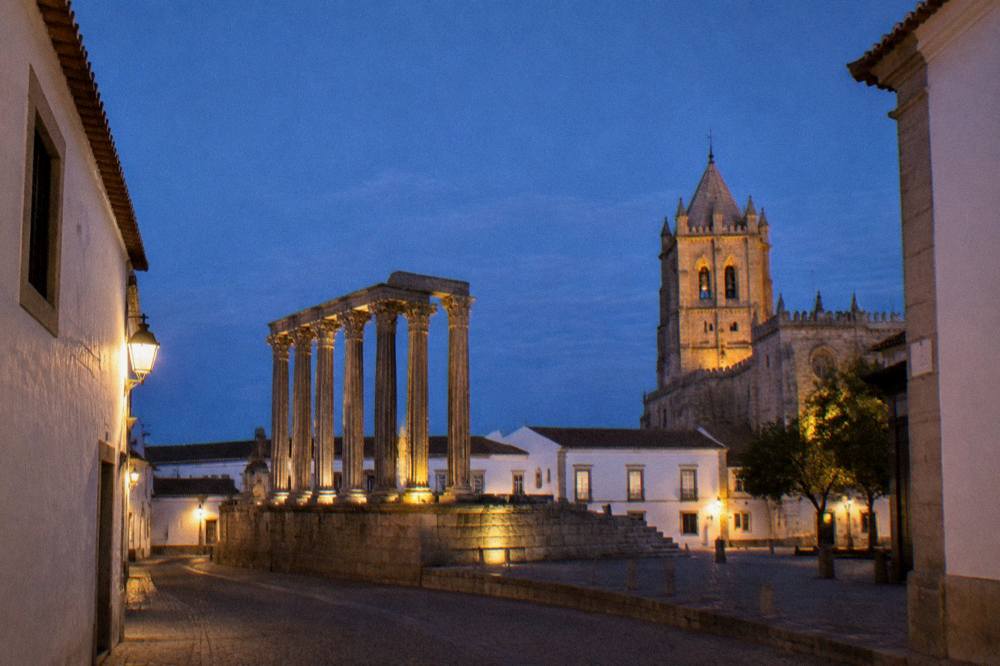
One tour ties the two halves of the day together neatly: the private skip-line walking tour of the university, cathedral and bones chapel ends with a wine tasting, runs about three hours from $91.39 per person and is rated 5 from 48 reviews, so the sightseeing hands you straight to the wine. Details are on the tour page.
Common Questions About Restaurants In Évora
What food is Évora known for?
Évora is known for Alentejo country cooking: bread soups such as açorda and migas, black Iberian pork, slow-cooked lamb, salt-cod and river-fish dishes, sheep's cheese, cured sausages and convent sweets, all served with Alentejo wine. Lunch is the main meal of the day.
How do you find the best restaurants in Évora?
Look for dining rooms that change a written prato do dia daily, keep short menus, list dishes in Portuguese first and fill with families at Sunday lunch. Wine by the carafe is usually the region's own at a local price. This page publishes no venue rankings because none was verified.
When is the best time of year to eat out in Évora?
April, May, late September and October, when the 1991 to 2020 averages for the Évora station show highs of about 20 to 25 C and few wet days. July and August average 33.3 C and 33.5 C, so lunch moves indoors and dinner starts late.
Can you do a food day trip from Évora?
Yes. Arraiolos is about 20 km away, Monsaraz about 40 to 45 km, Estremoz about 45 km, Vila Viçosa about 60 km, Elvas about 80 km and Marvão about 120 km, and guided options such as the Monsaraz and Wine tour from Évora, from $78.78 per person, cover the driving.
How much should you budget for food in Évora?
Check prices with the venue, since no restaurant price is published on this page. The verified figures are the guided experiences, from $83.28 per person for the evening food and wine crawl to $166.29 for a cooking class, plus the official monument tickets in euros if you are eating around the sights.
How do you get to Évora for a food weekend?
Take the train. Six through Intercidades trains a day run from Lisboa Oriente to Évora on the timetable valid since 6 September 2026, taking about 1 hour 40 to 1 hour 45, with a second-class fare of 13.90 EUR, which lands you in the middle of the dining district without a car.
Évora rewards the traveller who plans the day around the table rather than squeezing meals between monuments: eat lunch at the local hour, walk off the afternoon inside the walls, and let dinner end the day under the arcades of Praça do Giraldo.