Évora Vs Lisbon
A walled Alentejo museum city of about 53,000 people against Portugal's sprawling riverside capital, about 130 km apart on one rail line. Here is what the verified facts say about choosing between them, or taking both.
Short answer
Évora is a compact, UNESCO-listed inland city whose sights, prices and slow Alentejo pace suit a one or two-day stay, while Lisbon is a capital whose monuments spread across hills and riverfront districts and reward longer. Six through Intercidades trains connect them in about 1 hour 40 to 1 hour 45, from 13.90 EUR second class, so many travellers take both.
Évora, the capital of Portugal's Alentejo region and of the district that carries its name, sits about 130 km from Lisbon on the flat inland plain, roughly 90 km from the Atlantic. It is a small walled city of about 53,000 people whose entire historic centre was inscribed by UNESCO in 1986, and it gets compared with Lisbon more often than with anywhere else, because most travellers arrive from there and many wonder whether to swap days between the two. The comparison is a fair one to ask, and it deserves better than vibes: the train timetable is published, the monument prices are on official pages, and the climate is measured. This page puts the verified numbers on one side of the ledger and describes Lisbon honestly, in character rather than in invented figures, on the other.
What Kind Of City Is Évora Compared With Lisbon?
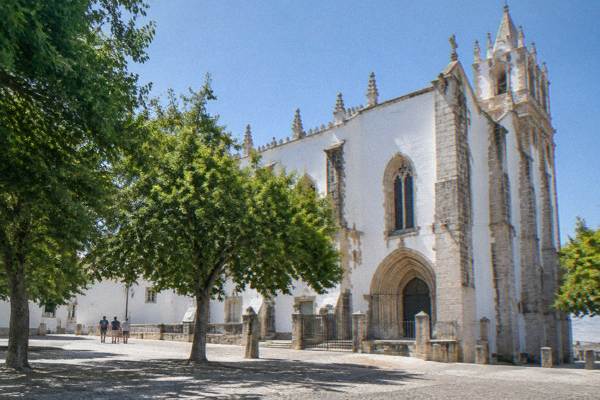
Évora is a small, walled inland city of about 53,000 people whose entire historic centre has been UNESCO-listed since 1986, while Lisbon is a hilly capital at the mouth of the Tagus whose sights spread across riverfront districts, outlying belvederes and satellite towns. Évora's attractions sit within walking distance of one another behind medieval walls; Lisbon's demand metro rides, trams and planning. The choice is between a compact museum city and a sprawling capital, not between two versions of the same place.
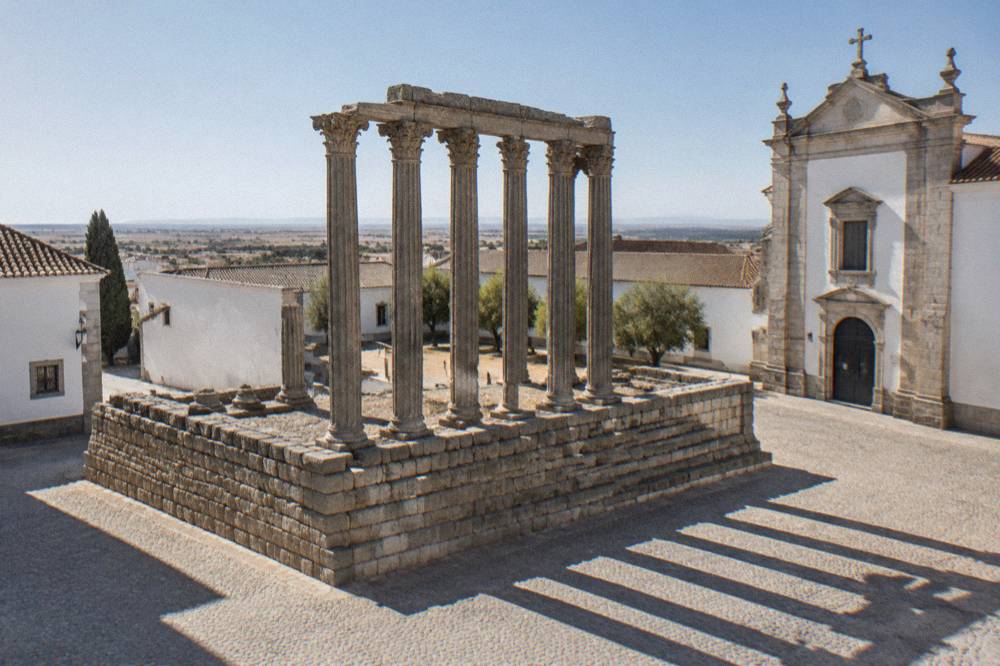
The difference is one of scale and rhythm. In Évora, the Roman temple, the cathedral, the Capela dos Ossos and the Praça do Giraldo all sit inside a centre you can cross on foot in well under an hour, and the municipal page for the Templo Romano records a monument of just 25 x 15 m standing in the open air, free of any ticket booth. Lisbon works differently: its signature viewpoints, its castle district and its riverside squares are separated by steep hills, and a visitor there spends real time moving between them.
Neither character is better, and this page will not declare a winner as fact. What the verified record does say is that UNESCO's criterion (iv) calls Évora the finest example of a city of the golden age of Portugal, precisely because the 1755 earthquake that devastated Lisbon largely spared it. The two cities are, in a literal sense, historical opposites: one kept its golden-age fabric, the other rebuilt around what it lost. If your trip is about density, Évora wins on paper. If it is about variety, Lisbon offers more of it.
For travellers weighing other small-city alternatives, the Évora Vs Sintra comparison and the Évora Vs Óbidos comparison cover two different day-trip rivals, and the Évora Vs Coimbra comparison a different university city.
How Far Is Évora From Lisbon And How Long Does The Train Take?
The road distance is about 130 km. CP's timetable valid since 6 September 2026 lists six through Intercidades trains from Lisboa Oriente to Évora, taking about 1 hour 40 to 1 hour 45, with a second-class fare of 13.90 EUR and first class at 18.50 EUR. The trains call at Entrecampos, Sete Rios, Pragal, Pinhal Novo, Vendas Novas and Casa Branca, and no change is needed on these through services. Coaches also run the route, but no coach fare or timetable has been verified here.
The rail link is the single most important fact in the whole comparison, because it is the one journey where a verified figure exists on both ends. The six departures and arrivals in the current CP timetable are:
| Departs Lisboa Oriente | Arrives Évora |
|---|---|
| 07:02 | 08:47 |
| 09:02 | 10:45 |
| 09:58 | 11:40 |
| 13:35 | 15:13 |
| 17:02 | 18:41 |
| 19:02 | 20:46 |
CP's timetable lists these as through trains on the Lisboa to Évora and Beja route, and the fare table valid for 2026 prices the Lisboa Oriente to Évora Intercidades journey at 13.90 EUR in second class and 18.50 EUR in first. The weekday remarks in the PDF were not checked for this page, so treat the six trains as the listed pattern rather than a promise for every date, and confirm your own travel day on CP's site. Return-direction times from Évora to Lisbon were not read here either, so check those directly before planning an evening back.
The practical reading is simple: the two cities are close enough that the choice between them is not really about travel effort. A traveller based in Lisbon can be standing inside Évora's walls by 08:47 on the first train, and a traveller moving on from Évora can reach the capital for an afternoon. The full route options, including the train options from Lisbon, the bus services from Lisbon and driving from Lisbon to Évora, are covered in the main Lisbon to Évora route guide.
Is Évora Cheaper To Visit Than Lisbon?
On verified numbers, Évora's headline monuments are inexpensive: the Sé's complete-visit ticket is 5.00 EUR, the Capela dos Ossos museum ticket 7.00 EUR, the Museu de Évora 8 EUR, and the multi-site Évora Ticket 8 EUR for one day. No equivalent Lisbon attraction prices have been verified for this comparison, so none are stated. A municipal tourist tax applies to stays in Évora; ask your hotel for the current amount at booking.
Every euro figure below was read on the official page of the monument concerned, and each attaches to that monument only. The Sé's single ticket covers the cathedral, the cloister, the roof terrace and the museum, with children up to 12 free alongside a parent or guardian. The Igreja de São Francisco's museum ticket covers the Capela dos Ossos and the other museum areas, and the church notes it is a private religious entity that does not apply State Museum discounts.
| Site | Adult ticket | Reductions and notes |
|---|---|---|
| Sé de Évora, complete visit | 5.00 EUR | Children up to 12 free with a parent or guardian |
| Capela dos Ossos / Igreja de São Francisco museum | 7.00 EUR | Youth to 25 and seniors over 65 pay 5.00 EUR; family ticket 15.00 EUR |
| Museu de Évora | 8 EUR | Youth 13-24, seniors over 65 and family tickets 50% off; free to age 12 |
| Évora Ticket | 8 EUR one day | 10 EUR for two days, 12 EUR for three days; free to age 12 |
| Templo Romano | No ticket listed | Open-air monument in the public square |
One detail worth knowing before you buy: the Évora Ticket covers the Cidade-Museu network, and it does not include the Sé, the Capela dos Ossos or the Museu de Évora, the three most-visited monuments in the city. For many visitors the smarter arithmetic is simply buying the Sé and the Capela dos Ossos separately and skipping the pass unless the rest of its network is on the itinerary. Opening hours follow the same verified pattern:
| Site | Hours | Verified closing days |
|---|---|---|
| Sé de Évora | 9:00-17:00 | 24 December afternoon, 25 December, 1 January |
| Capela dos Ossos / Igreja de São Francisco | Summer 9:00-18:30, winter 9:00-17:00 | 1 January, Easter Sunday, 24 December afternoon, 25 December |
| Museu de Évora | Tuesday to Sunday 9:30-13:00 and 14:00-17:30 | Mondays, 1 January, Easter Sunday, 1 May, 29 June, 25 December |
| Almendres Interpretation Centre | 1 May to 31 Oct 10:00-18:00; 1 Nov to 30 Apr 10:00-17:00 | None listed |
Against Lisbon, the honest statement is that no verified price comparison exists on this page, and a fabricated one would be worse than none. What can be said is structural: Évora's paid sights are few, cheap and central, so a full monument day costs the price of two tickets, while a capital city typically spreads spending across more entries, more transport and more meals. Budget by structure, not by invented numbers.
How Do Évora'S Sights Compare With Lisbon'S?
Évora's sights are Roman, medieval and golden-age Portuguese packed inside one walkable centre: UNESCO inscribed the Historic Centre of Évora in 1986 under criteria (ii) and (iv), and criterion (iv) calls it the finest example of a city of the golden age of Portugal after the 1755 Lisbon earthquake, which Évora was largely spared. Lisbon answers with capital-scale monuments spread across a far wider area, best described here by character rather than by figures.
The depth of Évora's fabric is unusual for a city its size. Moorish rule ended in 1165, the Jesuit University of the Holy Spirit dates from 1553, and the Jesuits were expelled in 1759, so the centre carries visible layers from Roman Évora through to the early modern university city. The Templo Romano, popularly called the Temple of Diana, was probably dedicated to the imperial cult according to the municipal page, a name that only stuck in the 17th century; the building was later reused as a municipal butcher's shop and its walls were freed in 1870. That is a single monument carrying two thousand years of reuse on one corner.
Lisbon's sights run bigger and broader: a capital's castle district, a monumental riverside square, a tower at the water's edge, and day-trip satellites of its own. None of those carry verified figures here, and none need them, because the real difference is not quality but concentration. In Évora you walk between everything; in Lisbon you commute between highlights. Travellers who want the full monument rundown can follow the dedicated pages on the Évora cathedral, the Capela dos Ossos and the Roman temple.
A guide changes the equation in Évora more than in most cities, because so much of the story is in the details: the probable imperial cult behind the temple, the golden-age reasoning behind the UNESCO inscription, the layers a casual walk passes without noticing. The flexible historic-centre walking tour below is built exactly for that, at the lowest entry price of any paid guided walk in the city.
Évora Vs Lisbon For Food And Wine?
Évora's food scene is Alentejo on a plate: regional breads, Alentejo wines and slow-cooked dishes served inside the walls, with guided options running from $23.92 for a walking tour with a Portuguese wine tasting to $321.11 for a full-day private wine tour around Évora. Lisbon's restaurant scene is larger and more international in character; no verified price comparison between the two exists, so character is the honest basis for choosing.
The Alentejo is wine country, and Évora is its capital, which is a structural advantage no big city can copy. The guided food and wine options that start in Évora, with their live listing prices in dollars, look like this:
| Tour | From, per person | Rating | Length |
|---|---|---|---|
| Golden Era of Évora walking and Portuguese wine tasting | $23.92 | 4.4 from 33 reviews | 2.5 to 3 hours |
| Alentejo Wine and Cork from Évora | $78.78 | 4.7 from 24 reviews | 4 hours |
| Évora: Evening Food & Wine Crawl | $83.28 | 4.6 from 19 reviews | 3 hours |
| 1 Day Wine Tour Around Évora | $321.11 | 5 from 11 reviews | Full day |
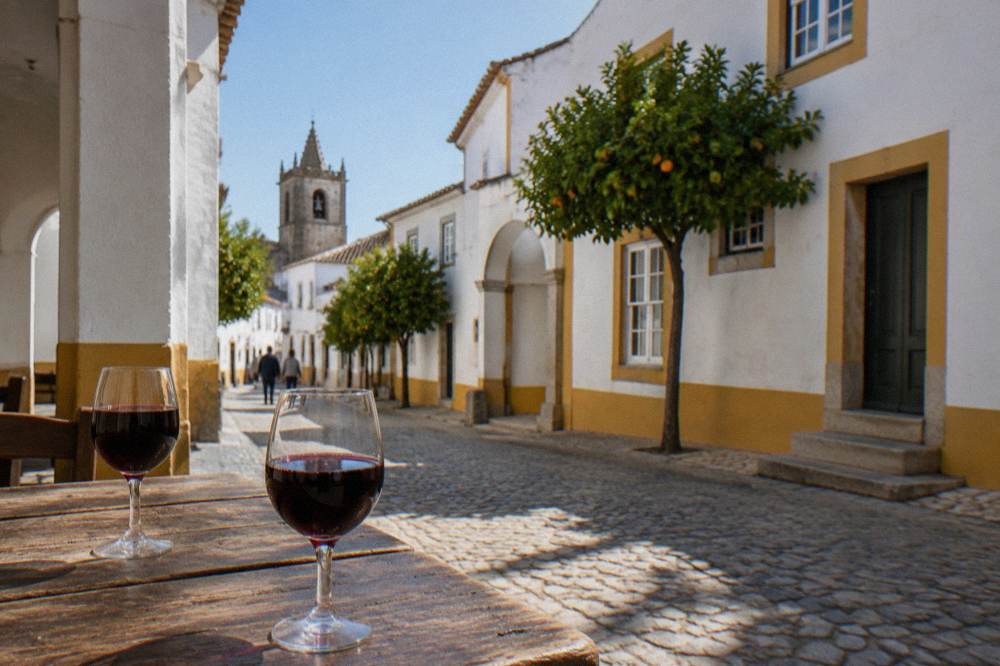
The evening crawl deserves its own word, because it converts the day-trip question into a stay question: the food and wine crawl runs in the evening, a part of the day a Lisbon-based visitor never sees. It is one of the strongest arguments for sleeping in Évora at least once. Everything else covered here is indexed on Évora Travel Guide.
Lisbon, for its part, is a capital eating scene: more cuisines, more rooms, later hours, and a fish-forward coastal identity that inland Évora simply does not have, sitting as it does roughly 90 km from the sea. The honest framing is that Évora offers depth in one regional tradition and Lisbon offers breadth across many. Travellers who want the deeper Alentejo food background can read the Alentejo food overview and the guide to Évora restaurants.
Should You Day-Trip To Évora From Lisbon Or Stay Overnight?
A day trip is realistic on the verified timetable: the 07:02 Intercidades from Lisboa Oriente reaches Évora at 08:47, giving a full day before an evening return, though Évora-to-Lisbon departure times were not verified here and should be checked on CP's site before you plan the night. An overnight stay adds the evening food and wine crawl, the megaliths at an unhurried pace, and Alentejo towns such as Arraiolos, about 20 km away, or Monsaraz, about 40 to 45 km.
The arithmetic favours the day trip for the historic centre alone. Arriving at 08:47 leaves a full working day for the Sé, the Capela dos Ossos, the Praça do Giraldo and a long Alentejo lunch, all inside the walls. The dedicated Évora day trip itinerary lays out an hour-by-hour version, and the question is Évora worth a day trip from Lisbon gets a direct answer on its own page.
The overnight case rests on what a day trip structurally cannot include: evening, the surrounding megalithic landscape, and the small towns of Central Alentejo. The Cromeleque dos Almendres interpretation centre in Guadalupe keeps summer hours of 10:00 to 18:00, and the megalithic circuit is the reason many visitors give Évora a second day. Guided walks and rides around the city itself span a wide price range:
| Tour | From, per person | Rating | Length |
|---|---|---|---|
| The Essential Free Tour of Évora, on GuruWalk | Free, tip based | 4.93 from 774 reviews | 2 hours |
| Évora: Personal & Flexible Walking Tour in Historic Center | $13.51 | 4.8 from 105 reviews | 3 hours |
| Évora Walking Tour | $53.90 | 4.8 from 37 reviews | See card |
| Medieval Tour of Évora on a Sidecar & Wine Tasting | $61.90 | 4.9 from 16 reviews | 3 hours |
| Évora: Small-Group Cultural Walking Tour & Chapel of Bones | $77.66 | 4.9 from 141 reviews | 2 hours |
The free option deserves its naming: the Essential Free Tour of Évora runs on GuruWalk, led by a local guru who is paid by tip rather than ticket, and it is the cheapest possible way to test whether Évora's stories grab you. From there the ladder runs up through the flexible historic-centre walk to private and small-group formats with monument tickets handled for you. The sidecar tour below is the middle path, a guided ride through the medieval streets with a wine tasting attached, and availability can be checked on the operator's live listing.
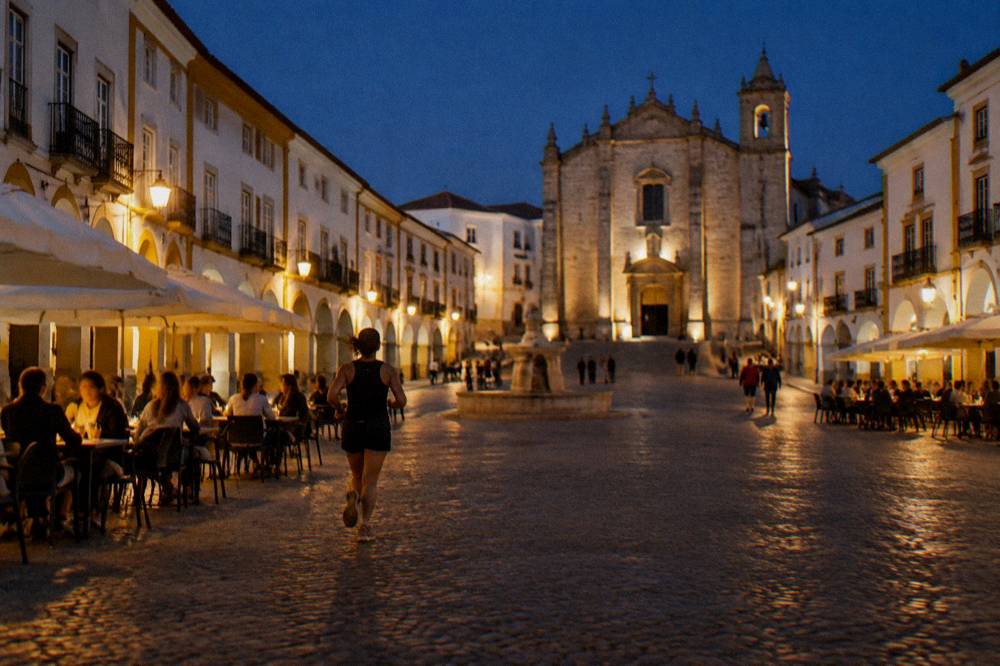
For the related flexible walking tour, the operator's live listing shows current dates and terms: Check availability.
When Is The Best Time Of Year To Visit Évora?
IPMA's 1991-2020 normals for the Évora station show a hot inland climate: July averages a maximum of 33.3 C and August 33.5 C, the year averages 31.9 days at 35 C or more, and the station's record maximum is 45.4 C, set on 4 August 2018. Rain concentrates from October to December at 81.5, 86.0 and 85.1 mm per month. Spring and autumn sit in the comfortable middle of that range.
The full monthly picture from the same normals table:
| Month | Mean maximum (C) | Mean minimum (C) | Days with 1 mm or more of rain |
|---|---|---|---|
| January | 14.1 | 4.5 | 8.6 |
| February | 15.7 | 5.0 | 7.0 |
| March | 18.7 | 6.9 | 7.5 |
| April | 20.7 | 8.5 | 8.0 |
| May | 25.0 | 10.9 | 6.0 |
| June | 30.2 | 13.8 | 1.7 |
| July | 33.3 | 15.6 | 0.6 |
| August | 33.5 | 16.0 | 0.7 |
| September | 29.5 | 14.6 | 3.6 |
| October | 24.1 | 12.3 | 7.7 |
| November | 17.6 | 7.9 | 8.8 |
| December | 14.6 | 5.3 | 8.7 |
Every figure above is the 1991-2020 average for station number 558, and the table carries no sunshine, wind or humidity rows, so none are claimed here. What the numbers do establish is that Évora's summer is seriously hot by any standard: 25.0 days a year at 30 C or more fall inside August alone in the averages, and the record shows how far the tail extends. Lisbon, by contrast, sits at the mouth of the Tagus with a coastal influence this page has no verified data to quantify, so no comparison figure is offered for it.
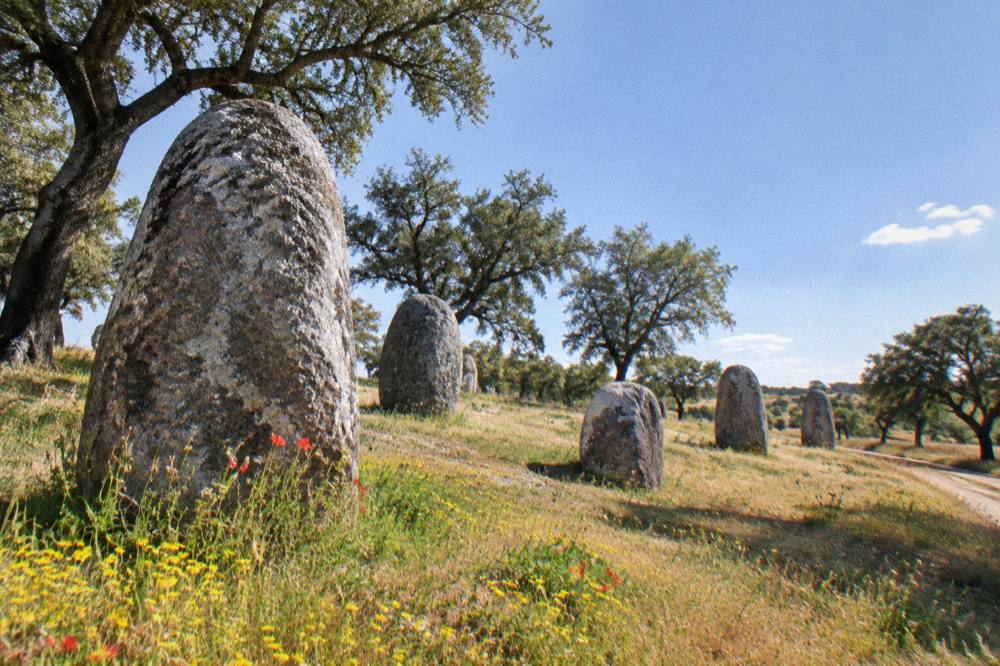
The seasonal advice that follows from the data is straightforward: May, June, September and October combine warm afternoons with the lowest rain counts outside high summer, and the megalithic sites around Évora, which have no shade, are best saved for those months. The full breakdowns live in the best time to visit Évora guide and the month-by-month Évora weather page.
How Do You Combine Évora And Lisbon In One Trip?
The two cities sit about 130 km apart on one rail line, so the standard pattern is Lisbon first, then two or three days in Évora, using CP's six through Intercidades trains from 13.90 EUR second class. Évora then works as a base for the Alentejo: Arraiolos about 20 km, Monsaraz about 40 to 45 km, Estremoz about 45 km, Vila Viçosa about 60 km. A hire car helps for the smaller towns; the historic centre itself is walked.
The classic Portuguese itinerary runs the capital, then the plains. Two or three Lisbon days cover what a capital does best, then the 07:02 or 09:02 train puts you in Évora before lunch, and the change of register is immediate: walls instead of hills, taverns instead of trams, everything on foot. Travellers flying out of Lisbon again finish in Évora and follow the route from Évora back to Lisbon airport, while those with a car may loop onward, in which case the parking in Évora guide matters before you arrive.
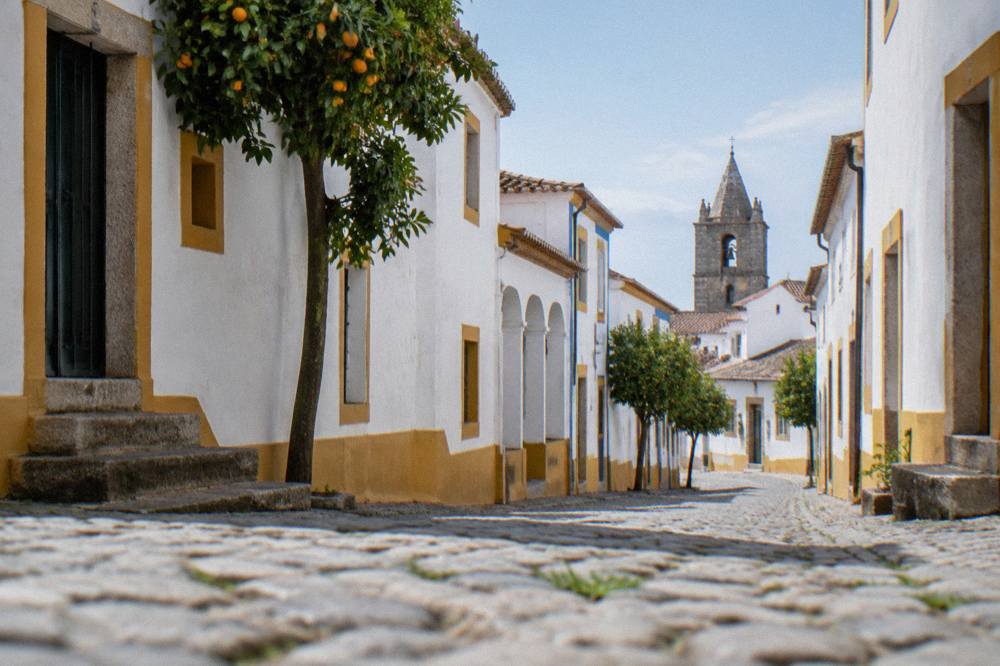
One timing note belongs here rather than anywhere else: the Capital of Culture year changes the calculus. Évora's 2027 programme is not yet published in full, but the preparation activity is already running, and a city of 53,000 hosting a European cultural year is a different proposition from the same city in an ordinary season. Anyone choosing between extra Lisbon days and extra Évora days in 2027 should watch the official programme before deciding.
For the Alentejo extensions, the best day trips from Lisbon guide covers the wider field from the capital's side, including Alentejo tours starting from Lisbon for travellers who prefer not to move hotels at all. The guided options below are the Évora-based walks worth booking ahead for the days you spend inside the walls.
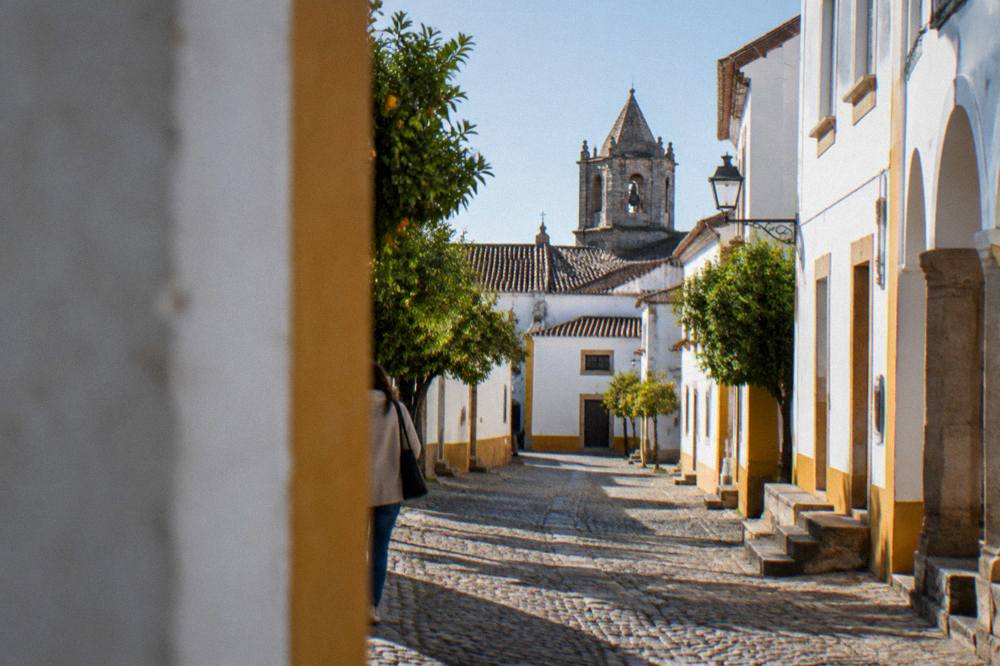
The verdict this page can honestly give is not a winner but a shape: Lisbon for breadth and scale, Évora for density, price transparency and a measured, inland calm, and the 13.90 EUR train that makes refusing the second city the only genuinely bad option. More of the practical layer, from the station to the walls, is laid out across Évora Travel Guide, and the questions below answer the comparisons travellers actually search for.
Common Questions About Évora Vs Lisbon
Is Évora worth a day trip from Lisbon?
Yes, on the verified timetable: the 07:02 Intercidades from Lisboa Oriente arrives at 08:47, and the historic centre's main monuments, the Sé, the Capela dos Ossos and the Praça do Giraldo, are all within walking distance of the station area. A day trip covers the walled centre comfortably; it cannot cover the megaliths or an evening in the city.
Is there a direct train from Lisbon to Évora?
Yes. CP's timetable valid since 6 September 2026 lists six through Intercidades trains from Lisboa Oriente to Évora, about 1 hour 40 to 1 hour 45, calling at Entrecampos, Sete Rios, Pragal, Pinhal Novo, Vendas Novas and Casa Branca with no change needed on these services. The second-class fare is 13.90 EUR.
How do you get from Lisbon to Évora?
By train, coach or car. The train is the verified option: six through Intercidades trains, about 1 hour 40 to 1 hour 45, from 13.90 EUR second class. Coaches run the route too, but no fare or timetable for them has been verified here, so check the operator. By road the distance is about 130 km.
Is Évora cheaper than Lisbon?
Évora's verified monument prices are low: 5.00 EUR for the Sé's complete visit, 7.00 EUR for the Capela dos Ossos museum ticket and 8 EUR for the Museu de Évora. No equivalent Lisbon prices were verified for a direct comparison, so the honest answer is structural: Évora's paid sights are few, cheap and central, which tends to hold a day's spending down.