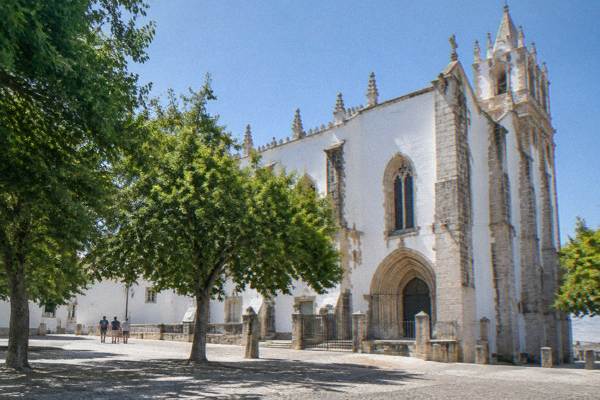
Évora In Autumn
Autumn is the season when Évora, the inland capital of the Alentejo, cools from its 33 C summer afternoons to 17.6 C November highs, the first serious rain since spring arrives, and the monuments settle into their winter hours.
Short answer
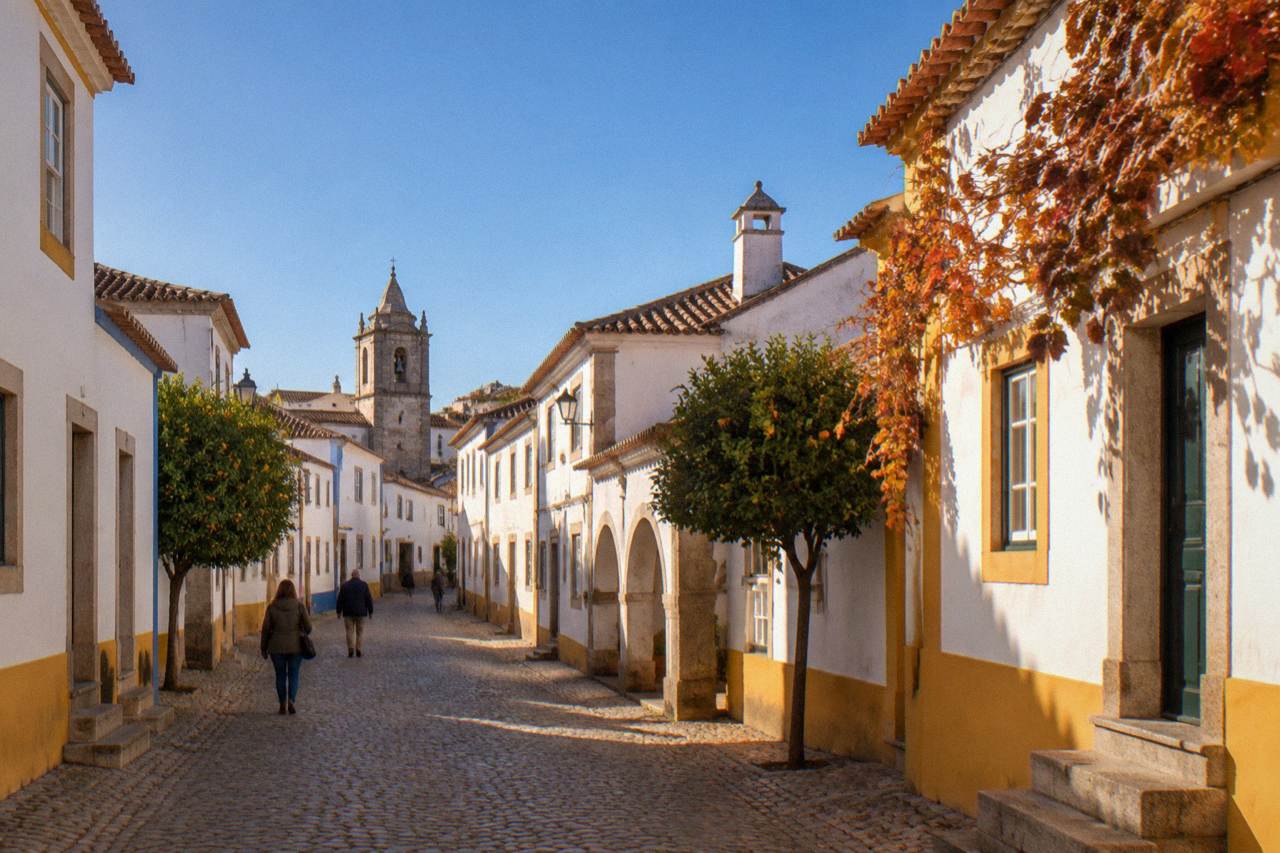
Évora in autumn means daytime highs falling from 29.5 C in September to 17.6 C in November, rain returning after a nearly dry summer, and shorter queues at the Sé, the Capela dos Ossos and the Museu de Évora. IPMA's 1991-2020 normals for the Évora station put November at a 12.8 C mean with 86.0 mm of rain, and the CP timetable valid since 6 September 2026 still runs six through trains a day from Lisbon.
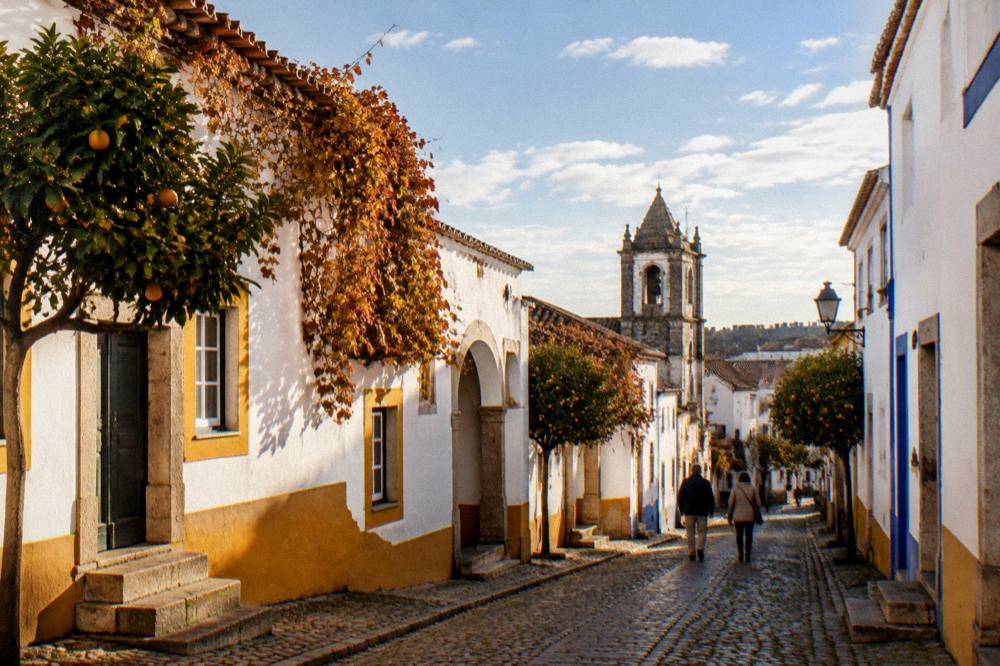
Autumn changes Évora, Portugal more visibly than it changes most Portuguese cities. This is an inland Alentejo town on a plain at 247.6 m altitude, with no sea to moderate anything: the IPMA 1991-2020 normals for the Évora station show August afternoons averaging 33.5 C and November afternoons 17.6 C, a swing of nearly sixteen degrees in three months. The rain that barely exists in July, 2.7 mm across the whole month on average, comes back in earnest in October, 81.5 mm, and November, 86.0 mm. The city does not empty out. It slows, the light goes low and gold across the whitewashed walls, and the monuments switch to their winter schedules, which for the Capela dos Ossos means 9:00-17:00 instead of the summer's 9:00-18:30.
This guide covers the season as the data defines it: what the climate normals actually say month by month, what the verified winter hours and ticket prices are for the main monuments, how the Lisbon train timetable looks, and which day trips make sense when the days shorten. The numbers come from IPMA's climate-normal series for the Évora station, CP's timetable valid since 6 September 2026, and the official pages of the monuments themselves. For the wider picture of the year, read the Évora weather guide and the best time to visit Évora.
What Is The Weather Like In Évora In Autumn?
Autumn in Évora runs from a September that still feels like summer, 22.1 C mean and 29.5 C afternoon highs, through an October that drops to 18.2 C with 81.5 mm of rain, to a November averaging 12.8 C with 17.6 C highs and 7.9 C nights. Rain days climb from 3.6 in September to 8.8 in November on the IPMA 1991-2020 normals, while days at 30 C or more fall from 13.9 to zero.
The transition is sharper here than on the coast because nothing buffers it. The station sits at 38.5365N, 7.8880W on the open plain, and the same normals that give Évora 31.9 days a year at 35 C or more also give it a record low of -4.2 C, recorded on 4 December 1998 and again on 23 January 2000. Frost is a real possibility by late November: the mean minimum for the month is 7.9 C, which puts clear nights below freezing within reach. December continues the slide to a 10.0 C mean.
| Month | Mean temp | Mean max | Mean min | Rain (mm) | Days with 1 mm+ rain | Days at 30 C+ | Days at 35 C+ |
|---|---|---|---|---|---|---|---|
| September | 22.1 C | 29.5 C | 14.6 C | 33.9 | 3.6 | 13.9 | 3.1 |
| October | 18.2 C | 24.1 C | 12.3 C | 81.5 | 7.7 | 2.9 | 0.1 |
| November | 12.8 C | 17.6 C | 7.9 C | 86.0 | 8.8 | 0.0 | 0.0 |
| December | 10.0 C | 14.6 C | 5.3 C | 85.1 | 8.7 | 0.0 | 0.0 |
All figures are IPMA 1991-2020 climate normals for the Évora station, number 558. Two practical readings follow from the table. First, September is still a hot month by most standards: nearly fourteen days at 30 C or more on average, and the first days of the month can carry the tail of the summer heat, the record maximum being 45.4 C on 4 August 2018. Second, October and November are genuinely wet by Alentejo standards, but the rain concentrates into a handful of days, eight or nine a month, rather than stretching across weeks. A typical autumn visit still gets long dry stretches between the systems coming in from the Atlantic, roughly 90 km away beyond the plain.
Is November A Good Time To Visit Évora?
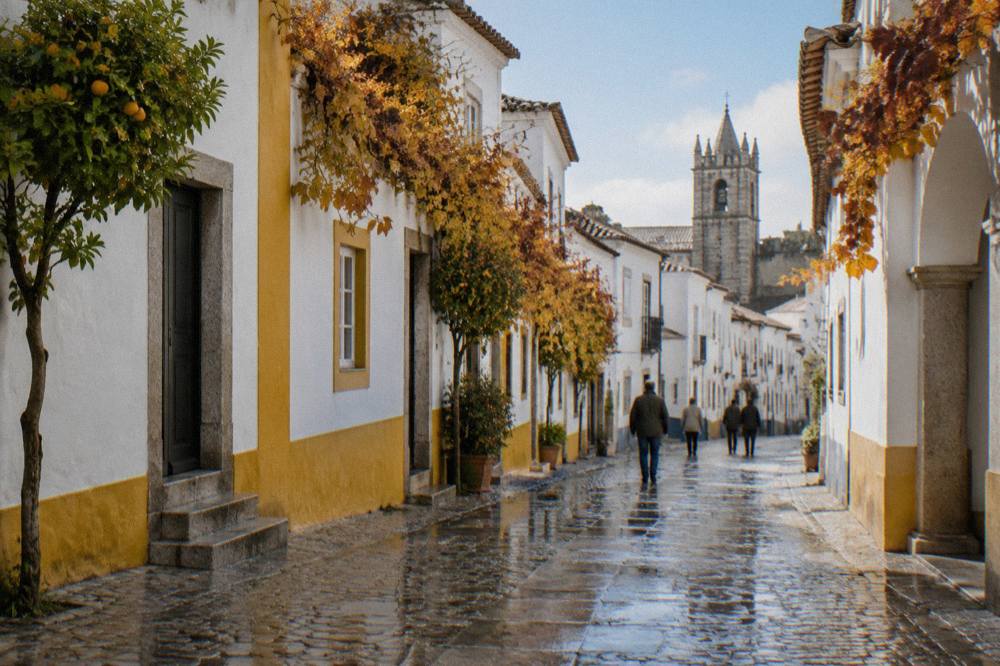
November is a good month for Évora if the aim is monuments, walking and low-season calm rather than heat: afternoons average 17.6 C, which is comfortable for the historic centre on foot, and the crowds of summer are gone. The trade-off is 86.0 mm of rain across 8.8 days on the 1991-2020 normals and nights down to 7.9 C, so waterproofs matter and some days will be indoor days at the Museu de Évora or the Capela dos Ossos.
The case for November is largely a case about light and pace. The sun sits low over the plain, the whitewashed walls of the historic centre take on a warm colour in the late afternoon, and the UNESCO-inscribed streets, the site was listed in 1986 under criteria (ii) and (iv), are walkable without the heat load of a July visit. The case against is simple: it is the wettest month of the year on the normals, just ahead of December at 85.1 mm, and the days are short enough that the Sé's 9:00-17:00 hours and the Capela dos Ossos's winter 9:00-17:00 hours fill a bigger share of the usable day.
November also sits inside the preparation year for Évora 2027, when the city and the Alentejo become a European Capital of Culture. The 2026 programme is built around the concept of "Vagar" and includes the first edition of the GUADIANA Festival of Afro-Ibero-American Literatures, 9 to 11 October 2026, with 28 authors from nine countries. The full 2027 calendar is not yet published, so anyone planning around the Capital of Culture year should check the official programme pages before committing to dates.
What Should You Pack For Évora In Autumn?
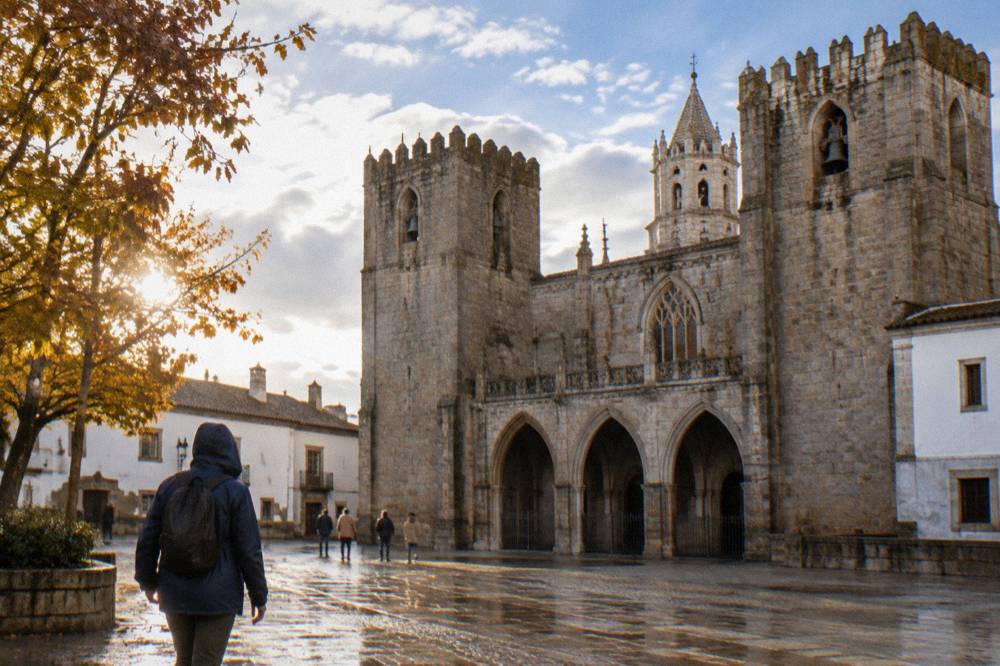
Pack for two seasons in one bag: September still needs summer clothing, sun protection and water for afternoons near 30 C, while late October and November need layers, a waterproof jacket and something warm for evenings that average 7.9 C at night. Sturdy shoes with grip matter more than in summer, because wet cobblestones and the limestone streets of the historic centre get slippery, and an umbrella or rain shell covers the eight to nine rain days a month.
The layering logic follows the normals directly. A September visit means a 14.6 C night turning into a 29.5 C afternoon, so a light jacket for the morning and evening plus summer wear for the day covers it. By November the range is 7.9 C to 17.6 C, which is autumn clothing anywhere in northern Europe: a warm mid-layer, a real coat for the evening, and the waterproof. The one constant across the whole season is footwear. Évora's streets are stone and flagged, and the wet-season version of them is unforgiving on smooth soles.
A packing list by month, sized to the normals:
| Month | Daytime wear | Evening wear | Rain gear | Footwear |
|---|---|---|---|---|
| September | Summer clothing, sun hat | Light jacket | Umbrella, rarely needed | Comfortable walking shoes |
| October | Long sleeves, light layers | Warm jacket | Waterproof jacket, umbrella | Shoes with grip |
| November | Autumn layers, warm coat | Heavy coat, scarf | Waterproof jacket, umbrella | Water-resistant shoes with grip |
One thing not to pack for: a beach. Évora is inland, with the Atlantic roughly 90 km away, and no itinerary built around this city involves a coast. What the region does offer in autumn is the landscape going over to brown and gold, which is exactly what the Alentejo travel guide covers in depth.
What Are The Best Things To Do In Évora In Autumn?
The best autumn activities in Évora are the ones the summer heat makes hard: walking the full UNESCO historic centre from the Templo Romano to the Praça do Giraldo in 17.6 C November afternoons, climbing the Sé's roof terrace without the queue, and touring the megalithic sites of the Almendres Cromlech in cool, clear air. The indoor anchors, the Capela dos Ossos, the Museu de Évora and the cathedral's museum, double as rain-day options, and all run their full winter hours through the season.
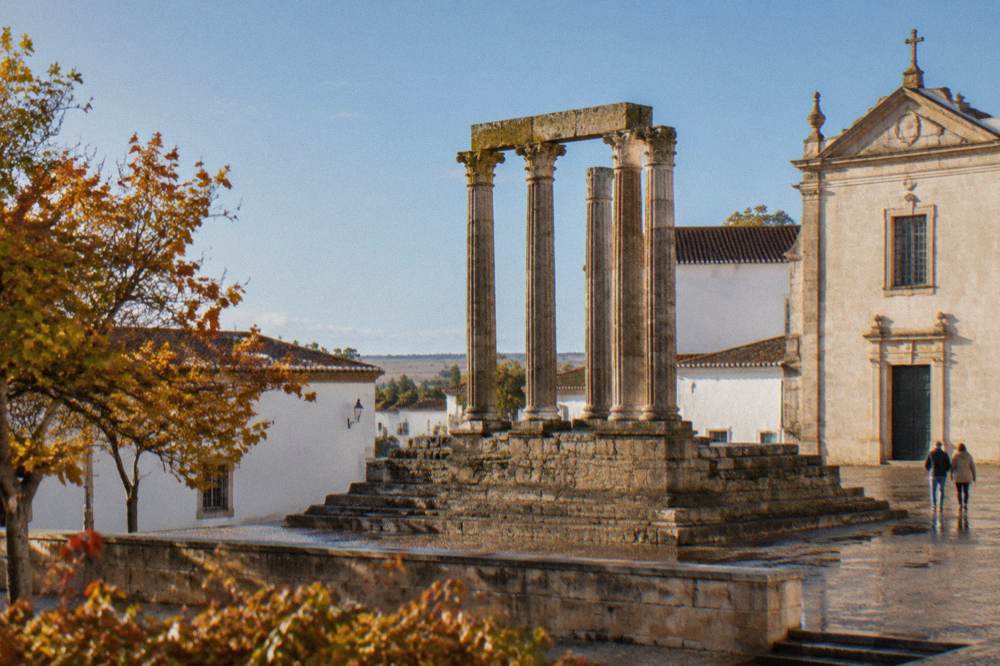
The walking argument is the strongest one. The historic centre inside the walls is compact and its main sights chain together naturally: the Templo Romano, which the municipal page says was probably dedicated to the imperial cult rather than to Diana, the Sé, the Praça do Giraldo, the Igreja de São Francisco and the Capela dos Ossos. In July, with a 33.3 C mean maximum, that circuit is an early-morning job. In October or November it is an all-day pleasure.
For something with more machinery in it, the puts two passengers in a classic sidecar for a 3-hour ride through the medieval streets with a wine tasting, from $61.90 per person and rated 4.9 from 16 reviews, and the open cockpit is a very different proposition at 18 C than at 33 C.
Beyond the walls, autumn is the right season for the megalithic circuit. The Almendres Cromlech, the Great Dolmen of Zambujeiro and the standing stones around Guadalupe sit on open ground with no shade, which makes them punishing in midsummer and atmospheric in October. The Almendres Interpretation Centre in Guadalupe keeps winter hours of 10:00-17:00 from 1 November to 30 April, and the municipal directions run along the national road toward Lisbon, with a turn-off after 8 km. The things to do in Évora page holds the full list, and the megalithic sites near the city are covered in their own detail there.
What Are The Opening Hours And Ticket Prices In Évora In Autumn?
In autumn the main monuments run their winter hours: the Sé de Évora is open 9:00-17:00 with a 5.00 EUR complete-visit ticket covering cathedral, cloister, roof terrace and museum, the Capela dos Ossos runs 9:00-17:00 in winter legal time with a 7.00 EUR adult museum ticket, and the Museu de Évora is open Tuesday to Sunday 9:30-13:00 and 14:00-17:30 at 8 EUR, closed Mondays. Children up to 12 enter the Sé free.
The Capela dos Ossos ticket is a single museum ticket that covers all the museum areas of the Igreja de São Francisco complex: the chapel itself, the Sala do Capítulo, the presépio, the sacred-art nucleus, the Sala da Tribuna Real, the terrace and the nativity collection. Youth up to 25 and seniors over 65 pay 5.00 EUR, and a family ticket for two adults with youths is 15.00 EUR. The church notes on its own page that it is a private religious entity and does not apply State Museum discounts, which matters if you are carrying a museum pass expecting reciprocity. The rest of the planning pages sit on Évora Travel Guide.
| Monument | Winter hours | Adult ticket | Closed |
|---|---|---|---|
| Sé de Évora | 9:00-17:00 | 5.00 EUR complete visit | 24 Dec afternoon, 25 Dec, 1 Jan |
| Capela dos Ossos / Igreja de São Francisco | 9:00-17:00 (winter legal time) | 7.00 EUR museum ticket | 1 Jan, Easter Sunday, 24 Dec afternoon, 25 Dec |
| Museu de Évora | Tue-Sun 9:30-13:00, 14:00-17:30 | 8 EUR | Mondays, 1 Jan, Easter Sunday, 1 May, 29 June, 25 Dec |
| Almendres Interpretation Centre, Guadalupe | 10:00-17:00 (1 Nov-30 Apr) | Check at the centre | Not stated |
The multi-site Évora Ticket, for the Cidade-Museu network, costs 8 EUR for one day, 10 EUR for two days and 12 EUR for three days, and is free to age 12. One point that catches visitors out: it does not include the Sé, the Capela dos Ossos or the Museu de Évora, so it complements rather than replaces the tickets above. Whether it pays off depends on how many of the network's other sites you plan to see; the Évora tickets and passes breakdown covers the arithmetic.
For anyone trying to compress the three headline monuments into one afternoon, which the winter hours make tight but possible, the handles it directly: a 3-hour private walk with skip-the-line entry to the university, the cathedral and the Bones Chapel plus a wine tasting, from $91.39 per person and rated 5 from 48 reviews. Check availability on the operator's live listing for autumn dates.
How Do You Get To Évora In Autumn?
The train is the standard route: CP's Intercidades timetable, valid since 6 September 2026, runs six through trains a day from Lisboa Oriente to Évora, departing at 07:02, 09:02, 09:58, 13:35, 17:02 and 19:02, arriving about 1 hour 40 to 1 hour 45 later, with a second-class fare of 13.90 EUR and first class at 18.50 EUR. Check the CP weekday remarks before planning around any single departure.
The six through trains call at Entrecampos, Sete Rios, Pragal, Pinhal Novo, Vendas Novas and Casa Branca, and no change is needed on these services. Arrivals in Évora land at 08:47, 10:45, 11:40, 15:13, 18:41 and 20:46, which means the 09:58 arrival gives a full first day and the 17:02 departure out is a workable end to a two-night stay.
| Depart Lisboa Oriente | Arrive Évora | Notes |
|---|---|---|
| 07:02 | 08:47 | Earliest start, full day in the city |
| 09:02 | 10:45 | Mid-morning arrival |
| 09:58 | 11:40 | Late-morning arrival |
| 13:35 | 15:13 | Afternoon arrival, evening in the centre |
| 17:02 | 18:41 | Evening arrival |
| 19:02 | 20:46 | Latest train, arrival after dark in November |
Coach services also connect Lisbon and Évora, and the airport run can be done directly, but no fare or timetable is printed here: check the operator's own page for current times and prices. The Lisbon to Évora by train guide holds the detail on tickets and classes, the bus version covers the coach alternative, and the Lisbon to Évora page compares the whole set of options including driving.
Where Should You Stay And Eat In Évora In Autumn?
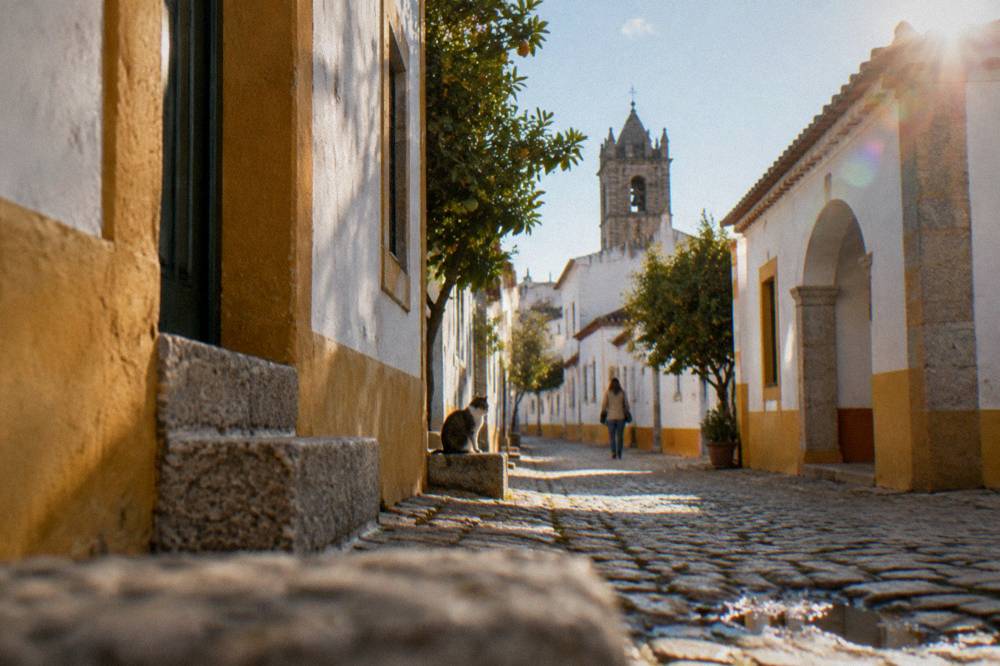
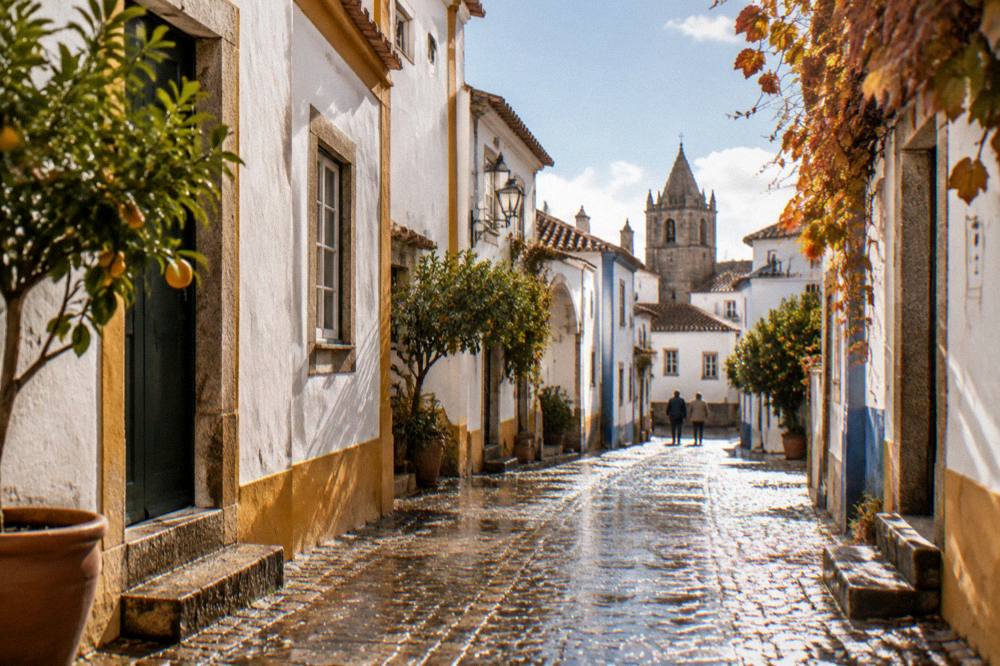
Stay inside the walls if the budget allows, because autumn's shorter days put a premium on walking back to your room after dinner at 8 C rather than driving in from outside. For eating, the Alentejo table is at its best in cool weather: the region's pork, bread and stew traditions are cold-season food, and the restaurants around the Praça do Giraldo and Rua de Alcáçova serve them without the summer crush.
No hotel, restaurant or tavern is recommended by name here, and no price ranges are quoted for them, because none of that detail is verified. What is solid is the structural advice. The where to stay in Évora guide sets out the neighbourhoods inside and outside the walls, and the Évora restaurants and Alentejo food pages cover the table in depth.
The food argument for autumn is straightforward. Alentejo cooking is built on slow dishes, bread soups, pork, game and the red wines of the region, and the Alentejo wine guide explains what those wines are like. An evening food and wine crawl is one way to sample several rooms in one night; the Évora evening food and wine crawl runs 3 hours from $83.28 per person, rated 4.6 from 19 reviews, and the autumn version starts in daylight and ends in the cold, which is the correct order of operations.
What Day Trips Work From Évora In Autumn?
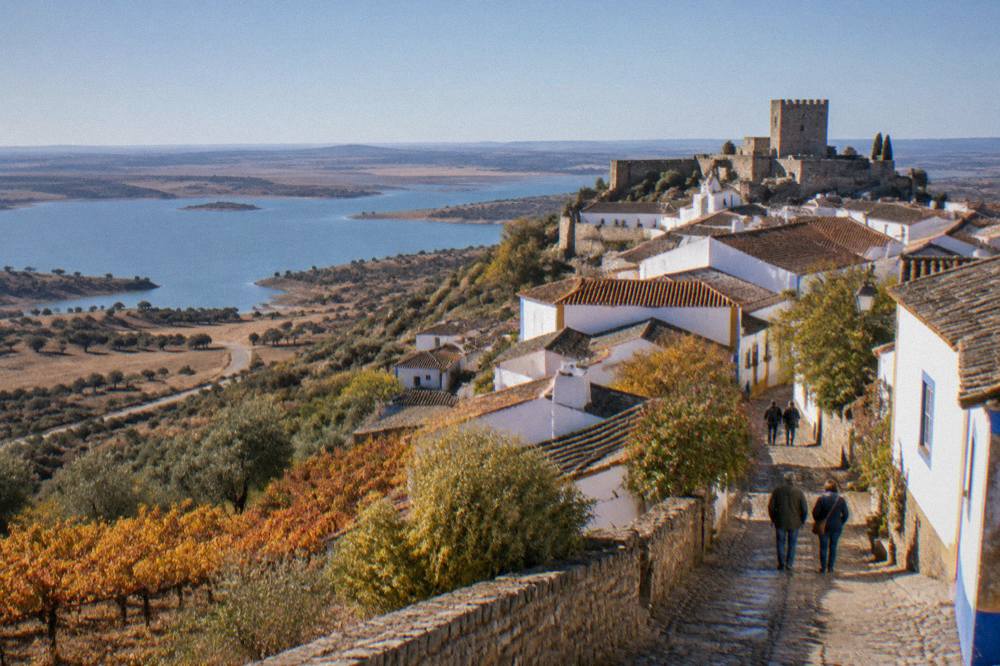
The best autumn day trips from Évora are the small Alentejo towns within an hour or so: Monsaraz and its reservoir views about 40-45 km away, Estremoz about 45 km, Vila Viçosa about 60 km and Elvas about 80 km, all of which are more comfortable to walk around at 18 C than at 33 C. The Almendres Cromlech and the megalithic circuit work the same way, and the marble town of Arraiolos, about 20 km out, is the shortest hop of all.
The distances are rounded estimates and should be read as "about". What they buy you in autumn is walking weather in places that have very little shade. Monsaraz, a walled village above the Alqueva reservoir, is brutal in August and beautiful in October. Vila Viçosa pairs a ducal palace with the marble quarries that dressed half the region's churches, and a 2-hour marble tour there runs from $28.14 per person, rated 4.8 from 82 reviews.
| Destination | Distance from Évora | Why it works in autumn |
|---|---|---|
| Arraiolos | about 20 km | Shortest trip, embroidery town, easy half day |
| Monsaraz | about 40-45 km | Walled village over the Alqueva reservoir, no shade to endure |
| Estremoz | about 45 km | Marble and a castle, walkable in cool air |
| Vila Viçosa | about 60 km | Ducal palace and marble quarries, guided tours available |
| Elvas | about 80 km | Fortified border city, full-day outing |
| Marvão | about 120 km | Hilltop village, longest run, best in clear autumn air |
Guided options take the driving off your plate. A Monsaraz and wine guided tour from Évora runs 4 hours from $78.78 per person, rated 4.6 from 51 reviews, and a version with a traditional pottery workshop in São Pedro do Corval runs 4.5 hours from $56.27 per person, rated 5 from 13 reviews. The megalithic and cork forest guided tour from Évora combines the standing stones with the montado, 4 hours from $50.65 per person, rated 4.9 from 41 reviews, and the cork landscape is at its most photogenic when the autumn light is low across it. The best day trips from Évora style overview and the individual town guides on this site carry the detail for each one.
How Does Évora In Autumn Compare With Other Seasons?
Autumn beats summer for comfort, 18.2 C October afternoons against 33.3 C July afternoons on the 1991-2020 normals, and beats winter for daylight and temperature, with November's 17.6 C highs well above December's 14.6 C. Spring is autumn's real rival, with April at a 14.6 C mean and similar rain, but spring carries the 30 C-plus days that arrive from May, 5.5 on average, while autumn carries the first frosts.
The summer comparison is not close for anyone sensitive to heat. June, July and August average 15.1, 23.7 and 25.0 days at 30 C or more respectively, and 31.9 days a year reach 35 C or more. Against that, October's 2.9 days at 30 C and November's zero make the autumn the season for doing things. The winter comparison favours autumn on temperature but not on atmosphere: the Évora in winter picture includes the Feira de São João, which in 2026 ran 23 June to 5 July, and the Christmas season, though no 2027 dates for the winter events are published yet. The choice between spring and autumn is a choice between warming days and cooling ones.
| Season | Months | Mean temp | Mean max | Rain (mm) | Character |
|---|---|---|---|---|---|
| Summer | Jun-Aug | 22.0-24.7 C | 30.2-33.5 C | 2.7-10.6 | Hot, dry, crowded, early starts |
| Autumn | Sep-Nov | 12.8-22.1 C | 17.6-29.5 C | 33.9-86.0 | Cooling, golden, rain returns |
| Winter | Dec-Feb | 9.3-10.3 C | 14.1-15.7 C | 68.6-85.1 | Cold nights, quiet, festive |
| Spring | Mar-May | 12.7-18.0 C | 18.7-25.0 C | 46.6-62.1 | Warming, green, 30 C days from May |
For travellers weighing Évora against the coast or the big cities, the Évora vs Sintra comparison and the is Évora worth visiting page set out the honest case, and autumn strengthens it: this is a city whose pleasures, stone, wine, walking and light, are all better out of the heat.
Common Questions About Évora In Autumn
Is November a good time to visit Évora?
Yes, for monuments and walking. November afternoons average 17.6 C on the IPMA 1991-2020 normals, the summer crowds are gone, and the historic centre is comfortable on foot. Expect 86.0 mm of rain across 8.8 days and nights down to 7.9 C, so pack layers and a waterproof.
Does it rain a lot in Évora in autumn?
October and November are the wettest months of the year on the 1991-2020 normals, 81.5 mm and 86.0 mm respectively, but the rain falls on seven to nine days a month rather than continuously. Long dry stretches between systems are normal, and September averages only 3.6 rain days.
How cold does Évora get in autumn?
November nights average 7.9 C and December nights 5.3 C, with the record low for the station, -4.2 C, recorded on 4 December 1998. Daytime highs stay near 17.6 C in November, so the cold is an evening and early-morning phenomenon rather than an all-day one.
Is the Capela dos Ossos open in autumn?
Yes. The Igreja de São Francisco complex runs winter legal-time hours of 9:00-17:00, open every day except 1 January, Easter Sunday, 24 December afternoon and 25 December. The adult museum ticket is 7.00 EUR, with youth to 25 and seniors over 65 at 5.00 EUR and a family ticket at 15.00 EUR.
What should I pack for Évora in November?
Layers for a 7.9 C to 17.6 C day, a warm coat for the evening, a waterproof jacket for the rain days, and shoes with grip for wet stone streets. Sun protection matters less than in summer but the September tail of the season still averages 13.9 days at 30 C or more.
Can you visit the Almendres Cromlech in autumn?
Yes, and it is one of the better seasons for it, since the site is open ground with no shade. The Almendres Interpretation Centre in Guadalupe keeps winter hours of 10:00-17:00 from 1 November to 30 April, and the municipal directions run along the national road toward Lisbon with a turn-off after 8 km.
Autumn in Évora is the season the climate data recommends: the heat has gone, the rain has not yet settled in for winter, the monuments run full hours at winter prices, and six trains a day still roll in from Lisbon on a timetable that has been valid since 6 September 2026. Bring the coat, keep the umbrella in the daypack, and give the low golden light over the whitewashed walls an hour at the end of every afternoon.