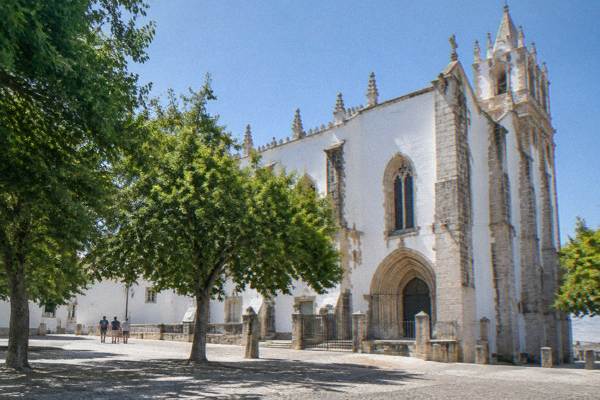
Roman Baths Of Évora
The Roman Baths of Évora are a streetside fragment of Roman Ebora, sitting inside the UNESCO-listed old town of this inland Alentejo city. This guide sets them against the Templo Romano, the aqueduct and the walls, and shows how to fold them into a day of walking Évora.
Short answer
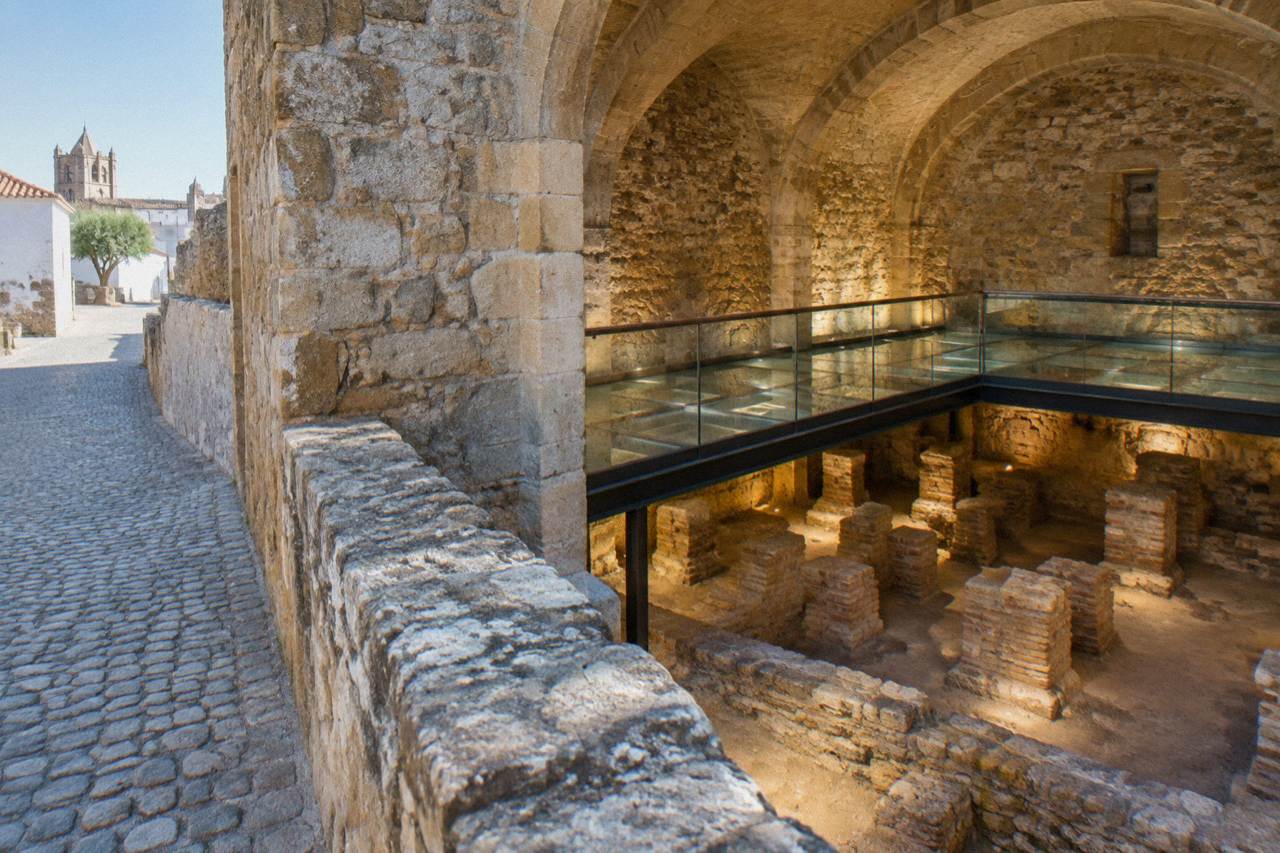
The Roman Baths of Évora are exposed remains of a Roman bathhouse inside the UNESCO historic centre of Évora, Portugal, an inland Alentejo city about 130 km from Lisbon. They are seen from the street rather than behind a ticket desk, and they pair naturally with the Templo Romano, the Sé and the Capela dos Ossos on a walking route.
The Roman Baths of Évora, Portugal, are the exposed remains of a Roman bathhouse lying inside the walled historic centre of this inland Alentejo city, roughly 130 km from Lisbon by road. Évora is the capital of the district of the same name and of the Central Alentejo sub-region, and its old town was inscribed by UNESCO in 1986 under criteria (ii) and (iv), a listing that explicitly credits the city's Roman remains alongside its golden-age architecture. The baths are the quiet member of that Roman family. The Templo Romano gets the postcards, the aqueduct gets the skyline, and the baths get a low stretch of ancient wall that most walkers pass without a pause. This guide from the Évora Travel Guide editorial desk gives the fragment its due: what it is, where it sits, how it compares with the rest of Roman Évora, and how to build a day around it.
What Are The Roman Baths Of Évora?
The Roman Baths of Évora are the surviving masonry of a bathhouse from Roman Ebora, the settlement on this part of the Alentejo plain whose ancient layer helped earn the whole historic centre its 1986 UNESCO inscription under criteria (ii) and (iv). They stand in the open, at street level, woven into the fabric of the walled city rather than displayed behind a museum door, and they belong to the same Roman stratum as the Templo Romano in the same quarter of the old town.
Bathhouses were the engine rooms of Roman civic life. Every town of any standing had one, and Ebora, prosperous enough in the imperial period to raise a temple on its high ground, was no exception. What survives in Évora today is not a reconstructed monument but a genuine slice of ancient structure, sitting where the street grid has grown around it over two millennia. That is the point of the visit. This is not a site you enter through a turnstile; it is a site you read, standing on a public street, with the modern city pressing in on every side.
The UNESCO citation frames why that matters. Criterion (iv) calls the Historic Centre of Évora the finest example of a city of the golden age of Portugal after the 1755 Lisbon earthquake, a quake Évora was largely spared. The same record notes that Moorish rule ended in 1165, that the Jesuit University of the Holy Spirit dates from 1553 and that the Jesuits were expelled in 1759. The Roman layer sits beneath all of that, and the baths are one of the places where you can stand with your eyes on it.
For a fuller survey of the ancient sites in and around the city, the companion page on Évora's ancient and Roman sites gathers the whole layer in one route.
Where Are The Roman Baths In Évora'S Historic Centre?
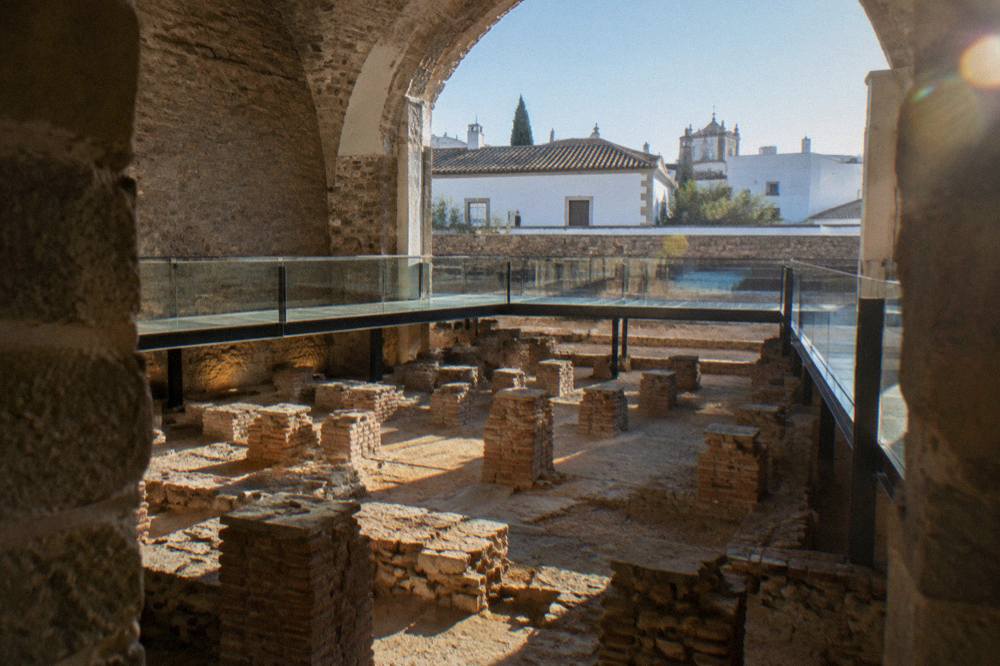
The baths sit inside the walls of the historic centre of Évora, the UNESCO property inscribed in 1986, which UNESCO's criterion (iv) describes as the finest example of a city of the golden age of Portugal after the 1755 Lisbon earthquake, a disaster Évora was largely spared. The city is the capital of the Évora district and of the Central Alentejo sub-region, inland on the Alentejo plain, with the Atlantic roughly 90 km away.
Everything in the old town is close to everything else, which is why the baths work so well on a walking itinerary. The medieval wall still encircles the core, and the great squares, the Roman walls and the medieval wall, the Água de Prata aqueduct and the Roman fragment itself all sit within a compact perimeter. Visitors arriving by train walk in from the station through streets that thicken with history as the wall approaches.
Distances matter for planning the wider trip, and the verified rounded figures look like this:
| Place | Distance From Évora |
|---|---|
| Lisbon | about 130 km |
| Arraiolos | about 20 km |
| Monsaraz | about 40 to 45 km |
| Estremoz | about 45 km |
| Vila Viçosa | about 60 km |
| Elvas | about 80 km |
| Marvão | about 120 km |
None of these neighbours has a sea view either; the Alentejo is interior country, and Évora is its capital. That geography shapes the whole visit: dry heat in summer, low golden light in the evening, and a city whose monuments were built to be seen on foot.
The guided options above all start in Évora itself and move through the historic centre, which is the natural way to meet the Roman layer first rather than hunting for it on a map.
How Do The Roman Baths Compare With Évora'S Other Roman Remains?
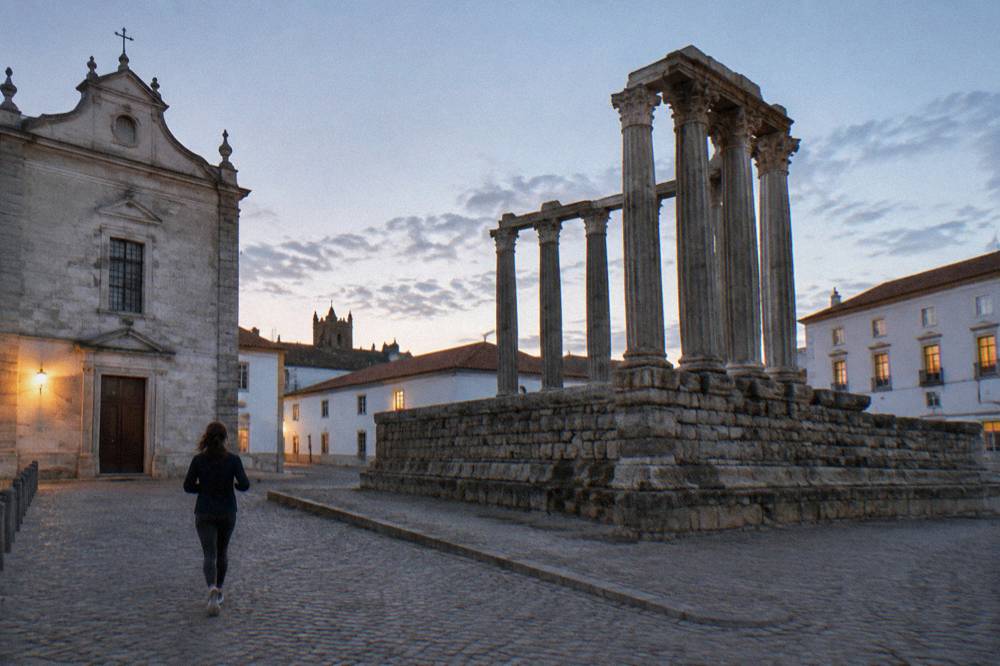
The Templo Romano is the headline Roman monument: the municipal page says it was probably dedicated to the imperial cult rather than to the goddess Diana, a name only in use since the 17th century, that it measures 25 x 15 m, that it was reused as a municipal butcher's, and that its walls were freed in 1870 under Cinatti. The baths are quieter, a streetside fragment rather than a landmark, while the Água de Prata aqueduct and the Roman walls complete the same ancient layer.
The comparison is instructive. The temple survived because it was built into the city's fabric and then, ignobly, used as a butcher's shop for centuries, which preserved its columns even as it hid their purpose. The baths survived as the opposite kind of survivor: not a grand elevation but a low horizontal structure, the sort of thing later builders simply built over and around. Évora's old town is full of these collisions, Roman footing under medieval wall under Manueline window.
The municipal page for the Templo Romano is the city's most detailed official Roman source, and it is worth reading before a visit because it corrects the popular name. The temple stands beside the Sé de Évora, and the pair anchors the high ground of the old town. The aqueduct, by contrast, runs out along a long arm of arches; the question of whether Portugal has Roman aqueducts is answered at length on its own page.
| Roman Site In Évora | What The Official Material Says | Planning Note |
|---|---|---|
| Templo Romano | Probably dedicated to the imperial cult, not Diana; 25 x 15 m; reused as a butcher's; walls freed in 1870 | Open-air monument, no ticket listed |
| Roman Baths | Exposed bathhouse remains inside the inscribed historic centre | Ask at the Posto de Turismo before planning around a fee |
| Água de Prata aqueduct | A defining arch-built feature of the eastern approaches | Seen from the street; no hours or prices are given |
| Roman walls | Ancient and medieval circuits enclosing the core | Public streets; check the municipal pages before a detour |
For the prehistoric side of the region's deep past, the Cromeleque dos Almendres lies outside the city and belongs to a different, older story again.
What Can You See At The Roman Baths Today?
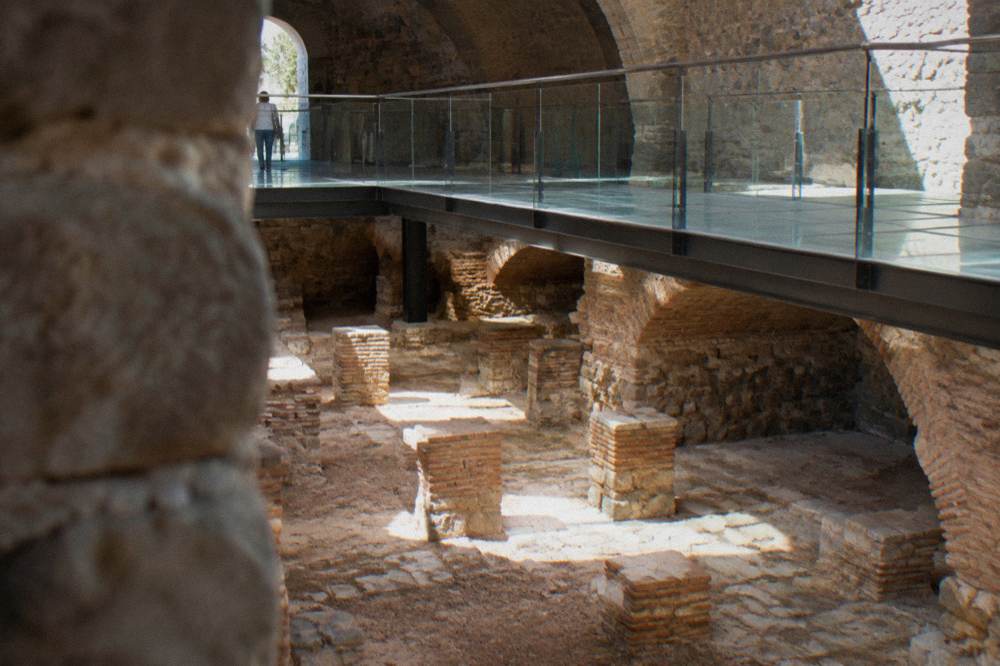
What you see today is exposed ancient masonry at street level: the lower structure of a bathhouse woven into the modern cityscape rather than excavated behind a ticket desk. Roman bathhouses of the imperial period typically arranged hot, warm and cold rooms over heated floors and a furnace wall, and the fragment in Évora belongs to that tradition of working architecture. The Templo Romano, at 25 x 15 m, carries the interpretive weight for the Roman period in the city.
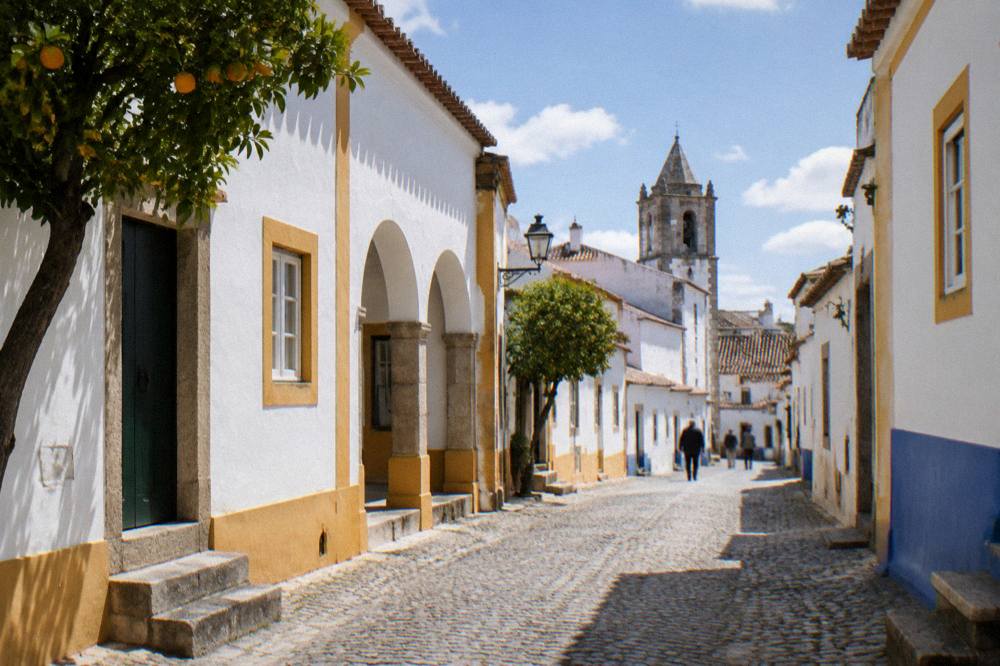
Reading the fragment takes a small shift of habit. The baths reward the visitor who looks down and along, at courses of stone and the spring of an arch, rather than up at a façade. The surrounding streets do the rest of the work: whitewash, chimney pots, washing lines, the ordinary Alentejo street life that has been neighbours with this wall for as long as anyone can trace. It is one of the pleasures of Évora that antiquity is not fenced off from the present.
The honest framing is structural rather than statistical. A bathhouse of this kind, in a town of Roman Ebora's standing, would have served the daily rituals of bathing, exercise and conversation that defined civic life, and its position within the walled centre reflects how central that function was. What the modern street preserves is the bones of that building. Context comes from the surrounding quarter, where the Igreja de São Francisco and its Capela dos Ossos, the Museu de Évora and the Praça do Giraldo hold the documented, ticketed end of the city's story.
Visitors who want the whole archaeological picture can extend to the page on Évora's archaeological sites, which sets the baths inside the wider sweep of finds from the region.
Do The Roman Baths Of Évora Charge Admission?
No admission figure for the Roman Baths can be given here, and none should be assumed. The practical move is to ask at the Posto de Turismo on Praça do Giraldo 73 before planning a visit around a fee, because the monument reads as an open streetside site in the same way the Templo Romano does, an open-air monument with no ticket listed on its municipal page. Treat the baths as something you see from the public street.
That distinction, between a streetside monument and a ticketed interior, is the single most useful planning fact about the Roman layer of Évora. The city's paid monuments are concentrated and well documented: the Sé, the Capela dos Ossos, the Museu de Évora. The Roman fragments, the baths included, live in the open and cost the shoe leather it takes to reach them.
A word on the tourist office itself. Its opening hours are published on the municipal pages, so check them there before setting out, and treat them as indicative and confirm on arrival. The office is the right place for questions the street cannot answer, including anything about access arrangements at the baths on the day.
A municipal tourist tax applies to overnight stays in the city; check with your hotel at booking, since amounts and collection details vary by property.
Which Guided Tours Of Évora Cover The Roman Sights?
Walking tours of the historic centre are the natural fit, and the Street Stories walking tour, from $53.90 per person and rated 4.8 from 37 reviews, is the featured pick for this page. A small-group cultural walk that includes the Chapel of Bones runs from $77.66 per person, and a flexible historic-centre walk starts from $13.51, so the on-foot guided range spans roughly $13.51 to $77.66 per person across options that pass the Roman layer.
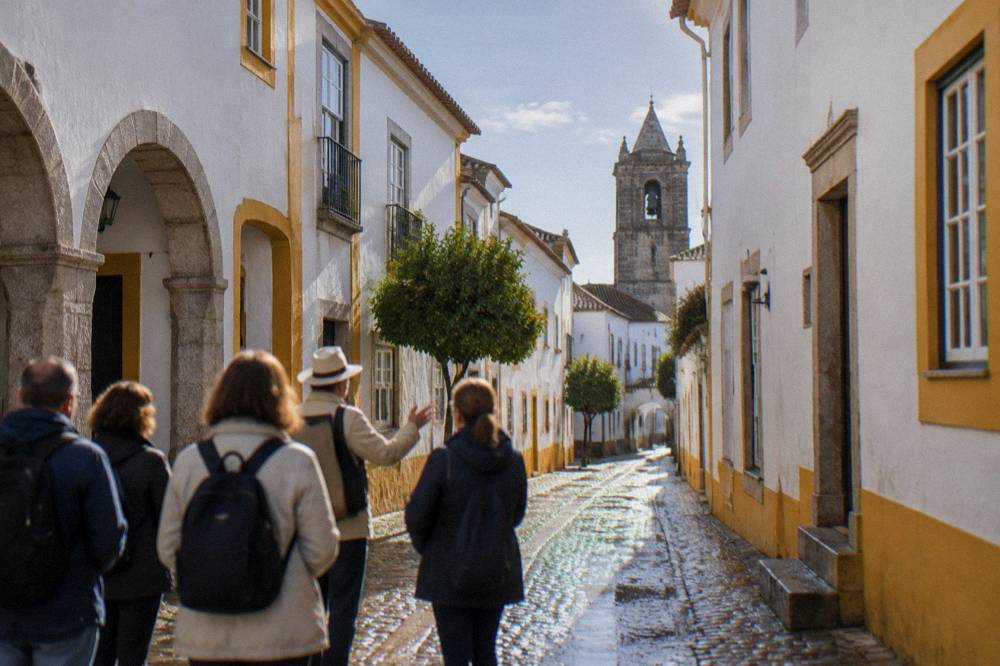
A guide earns their fee at the baths more than at almost any other stop in Évora, because the fragment explains little on its own. A good walking guide supplies the Roman context, the story of Ebora's growth, and the thread that runs from the baths to the temple to the aqueduct. The featured option, the Check availability listing for the Street Stories walk, moves through the historic centre with the city's narrative attached.
The comparison below uses each operator's live listing for its figures, all in US dollars:
| Tour | Best For | From Price | Rating | Duration |
|---|---|---|---|---|
| Street Stories Walking Tour | The full historic-centre narrative | $53.90 per person | 4.8 from 37 reviews | See card |
| Small-Group Cultural Walk with Chapel of Bones | Roman layer plus the famous chapel | $77.66 per person | 4.9 from 141 reviews | 2 hours |
| Personal and Flexible Historic-Centre Walk | Budget-friendly flexible pacing | $13.51 per person | 4.8 from 105 reviews | 3 hours |
| Medieval Sidecar Tour with Wine Tasting | A wheeled spin through the old town | $61.90 per person | 4.9 from 16 reviews | 3 hours |
| Golden Era Walk with Wine Tasting | History plus a glass at the end | $23.92 per person | 4.4 from 33 reviews | 2.5 to 3 hours |
The sidecar option deserves a note for travellers with mobility limits or small children in tow: it covers the same ground as a walk at a different pace, and the listing carries the details on what is included.
The Golden Era walk pairs the city's architectural peak with a tasting, a combination that suits an afternoon arrival and a relaxed first evening in the old town.
For visitors who simply want a cheap, cheerful orientation before exploring alone, the flexible walk at $13.51 is the entry point, and its 4.8 rating from 105 reviews suggests it over-delivers for the price.
How Do You Fit The Roman Baths Into A Day In Évora?
Pair the baths with the Templo Romano, the Sé de Évora at 5.00 EUR for the complete visit, and the Capela dos Ossos at 7.00 EUR adult, then decide whether the Évora Ticket, at 8 EUR for one day, suits your list, remembering it does not include the Sé, the Capela dos Ossos or the Museu de Évora. The baths ask little of the clock: they are a stop on a walking route, not a half-day commitment.
The paid monuments of the city publish their figures clearly, which makes the arithmetic easy:
| Monument | Official Ticket | Notes |
|---|---|---|
| Sé de Évora | 5.00 EUR complete visit | Cathedral, cloister, roof terrace and museum; children up to 12 free |
| Capela dos Ossos and Igreja de São Francisco | 7.00 EUR adult | Youth to 25 and seniors over 65 at 5.00 EUR; family ticket 15.00 EUR |
| Museu de Évora | 8 EUR adult | Closed Mondays; youth, seniors and family ticket 50% off |
| Évora Ticket | 8 EUR one day, 10 EUR two days, 12 EUR three days | Free to age 12; excludes the Sé, the Capela dos Ossos and the Museu de Évora |
A sensible day shape looks like this:
| Part Of The Day | Focus | Why It Works |
|---|---|---|
| Morning | Templo Romano, the baths, the Sé | The Roman high ground first, before the heat builds |
| Afternoon | Capela dos Ossos, the Museu de Évora | Ticketed interiors during the warmest hours |
| Evening | Praça do Giraldo and dinner | The Alentejo evening is the city's best hour |
The Museu de Évora, founded officially in 1915 and housed in the former Archbishop's Palace, is the place where finds from the city's long history are interpreted under one roof, and it closes on Mondays as well as on 1 January, Easter Sunday, 1 May, 29 June and 25 December. The Capela dos Ossos keeps summer hours of 9:00 to 18:30 and winter hours of 9:00 to 17:00, open every day except 1 January, Easter Sunday, the afternoon of 24 December and 25 December. The Sé runs 9:00 to 17:00 and closes on the afternoon of 24 December, 25 December and 1 January.
For the full menu of the city, the things to do in Évora page collects the lot, and the University of Évora and the Convento dos Lóios round out the monumental core for a second day.
When Is The Best Time Of Year To Visit The Roman Baths?
IPMA's 1991 to 2020 normals for the Évora station show why spring and autumn suit a streetside monument: July averages a maximum of 33.3 C and August 33.5 C, with 31.9 days a year reaching 35 C or more, while May and October sit at mean maxima of 25.0 C and 24.1 C. The record high, 45.4 C, was set on 4 August 2018, and the record low, -4.2 C, on 4 December 1998 and 23 January 2000.
The monthly picture, all figures from the 1991 to 2020 normals for station 558:
| Month | Mean Max (C) | Mean Min (C) | Days With 1 mm+ Rain | Days At 30 C Or More |
|---|---|---|---|---|
| January | 14.1 | 4.5 | 8.6 | 0.0 |
| February | 15.7 | 5.0 | 7.0 | 0.0 |
| March | 18.7 | 6.9 | 7.5 | 0.0 |
| April | 20.7 | 8.5 | 8.0 | 0.3 |
| May | 25.0 | 10.9 | 6.0 | 5.5 |
| June | 30.2 | 13.8 | 1.7 | 15.1 |
| July | 33.3 | 15.6 | 0.6 | 23.7 |
| August | 33.5 | 16.0 | 0.7 | 25.0 |
| September | 29.5 | 14.6 | 3.6 | 13.9 |
| October | 24.1 | 12.3 | 7.7 | 2.9 |
| November | 17.6 | 7.9 | 8.8 | 0.0 |
| December | 14.6 | 5.3 | 8.7 | 0.0 |
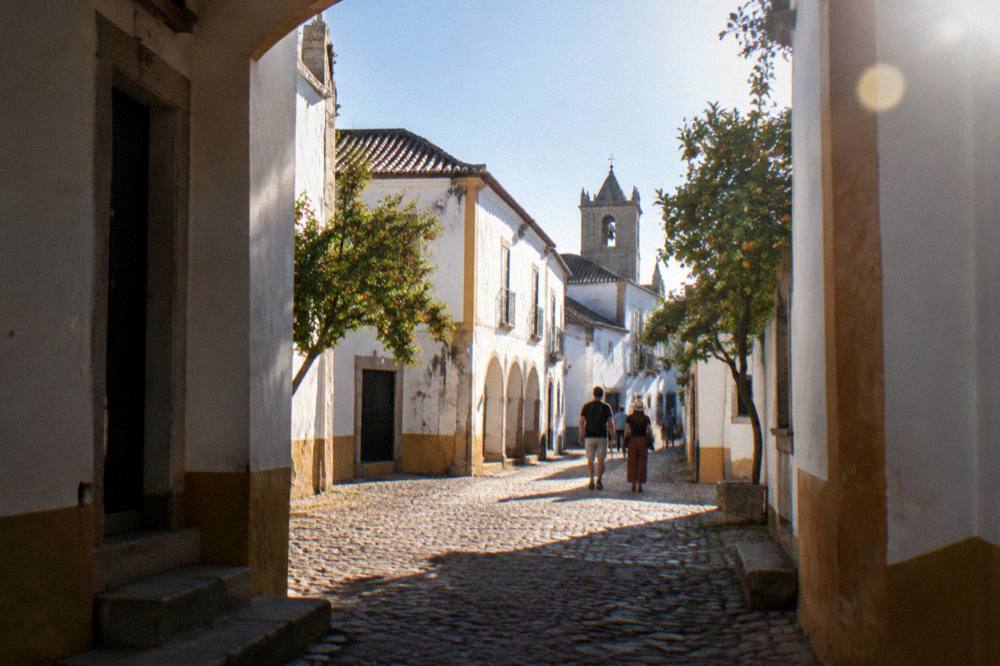
For a monument seen from an open street, the arithmetic is simple. The bath fragment has no shade, no queue and no interior to retreat into; the Roman layer of Évora is best walked in the shoulder months or in the early and late edges of a summer day. Rain, by contrast, is a modest factor: the normals show 68.9 days a year with a millimetre or more, concentrated from October through December.
The city's calendar adds a second reason to time a trip. Évora and the Alentejo are a European Capital of Culture in 2027, with 2026 running as a preparation year built on the concept of Vagar, and the full 2027 programme had not been published as of October 2026. Visitors in the years either side of the title will find a city in the middle of a cultural build-up.
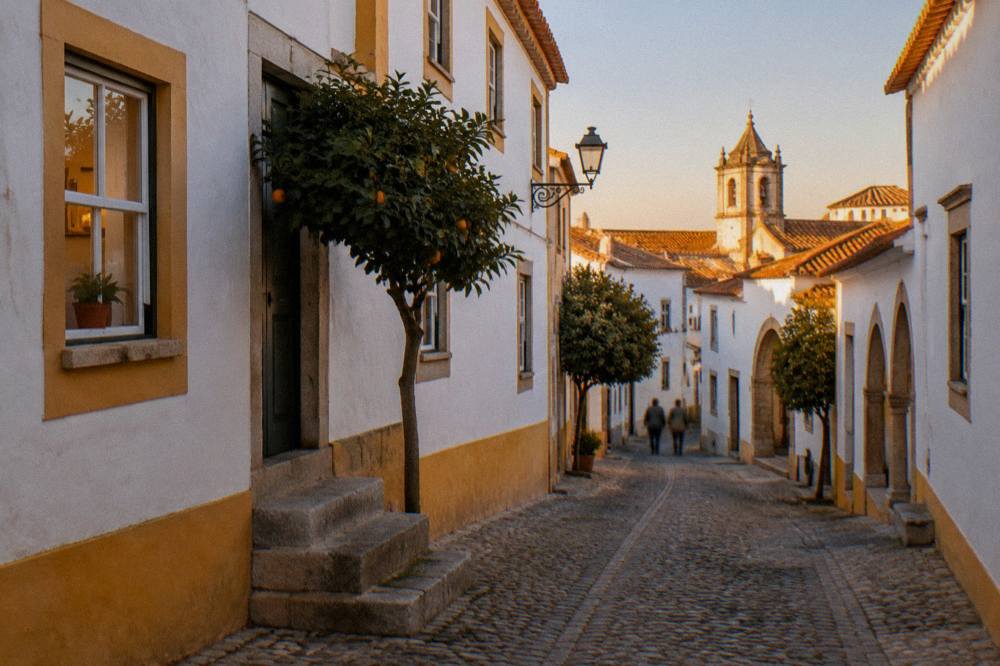
Whichever month you choose, a guided walk of the historic centre remains the most efficient way to reach the baths with their context intact.
How Do You Get To Évora To See The Roman Baths?
CP's Intercidades timetable, valid since 6 September 2026, lists six through trains from Lisboa Oriente to Évora, taking about 1 hour 40 to 1 hour 45, with a second-class fare of 13.90 EUR and first class at 18.50 EUR. Lisbon is about 130 km away by road, so the train is the straightforward gateway for a visit built around the historic centre and its Roman layer.
The six daily departures in the current timetable:
| Depart Lisboa Oriente | Arrive Évora |
|---|---|
| 07:02 | 08:47 |
| 09:02 | 10:45 |
| 09:58 | 11:40 |
| 13:35 | 15:13 |
| 17:02 | 18:41 |
| 19:02 | 20:46 |
The services call at Entrecampos, Sete Rios, Pragal, Pinhal Novo, Vendas Novas and Casa Branca, and the through trains require no change at Casa Branca. Check the operator's own timetable for weekday variations before locking a plan, since remarks in the PDF govern specific days.
Once in the city, everything Roman is walkable. The historic centre is compact, the streets are the attraction, and the baths sit on a route that naturally takes in the temple, the cathedral and the aqueduct's arches. Travellers combining Évora with the wider region can reach Arraiolos in about 20 km, Estremoz in about 45 km and Vila Viçosa in about 60 km, all inland Alentejo towns of the same golden stone.
Common Questions About The Roman Baths Of Évora
Are The Roman Baths Of Évora Inside The UNESCO Historic Centre?
Are the Roman Baths of Évora inside the UNESCO Historic Centre?
Yes. The baths lie within the Historic Centre of Évora, the property UNESCO inscribed in 1986 under criteria (ii) and (iv). The same inscription credits the city's Roman remains, including the temple popularly named after Diana, as part of what makes the old town exceptional.
Can You Visit The Roman Baths Of Évora For Free?
Can you visit the Roman Baths of Évora for free?
No admission figure for the baths can be stated here. The monument reads as an open streetside site, in the manner of the Templo Romano, an open-air monument with no ticket listed on its municipal page. Ask at the Posto de Turismo on Praça do Giraldo 73 before planning around a fee.
What Else From Roman Évora Can You See In The City?
What else from Roman Évora can you see in the city?
The Templo Romano, probably dedicated to the imperial cult according to the municipal page, measuring 25 x 15 m, reused as a butcher's and freed of later walls in 1870. The Água de Prata aqueduct and the Roman walls complete the layer, and the Cromeleque dos Almendres outside the city belongs to the much older, prehistoric story.
Do Guided Tours Of Évora Include The Roman Sights?
Do guided tours of Évora include the Roman sights?
Yes, the historic-centre walks do. The Street Stories walking tour runs from $53.90 per person with a 4.8 rating from 37 reviews, a small-group cultural walk with the Chapel of Bones runs from $77.66, and a flexible historic-centre walk starts from $13.51. All figures come from each operator's live listing.
How Far Is Évora From Lisbon, And How Long Does The Train Take?
How far is Évora from Lisbon, and how long does the train take?
Lisbon is about 130 km from Évora by road. CP's Intercidades timetable, valid since 6 September 2026, lists six through trains from Lisboa Oriente taking about 1 hour 40 to 1 hour 45, at 13.90 EUR in second class and 18.50 EUR in first class.
Is Évora Worth Visiting For Roman History Alone?
Is Évora worth visiting for Roman history alone?
Roman history alone makes a strong day: the Templo Romano, the baths, the aqueduct and the walls, all inside a UNESCO-inscribed centre. Most visitors stay longer, because the Sé at 5.00 EUR, the Capela dos Ossos at 7.00 EUR and the Museu de Évora at 8 EUR sit on the same streets, and the city is a European Capital of Culture for 2027.
The Roman Baths of Évora ask for ten quiet minutes and reward them with two thousand years of context, and they are at their best as one stop on a slow walk through the finest surviving city of Portugal's golden age.