Ancient And Roman Sites In Évora
Roman Évora survives in the open, in the middle of a living city: a temple, baths, wall fragments, an aqueduct and, out in the countryside, one of Europe's great stone circles. This guide covers each ancient site, what is actually known about it, and how to see them all.
Short answer
The core ancient sites of Évora are the Templo Romano in the historic centre, the Roman baths inside the town hall building, the surviving wall circuit, the Água de Prata aqueduct and, about 8 km out on the road toward Lisbon, the Almendres Interpretation Centre serving the cromlech and the surrounding megalithic landscape. The Templo Romano is an open-air monument with no ticket, and the interpretation centre keeps summer and winter hours.
Évora, the inland capital of the Alentejo in southern Portugal, keeps its oldest layers in plain sight. A Roman temple stands in the middle of the historic centre, baths sit beneath a municipal building, wall fragments curve through back streets, and an aqueduct marches into the city from the east. Beyond the walls, the plain holds one of the largest concentrations of megalithic monuments in the Iberian Peninsula. This guide walks through each ancient site in Évora, sets out what the primary sources actually say about them, and explains how to fit them into a visit.
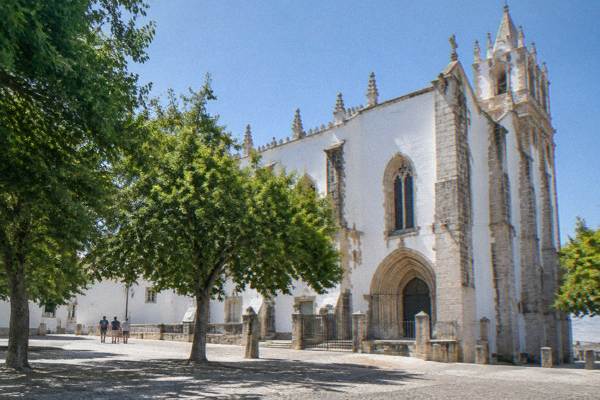
The city's Roman name was Ebora, and its historic centre was inscribed by UNESCO in 1986 under criteria (ii) and (iv). Criterion (iv) calls it the finest example of a city of the golden age of Portugal after the 1755 Lisbon earthquake, a quake Évora was largely spared. That sparing is part of why so much survives: the temple, the walls and the street plan were never flattened and rebuilt from scratch. For the long arc from Roman Ebora to the present, the history of Évora carries the full story, and the question of what the history of Évora adds in plain form.
What Roman Remains Can You Still See In Évora?
Five distinct layers of ancient Évora are visible today: the Templo Romano in the centre, the Roman baths inside the town hall building on Rua do Raimundo, the surviving wall circuit that mixes Roman and medieval masonry, the Água de Prata aqueduct running in from the east, and the megalithic landscape outside the city, anchored by the Cromeleque dos Almendres. Together they cover well over five thousand years of settlement, all within reach of the historic centre.
The remarkable thing about Évora is not that Roman material exists, it is where it exists. The temple shares a square with a museum. The baths sit under a working municipal building. Wall stones serve as the foundations of houses people live in. Nothing is fenced off behind glass in a way that separates it from the city, which is precisely what the UNESCO citation recognised in 1986: a living place whose golden-age fabric survived, not a dig site.
| Ancient Site | What It Is | Access Today |
|---|---|---|
| Templo Romano | Roman temple, probably dedicated to the imperial cult | Open-air monument, no ticket listed |
| Roman baths (Termas Romanas) | Bath complex inside the town hall building | Check the municipal notice before visiting |
| City walls | Circuit mixing Roman foundations and medieval rebuilding | Public streets, visible throughout |
| Água de Prata aqueduct | Aqueduct carrying water into the city | Public streets, visible throughout |
| Cromeleque dos Almendres | Stone circle in the countryside near Guadalupe | Open ground; interpretation centre keeps set hours |
For a fuller rundown of the megalithic side, the megalithic sites near Évora go deep on the cromlech, the dolmens and how to move between them, and the archaeological sites of Évora collect the city's digs and finds in one place.
Is The Templo Romano Actually The Temple Of Diana?
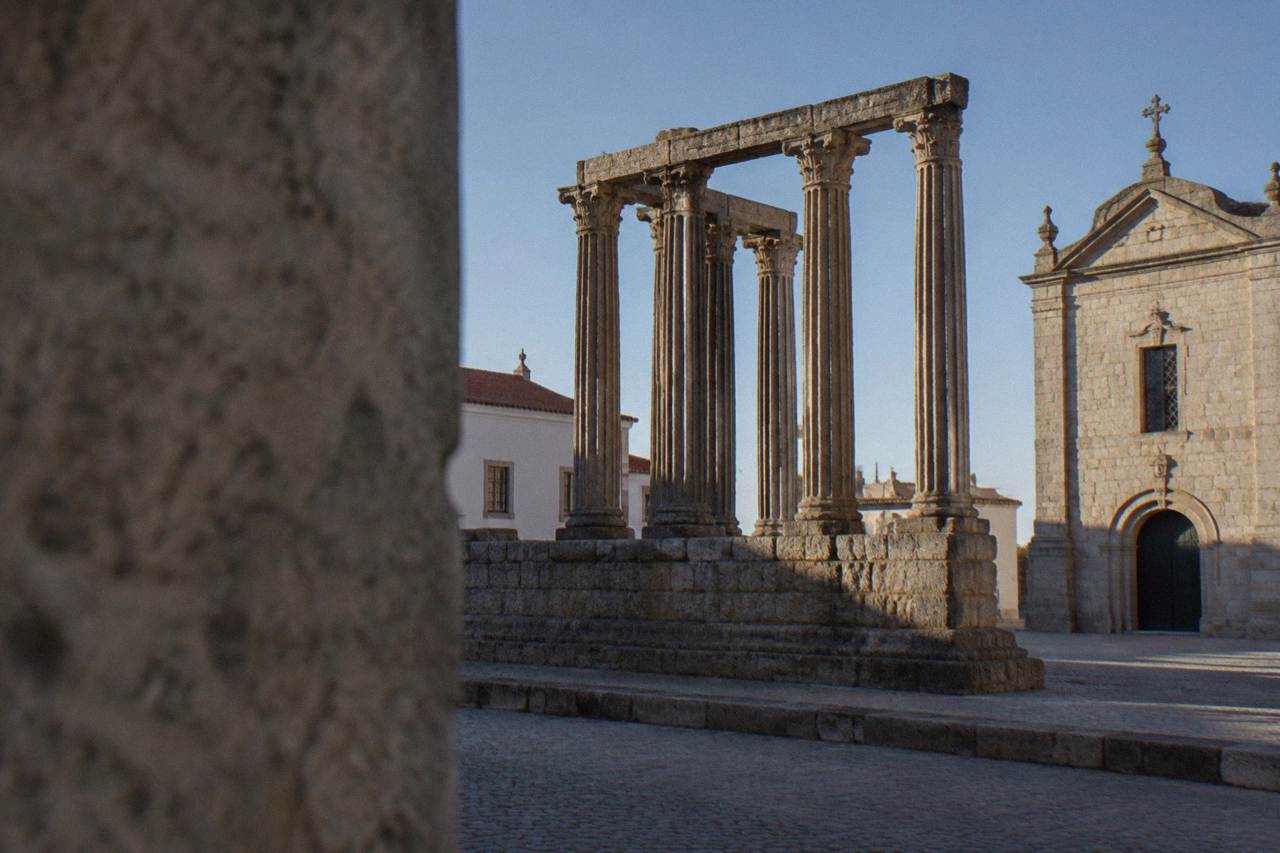
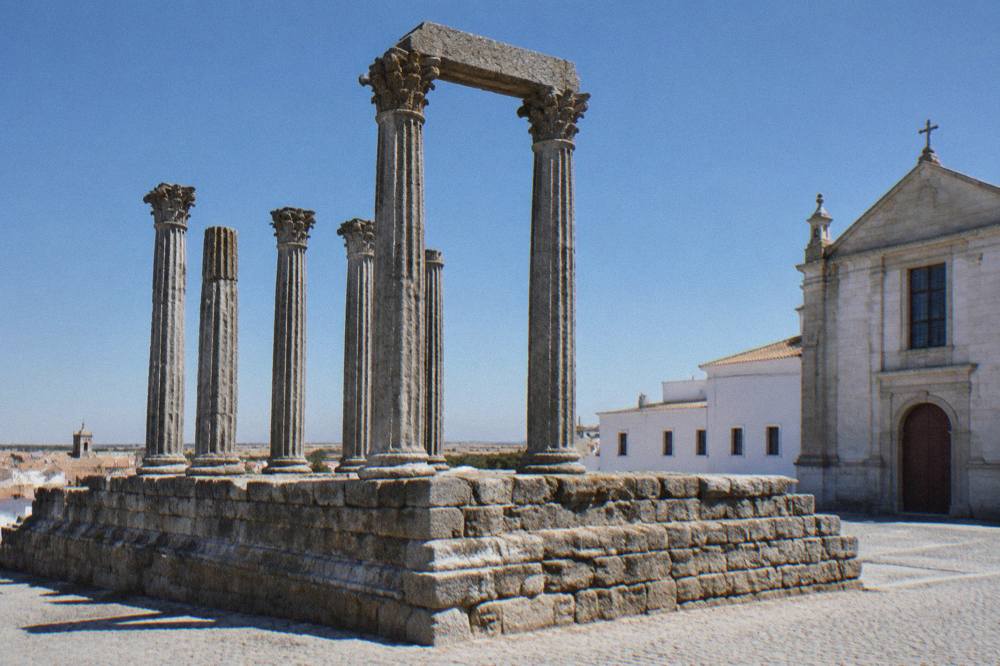
The name Temple of Diana has been used since the 17th century, but the municipal page for the monument says the temple was probably dedicated to the imperial cult, not to the goddess Diana. It measures 25 x 15 m, it was reused as a municipal butcher's in later centuries, and its walls were freed in 1870 under Cinatti. It stands today as an open-air monument with no ticket and no listed hours, visible at any time from the square.
That is the honest answer, and it is more interesting than the legend. The Diana name stuck because a temple with columns invites a goddess, and Diana was the convenient guess of a later age. The municipal page is careful: probably dedicated to the imperial cult, meaning the cult of the emperor himself, which was a common purpose for grand provincial temples. The 25 x 15 m footprint makes it a substantial building, not a roadside shrine.
The butcher's chapter is the detail that stays with visitors. For years the temple's interior spaces served the city's meat trade, which sounds like vandalism but is also why the structure stayed standing and useful instead of being quarried for stone. The 1870 clearing under Cinatti stripped away the later accretions and left the columns the city shows today.
| Templo Romano | What The Record Says |
|---|---|
| Traditional name | Temple of Diana, in use since the 17th century |
| Probable dedication | The imperial cult, per the municipal page |
| Dimensions | 25 x 15 m |
| Later reuse | Municipal butcher's |
| Cleared | 1870, under Cinatti |
| Access | Open-air, no ticket or hours listed |
The Roman temple of Évora has its own full page with the surrounding square, the neighbouring church and the viewpoints. What matters for planning here is simple: the temple costs nothing to look at, it sits five minutes from Praça do Giraldo, and it is best early or late in the day when the low sun warms the granite.
Where Are Évora'S Roman Baths And What Survives?
Évora's Roman baths sit inside the town hall building on Rua do Raimundo, where a section of the bath complex, including parts of the heating system, is preserved in the basement and can be viewed on visits arranged through the municipal service. No ticket price or fixed hours for the baths are published on the municipal pages, so the practical advice is to ask at the tourist office in Praça do Giraldo 73, or check the municipal notice before you go.
The baths are the least advertised of Évora's Roman remains and among the most striking, precisely because of where they are. You descend from a working civic building into brick vaults and hypocaust channels that served Roman Ebora. The contrast between the office corridors above and the heated floors below is the whole point: the city grew upward, and the Roman layer stayed underneath.
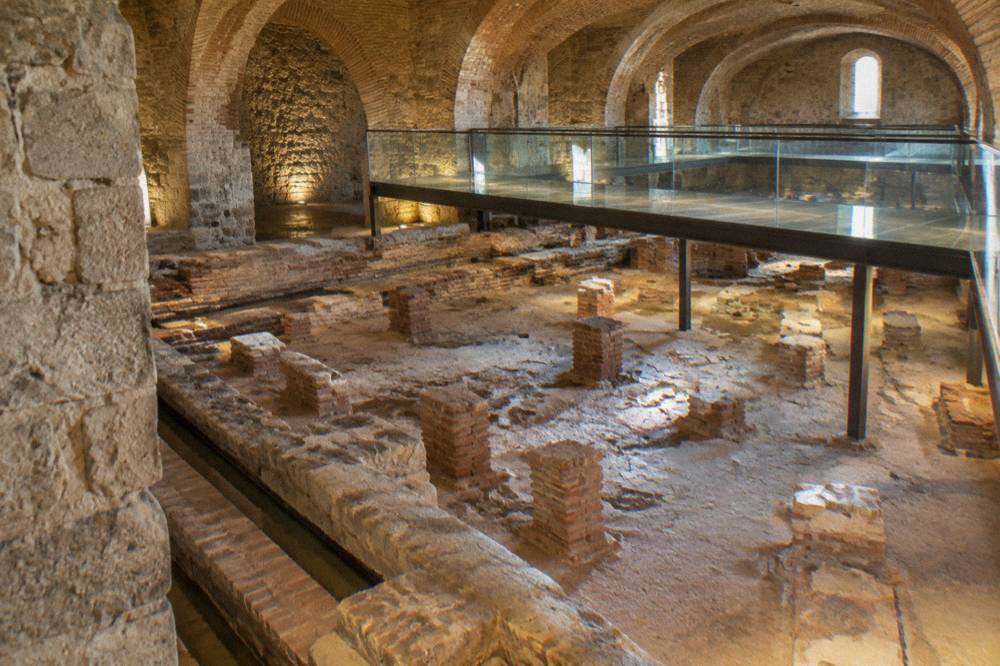
Because access runs through a municipal building, this is the one ancient site in Évora where a small amount of planning genuinely changes the visit. The tourist office at Praça do Giraldo 73 is the natural first stop, and the Roman baths of Évora page collects what is known about the complex in one place.
A guided walk earns its keep on this exact stretch of the city. The Évora: Tales and Legends Guided Walking Tour, a 2.5-hour walk rated 4.8 from 40 reviews and priced from $52.90 per person, threads the temple, the baths district and the wall streets into one narrative, and the guide handles the municipal access question on the day. Check availability
Can You Walk Évora'S Ancient Walls?
Yes, the surviving wall circuit can be walked as a loose loop around the historic centre, mixing Roman foundations with medieval rebuilding, and the best-preserved stretches run along the western and southern edges where houses were built directly against the wall. No length, height or construction date for the walls is published on the municipal pages, so treat any figure you read elsewhere, including round numbers in older guidebooks, with caution.
What the walls offer is texture rather than a monument. Roman Évora was walled, the medieval city was walled on much the same line, and today's visitor meets the circuit in fragments: a tower base here, a gate there, a long run of stone behind a row of houses. The walk between the fragments is short, the historic centre is compact, and the wall line makes a natural route for a first afternoon.
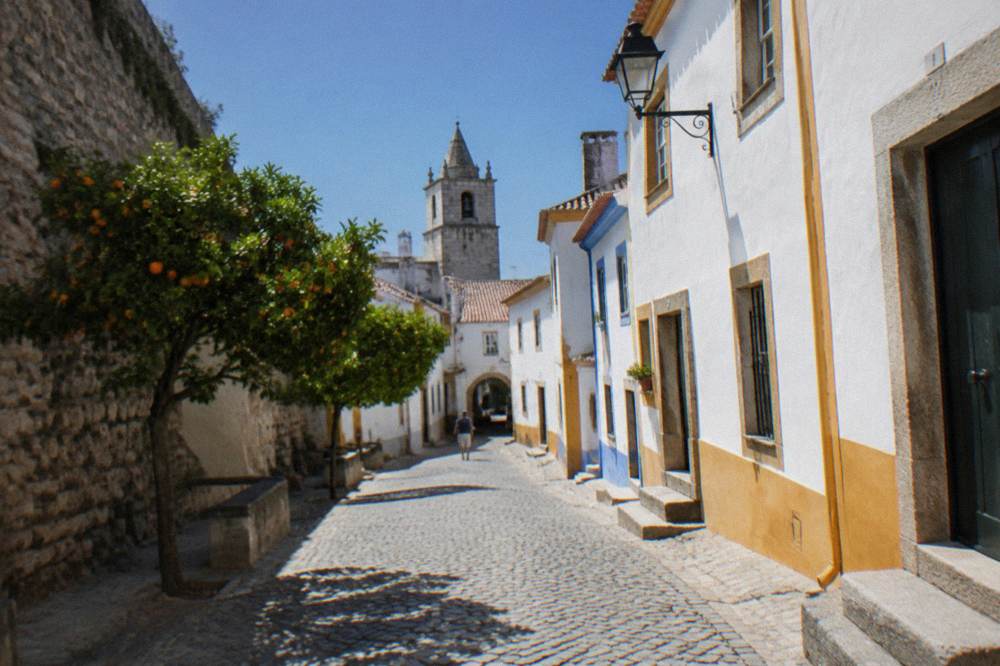
The practical pairing is with the aqueduct, which meets the wall line on the eastern side. Walk the walls in the morning, follow the aqueduct out at midday, and the geometry of ancient Évora, defended on one side and watered on the other, becomes easy to read.
Where Does The Água De Prata Aqueduct Run?
The Água de Prata aqueduct, whose name means Silver Water, runs into Évora from the east, its arches descending through the eastern streets and houses built between its piers before it reaches the city centre. No construction date, length, architect or opening hours for the aqueduct are published on the municipal pages, so the structure is best enjoyed as a piece of street architecture, walked rather than visited.
The image most visitors remember is the stretch where the arches stop being a monument and become a street: small houses slotted between the piers, washing lines, the arches overhead. That intimacy is unusual among European aqueducts, most of which stand in open country. In Évora the water channel was absorbed into the fabric of the city, and the houses followed it. Other pages covering the same trip are gathered on Évora Travel Guide.
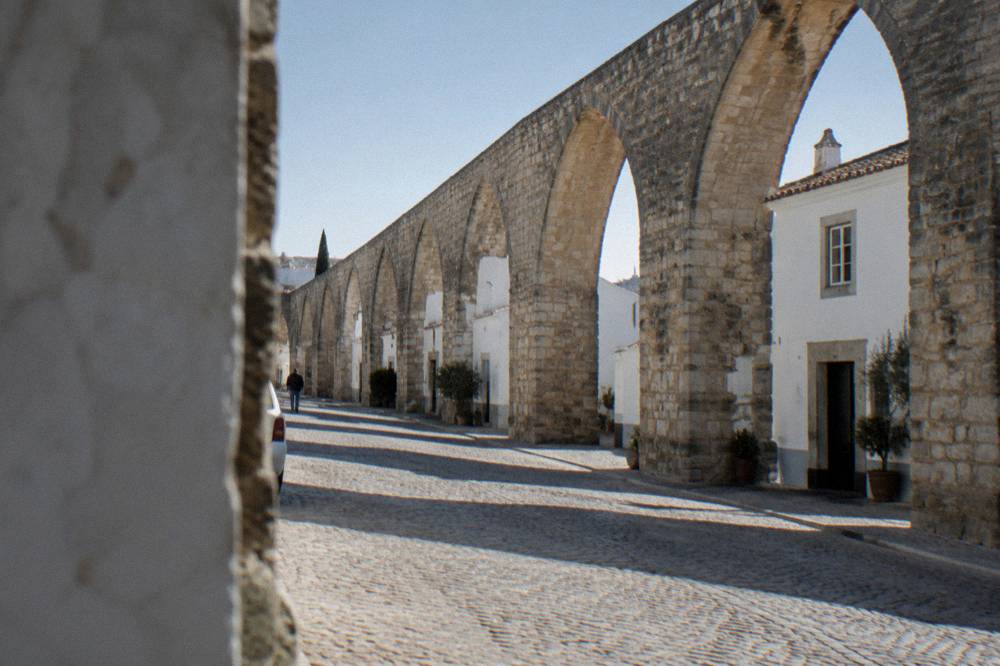
The question of Roman aqueducts in Portugal is a rich one in its own right, and the Alentejo has several candidates; the Roman aqueducts of Portugal page sets out what is known. For Évora's own channel, walk out from the centre along the arches, then loop back through the eastern gates.
What Is The Cromeleque Dos Almendres?
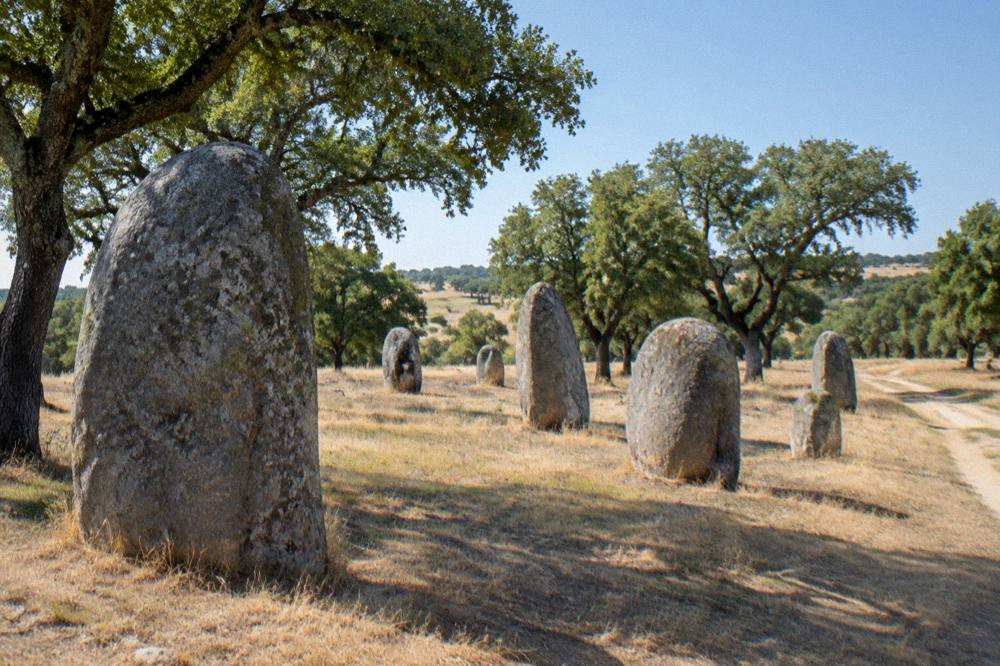
The Cromeleque dos Almendres is a large stone circle, or cromlech, standing in open countryside near the village of Guadalupe, reached from Évora by taking the national road toward Lisbon and, after about 8 km, following the turn-off toward the site. The Almendres Interpretation Centre in Guadalupe, on Rua do Cromeleque, keeps summer hours of 10:00 to 18:00 from 1 May to 31 October and winter hours of 10:00 to 17:00 from 1 November to 30 April.
Almendres is the reason many visitors rent a car or join a tour in the first place. The stones stand among cork oaks on a low rise, and the surrounding area carries a wider megalithic landscape: menhirs, dolmens and settlement traces scattered across a few kilometres of plain. The interpretation centre in Guadalupe is the practical anchor, with parking, orientation and the context that turns a field of stones into a place.
| Almendres Interpretation Centre | Details |
|---|---|
| Location | Rua do Cromeleque, Guadalupe village |
| GPS | 38.567801, -8.027456 |
| Summer hours (1 May to 31 Oct) | 10:00 to 18:00 |
| Winter hours (1 Nov to 30 Apr) | 10:00 to 17:00 |
| Route from Évora | National road toward Lisbon, turn-off after about 8 km |
No stone count or age for the cromlech belongs on this page, because no such figure is published on the primary sources; the stones themselves speak clearly enough without a number. What is certain is scale: this is one of the significant cromlechs of the Iberian Peninsula, and it sits a short drive from a UNESCO-listed city, which is a rare combination.
Two guided options do this ground well. The Evora: Cromlech of Almendres and Great Dolmen of Zambujeiro tour, a 3-hour trip from $33.76 per person rated 5 from 54 reviews, covers the cromlech and the great dolmen, and the Half Day Megaliths Cromlech Tour from Evora by Archaeologists, from $74.54 per person rated 5 from 77 reviews, is led by working archaeologists. Both start in Évora, so no car is needed.
How Do The Ancient Sites Fit Into One Or Two Days?
In one day, walk the historic centre cluster in the morning: the Templo Romano, the Roman baths district and the wall fragments all sit inside a compact area, with the aqueduct arches as an eastern extension. Give the afternoon to Almendres by car or tour, using the interpretation centre in Guadalupe as the base. With two days, add the museums, including the Museu de Évora, closed Mondays, adult ticket 8 EUR, Tuesday to Sunday 9:30 to 13:00 and 14:00 to 17:30.
The centre-first order is not arbitrary. The city sites need no transport, no tickets in most cases and no timing, while Almendres needs half a day, a vehicle or a tour, and a decision about morning or afternoon light. Doing the free, open-air city layer first also calibrates the eye: after a morning of Roman granite, the rounded megalithic stones read very differently.
| Day | Morning | Afternoon |
|---|---|---|
| Day one | Templo Romano, Roman baths district, wall fragments | Água de Prata arches, museums |
| Day two | Cromeleque dos Almendres via Guadalupe centre | Surrounding menhirs and dolmens |
Which Guided Tours Cover Ancient And Roman Évora?
Guided coverage splits into three kinds: city walking tours that take in the temple, baths and walls, the Medieval Tour of Évora on a Sidecar with wine tasting from $61.90 per person rated 4.9 from 16 reviews, and the Évora Walking Tour from $53.90 per person rated 4.8 from 37 reviews, plus dedicated megalithic tours out to Almendres. Free GuruWalk options also run in the historic centre, including The Essential Free Tour of Évora, tip based, rated 4.93 from 774 reviews.
A guide changes what the stones say. The difference between looking at the Templo Romano alone and hearing its butcher's chapter told on the square is the difference between a photo stop and a story, and the wall fragments need narration to become a circuit. The tours below are the strongest fits for ancient Évora specifically.
| Tour | Focus | Duration | From | Rating |
|---|---|---|---|---|
| Évora: Tales and Legends Guided Walking Tour | City legends, temple and walls | 2.5 hours | $52.90 | 4.8, 40 reviews |
| Évora Walking Tour | Street stories, historic centre | 2 hours | $53.90 | 4.8, 37 reviews |
| Medieval Tour of Évora on a Sidecar & Wine Tasting | Medieval layer, sidecar, tasting | 3 hours | $61.90 | 4.9, 16 reviews |
| Évora: Cromlech of Almendres and Great Dolmen of Zambujeiro | Megalithic plain | 3 hours | $33.76 | 5, 54 reviews |
| Half Day Megaliths Cromlech Tour by Archaeologists | Megalithic plain, expert led | Half day | $74.54 | 5, 77 reviews |
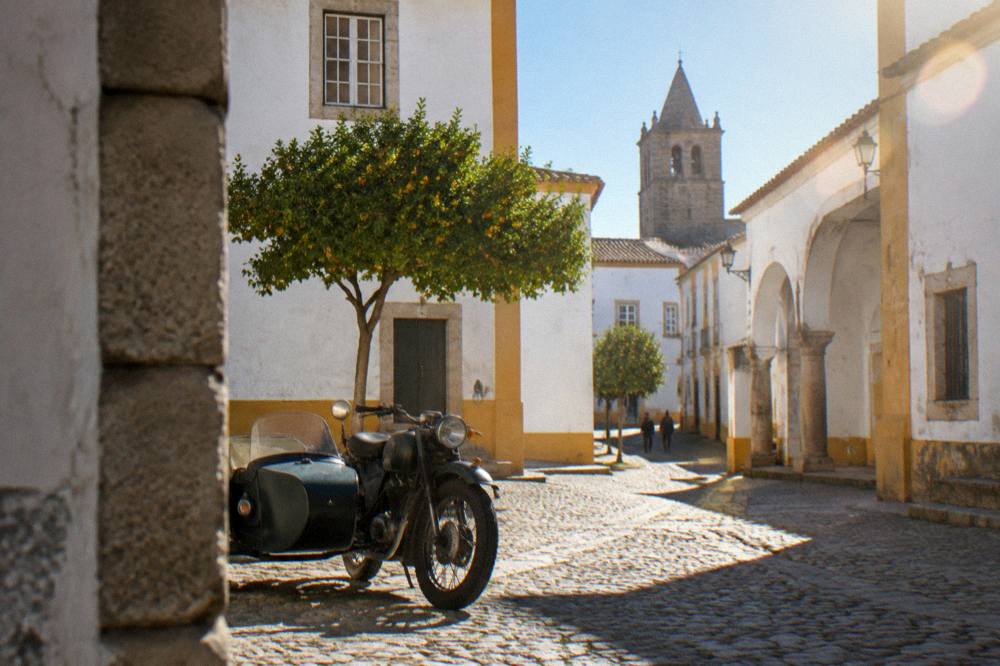
The sidecar tour deserves a word because it is genuinely different: the medieval layer of Évora, the walls, gates and post-Roman rebuilds, seen from the passenger seat of a classic sidecar, finished with a wine tasting. It starts in Évora and suits travellers who want the ancient city covered fast and with character.
For the free end of the scale, GuruWalk is the platform to know: its Évora walks are free or pay what you want. The Essential Free Tour of Évora runs about 2 hours and carries a 4.93 rating from 774 reviews, which is a serious track record for a tip-based walk. Never expect a price for one; the tip is the model.
How Do You Get To Évora For The Ancient Sites?
The train is the simplest route from Lisbon: CP's Intercidades timetable valid since 6 September 2026 lists six through services from Lisboa Oriente to Évora, departing at 07:02, 09:02, 09:58, 13:35, 17:02 and 19:02, arriving about 1 hour 40 to 1 hour 45 minutes later, with a second-class fare of 13.90 EUR and first class at 18.50 EUR. Check the CP timetable's weekday remarks before counting on every departure.
Those six trains make a day trip genuinely workable, and an early start pairs naturally with the ancient sites, which are mostly open-air and best in morning light. The details of rail versus road, and the return leg, are covered on the Lisbon to Évora by train page, with the wider options on getting from Lisbon to Évora.
| Lisboa Oriente Departure | Évora Arrival |
|---|---|
| 07:02 | 08:47 |
| 09:02 | 10:45 |
| 09:58 | 11:40 |
| 13:35 | 15:13 |
| 17:02 | 18:41 |
| 19:02 | 20:46 |
Once in the city, everything in the historic centre is on foot, and the megalithic plain needs a car or a tour. The practical pages for the rest, parking, budget and timing, are parking in Évora, the cost of visiting Évora and the best time to visit Évora.
Common Questions About Ancient And Roman Sites In Évora
Is the Temple of Diana in Évora actually dedicated to Diana?
No. The name has been in use since the 17th century, but the municipal page for the Templo Romano says the temple was probably dedicated to the imperial cult. It measures 25 x 15 m, was reused as a municipal butcher's, and its walls were freed in 1870 under Cinatti.
Do you need a ticket for the Roman sites in Évora?
Mostly no. The Templo Romano is an open-air monument with no ticket listed, the walls and the Água de Prata aqueduct are public streets, and the cromlech stands in open ground. The Roman baths sit inside a municipal building, so ask at the tourist office in Praça do Giraldo 73 about viewing arrangements.
How far is the Almendres cromlech from Évora?
The route described by the interpretation centre is to take the national road from Évora toward Lisbon and, after about 8 km, follow the turn-off toward the site. The Almendres Interpretation Centre itself is in the village of Guadalupe on Rua do Cromeleque, open 10:00 to 18:00 in summer, 1 May to 31 October, and 10:00 to 17:00 in winter, 1 November to 30 April.
Are Évora's Roman baths open to the public?
Parts of the bath complex are preserved inside the town hall building on Rua do Raimundo and can be viewed, but no ticket price or fixed hours are published on the municipal pages. Check the municipal notice or ask at the tourist office before planning a visit.
Can you see the Roman sites of Évora in one day?
Yes. The Templo Romano, the baths district, the wall fragments and the aqueduct arches all sit inside the compact historic centre and can be walked in a morning and early afternoon. The Cromeleque dos Almendres needs a separate half day with a car or a tour.
What is the oldest ancient site near Évora?
The megalithic monuments of the surrounding plain, including the Cromeleque dos Almendres, predate the Roman city by thousands of years, while the Roman layer, the temple, the baths and the walls, belongs to the period of Roman Ebora. No single age figure for the cromlech is published on the primary sources, so the honest framing is megalithic first, Roman second.
Ancient Évora rewards the walker who moves slowly: a temple that kept its name by accident, baths under a town hall, walls that became house fronts, an aqueduct that became a street, and a plain of standing stones a short drive out. Take the morning for the centre, the afternoon for Almendres, and let the granite tell the rest.