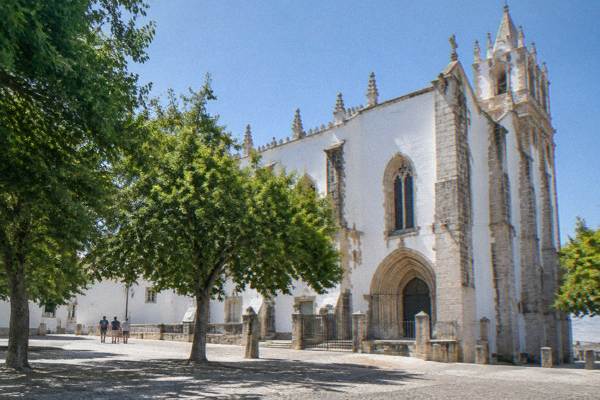
Where Is Évora? Location, Distances And How To Get There
Évora is an inland city in the Alentejo region of southern Portugal, the capital of the district that carries its name, about 130 km from Lisbon.
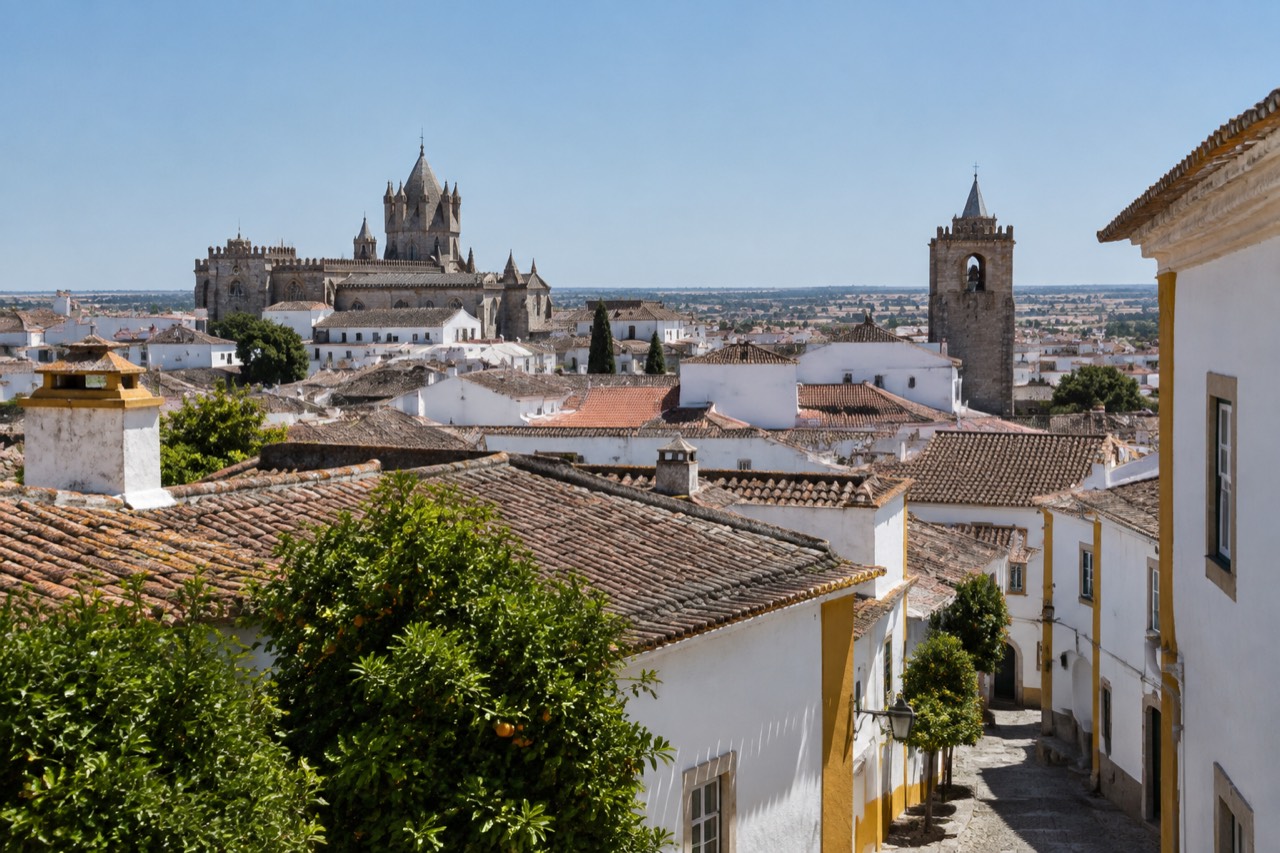
Short answer
Évora is in southern Portugal, in the Alentejo, the capital of the Évora district and of the Central Alentejo sub-region. It is an inland city on the Alentejo plain, about 130 km from Lisbon, and its walled historic centre is a UNESCO World Heritage Site.
Évora is a city in southern Portugal, the capital of the Alentejo region's Évora district and of the Central Alentejo sub-region, standing on the rolling plain of the interior rather than on any coast. The municipality counted about 53,000 residents at the 2021 Census, and its walled historic centre has been a UNESCO World Heritage Site since 1986. Lisbon lies about 130 km to the west, and the Atlantic is roughly 90 km away, which matters: Évora is an inland city, and everything about its light, its heat and its food follows from that. This page sets out exactly where Évora is, what surrounds it, and how the journey from Lisbon works, with the train times and fares from the current CP timetable.
Where Is Évora On The Map?
Évora sits at 38.5365 degrees north, 7.8880 degrees west, at an altitude of 247.6 m on the Alentejo plain of southern Portugal, roughly 130 km east-southeast of Lisbon and about 90 km inland from the Atlantic coast. It is the capital of both the Évora district and the Central Alentejo sub-region, which places it at the administrative heart of the largest region of southern Portugal.
Those coordinates come from the IPMA climate station for Évora, station number 558, and they tell you most of what you need to know before arriving. The city stands on a gentle rise in a landscape of cork oaks, olive groves, wheat fields and low hills, with no river of any size running through it and no sea anywhere near it. The Alentejo name is usually explained as "beyond the Tagus", the great river that Lisbon straddles, and Évora lies well beyond it, deep in the interior.
The altitude explains the climate more than the latitude does. At 247.6 m, on an open plain, Évora bakes in summer and cools sharply on winter nights. Anyone comparing it with coastal Portugal should expect a different country altogether, weather-wise, and the Évora weather guide breaks down what that means month by month.
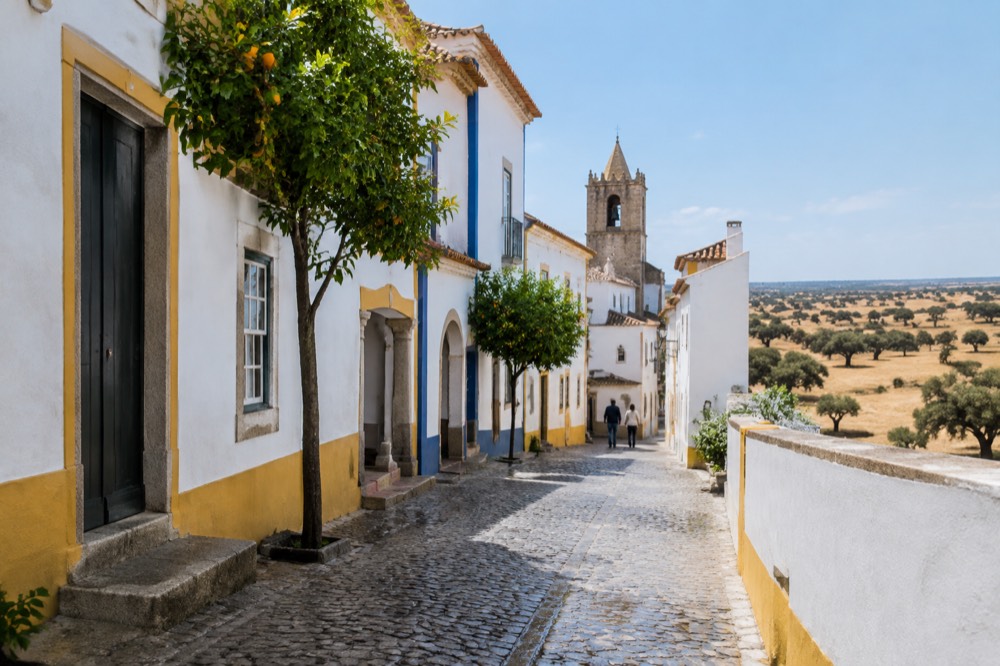
Which Region And District Is Évora The Capital Of?
Évora is the capital of the Évora district, one of Portugal's eighteen mainland districts, and of the Central Alentejo sub-region within the wider Alentejo region. It is also a municipality in its own right, with about 53,000 residents at the 2021 Census, and it functions as the practical centre for the surrounding towns of the interior, from Estremoz to Reguengos de Monsaraz.
That double role as district and sub-region capital is why Évora punches above its population. The city holds the region's university, its principal museum, the Museu de Évora, and the institutional weight that comes from centuries as an episcopal and royal seat. The UNESCO inscription of 1986, under criteria (ii) and (iv), recognised the historic centre as the finest example of a city of the golden age of Portugal to survive the 1755 Lisbon earthquake, which Évora was largely spared.
The region around it, the Alentejo, stretches across southern Portugal from the Spanish border toward the Atlantic, and Évora sits near its middle. The Alentejo travel guide covers the wider region; this page stays on the city and what immediately surrounds it. For what the city itself is famous for, the what Évora is known for guide is the companion read.
How Far Is Évora From Lisbon?
Lisbon is about 130 km from Évora by road, and the CP Intercidades train covers the distance in about 1 hour 40 to 1 hour 45 on the six through trains listed in the timetable valid since 6 September 2026, with a second-class fare of 13.90 EUR and a first-class fare of 18.50 EUR between Lisboa Oriente and Évora.
The train is the simplest way to understand where Évora is relative to the capital. The line runs east from Lisboa Oriente through Entrecampos, Sete Rios, Pragal, Pinhal Novo, Vendas Novas and Casa Branca before climbing onto the plain and arriving at Évora station. The six daily through departures from Oriente are 07:02, 09:02, 09:58, 13:35, 17:02 and 19:02, arriving at 08:47, 10:45, 11:40, 15:13, 18:41 and 20:46 respectively.
| Lisboa Oriente departure | Évora arrival | Notes |
|---|---|---|
| 07:02 | 08:47 | Through Intercidades |
| 09:02 | 10:45 | Through Intercidades |
| 09:58 | 11:40 | Through Intercidades |
| 13:35 | 15:13 | Through Intercidades |
| 17:02 | 18:41 | Through Intercidades |
| 19:02 | 20:46 | Through Intercidades |
The fare table for the route prices the journey at 13.90 EUR in second class and 18.50 EUR in first. Check the CP site before travelling, because the timetable's weekday remarks matter and services can change. The full route picture, including the station itself and what to do on arrival, is in the Lisbon to Évora by train guide, and the wider journey options are compared in Lisbon to Évora.
How Do You Get To Évora Without A Car?
The train from Lisbon is the main public-transport route into Évora, with six through Intercidades services a day from Lisboa Oriente taking about 1 hour 40 to 1 hour 45, and long-distance coaches from Lisbon also serve the city's terminal rodoviário, though no verified fare or timetable for the coach services can be quoted here, so check the operator's page before booking.
For most visitors the choice is between the CP train, described above, and the coach. The coach terminal sits within walking distance of the historic centre, as does the railway station, which is one of the quiet advantages of Évora's size: arriving without a car costs you almost nothing in convenience. The Lisbon to Évora by bus guide covers the coach option in detail, and the getting back from Évora to Lisbon guide handles the return leg.
Driving is the third option, and the Lisbon to Évora by car guide explains the route, but the honest summary is that a car is more useful after arrival than for the journey itself. Évora's historic centre is compact and partly closed to through traffic, so the parking guide matters if you do drive. For anyone flying into Portugal and heading straight for the Alentejo, the connection through Lisbon is the standard path.
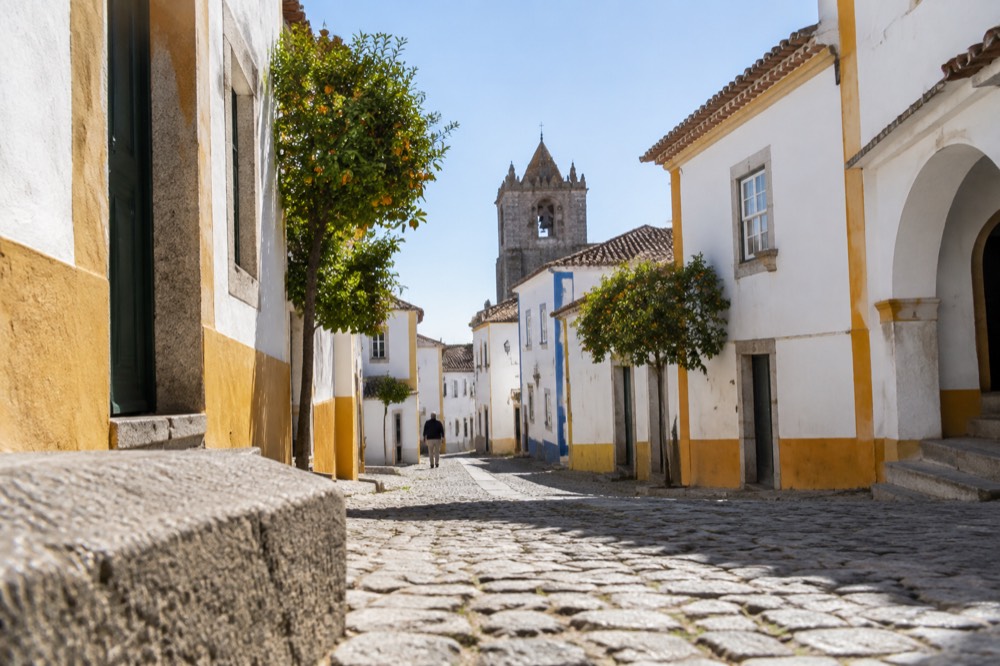
What Is The Landscape Around Évora Like?
The land around Évora is the classic Alentejo plain: gently rolling, open, dotted with cork oaks and holm oaks, olive groves and vineyards, with the soil shifting between gold and red through the year. There is no coast, no major river through the city and no mountain backdrop, only the low hills of the interior and the wide sky that makes the region's light so distinctive.
The montado, the traditional mixed landscape of cork oaks and pasture, defines the immediate surroundings. Cork is the Alentejo's signature crop, and the landscape it creates, scattered trees with grazing beneath them, is what most people picture when they picture the region. The Alentejo cork guide explains how that landscape works and why it shapes the region's economy.
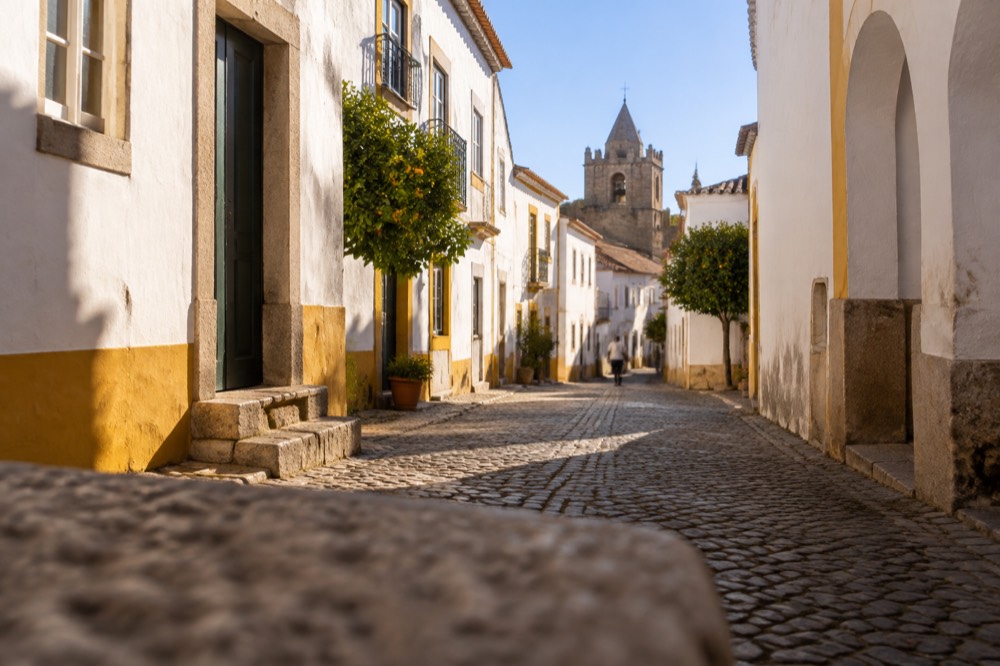
The plain also explains the prehistory. The Cromeleque dos Almendres, the great stone circle that stands out in the countryside outside the city, was raised by communities who farmed this same open land thousands of years ago, and the megalithic sites of the area cluster on the rises around Évora. The megalithic sites near Évora guide maps them.
Which Towns And Sights Sit Near Évora?
Évora is the natural base for the towns of the Central Alentejo: Arraiolos about 20 km away with its carpets, Estremoz about 45 km with its marble and castle, Monsaraz about 40-45 km on its hill above the Alqueva reservoir, Vila Viçosa about 60 km with its ducal palace, Elvas about 80 km on the Spanish border and Marvão about 120 km in the northern hills.
All of those distances are rounded road estimates and should be read as "about", not as exact figures. What they show is that Évora sits at the centre of a ring of small historic towns, each reachable as a half-day or day trip, and that the Spanish border at Elvas and Badajoz is close enough that Cáceres and Badajoz themselves work as longer excursions. The best day trips from Évora guide covers the full ring.
| Place | Distance from Évora | Known for |
|---|---|---|
| Arraiolos | about 20 km | Handmade carpets, hilltop church |
| Monsaraz | about 40-45 km | Walled village above the Alqueva |
| Estremoz | about 45 km | Marble, castle, weekly market |
| Vila Viçosa | about 60 km | Ducal palace, marble quarries |
| Elvas | about 80 km | Fortifications, Spanish border |
| Marvão | about 120 km | Mountain-top walled village |
| Lisbon | about 130 km | Capital, airport, rail gateway |
For travellers deciding whether to sleep in Évora or in Lisbon and visit, the comparison is genuine: Évora is close enough to the capital for a day trip, far enough to feel like a different country. The is Évora worth a day trip from Lisbon question is answered in full on its own page.
What Does Évora'S Climate Tell You About Its Location?
The IPMA 1991-2020 climate normals for the Évora station show a genuinely continental pattern for a country with Portugal's coastline: a July mean maximum of 33.3 C and an August mean maximum of 33.5 C, 31.9 days a year reaching 35 C or more, a record of 45.4 C set on 4 August 2018, and a winter mean minimum of 4.5 C in January, with the coldest recorded reading at -4.2 C.
Those figures, all from the 1991-2020 normals for station 558, are the clearest proof of where Évora is. A city 90 km from the Atlantic behaves like an interior city: hot, dry summers, cool nights in winter, and a spring and autumn that are the sweet spots in between. The annual mean temperature is 16.6 C and annual rainfall 596.1 mm, concentrated almost entirely outside summer, when July averages just 2.7 mm.
| Month | Mean max (C) | Mean min (C) | Rain (mm) |
|---|---|---|---|
| January | 14.1 | 4.5 | 68.6 |
| April | 20.7 | 8.5 | 62.1 |
| July | 33.3 | 15.6 | 2.7 |
| August | 33.5 | 16.0 | 6.0 |
| October | 24.1 | 12.3 | 81.5 |
| December | 14.6 | 5.3 | 85.1 |
The 1991-2020 normals count 86.5 days a year with a maximum of 30 C or more, of which 31.9 days reach 35 C or more, and almost all of those fall between June and September. The best time to visit Évora guide turns those numbers into a month-by-month recommendation, and the Évora in summer page is honest about what July and August feel like on an inland plain.
How Does Évora'S Location Shape Its History?
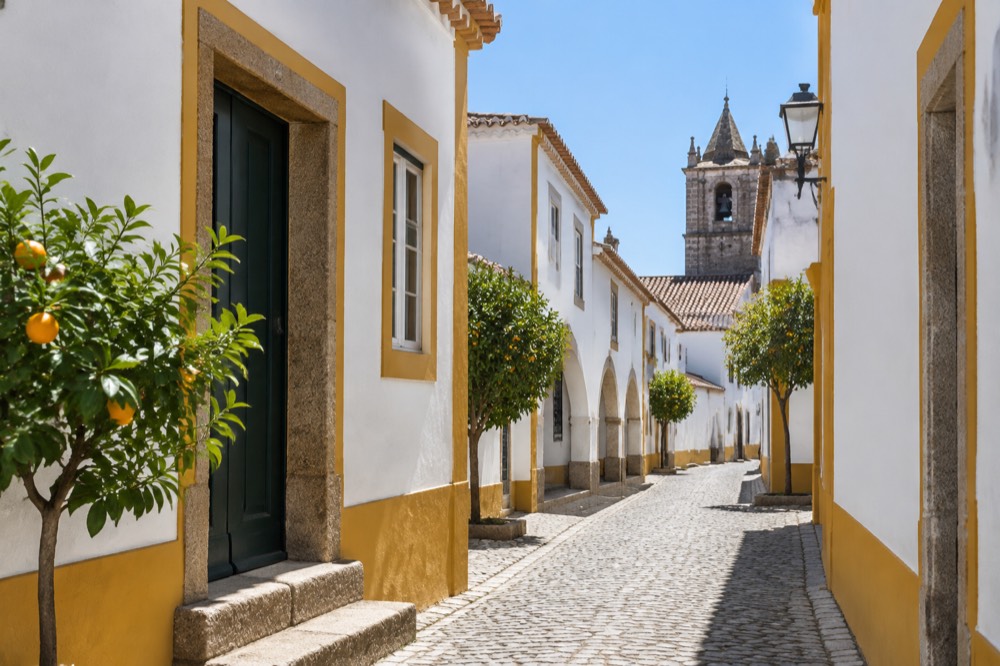
Évora's position on the interior plain, at a crossroads between Lisbon, the Spanish border and the agricultural south, made it a Roman provincial town, a Moorish stronghold until 1165, a favourite residence of the Portuguese kings, and the seat of the Jesuit University of the Holy Spirit from 1553 until the Jesuits were expelled in 1759, which is why so much golden-age architecture survives inside the walls.
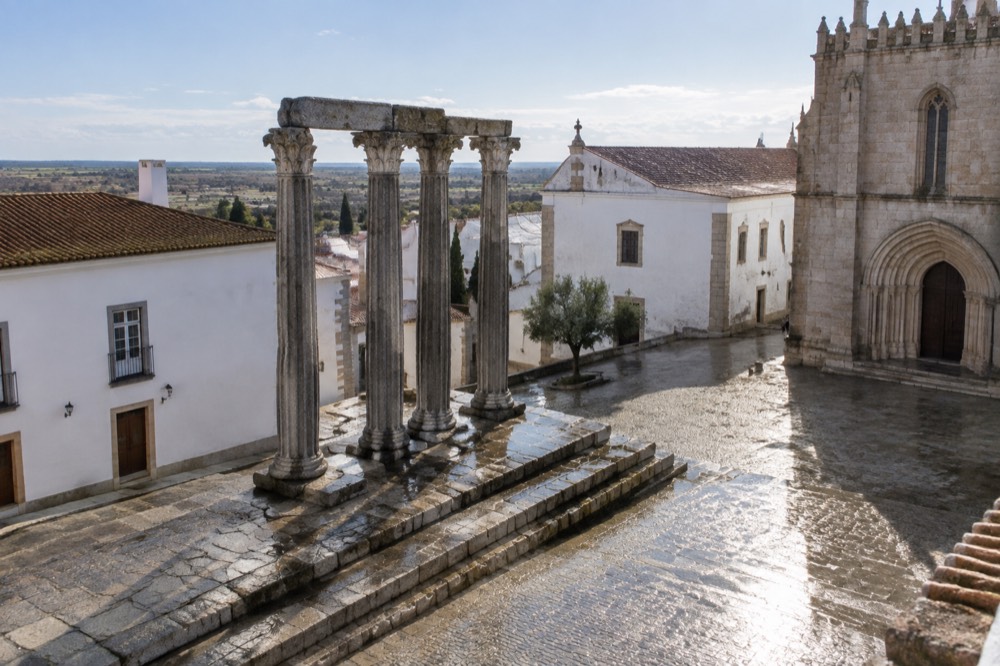
The UNESCO inscription of 1986 rests on that survival. Criterion (iv) calls the historic centre the finest example of a city of the golden age of Portugal after the 1755 Lisbon earthquake, precisely because Évora was largely undamaged by the quake that flattened the capital. The Templo Romano, popularly called the Temple of Diana, probably served the imperial cult according to the municipal page, measures 25 x 15 m, was reused for centuries as a municipal butcher's and had its walls freed in 1870. The Évora history guide carries the full story.
The same interior position made Évora a market town for the whole Alentejo, a role the Feira de São João still performs every year: the 2026 edition ran from 23 June to 5 July at the Rossio de São Brás under the theme "Évora: Capital Europeia ao Sul". And the city's regional standing continues into the present, since Évora and the Alentejo hold the European Capital of Culture title in 2027, with 2026 running as a preparation year built on the concept of "Vagar".
Where Should You Stay To Be Inside The Walls?
The historic centre inside the medieval wall is compact enough that almost any hotel there puts the Sé, the Praça do Giraldo, the Capela dos Ossos and the Templo Romano within a short walk of one another, so the practical choice is between staying inside the walls for atmosphere and convenience, or just outside them for easier parking and often lower rates, with the area around the railway station a workable budget fallback.
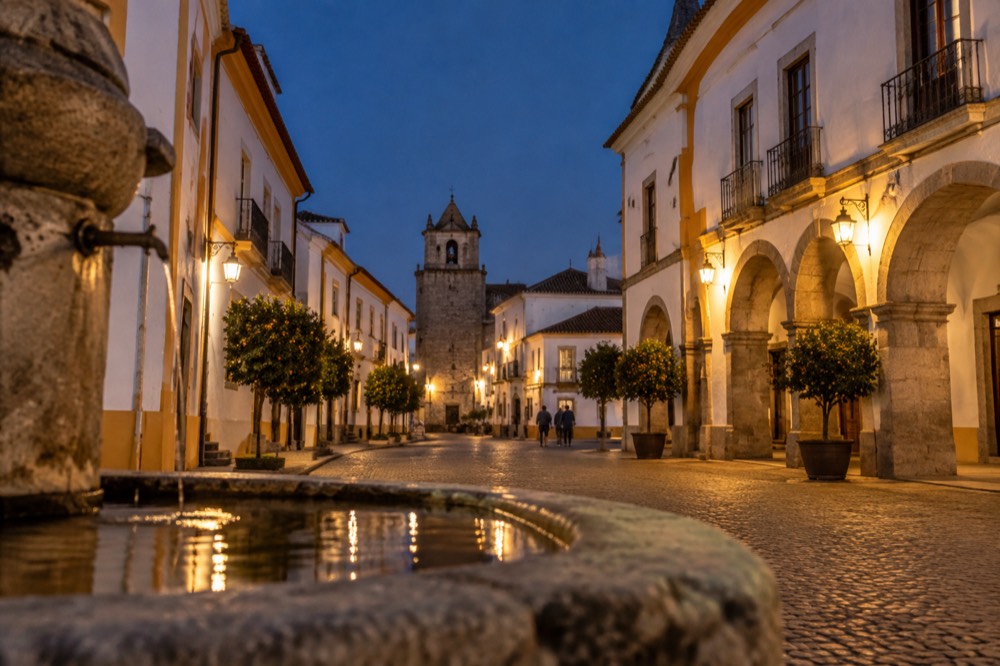
The wall itself is the dividing line. Inside it, the streets are narrow, whitewashed and largely pedestrian in feel; outside, the city opens into newer districts and then the modern town. The where to stay in Évora guide breaks the neighbourhoods down properly, and the Évora cost and budget guide covers what a stay costs, including the municipal tourist tax that applies to overnight stays, for which you should check the current amount with your hotel at booking.
| Area | Position | Best for |
|---|---|---|
| Inside the walls | Historic centre | Atmosphere, walkability |
| Rossio de São Brás | East of the centre | Feira, open space, parking |
| Around the station | Southwest of the walls | Train arrivals, budget stays |
| Outskirts and rural | Beyond the ring | Cork estates, quiet, cars |
One thing worth saying plainly: because Évora is small and inland, staying outside the walls costs you little time and saves money, but staying inside them is the reason many people come. The trade-off is real, and the choice is yours.
Is Évora Well Placed For Visiting The Rest Of Portugal?
Évora works as a base for southern Portugal's interior, with Lisbon about 130 km away by train or road, the Spanish border towns of Elvas and Badajoz within easy reach to the east, and the marble and castle towns of the Central Alentejo all around it, but it is not a coastal base: the Atlantic is roughly 90 km away, and the Algarve, Porto and the northern cities all call for a return through Lisbon or a long drive.
The honest geography is that Évora is a hub for one region, not for the country. Day trips radiate outward to Arraiolos, Estremoz, Vila Viçosa, Monsaraz and the Alqueva, and the Alentejo road trip guide strings them together. For Lisbon-based itineraries, the best day trips from Lisbon guide puts Évora alongside the other options, and the Évora versus Sintra comparison is the one most first-time visitors ask for.
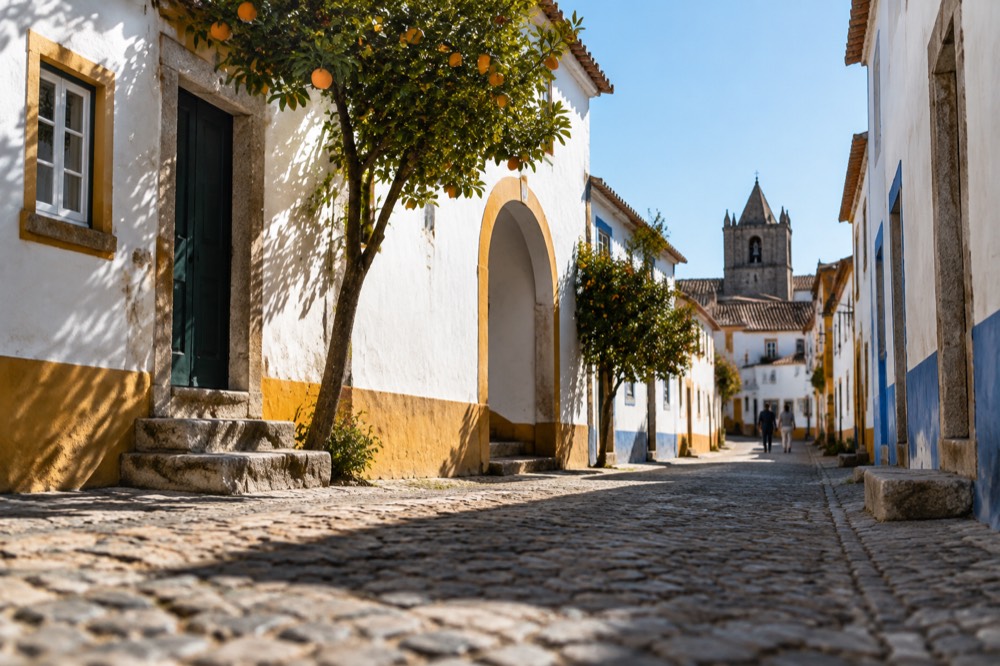
Longer movements are a different matter. Porto, Coimbra and the Algarve all sit beyond comfortable day-trip range, and the connections run through Lisbon, which is why the Porto to Évora guide and the Portugal itinerary with Évora guide treat the city as a stop on a route rather than a pivot. The Évora Travel Guide covers all of these movements in one place.
A guided walk is also the fastest way to turn this geography into something you can see with your own eyes: the small-group cultural walking tour covers the walled centre and the Chapel of Bones in about two hours, which leaves the rest of the day for the plain beyond it. Between the two, the guided options below round out the picture.
Common Questions About Where Évora Is
Where is Évora?
Évora is an inland city in the Alentejo region of southern Portugal, the capital of the Évora district and of the Central Alentejo sub-region. It stands on the Alentejo plain at 38.5365 degrees north, 7.8880 degrees west, about 130 km from Lisbon and roughly 90 km from the Atlantic coast.
Where Is Évora in Portugal?
Évora is in the south of Portugal, in the interior, east-southeast of Lisbon. It is the capital of the Évora district and of the Central Alentejo sub-region, and its municipality had about 53,000 residents at the 2021 Census.
Is Évora Near the Coast?
No. Évora is an inland city on the Alentejo plain, roughly 90 km from the Atlantic. There is no beach, no sea view and no coastal walk anywhere near it, and the climate reflects that interior position.
How Far Is Évora From Lisbon?
About 130 km by road. The CP Intercidades train covers the route in about 1 hour 40 to 1 hour 45, with six through trains a day from Lisboa Oriente in the timetable valid since 6 September 2026, and a second-class fare of 13.90 EUR.
Which Region Is Évora In?
Évora is in the Alentejo, Portugal's large southern region, whose name is usually explained as "beyond the Tagus". Within the Alentejo, Évora belongs to and serves as the capital of the Central Alentejo sub-region.
What Towns Are Near Évora?
Arraiolos is about 20 km away, Monsaraz about 40-45 km, Estremoz about 45 km, Vila Viçosa about 60 km, Elvas about 80 km and Marvão about 120 km, all rounded road estimates. Each works as a half-day or day trip from the city.
Knowing where Évora is, on its plain, inland, at the centre of the Alentejo and a short train ride from Lisbon, is most of the work of planning a visit to it.