Is The Chapel Of Bones Worth Visiting?
A direct answer to whether the Capela dos Ossos in Évora, Portugal is worth the ticket, with prices, hours, what the single museum ticket covers and who the chapel suits.
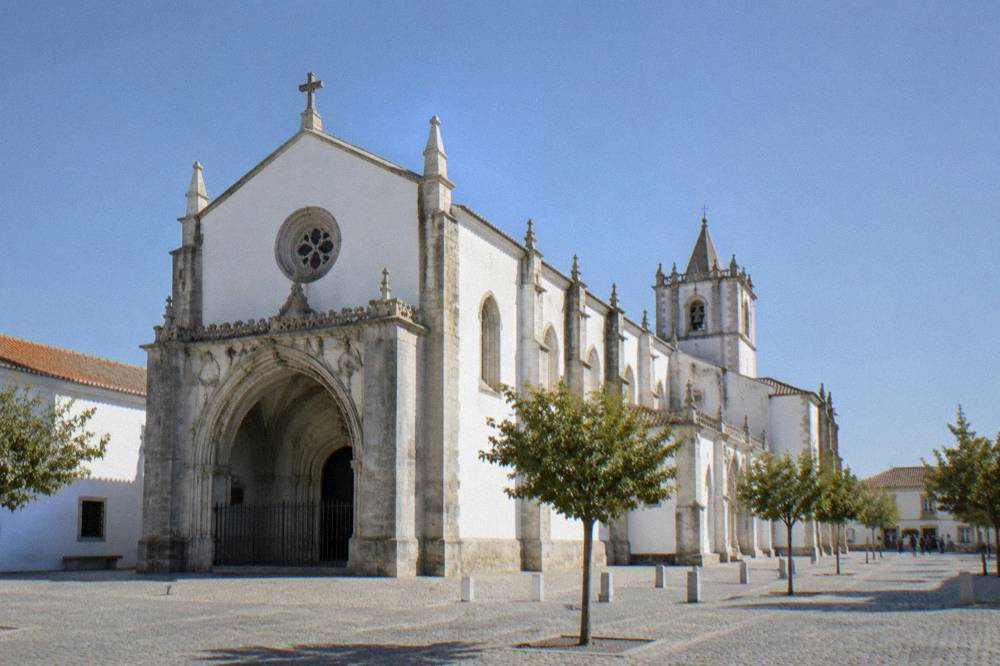
The Capela dos Ossos, the Chapel of Bones, sits inside the Igreja de São Francisco in the historic centre of Évora, Portugal, the inland capital of the Alentejo. Its walls and pillars are lined with human bones, arranged in patterns that have made it the single most photographed interior in the city. The question every visitor asks beforehand is the same: is it worth the ticket, or is it a two-minute shock that wears off? The honest answer depends on what a visitor expects from it, and on whether the rest of the church complex, which the same ticket covers, is part of the plan.
Is The Chapel Of Bones Worth Visiting?
Yes, for the large majority of visitors the Capela dos Ossos is worth visiting, because it is a genuinely singular interior that exists nowhere else in Portugal at this scale and level of preservation, it sits at the heart of a UNESCO-listed city that is compact enough to make the detour cost almost nothing, and the single 7.00 EUR adult ticket also opens five further museum areas of the Igreja de São Francisco rather than the chapel alone. The visitors who leave disappointed are usually those who arrive expecting a large cavern, a haunted-house experience or a long self-contained attraction. The chapel is small, the visit is quiet, and its impact comes from restraint rather than spectacle. Anyone who wants context, the reason the bones are there at all and what the city around them was, gets far more out of it, which is why a guided walk is the format the reviews consistently reward.
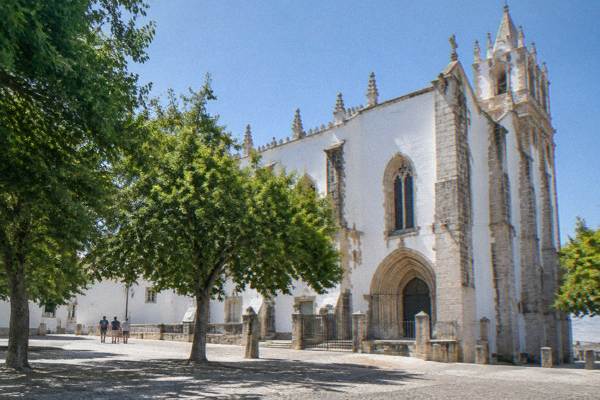
The chapel belongs to the Igreja de São Francisco, one of the flagship monuments of the Historic Centre of Évora, inscribed by UNESCO in 1986 under criteria (ii) and (iv). The full monument guide on this site, Chapel of Bones in Évora, covers the building itself; this page sticks to the decision: whether to go, what it costs and how to fit it in.
What The Chapel Of Bones Ticket Costs And What It Includes
One single ticket covers every museum area of the Igreja de São Francisco: the Capela dos Ossos itself, the Sala do Capítulo, the Presépio, the Arte Sacra nucleus, the Sala da Tribuna Real, the Terraço da Galilé and the Canha da Silva nativity collection. An adult pays 7.00 EUR, visitors up to 25 and over 65 pay 5.00 EUR, and a family ticket covering two adults plus youths is 15.00 EUR. The church itself remains free to enter.
| Ticket | Price |
|---|---|
| Adult, all museum areas | 7.00 EUR |
| Youth up to 25 | 5.00 EUR |
| Senior over 65 | 5.00 EUR |
| Family, 2 adults plus youths | 15.00 EUR |
| Church nave, no museum access | Free |
Two details from the church's own page matter for budgeting. First, the Igreja de São Francisco describes itself as a private religious entity and does not apply State Museum discounts, so a Portuguese museum pass or a youth card that works elsewhere in Évora may not work here. Second, the municipal Évora Ticket, at 8 EUR for one day and 10 EUR for two, does not include the Capela dos Ossos, the Sé or the Museu de Évora; anyone combining those three pays for them separately, and the chapel's 7.00 EUR sits outside the pass entirely.
That price point is what pushes many visitors toward a guided format. A private walk that pairs the chapel with the Sé and a guide costs from $113.53 per person and is rated 5 from 256 reviews, and a skip-the-line version with the University, the cathedral and a wine tasting starts from $91.39 per person, rated 5 from 48 reviews. Neither is necessary to see the chapel, but both convert a short, self-guided look into a full morning of Évora, and the difference shows up sharply in what visitors say afterwards.
How The Chapel Of Bones Fits Into One Day In Évora
The chapel works best as one stop of several inside a single day, not as a standalone destination: Évora's historic centre is compact and walkable, the chapel sits a few minutes from the Praça do Giraldo, and a realistic plan pairs it with the Sé de Évora, whose complete-visit ticket is 5.00 EUR, and the Museu de Évora at 8 EUR, all within the UNESCO perimeter. Anyone asking how much time you need in Évora gets the same answer from every angle: the city rewards a full day, and the chapel is a 30-to-45-minute piece of it rather than the whole.
The practical sequencing matters more than most first-time visitors expect. The chapel opens at 9:00, keeps summer hours of 9:00 to 18:30 and winter hours of 9:00 to 17:00, and is open every day except 1 January, Easter Sunday, the afternoon of 24 December and 25 December. An early start puts a visitor inside before the Lisbon day-trip coaches arrive, and the midday window is the busiest. The Sé next door closes at 17:00 with last museum admission 30 minutes before, so a morning order of chapel, then cathedral, then a long Alentejo lunch, is the shape most itineraries settle into. More of these guides are collected on Évora Travel Guide.
| Way of visiting | What it costs | Best for |
|---|---|---|
| Independent, chapel ticket only | 7.00 EUR adult | Short visits, tight budgets, photographers |
| Private walk with Sé and chapel | From $113.53 per person | First-time visitors wanting full context |
| Skip-line tour with wine tasting | From $91.39 per person | Visitors pairing monuments with Alentejo wine |
| Tales and legends evening walk | From $52.90 per person | Visitors who want the city's darker stories |
For travellers weighing Évora against the coast or against Sintra, the chapel is often the deciding exhibit: it is the one thing in the Alentejo that has no substitute anywhere else in the country. The wider verdict on the city itself is covered in is Évora worth visiting, and for anyone arriving without a car the chapel is comfortably reachable on foot from anywhere inside the walls.
What Else The Same Ticket Includes Inside The Igreja De São Francisco
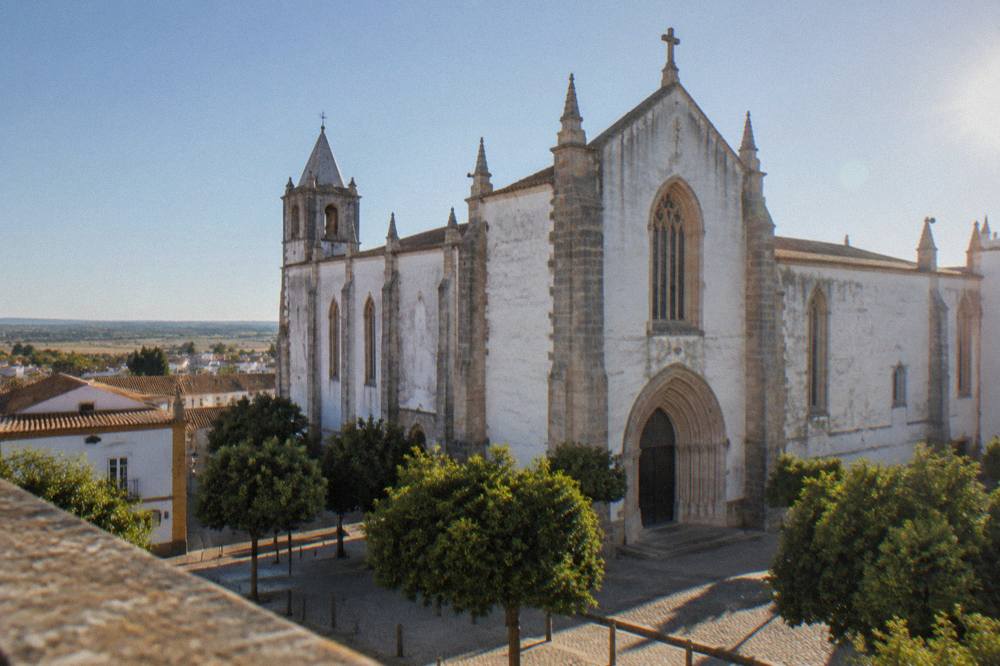
Beyond the chapel itself, the 7.00 EUR ticket opens the Sala do Capítulo, a chapter house of carved stone, the Presépio and the wider Canha da Silva nativity collection, the Arte Sacra nucleus of religious art, the Sala da Tribuna Real and the Terraço da Galilé, a terrace overlooking the church and the city. Visitors who walk straight through the chapel and out again leave the majority of what they paid for unseen. The terrace in particular changes the visit: after the enclosed, dim room of the chapel, it puts the roofs of the UNESCO centre in front of the visitor, and the contrast between the two is the point of the complex.
The nativity collection is the surprise for most people. It is a substantial display, and it sits in deliberate counterpoint to the chapel: one room given over to death, another to birth. A guide makes that juxtaposition legible, which is exactly what the private walking format does. The tour below pairs the chapel and the cathedral with a dedicated guide, holds a 5 rating from 256 reviews, and is the option most consistently chosen by visitors who only have one day in the city.
Read more about it on the private walking tour with cathedral and Chapel of Bones page, or Check availability if the one-day plan is already fixed.
When To Visit The Chapel Of Bones In Évora
The chapel is open 9:00 to 18:30 in summer legal time and 9:00 to 17:00 in winter legal time, every day except 1 January, Easter Sunday, the afternoon of 24 December and 25 December, so the choice is less about the day and more about the hour: early morning before the day-trip wave, or late afternoon, when the summer heat has dropped and the light in the historic centre softens. Évora's climate argues for the shoulder seasons. IPMA's 1991 to 2020 normals for the Évora station show a July mean maximum of 33.3 C and August 33.5 C, with 31.9 days a year reaching 35 C or more, and the record of 45.4 C set on 4 August 2018. An August afternoon walk between monuments is a genuinely hot undertaking.
| Season | Hours in force | What to expect |
|---|---|---|
| Summer legal time | 9:00 to 18:30 | Heat above 30 C on most days, longest daylight for the terrace |
| Winter legal time | 9:00 to 17:00 | Mild days near 15 C midday, quiet streets after dark |
| Closed | 1 Jan, Easter Sunday, 24 Dec afternoon, 25 Dec | Plan around these four dates |
Timing the visit around the masses is also possible: the church holds Masses Monday to Saturday at 11:30 and on Sunday at 9:00 and 12:00, and the working church around the museum areas is part of what keeps the complex from feeling like a pure attraction.
For visitors who decide to make the chapel the anchor of a fuller day, the guided options below are the three that pair it most naturally with the rest of the historic centre, from a private walk with the Sé to a skip-line version that ends in wine.
Common Questions About The Chapel Of Bones In Évora
The questions visitors most often ask about the Capela dos Ossos are whether it is free, whether the bones are real, why it is famous and whose bones line the walls, and each has a short factual answer drawn from the church's own published information: entry to the church is free but the chapel sits in the paid museum areas, the bones are human and historic, and the chapel's fame rests on the completeness of the interior rather than on any single story. The fuller answers, and the ones this page is built around, follow below.
Is the Chapel of Bones worth visiting?
For most visitors, yes. The interior is unique in Portugal at this scale, the 7.00 EUR adult ticket also covers six museum areas of the Igreja de São Francisco, and the chapel sits inside a compact UNESCO-listed centre that costs almost no extra time to reach.
Is the Chapel of Bones free?
The church nave is free to enter, but the Capela dos Ossos is one of the paid museum areas, covered by the single 7.00 EUR adult ticket. The details are in is the Chapel of Bones free.
Are the bones in the Chapel of Bones real?
They are human bones, recovered and arranged when the chapel was created, and the walls are lined with them rather than decorated to look like them. The full answer is at is the Chapel of Bones made of real bones.
Whose bones are in the Chapel of Bones?
The bones came from Évora's churchyards, moved as the city's burial grounds were cleared. The attribution and the history are covered in whose bones are in the Chapel of Bones.
Why is the Chapel of Bones famous?
Because an entire chapel interior, walls and pillars, is lined with arranged human bones, a memento-mori work without a parallel in Portugal. More on that at why is the Chapel of Bones famous.
How long does a visit take?
The chapel itself is small; with the rest of the museum areas, the terrace and the nativity collection, plan on the better part of an hour, more with a guide who explains the complex.
The verdict, in the end, is simple. A visitor who wants spectacle alone may find the chapel brief; a visitor who takes the whole ticket, the chapter house, the terrace and the nativity collection, and who walks out into the UNESCO centre that surrounds it, gets one of the most complete and memorable hours the Alentejo offers.