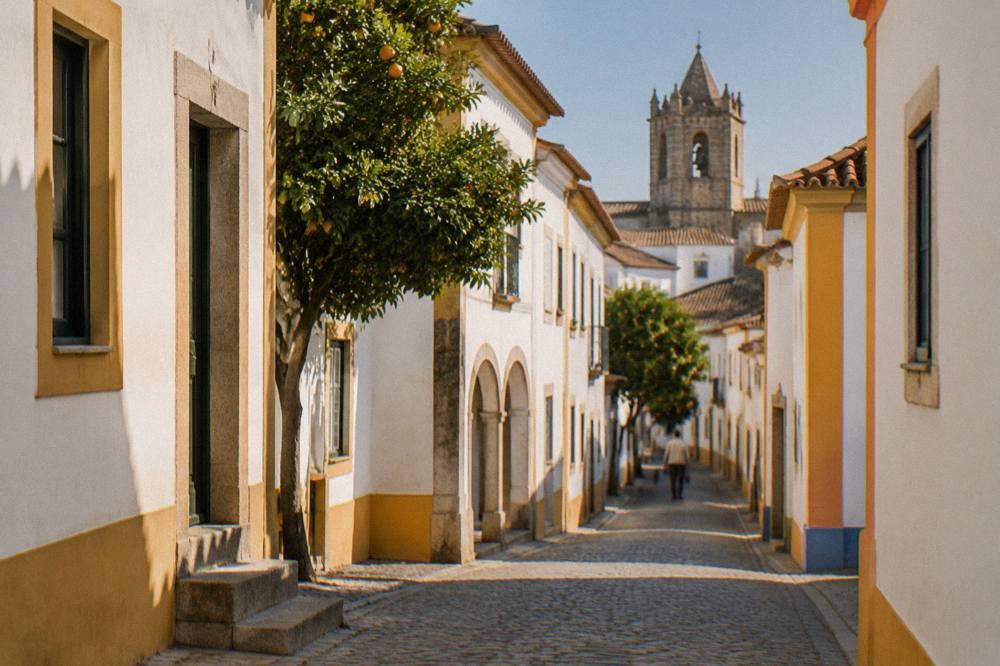
Évora Train Station: Arriving By Rail In Portugal's Alentejo
Évora Train Station is the rail gateway to Portugal's inland Alentejo, served by six through Intercidades trains from Lisbon each day in the 2026 CP timetable. This guide covers the trains, the fares, the tickets and the first twenty minutes after you step off.
Short answer
CP's timetable valid since 6 September 2026 lists six through Intercidades trains from Lisboa Oriente to Évora, taking about 1 hour 40 to 1 hour 45, with a second-class fare of 13.90 EUR. The station sits at the edge of the historic walled centre, which is reached on foot past the Água de Prata aqueduct.
Évora, the capital of the Alentejo region of Portugal, is one of the few inland cities on the Iberian peninsula where the railway still drops you a short stroll from a UNESCO World Heritage centre. The station that does it is modest: a regional terminus on CP's Lisbon to Évora line, about 130 km from the capital, handling a handful of through Intercidades trains each day rather than a stream of expresses. That modesty is part of the appeal. Where Lisbon's stations demand navigation, Évora's asks almost nothing of you beyond stepping off the train and walking toward the old walls.
This guide from the Évora Travel Guide editorial desk covers what the 2026 CP timetable actually lists, what the fare table says, which tickets make sense once you arrive, and what the walk from the platform into the historic centre looks like. It also explains where the train fits against the bus for the Lisbon run, and whether a car is worth adding once you are here. For the wider picture of arriving in the city from the capital, see Lisbon to Évora by Train and the overview at Lisbon to Évora.
Where Is Évora Train Station And What Arrives There?
Évora Train Station stands at the southern edge of the city, just outside the historic walls, and it is the terminus of the CP line from Lisbon through Casa Branca. CP's timetable valid since 6 September 2026 lists six through Intercidades trains arriving from Lisboa Oriente each day, at 08:47, 10:45, 11:40, 15:13, 18:41 and 20:46, after a journey of about 1 hour 40 to 1 hour 45. Nothing else arrives here: there is no other rail line into the city.
The station serves a municipality of about 53,000 people, and the rail link matters to the city's tourism in a way that is easy to underestimate. Évora's historic centre was inscribed by UNESCO in 1986 under criteria (ii) and (iv), and the UNESCO record calls it the finest example of a city of the golden age of Portugal after the 1755 Lisbon earthquake, which Évora was largely spared. The train is what makes that centre a realistic day trip or short break from the capital without a hire car.
What arrives, concretely, is the CP Intercidades service. The 2026 timetable shows the through trains calling at Entrecampos, Sete Rios, Pragal, Pinhal Novo, Vendas Novas and Casa Branca before Évora, with no change needed at Casa Branca on these services. The weekday remarks in CP's published timetable were not all read by this desk, so rather than promising a service pattern, check the current PDF on cp.pt before you lock a plan: the six-departure pattern is what the timetable lists, and CP's own page is the authority on which days each train runs.
If you are weighing the train against the coach, the comparison pages at Évora Bus Station and Lisbon to Évora by Bus cover the road option, and the direct answer to the most common question sits at Is There a Direct Train From Lisbon to Évora?.
What Trains Run Between Lisbon And Évora?
CP lists six through Intercidades trains from Lisboa Oriente to Évora in the timetable valid since 6 September 2026: departures at 07:02, 09:02, 09:58, 13:35, 17:02 and 19:02, arriving at 08:47, 10:45, 11:40, 15:13, 18:41 and 20:46. Each run takes about 1 hour 40 to 1 hour 45. The trains call at Entrecampos, Sete Rios, Pragal, Pinhal Novo, Vendas Novas and Casa Branca, and no change is needed at Casa Branca on these through services.
The full pattern, as the CP timetable lists it:
| Depart Lisboa Oriente | Arrive Évora | Journey Time | Service |
|---|---|---|---|
| 07:02 | 08:47 | about 1 h 45 | Intercidades |
| 09:02 | 10:45 | about 1 h 43 | Intercidades |
| 09:58 | 11:40 | about 1 h 42 | Intercidades |
| 13:35 | 15:13 | about 1 h 40 | Intercidades |
| 17:02 | 18:41 | about 1 h 40 | Intercidades |
| 19:02 | 20:46 | about 1 h 44 | Intercidades |
Two practical readings of that table. First, the morning cluster is generous: three arrivals before noon, which means a day visitor can be inside the walls by late morning and still have the afternoon for the Sé, the Capela dos Ossos and a long Alentejo lunch. Second, the evening return pattern from Évora was not read from the timetable by this desk, so do not plan a last train from memory: check the Évora to Lisbon direction on cp.pt, or read the return-planning page at Évora to Lisbon for how to think about it.
The line itself is a single-track Alentejo route for much of its length, which is why the service is six through trains rather than a half-hourly shuttle. CP's published timetable is the only source worth trusting on this: services, times and any seasonal adjustments appear there first, and the fare table changes with it.
Once you step off, the fastest way to make the city make sense is with a guide, and the guided options below all start in Évora itself.
How Much Does The Train From Lisbon To Évora Cost?
The CP price table for Lisboa Oriente to Évora, valid in 2026, lists the Intercidades fare at 13.90 EUR in second class and 18.50 EUR in first class, each way. Those are the only two figures this desk will print, because they are the only two in the published fare table. There is no verified youth, senior or advance-purchase discount to state, so treat the fare page on cp.pt as the final word before booking.
In full:
| Route | Class | Fare |
|---|---|---|
| Lisboa Oriente to Évora | 2nd class | 13.90 EUR |
| Lisboa Oriente to Évora | 1st class | 18.50 EUR |
Against the cost of the city itself, the train fare is small. The paid monuments inside the walls are cheap by European standards, and several can be bundled. The Évora Ticket, the multi-site pass for the Cidade-Museu network, is priced at 8 EUR for one day, 10 EUR for two days and 12 EUR for three days, free for children to age 12. Note what it does not include: the Sé, the Capela dos Ossos and the Museu de Évora are separate.
The individual entry prices, all from the official pages:
| Site | Adult Ticket | Notes |
|---|---|---|
| Sé de Évora | 5.00 EUR | Complete visit: cathedral, cloister, roof terrace, museum; children to 12 free |
| Capela dos Ossos / Igreja de São Francisco | 7.00 EUR | One museum ticket; youth to 25 and seniors over 65 pay 5.00 EUR; family 15.00 EUR |
| Museu de Évora | 8 EUR | Closed Mondays; 50% off for youth 13-24, seniors over 65 and families |
| Évora Ticket | 8 EUR (1 day) | 10 EUR two days, 12 EUR three days; free to age 12 |
A municipal tourist tax applies to overnight stays in the city; check with your hotel for the current amount rather than relying on any figure quoted elsewhere. For the full budget picture, the page at Évora Cost and Budget breaks down what a day, a weekend or a week realistically costs.
How Do You Get From Évora Train Station Into The Historic Centre?
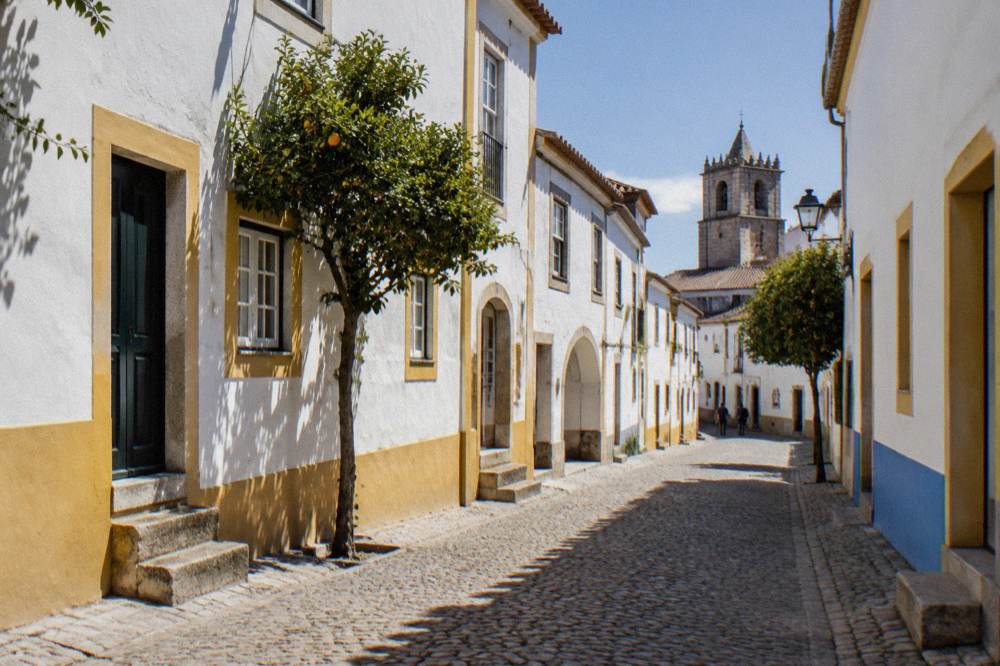
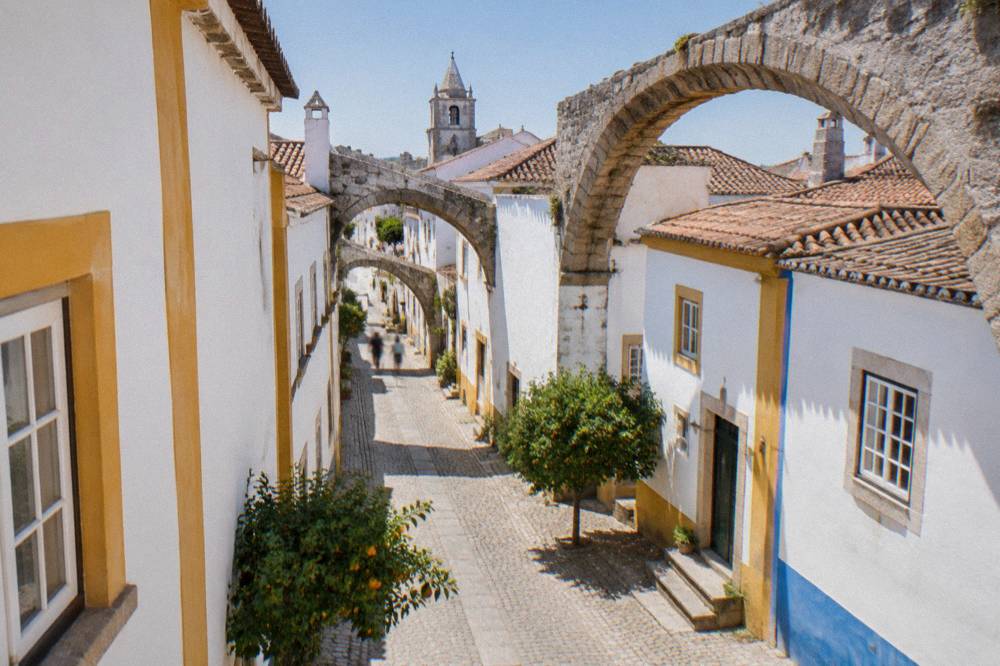
The historic centre of Évora sits inside its old walls, and the station stands just outside them, so the transfer is a walk rather than a ride. The Água de Prata aqueduct, the old water channel whose arches run toward the old town, marks the line of approach, and the streets inside the walls are narrow, cobbled and closed or restricted to cars through much of the UNESCO-listed core. Most visitors arriving by train simply walk in and never use a vehicle inside the centre.
No walking time is printed here because none is stated in the sources this desk uses. What can be said is structural: the centre is compact, the walls are visible from the approach, and the first landmark most walkers meet is the aqueduct's arches, followed by the lanes around the Convento dos Lóios and the Praça do Giraldo, the arcaded main square where the tourist office sits at number 73. Other pages covering the same trip are gathered on Évora Travel Guide.
If you have luggage and would rather not drag it over cobbles, ask at the ticket window about a taxi; this desk prints no fare and no rank location, because neither is published in the sources it holds. If you are driving onward, the practicalities of parking outside the restricted centre are covered at Évora Parking, and where to sleep, inside the walls or out, at Where to Stay in Évora.
The walk in is also the best possible first tour if you know what you are looking at. The city's story is unusually layered for its size: Moorish rule ended here in 1165, the Jesuit University of the Holy Spirit dates from 1553, and the Jesuits were expelled in 1759, all per the UNESCO record. A guided walk turns those dates into streets. The small-group cultural walking tour below pairs the historic centre with the Chapel of Bones, with entry included, and is the natural first activity after a morning train.
What Is There To Do Within Walking Distance Of Évora Train Station?
Everything inside the UNESCO-listed historic centre is reachable on foot from the station, and that centre is dense: the Sé de Évora with its roof terrace, the Capela dos Ossos at the Igreja de São Francisco, the Templo Romano, the Museu de Évora in the former Archbishop's Palace, and the Praça do Giraldo all sit within the same compact walled area. A visitor arriving on the 09:02 train can realistically visit two or three of them before lunch.
The headline sights, with their verified entry conditions:
| Sight | Hours | Closed |
|---|---|---|
| Sé de Évora | 9:00-17:00 | 24 Dec afternoon, 25 Dec, 1 Jan |
| Capela dos Ossos | Summer 9:00-18:30, winter 9:00-17:00 | 1 Jan, Easter Sunday, 24 Dec afternoon, 25 Dec |
| Museu de Évora | Tue-Sun 9:30-13:00 and 14:00-17:30 | Mondays, 1 Jan, Easter Sunday, 1 May, 29 June, 25 Dec |
| Templo Romano | Open-air monument, no ticket listed | None listed |
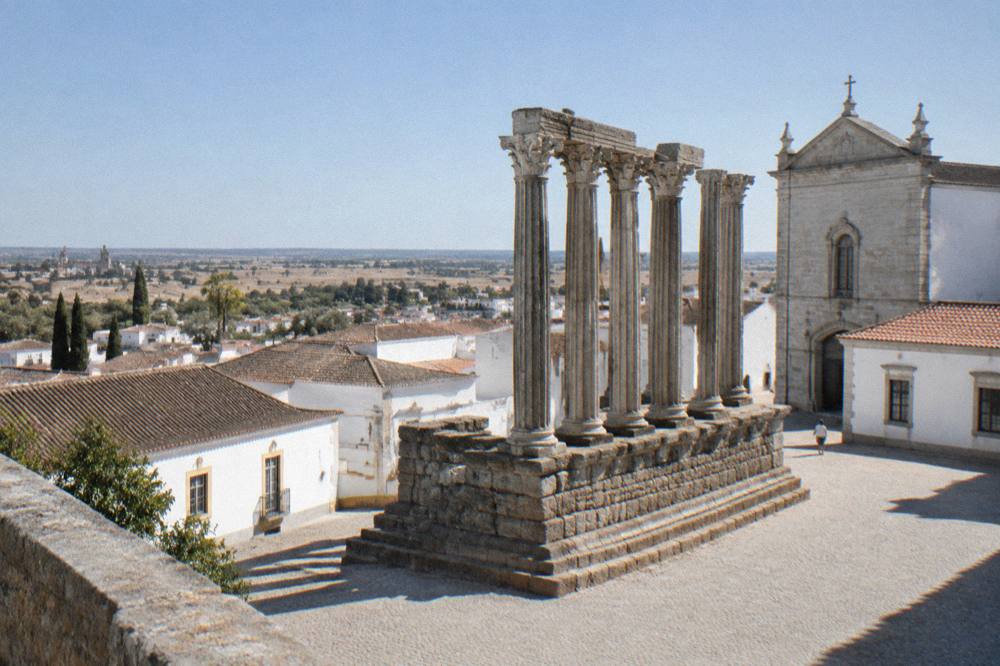
The Templo Romano deserves a note, because the popular name is misleading. The municipal page says the temple was probably dedicated to the imperial cult, not to the goddess Diana; the Diana name has been used only since the 17th century. The monument measures 25 x 15 m, was reused for centuries as a municipal butcher's shop, and had its walls freed in 1870. That is the kind of detail a guide gives you at the railing, and the reason a two-hour walk is worth more than a map.
For the deeper list, Things to Do in Évora covers the full range, and What Is Évora Known For? explains why a city this small carries a UNESCO inscription at all. If the megaliths pull at you, the Cromeleque dos Almendres and the surrounding stone landscapes are covered on the site's megalith pages, and they are the one category of sight that genuinely benefits from a tour rather than a walk, since they sit out in the countryside beyond the city.
For a first afternoon on foot, two other guided options stand beside the small-group cultural walk: a flexible historic-centre walk that suits a smaller budget, and a sidecar tour that covers the medieval streets with a wine tasting attached.
The sidecar option below is the one to pick if cobblestones are a problem or if the idea of seeing a walled city from a vintage motorcycle sidecar appeals on its own terms. It runs three hours with a tasting included.
Do You Need A Car Once You Arrive By Train In Évora?
For the historic centre itself, no: the UNESCO-listed core is a walking district, with narrow streets and restricted vehicle access, and every headline monument sits inside it. A car becomes worth considering only for the Alentejo beyond the walls, the megalithic sites, the marble towns, the wineries and the hilltop villages such as Monsaraz, which lie about 40-45 km away and are poorly served by public transport. Many visitors split the difference: train in, walk the city, then take a guided day tour outward.
The trade-off, in the terms the facts allow:
| You Want | Car Needed? | Better Option |
|---|---|---|
| Sé, Capela dos Ossos, Templo Romano, Museu de Évora | No | Walk; all inside the walls |
| Cromeleque dos Almendres and dolmens | Helpful | Guided megaliths tour from Évora |
| Monsaraz and the Alqueva lake country | Helpful | Guided Monsaraz tour from Évora |
| Vila Viçosa marble country, about 60 km | Helpful | Guided tour or hire car |
| Restaurants and taverns inside the centre | No | Walk; Évora Restaurants and the Évora Food Guide list the ground to cover |
The distances that can be quoted are rounded ones: Arraiolos about 20 km, Monsaraz about 40-45 km, Estremoz about 45 km, Vila Viçosa about 60 km, Elvas about 80 km, Marvão about 120 km, Lisbon about 130 km. No drive times, timetables or fares attach to those figures in the sources this desk holds, so none are printed. If the countryside is the point of your trip, the Alentejo Travel Guide and the road-trip pages map the region properly.
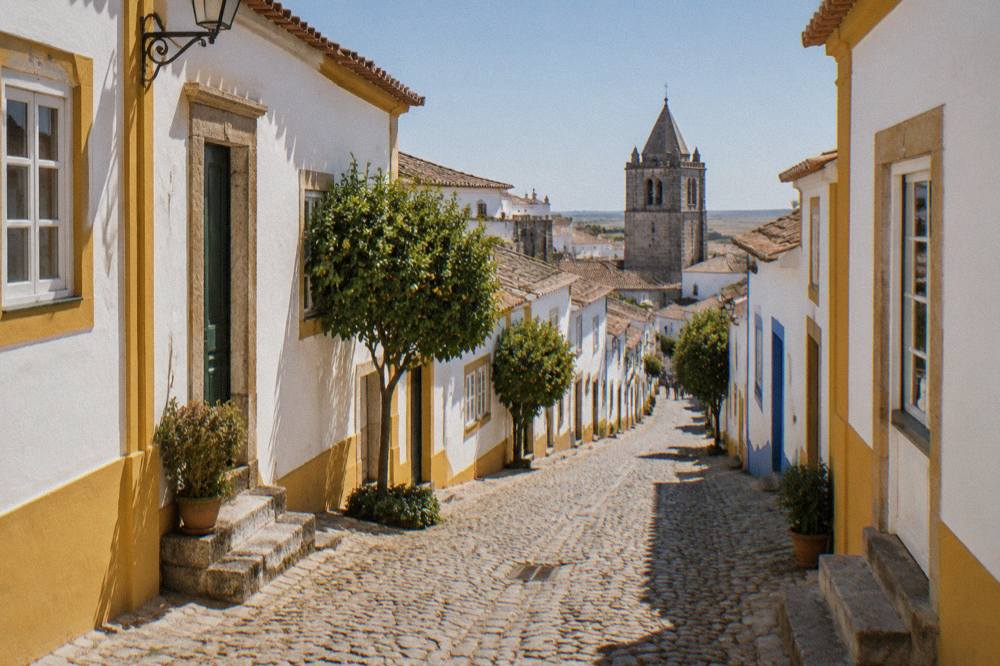
Évora is inland Alentejo, and that shapes everything about visiting it. The Atlantic is roughly 90 km away; there is no sea breeze to soften an August afternoon, and no coastal detour worth making from here on a whim. What the region offers instead is plain, hot, golden and slow, and the train delivers you straight into the middle of it.
When Is The Best Time Of Year To Arrive In Évora By Train?
By the IPMA 1991-2020 averages for the Évora station, the comfortable months are April, May and October, with mean daily maxima of 20.7 C, 25.0 C and 24.1 C. July and August average 33.3 C and 33.5 C by day, and 11.5 and 10.9 days per month at 35 C or above. Winter days are mild, with a January mean maximum of 14.1 C, but January nights average a minimum of 4.5 C.
The numbers behind that, from the IPMA 1991-2020 normals for station Évora, number 558:
| Month | Mean Max (C) | Mean Min (C) | Days With 1 mm+ Rain | Days at 35 C+ |
|---|---|---|---|---|
| January | 14.1 | 4.5 | 8.6 | 0.0 |
| April | 20.7 | 8.5 | 8.0 | 0.0 |
| May | 25.0 | 10.9 | 6.0 | 0.7 |
| July | 33.3 | 15.6 | 0.6 | 11.5 |
| August | 33.5 | 16.0 | 0.7 | 10.9 |
| October | 24.1 | 12.3 | 7.7 | 0.1 |
Two cautions attach to that table. The record maximum at this station is 45.4 C, set on 4 August 2018, and the year averages 31.9 days at 35 C or above, so a summer arrival means planning monuments for the morning and shade for the afternoon. And the normals say nothing about sunshine hours or wind, so neither does this desk. The seasonal pages at Best Time to Visit Évora and Évora Weather go deeper, including the rainy-day options if the 68.9 annual rain days land on yours.
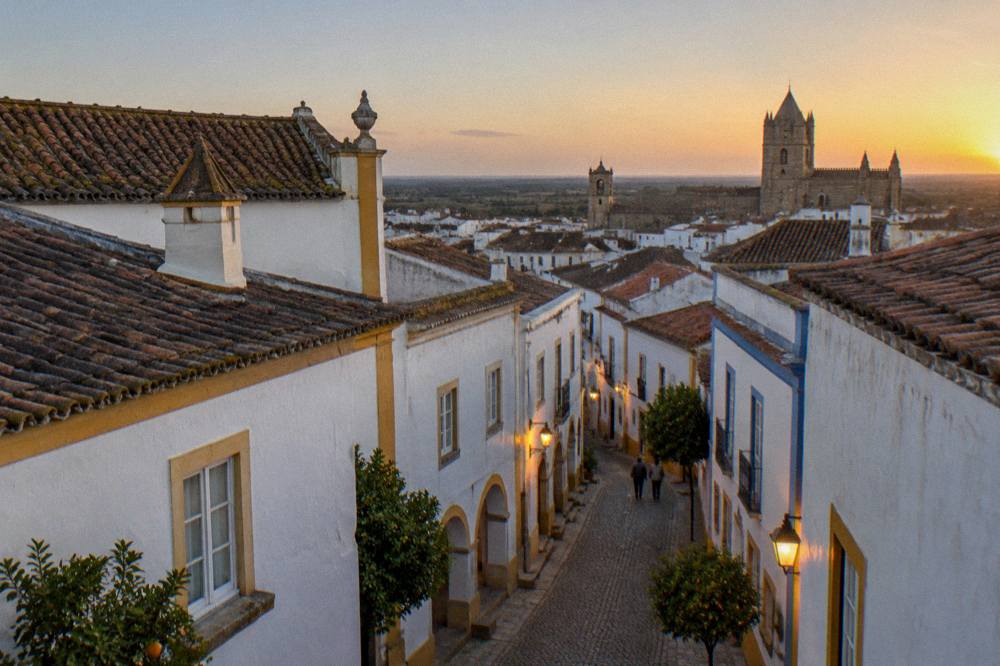
There is a cultural timing angle too. Évora and the Alentejo are a European Capital of Culture in 2027, with 2026 running as a preparation year built on the concept of "Vagar"; the GUADIANA festival of Afro-Ibero-American literatures held its first edition in Évora on 9 to 11 October 2026 with 28 authors from nine countries. The full 2027 programme is not yet published, so anyone planning a visit around it should watch the official programme page rather than any printed date. The Feira de São João, the city's big June fair, ran 23 June to 5 July 2026 at the Rossio de São Brás under the theme "Évora: Capital Europeia ao Sul"; describe 2027 only as late June into early July if the pattern holds, and confirm before you book.
Whichever month you choose, the guided options below are the ones that start from the city itself, which is exactly what you want after stepping off the train.
For the broader question of whether the city justifies the fare at all, Is Évora Worth Visiting? answers it straight, and Where Is Évora? covers the geography for anyone still placing the city on the map.
Common Questions About Évora Train Station
Is there a direct train from Lisbon to Évora?
Yes. CP's timetable valid since 6 September 2026 lists six through Intercidades trains from Lisboa Oriente to Évora with no change needed, departing at 07:02, 09:02, 09:58, 13:35, 17:02 and 19:02 and taking about 1 hour 40 to 1 hour 45. Check cp.pt for the days each service runs before you plan around one.
How much does the train from Lisbon to Évora cost?
The CP fare table lists 13.90 EUR in second class and 18.50 EUR in first class for Lisboa Oriente to Évora. Those are the only published figures for the route; check the CP fare page for any changes or conditions before booking.
How far is Évora Train Station from the historic centre?
The station sits just outside the old walls, and the historic centre is a walk rather than a ride, with the Água de Prata aqueduct arches marking the approach. No walking time is printed here because the sources this desk holds give none; ask at the ticket window or the tourist office at Praça do Giraldo 73 if you need one.
Do I need a car in Évora if I arrive by train?
Not for the historic centre: the UNESCO-listed core is a compact walking district containing the Sé, the Capela dos Ossos, the Templo Romano and the Museu de Évora. A car or a guided day tour earns its keep only for the countryside sights, such as the Cromeleque dos Almendres or Monsaraz, about 40-45 km away.
Can I visit Évora as a day trip from Lisbon by train?
Yes, and the timetable supports it: three through trains arrive before noon, at 08:47, 10:45 and 11:40, and the centre is walkable from the station. Confirm the return departure times on cp.pt before committing, and read the day-trip planning pages on this site for how to spend the hours well.
What is the best time of year to take the train to Évora?
By the IPMA 1991-2020 averages for the Évora station, April, May and October are the comfortable months, with mean maxima of 20.7 C, 25.0 C and 24.1 C. July and August average 33.3 C and 33.5 C by day, and the station's record is 45.4 C, set on 4 August 2018, so summer visitors should sightsee early.
The station itself will take you ten minutes to understand and no longer to leave: six trains a day from Lisbon, one fare table, one walk through an aqueduct's shadow into a city the UNESCO record calls the finest example of a city of the golden age of Portugal. Arrive on the 09:02, and the whole of that city is still ahead of you by lunchtime.