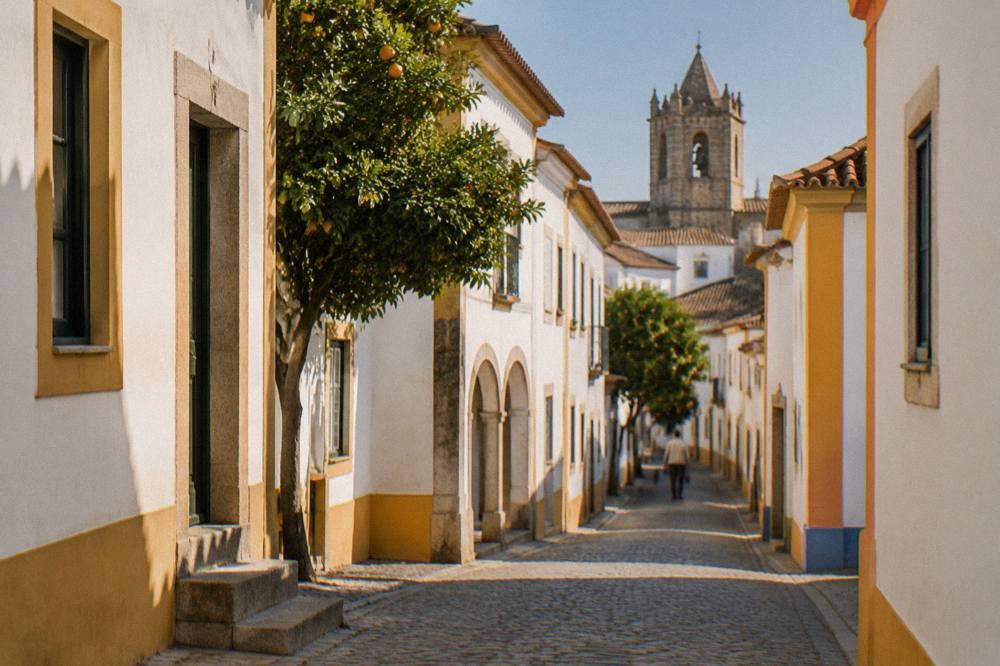
Évora Bus Station
Évora's bus station, the Terminal Rodoviário, is the arrival point for long-distance coaches and the practical gateway to a walled city that is small enough to explore entirely on foot.
Short answer
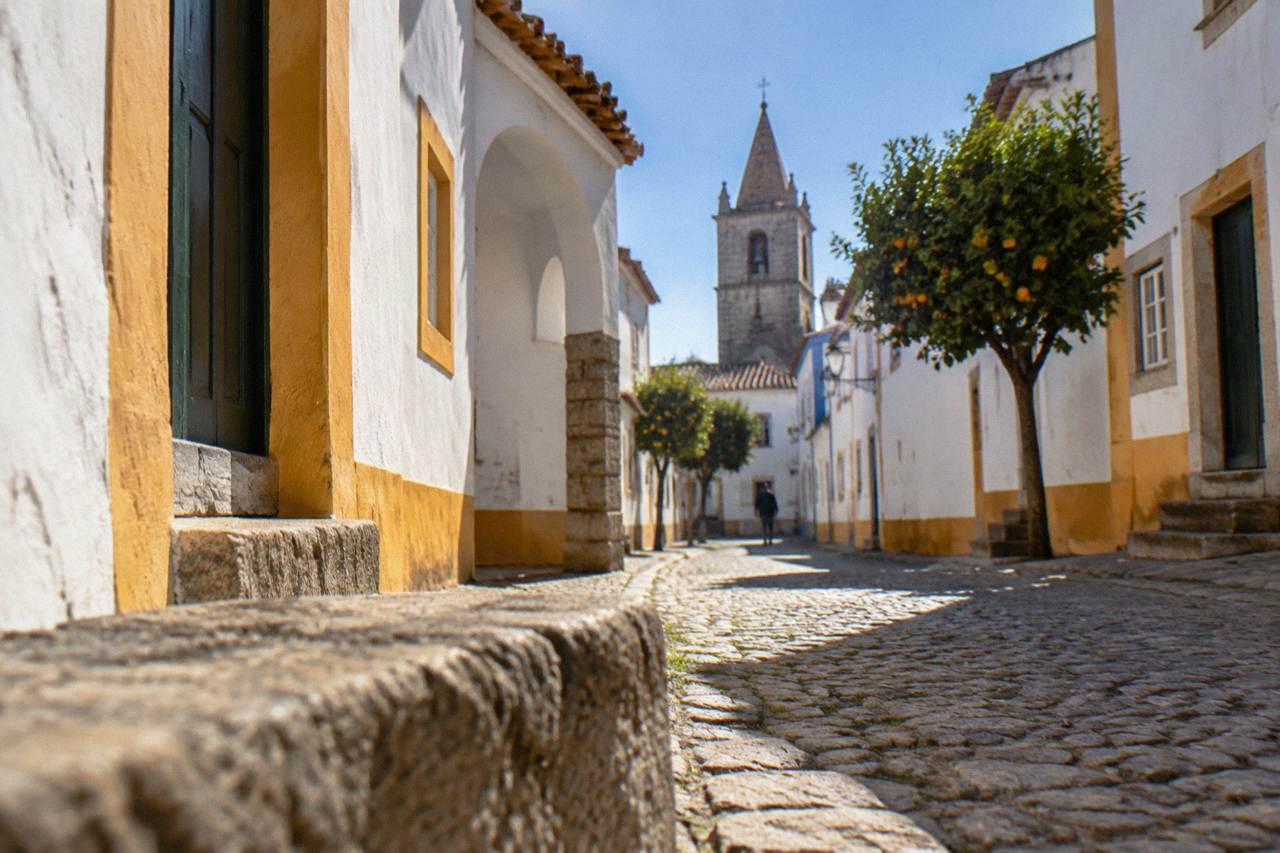
Évora's bus terminal sits close to the edge of the historic centre, and the whole UNESCO-listed old town is walkable from it. Rede Expressos and FlixBus are the operators usually named for the Lisbon route, with a journey usually a little under two hours; check the operator's page for times and fares, which change often.
Évora, the capital of the Alentejo district of that name in southern Portugal, is a compact walled city whose historic centre has held UNESCO World Heritage status since 1986, and almost every visitor who does not come by car arrives through one of two doors: the railway station to the south, or the Terminal Rodoviário, the city's bus station. This page is about the second one. It covers what the terminal is, how coach travel from Lisbon works in practice, how the bus and train options genuinely differ, and how to get from the terminal into the medieval streets without a car, because in Évora you will not need one.
Where Is The Évora Bus Station?
The Évora bus station, the Terminal Rodoviário, is the city's coach hub, and it sits close enough to the historic centre that the walk into the walled town is short and flat along ordinary streets. Évora is a small city of roughly 53,000 people, and its terminal handles the regional and long-distance coach network.
There is no separate central station beyond it, so a coach from Lisbon, the Algarve or the Alentejo towns all lands you in the same place, a short distance from Praça do Giraldo, the main square inside the walls.
That geography is the single most useful thing to know about the terminal. In larger Portuguese cities the bus station can sit on a ring road far from anything worth seeing, which turns arrival into a second journey. Évora does not work that way. The city's sights cluster tightly inside and just outside the medieval walls: the Praça do Giraldo, the Sé cathedral, the Igreja de São Francisco with its Capela dos Ossos, the Templo Romano and the Museu de Évora all sit within a stroll of one another, and the terminal is on the near side of that cluster.
The practical consequence is that a coach arrival in Évora behaves more like a train arrival in a small town than a bus arrival in a capital. You step off, you orient yourself, and you walk. Luggage is the one variable: with a heavy suitcase the cobbled streets inside the walls take more effort than they do with a backpack, and travellers staying deep in the historic centre sometimes prefer a taxi for the final stretch. No verified taxi fare for that hop exists, so ask at the ticket window or the driver's desk before you commit to anything.
For orientation, the where is Évora guide places the city on the map of the Alentejo, about 130 km from Lisbon, and the getting around Évora pages cover the same on-foot logic in more detail. The short version: distances in Évora are short, the terrain inside the walls is gentle, and the city was built at pedestrian scale centuries before anyone imagined a coach terminal on its edge.
How Do You Travel From Lisbon To Évora By Bus?
Rede Expressos and FlixBus are the two operators usually named for the Lisbon to Évora coach route, a journey usually a little under two hours each way, and both sell tickets online and at their own counters. No honest guide can print a fare or a timetable for the route, because coach pricing changes by date, by departure time and by how far ahead you book, so the operator's own page is the only reliable place to check both.
What is stable is the arrival: every coach terminates at the Évora Terminal Rodoviário described above.
The comparison most travellers actually weigh is coach against train, and the train side of that comparison is unusually well documented. CP, the national operator, lists six through Intercidades trains from Lisboa Oriente to Évora in its 2026 timetable, valid since 6 September 2026, departing at 07:02, 09:02, 09:58, 13:35, 17:02 and 19:02 and arriving at 08:47, 10:45, 11:40, 15:13, 18:41 and 20:46. That is a journey of about 1 hour 40 to 1 hour 45, and the fare is 13.90 EUR in second class or 18.50 EUR in first class. The coach is typically quoted as a little under two hours, but treat that as a planning range and confirm on the operator's page, not as a promise.
The coach has real advantages in specific situations. It can be cheaper when booked early, though no figure survives being printed here because none is stable. It serves Lisbon's Humberto Delgado airport with direct services reported to Évora, which matters if you are landing and want to skip the cross-city transfer to Lisboa Oriente station. And it runs from a terminal that, in Évora, puts you marginally closer to the walls than the railway station does.
The train counters with comfort and certainty. An Intercidades seat is roomier than a coach seat, the timetable above is published by the operator in a single PDF, and the fare is fixed in a price table rather than floating with demand. The Lisbon to Évora by bus and Lisbon to Évora by train pages break each mode down separately, and the Lisbon to Évora overview compares them side by side for the return leg too.
Whichever mode you choose, the arrival experience in Évora itself is the same calm sequence: step off, orient, walk or take a short taxi hop, and you are inside a UNESCO-listed city whose entire monumental core fits within a morning's walking. That is rare in Portugal, and it is the reason so many visitors treat Évora as an easy add-on to a Lisbon stay rather than a logistics project.
Bus Or Train To Évora: Which Should You Take?
Take the train if you want a fixed published timetable and a fixed fare: CP lists six through Intercidades trains from Lisboa Oriente, about 1 hour 40 to 1 hour 45, at 13.90 EUR second class or 18.50 EUR first class. Take the coach if you are starting at Lisbon airport, want the possibility of a cheaper advance fare, or the train times do not fit your day, accepting that you must check the operator's page for anything specific. Neither mode wins outright.
The train timetable is worth seeing laid out, because it is the one piece of the Lisbon to Évora journey that is fully documented by the operator in a single place:
| Depart Lisboa Oriente | Arrive Évora | Journey |
|---|---|---|
| 07:02 | 08:47 | about 1 h 40 to 1 h 45 |
| 09:02 | 10:45 | about 1 h 40 to 1 h 45 |
| 09:58 | 11:40 | about 1 h 40 to 1 h 45 |
| 13:35 | 15:13 | about 1 h 40 to 1 h 45 |
| 17:02 | 18:41 | about 1 h 40 to 1 h 45 |
| 19:02 | 20:46 | about 1 h 40 to 1 h 45 |
These six through trains call at Entrecampos, Sete Rios, Pragal, Pinhal Novo, Vendas Novas and Casa Branca on the way, so the same service can also be boarded at those stations. The weekday remarks in CP's own PDF should be checked before you plan around a specific departure, so treat the table as the 2026 pattern rather than a guarantee for your exact date, and confirm on cp.pt.
The fare side is equally simple:
| Ticket | Fare |
|---|---|
| Intercidades, 2nd class, Lisboa Oriente to Évora | 13.90 EUR |
| Intercidades, 1st class, Lisboa Oriente to Évora | 18.50 EUR |
For the coach, the honest position is that the operators' own pages are the source of truth for times and prices, and both should be checked close to travel. What can be said firmly is the arrival end: the coach terminal and the railway station both sit on the near side of the walls, and neither demands a second connection to reach the old town.
How Far Is The Terminal From Évora'S Main Sights?
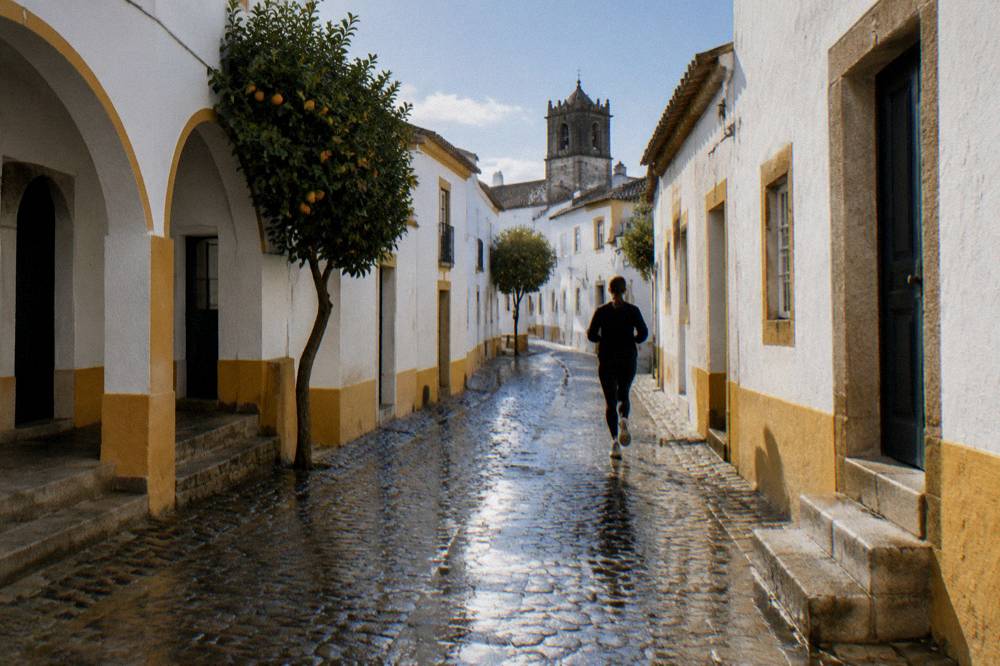
All of Évora's headline sights sit within a compact walk of the bus terminal, because the historic centre inside the walls is small and the terminal sits just outside it. The Praça do Giraldo, the Sé cathedral, the Templo Romano, the Igreja de São Francisco and its Capela dos Ossos, and the Museu de Évora form a cluster that can be covered on foot in a single loop, with no bus, taxi or transfer needed between them. Distances are short, and the streets are pedestrian in scale.
The cluster is worth listing, because it is what makes an Évora arrival so frictionless:
| Sight | Position in the centre |
|---|---|
| Praça do Giraldo | Main square, the traditional heart of the walled town |
| Sé de Évora | Cathedral with cloister, roof terrace and museum, one 5.00 EUR complete-visit ticket |
| Igreja de São Francisco and Capela dos Ossos | One 7.00 EUR adult museum ticket covers the chapel and all museum areas |
| Templo Romano | Open-air Roman temple, 25 x 15 m, no ticket |
| Museu de Évora | Former Archbishop's Palace, 8 EUR adult, closed Mondays |
| Convento dos Lóios | Inside the walls; the ticket is temporarily unavailable, so check on arrival |
The one planning note that catches people out is Monday. The Museu de Évora is closed on Mondays along with 1 January, Easter Sunday, 1 May, 29 June and 25 December, so a Monday arrival by coach or train should not be built around it. The Sé and the Capela dos Ossos both open daily in the season sense, the Sé from 9:00 to 17:00 and the Capela dos Ossos 9:00 to 18:30 in summer legal time and 9:00 to 17:00 in winter, with both closed on 25 December and 1 January and the chapel also on Easter Sunday and the afternoon of 24 December.
A structured walk is the natural first activity after arrival, and the guided options cover the same cluster with a guide who can open the history of each building. The Évora private walking tour with cathedral and Chapel of Bones runs 2.5 hours from $111.42 per person and carries monument tickets, which spares you the queue logic entirely.
Do You Need A Bus Pass Or City Transport In Évora?
No, you do not need a city transport pass in Évora, because the historic centre is entirely walkable and the distances between sights are short. The only passes worth knowing about are monument passes, not transport passes: the Évora Ticket, which covers the Cidade-Museu network at 8 EUR for one day, 10 EUR for two days and 12 EUR for three days, free to age 12.
It does not include the Sé, the Capela dos Ossos or the Museu de Évora, so check the network list before assuming it replaces individual tickets.
That distinction between a transport pass and a monument pass is where most arrival-day confusion happens. Travellers step off a coach expecting a city bus system like Lisbon's, and there is no equivalent worth planning around. Inside the walls everything is on foot; outside the walls, the distances to the megalithic sites, the wineries and the Alentejo towns are exactly why guided tours with transport exist, and those depart from the city rather than from a municipal bus network.
The monument economics are simple enough to lay out:
| Ticket | Price | Covers |
|---|---|---|
| Sé de Évora complete visit | 5.00 EUR | Cathedral, cloister, roof terrace and museum; children to 12 free |
| Capela dos Ossos museum ticket | 7.00 EUR adult | Chapel and all museum areas of the Igreja de São Francisco; youth to 25 and seniors over 65 at 5.00 EUR, family 15.00 EUR |
| Museu de Évora | 8 EUR | Permanent collections in the former Archbishop's Palace; half price for youth 13-24, seniors and families; free Sundays and holidays for residents in Portugal |
| Évora Ticket | 8 EUR one day, 10 EUR two days, 12 EUR three days | The Cidade-Museu network sites; not the Sé, the Capela dos Ossos or the Museu de Évora |
For a one-day visitor arriving by coach, the Sé ticket plus the Capela dos Ossos ticket is the combination that matches the classic Évora loop, and both can be bought on arrival. The Évora tickets and passes page works through the permutations in more depth, and the one day in Évora itinerary sequences the same sights for a single day.
Can You Use The Bus Terminal For Day Trips Around The Alentejo?
Yes, the terminal is the hub for regional coaches into the Alentejo, and the surrounding towns are close enough to make day trips realistic, but no timetable, fare or frequency for any specific regional route can be stated here, so the ticket window or the operator's page is the planning source. The verified distances are rounded ones: Arraiolos about 20 km, Monsaraz about 40-45 km, Estremoz about 45 km, Vila Viçosa about 60 km, Elvas about 80 km and Marvão about 120 km from Évora.
Those figures shape what is sensible in a day:
| Destination | Distance from Évora | Character |
|---|---|---|
| Arraiolos | about 20 km | Arraiolos embroidery and a hilltop castle |
| Monsaraz | about 40-45 km | Walled medieval village above the Alqueva lake |
| Estremoz | about 45 km | Marble town with a hilltop keep |
| Vila Viçosa | about 60 km | Ducal palace and marble quarries |
| Elvas | about 80 km | Fortified border city, UNESCO-listed |
| Marvão | about 120 km | Mountain-top walled village |
For most visitors, though, the practical answer for the Alentejo beyond the walls is a guided tour with transport included, because the region's scattered sights, from the Cromeleque dos Almendres to the wineries around Reguengos de Monsaraz, are not strung along a single convenient line. The best day trips from Évora page maps the options, and the Alentejo travel guide covers the wider region for anyone planning a multi-stop route.
A sidecar tour is a different way to see the same territory close up, and the medieval sidecar option covers Évora's streets with a wine tasting, from $61.90 per person over 3 hours. Other pages covering the same trip are gathered on Évora Travel Guide.
When Is The Best Time To Arrive In Évora By Bus?
Spring and autumn are the comfortable seasons to arrive, because Évora's summers are genuinely hot: IPMA's 1991-2020 normals for the Évora station show a July mean maximum of 33.3 C and an August mean maximum of 33.5 C, with 31.9 days a year reaching 35 C or more and a record of 45.4 C set on 4 August 2018. Winter arrivals are cool rather than cold, with a January mean maximum of 14.1 C and a mean minimum of 4.5 C.
The monthly picture, all figures from the 1991-2020 normals for the Évora station:
| Month | Mean max (C) | Mean min (C) | Rain (mm) | Days max 30 C+ |
|---|---|---|---|---|
| January | 14.1 | 4.5 | 68.6 | 0.0 |
| March | 18.7 | 6.9 | 60.8 | 0.0 |
| May | 25.0 | 10.9 | 46.6 | 5.5 |
| July | 33.3 | 15.6 | 2.7 | 23.7 |
| August | 33.5 | 16.0 | 6.0 | 25.0 |
| October | 24.1 | 12.3 | 81.5 | 2.9 |
| December | 14.6 | 5.3 | 85.1 | 0.0 |
Two arrival-specific notes follow from that table. First, a summer coach arrival is best timed for the morning: the six through trains from Lisbon land between 08:47 and 20:46, and the coach operators run comparable morning patterns, so an early start puts your walking hours before the afternoon peak. Second, Évora is inland: there is no sea breeze to soften the afternoon, because the Atlantic is roughly 90 km away, so the heat is dry and the shade inside the walls is the only relief. The best time to visit Évora and Évora weather pages carry the full monthly breakdown.
What Should You Do On Your First Walk From The Terminal?
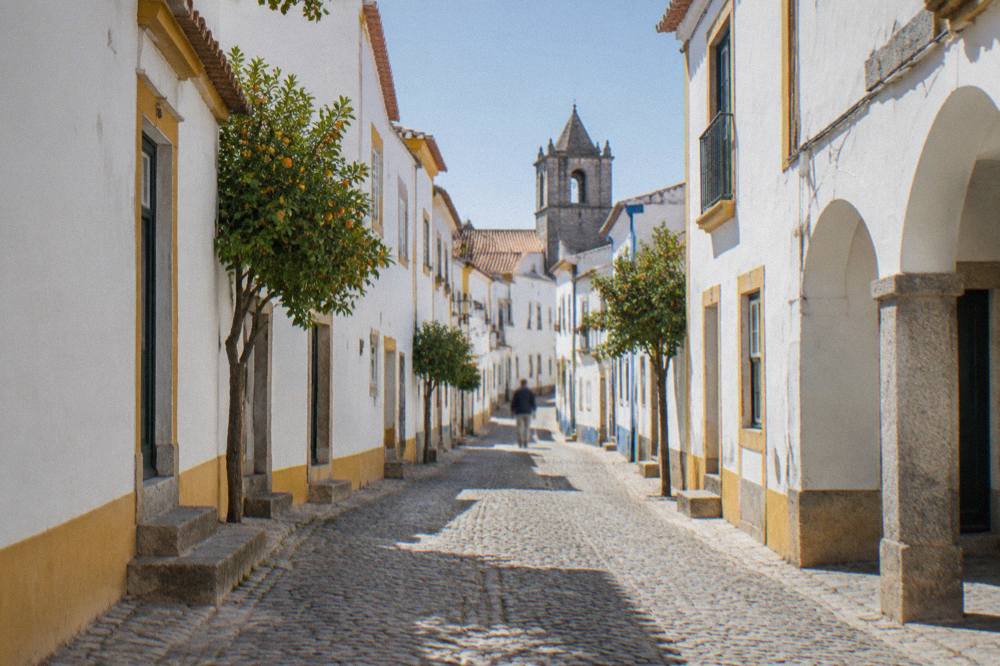
Head first for the Praça do Giraldo, the main square and the traditional orientation point of the walled city, then loop through the Sé, the Templo Romano and the Igreja de São Francisco in one circuit, because all of them sit within a short walk of one another. That loop is the classic first hour in Évora, it needs no transport, and it passes the tourist office at Praça do Giraldo 73, where the municipal staff can confirm anything time-sensitive about the monuments.
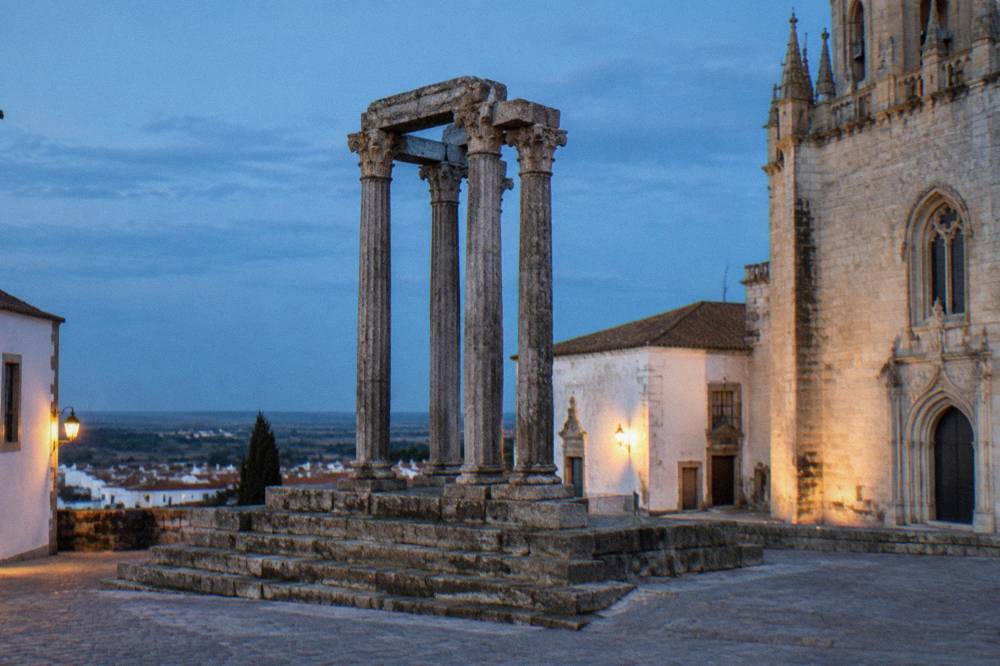
The order matters less than the pacing. The Sé's complete-visit ticket includes the roof terrace, which is the one part of the loop with a genuine reward-to-effort question, and the view from it is the widest single panorama of the Alentejo plain available inside the walls. The Templo Romano beside it is an open-air monument with no ticket and no hours in the ordinary sense, a Roman temple 25 x 15 m that the municipal page says was probably dedicated to the imperial cult rather than to Diana, whose name stuck only in the 17th century, and whose walls were freed in 1870 after centuries of being built into other structures, including a spell as a municipal butcher's shop.
A guided version of the same loop adds the history that the stones do not volunteer. The skip-line option covering the university, the cathedral and the bones chapel with a wine tasting runs 3 hours from $91.39 per person, and the small-group cultural walk with the Chapel of Bones runs 2 hours from $77.66 per person.
For anyone arriving with more than a day, the two days in Évora and three days in Évora and the Alentejo itineraries stretch the same cluster into a slower rhythm, with the second day usually given to the megalithic sites and the wineries outside the walls. The is Évora worth visiting page answers the prior question for anyone still weighing the trip.
Where Should You Stay Near The Terminal?
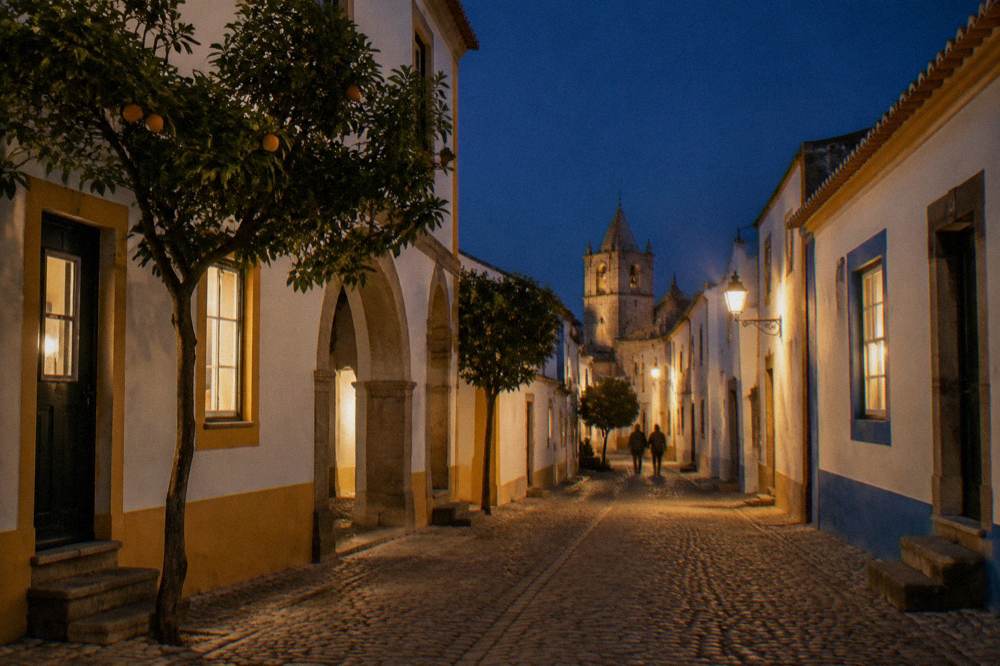
Stay inside or just inside the walls rather than out by the terminal, because the whole point of Évora's geography is that the historic centre is small, quiet at night and fully walkable, and the terminal's immediate surroundings are functional rather than charming. Every part of the walled city is within a short walk of the terminal, so the choice is between atmosphere and price, not between convenience and distance.
The accommodation logic splits three ways. Pousadas and historic hotels occupy converted convents and palaces inside the walls, including the Convento dos Lóios itself, and they trade on atmosphere rather than proximity. Guesthouses and small hotels cluster around the Praça do Giraldo and the streets running down toward the Templo Romano, which puts every monument within a stroll. Budget options sit toward the edge of the centre, which is still only a short walk from the terminal, so the saving rarely costs you much time.
The where to stay in Évora page covers the neighbourhoods in detail, the best hotels in Évora page lists the top of the market, and the Évora cost and budget page prices the whole trip, including what a coach arrival does to the arithmetic compared with renting a car.
What About Arriving From Somewhere Other Than Lisbon?
Coaches into Évora also serve the wider Alentejo and connections from the south and east, but no specific route, timetable or fare beyond the Lisbon corridor can be stated with confidence here, so the operator's page or the terminal's ticket window is the source for anything regional. For train travellers from the south, the CP line through Casa Branca is the documented rail approach to Évora, and the six through Intercidades from Lisboa Oriente all pass through it.
The practical pattern for long-haul arrivals is Lisbon as the hub. Travellers coming from the Algarve, from the Spanish side through Badajoz and Cáceres, or from Porto almost always route via Lisbon and then take the coach or the train for the final leg, which is why the Faro to Évora, Seville to Évora, Madrid to Évora and Porto to Évora pages all end at the same comparison: the last 130 km is where the planning happens. The choice between the coach terminal and the Évora train station then decides the arrival experience, and for most people the coach's airport link or the train's fixed timetable tips it one way or the other.
For the return, the Évora to Lisbon page covers the direction most visitors need at the end of a stay, and the Évora to Lisbon airport page handles the flight-day version, where the coach's direct airport service is often the deciding factor. The one thing not to do is plan the return leg from memory: both the coach timetables and the CP pattern are living documents, and the CP timetable above is the one valid since 6 September 2026, so check the current version before you book anything non-refundable around it.
Is There Anything Happening In Évora That Affects Your Arrival?
Yes, one big thing: Évora and the Alentejo are a European Capital of Culture in 2027, with 2026 running as a preparation year built on the concept of "Vagar", and the city's event calendar is already filling around it, so arrival crowds and accommodation prices will respond to the programme.
The GUADIANA festival of Afro-Ibero-American literatures ran its first edition from 9 to 11 October 2026 with 28 authors from nine countries, and the Feira de São João filled the Rossio de São Brás from 23 June to 5 July 2026.
None of that changes the mechanics of arriving by coach, but it changes the advice around booking. A city in its Capital of Culture run draws visitors who would otherwise never come, and the full 2027 programme had not been published as of the 2026 season, so the honest planning position is to book transport and rooms early for any 2027 visit and to check the city's event calendar before fixing dates. The Évora events and festivals page tracks the calendar as it firms up.
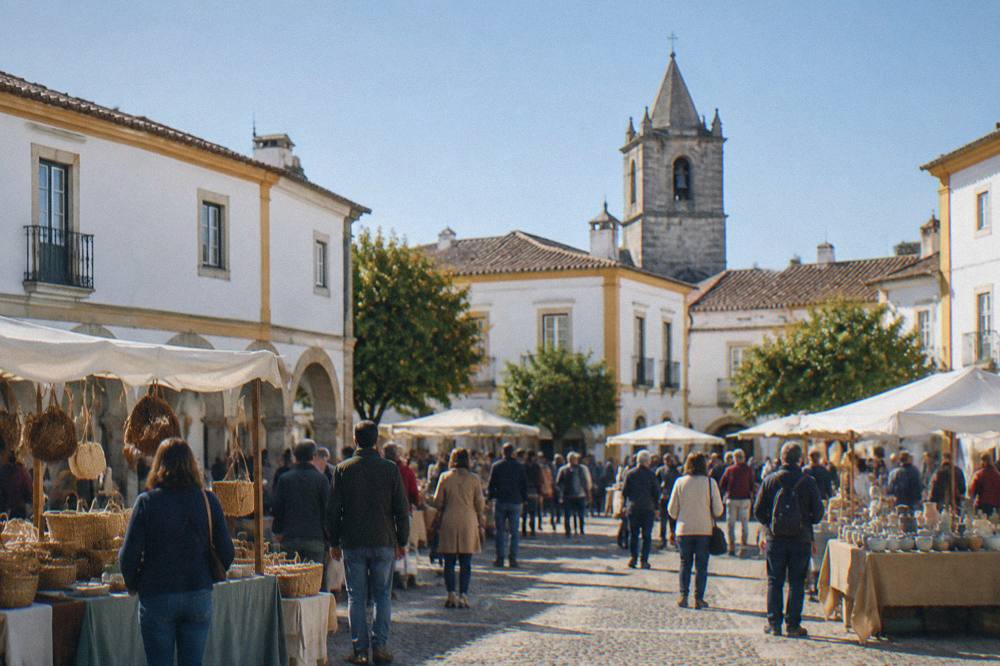
The Feira de São João is the one event with a physical footprint worth knowing about, because it takes over the Rossio de São Brás, the open ground on the city's edge, and that is the side of town a coach arrival naturally approaches. During its run the streets between the terminal and the centre carry more foot traffic than usual, which cuts both ways for a visitor: busier approaches, but a fair in full swing within sight of the walls.
For the everyday arrival, though, none of this complicates the basics. The terminal sits by the walls, the centre is walkable, the monuments cluster, and the biggest decision on the day is whether to start at the Sé or the Capela dos Ossos. That is the whole of the Évora arrival experience, and it is why the city works so well for visitors who arrive without a plan.
Common Questions About The Évora Bus Station
How do I get from the Évora bus station to the historic centre?
On foot. The Terminal Rodoviário sits close to the edge of the walled city, distances are short, and the whole monumental core, from the Praça do Giraldo to the Sé and the Capela dos Ossos, is walkable from it. With heavy luggage, ask at the ticket window about a taxi rather than assuming a fare.
How long is the bus journey from Lisbon to Évora?
Usually a little under two hours, but treat that as a planning range rather than a fact and check the operator's page. The train alternative is documented precisely: CP lists six through Intercidades from Lisboa Oriente taking about 1 hour 40 to 1 hour 45.
How much does the bus from Lisbon to Évora cost?
No fare can be printed here, because coach pricing changes with date and booking time. Check the operator's live listing or ticket counter for the current price. The train fare is fixed and published: 13.90 EUR second class, 18.50 EUR first class.
Is the bus or the train better from Lisbon to Évora?
The train suits travellers who want a fixed timetable and fare; the coach suits those starting at Lisbon airport or hunting a cheaper advance fare. Both arrive within a short walk of the historic centre, so the choice is about the Lisbon end, not the Évora end.
Do I need local transport inside Évora?
No. The historic centre inside the walls is entirely walkable and the distances between sights are short. The only passes worth planning are monument passes such as the Évora Ticket, which covers the Cidade-Museu network but not the Sé, the Capela dos Ossos or the Museu de Évora.
Can I reach the Alentejo towns from the Évora bus station?
Yes, the terminal is the regional hub, but timetables and fares for specific routes must be checked at the window or on the operator's page. Arraiolos is about 20 km away, Monsaraz about 40-45 km, Estremoz about 45 km and Vila Viçosa about 60 km, and guided tours with transport are the usual way to reach the scattered sights.
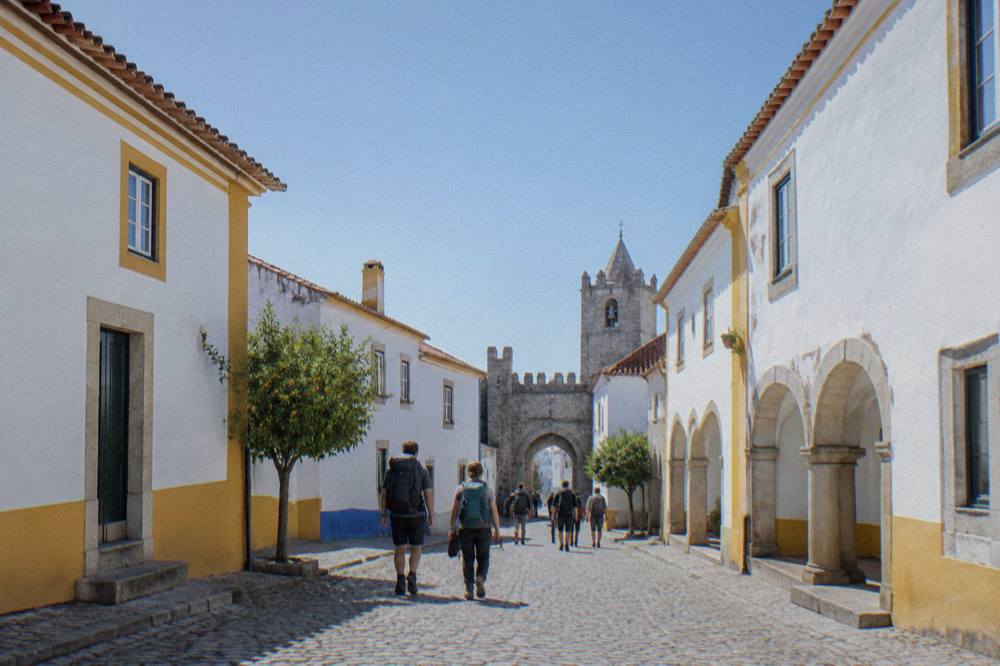
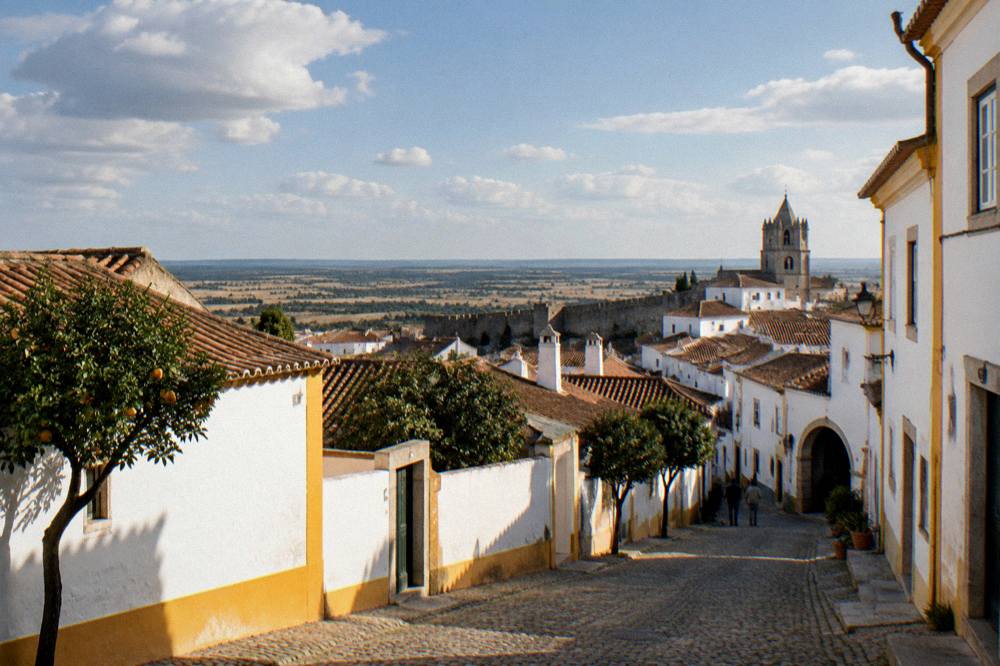
Arriving in Évora by coach is the low-stress version of Portuguese travel: one terminal, one short walk, and a UNESCO-listed city that opens up on foot within minutes of stepping off the bus. The Évora Travel Guide editorial desk covers every leg of that journey, from the Lisbon to Évora by bus planning stage to the free things to do in Évora once the bags are dropped, and the same walkable logic holds for every season on the calendar.