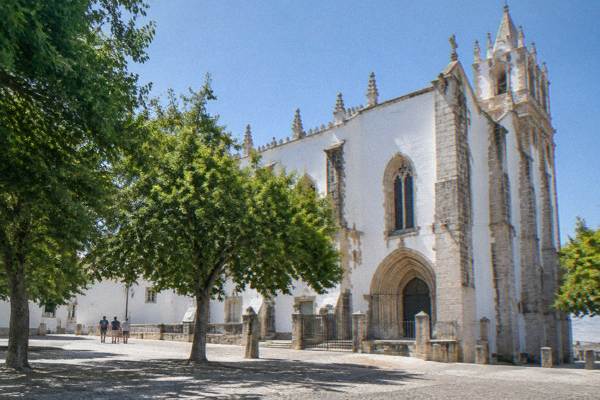
Évora In Winter
Winter in Évora, Portugal is the quiet season: 14 C afternoons, 4.5 C nights, museums without queues, and a UNESCO-listed historic centre you can have almost to yourself.
Short answer
Winter is a fine time to visit Évora. IPMA's 1991-2020 normals for the Évora station put January afternoons at a mean maximum of 14.1 C and nights at 4.5 C, with about 68.6 mm of rain across the month. Monuments run their winter hours, the Capela dos Ossos opens 9:00-17:00, and the city is far less crowded than in summer.
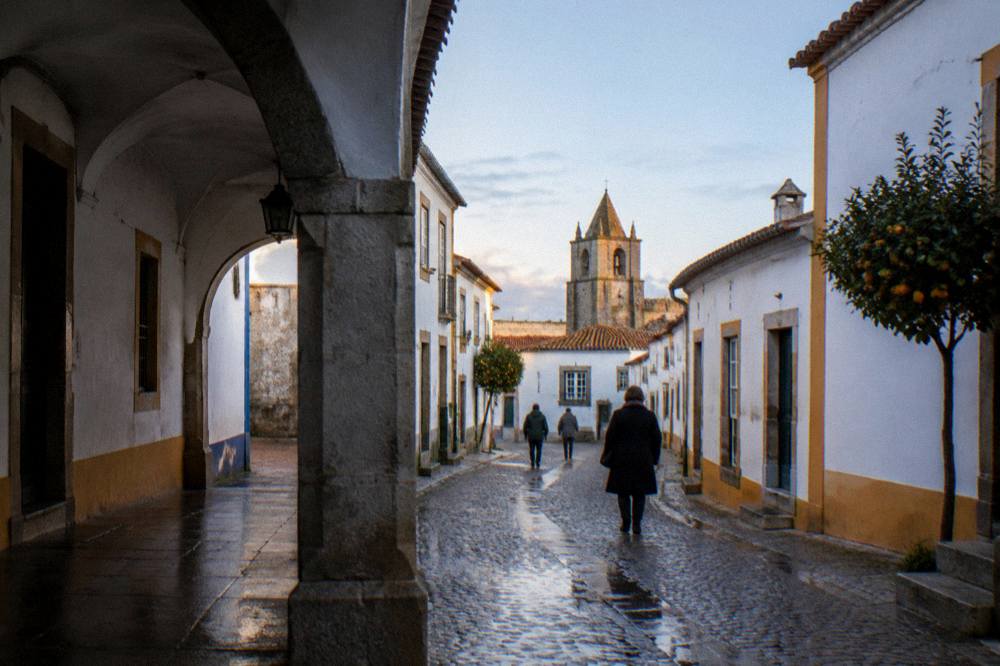
Winter in Évora, the inland capital of Portugal's Alentejo, is the season the city keeps for itself. The summer crowds that fill Praça do Giraldo in July are gone, the 33 C afternoons are months away, and the monuments run their shorter winter hours. IPMA's 1991-2020 climate normals for the Évora station, at 247.6 m altitude on the Alentejo plain, put a January afternoon at a mean maximum of 14.1 C and a January night at a mean minimum of 4.5 C. That is coat weather in the evening and light-jacket weather at midday, with the lowest temperature ever recorded at the station standing at -4.2 C, on 4 December 1998 and again on 23 January 2000. There is no sea here, no coast and no beach: the Atlantic is roughly 90 km away, and winter in Évora is a city season, spent in churches, museums, taverns and candle-lit chapels. This guide from the Évora Travel Guide editorial desk covers the weather in honest numbers, the winter hours and prices at every major monument, what is happening in the city between December and February, and the guided tours that work best when the days are short.
What Is Winter Weather Really Like In Évora?
Winter in Évora is mild by day and genuinely cold at night. IPMA's 1991-2020 normals for the Évora station show December at a mean of 10.0 C with afternoons of 14.6 C and nights of 5.3 C, January at 9.3 C with afternoons of 14.1 C and nights of 4.5 C, and February at 10.3 C with afternoons of 15.7 C and nights of 5.0 C. Rain falls on 8.7, 8.6 and 7.0 days a month respectively.
The numbers are worth reading closely, because Évora's winter is really two winters in one day. An afternoon that reaches the low teens feels pleasant in the sun, especially on the sheltered south side of a street, and visitors regularly eat lunch outdoors on a bright January day. Then the sun drops, the wind has nothing to slow it across the open Alentejo plain, and the same street feels ten degrees colder by six in the evening. The layering advice that follows from the data is simple: plan for a range of roughly 4.5 C to 15 C in the depth of the season, and expect to add and remove a layer across the day.
Rain is real but not dominant. The normals count 8.6 days with at least 1 mm of rain in January, 8.7 in December and 7.0 in February, against 68.6 mm, 85.1 mm and 52.3 mm of total precipitation. Compare that with July's 0.6 rain days and 2.7 mm and the shape of the year is clear: Évora is a summer-dry, winter-green city, and the winter months are when the plain around it turns green again. Frost happens, as the -4.2 C record shows, but the normals give no snowfall row, and no snow figure is published for the station, so none is claimed here.
| Month | Mean temp | Mean max | Mean min | Rain | Days with 1 mm+ rain |
|---|---|---|---|---|---|
| December | 10.0 C | 14.6 C | 5.3 C | 85.1 mm | 8.7 |
| January | 9.3 C | 14.1 C | 4.5 C | 68.6 mm | 8.6 |
| February | 10.3 C | 15.7 C | 5.0 C | 52.3 mm | 7.0 |
All figures are the 1991-2020 averages for the Évora station, number 558. For the full year-round picture, including the 31.9 days a year at 35 C or more that make summer the harder season, see Évora Weather Month By Month and the broader comparison in The Best Time To Visit Évora.
Which Évora Monuments Are Open In Winter, And What Do They Cost?
Every major monument in Évora stays open through winter, on shorter hours. The Capela dos Ossos and Igreja de São Francisco run 9:00-17:00 in winter legal time with a 7.00 EUR adult museum ticket, the Sé de Évora keeps 9:00-17:00 with a 5.00 EUR complete-visit ticket, and the Museu de Évora opens 9:30-13:00 and 14:00-17:30 Tuesday to Sunday, closed Mondays, at 8 EUR for adults.
Winter legal time is the phrase the Igreja de São Francisco's own page uses for the season when hours drop from the summer 9:00-18:30 to 9:00-17:00. The chapel and church complex is open every day except 1 January, Easter Sunday, the afternoon of 24 December and 25 December, so a winter visit loses almost nothing. One ticket covers all the museum areas: the Capela dos Ossos itself, the Sala do Capítulo, the Presépio, the sacred-art nucleus, the Sala da Tribuna Real, the terrace and the Canha da Silva nativity collection. The church notes on its page that it is a private religious entity and does not apply State Museum discounts, which is worth knowing if you hold a Portuguese museum pass.
The Sé de Évora, the cathedral that UNESCO's criterion (iv) description of the golden-age city sits beside, sells one ticket at 5.00 EUR for the complete visit: cathedral, cloister, the panoramic roof terrace and the museum, with children up to 12 free alongside a parent or guardian. The roof terrace is the part that changes most in winter. On a clear January afternoon at 14 C the view over the terracotta roofs toward the Templo Romano is comfortable and uncrowded; on a grey one it is brief and cold, so pick your day for it.
The Museu de Évora, housed in the former Archbishop's Palace and founded officially in 1915, is the monument whose winter rhythm matters most: it closes on Mondays, plus 1 January, Easter Sunday, 1 May, 29 June and 25 December, and it splits its day into two sessions, 9:30-13:00 and 14:00-17:30. Convento dos Lóios, a few minutes away, currently shows no ticket price on the municipal page, so check at the door before planning a visit. The Évora Ticket, the multi-site pass for the Cidade-Museu network, costs 8 EUR for one day, 10 EUR for two days and 12 EUR for three days, and is free to age 12; note that it does not include the Sé, the Capela dos Ossos or the Museu de Évora, which sell their own tickets.
| Monument | Winter hours | Adult ticket | Closed |
|---|---|---|---|
| Capela dos Ossos / Igreja de São Francisco | 9:00-17:00 | 7.00 EUR (youth to 25 and over-65s 5.00, family 15.00) | 1 Jan, Easter Sunday, 24 Dec afternoon, 25 Dec |
| Sé de Évora | 9:00-17:00 | 5.00 EUR complete visit, under-12s free | 24 Dec afternoon, 25 Dec, 1 Jan |
| Museu de Évora | 9:30-13:00 and 14:00-17:30, Tue-Sun | 8 EUR (youth 13-24, over-65s and family 50% off, free to age 12) | Mondays, 1 Jan, Easter Sunday, 1 May, 29 June, 25 Dec |
| Convento dos Lóios | Check at the door | No price currently published | Not stated |
| Évora Ticket (multi-site) | Varies by site | 8 EUR one day, 10 EUR two days, 12 EUR three days | Varies by site |
The tourist office on Praça do Giraldo 73 runs winter hours itself, 1 November to 31 March: 9:00-18:00 on weekdays and 10:00-14:00 plus 15:00-18:00 on Saturdays and Sundays, though treat them as indicative and confirm on arrival. For the individual buildings in depth, the guides to the Chapel of Bones, the Sé and the Museu de Évora carry the full detail.
A guided visit is the way many travellers handle these monuments in winter, when a two-hour walk indoors and out works better than a long self-guided day. The small-group cultural walking tour with the Chapel of Bones included runs two hours from $77.66 per person and is rated 4.9 from 141 reviews, and there is a matching option for travellers who want the whole monumental set in one go: the skip-line tour of the University, the cathedral and the Bones Chapel with a wine tasting, three hours from $91.39 per person, rated 5 from 48 reviews. Both are described on the operator's live listing.
Is Winter A Good Time To Visit Évora, Or Should You Wait For Spring?
Winter is a good time to visit Évora if you want the monuments to yourself and do not mind cold evenings, and a poor one if your priorities are long days, rooftop time and the Alentejo outdoors. The trade is roughly this: against 8.6 rain days in January you set near-empty cloisters, and against a 14.1 C afternoon you set a 4.5 C night that ends sightseeing by six.
The honest case for winter is crowding and pace. Évora's historic centre, inscribed by UNESCO in 1986 under criteria (ii) and (iv), is a compact grid where the summer peak puts real pressure on the narrow streets around Praça do Giraldo and on the Capela dos Ossos queue. In December and February the same rooms are quiet, the Museu de Évora's Flemish panels can be viewed unhurried, and a table in an Alentejo tavern needs no booking. The city is also preparing for 2027, when it becomes a European Capital of Culture, the fourth Portuguese city after Lisbon, Porto and Guimarães, and the 2026 programme is a preparatory year built on the concept of "Vagar", which translates roughly as moving slowly. A winter visit, before the 2027 programme fills the city, is the quiet end of that curve.
The honest case against winter is the short day and the cold night. With the last light gone before six and the mean minimum at 4.5 C, an itinerary built around evening terraces and sunset walks does not work. The Alqueva and dark-sky activities, the balloon flights over Monsaraz and the long megalith circuits, all sit better in the warmer half of the year, and a day trip to Marvão, about 120 km away, is a much better proposition in spring than in a January wind. If your trip is a first visit built on the three great monuments, the Sé, the Capela dos Ossos and the Museu de Évora, plus food and wine, winter serves it well. If it is an outdoor Alentejo trip, wait for April or May.
What Should You Pack For Évora In Winter?
Pack for a 4.5 C to 15 C day with a real chance of rain: a warm mid-layer and a proper coat for the evenings, a lighter layer for afternoons, waterproof shoes for the cobbles, and an umbrella or rain shell for the roughly eight days a month when 1 mm or more falls. The IPMA normals show the daily range runs from about 5 C before dawn to the low teens after lunch, so the plan is layers you can shed and put back on.
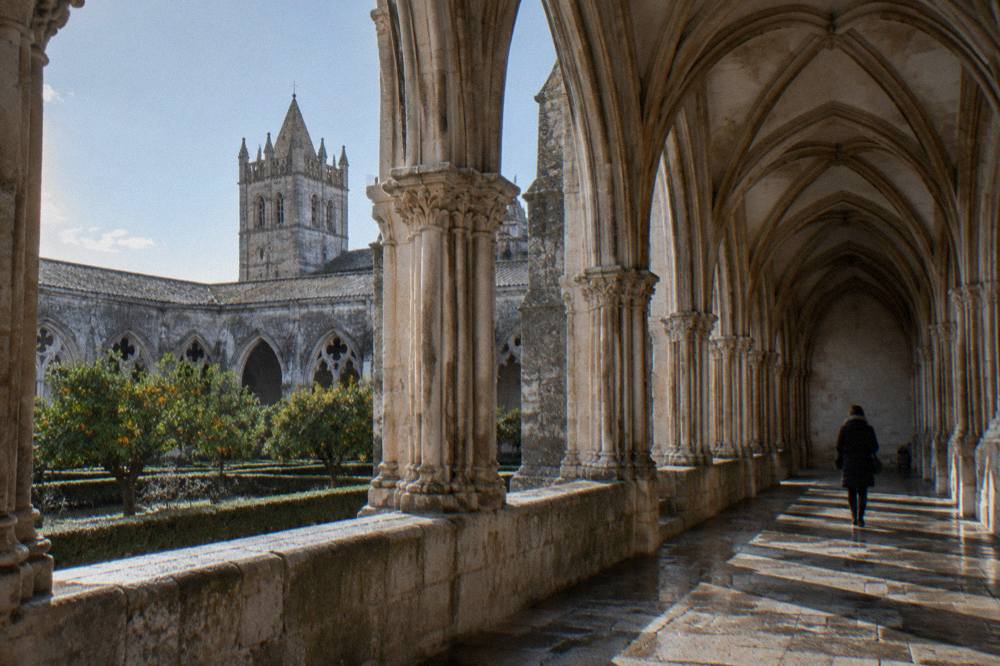
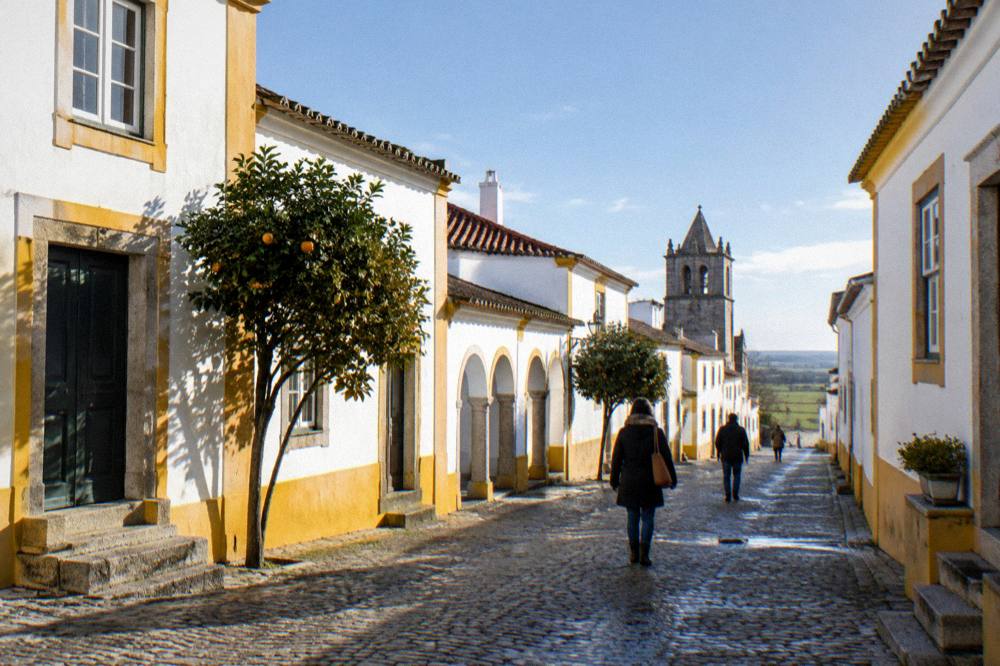
The cobbles are the practical detail that surprises people. Évora's historic centre is paved in the traditional Portuguese calçada, polished marble and basalt setts that become genuinely slippery in the winter rain, and the eight-or-so wet days a month are enough that smooth-soled shoes are a bad idea. Ankle support matters too if you plan to walk the walls or the aqueduct path, where the Água de Prata arches run through the eastern side of the city.
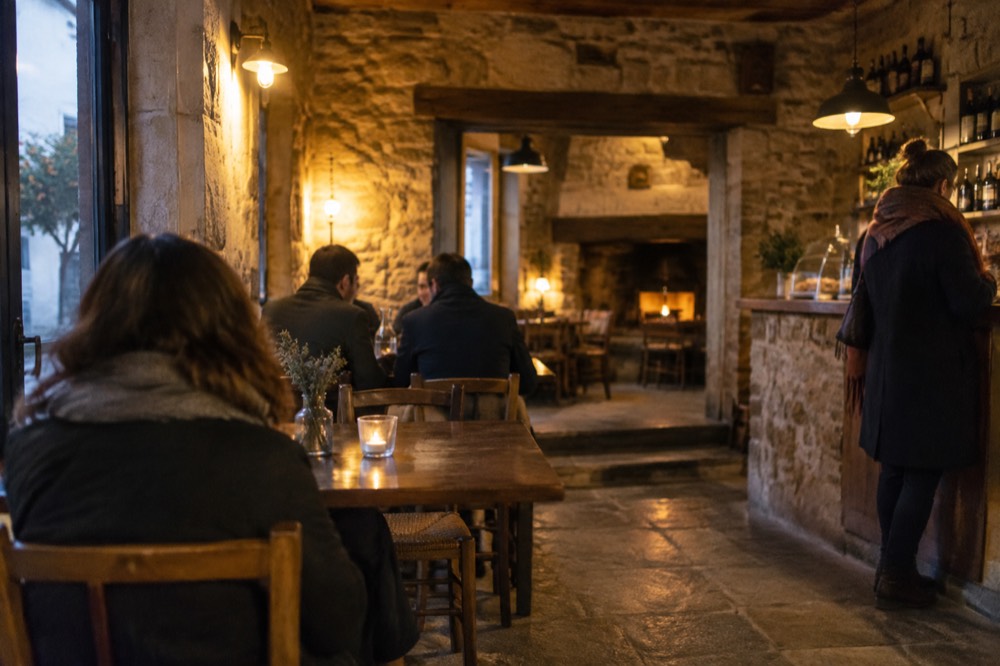
The evenings are the second detail. Alentejo winter dining is built for the cold: the pork, the bread soups and the red wines of the region are exactly the food the season calls for, and the taverns of the old centre are small, warm and full by eight. But getting between them is a ten-minute walk in 5 C air, and the wind funnels down streets that were laid out in the Middle Ages. A coat that blocks the wind is worth more in Évora in January than a heavy parka that soaks up rain.
| Item | Why, in the IPMA numbers |
|---|---|
| Warm coat and windproof layer | Mean minimum 4.5 C in January, 5.3 C in December, and the plain offers no windbreak |
| Mid-layer for afternoons | Mean maximum 14.1 C in January means a fleece at noon and a coat at dusk |
| Waterproof shoes with grip | 8.6 rain days in January, plus polished cobble paving in the historic centre |
| Umbrella or rain shell | 68.6 mm of rain in January, 85.1 mm in December |
| Something for the roof terrace | The Sé's panoramic terrace is open at 5.00 EUR and is cold in any wind |
How Do You Get To Évora In Winter?
The train is the straightforward winter route from Lisbon: CP's Intercidades timetable, valid since 6 September 2026, lists six through trains a day from Lisboa Oriente to Évora, departing 07:02, 09:02, 09:58, 13:35, 17:02 and 19:02 and arriving about 1 hour 40 to 1 hour 45 later, at 13.90 EUR second class or 18.50 EUR first class.
Those six departures arrive at 08:47, 10:45, 11:40, 15:13, 18:41 and 20:46, and they call at Entrecampos, Sete Rios, Pragal, Pinhal Novo, Vendas Novas and Casa Branca on the way, with no change needed on the through services. For a winter day trip the 07:02 is the one that gives you the full day: arrival at 08:47 is before anything opens, which leaves time for coffee and a pastry on Praça do Giraldo before the Sé opens at 9:00. The 17:02 back to Lisbon is the natural return for a same-day visit, and the 19:02 covers a dinner in the city before the train.
Coach services also run the Lisbon to Évora route, but no fare or timetable for them is printed here: check the operator's own page before booking. If you are flying in and out, the connections and the airport options are covered in detail in Lisbon To Évora By Train, Lisbon To Évora By Bus and the overview at Lisbon To Évora. One border note for non-EU visitors: the Entry-Exit System has been fully deployed across the Schengen area since 10 April 2026, so your passport is scanned on entry, a change that adds a few minutes at the border but nothing you need to plan around.
What Is There To Do In Évora On A Short Winter Day?
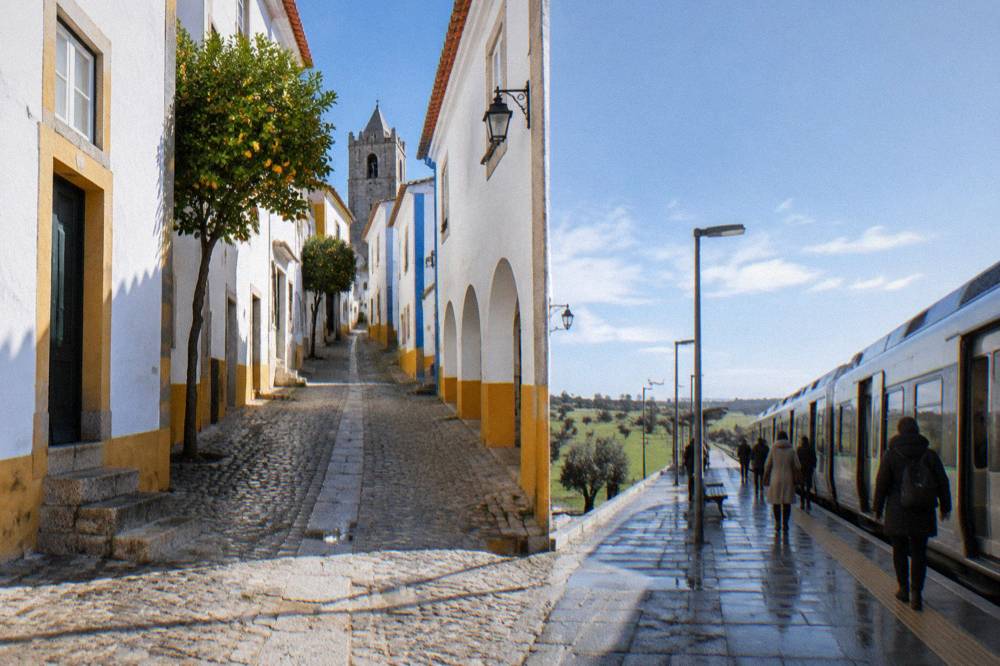
With roughly ten hours of usable daylight, the winter plan is to front-load the outdoor sights before mid-afternoon and move indoors after four: the Templo Romano, the Praça do Giraldo and the Roman walls in the morning light, the Sé with its roof terrace before lunch, the Capela dos Ossos and the Museu de Évora in the afternoon, and the evening given over to food and wine.
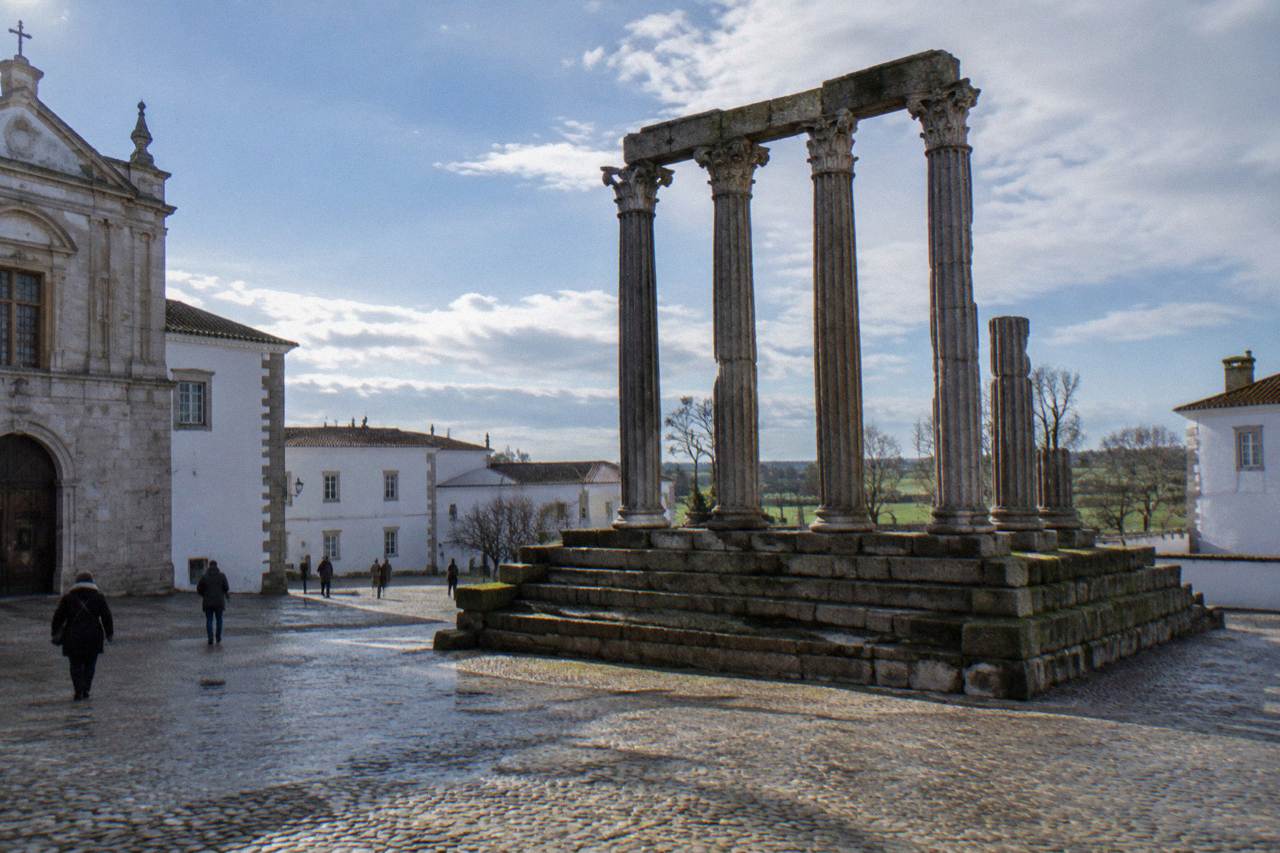
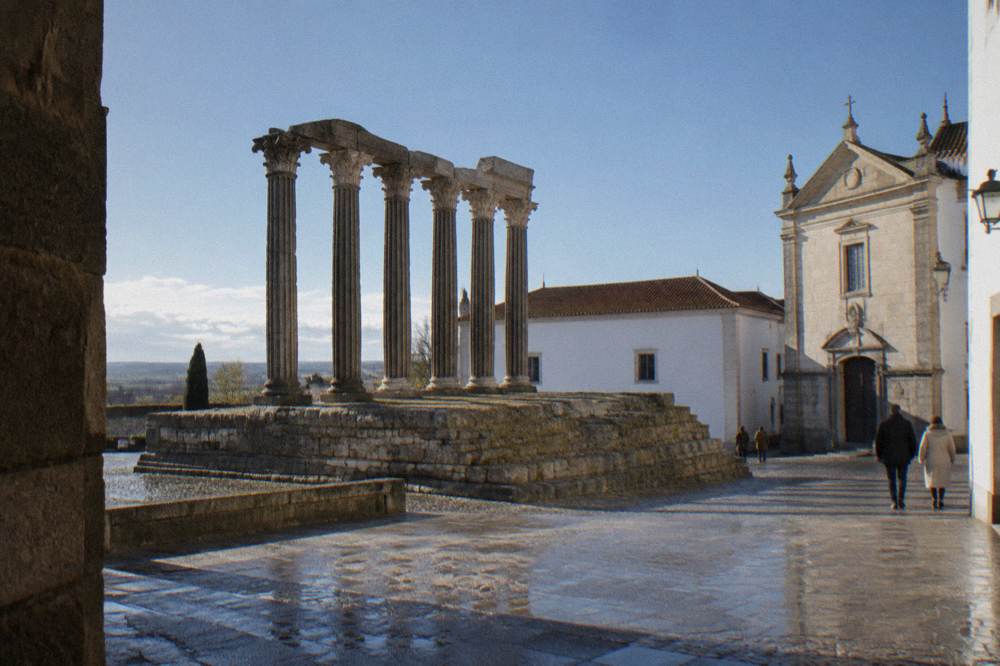
The Templo Romano is the natural first stop, and winter suits it. The municipal page for the monument says it was probably dedicated to the imperial cult rather than to the goddess Diana, a name it has carried only since the 17th century, and that its 25 x 15 m footprint was reused for centuries as a municipal butcher's shop before its walls were freed in 1870. It is an open-air monument with no ticket and no hours, which means the low winter sun raking across the columns at eleven in the morning is free, and there is no queue at any time of year.
The Sé follows, and its complete-visit ticket at 5.00 EUR covers the cloister, the roof terrace and the museum in one price, with the last museum admission 30 minutes before closing. The Museu de Évora is the afternoon anchor, and its Monday closure and lunchtime gap, 13:00 to 14:00, are the two scheduling traps in a winter week. The Capela dos Ossos, open until 17:00 in winter legal time, fits either side of the museum visit, and the Igreja de São Francisco that contains it holds masses on Monday to Saturday at 11:30 and on Sunday at 9:00 and 12:00, which shapes the quietest times to see it.
For the evening, the food and wine of the Alentejo are the season's real attraction. The evening food and wine crawl, three hours from $83.28 per person and rated 4.6 from 19 reviews, is built exactly for this: it moves the evening indoors, from tavern to tavern, and it is the tour that answers the winter problem of what to do after dark. The regional cooking class with Andre, from $166.29 per person, is another indoor option for a wet afternoon. The full range of guided options is collected in Évora Tours, and the food side of the city is covered in Évora Restaurants and the Évora Food Guide.
| Time of day | What works in winter |
|---|---|
| Morning, 9:00-12:00 | Templo Romano, Praça do Giraldo, the Sé and its roof terrace in the best light |
| Midday, 12:00-14:00 | A long Alentejo lunch indoors: pork, bread soups, regional reds |
| Afternoon, 14:00-17:00 | Museu de Évora (note the Monday closure), Capela dos Ossos until 17:00 |
| Evening, after 17:00 | Food and wine crawl, taverns, or the 17:02 or 19:02 train back to Lisbon |
Which Guided Tours Work Best In Évora In Winter?
The winter-friendly tours are the indoor-weighted ones: the small-group cultural walk with the Chapel of Bones at two hours and $77.66, the skip-line University, cathedral and Bones Chapel tour with wine at three hours and $91.39, and, for a dry cold afternoon, the medieval sidecar tour with a wine tasting at three hours and $61.90. All three are short enough to fit inside a ten-hour winter day, and all three end somewhere warm.
The sidecar tour deserves a specific winter note. A three-hour loop of the medieval city in an open sidecar is a different proposition at 14 C than at 33 C, and the tour's wine-tasting finish is effectively built for the season: the rating, 4.9 from 16 reviews, reflects a small operation, and the price of $61.90 per person sits in the middle of the guided range. The medieval tour of Évora on a sidecar with wine tasting is the one to book for a bright, still afternoon rather than a wet one, and the operator's live listing shows the current availability.
The two walking tours are weather-proof in the way winter demands. The small-group cultural walk covers the historic centre and the Chapel of Bones in two hours, and the skip-line tour adds the University and the cathedral with a wine tasting at the end, which turns the last hour of the day into an indoor one. For travellers starting from Lisbon rather than in Évora, the day-trip products that visit the city are described as starting in Lisbon, and they are covered on the Lisbon-to-Évora pages rather than here. Free options exist too: GuruWalk lists a free essential walking tour of Évora, tip-based, two hours and rated 4.93 from 774 reviews, and the platform's other Évora walks, including a history-and-heritage walk rated 5 from 9 reviews, run on the same pay-what-you-want basis.
The small-group cultural walking tour and Chapel of Bones visit, two hours from $77.66 per person and rated 4.9 from 141 reviews, is the natural first tour of a winter trip: it compresses the monumental core into a short daylight window and leaves the afternoon free. Check availability on the operator's live listing.
The skip-line University, cathedral and Bones Chapel tour with wine, three hours from $91.39 per person and rated 5 from 48 reviews, handles the three indoor giants in one private visit and finishes with a tasting, which is exactly the shape a short winter day wants. Current starting times are shown on the operator's live listing.
The medieval sidecar tour with wine tasting, three hours from $61.90 per person and rated 4.9 from 16 reviews, is the dry-day pick: an open-air loop of the walls and old quarters followed by a warm finish. Check the operator's live listing before committing a bright afternoon to it.
What Winter Events And Festivals Happen In Évora?
The fixed winter dates that can be stated are few: the GUADIANA Festival of Afro-Ibero-American Literatures ran 9 to 11 October 2026 in its first edition with 28 authors from nine countries as an Évora 2027 project, and the Feira de São João ran 23 June to 5 July 2026 at the Rossio de São Brás.
For the December-to-February season itself, the city's Christmas and holy-week calendars are not published with dates that can be quoted, so check the municipal pages before planning around them.
What can be said with confidence is the frame around those gaps. Évora and the Alentejo are a European Capital of Culture in 2027, promoted by an executive board led by the Municipality of Évora together with the Alentejo Regional Directorate for Culture, the University of Évora and other partners, and 2026 is its preparation year, built on the concept of "Vagar". The GUADIANA literature festival in October 2026 was part of that programme, and the full 2027 calendar, which will fill the winter of 2026-27 and beyond, was not published in full as of October 2026. That makes the coming winter an interesting one: the programme is arriving rather than arrived, and the open calls and community projects for 2027 are already listed on the official Évora 2027 pages.
For the traditional calendar, the honest position is that the Christmas programme in Évora, the Semana Santa processions and the Festas de Évora all happen, but none of their dates for the coming season can be printed as fact here. The practical advice is direct: check the Câmara Municipal's events pages for the Christmas programme once it is published, and ask at the tourist office on Praça do Giraldo 73, which keeps winter hours of 9:00-18:00 on weekdays and 10:00-14:00 plus 15:00-18:00 at weekends, for what is running the week you are there.
Where Should You Stay In Évora In Winter?
Winter rewards staying inside the walls, where every monument, tavern and the Capela dos Ossos are within a ten-minute walk and the cold evenings never involve a drive: the historic centre is compact enough that a hotel near Praça do Giraldo or in the streets toward the Sé puts the whole winter day on foot, and the trade is higher winter rates inside the walls against cheaper rooms outside them.
The geography that decides this is simple. Évora's walled centre holds the Sé, the Capela dos Ossos, the Museu de Évora, the Templo Romano, the Praça do Giraldo and the Água de Prata aqueduct's passage through the town, all inside a walk of perhaps fifteen minutes end to end. Outside the walls, the modern city spreads across the plain, with the railway and coach stations to the south of the centre, and winter's 4.5 C nights make the difference between a five-minute walk to dinner and a fifteen-minute one more keenly felt than in July.
The seasonal note is that winter is the low season for Alentejo hotels, and rates inside the walls drop accordingly, though no specific price range is printed here because none can be stated as fact. The practical move is to compare the inside-the-walls options against the outside ones for your dates, and to weigh the walk-to-everything factor heavily in winter. The full neighbourhood-by-neighbourhood breakdown, including the areas near the stations and the quieter corners inside the walls, is in Where To Stay In Évora, and the budget picture for the whole trip is covered in Évora Cost And Budget.
Can You Take Winter Day Trips From Évora?
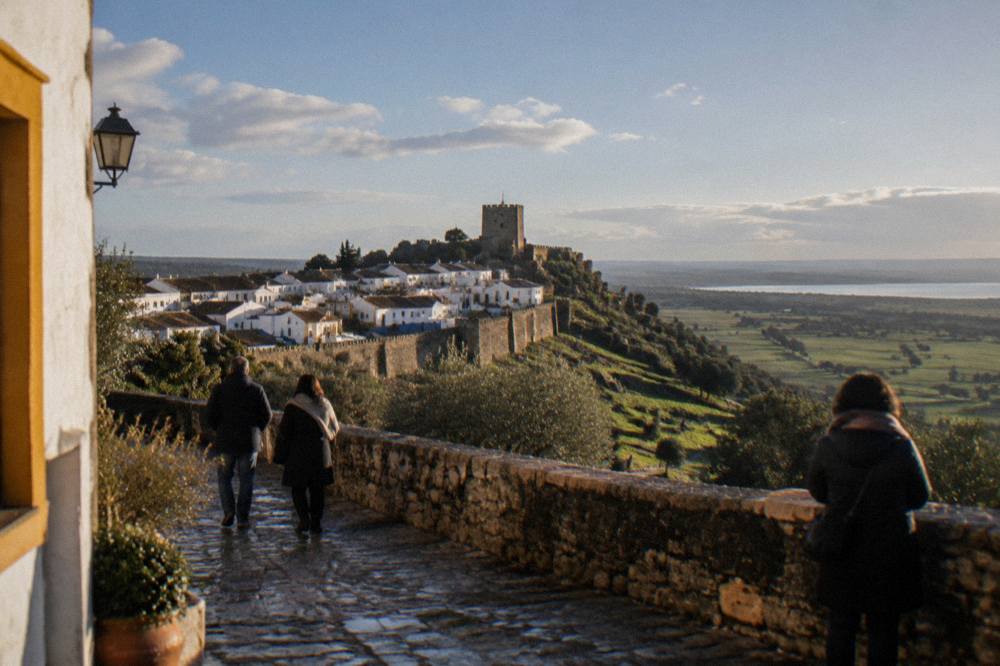
Yes, with the right choices: the close-in Alentejo towns work well in winter, above all Estremoz at about 45 km, Vila Viçosa at about 60 km and Arraiolos at about 20 km, while the long runs to Marvão at about 120 km and Elvas at about 80 km, and the outdoor draws like Alqueva and the megalithic circuit, sit better in the warmer half of the year when the days are long enough to enjoy them.
The reasoning is daylight and temperature together. A winter day gives you roughly ten hours of light, and a day trip that spends three of them driving each way leaves the destination in the dark by mid-afternoon. Estremoz, the marble town about 45 km north, fits comfortably: its heritage walking tour runs from $28.67 per person and is rated 4.8 from 19 reviews, and the town's castle-quarter core is walkable in a short afternoon. Vila Viçosa, about 60 km away, is the marble and ducal-palace town, and its marble tours, from $28.14 and $28.67 per person, are indoor-weighted in a way winter appreciates. Arraiolos, about 20 km, is the shortest trip of all and the arraiolos needlework tradition is an indoor craft to watch being made.
The ones to save for spring are the outdoor set. The megalithic circuit around the Cromeleque dos Almendres and the Great Dolmen of Zambujeiro is open country, and the Almendres Interpretation Centre in the village of Guadalupe runs winter hours of 10:00-17:00, 1 November to 30 April, against 10:00-18:00 in summer, which shows the season's shape: the sites are open, but the light and the warmth to enjoy standing among stones in open fields are better in April. The Alentejo's full day-trip menu, with the distances and the seasonal judgement for each, is in The Best Day Trips From Évora, and the wider region is covered in the Alentejo Travel Guide.
| Day trip | Distance from Évora | Winter verdict |
|---|---|---|
| Arraiolos | about 20 km | Works well: short drive, indoor craft tradition |
| Estremoz | about 45 km | Works well: marble heritage, guided walk available |
| Vila Viçosa | about 60 km | Works well: palace and marble tours, indoor-weighted |
| Elvas | about 80 km | Possible, but a long winter run for a short day |
| Marvão | about 120 km | Better in spring: long drive, exposed hilltop |
| Alqueva and the megaliths | Varies by site | Better in the warmer, longer days |
How Does Winter Compare With The Rest Of The Year In Évora?
Winter is the coldest and second-wettest of Évora's seasons but by far its quietest: against January's 14.1 C afternoons and 4.5 C nights stand July's 33.3 C and 15.6 C, and against January's 8.6 rain days stands July's 0.6, while the 31.9 days a year at 35 C or more all fall between May and October, which makes winter the season with no extreme heat at all.
The IPMA normals make the comparison precise. The year runs from a January mean of 9.3 C to an August mean of 24.7 C, with the annual mean at 16.6 C and total precipitation of 596.1 mm. The heat is heavily concentrated: 86.5 days a year reach a maximum of 30 C or more, and 31.9 of those reach 35 C or more, with the 35 C days split across June, July, August and September and the station's record of 45.4 C set on 4 August 2018. Winter has no such extremes: no day in December, January or February even reaches 30 C in the averages, and the season's defining discomfort is the cold night, not the hot afternoon.
| Season | Months | Mean max range | Mean min range | Character |
|---|---|---|---|---|
| Winter | Dec, Jan, Feb | 14.1-15.7 C | 4.5-5.3 C | Cold nights, mild afternoons, quiet monuments |
| Spring | Mar, Apr, May | 18.7-25.0 C | 6.9-10.9 C | Green plain, rising warmth, 30 C days begin in May |
| Summer | Jun, Jul, Aug | 30.2-33.5 C | 13.8-16.0 C | Extreme heat: 11.5 days at 35 C or more in July alone |
| Autumn | Sep, Oct, Nov | 17.6-29.5 C | 7.9-14.6 C | Cooling fast, rain returning, 81.5 mm in October |
The seasonal choice is really a choice between two kinds of discomfort and one kind of crowd. Summer in Évora, with a July mean maximum of 33.3 C, is the season the heat shapes everything: see Évora In Summer for how the locals handle it. Winter is the season the cold evening shapes, and the crowd question sits almost entirely on the summer side. Spring and autumn sit between, with October's 81.5 mm the wettest single month in the table and April's 20.7 C afternoons close to winter's mild days but with longer light. If your dates are flexible and your priorities are monuments and food rather than the outdoors, winter is the value season; if they are fixed in July, plan around the heat instead.
Common Questions About Évora In Winter
Is Évora worth visiting in winter?
Yes. The monuments all stay open on winter hours, the Capela dos Ossos and the Sé until 17:00 and the Museu de Évora Tuesday to Sunday, and the crowds of the summer peak are gone. The trade is cold nights, with a January mean minimum of 4.5 C, and roughly eight rain days a month.
How cold does Évora get in winter?
IPMA's 1991-2020 normals for the Évora station put January nights at a mean minimum of 4.5 C and afternoons at a mean maximum of 14.1 C. The lowest temperature ever recorded at the station is -4.2 C, on 4 December 1998 and 23 January 2000.
Does it snow in Évora?
Snow is not a feature the climate normals record for Évora, and no snowfall figure is published for the station. Frost happens, as the -4.2 C record shows, but the winter you should plan for is cold nights and mild, often sunny afternoons.
Is the Chapel of Bones open in winter?
Yes. The Igreja de São Francisco complex runs winter legal-time hours of 9:00-17:00, against 9:00-18:30 in summer, and it is open every day except 1 January, Easter Sunday, the afternoon of 24 December and 25 December. The adult museum ticket is 7.00 EUR.
What is the wettest month in Évora?
By the 1991-2020 normals, November is the wettest month at 86.0 mm, just ahead of December at 85.1 mm. January, in the middle of winter, sees 68.6 mm across 8.6 days with 1 mm or more of rain.
Are the Évora walking tours running in winter?
The guided walks listed by operators run year-round, including the small-group cultural walk with the Chapel of Bones and the skip-line monuments tour with wine. GuruWalk's free essential walking tour of Évora, tip-based and two hours, also runs through the winter season; check the operator's live listing for the dates you are there.
Winter in Évora is the season for the city itself: the stones, the chapels, the museums and the long indoor lunches, taken at a pace the Alentejo has always kept anyway.