Évora History: The Full Story Of Portugal's Alentejo Capital
Évora, the inland capital of Portugal's Alentejo, has been a Roman city, a Moorish one, a royal seat and a university town, and its walls still hold all of it.
Short answer
Évora's history runs from Roman Ebora, through the end of Moorish rule in 1165, into a golden age of kings and bishops that produced the Jesuit University of the Holy Spirit, founded in 1553. The Jesuits were expelled in 1759, and the city's escape from the 1755 Lisbon earthquake preserved its historic centre, inscribed by UNESCO in 1986.
Évora, the capital of the Alentejo district of that name in southern Portugal, is one of those rare cities where the whole arc of a country's history sits inside a single set of walls. The Roman temple still stands at its heart, the medieval cathedral still sells tickets at its door, and the UNESCO listing that protects the historic centre dates only from 1986, the end point of a story that begins with a Roman town called Ebora. This guide walks through that story in order, and then shows where each chapter can still be seen on the ground today, from the Praça do Giraldo to the Cromeleque dos Almendres out in the cork plains.
What Is The History Of Évora, Portugal?
Évora's history spans more than two thousand years as a continuously inhabited inland city: a Roman town called Ebora, later under Moorish rule that ended in 1165, then a Christian royal and episcopal seat whose golden age produced the Jesuit University of the Holy Spirit in 1553. The Jesuits were expelled in 1759, the city was largely spared the 1755 Lisbon earthquake, and UNESCO inscribed its historic centre in 1986 under criteria (ii) and (iv).
That compressed timeline hides how much each layer still matters to a visitor. The city is the capital of the Évora district and of the Central Alentejo sub-region, an inland place on the plain, with the Atlantic roughly 90 km away and no coast of its own. Its wealth came from agriculture, cork, marble and the church, not from the sea, and that difference shaped everything: the buildings are granite and marble rather than tile-and-lime fishing houses, and the streets follow Roman and medieval lines rather than a grid. The UNESCO record, read through the open-data entry for the Historic Centre of Évora, is precise about why the city matters: criterion (iv) calls it the finest example of a city of the golden age of Portugal, after the 1755 Lisbon earthquake, which Évora was largely spared. For a fuller version of this story in question form, see the history of Évora explained, and for the practical side, the Évora Travel Guide covers tickets, transport and seasons.
The dates that the primary sources actually support are fewer than most guidebooks imply, and they are worth listing cleanly, because a lot of what circulates about Évora's past is embellishment.
| Period | What the sources say | Where to see it now |
|---|---|---|
| Roman Ebora | Templo Romano, 25 x 15 m, probably dedicated to the imperial cult per the municipal page | Templo Romano precinct |
| Moorish Évora | Moorish rule ended in 1165 (UNESCO record) | Street plan of the old town |
| Golden age | Jesuit University of the Holy Spirit dates from 1553 (UNESCO record) | University of Évora |
| Decline | Jesuits expelled in 1759 (UNESCO record) | Convento dos Lóios quarter |
| Survival | Largely spared the 1755 Lisbon earthquake (UNESCO criterion iv) | Intact historic centre |
| Recognition | UNESCO inscription 1986, criteria (ii) and (iv) | The whole walled city |
Everything else in the popular telling, exact Visigothic kings, precise Moorish governors, the founding date of the chapel of bones, is either legend or later invention. The honest version of Évora's history is stronger for that: every date in this guide can be checked against a page published by the city, the church or UNESCO.
Roman Évora: What Survives From Ebora?
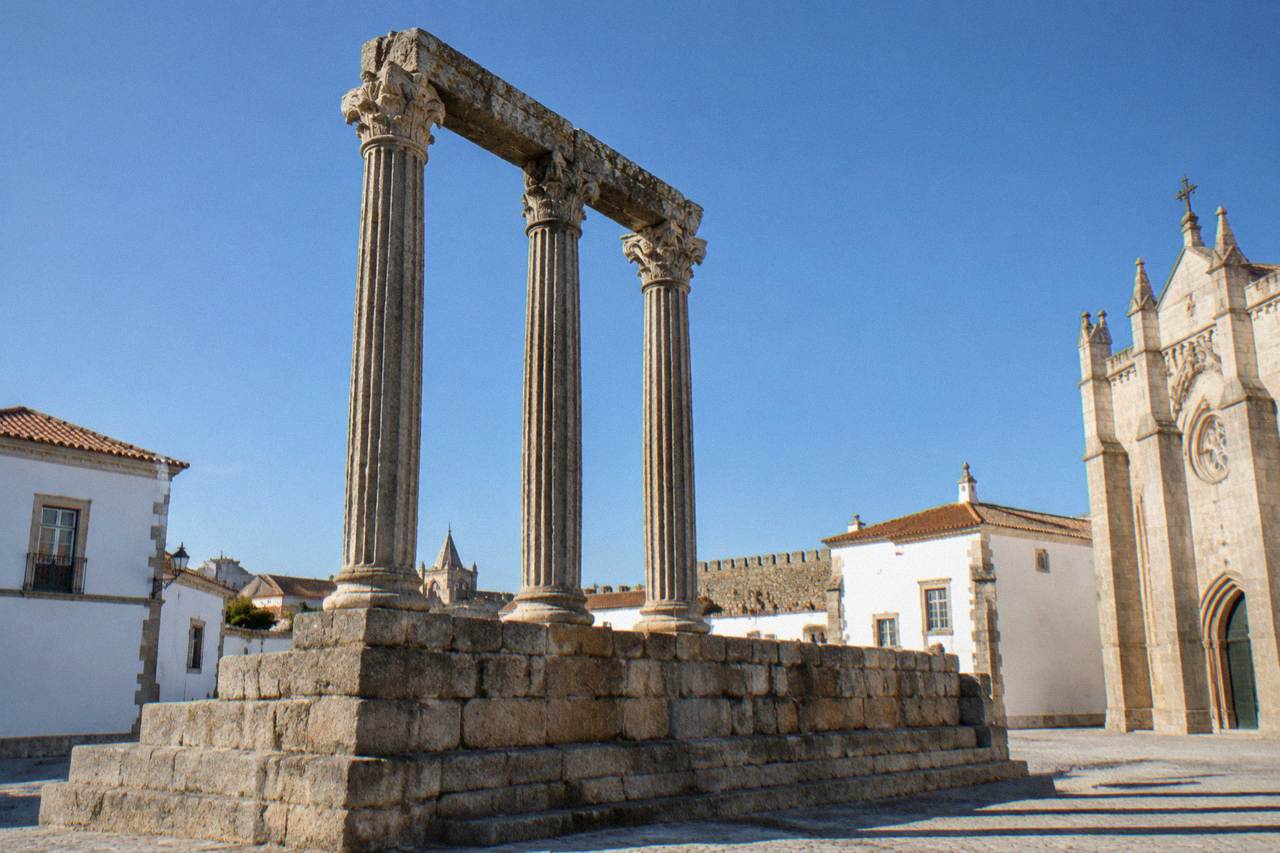
The Templo Romano, popularly called the Temple of Diana, is the most complete Roman structure in the city, measuring 25 x 15 m and probably dedicated to the imperial cult rather than to the goddess Diana, according to the municipal page for the monument. Its walls were freed in 1870, and the building was reused for centuries as a municipal butcher's shop before being recognised as a Roman temple.
That reuse is the detail that surprises people. A temple that spent the medieval period as a butcher's was not a monument; it was a convenient stone shell with columns, and the municipal page for the Templo Romano records both the butcher's reuse and the 1870 clearing of the walls under Cinatti. The name "Temple of Diana" only took hold in the 17th century, and the city's own page says the dedication was probably to the imperial cult. There is no ticket and no listed hours: it is an open-air monument you simply walk up to.
Roman Évora was more than one temple. The city sits inside a wall whose line is still partly walkable, and the Roman baths survive in a small excavated site you can visit today, described in the ancient and Roman sites of Évora guide. The Água de Prata aqueduct, which brings water into the city from the east, is a Renaissance-era structure but one that follows the logic of Roman engineering, and houses were built into its arches in later centuries, a common Alentejo pattern. The Roman legacy also extends beyond the walls: the Cromeleque dos Almendres, out in the countryside toward Guadalupe, is far older than Rome itself, and the Almendres Interpretation Centre in Guadalupe, a partner of the municipality, keeps summer hours of 10:00-18:00 from 1 May to 31 October and winter hours of 10:00-17:00 from 1 November to 30 April.
For travellers who want the Roman layer explained rather than just found, a guided walk is the efficient route. The Évora Personal and Flexible Walking Tour in the Historic Center, from $13.51 per person and rated 4.8 from 105 reviews, runs about three hours and is the budget-friendly way to have the old town's layers unpacked by someone who knows which stone belongs to which era, and you can Check availability before you travel. There is also a free option: the Essential Free Tour of Évora on GuruWalk, tip based and rated 4.93 from 774 reviews, covers the same core streets in about two hours.
Moorish Évora And The 1165 Reconquest
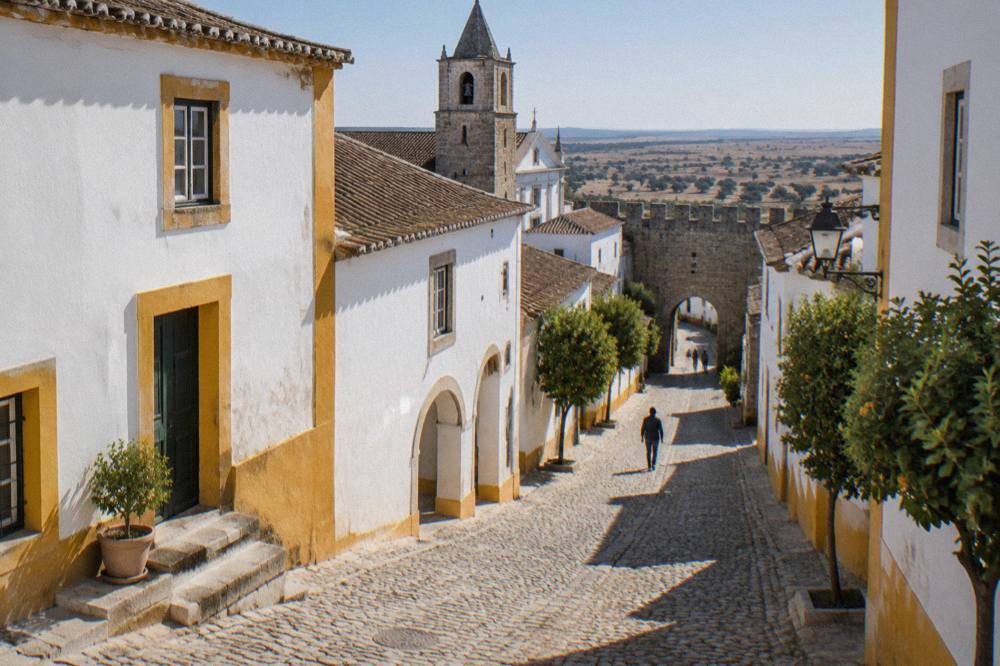
Moorish rule in Évora ended in 1165, the one date from the Islamic period that the UNESCO record states, after which the city passed into the Christian kingdom of Portugal and began its long association with the Portuguese crown. The street plan of the old town, its tight lanes and sudden small squares, is the most visible inheritance of the pre-1165 city.
The UNESCO record for the Historic Centre of Évora gives 1165 as the end of Moorish rule and adds nothing else about the period, which is the honest position: the popular accounts of Évora under Islamic rule are thin on verifiable detail. What is not in dispute is the urban fabric. The lanes around the Porta da Moura square, whose very name records the Moorish gate, twist in a way that no planned Roman or Renaissance town does, and that organic pattern is what a visitor is actually walking through.
After 1165, Évora's importance grew because of geography and kings. The city sits on the main inland route between Lisbon and the Spanish border, and the Portuguese monarchs used it as a base in the Alentejo for centuries. The cathedral, the Sé de Évora, belongs to this Christian medieval phase, and its complete-visit ticket today costs 5.00 EUR, covering the cathedral, the cloister, the roof terrace and the museum, with children up to 12 free. The Évora Cathedral guide covers the building in detail. The medieval walls that a visitor can still walk are described in the Roman and medieval walls of Évora guide.
The Golden Age: Kings, Bishops And The 1553 University
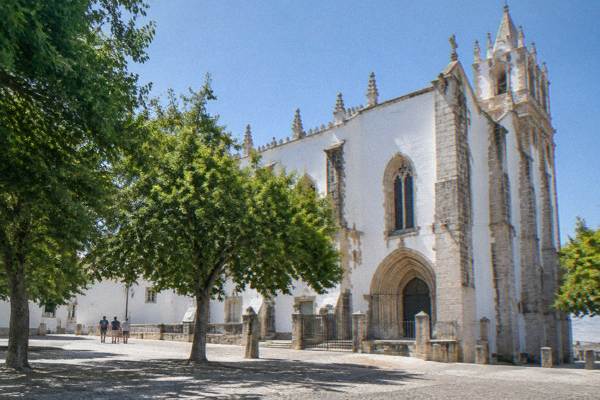
Évora's golden age centred on the founding of the Jesuit University of the Holy Spirit in 1553, which turned a provincial episcopal city into a centre of learning, and the great buildings of the old town, the Igreja de São Francisco, the convents and the archbishop's palace, belong to this era of royal and church wealth. The 1759 expulsion of the Jesuits ended it.
The university is the hinge of the whole story. The UNESCO record states the founding date of 1553 and the expulsion of the Jesuits in 1759, and between those two dates Évora was one of the intellectual capitals of Portugal. The Jesuit college building, today the main building of the University of Évora, is one of the most recognisable structures in the city, and the University of Évora guide covers what a visitor can see there. The golden age also built the Igreja de São Francisco, whose Capela dos Ossos is now one of the city's best-known interiors, and filled the Archbishop's Palace, which has housed the Museu de Évora since it was officially founded in 1915.
The practical trace of this era for a visitor is ticketing. The three big golden-age interiors each charge separately, and the numbers below come from the operators' own pages.
| Monument | Adult ticket | Concessions | Hours | Closed |
|---|---|---|---|---|
| Sé de Évora (complete visit) | 5.00 EUR | Children to 12 free | 9:00-17:00 | 24 Dec afternoon, 25 Dec, 1 Jan |
| Capela dos Ossos / Igreja de São Francisco | 7.00 EUR | Youth to 25 and seniors over 65 at 5.00 EUR, family 15.00 EUR | Summer 9:00-18:30, winter 9:00-17:00 | 1 Jan, Easter Sunday, 24 Dec afternoon, 25 Dec |
| Museu de Évora | 8 EUR | Youth 13-24, seniors over 65 and family ticket 50% off, free to 12, free Sundays and holidays for residents of Portugal | Tue-Sun 9:30-13:00 and 14:00-17:30 | Mondays, 1 Jan, Easter Sunday, 1 May, 29 June, 25 Dec |
The Évora Ticket, the multi-site pass for the Cidade-Museu network, costs 8 EUR for one day, 10 EUR for two days and 12 EUR for three days, and is free to age 12, but note what the pass page itself makes clear: it does not include the Sé, the Capela dos Ossos or the Museu de Évora. The Évora tickets and passes guide compares the options line by line. For a private, in-depth version of the golden-age city, the Évora Private Walking Tour with Cathedral and Chapel of Bones, from $113.53 per person and rated 5 from 256 reviews, includes the monument tickets and runs about two and a half hours.
The 1755 Earthquake, The Inquisition And The 1759 Expulsion
The 1755 Lisbon earthquake, which destroyed much of the capital, largely spared Évora, and that single geological fact is why the historic centre survives as the finest example of a city of the golden age of Portugal, in UNESCO's own wording under criterion (iv). The expulsion of the Jesuits in 1759 then removed the university, and Évora settled into a long quiet stretch as a provincial market and administrative town.
The earthquake is the pivot. When the capital was rebuilt after 1755, it was rebuilt in a new style, and the old golden-age Lisbon was lost. Évora, inland and largely undamaged, kept its earlier face, which is exactly the argument UNESCO made when it inscribed the Historic Centre of Évora in 1986 under criteria (ii) and (iv). The city's later years were quieter: the Museu de Évora was officially founded in 1915 in the former Archbishop's Palace, and the city remained the district capital of the Alentejo.
The Inquisition also sat in Évora, and the Évora Inquisition history page covers what can honestly be said about it. What can be said is that the Inquisition's presence in the city is part of why the Jewish quarter's story, covered in the Jewish quarter of Évora guide, matters so much to the city's memory.
What The UNESCO 1986 Listing Actually Says
UNESCO inscribed the Historic Centre of Évora in 1986 under criteria (ii) and (iv), with criterion (iv) describing it as the finest example of a city of the golden age of Portugal, after the 1755 Lisbon earthquake, which Évora was largely spared. The listing also records the Temple of Diana among the Roman remains, the end of Moorish rule in 1165, the Jesuit University of the Holy Spirit from 1553 and the expulsion of the Jesuits in 1759.
That is the complete set of historical claims in the UNESCO record, and it is worth being strict about it because so much else is invented around Évora. No area size for the listed zone, no population figures for the Roman or Moorish city, and no Inquisition statistics appear in the record, and none are printed here. The Évora UNESCO historic centre guide maps the listed zone street by street.
The 1986 inscription also changed the city's economy. Heritage tourism is now a pillar of Évora alongside cork, wine and the university, and the city is a European Capital of Culture in 2027, promoted by an executive board led by the Municipality of Évora, with 2026 running as a preparation year built on the concept of "Vagar". The GUADIANA festival of Afro-Ibero-American literatures, part of the Évora 2027 programme, held its first edition on 9 to 11 October 2026 with 28 authors from nine countries. The full 2027 programme is not yet published.
Évora History In The Streets: What To See Today
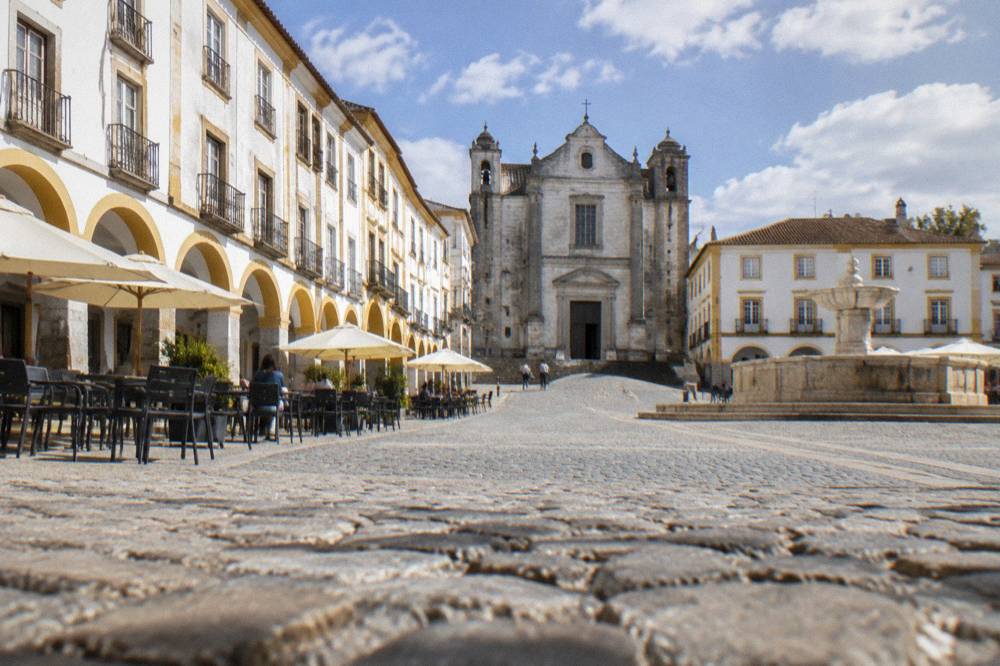
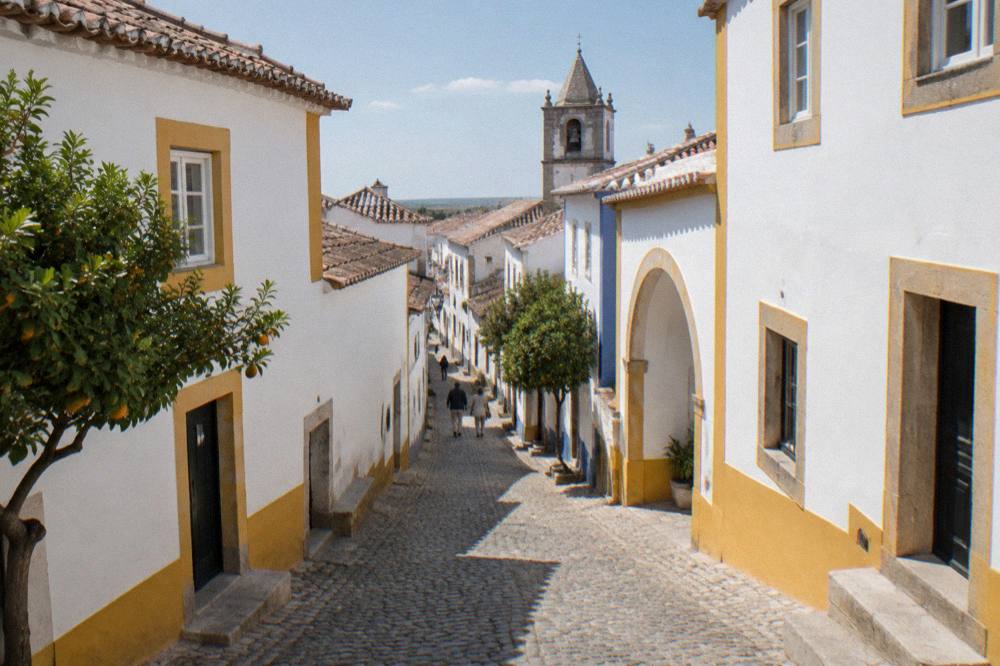
The whole timeline of Évora can be walked in a day: the Roman temple and baths, the Moorish street plan around Porta da Moura, the medieval Sé, the university founded in 1553 and the Igreja de São Francisco, and the Manueline and baroque interiors that filled the gaps, all inside a wall about one kilometre across. The Praça do Giraldo, the main square, has been the city's market and meeting place through every one of those eras.
The walk is the point. Unlike capitals where the layers are scattered across districts, Évora keeps everything within the walls, and the one day in Évora itinerary sequences it sensibly. Start at the Templo Romano, cross to the Sé, drop downhill to the Praça do Giraldo, then work toward the Igreja de São Francisco and the Capela dos Ossos before ending at the university. The Giraldo Square guide covers the square's own long history as the site of the city market.
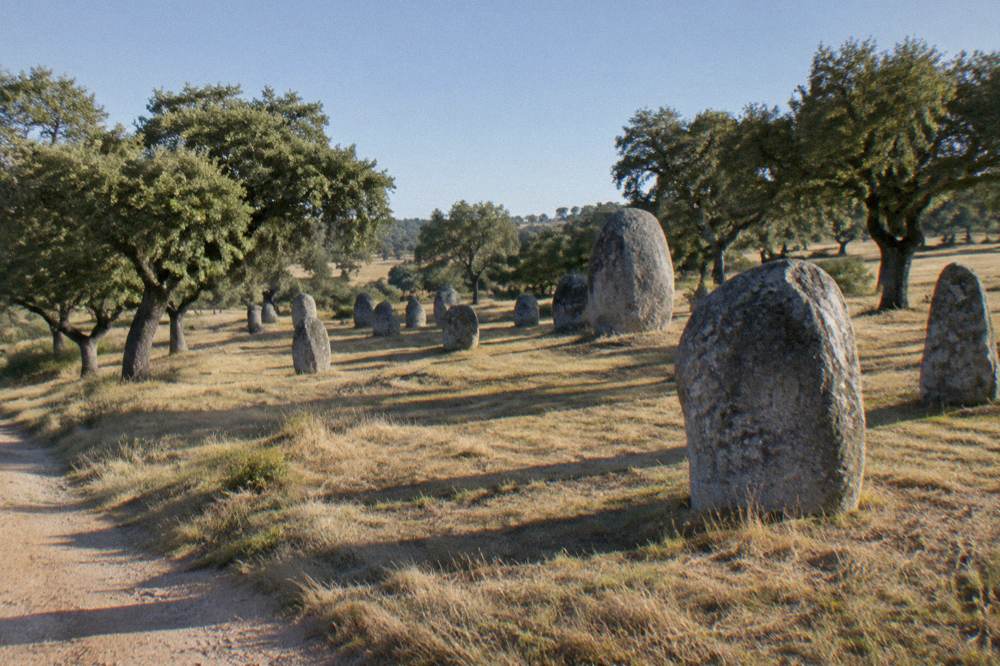
Beyond the walls, the megalithic sites push the story back far past Rome. The Cromeleque dos Almendres and the Great Dolmen of Zambujeiro belong to a prehistoric landscape that the megalithic sites near Évora guide covers in full, and the Almendres Interpretation Centre in Guadalupe, reached by taking the national road toward Lisbon and following the turn-off after about 8 km, is the place to start.
Guided options range from free to private, and the prices below are in US dollars as shown on the operators' live listings.
| Tour | Duration | From (per person) | Rating |
|---|---|---|---|
| Évora Personal and Flexible Walking Tour in Historic Center | 3 hours | $13.51 | 4.8 from 105 reviews |
| Medieval Tour of Évora on a Sidecar and Wine Tasting | 3 hours | $61.90 | 4.9 from 16 reviews |
| Évora Private Walking Tour with Cathedral and Chapel of Bones | 2.5 hours | $113.53 | 5 from 256 reviews |
| Évora Small-Group Cultural Walking Tour and Chapel of Bones | 2 hours | $77.66 | 4.9 from 141 reviews |
| Évora: Tales and Legends Guided Walking Tour | 2.5 hours | $52.90 | 4.8 from 40 reviews |
The sidecar option deserves a note of its own: the Medieval Tour of Évora on a Sidecar and Wine Tasting, from $61.90 per person and rated 4.9 from 16 reviews, covers the medieval city in three hours with a wine tasting, and it is the most unusual way to move through the timeline, since the vehicle itself belongs to the era the tour narrates.
How The Past Shapes Visiting Évora Now
Évora's history determines the practicalities of a visit: the historic centre is compact and mostly walkable, the main monuments charge separately, the city is reached by train from Lisbon in about 1 hour 40 to 1 hour 45, and the inland Alentejo climate means July and August average maximums of 33.3 C and 33.5 C respectively in the 1991-2020 normals, with 31.9 days a year reaching 35 C or more.
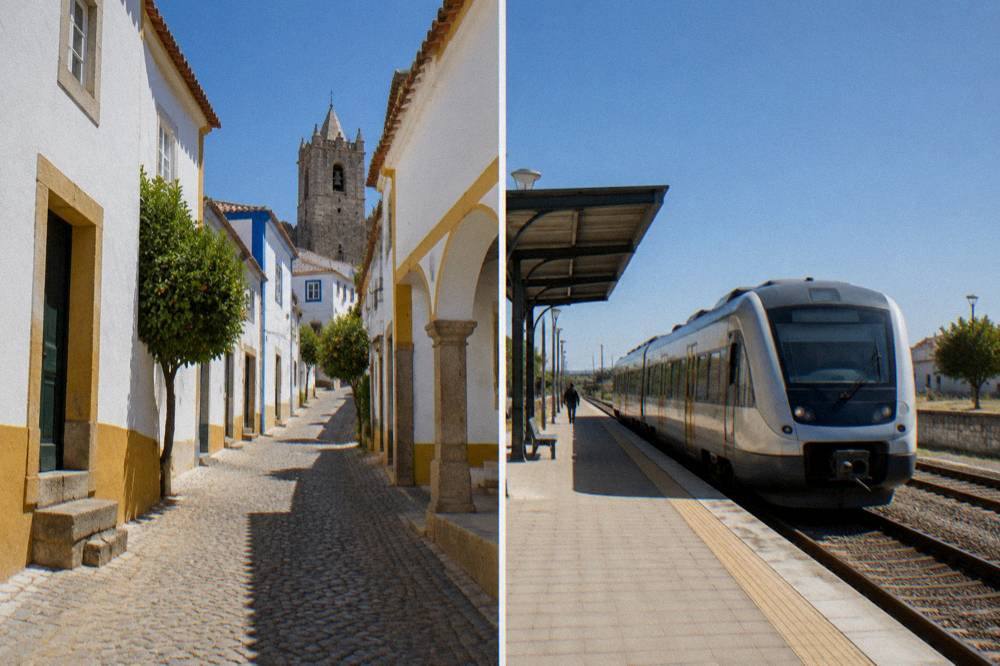
The train is the cleanest link between the capital and the old city. CP's timetable for Lisboa Oriente to Évora, valid since 6 September 2026, lists six through trains, and the fare is 13.90 EUR in second class or 18.50 EUR in first class. The Lisbon to Évora by train guide covers the details, and the bus alternative is covered in Lisbon to Évora by bus.
| Departure from Lisboa Oriente | Arrival in Évora | Class | Fare |
|---|---|---|---|
| 07:02 | 08:47 | 2nd | 13.90 EUR |
| 09:02 | 10:45 | 2nd | 13.90 EUR |
| 09:58 | 11:40 | 1st | 18.50 EUR |
| 13:35 | 15:13 | 2nd | 13.90 EUR |
| 17:02 | 18:41 | 2nd | 13.90 EUR |
| 19:02 | 20:46 | 1st | 18.50 EUR |
The climate is the other practical inheritance. Évora sits inland on the Alentejo plain, and the IPMA 1991-2020 normals for the Évora station show a genuinely hot summer: July averages a maximum of 33.3 C and August 33.5 C, with 31.9 days a year at 35 C or more and a record of 45.4 C set on 4 August 2018. Spring and autumn are the comfortable seasons, and the best time to visit Évora and Évora weather guides break the months down.
| Month | Mean max (C), 1991-2020 | Mean min (C), 1991-2020 | Rain (mm) | Days at 30 C or more |
|---|---|---|---|---|
| April | 20.7 | 8.5 | 62.1 | 0.3 |
| May | 25.0 | 10.9 | 46.6 | 5.5 |
| June | 30.2 | 13.8 | 10.6 | 15.1 |
| July | 33.3 | 15.6 | 2.7 | 23.7 |
| August | 33.5 | 16.0 | 6.0 | 25.0 |
| September | 29.5 | 14.6 | 33.9 | 13.9 |
| October | 24.1 | 12.3 | 81.5 | 2.9 |
The historic centre's compactness also shapes where to stay and how to budget. The where to stay in Évora guide sorts the neighbourhoods, the Évora cost and budget guide prices a realistic trip, and a municipal tourist tax applies to stays, so check with your hotel at booking rather than assuming it is included in the quoted rate.
Day Trips Into The Wider Historical Landscape
The country around Évora carries the same story outward: fortified border towns, marble quarries and prehistoric stones, all reachable on short drives, with Arraiolos about 20 km away, Estremoz about 45 km, Vila Viçosa about 60 km, Elvas about 80 km and Marvão about 120 km, using rounded road distances.
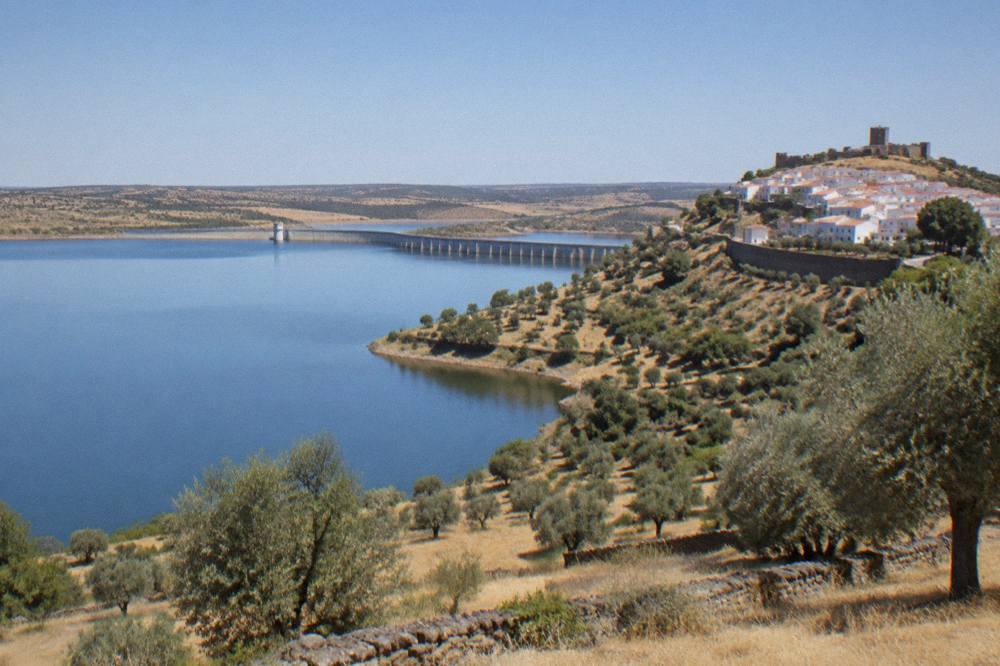
Each of these towns belongs to the same historical arc as Évora itself. Elvas, a border fortress facing Spain, and Marvão, a hilltop walled village, are the military chapter; Vila Viçosa and Estremoz, both marble towns, are the ducal and royal chapter, and the Marble Tour in Vila Viçosa, from $28.14 per person and rated 4.8 from 82 reviews, is the easiest way to see the quarries and the landscape they shaped. Monsaraz, about 40 to 45 km away, is the medieval chapter, sitting above the Alqueva reservoir, and the Monsaraz guide covers it in full.
| Destination | Distance from Évora (about) | Historical theme | Guide |
|---|---|---|---|
| Arraiolos | 20 km | Medieval hill town, carpet weaving | Arraiolos guide |
| Monsaraz | 40-45 km | Walled medieval village, reservoir | Monsaraz guide |
| Estremoz | 45 km | Marble, royal castle | Estremoz guide |
| Vila Viçosa | 60 km | Ducal palace, marble quarries | Vila Viçosa guide |
| Elvas | 80 km | Border fortifications | Elvas guide |
| Marvão | 120 km | Hilltop walled fortress town | Marvão guide |
The full loop of these towns, plus the cork and wine country between them, is sequenced in the Alentejo road trip guide, and the three-day version is laid out in three days in Évora and the Alentejo.
Whichever way you choose to see the old town, the flexible walking option is the one that fits the history best, because a city with this many layers rewards a guide who can slow down where the story gets interesting.
Common Questions About Évora History
How old is Évora, Portugal?
Évora has been continuously inhabited since Roman times, when it was the town of Ebora, and the Templo Romano still standing in the centre measures 25 x 15 m. The prehistoric stones at the Cromeleque dos Almendres outside the city are far older still, though no age or stone count for the cromlech is stated on a verified source.
When did Moorish rule in Évora end?
Moorish rule in Évora ended in 1165, the date given in the UNESCO record for the Historic Centre of Évora. The tight street plan of the old town, especially around Porta da Moura, is the visible inheritance of the pre-1165 city.
Why is Évora a UNESCO World Heritage site?
The Historic Centre of Évora was inscribed by UNESCO in 1986 under criteria (ii) and (iv). Criterion (iv) calls it the finest example of a city of the golden age of Portugal, after the 1755 Lisbon earthquake, which Évora was largely spared, leaving its golden-age centre intact.
When was the University of Évora founded?
The Jesuit University of the Holy Spirit dates from 1553, according to the UNESCO record. The Jesuits were expelled in 1759, which ended the university's first life; the building is now the main building of the University of Évora.
Did the 1755 earthquake damage Évora?
No, Évora was largely spared the 1755 Lisbon earthquake, in UNESCO's own wording, and that is precisely why its golden-age centre survives so completely while rebuilt Lisbon does not.
What is the oldest monument in Évora?
The Templo Romano is the oldest monument standing in the city, probably dedicated to the imperial cult according to the municipal page, with walls freed in 1870 after centuries of reuse, including as a municipal butcher's. Outside the walls, the Almendres cromlech is far older, but no age figure for it is verified.
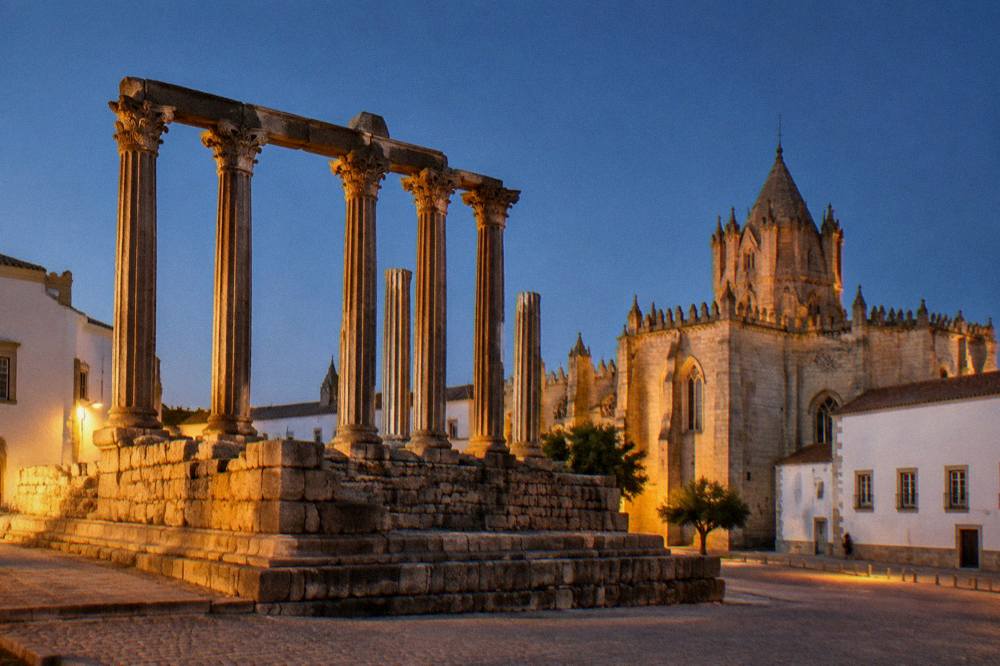
Évora's history is not a museum behind glass: it is a working city where the Roman temple shares a square with café tables, the university founded in 1553 still teaches, and the 1986 UNESCO listing simply confirmed what the walls had preserved all along, a golden-age Portuguese city that the great earthquake of 1755 forgot to touch.