Évora Historic Centre (UNESCO)
Évora's walled centre was inscribed by UNESCO in 1986 under criteria (ii) and (iv), as the finest example of a city of the golden age of Portugal. This guide covers the listing, the monuments, the tickets and the walks.
Short answer
The Historic Centre of Évora, in Portugal's Alentejo region, was inscribed on the UNESCO World Heritage List in 1986 under criteria (ii) and (iv). Criterion (iv) calls it the finest example of a city of the golden age of Portugal, preserved because Évora was largely spared by the 1755 Lisbon earthquake.
The Historic Centre of Évora, the inland capital of the Alentejo in southern Portugal, was inscribed on the UNESCO World Heritage List in 1986 under criteria (ii) and (iv). The listing covers a walled city where a Roman temple, a medieval cathedral, a Jesuit university and a marble-lined main square stand within a few minutes' walk of one another. UNESCO's criterion (iv) calls Évora the finest example of a city of the golden age of Portugal, after the 1755 Lisbon earthquake, which Évora was largely spared. That single sentence explains why this city, about 130 km from Lisbon, looks more complete than almost anywhere else in the country.
This guide walks through what the UNESCO listing actually says, which monuments carry it, what the verified tickets and hours are, and how to fit the whole walled centre into a day on foot. Practical pages on things to do in Évora and the wider historic centre area cover the rest of the visit.
What Is The UNESCO Historic Centre Of Évora?
The UNESCO Historic Centre of Évora is the walled old core of a city in Portugal's Alentejo region, inscribed on the World Heritage List in 1986 under criteria (ii) and (iv). Criterion (ii) recognises the exchange of influences that shaped its architecture, and criterion (iv) calls it the finest example of a city of the golden age of Portugal, preserved after the 1755 Lisbon earthquake, which Évora was largely spared. The listing covers the city inside the walls, not a single building.
UNESCO's own record is precise about the layers inside those walls. Roman remains include the temple long popularly called the Temple of Diana. Moorish rule ended in 1165. The Jesuit University of the Holy Spirit, today the University of Évora, dates from 1553, and the Jesuits were expelled in 1759. Those dates frame a city that was important under Rome, under the Moors, and again as a favourite residence of the Portuguese kings before the 1755 earthquake reshaped the country's cities.
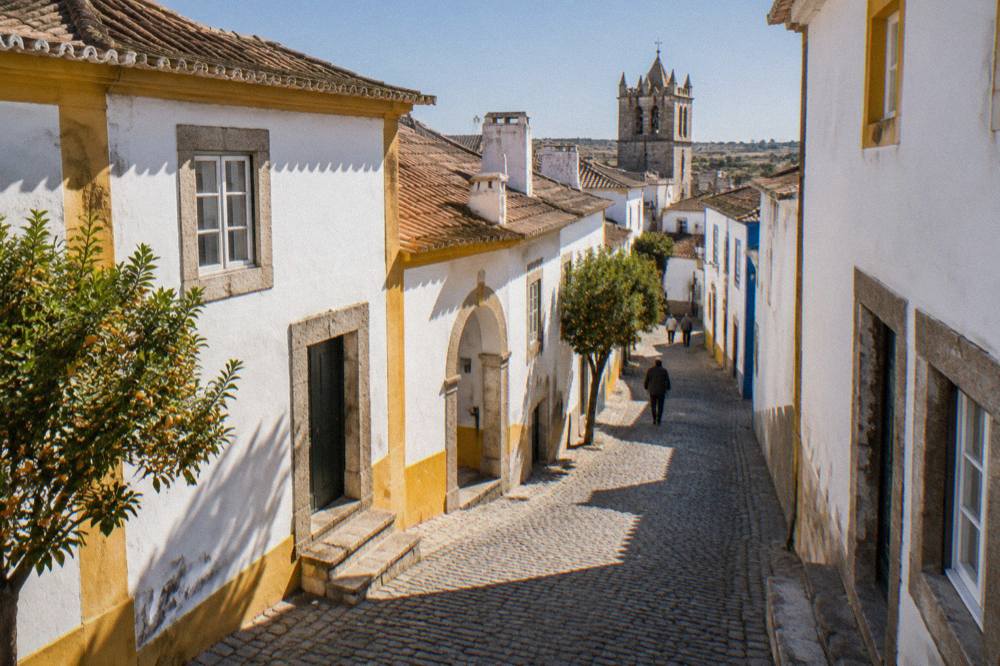
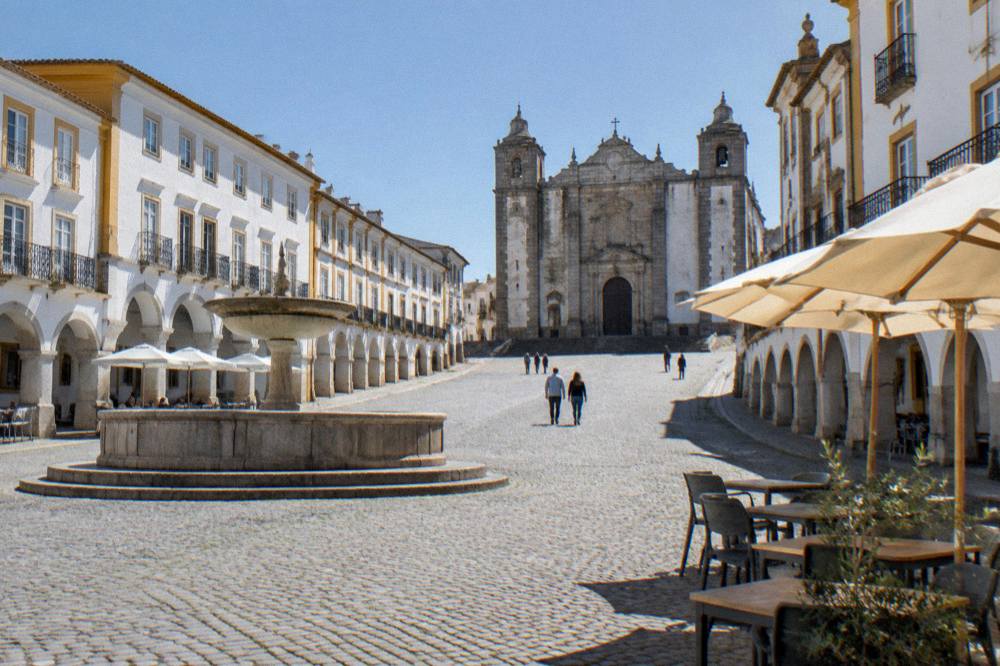
What makes the listing unusual is completeness. Many European old towns keep a facade of their golden age and a rebuilt interior. Évora kept the whole fabric: the street plan, the walls, the aqueduct running through later houses, the white and ochre street walls with granite frames, and the monuments at every turn. The city's history is readable in the stones rather than reconstructed around a few survivors.
The municipal tourist office sits at Praça do Giraldo 73, which is as close to the centre of the listed area as any address gets. It is the natural first stop for a paper map and for the Évora Ticket, the multi-site pass described further down this page.
Why Did UNESCO Inscribe Évora In 1986?
UNESCO inscribed the Historic Centre of Évora in 1986 under criteria (ii) and (iv). Criterion (ii) credits the city's role in the exchange of architectural and artistic ideas, and criterion (iv) calls it the finest example of a city of the golden age of Portugal, after the 1755 Lisbon earthquake, which Évora was largely spared.
The golden age in question is the era framed by the Jesuit University of the Holy Spirit, founded in 1553, and the expulsion of the Jesuits in 1759, when the Portuguese court resided in the city.
The 1755 earthquake is the hinge of the whole argument. It destroyed central Lisbon and damaged or flattened golden-age quarters in many other Portuguese cities. Évora, inland on its plain, kept its golden-age fabric largely intact, so the city that the court knew survived into the present as a working place rather than a monument district. UNESCO's wording turns that luck into the core of the listing.
The court's presence left concrete traces. The University of the Holy Spirit, founded by the Jesuits in 1553, gave Évora a Renaissance collegiate building with a schist and marble cloister that still anchors the university quarter. The ducal cadet branch of the royal house built and rebuilt palaces inside the walls. Religious orders, from the Franciscans at São Francisco to the Carthusians at the Cartuxa monastery just outside them, added convents and churches across every style from Romanesque to baroque.
The result is a city where a single walk crosses two thousand years of building without ever leaving the listed area. That density is what the guided options are built around, and it is why the listing rewards walking far more than driving: the boundary of the World Heritage property is the wall itself, and everything inside it is the monument.
Which Monuments Define The UNESCO Listing?
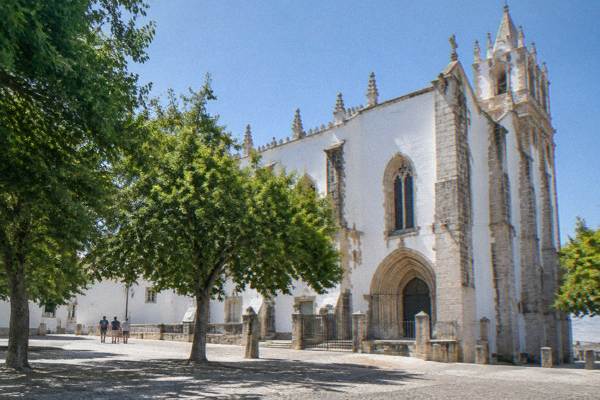
The listing is carried by a compact set of monuments inside the walls: the Roman temple, the Sé cathedral, the Igreja de São Francisco with its Capela dos Ossos, the Jesuit university, the Praça do Giraldo, the Convento dos Lóios, the Água de Prata aqueduct and the Museu de Évora in the former Archbishop's Palace. Together they run from Roman Évora through the Moorish period to the golden age that criterion (iv) names.
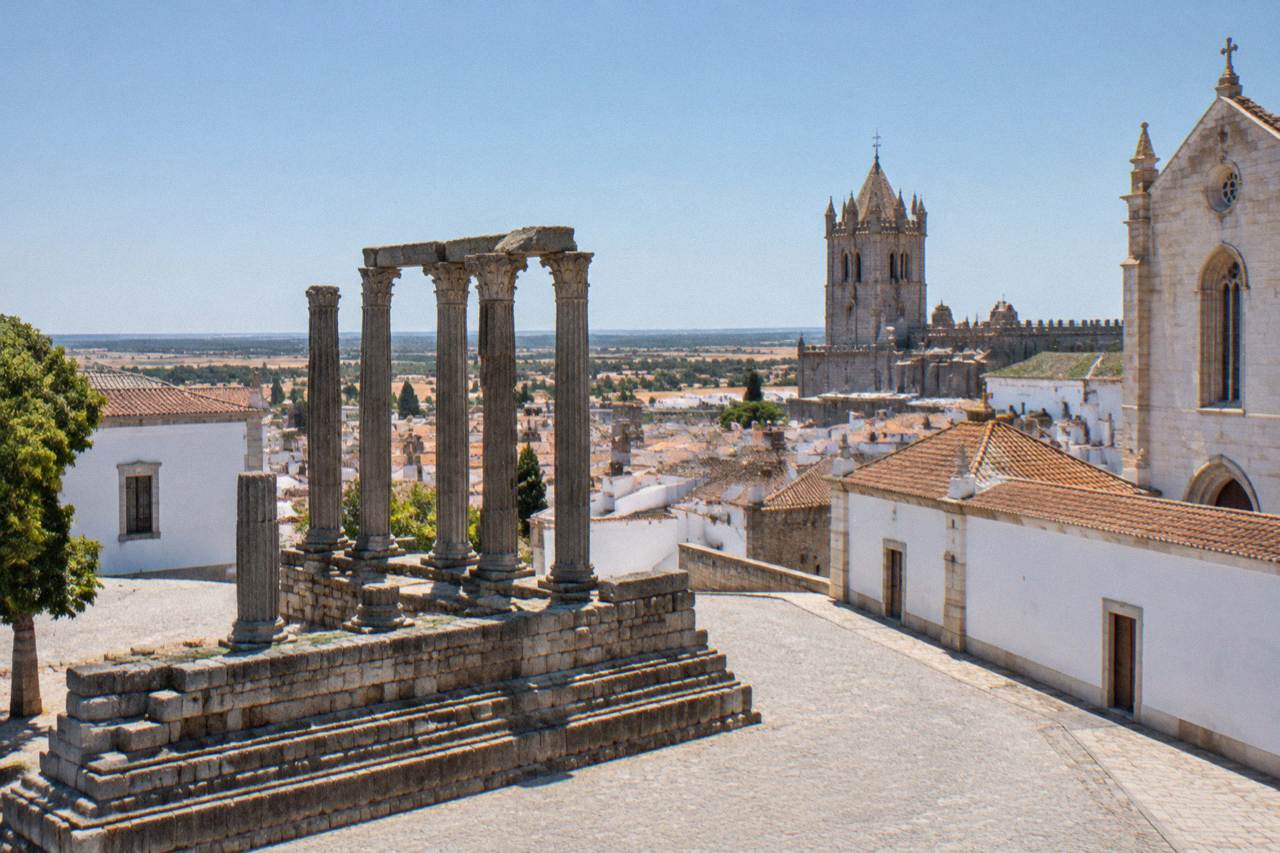
The Roman temple is the emblem of the city, and the municipal page for it says something most guides get wrong: it was probably dedicated to the imperial cult, not to the goddess Diana, a name only used since the seventeenth century. The temple measures 25 x 15 m, was later reused as a municipal butcher's, and had its walls freed in 1870 under Cinatti. It stands in the open, with no ticket and no listed hours, at the highest point of the old city next to the cathedral, the loios convent and the church of São João Evangelista.
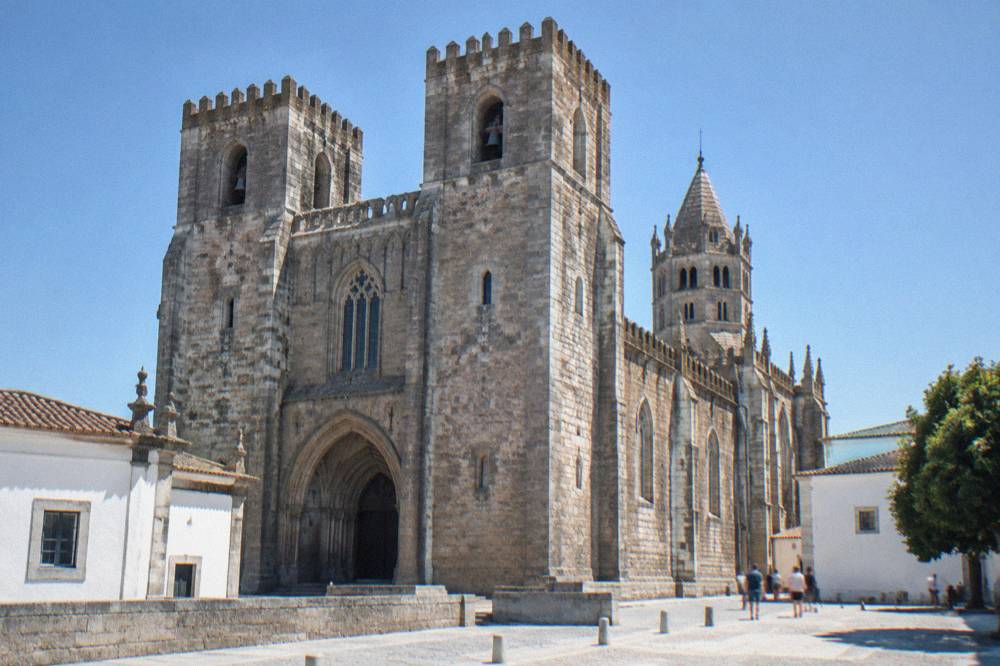
The Sé de Évora is the largest medieval cathedral in Portugal and the one monument that gives you a view over the whole listed area. One complete-visit ticket at 5.00 EUR covers the cathedral, the cloister, the roof terrace and the museum, with children up to 12 free. The Roman temple page covers the archaeology of the precinct around it, which includes Roman baths and a stretch of earlier wall.
The Igreja de São Francisco and its Capela dos Ossos are the listing's most famous interior. The church operates a single museum ticket for all its visitable areas, at 7.00 EUR for an adult, 5.00 EUR for youth to 25 and seniors over 65, and 15.00 EUR for a family of two adults with youths. Hours are 9:00 to 18:30 in summer legal time and 9:00 to 17:00 in winter, open every day except 1 January, Easter Sunday, the afternoon of 24 December and 25 December.
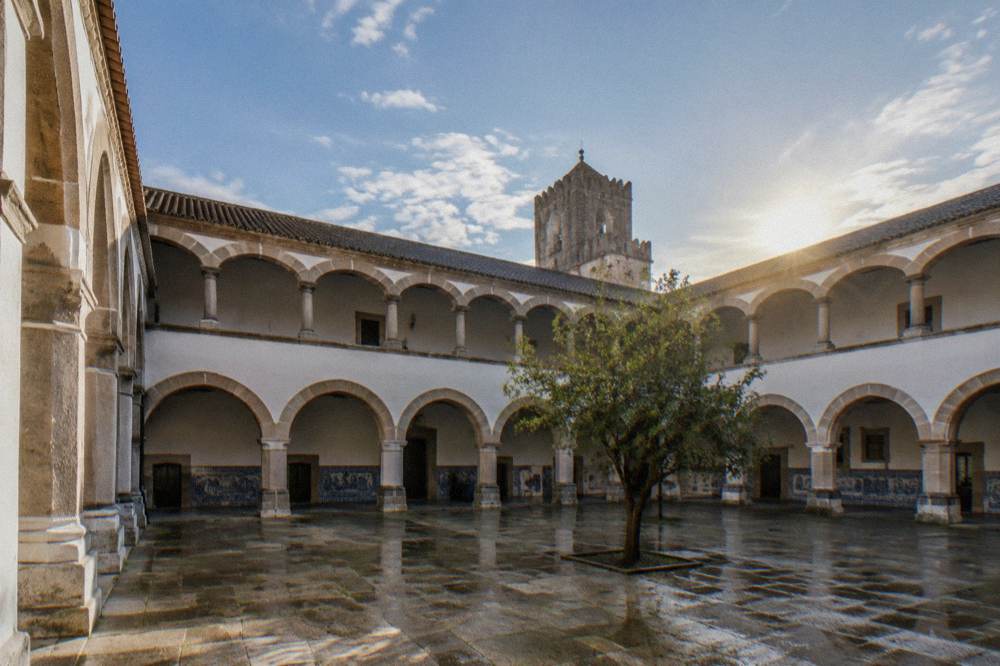
The University of Évora is the golden-age centrepiece. The Jesuit college of the Holy Spirit, founded in 1553, holds a cloister whose alternating schist and marble banded columns are the single most photographed architectural detail in the city. The Jesuits were expelled in 1759 and the building later returned to university use; no verified ticket or hours are published for the visitor, so check the notices at the entrance before planning an interior visit.
The remaining monuments fill out the fabric rather than headline it. The Praça do Giraldo is the marble public square where the tourist office sits. The Museu de Évora, founded officially in 1915 and housed in the former Archbishop's Palace, holds the city's art collection. The Água de Prata aqueduct runs into the listed area with houses built into its arches, and the Roman walls and medieval wall still define the boundary of the property.
How Much Do Tickets Cost Inside The Historic Centre?
The three headline paid monuments cost 5.00 EUR for the Sé complete visit, 7.00 EUR for the Capela dos Ossos museum ticket, and 8 EUR for the Museu de Évora, while the Roman temple, the Praça do Giraldo, the walls and the aqueduct are free.
The Évora Ticket multi-site pass costs 8 EUR for one day, 10 EUR for two days and 12 EUR for three days, free to age 12, and it does not include the Sé, the Capela dos Ossos or the Museu de Évora.
The prices are small, but the structure matters. The three big paid sites each sell their own ticket and none of them is covered by the Évora Ticket, which is built around the municipal "Cidade-Museu" network instead. A visitor who buys the pass expecting the cathedral and the bone chapel will pay twice, so the table below separates what each route actually costs.
| Site | Adult price | Concessions | Hours (verified) | Closed |
|---|---|---|---|---|
| Sé de Évora (complete visit) | 5.00 EUR | Children up to 12 free | 9:00-17:00 daily | 24 Dec afternoon, 25 Dec, 1 Jan |
| Capela dos Ossos / Igreja de São Francisco | 7.00 EUR | Youth to 25 and seniors over 65 5.00 EUR, family 15.00 EUR | Summer 9:00-18:30, winter 9:00-17:00 | 1 Jan, Easter Sunday, 24 Dec afternoon, 25 Dec |
| Museu de Évora | 8 EUR | Youth 13-24, seniors over 65 and family 50% off, free to age 12 | Tue-Sun 9:30-13:00 and 14:00-17:30 | Mondays, 1 Jan, Easter Sunday, 1 May, 29 Jun, 25 Dec |
| Évora Ticket | 8 EUR one day, 10 EUR two days, 12 EUR three days | Free to age 12 | Network sites vary | Does not include the Sé, the Capela dos Ossos or the Museu de Évora |
| Roman temple, Praça do Giraldo, walls, aqueduct | Free | Free | Open public spaces | None stated |
Two cautions sit alongside that table. The Convento dos Lóios, next to the Roman temple, shows its price on the official municipal page as temporarily unavailable, so no ticket figure can be given for it; check the notice at the entrance. And the Museu de Évora is closed on Mondays, which catches out visitors who arrive on the first day of a weekend break and leave Monday morning.
For the practical planning around all of this, the tickets and passes page and the opening hours page carry the full detail, and the cost and budget guide puts the monument spend in the context of a whole trip.
How Do You Walk The Historic Centre In One Day?
The whole UNESCO area is walkable in one day because it is compact and roughly circular: start at the Praça do Giraldo, take Rua 5 de Outubro to the Sé and the Roman temple, loop through the Lóios convent and the university cloister, cross to the Igreja de São Francisco and the Capela dos Ossos, and finish along the aqueduct at the Rua da Cano near the Porta de Moura quarter. Every stop on that loop is inside the walls.
The order above is not arbitrary. It climbs first, putting the temple precinct and the cathedral terrace at the top of the day while legs are fresh, then descends westward through the university to the low ground where the aqueduct enters the city. The one day in Évora itinerary and the half-day version break the same ground into timed plans; the table here is the bare skeleton. Everything else covered here is indexed on Évora Travel Guide.
| Stop | What you see | Ticket needed |
|---|---|---|
| Praça do Giraldo | Marble square, tourist office, city fountain | No |
| Sé de Évora | Cathedral nave, cloister, roof terrace, museum | 5.00 EUR |
| Roman temple precinct | Temple, viewpoint over the plain, nearby Roman baths | No |
| Convento dos Lóios | Church of São João Evangelista and convent | Check at entrance |
| University of Évora | Renaissance college and banded cloister | Check at entrance |
| Igreja de São Francisco and Capela dos Ossos | Church, bone chapel, museum areas | 7.00 EUR |
| Rua da Cano and Água de Prata | Aqueduct arches with houses built between them | No |
| Jardim Público and Palácio de Dom Manuel | Garden and palace exterior at the Diana precinct | No |
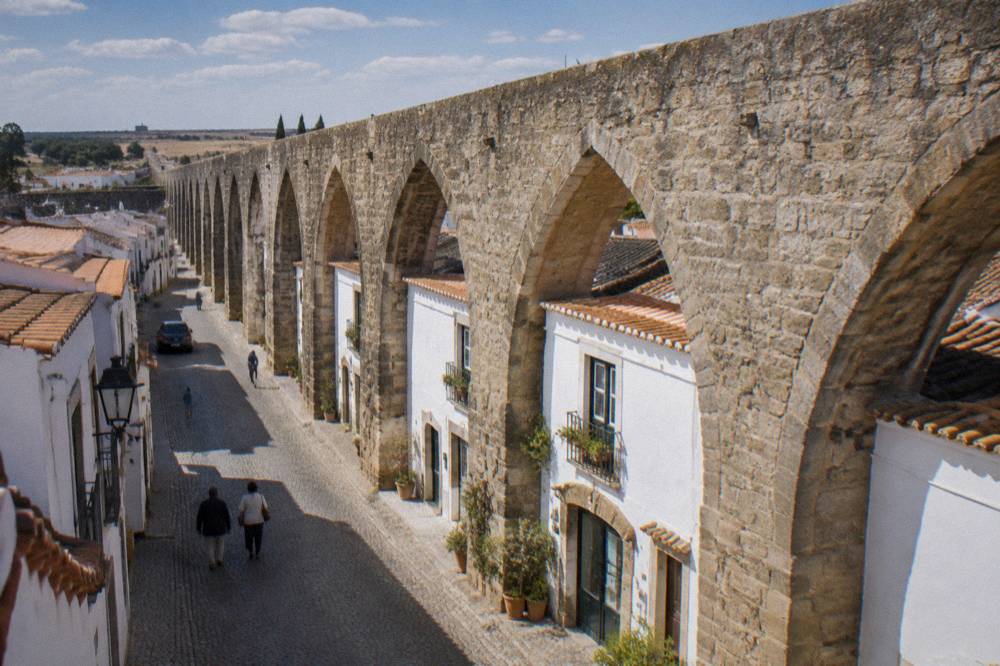
The aqueduct stretch is the part first-time visitors most often miss, and it is the most photogenic proof of how the listed city works. The structure still stands to its full height where it crosses the Rua da Cano, and later houses were built directly into and beneath its arches, so the monument and the ordinary street are the same thing. The Porta de Moura square sits at the top of that street, a quiet Renaissance square that most walking routes pass through without stopping.
For a shorter visit, the free things to do page shows how much of the listing can be seen without a single ticket: the temple, the walls, the aqueduct, the squares and the whole street fabric cost nothing. The paid interiors are the depth, not the substance.
What Are The Best Guided Tours Of The Historic Centre?
The strongest guided options inside the UNESCO area are the private walking tour that pairs the cathedral with the Capela dos Ossos, the small-group cultural walk that ends at the bone chapel, and the sidecar tour that covers the medieval city on three wheels with a wine tasting attached. A flexible historic-centre walking tour from $13.51 per person is the budget entry point, and GuruWalk runs free, tip-based walks for visitors who want the orientation before spending anything.
The private option is the deepest. The Évora Private Walking Tour with Cathedral & Chapel of Bones runs 2.5 hours, is rated 5 from 106 reviews, and starts from $111.42 per person, with monument tickets handled as part of the walk. For visitors whose whole reason for coming is the UNESCO listing, that tour turns the two paid headline interiors plus the street fabric into a single explained sequence rather than three separate queues.
The small-group alternative covers the same cultural ground at lower cost. The Évora Small-Group Cultural Walking Tour & Chapel of Bones runs 2 hours, is rated 4.9 from 141 reviews, and starts from $77.66 per person. It suits visitors who want a guide's explanations but not a private format.
The sidecar tour is the odd one out and the most fun for it. The Medieval Tour of Évora on a Sidecar & Wine Tasting runs 3 hours, is rated 4.9 from 16 reviews, and starts from $61.90 per person, taking the medieval city in from an open motorcycle sidecar and finishing with a tasting. It is the only format that covers ground faster than walking without leaving the listed area behind.
| Tour | Format | Length | Rating | From (per person) |
|---|---|---|---|---|
| Évora Private Walking Tour with Cathedral & Chapel of Bones | Private walk, monument tickets | 2.5 hours | 5 from 106 reviews | $111.42 |
| Évora Small-Group Cultural Walking Tour & Chapel of Bones | Small-group walk | 2 hours | 4.9 from 141 reviews | $77.66 |
| Medieval Tour of Évora on a Sidecar & Wine Tasting | Sidecar ride, wine tasting | 3 hours | 4.9 from 16 reviews | $61.90 |
| Évora: Personal & Flexible Walking Tour in Historic Center | Flexible walk | 3 hours | 4.8 from 105 reviews | $13.51 |
| Évora: Tales and Legends Guided Walking Tour | Themed walk | 2.5 hours | 4.8 from 40 reviews | $52.90 |
The GuruWalk free tours deserve their own line because they invert the usual pricing. The Essential Free Tour of Évora, rated 4.93 from 774 reviews over 2 hours, and Évora through history and how it shaped the city, rated 4.88 from 74 reviews, are both free and tip-based, with the guru named on the platform listing. For a first afternoon in the city, one of those walks plus a paid interior visit the next morning is a genuinely good plan.
When Is The Best Time To Visit The Historic Centre?
The best time to walk the UNESCO centre is spring or autumn, because IPMA's 1991-2020 normals for the Évora station show July and August averaging 33.3 C and 33.5 C as mean daily maxima, with 31.9 days a year reaching 35 C or more, while April, May, October and the shoulder months stay in the 20 to 25 C range with only a handful of hot days. Winter is cool, around 14 C mean maximum, and wet but workable.
The climate table is the whole argument, so it is worth reading closely rather than skimming. Évora is inland on the Alentejo plain, with no sea to moderate anything, so summer heat builds through the day and the stone streets hold it into the evening.
| Month | Mean max (C) | Mean min (C) | Rain (mm) | Days at 30 C+ |
|---|---|---|---|---|
| March | 18.7 | 6.9 | 60.8 | 0.0 |
| April | 20.7 | 8.5 | 62.1 | 0.3 |
| May | 25.0 | 10.9 | 46.6 | 5.5 |
| June | 30.2 | 13.8 | 10.6 | 15.1 |
| July | 33.3 | 15.6 | 2.7 | 23.7 |
| August | 33.5 | 16.0 | 6.0 | 25.0 |
| September | 29.5 | 14.6 | 33.9 | 13.9 |
| October | 24.1 | 12.3 | 81.5 | 2.9 |
| November | 17.6 | 7.9 | 86.0 | 0.0 |
All figures are IPMA 1991-2020 climate normals for the Évora station. The record maximum for the station is 45.4 C, set on 4 August 2018, which is the number to keep in mind when a guide suggests an August afternoon walking tour. The best time to visit guide and the seasonal pages for summer, autumn, winter and spring expand on this.
Practical heat tactics matter more here than on the coast. The Sé's roof terrace and the temple precinct have no shade, and the Capela dos Ossos queue sits on an open street. Early morning and late afternoon are the workable summer windows, and the rainy day guide covers the indoor alternatives for the wetter months, when the museum and the bone chapel carry the day.
How Does Évora 2027 Change A Visit?
Évora and the Alentejo are a European Capital of Culture in 2027, promoted by an executive board led by the Municipality of Évora, and 2026 is running as a preparation year built on the concept of "Vagar". The GUADIANA festival of Afro-Ibero-American literatures runs 9 to 11 October 2026 with 28 authors from nine countries, and the Feira de São João ran 23 June to 5 July 2026 at the Rossio de São Brás. The full 2027 programme is not yet published.
The preparatory programme has been running through 2026, and the open calls for 2027 community projects point to a programme that will spread beyond the walls into the Alentejo region.
| Event | Dates | Status |
|---|---|---|
| GUADIANA, festival of Afro-Ibero-American literatures | 9 to 11 October 2026, first edition, 28 authors from 9 countries | Part of the Évora 2027 programme |
| Feira de São João 2026 | 23 June to 5 July 2026, Rossio de São Brás | Annual; 2027 dates not published |
| Évora 2027 European Capital of Culture | Year-long, 2027 | Full programme not yet published |
| 2026 preparation programme | Throughout 2026 | Built on the concept of "Vagar" |
For a visitor, the practical reading is simple. Nothing about the monuments changes: the Sé, the Capela dos Ossos and the university will be exactly what they are now. What changes is the calendar, and anyone planning a 2027 trip should expect fuller hotels and a livelier programme than the city has seen in decades. The events and festivals guide tracks what is confirmed, and the where to stay guide covers the quarters inside and outside the walls, with a municipal tourist tax applying to stays; check your hotel for the current amount.
What Should You Not Miss Inside The Walls?
The four interiors that justify the UNESCO listing are the Sé complete visit with its roof terrace, the Capela dos Ossos, the university cloister and the Museu de Évora, and the four free experiences that match them are the Roman temple precinct at golden hour, the Praça do Giraldo in the morning, the Rua da Cano aqueduct houses, and the walk along the medieval wall. A visitor who does all eight has seen the listing, not just a postcard of it.
The roof terrace of the Sé is the single most under-bought ticket in the city. At 5.00 EUR the complete visit is already cheap, and the terrace is the only place where the whole walled centre, the aqueduct and the plain beyond read as one landscape. The rooftop views page collects the other vantage points, including the Diana precinct next to the temple.
The university cloister is the golden-age statement. Criterion (iv) exists because of buildings like it, and because the streets around it survived. The Porta de Moura quarter and the Jewish quarter sit a few minutes away and carry the older, quieter layers of the same fabric, from the period when Évora was a city of scholars, merchants and, harder history, an Inquisition tribunal whose details no verified source on this page will support.
Outside the walls, the same golden age spread to the Cartuxa winery and the cork museum, both of which extend a historic-centre visit into the working Alentejo without a long drive. The best day trips guide covers the wider region, from Arraiolos at about 20 km to Monsaraz at about 40 to 45 km and Estremoz at about 45 km.
Common Questions About The Évora UNESCO Historic Centre
Why is Évora a UNESCO World Heritage Site?
UNESCO inscribed the Historic Centre of Évora in 1986 under criteria (ii) and (iv). Criterion (iv) calls it the finest example of a city of the golden age of Portugal, after the 1755 Lisbon earthquake, which Évora was largely spared. The city keeps its Roman temple, medieval cathedral, Jesuit university and golden-age street fabric inside the same walls.
What year was Évora listed by UNESCO?
The Historic Centre of Évora was inscribed on the World Heritage List in 1986, under criteria (ii) and (iv). No other date, criterion or area size belongs to the listing.
How big is the UNESCO area in Évora?
The listed area is the walled historic centre of Évora, bounded by the surviving walls, and it is walkable end to end in well under an hour. No verified figure for the size of the listed area is published on the pages this guide draws from, so none is stated here.
Do you need tickets for the UNESCO area itself?
No. The streets, squares, walls, aqueduct and Roman temple precinct are public and free. Tickets apply only to interiors: 5.00 EUR for the Sé complete visit, 7.00 EUR for the Capela dos Ossos museum ticket, and 8 EUR for the Museu de Évora.
Is the Évora Ticket valid at the cathedral and the Capela dos Ossos?
No. The Évora Ticket costs 8 EUR for one day, 10 EUR for two days and 12 EUR for three days, and it does not include the Sé, the Capela dos Ossos or the Museu de Évora. Those three sell their own tickets separately.
Can you see the UNESCO centre on a day trip from Lisbon?
Yes. CP's Intercidades timetable valid since 6 September 2026 lists six through trains from Lisboa Oriente to Évora taking about 1 hour 40 to 1 hour 45, with a second-class fare of 13.90 EUR. A single day covers the temple, the Sé, the Capela dos Ossos and the main squares on foot.
The UNESCO listing of Évora is not a label attached to a monument; it is a judgement about an entire walled city that survived the earthquake which levelled the rest of golden-age Portugal. Walk it slowly, buy the three interior tickets, climb the Sé terrace at the end of the afternoon, and the wording of criterion (iv) stops being a quote and becomes something you can see for yourself.