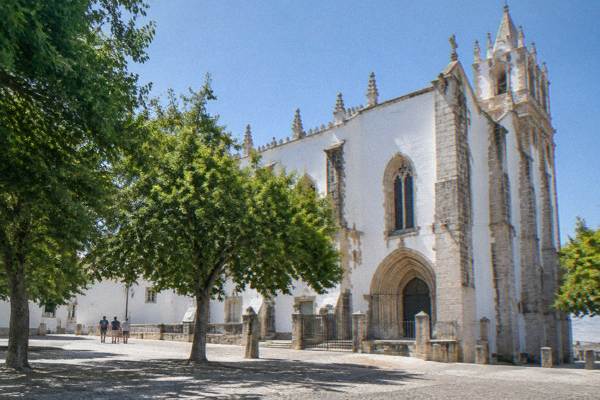
What Is The History Of Évora?
The history of Évora, Portugal, from the Roman Templo Romano and the end of Moorish rule in 1165 to the Jesuit university of 1553, the 1755 earthquake it escaped, UNESCO listing in 1986 and the 2027 Capital of Culture.
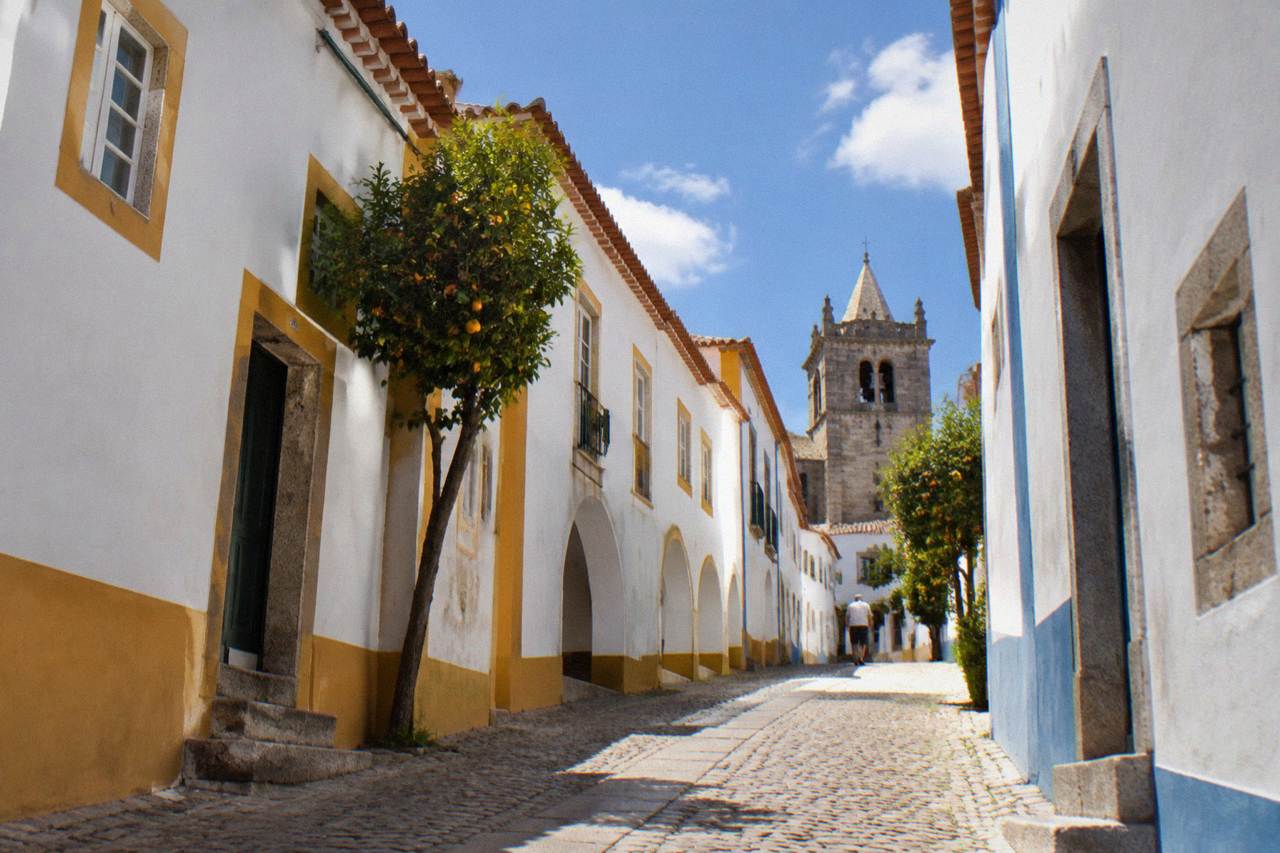
Évora, the capital of the Alentejo district of that name in southern Portugal, is one of those rare cities where the whole historical record is still standing in the streets. The UNESCO World Heritage listing for the Historic Centre of Évora, inscribed in 1986 under criteria (ii) and (iv), describes it as the finest example of a city of the golden age of Portugal, precisely because the 1755 Lisbon earthquake that destroyed so much of the country left Évora largely undamaged. A Roman temple still stands at the city's highest point. Moorish rule ended here in 1165. The Jesuit University of the Holy Spirit dates from 1553, and the Jesuits were expelled in 1759. Few inland cities of this size, about 53,000 people in the municipality at the 2021 census, carry a documented past this dense.
What Is The History Of Évora?
The history of Évora runs from a Roman city with a surviving temple, through Moorish rule that ended in 1165, into a Portuguese golden age marked by the Jesuit University of the Holy Spirit of 1553 and ended for the Jesuits by their expulsion in 1759, and on into a modern era crowned by UNESCO World Heritage inscription in 1986 and the European Capital of Culture title in 2027. The 1755 earthquake that flattened Lisbon largely spared Évora, which is why its golden-age centre survives intact.
That single paragraph is the spine of the story, and every date in it comes from the UNESCO record for the Historic Centre of Évora. What makes the city unusual is not any one monument but the stacking: Roman, Moorish, medieval, Renaissance and Baroque layers all within a wall you can cross on foot in twenty minutes or so of unhurried walking. The city's own name has shifted with those layers, from Roman Ebora through Arabic Yabura to the modern Portuguese Évora, and each pronunciation left something in the street plan.
The longer history of Évora is easiest to read monument by monument, which is why this page works through the periods in order. If you want the short version of what the city is known for today, the answer to what Évora is famous for covers the headlines: the Capela dos Ossos, the Templo Romano, the Sé and the Alentejo food and wine culture that grew up around a city of scholars, soldiers and farmers.
| Date | What Happened In Évora |
|---|---|
| 1165 | Moorish rule in Évora ends |
| 1553 | Jesuit University of the Holy Spirit founded |
| 1755 | The Lisbon earthquake largely spares Évora |
| 1759 | The Jesuits are expelled from Portugal |
| 1870 | The Templo Romano's embedded walls are freed under Cinatti |
| 1915 | The Museu de Évora is officially founded |
| 1986 | UNESCO inscribes the Historic Centre of Évora, criteria (ii) and (iv) |
| 2027 | Évora becomes a European Capital of Culture |
What Did The Romans Leave Behind In Évora?
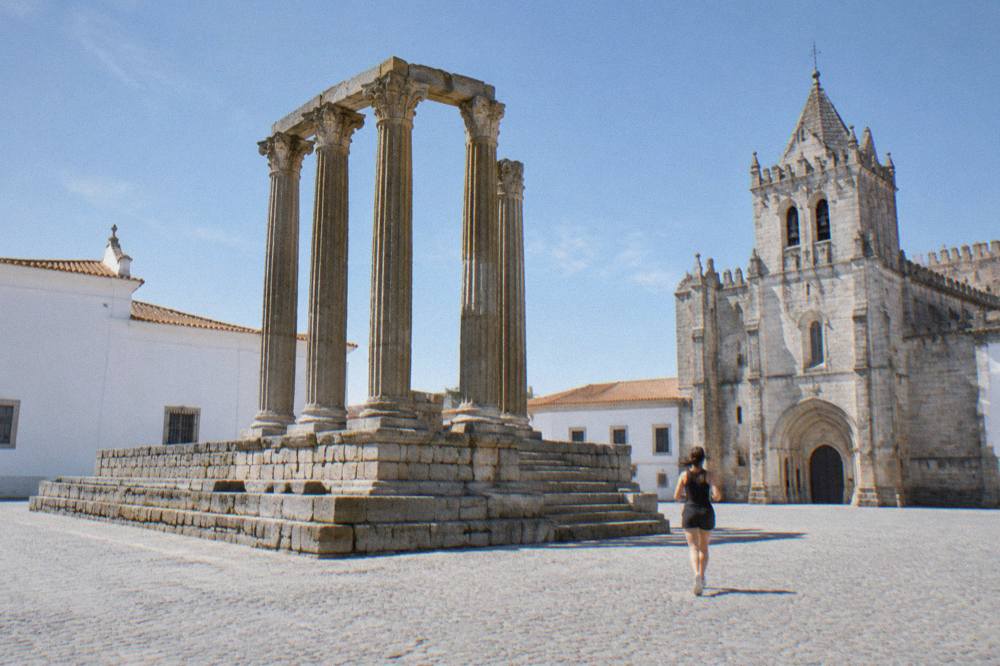
The clearest Roman survival is the Templo Romano, popularly called the Temple of Diana, a structure the municipal page says was probably dedicated to the imperial cult rather than to the goddess Diana, measuring 25 x 15 m, later reused as a municipal butcher's shop, with its embedded walls only freed in 1870 under the architect Cinatti. It stands as an open-air monument with no ticket and no listed hours.
The Diana name is the popular one, used since the 17th century, but the city's own account is careful: the temple was probably dedicated to the imperial cult. That distinction matters, because it tells you what Roman Évora was, a provincial city with a temple at its highest point, not a mystery. The building's later life is the more remarkable part of the story. For centuries it was built into the urban fabric and put to thoroughly mundane use as a butcher's, and only in 1870 were the walls that had grown around it cleared away.
The temple is not the only Roman trace. The ancient and Roman sites of Évora collect the remains scattered through the centre, and the UNESCO record lists the Temple of Diana among the Roman remains that justified inscription. Roman Évora was a city of the province of Lusitania, inland, agricultural and wealthy enough to build in stone, and the plain around it has been farmed continuously since.
What a visitor notices is how little fuss the city makes of any of this. The temple sits at the top of the old town next to the Sé and the museum, un-ticketed, climbed around by visitors and locals alike. The stone is granite, the columns are Corinthian, and the setting, between the cathedral and the Convento dos Lóios, is a piece of urban theatre the Romans could not have planned better.
When Did Moorish Évora Become A Portuguese City?
Moorish rule in Évora ended in 1165, when the city passed into the expanding Portuguese kingdom, after which it grew into a walled medieval and Renaissance city whose centre is the one UNESCO listed in 1986. The 1165 date comes from the UNESCO record for the Historic Centre of Évora, and it is the fixed point between the city's Islamic centuries and its Portuguese ones.
The Moorish period left its deepest mark not in standing monuments but in the street plan. The tangle of lanes inside the walls, narrow, shaded and turning on themselves, is the shape of an Islamic-period town, and it survived every later building campaign because it was never worth anyone's while to straighten it. The medieval Portuguese city simply grew over it and around it, walling the whole with a defensive circuit whose gates still name the quarters. The full index of guides sits on Évora Travel Guide.
After 1165, Évora's story becomes a Portuguese one, and a royal one. The city sat on the road between Lisbon and the Spanish border, close enough to the frontier to need walls and rich enough from Alentejo wheat, wool and wine to pay for them. Monastic orders arrived, the Franciscans among them, and the Igreja de São Francisco that houses the famous Capela dos Ossos grew out of that medieval mendicant presence. The Inquisition history of Évora is a darker chapter of the same period, though the details of the tribunal and its trials belong to a record this page does not go into.
By the late medieval period the city was a regular seat of the Portuguese court, which is what set up the golden age that followed. Courts bring builders, and builders in Évora worked in the local limestone that gives the old town its pale, slightly golden colour. That stone is the physical link between the medieval city and the Renaissance one, and it is why the centre reads as a single composition rather than a collection of periods.
The medieval and golden-age layers are what a guided walk makes sense of fastest, because the guide carries the stories the stones do not spell out. The Évora: Tales and Legends Guided Walking Tour, a 2.5-hour walk through the historic centre, is built exactly on that material, pairing the monuments with the legends attached to them. Check availability
Why Is Évora Called The Finest City Of Portugal'S Golden Age?
UNESCO's criterion (iv) for the Historic Centre of Évora calls it the finest example of a city of the golden age of Portugal, after the 1755 Lisbon earthquake, which Évora was largely spared. The golden age the wording refers to was built around the Jesuit University of the Holy Spirit, founded in 1553, whose professors and students made Évora a intellectual capital until the Jesuits were expelled in 1759.
The 1755 earthquake is the hinge of the whole phrase. It destroyed central Lisbon and much of the coast, and the rebuilding there produced the Baixa's grid of neoclassical streets. Évora, inland on its plateau, kept its earlier fabric, so the city that the golden age actually built, the Manueline, Renaissance and Baroque churches, the palace fronts, the university's cloister, survived in a completeness Lisbon cannot match. UNESCO inscribed the centre in 1986 under criteria (ii) and (iv), and criterion (iv) is where that famous wording sits.
The university is the institution at the centre of it. The Jesuit University of the Holy Spirit dates from 1553, and its presence turned a garrison and market town into a city of colleges, printing and scholarship. The expulsion of the Jesuits in 1759 ended that first university, and the modern Universidade de Évora is a later institution on the same tradition, but the college building at the top of the old town, with its azulejo-clad cloister, is the physical survivor of the 1553 foundation.
| Period | What To See In Évora Today | What It Shows |
|---|---|---|
| Roman | Templo Romano, 25 x 15 m | A provincial temple, probably to the imperial cult |
| Moorish to medieval | The walled street plan and gates | The Islamic-era lane pattern under later building |
| Golden age | The Jesuit university building of 1553, the Sé, the Igreja de São Francisco | The city of the golden age of Portugal that UNESCO's criterion (iv) names |
| After 1755 | The intact centre the earthquake largely spared | Why the golden-age city survives complete |
| Modern | Museu de Évora, founded 1915 in the former Archbishop's Palace | The city turned into a museum of itself |
The golden-age label is not a tourism slogan, it is a quotation, and that is worth knowing when you read other guides. When a writer calls Évora the finest city of Portugal's golden age, they are citing UNESCO's criterion (iv) wording, sometimes without saying so. The city earns the phrase honestly: walk from the Templo Romano past the Sé to the Praça do Giraldo and you cross the Roman, medieval and golden-age city in ten minutes, each layer still doing its job.
How Did Évora Become The Alentejo'S Capital Of Culture?
After the golden age, Évora's modern history runs through the founding of the Museu de Évora in 1915 in the former Archbishop's Palace, the UNESCO inscription of the Historic Centre in 1986, and the city's selection as a European Capital of Culture for 2027, with a preparatory 2026 programme and events like the GUADIANA literature festival of 9 to 11 October 2026 and the Feira de São João of 23 June to 5 July 2026.
The museum founding is a good marker for when Évora began curating itself. The Museu de Évora, officially founded in 1915, occupies the former Archbishop's Palace beside the Sé, and its collection is effectively the city's own attic, the paintings, sculpture and archaeology that a thousand years of bishops and scholars accumulated. Today it runs on municipal hours, Tuesday to Sunday, with an adult ticket at 8 EUR and free entry to age 12.
The 1986 UNESCO inscription changed the city's economy more than any single event since the Jesuits left. World Heritage status put Évora on the international circuit, and the visitors who arrived for the Templo Romano and the Capela dos Ossos found a living Alentejo town around them, one that still holds the Feira de São João, the great June fair, on the Rossio de São Brás. The 2026 edition ran from 23 June to 5 July under the theme "Évora: Capital Europeia ao Sul", a fair that has been the city's commercial calendar for centuries.
The Capital of Culture year is the next chapter. Évora 2027 is promoted by an executive board led by the Municipality of Évora together with the Alentejo Regional Directorate for Culture, the University of Évora and regional partners, and the full 2027 programme had not been published as of October 2026. What is already running is the preparation: the 2026 programme, community projects and open calls, plus festival editions like GUADIANA in October 2026. For a city whose history has always been written by institutions, the university, the church, the municipality, a year-long cultural programme is the most traditional thing that could happen to it.
For visitors, the practical payoff of all this history is compactness. The whole story fits inside the walls, and the question of how much time you need in Évora usually resolves to a day for the monuments and two for the layers. A walk with a guide turns the stones back into narrative, and the guided options above cover the tales-and-legends walk, a sidecar tour with wine tasting, and a private walk that takes in the cathedral and the Chapel of Bones.
Common Questions About Évora'S History
What is the history of Évora?
Évora's documented history runs from a Roman city with a surviving temple, through Moorish rule that ended in 1165, into a Portuguese golden age marked by the Jesuit University of the Holy Spirit of 1553 and the Jesuit expulsion of 1759, and onward to UNESCO World Heritage inscription in 1986 and the European Capital of Culture title in 2027. The 1755 Lisbon earthquake largely spared the city, which is why its historic centre survives so completely.
Why is Évora a UNESCO World Heritage site?
The Historic Centre of Évora was inscribed in 1986 under criteria (ii) and (iv). Criterion (iv) calls it the finest example of a city of the golden age of Portugal, after the 1755 Lisbon earthquake, which Évora was largely spared. Roman remains, including the Temple of Diana, are part of what the listing recognises.
Is the Templo Romano really a temple of Diana?
The municipal page for the Templo Romano says the temple was probably dedicated to the imperial cult, not to the goddess Diana. The Diana name has been used since the 17th century. The structure measures 25 x 15 m, was later reused as a municipal butcher's, and had its embedded walls freed in 1870 under Cinatti.
When did Moorish rule in Évora end?
Moorish rule in Évora ended in 1165, according to the UNESCO record for the Historic Centre of Évora. After that the city grew as a walled Portuguese town, with the Moorish-period street pattern surviving under later medieval and golden-age building.
How old is the University of Évora?
The Jesuit University of the Holy Spirit dates from 1553. The Jesuits were expelled from Portugal in 1759, which ended that first university. The modern Universidade de Évora continues the tradition on the same historic college building in the old town.
Why does Évora look older than Lisbon?
Because the 1755 earthquake that destroyed much of Lisbon largely spared Évora, the inland city kept its Roman, medieval and golden-age fabric intact, while central Lisbon was rebuilt in the aftermath. That contrast is the basis of UNESCO's criterion (iv) wording calling Évora the finest example of a city of the golden age of Portugal.
The history of Évora is not a story you have to imagine, it is one you can stand inside, from the columns of the Templo Romano to the university cloister of 1553 and the walls that carried the city from Moorish rule in 1165 to a European Capital of Culture year in 2027.