Évora Events And Festivals
Évora's event calendar runs from a June fair that has filled the Rossio de São Brás for generations to a literature festival staged as part of the city's run-up to the 2027 European Capital of Culture year.
Short answer
The headline Évora events are the Feira de São João, which ran 23 June to 5 July 2026 at the Rossio de São Brás, and the GUADIANA Festival of Afro-Ibero-American Literatures on 9 to 11 October 2026. The bigger story is Évora 2027: the city and the Alentejo are European Capital of Culture in 2027, with 2026 running as a preparation programme around the concept of Vagar.
Évora, the inland capital of Portugal's Alentejo region, becomes a European Capital of Culture in 2027, and the city is not waiting for the year to arrive. The Évora 2027 Executive Board, led by the Municipality of Évora together with the Alentejo Regional Directorate for Culture, the University of Évora and CIMAC, is already running a preparation programme through 2026 built on the concept of "Vagar", an Alentejo word for a slow, unhurried way of moving through time. Alongside that cultural build-up sits an older calendar: a summer fair on the Rossio de São Brás, religious processions that thread the medieval streets, and a food and wine scene that gives almost any month a reason to celebrate. This guide lays out what is confirmed, when it happens and how to plan a trip around it.
What Are The Big Évora Events In 2026 And 2027?
The two confirmed headline events of 2026 are the Feira de São João, which ran from 23 June to 5 July at the Rossio de São Brás under the theme "Évora: Capital Europeia ao Sul", and the GUADIANA Festival of Afro-Ibero-American Literatures, a first-edition literature festival on 9 to 11 October 2026 with 28 authors from nine countries. Over everything sits the larger fact: Évora and the Alentejo are European Capital of Culture in 2027, with 2026 staged as a preparation year.
The Évora 2027 organisation promotes the programme together with regional partners, and the city is the fourth Portuguese city to hold the title. What a visitor can actually book in 2026 is the preparation programme: the published concept is "Vagar", and the events staged under it are deliberately spread across the year rather than clustered in one season.
The GUADIANA festival is the clearest example of what the preparation year produces. It is a festival of Afro-Ibero-American literatures, it is a first edition, and it brings 28 authors from nine countries to Évora for three days in October. A literature festival in a UNESCO-listed city of about 53,000 people, held in the run-up to a Capital of Culture year, is exactly the kind of event that rewards arriving with a plan: rooms in the historic centre fill quickly on festival weekends.
| Event | 2026 Dates | Place | What It Is |
|---|---|---|---|
| Feira de São João | 23 June to 5 July | Rossio de São Brás | Annual fair, 2026 theme "Évora: Capital Europeia ao Sul" |
| GUADIANA literature festival | 9 to 11 October | Évora | Afro-Ibero-American literatures, first edition, 28 authors from nine countries |
| Évora 2027 preparation programme | Through 2026 | City-wide | Preparatory programme built on the concept of "Vagar" |
The full 2027 programme calendar has not been published, so any specific 2027 date, venue or ticket price you may read elsewhere should be treated with care until it appears on the official Évora 2027 pages. What is safe to say is that 2027 will be a dense year, and that the preparation programme in 2026 gives a fair preview of the scale. If you want the background to why this small city carries such weight, the Évora UNESCO historic centre explains the 1986 inscription and the golden-age architecture that earned it.
What Is The Feira De São João?
The Feira de São João is Évora's annual summer fair, staged on the Rossio de São Brás, and in 2026 it ran from 23 June to 5 July under the theme "Évora: Capital Europeia ao Sul". It is the city's biggest recurring public event, a municipal edital fixes its dates each year, and the pattern places it in late June running into early July, so plan a future visit around that window rather than a fixed date.
The Rossio de São Brás is the open ground beside the Igreja de São Brás on the eastern edge of the centre, and it is the fair's traditional home. The Feira de São João combines market stalls, food, amusement rides and live entertainment in the way long-standing Iberian fairs do, and it draws people from across the surrounding Alentejo, not just from the city. For visitors it is the one moment of the year when Évora feels like a regional capital in the fullest sense: full, loud and outdoors late into the evening.
The 2026 edition's theme, "Évora: Capital Europeia ao Sul", pointed straight at the 2027 title, which tells you how the fair and the Capital of Culture programme are being woven together. For any year other than 2026, the honest planning advice is to work from "late June into early July" and confirm the exact dates on the Câmara Municipal's fair page before you book, because the edital sets them annually. If you want to see the rest of the city while the fair runs, the things to do in Évora guide covers the monuments that stay open through the summer season.
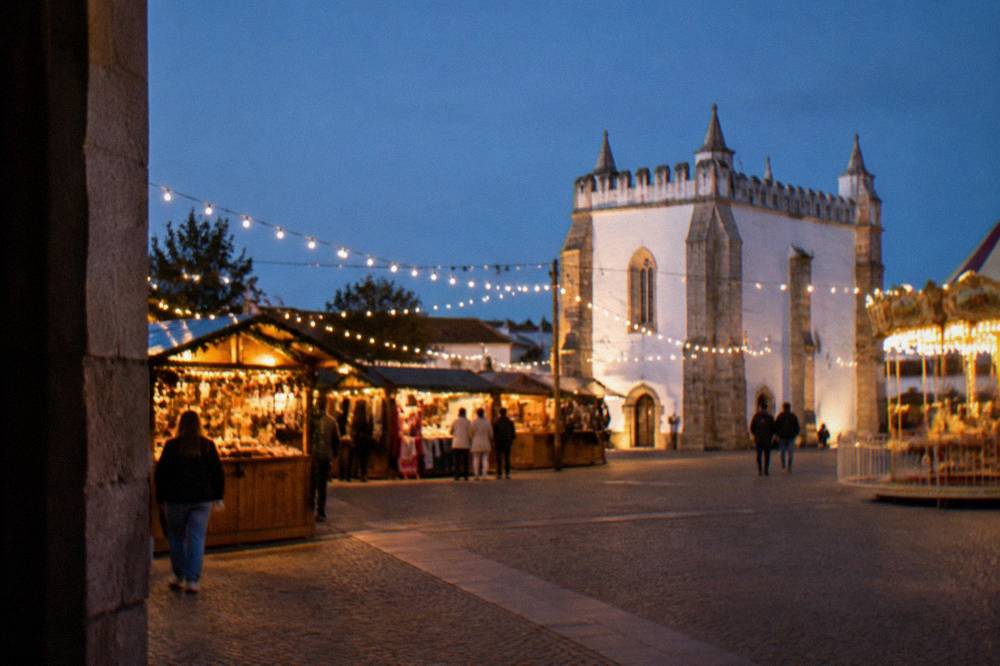
The fair also changes the rhythm of the historic centre. Day-trippers tend to arrive in the morning, see the Sé, the Templo Romano and the Capela dos Ossos, and leave before the evening; during the Feira de São João the incentive is to stay, because the fairground is a short walk from the walls and the atmosphere after dark is the point. A guided walk is one way to bridge the two halves of the day, and the Évora tours overview compares the formats.
Which Religious And Seasonal Traditions Mark The Évora Year?
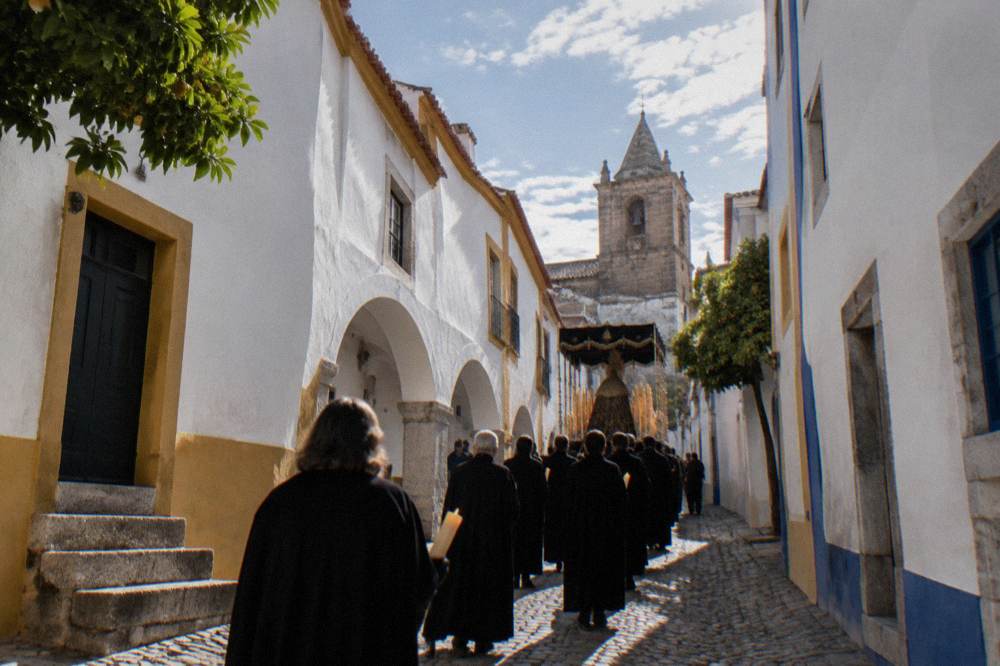
Évora's traditional calendar is anchored by Semana Santa processions in spring and the Natal programme in December, both staged through the city's parish churches and municipal partners, and by annual festivities such as the Festas de Évora. None of these has a confirmed date published for the 2027 edition, so the workable approach is to plan around the season, Easter and Christmas respectively, and confirm the programme on the municipal pages close to the date.
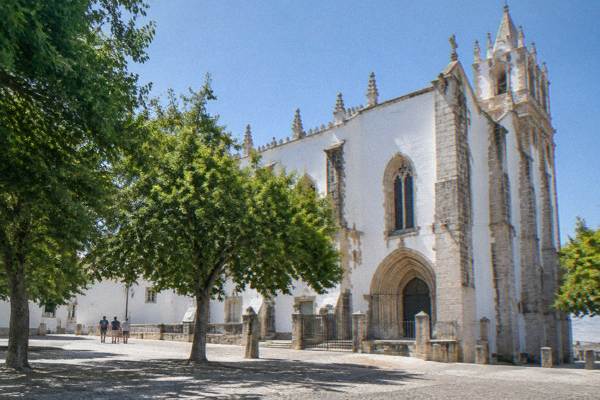
Semana Santa in Évora is a solemn affair rather than a party. Processions move through streets that were laid out long before the 1755 Lisbon earthquake, an earthquake Évora was largely spared, which is why the backdrop survives so intact. The churches that host the services are working buildings: the Igreja de São Francisco, which contains the Capela dos Ossos, holds Masses Monday to Saturday at 11:30 and on Sunday at 9:00 and 12:00, so a visitor can attend or simply time a monument visit around one. The church of São Francisco guide covers the building in detail.
| Tradition | Season | Where Details Are Announced |
|---|---|---|
| Semana Santa | Spring, around Easter | Parish and municipal pages |
| Natal (Christmas programme) | December | Municipal programme |
| Festas de Évora | Annual | Municipal edital |
| Feira de São João | Late June into early July | Municipal edital for the fair |
The December programme turns the historic centre into something quieter but no less atmospheric, with the city's churches and squares as the stage. Because these are traditions rather than ticketed festivals, there is little to book ahead: the practical decisions are where to stay and how early to arrive for anything with limited seating. The where to stay in Évora guide helps with that, and the Évora at night page covers the evening city generally.
What Do Food, Wine And Markets Add To The Évora Calendar?
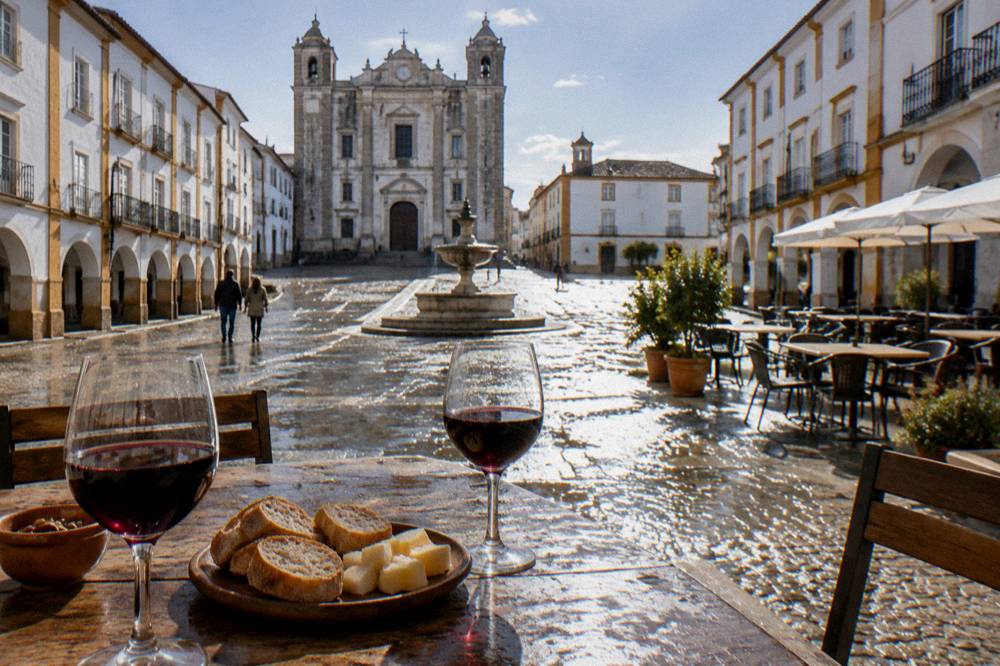
Food and wine run through almost every Évora event, and the city's own calendar of tastes is anchored by the Alentejo's wine culture: regional tastings appear inside several guided tours of the city and its surroundings, market trading fills the Praça do Giraldo area, and the Alentejo's olive oil, cheese and bread traditions each carry their own regional celebrations across the wider district. In Évora itself, the reliable way to taste the region on any date is an organised tasting or a tavern meal.
The Alentejo is Portugal's largest wine region by area, and Évora sits in the middle of it. Wine is not confined to a festival weekend: the Alentejo wine guide explains what the region's reds and whites are actually like, and the Évora food guide covers the pork, bread and cheese traditions that define the tables here. When a festival does run, food stalls follow, and the Feira de São João is as much an eating occasion as a fair.
The Évora Travel Guide editorial desk points visitors to two practical options for tasting without waiting for a festival date. One is the Alentejo Wine and Cork tour from Évora, from $78.78 per person, rated 4.7 from 24 reviews, which pairs winery visits with the cork-oak landscape that shapes the region's economy. The other is the evening food and wine crawl in Évora, from $83.28 per person, rated 4.6 from 19 reviews, which moves between the city's taverns after dark. Both are described on the Évora food tour page.
For a taste of the region's landscape as well as its produce, the medieval sidecar tour of Évora with wine tasting is a distinctive option: from $61.90 per person, rated 4.9 from 16 reviews, it covers the medieval city from a motorcycle sidecar and finishes with a tasting. The sidecar format suits visitors who want the historic streets without a long walking day, and it can be booked for an afternoon before an evening festival event.
What Music, Literature And Performing Arts Happen In Évora?
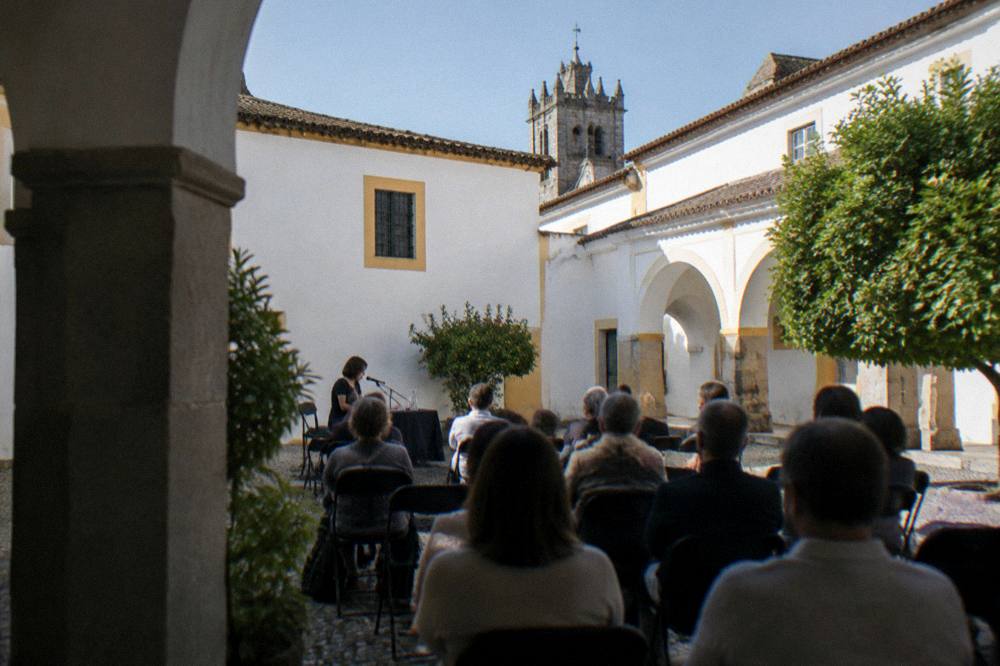
The confirmed performing-arts event of 2026 is the GUADIANA Festival of Afro-Ibero-American Literatures, a first edition running 9 to 11 October with 28 authors from nine countries, staged as part of the Évora 2027 programme. Beyond it, the Capital of Culture preparation programme is filling 2026 with open calls and community projects, and the city's established venues, including the University of Évora and the municipal cultural spaces, host performances year-round.
GUADIANA matters beyond its own three days. A festival of Afro-Ibero-American literatures says something about the direction of the 2027 programme: outward-facing, multilingual and built on the historical ties between Portugal, Africa and Iberia. Twenty-eight authors from nine countries in a city this size means readings and conversations in venues within walking distance of each other, which is the pleasant mechanics of a festival in a compact UNESCO-listed centre.
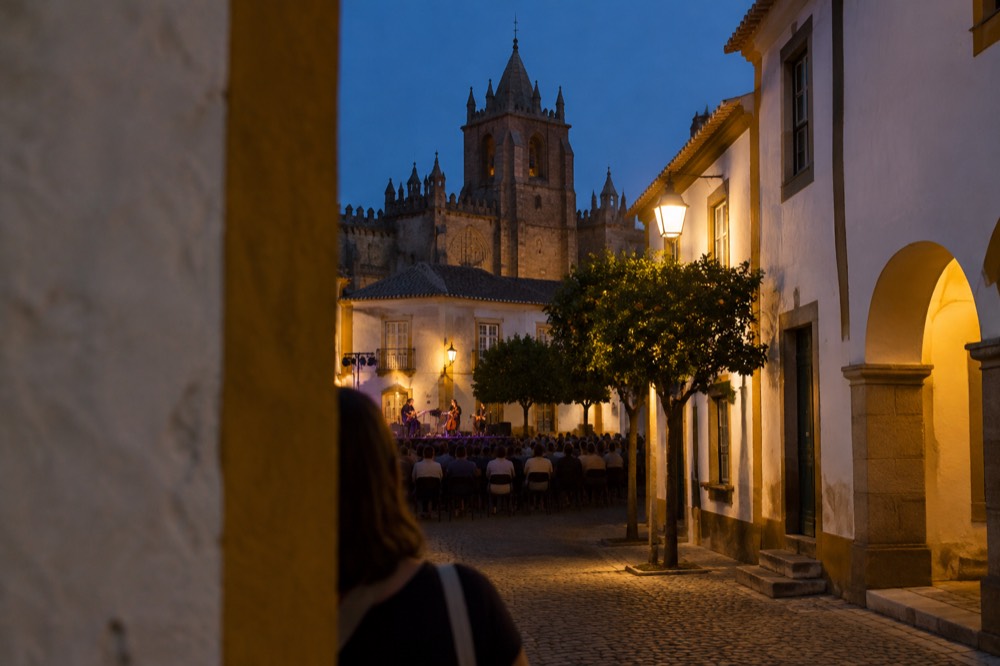
The performing-arts calendar outside that festival weekend is harder to pin to dates, and the honest advice is to check the Évora 2027 programme pages and the municipal culture listings while planning, because events are announced through the year rather than in a single published season. What you can rely on is the setting: the University of Évora's Colegio do Espírito Santo and the city's churches give even a small recital an extraordinary room. The University of Évora guide covers the building's history, which dates to the Jesuit institution founded in 1553.
When Is The Best Time To Visit Évora For Events?
The best event-weather combination is late June into early July for the Feira de São João, when the 1991 to 2020 IPMA normals for the Évora station show a June mean maximum of 30.2 C against July's 33.3 C, and October for the literature festival, when the mean maximum falls to 24.1 C and the month averages 7.7 days with 1 mm or more of rain. Spring and autumn are the comfortable shoulder choices if heat is the concern.
Évora is an inland Alentejo city, and the Atlantic is roughly 90 km away, so there is no sea breeze to soften a summer afternoon. The climate record is blunt about it: the 1991 to 2020 normals for station Évora (number 558) show 31.9 days a year with a maximum of 35 C or more, with the record maximum at 45.4 C on 4 August 2018. August averages 25.0 days at 30 C or above. A summer festival visit is entirely doable, but the day needs to be shaped around morning and evening, with the afternoon given to shade.
| Month (1991 to 2020 normals, Évora station) | Mean Maximum (C) | Mean Minimum (C) | Days With 1 mm+ Rain | Days At 30 C Or More |
|---|---|---|---|---|
| April | 20.7 | 8.5 | 8.0 | 0.3 |
| May | 25.0 | 10.9 | 6.0 | 5.5 |
| June | 30.2 | 13.8 | 1.7 | 15.1 |
| July | 33.3 | 15.6 | 0.6 | 23.7 |
| August | 33.5 | 16.0 | 0.7 | 25.0 |
| September | 29.5 | 14.6 | 3.6 | 13.9 |
| October | 24.1 | 12.3 | 7.7 | 2.9 |
The numbers point to a clear pattern for event planning. The Feira de São João sits at the start of the serious heat, with long dry evenings, which is exactly what an outdoor fair wants. The October literature festival lands in the first month that reliably cools, with rain returning but rarely dominating. For a fuller month-by-month picture, the best time to visit Évora and Évora weather guides carry the whole year, including the winter months, when the mean minimum drops to 4.5 C in January.
How Do You Plan An Évora Trip Around A Festival?
Plan an Évora festival trip around three fixed points: the train, which runs six through Intercidades services a day from Lisboa Oriente taking about 1 hour 40 to 1 hour 45 at 13.90 EUR second class under the timetable valid since 6 September 2026; the monument tickets, which are cheap and mostly need no advance booking; and accommodation inside the walls, which is the thing that actually sells out on festival dates. Book the room first, then the train, and treat everything else as flexible.
The rail link is the backbone of a festival visit from Lisbon. CP's timetable valid since 6 September 2026 lists six through trains a day between Lisboa Oriente and Évora, with no change needed at Casa Branca on these services, and the fare is 13.90 EUR in second class or 18.50 EUR in first class. The Lisbon to Évora by train guide walks through the whole journey, and the Lisbon to Évora page compares train, bus and car.
| Train From Lisboa Oriente | Arrival In Évora |
|---|---|
| 07:02 | 08:47 |
| 09:02 | 10:45 |
| 09:58 | 11:40 |
| 13:35 | 15:13 |
| 17:02 | 18:41 |
| 19:02 | 20:46 |
Monument tickets are the easy part of the budget. The confirmed prices are all modest, and none of the main sites requires elaborate advance planning outside the busiest holiday weeks.
| Site | Ticket | Price |
|---|---|---|
| Sé de Évora | Complete visit: cathedral, cloister, roof terrace, museum | 5.00 EUR, children to 12 free |
| Capela dos Ossos / Igreja de São Francisco | One museum ticket, all areas | 7.00 EUR adult, 5.00 EUR youth to 25 and senior over 65, 15.00 EUR family |
| Museu de Évora | Adult admission, closed Mondays | 8 EUR |
| Évora Ticket | Multi-site pass, excludes the Sé, the Capela dos Ossos and the Museu de Évora | 8 EUR one day, 10 EUR two days, 12 EUR three days |
A municipal tourist tax applies to overnight stays, so check with your hotel about it when booking. For the rest of the practical picture, the Évora parking page matters if you drive in for a fair weekend, and the Évora cost and budget guide sets out what a few days realistically cost. A small-group cultural walking tour with the Capela dos Ossos included, from $77.66 per person and rated 4.9 from 141 reviews, is a good festival-day anchor because it fixes two hours of sightseeing around whatever the evening programme holds.
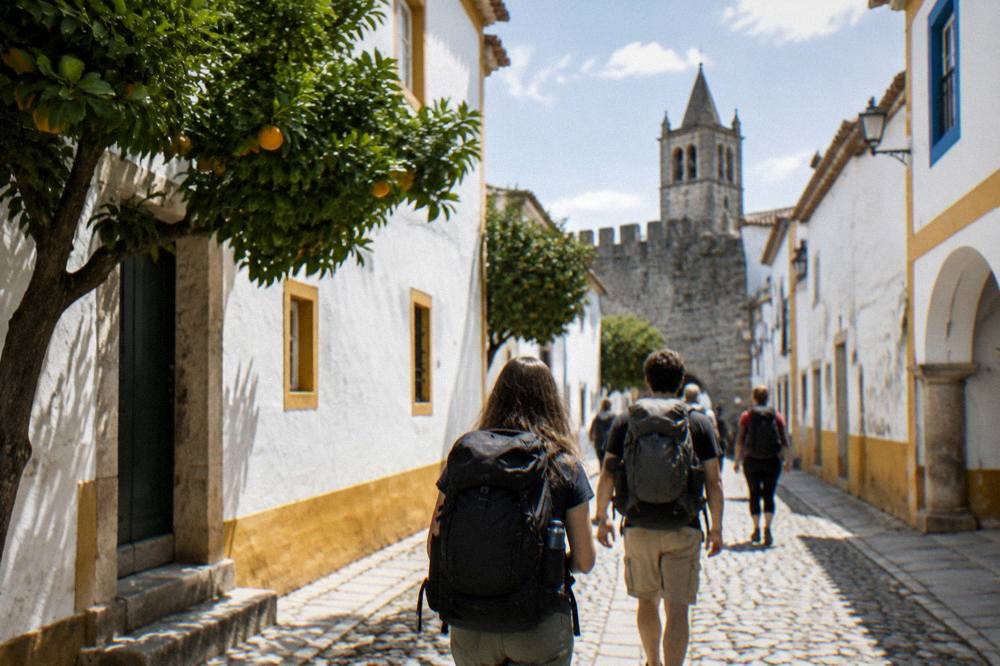
The related walking option deserves a specific mention for festival visitors on a budget. The personal and flexible walking tour of the historic centre runs from $13.51 per person, is rated 4.8 from 105 reviews, and lasts about three hours, which leaves an afternoon free for the fair or the festival programme. Because it is flexible, it can be bent around the day's event schedule, something a fixed-itinerary tour cannot do.
Common Questions About Évora Events And Festivals
What are the main Évora events?
The main confirmed events are the Feira de São João, which ran 23 June to 5 July 2026 at the Rossio de São Brás, and the GUADIANA Festival of Afro-Ibero-American Literatures on 9 to 11 October 2026. From 2027, the European Capital of Culture programme becomes the city's headline cultural calendar.
When is the Feira de São João held?
The 2026 edition ran from 23 June to 5 July on the Rossio de São Brás. The pattern is late June into early July, and the municipal edital sets the exact dates each year, so confirm them on the Câmara Municipal's fair page before booking travel.
What is Évora 2027?
Évora and the Alentejo are European Capital of Culture in 2027, promoted by an Executive Board led by the Municipality of Évora with regional partners. The year 2026 is a preparation programme built on the concept of "Vagar", and the full 2027 programme calendar had not been published as of the 2026 season.
What is the GUADIANA festival?
GUADIANA is the Festival of Afro-Ibero-American Literatures, a first edition held in Évora on 9 to 11 October 2026, bringing 28 authors from nine countries. It is part of the Évora 2027 programme.
Are Évora festivals free?
Traditional events such as the Feira de São João and the Semana Santa processions are staged in public spaces and are watched for free. Ticketed culture, such as the city's monuments, is inexpensive: the Sé's complete visit is 5.00 EUR and the Capela dos Ossos museum ticket is 7.00 EUR for an adult. Festival-specific ticketing depends on each event's own programme.
When should I book for an Évora festival?
Book accommodation first, because rooms inside the historic centre are the scarce resource on festival dates, then book the train, which runs six through services a day from Lisboa Oriente. Monument tickets can generally be handled on the day.
Whatever brings you to Évora, the fair, the literature festival or the first months of a Capital of Culture year, the city rewards arriving with the calendar already in hand.