Évoramonte Castle Day Trip
Évoramonte is a small hilltop village in the Central Alentejo, northeast of Évora, Portugal, known for the castle keep where the peace that ended the Portuguese civil war was signed. This guide covers what the village offers, when to go and how to pair it with Estremoz, Vila Viçosa or Arraiolos.
Short answer
Évoramonte is a small Alentejo hill village a short drive northeast of Évora, best known for its castle keep and the civil-war peace signed there. It works as a half-day stop combined with Estremoz or Vila Viçosa rather than as a full day on its own.
Évoramonte is a small hilltop village in the Central Alentejo, northeast of Évora, Portugal, the inland capital of the district of that name. The place is quiet, small and built almost entirely of stone and whitewash, and its single claim to national fame is a signature: the peace signed at Évoramonte that closed the Portuguese civil war between liberals and absolutists. For a visitor based in Évora it makes a short, unhurried excursion into the rolling plain, and it pairs naturally with the marble towns further east.
Where Is Évoramonte And What Kind Of Day Trip Does It Make?
Évoramonte sits on a low hill in the Central Alentejo, northeast of Évora, in the same district and the same sweeping plain of cork oaks, wheat fields and olive groves. The village is small enough to walk end to end in a relaxed morning, its lanes circling a stone castle keep, and it makes a half-day stop rather than a destination that fills a full day alone. Most visitors fold it into a loop that takes in Estremoz, Vila Viçosa or Arraiolos on the same drive.
That loop logic is the whole point of Évoramonte. The Central Alentejo east and north of Évora is a chain of small towns, each an hour or less apart on quiet roads, and Évoramonte is one of the smallest and least commercial of them. There is no large museum, no ticket queue, no evening economy to speak of. What there is, in the words repeated by every general description of the village, is a castle with an unusual profile, a handful of churches and a main square where the pace of the Alentejo asserts itself completely.
The village's place in Portuguese history is out of all proportion to its size. After years of conflict between the liberal constitutionalists and the absolutist supporters of King Miguel, the two sides signed the peace known as the Concession of Évoramonte, and the signing happened here, in this minor hill village rather than in Lisbon or Porto. That single document ended the war, sent Miguel into permanent exile and settled the constitutional monarchy's course for the rest of the century. The castle and the village carry that memory, and it is the reason Portuguese schoolbooks mention the place at all.
For planning purposes, treat Évoramonte as a stop of a couple of unhurried hours: the keep, the church, the square, the views over the plain from the hilltop. Then move on. The town's own tourist infrastructure is minimal, which is precisely its charm, and the practical base for the day remains Évora itself, with its UNESCO-listed historic centre described in the Évora UNESCO historic centre guide.
| Évoramonte at a glance | What the sources support |
|---|---|
| Region | Central Alentejo, in the Évora district |
| Direction from Évora | Northeast, on the Alentejo plain |
| Setting | Small hilltop village, stone and whitewash |
| Best known for | The castle keep and the civil-war peace |
| Scale | A couple of unhurried hours on foot |
| Best combined with | Estremoz, Vila Viçosa or Arraiolos |
What Was The Peace Of Évoramonte And Why Does It Matter?
The peace signed at Évoramonte ended the Portuguese civil war between the liberal forces supporting Queen Maria II and the absolutist forces of King Miguel, and it did so on terms that sent Miguel into permanent exile and confirmed the constitutional charter. A treaty of that weight signed in a village of a few hundred people made Évoramonte a fixed point in national memory, and the castle where it was concluded is now the village's principal monument.
The civil war was fought over the shape of the Portuguese crown: a constitutional monarchy on the liberal side, an absolute throne on the other. The fighting ended not in a great battle but in a negotiated capitulation, and the document that did it took the village's name. General histories of Portugal treat the Concession of Évoramonte as the moment the constitutional settlement became irreversible, and the village has traded on that moment ever since.
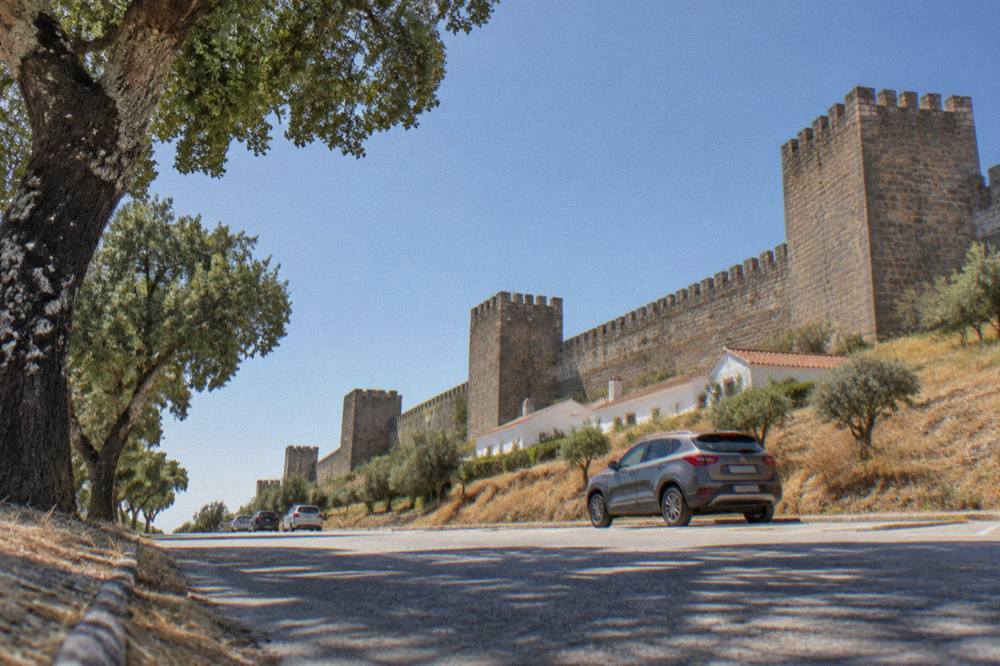
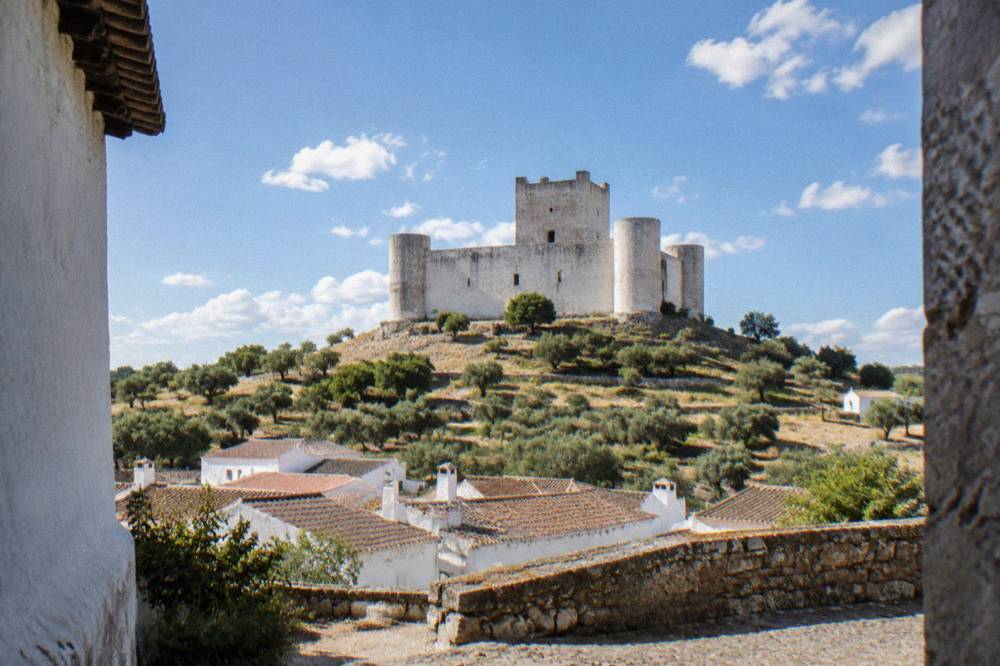
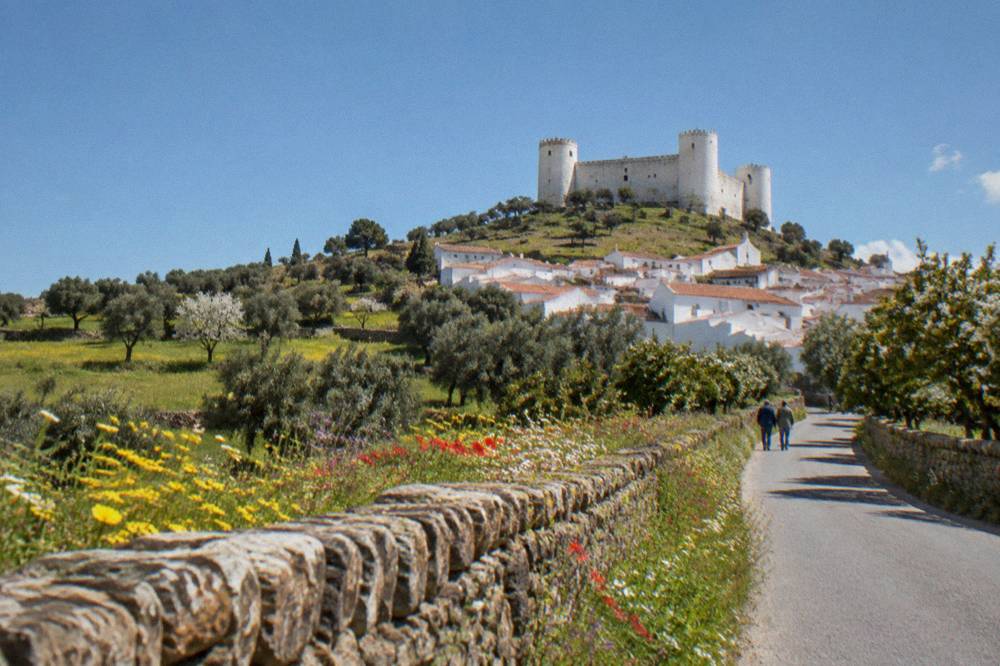
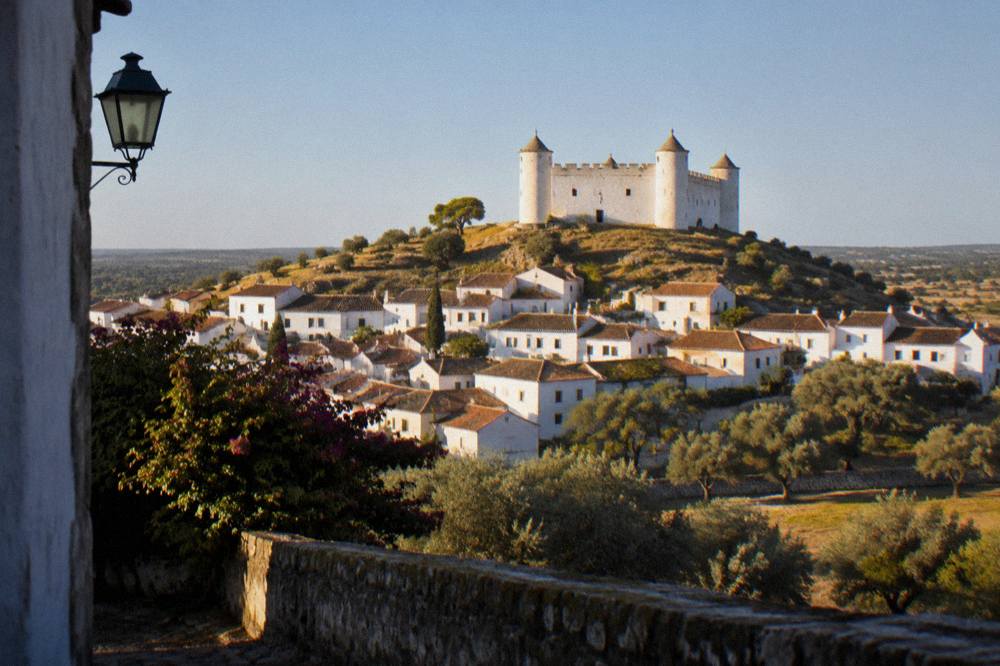
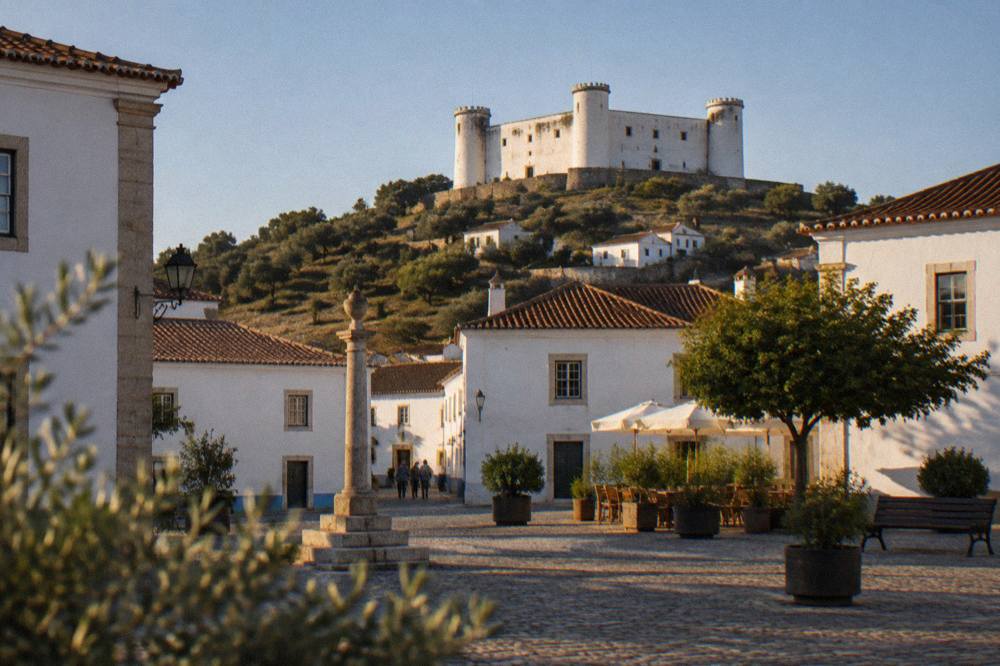
What survives on the ground is a castle whose silhouette is unlike the castles of neighbouring towns. Where Estremoz and Vila Viçosa carry heavy medieval walls and ducal palaces, Évoramonte's monument is a compact keep with a distinctive pentagonal plan, the kind of structure that photographs well from the plain below and rewards the short climb around it. No ticket price, opening hour or interior detail for the castle has been verified in the sources this site uses, so the honest planning advice is simple: check the municipal notices before setting out, and treat the exterior, the hilltop and the village lanes as the certain part of the visit.
The history does not stop at the peace. The village's wider setting is the Central Alentejo, a region whose story runs from Roman Ebora through Moorish rule, ended at Évora in 1165, to the golden age that earned Évora its UNESCO inscription in 1986 under criteria (ii) and (iv). Évoramonte belongs to the same landscape of hilltop strongpoints, and a day that pairs it with Évora's Roman temple and cathedral gives the full sweep, ancient to modern, inside one district.
What Do You Actually See In The Village Itself?
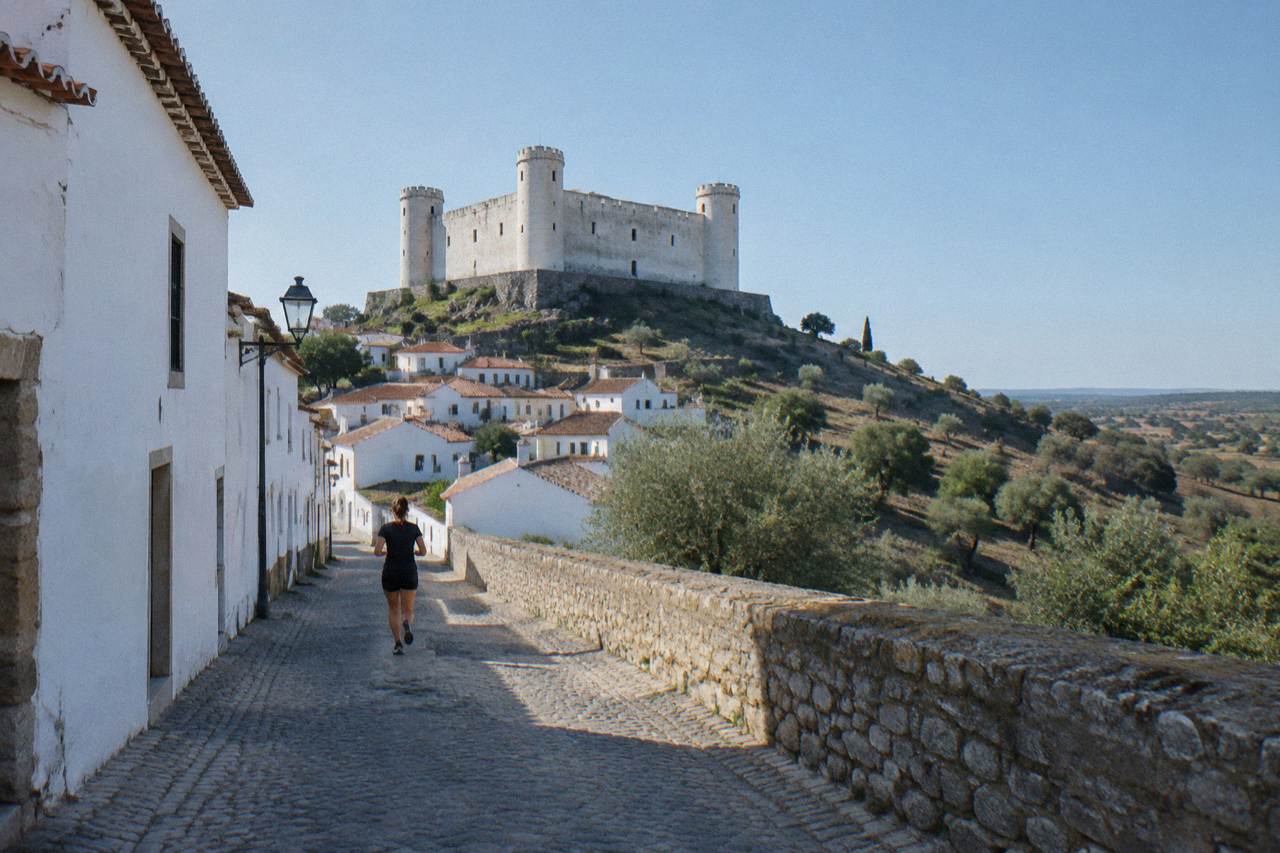
The visit is a compact circuit: the castle keep with its pentagonal silhouette, the small parish church, the main square with its plain civic architecture, and the lanes of whitewashed houses that ring the hill, all of it walkable at the pace the Alentejo imposes. There is no museum circuit and no ticketed attraction beyond the castle itself, so the pleasure of the place is architectural and atmospheric rather than curated. Expect stone, silence, bougainvillea and long views over the plain.
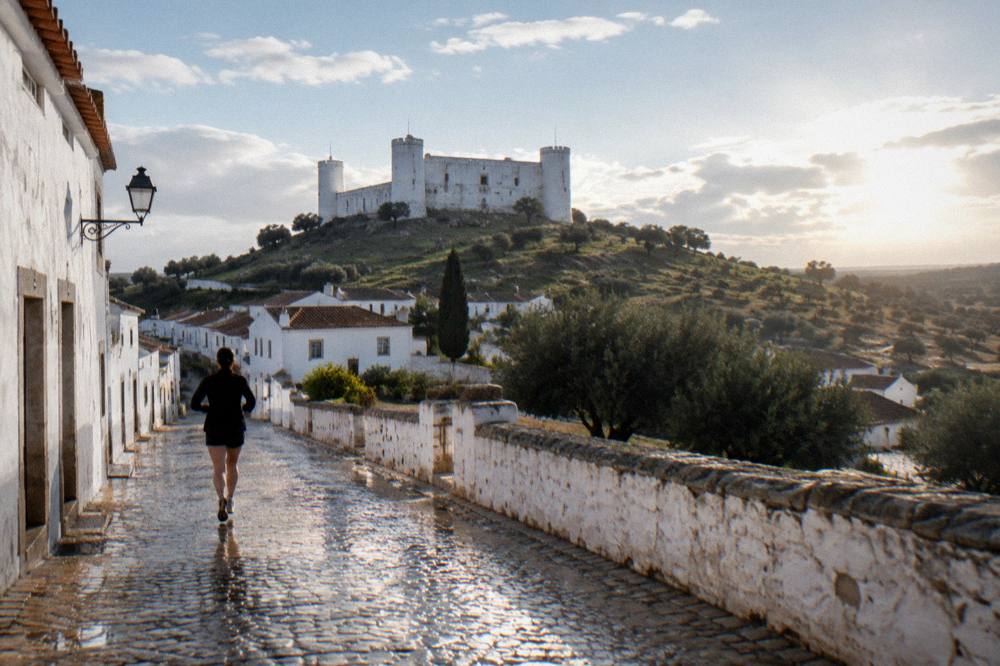
The keep is the anchor. Its shape is what people remember, and the walk around its base, taking in the hillside below, is the village's best quarter hour. From the upper lanes the Alentejo opens out in every direction: cork oaks in their low scatter, ploughed fields going pale in summer, the occasional white town on a distant rise. On a clear evening the light across the plain is the reason photographers make the drive.
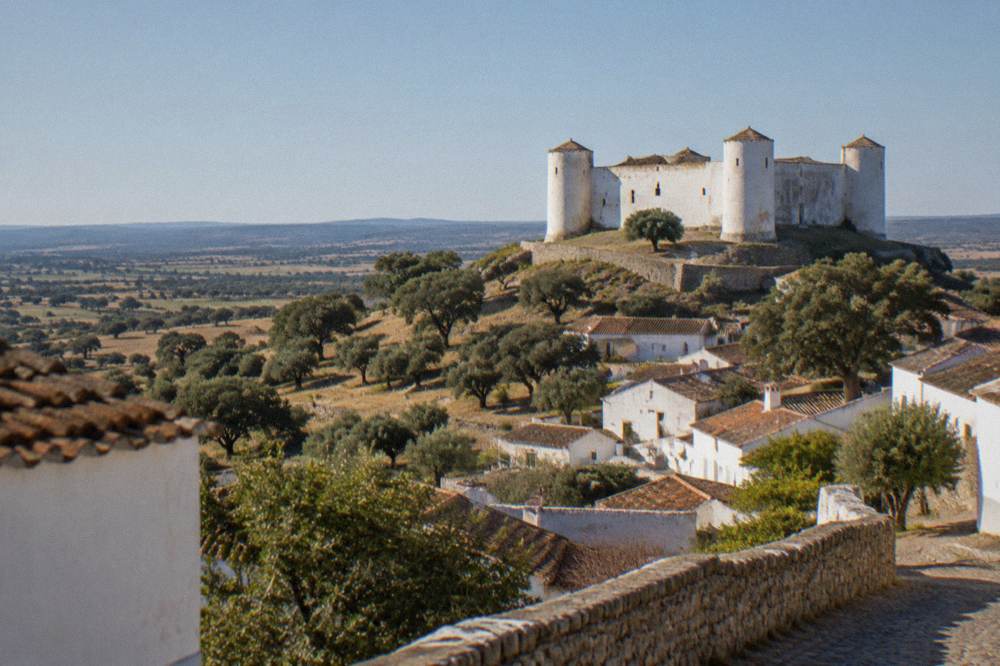
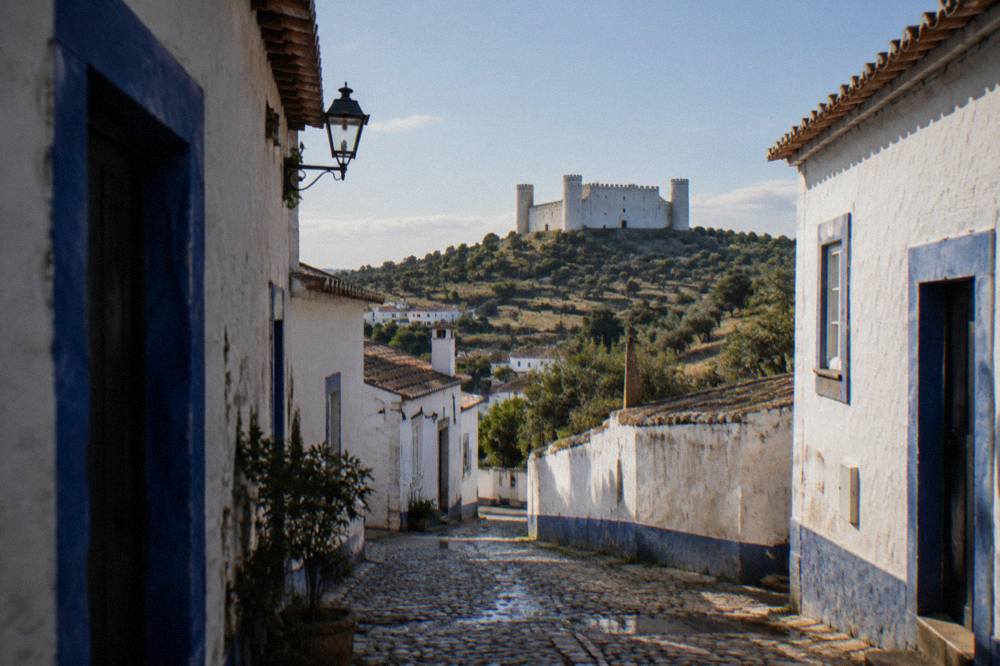
The rest of the circuit takes in the parish church, the small squares and the residential lanes where the blue and yellow trim around doors and windows follows the region's conventions. Village bars and small shops keep country hours; nothing about their schedules has been verified here, so plan food in Évora before departure or in one of the larger towns on the loop. The Évora food guide covers the regional dishes worth knowing before a day in the countryside, from migas to the pork and bread soups of the Alentejo.
For travellers who want the region's story told rather than self-assembled, the marble country to the east has the deepest guided offering. The Marble Tour in Vila Viçosa, from $28.67 per person and rated 4.9 from 324 reviews, walks the quarries and landscape that made the ducal town what it is, and it can be booked with free cancellation before the day. Check availability if a guided thread through the marble towns appeals more than a self-drive.
How Do You Get To Évoramonte From Évora?
The realistic way to reach Évoramonte is by rental car or by a private guided tour from Évora, driving northeast across the plain on quiet regional roads; no train serves the village, and no bus timetable or fare for it has been verified in the sources this site publishes. The drive is part of the appeal, crossing the cork and wheat country that defines the Central Alentejo. Visitors without a car should either book a private guide or treat Évoramonte as part of a guided loop.
Évora itself is the region's rail head. CP's timetable valid since 6 September 2026 lists six through Intercidades trains a day from Lisboa Oriente to Évora, taking about 1 hour 40 to 1 hour 45, with a second-class fare of 13.90 EUR and first class at 18.50 EUR. That connects the Alentejo capital to the country, but the line stops there: the villages of the plain, Évoramonte included, are road country.
| Way of reaching Évoramonte | What to expect |
|---|---|
| Rental car from Évora | Quiet regional roads northeast across the plain |
| Private guided tour from Évora | Driver-guide, village stops folded into a marble-country loop |
| Train | Serves Évora only; no line to Évoramonte |
| Bus | No verified timetable or fare; do not plan on it |
| From Lisbon | Train or car to Évora first, then onward by road |
Drivers should read the Évora car rental guide and the Évora parking guide for the city end of the trip. In the villages, parking is a matter of the small square and common sense; no charge or restriction for Évoramonte has been verified, and none is claimed here.
When Is The Best Time Of Year For An Évoramonte Day Trip?
Spring and autumn are the best seasons for Évoramonte, because the Alentejo plain is genuinely hot in summer: IPMA's 1991 to 2020 normals for the Évora station show a July mean maximum of 33.3 C and an August mean of 33.5 C, with 31.9 days a year reaching 35 C or more. April and October sit far below those figures with modest rain, and May, late September and October give the most comfortable walking weather for an exposed hill village.
The climate table deserves reading before any summer plan. The station data for Évora, the nearest long-record station to Évoramonte, show June averaging 15.1 days at 30 C or more and August 25.0 such days, with the all-time record maximum of 45.4 C set on 4 August 2018. The heat on an exposed hilltop with stone underfoot is a different experience from the same numbers on a coastal street, and the Atlantic is roughly 90 km away: there is no sea breeze coming to the rescue. The wider set of guides lives on Évora Travel Guide.
| Month (IPMA 1991-2020, Évora station) | Mean max (C) | Mean min (C) | Days with 1 mm+ rain |
|---|---|---|---|
| March | 18.7 | 6.9 | 7.5 |
| April | 20.7 | 8.5 | 8.0 |
| May | 25.0 | 10.9 | 6.0 |
| June | 30.2 | 13.8 | 1.7 |
| July | 33.3 | 15.6 | 0.6 |
| August | 33.5 | 16.0 | 0.7 |
| September | 29.5 | 14.6 | 3.6 |
| October | 24.1 | 12.3 | 7.7 |
Winter has its own case. The normals show January and February means of 9.3 C and 10.3 C with rain on roughly 8.6 and 7.0 days respectively, and the record minimum of -4.2 C was recorded on 4 December 1998 and again on 23 January 2000. A cold, bright winter day on the plain can be beautiful, but the short daylight and the chance of rain argue for keeping the loop tight. The full picture is in the Évora weather guide, and the seasonal breakdowns in the guides to Évora in spring, Évora in summer and Évora in autumn.
Can You Combine Évoramonte With Estremoz, Vila Viçosa Or Arraiolos?
Yes, and that is how most visitors should do it: Évoramonte is a short stop on a loop through the marble and craft towns of the Central Alentejo, with Estremoz about 45 km from Évora, Vila Viçosa about 60 km and Arraiolos about 20 km in the other direction. A realistic day takes Évoramonte plus one or two of these, not all of them, with the marble pair to the east making the most coherent single circuit.
Estremoz, about 45 km from Évora, is the natural first partner: a marble town with a hilltop castle, a famous weekly market tradition and the rosado marble that lines the region's buildings. Vila Viçosa, about 60 km, adds the ducal palace of the House of Bragança and the quarry landscape that produced it. Arraiolos, about 20 km, is the needlework town, its embroidered carpets the best-known craft of the Alentejo, and it sits west rather than east, so it belongs to a different loop. The best day trips from Évora guide lays out the full menu.
| Loop partner | Distance from Évora | Direction | What it adds |
|---|---|---|---|
| Estremoz | About 45 km | East | Marble town, castle hill, market tradition |
| Vila Viçosa | About 60 km | East | Ducal palace, marble quarries |
| Arraiolos | About 20 km | Northwest | Carpet embroidery, hilltop round village |
| Elvas | About 80 km | Southeast | Border fortress town |
| Monsaraz | About 40-45 km | Southeast | Walled village over the Alqueva lake |
The guided options concentrate on the marble pair. The Walking Tour in Estremoz, from $28.67 per person and rated 4.8 from 19 reviews, covers the town's heritage on foot, and the second Marble Tour in Vila Viçosa, from $28.14 per person and rated 4.8 from 82 reviews, takes the marble trail from landscape to archaeology.
For travellers starting from the capital rather than from Évora, the Lisbon to Évora guide and the Évora day trip from Lisbon itinerary cover the gateway logistics, including the train times listed above.
What Does A Day In The Marble Country Cost?
The verified costs sit on the guided side: the two Vila Viçosa marble tours run from $28.67 and $28.14 per person and the Estremoz walking tour from $28.67, all priced in US dollars on their listings, with ratings from 324, 82 and 19 reviews respectively. No castle ticket price for Évoramonte and no bus fare for the village has been verified, so the honest budget is the tour or the car, plus food, with nothing invented in between.
The table below compares the guided options that fit this loop. Prices are per person as shown on the operator's live listing.
| Guided option | From (USD) | Rating | Reviews | Length |
|---|---|---|---|---|
| Marble Tour in Vila Viçosa (marble trail) | $28.67 | 4.9 | 324 | See card |
| Marble Tour in Vila Viçosa | $28.14 | 4.8 | 82 | 2 hours |
| Walking Tour in Estremoz | $28.67 | 4.8 | 19 | See card |
Back in Évora, the verified sight prices are worth knowing for the days around the trip: the Sé de Évora complete-visit ticket at 5.00 EUR, the Capela dos Ossos museum ticket at 7.00 EUR for an adult, the Museu de Évora at 8 EUR, and the Évora Ticket at 8 EUR for one day, 10 EUR for two and 12 EUR for three, noting that the Évora Ticket does not include the Sé, the Capela dos Ossos or the Museu de Évora. The full breakdown is in the Évora tickets and passes guide, and the wider cost picture in the Évora cost and budget guide.
Is An Évoramonte Day Trip Worth It?
For visitors with a car and a second or third day in the Alentejo, yes: Évoramonte is a genuinely quiet hill village with a castle tied to one of the country's defining peace settlements, and it costs little in time or money to see. For visitors with only one day, no: a single day belongs to Évora's own UNESCO-listed centre, and Évoramonte only earns its place once the cathedral, the Capela dos Ossos and the Roman temple have been seen.
The honest ranking is that simple. The one day in Évora itinerary and the what to do in Évora for a day page handle the first-visit case, and the is Évora worth a day trip from Lisbon question answers itself for the marble country beyond. Évoramonte is the second helping: for the traveller who has already walked the walled city and wants the plain, the peace-signing village and the marble towns, it delivers a day of the Alentejo at its least performed.
One forward-looking note belongs here. Évora and the Alentejo are European Capital of Culture in 2027, with a preparatory 2026 programme built on the concept of "Vagar"; the full 2027 calendar is not yet published. A region-wide culture year of that scale tends to reach well beyond the city walls, so anyone planning a 2027 trip through the marble country should watch the programme announcements before fixing dates.
Common Questions About Évoramonte
Where is Évoramonte?
Évoramonte is a small hilltop village in the Central Alentejo, northeast of Évora, Portugal, within the Évora district. It sits on the Alentejo plain, roughly 90 km inland from the Atlantic coast.
Why is Évoramonte famous?
The village is famous for the peace signed there, the Concession of Évoramonte, which ended the Portuguese civil war between the liberal and absolutist sides and sent King Miguel into exile. Its castle keep, with a distinctive pentagonal silhouette, is the village's principal monument.
How far is Évoramonte from Évora?
Évoramonte lies northeast of Évora on the Alentejo plain, a short drive on quiet regional roads. No verified distance figure for the village is published by the sources this site uses, so plan by direction and by the loop towns: Estremoz about 45 km and Vila Viçosa about 60 km from Évora.
Can you visit Évoramonte without a car?
Not easily. No train serves the village, and no bus timetable or fare has been verified. The practical car-free options are a private guided tour from Évora or a guided loop through the marble towns that includes a village stop.
What is the best time of year to visit Évoramonte?
Spring and autumn. IPMA's 1991 to 2020 normals for the Évora station show July mean maxima of 33.3 C and August of 33.5 C, with 31.9 days a year at 35 C or more, so the exposed hilltop is best avoided in high summer. May, late September and October offer the most comfortable walking weather.
Should Évoramonte be a day trip from Lisbon?
Not on its own. Lisbon is about 130 km from Évora, and the sensible pattern is a train or car to Évora first, then onward into the marble country. A Lisbon-based visitor with a single day should follow the Évora day trip itinerary instead.
The Évora Travel Guide editorial desk rates Évoramonte as a fine second-day excursion: short, quiet, historically loaded and best taken with the marble towns of Estremoz and Vila Viçosa on the same loop through the Central Alentejo plain.