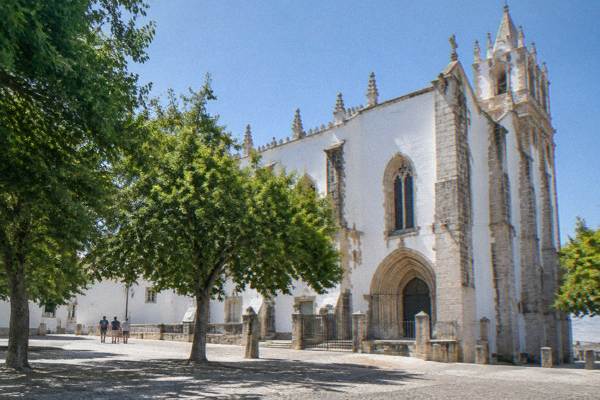
Évora In Spring
Spring is the season when the Alentejo plain around Évora turns green, the summer heat is still months away, and the city's monuments run on their long opening hours. Here is what the climate record, the ticket pages and the train timetable actually say about March, April and May.
Short answer
Spring, and April in particular, is one of the most comfortable times to visit Évora: the IPMA 1991-2020 normals put April's mean maximum at 20.7 C against 33.3 C in July, with rain on about 8 days in the month. Monuments are on summer hours, the surrounding countryside is at its greenest, and the crowds of July and August have not yet arrived.
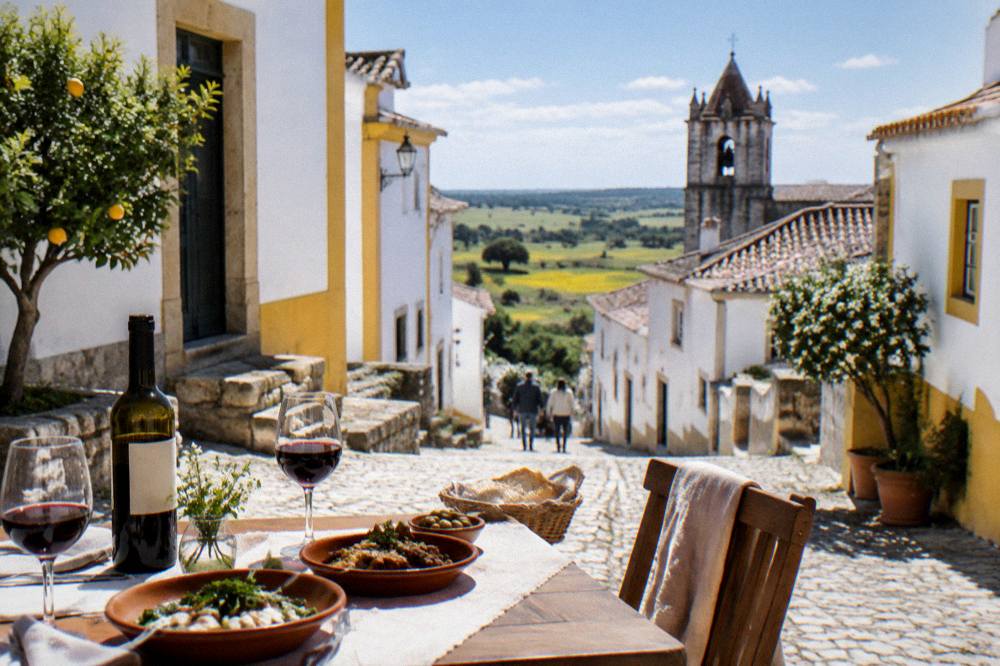
Spring arrives early in the Alentejo. While northern Europe is still pulling coats out of cupboards, the plain around Évora, the inland capital of the Alentejo region of Portugal, is already green, the cork oaks are shading new grass, and the city's whitewashed streets are warm enough for lunch outdoors by late March. The IPMA 1991-2020 climate normals for the Évora station record a March mean maximum of 18.7 C, rising to 20.7 C in April and 25.0 C in May, which places spring squarely between the cool, wet winter and a summer in which the thermometer tops 30 C on an average of 23.7 July days. This guide works through what those numbers mean for a visit, what the ticket pages and the train timetable say, and which days out from the city make most sense while the countryside is still soft.
What Is Spring Weather Like In Évora?
Spring in Évora is mild, progressively drier and warming fast: the IPMA 1991-2020 normals for the Évora station give March a mean temperature of 12.7 C, April 14.6 C and May 18.0 C, with mean maxima climbing from 18.7 C to 20.7 C to 25.0 C. Rain falls on about 7.5 days in March, 8.0 in April and 6.0 in May, and no 35 C day is recorded in any of the three months on average.
Those figures come from the official Portuguese weather service's 1991-2020 normals for station number 558, which sits at 38.5365 N, 7.8880 W and an altitude of 247.6 m, so they describe the city itself rather than a coastal station. That distinction matters more than most visitors expect. Évora is roughly 130 km from the Atlantic, on an open plain, so spring warms quickly and there is no sea breeze to hold the afternoon back. The same exposure means the nights stay cool: an April mean minimum of 8.5 C is jacket weather after sunset, even when the afternoon reached the low twenties.
The month-by-month detail is worth reading before choosing dates. March is the most changeable of the three, with 60.8 mm of rain across the month and a mean maximum still under 20 C. April is barely wetter in total, 62.1 mm, but the rain is spread across about 8 days, so a spring shower is a realistic part of any April plan rather than a surprise. May is the turning point: precipitation drops to 46.6 mm, the mean maximum reaches 25.0 C, and the normals record an average of 5.5 days at 30 C or more, the first appearance of genuine summer heat.
| Month | Mean temp | Mean max | Mean min | Rain (mm) | Days with 1 mm+ rain | Days at 30 C+ |
|---|---|---|---|---|---|---|
| March | 12.7 C | 18.7 C | 6.9 C | 60.8 | 7.5 | 0.0 |
| April | 14.6 C | 20.7 C | 8.5 C | 62.1 | 8.0 | 0.3 |
| May | 18.0 C | 25.0 C | 10.9 C | 46.6 | 6.0 | 5.5 |
Every figure in that table is a 1991-2020 average for the Évora station, not a forecast, and any individual week can sit well above or below it. The record books for the station show how wide the swing can be: the highest maximum ever recorded there is 45.4 C on 4 August 2018, and the lowest minimum is -4.2 C, recorded on 4 December 1998 and again on 23 January 2000. Neither extreme belongs to spring, but they frame a continental climate that does not do halfway. For a fuller month-by-month picture, including the summer figures that explain why spring is so prized, see the Évora weather guide and the broader best time to visit Évora.
Is April A Good Month To Visit Évora?
April is one of the two best months in the Évora year, and the climate record is the reason: a 20.7 C mean maximum with a 0.3-day average of 30 C weather, 62.1 mm of rain spread over about 8 days, and monument opening hours running at their longest. The green season on the Alentejo plain peaks between March and May, and the crowds that fill the city in July and August have not yet arrived.
The practical case for April rests on what the heat does to this city later in the year. The same normals that give April its gentle 20.7 C mean maximum give July 33.3 C and August 33.5 C, with 31.9 days across the year at 35 C or more, almost all of them between June and September. Évora's historic centre is stone and whitewash, its two most famous interiors, the Sé and the Capela dos Ossos, involve queues on outdoor streets, and the megalithic sites that surround the city offer no shade at all. In April all of that is pleasant rather than punishing.
April also catches the city before the festival calendar takes over. Évora and the Alentejo are a European Capital of Culture in 2027, and the 2026 programme is a preparation year built around the concept of "Vagar", with events such as the GUADIANA festival of Afro-Ibero-American literatures running 9 to 11 October 2026. Spring sits before that autumn cluster and before the Feira de São João, which in 2026 ran 23 June to 5 July at the Rossio de São Brás. An April visit gets the city in its ordinary rhythm, with the historic centre of the UNESCO listing, inscribed in 1986 under criteria (ii) and (iv), doing what it does on any given Tuesday.
The one honest caution about April is the rain. Eight days with at least 1 mm is not a washout, but it is not the Algarve in July either, and the showers that do arrive can be heavy. The saving grace of Évora is that the city's core is compact and its indoor options are unusually strong for a town of about 53,000 people: the Museu de Évora, the cathedral's museum and cloister, and the Capela dos Ossos complex can absorb a wet afternoon without difficulty, and the Évora rainy day guide covers the rest. A private guide also shrinks a wet day, because a local adjusts the route around the weather rather than following a fixed script.
What Are The Spring Opening Hours And Ticket Prices In Évora?
Spring runs on the monuments' longest hours: the Capela dos Ossos and Igreja de São Francisco complex is open 9:00 to 18:30 once summer legal time begins, the Sé de Évora is 9:00 to 17:00 with a complete-visit ticket at 5.00 EUR, and the Capela dos Ossos museum ticket is 7.00 EUR for an adult. The Museu de Évora charges 8 EUR and is closed on Mondays, so a Monday arrival needs a different plan.
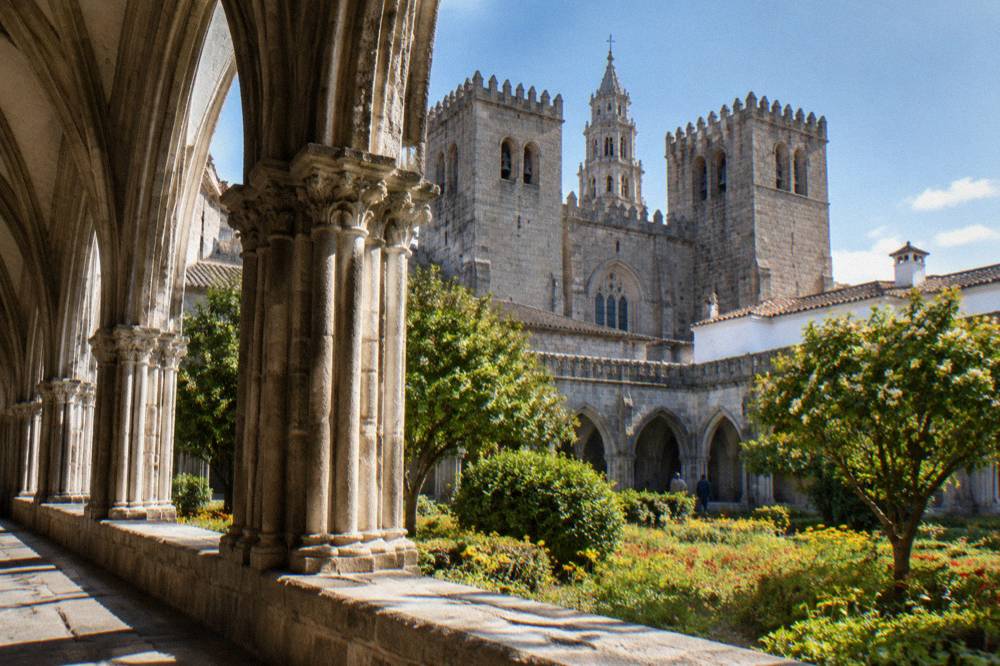
The detail that catches visitors out is the split between the two headline monuments. The Igreja de São Francisco's own page lists a single museum ticket covering the Capela dos Ossos and all its associated spaces, at 7.00 EUR for an adult, 5.00 EUR for youth up to 25 and seniors over 65, and 15.00 EUR for a family of two adults plus youths, with summer hours of 9:00 to 18:30 and winter hours of 9:00 to 17:00. The cathedral's ticket page lists one complete-visit ticket at 5.00 EUR covering the church, the cloister, the roof terrace and the museum, with children up to 12 free, and hours of 9:00 to 17:00. Two of Évora's three essential sights, in other words, cost 12.00 EUR in official-site prices to see in full.
| Monument | Adult price | Concessions | Hours | Closed |
|---|---|---|---|---|
| Sé de Évora (complete visit) | 5.00 EUR | Children up to 12 free | 9:00-17:00 | 24 Dec afternoon, 25 Dec, 1 Jan |
| Capela dos Ossos / Igreja de São Francisco | 7.00 EUR | Youth to 25 and seniors over 65 5.00 EUR, family 15.00 EUR | Summer 9:00-18:30, winter 9:00-17:00 | 1 Jan, Easter Sunday, 24 Dec afternoon, 25 Dec |
| Museu de Évora | 8 EUR | Youth 13-24, seniors over 65 and family ticket 50% off, free to age 12 | Tue-Sun 9:30-13:00 and 14:00-17:30 | Mondays, 1 Jan, Easter Sunday, 1 May, 29 June, 25 Dec |
| Évora Ticket | 8 EUR one day, 10 EUR two days, 12 EUR three days | Free to age 12 | Varies by site | Varies by site |
One Easter caveat belongs in any spring guide: Easter Sunday is a closing day at both the Capela dos Ossos and the Museu de Évora, and it falls in spring by definition. The Évora Ticket, the multi-site pass for the city's Cidade-Museu network, costs 8 EUR for one day, 10 EUR for two and 12 EUR for three, but it does not include the Sé, the Capela dos Ossos or the Museu de Évora, so it complements rather than replaces the tickets above. The Convento dos Lóios currently shows no bookable price on the municipal page, so check at the door rather than assuming.
A guided visit bundles several of these tickets and the queueing into one transaction, which is worth considering on a short spring break when a rainy day can eat an afternoon.
How Do You Get To Évora In Spring?
The train is the standard spring route from Lisbon: CP's Intercidades timetable, valid since 6 September 2026, lists six through trains a day from Lisboa Oriente to Évora taking about 1 hour 40 to 1 hour 45, with a second-class fare of 13.90 EUR and first class at 18.50 EUR. Departures from Oriente run at 07:02, 09:02, 09:58, 13:35, 17:02 and 19:02, arriving in Évora from 08:47 to 20:46.
Those six trains call at Entrecampos, Sete Rios, Pragal, Pinhal Novo, Vendas Novas and Casa Branca before Évora, and the through services listed in the CP PDF need no change at Casa Branca. The first arrival of the day, 08:47, is early enough for a full first day in the city, and the 17:02 departure from Oriente arriving 18:41 suits a final afternoon in Lisbon followed by dinner in Évora. The fare table is CP's own, valid for 2026, and the timetable is the one in force since 6 September 2026, so check the CP page for the day of travel before relying on any single departure.
| Lisboa Oriente departure | Évora arrival | Fare (2nd class) | Fare (1st class) |
|---|---|---|---|
| 07:02 | 08:47 | 13.90 EUR | 18.50 EUR |
| 09:02 | 10:45 | 13.90 EUR | 18.50 EUR |
| 09:58 | 11:40 | 13.90 EUR | 18.50 EUR |
| 13:35 | 15:13 | 13.90 EUR | 18.50 EUR |
| 17:02 | 18:41 | 13.90 EUR | 18.50 EUR |
| 19:02 | 20:46 | 13.90 EUR | 18.50 EUR |
Coach services also connect Lisbon and Évora, and direct coaches run from Humberto Delgado airport, but no verified fare or timetable for them can be quoted here, so check the operator's page before booking. Driving is the other common option, about 130 km from Lisbon, and the Lisbon to Évora by train, Lisbon to Évora by bus and Lisbon to Évora by car guides cover each route in detail. Spring adds one small advantage to every mode: the A6 and the railway were running normal published schedules as of October 2026, with no verified works or replacement buses on the Lisbon to Évora line.
What Is There To Do In Évora In Spring?
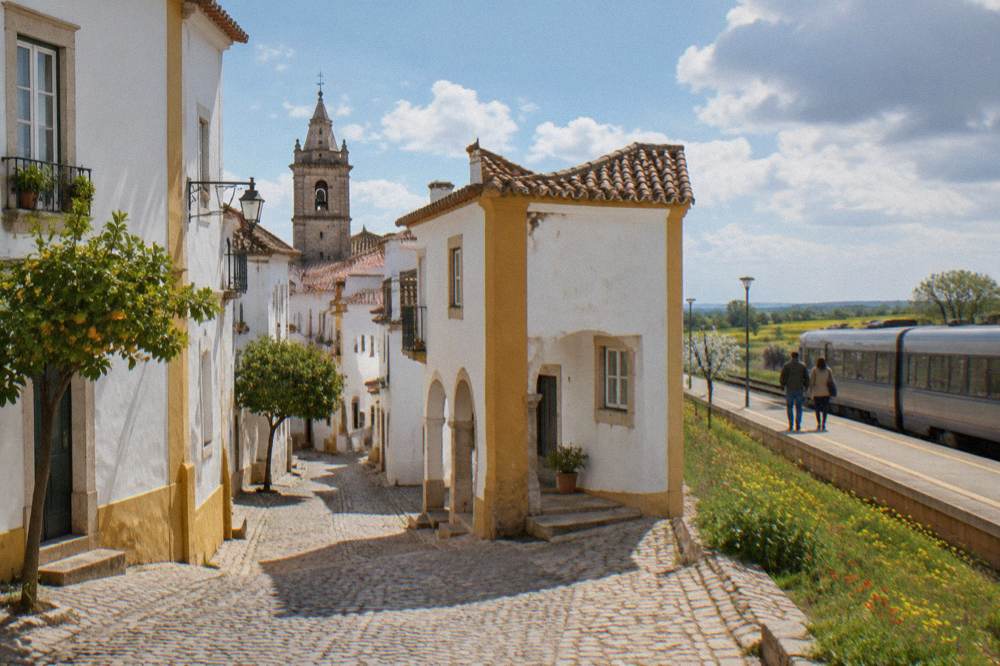
Spring is the season for everything in Évora that involves being outdoors: the megalithic sites on the surrounding plain, the walk along the Água de Prata aqueduct, the Templo Romano precinct, and the city's streets and squares at their greenest. The Almendres Interpretation Centre in Guadalupe keeps summer hours of 10:00 to 18:00 from 1 May, and the historic centre itself, a UNESCO site since 1986, is compact enough to cover on foot in a long weekend.
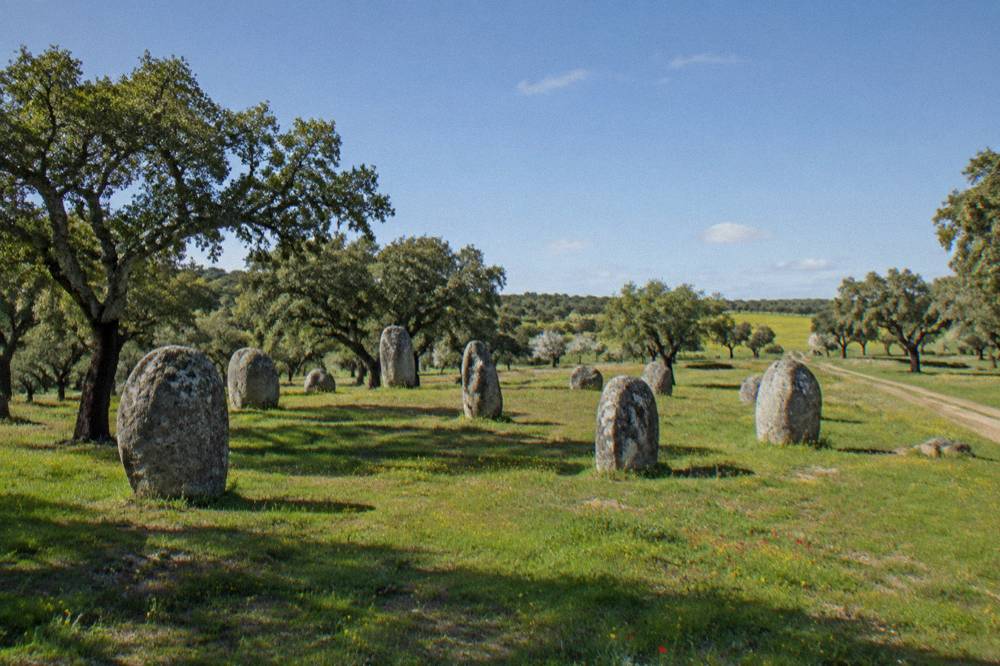
The megalithic circuit is the clearest spring winner. The Cromeleque dos Almendres sits in open countryside about 8 km from the Guadalupe turn-off along the national road toward Lisbon, and the interpretation centre that serves it, run by a partner of the municipality, opens 10:00 to 18:00 in summer season, which begins 1 May, and 10:00 to 17:00 in winter. In March and April the site therefore runs on the shorter hours, but the weather is the compensation: the stones stand in a landscape of cork oaks and spring grass, and the heat that makes the exposed plain punishing in July is absent. The municipal page gives GPS coordinates of 38.567801, -8.027456 for the centre in Guadalupe, on Rua do Cromeleque.
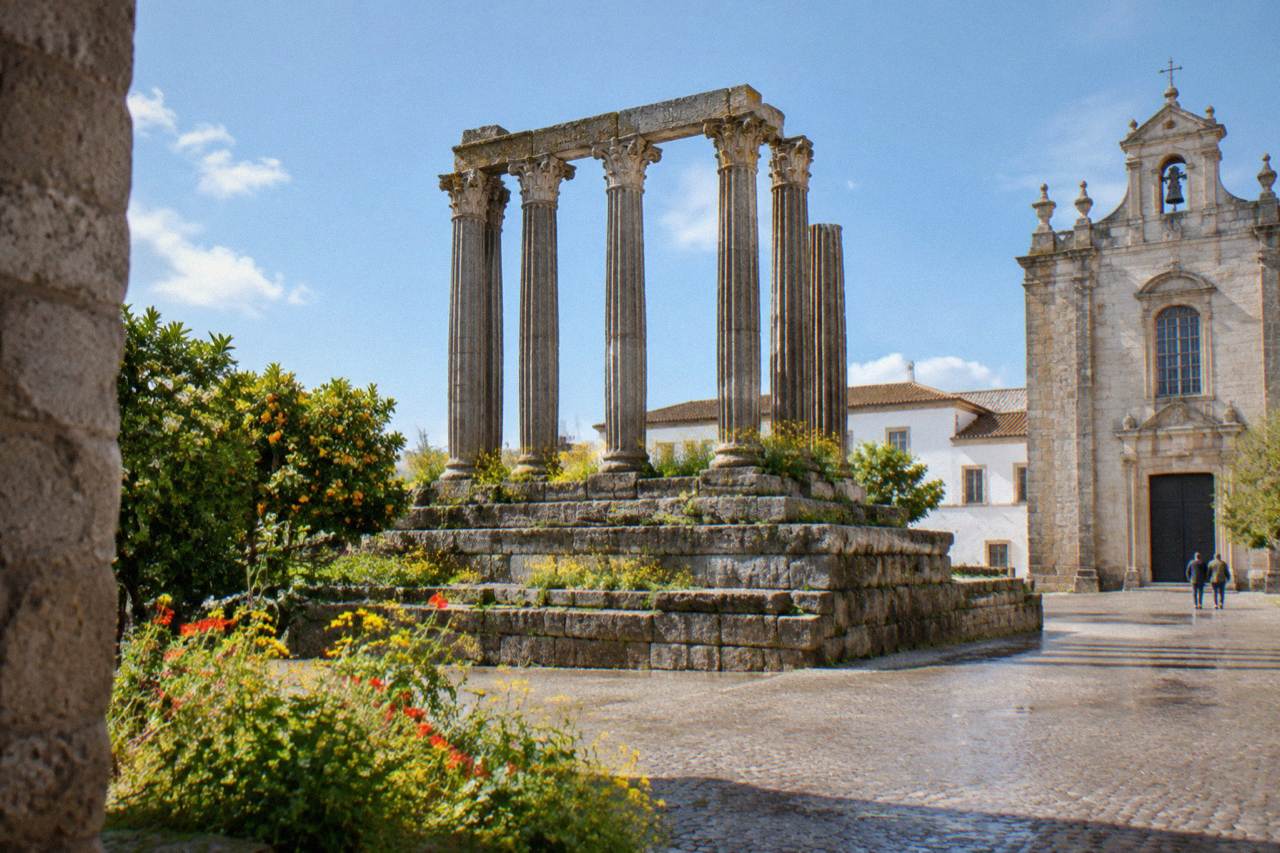
Inside the walls, spring suits the walking scale of the city. The Templo Romano, the Roman temple popularly called the Temple of Diana, is an open-air monument with no ticket and no hours, its 25 x 15 m footprint standing free since the walls around it were cleared in 1870; the municipal page says it was probably dedicated to the imperial cult rather than to Diana, a name it has carried only since the 17th century. The Praça do Giraldo, the Água de Prata aqueduct and the Jardim Público sit in a chain that a visitor can walk in an unhurried afternoon, and the things to do in Évora guide sequences the full list.
A different way to cover the same ground is from the passenger seat of a classic motorcycle sidecar, which turns the medieval streets into a rolling tour and finishes with a wine tasting. The Medieval Tour of Évora on a Sidecar & Wine Tasting runs about 3 hours from $61.90 per person and is rated 4.9 from 16 reviews, and a spring afternoon, with the mean maximum still in the low twenties, is exactly the weather it was built for.
Spring evenings deserve a mention of their own. The mean minimum rises from 6.9 C in March to 10.9 C in May, which is cool but not cold, and the historic centre's restaurants put tables out from April onward. Alentejo food is heavy, pork and bread and slow stews, and it sits better at 18 C than at 33 C; the Évora restaurants and Alentejo food guides cover what to order. An evening food and wine crawl through the city's taverns runs about 3 hours from $83.28 per person, rated 4.6 from 19 reviews, if a guided version appeals.
Which Spring Day Trips Work From Évora?
The best spring day trips from Évora are the ones that depend on open countryside: Monsaraz above the Alqueva reservoir about 40 to 45 km away, the marble town of Vila Viçosa about 60 km, Estremoz about 45 km and the hill fortress of Marvão about 120 km. All of them are at their most attractive between March and May, when the rolling Alentejo is green and the walking involved is comfortable rather than an ordeal.
Monsaraz is the headline. The walled village looks south over the Alqueva, the great reservoir on the Guadiana, and its lanes and viewpoint are entirely outdoor pleasures, which makes the season matter. A guided morning trip, the Monsaraz and Wine guided tour from Évora, runs about 4 hours from $78.78 per person, rated 4.6 from 51 reviews, and pairs the village with a regional wine tasting, the other thing the Alentejo does well in spring. The Monsaraz guide and the best day trips from Évora overview cover the rest of the list.
| Day trip | Distance from Évora | Why it suits spring |
|---|---|---|
| Arraiolos | about 20 km | A short hop to the embroidery town, easy in a half day |
| Monsaraz | about 40-45 km | Village streets and reservoir viewpoints, all outdoors |
| Estremoz | about 45 km | Marble town and castle walk in mild walking weather |
| Vila Viçosa | about 60 km | Ducal palace and marble quarries, spring tour season |
| Elvas | about 80 km | Fortified border city, long walls best walked before summer |
| Marvão | about 120 km | Hilltop fortress village, a full day with stops |
Distances are rounded road estimates, so treat them as planning figures rather than navigation data. Vila Viçosa also offers a dedicated Marble Tour, about 2 hours from $28.14 per person, rated 4.8 from 82 reviews, which walks visitors through the landscape the town is cut from. For wine specifically, the Alentejo wine and Évora wine tasting guides map the route, and a full-day private wine tour around Évora runs from $321.11 per person, rated 5 from 11 reviews, with lunch and transport included.
What Should You Pack For Évora In Spring?
Pack for a 20 C afternoon and an 8 C night in April, which means layers: the IPMA 1991-2020 normals give April a mean maximum of 20.7 C against a mean minimum of 8.5 C, a spread of more than 12 degrees in a single day. A light jacket for the evenings, comfortable walking shoes for cobbles and Roman paving, and something waterproof for the roughly 8 April days with measurable rain cover the whole season.
The layering advice is not generic caution, it follows directly from the station data. March swings from a 6.9 C mean minimum to an 18.7 C mean maximum, and May from 10.9 C to 25.0 C, so a day that starts with a cold morning in the shade of the city's narrow streets can end with lunch in full sun on the Praça do Giraldo. The cobbles are the other constant: Évora's historic centre is Roman and medieval paving, unforgiving in thin shoes, and the day trips involve castle walks and village lanes on top of that.
The waterproof item earns its place in March and April especially. Rain in the Alentejo does not drizzle for days the way it does in northern Portugal; it arrives in concentrated falls, 60.8 mm across March and 62.1 mm across April on the 1991-2020 averages, and then the sky clears. An umbrella or a light rain shell handles it, and the rest of the day is usually salvageable. By May the equation has shifted, with only 6.0 rain days on average and 5.5 days already reaching 30 C, so sun protection starts to matter more than rain protection.
| Spring month | Afternoon feel | Evening feel | Rain risk | Key packing item |
|---|---|---|---|---|
| March | Mild, 18.7 C mean max | Cool, 6.9 C mean min | About 7.5 rain days | Warm layer for evenings |
| April | Warm, 20.7 C mean max | Cool, 8.5 C mean min | About 8.0 rain days | Light rain shell |
| May | Warm to hot, 25.0 C mean max | Mild, 10.9 C mean min | About 6.0 rain days | Sun hat and water bottle |
Where Should You Stay In Évora In Spring?
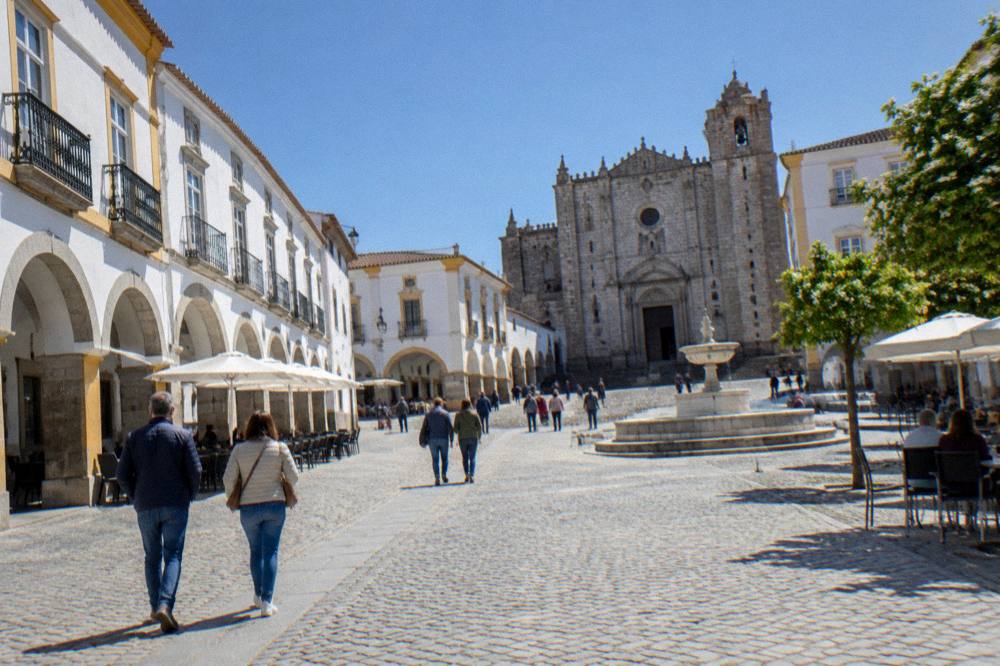
Stay inside or just outside the historic walls in spring, because the season is when the walk-everywhere advantage of the centre pays off most: evenings are mild enough to enjoy on foot, at an April mean minimum of 8.5 C, and the city's guesthouses fill less than they do in July and August. Convent buildings, traditional townhouses and modern hotels inside the walls all put the Sé, the Capela dos Ossos and the Praça do Giraldo within a short walk.
The where to stay in Évora guide covers the neighbourhoods in full, but the spring-specific point is simple: this is the season when location matters most, because everything worth doing is outdoors and within walking distance, and the evenings are long enough to use. A municipal tourist tax applies to stays, so check with your hotel at booking rather than being surprised by it at checkout.
How Much Does A Spring Trip To Évora Cost?
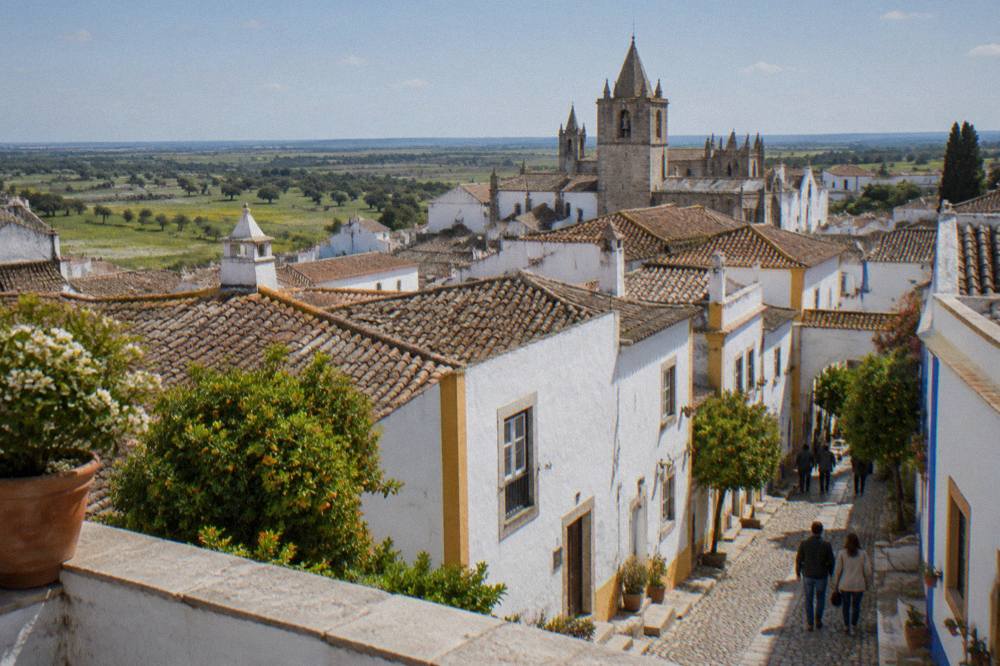
A spring day in Évora costs about 12.00 EUR per adult in official monument prices, the 5.00 EUR Sé complete-visit ticket plus the 7.00 EUR Capela dos Ossos museum ticket, with the Museu de Évora adding 8 EUR and the Évora Ticket at 8 EUR for one day. Train travel from Lisbon adds 13.90 EUR each way in second class, and guided tours in and around the city run from $13.51 to $111.42 per person.
That range of guided options is wide enough to be worth reading carefully. At the lower end, a flexible small-group historic-centre walking tour runs from $13.51 per person over about 3 hours, rated 4.8 from 105 reviews, and the free, tip-based walks on the GuruWalk platform, including the Essential Free Tour of Évora rated 4.93 from 774 reviews, cost nothing upfront. At the upper end, private walking tours with monument tickets included run from $111.42 per person, rated 5 from 106 reviews, and full-day wine experiences reach $321.11 per person. The Évora cost and budget guide breaks down the rest of a trip, and the Évora tickets and passes guide explains what each pass does and does not include.
| Item | Price | Notes |
|---|---|---|
| Sé de Évora complete visit | 5.00 EUR | Children up to 12 free |
| Capela dos Ossos museum ticket | 7.00 EUR | Youth and senior rate 5.00 EUR |
| Museu de Évora | 8 EUR | Closed Mondays |
| Évora Ticket | 8 EUR / 10 EUR / 12 EUR | One, two or three days, excludes the three headline sights |
| CP train, Lisboa Oriente to Évora | 13.90 EUR | Second class, 18.50 EUR first class |
| Flexible historic-centre walking tour | from $13.51 | About 3 hours, rated 4.8 from 105 reviews |
| Private walking tour with tickets | from $111.42 | About 2.5 hours, rated 5 from 106 reviews |
Common Questions About Spring In Évora
Is April a good time to visit Évora?
Yes. The IPMA 1991-2020 normals give April a mean maximum of 20.7 C, rain on about 8 days, and effectively no 30 C days, while the monuments run on their longest hours and the surrounding Alentejo plain is green.
Is it warm in Évora in March?
Mild rather than warm: the 1991-2020 normals put March's mean maximum at 18.7 C and its mean minimum at 6.9 C, so afternoons are pleasant in a light layer and evenings need a jacket.
How hot does Évora get in May?
May's mean maximum is 25.0 C on the 1991-2020 normals, with an average of 5.5 days at 30 C or more, so late May can already feel like early summer in the middle of the afternoon.
Does it rain a lot in Évora in spring?
Spring rain is moderate and concentrated: March averages 60.8 mm over about 7.5 days and April 62.1 mm over about 8.0 days, while May drops to 46.6 mm over about 6.0 days, all on the 1991-2020 normals for the Évora station.
What are the spring opening hours for the Capela dos Ossos?
The Igreja de São Francisco's page lists summer legal-time hours of 9:00 to 18:30 and winter hours of 9:00 to 17:00, open every day except 1 January, Easter Sunday, 24 December afternoon and 25 December.
Is the Museu de Évora open on Mondays?
No. The museum's page lists Tuesday to Sunday, 9:30 to 13:00 and 14:00 to 17:30, closed on Mondays, 1 January, Easter Sunday, 1 May, 29 June and 25 December.
Spring gives Évora its best combination of the year: green countryside, gentle afternoons, full monument hours and a city still running at its own pace, all before the plain turns gold and the thermometers start their climb toward the 33.3 C July average. For everything the season does not cover, the Évora Travel Guide homepage holds the rest.