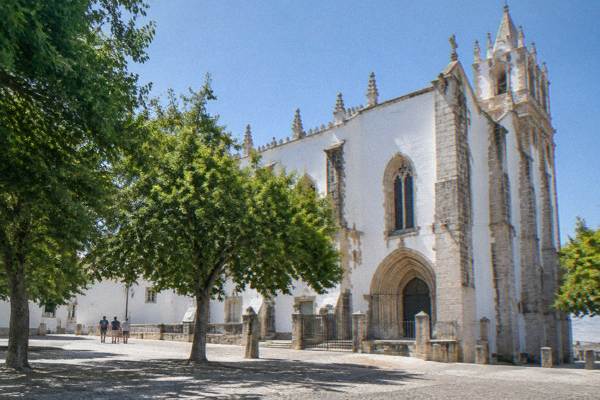
Évora Historic Centre Neighbourhood
The Évora historic centre is a UNESCO-listed core of Roman temples, medieval walls and marble arcades, small enough to walk end to end and dense enough to fill two days.
Short answer
The Évora historic centre is the walled UNESCO-listed old core of Évora, capital of the Alentejo in Portugal, inscribed in 1986 under criteria (ii) and (iv). It holds the Templo Romano, the Sé, the Capela dos Ossos, Praça do Giraldo and the university quarter within roughly twenty minutes' walk of each other.
The historic centre of Évora, the capital of the Alentejo region of Portugal, is one of the smallest World Heritage cores in Europe and one of the most complete. UNESCO inscribed the Historic Centre of Évora in 1986 under criteria (ii) and (iv), and the criterion (iv) wording calls it the finest example of a city of the golden age of Portugal, preserved because Évora was largely spared the destruction of the 1755 Lisbon earthquake. Inside the walls stand a Roman temple, a fortress cathedral, a Jesuit university, a bone chapel and a marble main square, packed into a space a visitor can cross on foot in well under half an hour. This page covers what the centre holds, what tickets and hours apply, when to walk it, and how to plan the visit.
What Is The Évora Historic Centre?
The Évora historic centre is the walled old core of Évora, the inland capital of Portugal's Alentejo region, inscribed by UNESCO in 1986 under criteria (ii) and (iv) as the finest example of a city of the golden age of Portugal. Its layers run from a Roman temple and Moorish street plan to medieval walls, a Renaissance university and baroque churches, all within a circuit a visitor walks end to end in about twenty minutes.
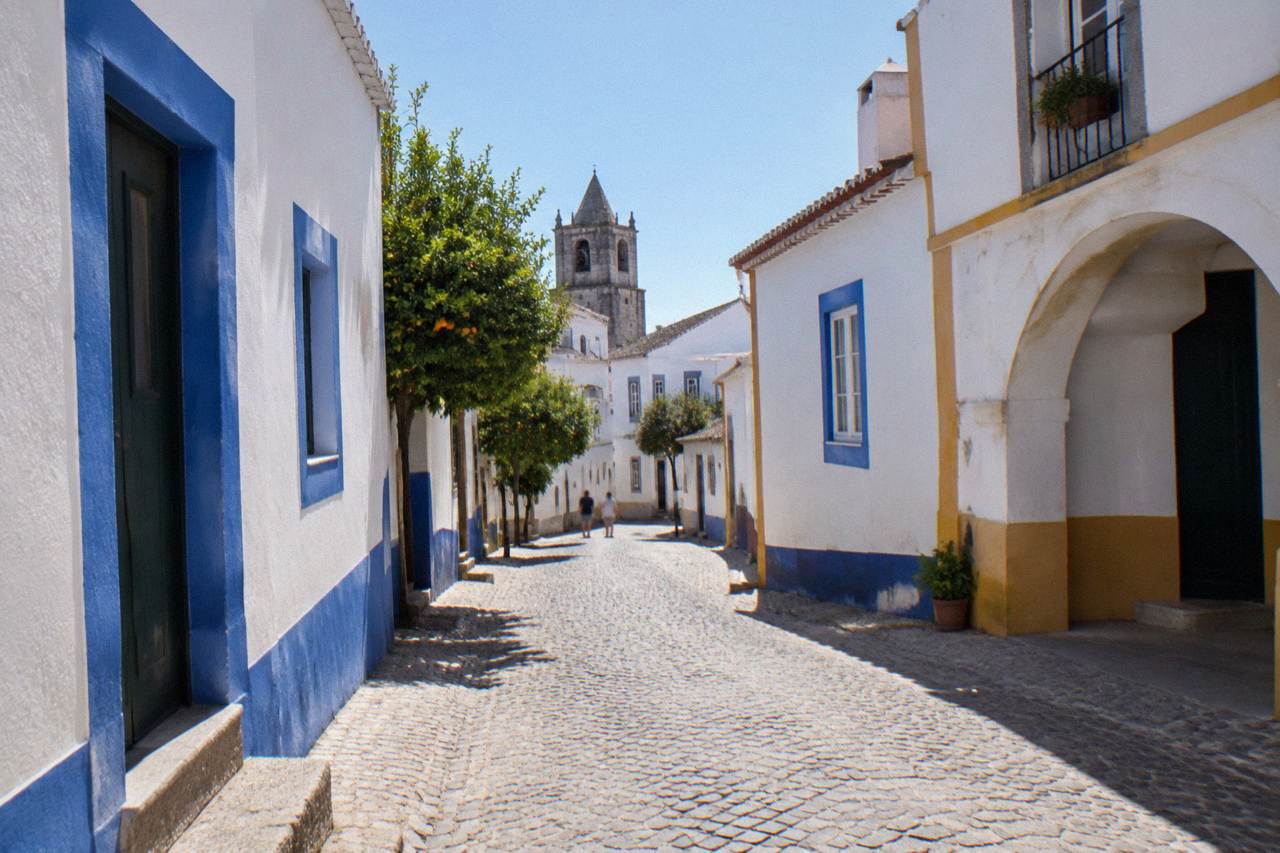
Moorish rule in Évora ended in 1165, when the city was taken for the young Portuguese kingdom, and the street pattern of the old quarters still reflects the narrow Moorish layout. The Jesuit University of the Holy Spirit dates from 1553; the Jesuits were expelled in 1759 and the building later became the University of Évora, whose colonnaded marble courtyard is now one of the most photographed spots inside the walls. The golden age UNESCO refers to is the period when Portuguese kings kept court here, and the reason so much of it survives is geographic luck: the 1755 earthquake that flattened Lisbon did comparatively little damage this far inland.
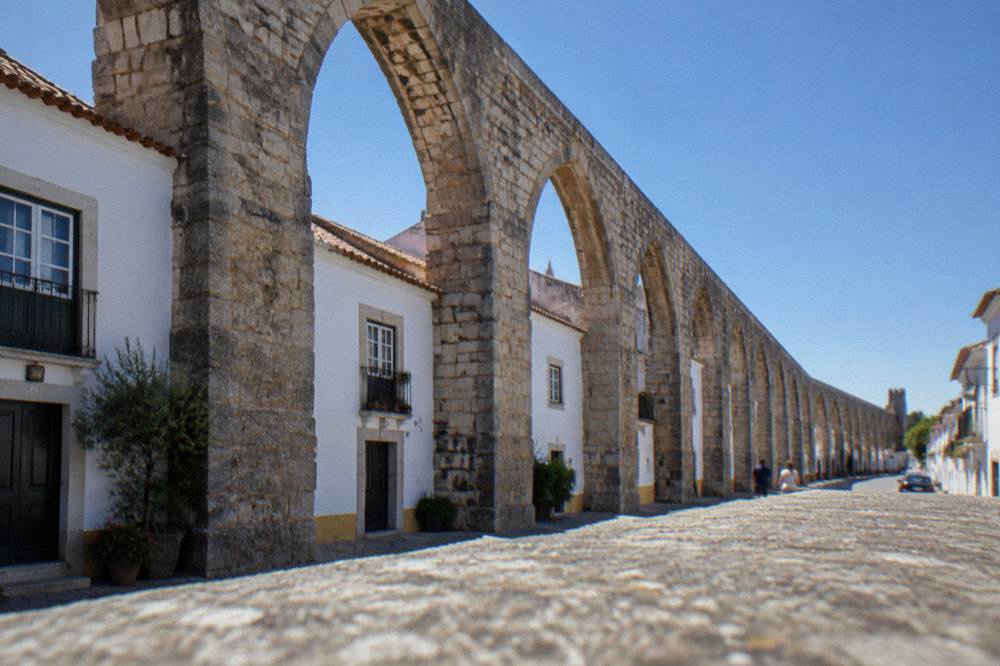
The walls themselves are a mix. Roman Évora, called Ebora, had its own circuit, and stretches of medieval and later fortification were built over and around the Roman line. Several gates still open through the wall, including the Porta de Moura on the eastern side, and the Água de Prata aqueduct, the water channel that once fed the city, runs into the historic core with houses built into its arches. The full story of the listing sits on the UNESCO historic centre attraction page.
What surprises many first-time visitors is the scale. This is not a sprawling old town like Lisbon's; the walled centre holds about a dozen genuinely major monuments and a web of small squares, and everything worth seeing sits within a comfortable walk. The practical consequence is that the historic centre works as a base rather than a commute: a hotel inside the walls puts the Sé, the bone chapel and the main square within a few minutes on foot, and the newer parts of the city, including the modern shopping streets, sit just outside the gates. For what lies beyond the wall itself, see the outside the walls area guide.
What Are The Main Sights Inside The Évora Historic Centre?
The core sights are the Templo Romano, the Sé de Évora with its cloister and roof terrace, the Capela dos Ossos at the Igreja de São Francisco, Praça do Giraldo with its Renaissance fountain, the University of Évora's marble courtyard and the Museu de Évora in the former Archbishop's Palace, all inside the walls and none more than about fifteen minutes' walk from another.
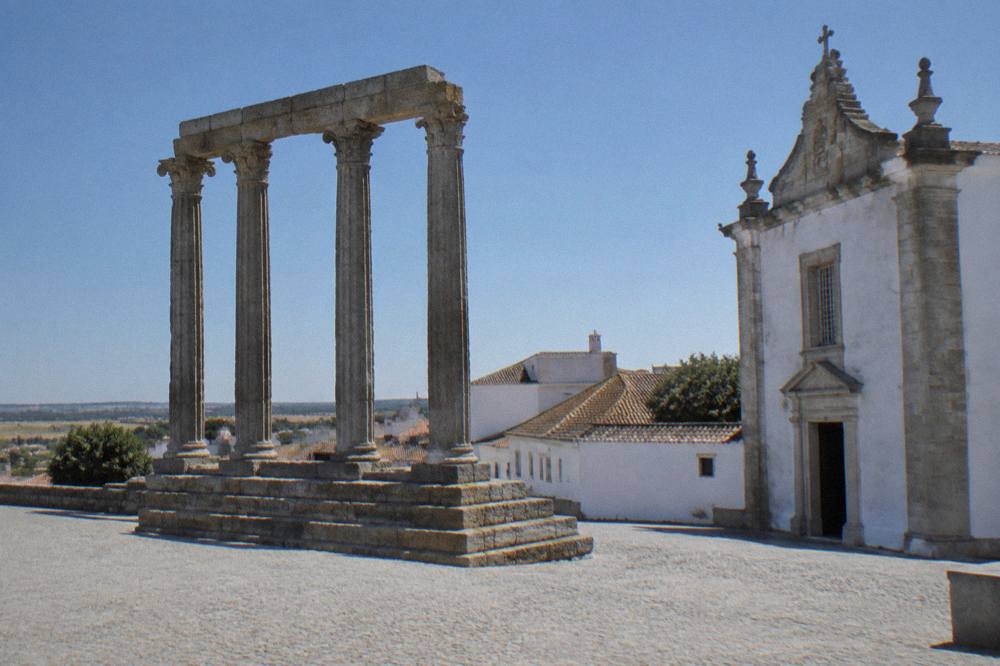
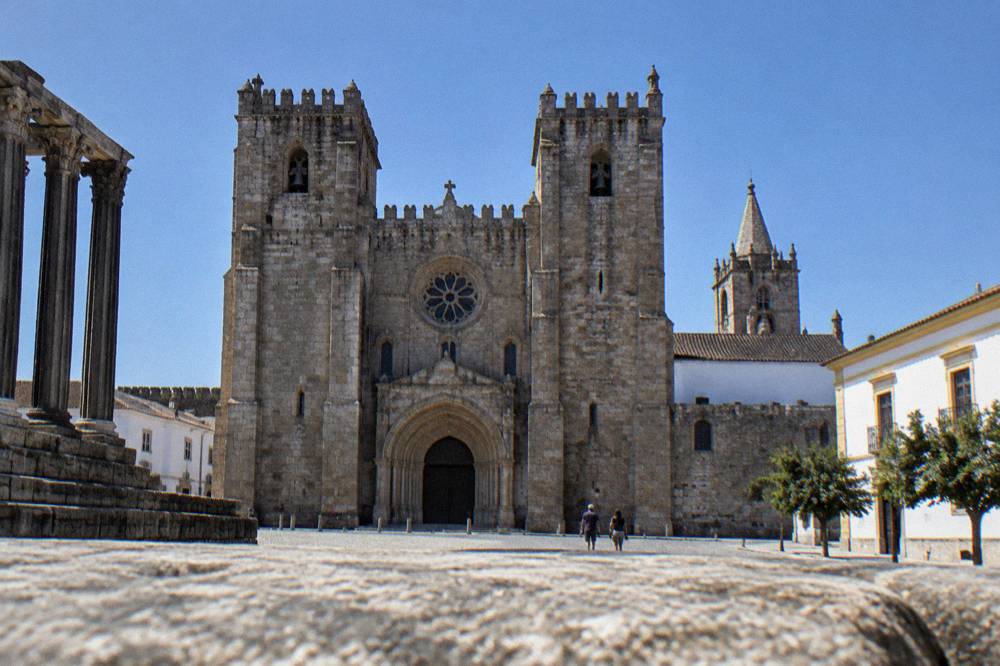
The Templo Romano, popularly called the Temple of Diana, stands on the highest point of the old city next to the cathedral. The municipal page says it was probably dedicated to the imperial cult rather than to the goddess Diana, a name only in use since the seventeenth century, that it measures 25 x 15 m, and that its columns were reused for centuries as part of a municipal butcher's shop before the walls were freed in 1870. It is an open-air monument with no ticket: the Roman temple page covers what is known and what is legend. A few steps away, the Sé de Évora, the fortress-cathedral built in granite, guards the top of the hill; its full guide covers the cloister and the panoramic roof terrace.
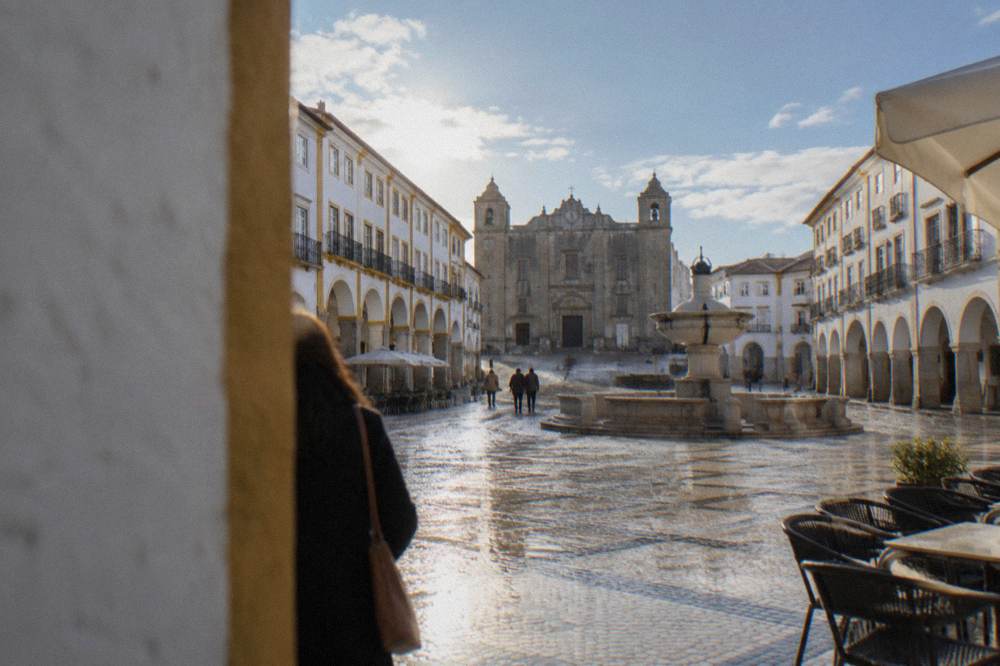
Downhill toward the main square, the Igreja de São Francisco holds the city's most famous interior, the Capela dos Ossos, a chapel lined and vaulted with human bones. The church's own page lists a single museum ticket covering the chapel and five further museum areas, and the Capela dos Ossos guide covers what the ticket includes and the chapel's history. At the centre of daily life sits Praça do Giraldo, the marble-paved main square lined with arcades, where the tourist office keeps its desk; the Giraldo Square page covers the square's buildings and its role in the city's harder history.
Beyond these headline sights, the historic centre holds the University of Évora's courtyard, the Museu de Évora, the Convento dos Lóios beside the temple, the Roman baths tucked into the town hall, the old Jewish quarter around the Porta de Moura side, and the aqueduct arches marching into the eastern edge of the core. A first visit usually strings together the temple, the cathedral, the bone chapel and Giraldo in one loop; the one day in Évora itinerary shows that loop hour by hour, and the two days in Évora itinerary adds the university, the museum and the quieter quarters.
How Much Do Tickets Cost In The Évora Historic Centre?
The main paid sights inside the walls cost 5.00 EUR for the Sé complete visit, 7.00 EUR for the Capela dos Ossos museum ticket at the Igreja de São Francisco, and 8 EUR for the Museu de Évora, while the Évora Ticket multi-site pass runs 8 EUR for one day, 10 EUR for two days and 12 EUR for three days, free to age 12, though it does not include those three headline sights.
The pricing structure is the thing most visitors get wrong, so it is worth reading the small print. The Sé sells one complete-visit ticket at 5.00 EUR covering the cathedral, the cloister, the roof terrace and the museum, with children up to 12 free alongside a parent or guardian; there is no cheaper roof-only tier. The Igreja de São Francisco sells one 7.00 EUR adult museum ticket covering the Capela dos Ossos and five other areas, with youth to 25 and seniors over 65 at 5.00 EUR and a family ticket at 15.00 EUR; the church notes it is a private religious entity and does not apply State museum discounts. The Museu de Évora charges adults 8 EUR, with youth 13 to 24, seniors over 65 and families at 50 percent off, free to age 12, and free on Sundays and holidays for residents of Portugal; it is closed Mondays.
| Sight inside the walls | Adult ticket | Concessions | Children |
|---|---|---|---|
| Sé de Évora (cathedral, cloister, roof, museum) | 5.00 EUR | none listed | free to 12 |
| Capela dos Ossos / Igreja de São Francisco museum areas | 7.00 EUR | 5.00 EUR youth to 25 and seniors over 65, 15.00 EUR family | family ticket covers youths |
| Museu de Évora | 8 EUR | 50% off youth 13-24, seniors, family | free to 12 |
| Évora Ticket, one day | 8 EUR | reduced tiers not listed | free to 12 |
| Évora Ticket, two days | 10 EUR | reduced tiers not listed | free to 12 |
| Évora Ticket, three days | 12 EUR | reduced tiers not listed | free to 12 |
The Évora Ticket covers the Cidade-Museu network of smaller municipal sites, and the key point is what it does not cover: the Sé, the Capela dos Ossos and the Museu de Évora are separate. A visitor who buys the pass expecting the bone chapel will still queue for a separate 7.00 EUR ticket. The Convento dos Lóios, often listed among the centre's sights, currently shows no ticket price on the municipal page at all, so check its notice before planning an entry. For a fuller breakdown of what each pass and monument includes, see the things to do in Évora overview.
For visitors who would rather not manage three separate ticket desks, the Évora University, Cathedral & Bones Chapel skip-line tour arranges entry to the headline monuments as part of a private three-hour walk and ends with a wine tasting; the listing prices it from $91.39 per person, rated 5 from 48 reviews. That is the efficient route when time is short and the walk matters more than the queueing.
When Is The Best Time To Walk The Évora Historic Centre?
The best walking months in the Évora historic centre are April, May, late September and October, when IPMA's 1991 to 2020 normals for the Évora station show mean daily maxima of 20.7 C, 25.0 C, 29.5 C and 24.1 C respectively, against July and August means of 33.3 C and 33.5 C, months that average 23.7 and 25.0 days at 30 C or more.
The climate data matters more here than in coastal Portugal, because Évora is inland on the Alentejo plain and there is no sea breeze to take the edge off an afternoon. The station normals show the year brings 86.5 days with a maximum of 30 C or more and 31.9 days at 35 C or more, almost all of them between June and September, with the record maximum of 45.4 C set on 4 August 2018. Summer visitors should walk the centre early, use the middle of the day for the Sé's museum, the bone chapel or a long Alentejan lunch under an arcade, and come back out for the evening light on the marble of Praça do Giraldo.
| Month | Mean max (C), 1991-2020 | Mean min (C) | Days at 30 C+ | Rain days (1 mm+) |
|---|---|---|---|---|
| April | 20.7 | 8.5 | 0.3 | 8.0 |
| May | 25.0 | 10.9 | 5.5 | 6.0 |
| June | 30.2 | 13.8 | 15.1 | 1.7 |
| July | 33.3 | 15.6 | 23.7 | 0.6 |
| August | 33.5 | 16.0 | 25.0 | 0.7 |
| September | 29.5 | 14.6 | 13.9 | 3.6 |
| October | 24.1 | 12.3 | 2.9 | 7.7 |
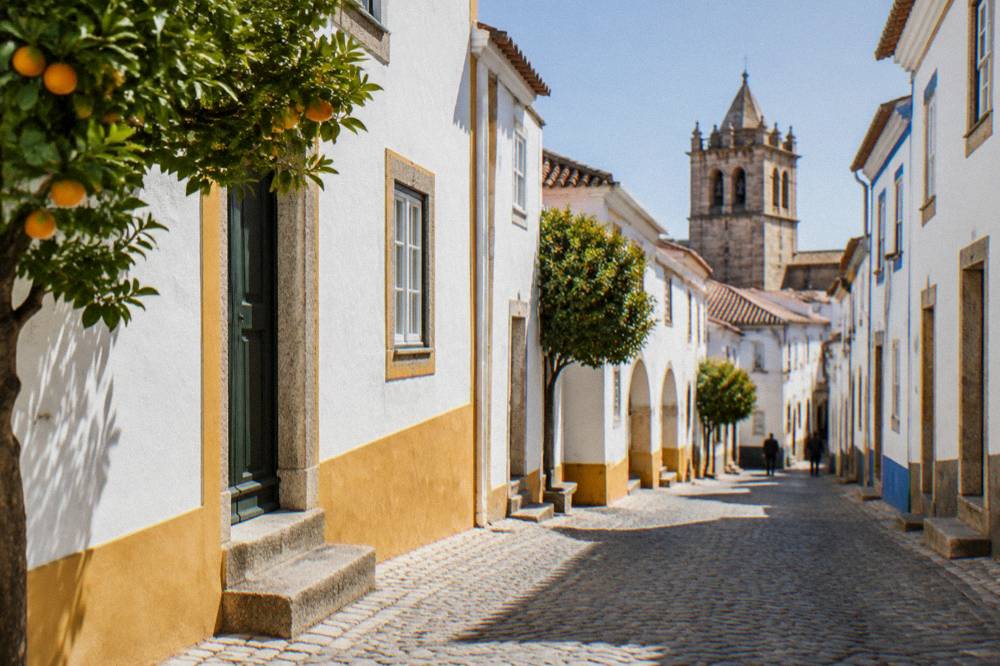
Winter is a different proposition: the normals give January a mean maximum of 14.1 C and a mean minimum of 4.5 C, with the record low of -4.2 C recorded twice, on 4 December 1998 and 23 January 2000. Rain concentrates from October to December, at 7.7 to 8.8 rain days a month, but the compensation is that the monuments are quiet and the light on whitewashed walls is at its sharpest. The seasonal trade-offs, including what closes when, are laid out in the best time to visit Évora guide.
One planning note sits outside the climate: Évora and the Alentejo are European Capital of Culture in 2027, and 2026 is a preparation year built on the concept of "Vagar". The Feira de São João, the city's big fair, ran 23 June to 5 July 2026 on the Rossio de São Brás, and the GUADIANA literature festival held its first edition 9 to 11 October 2026. Event weeks fill the centre's small hotels and put life in the squares, so check the municipal calendar before choosing dates.
Where To Stay Inside The Évora Historic Centre?
The historic centre divides into four practical quarters for staying: the area inside the walls closest to Praça do Giraldo, the cathedral and temple hill around the Sé, the university quarter to the west, and the Porta de Moura side toward the eastern wall and the aqueduct, all walkable, all quiet at night, and none more than a few minutes from the main square.
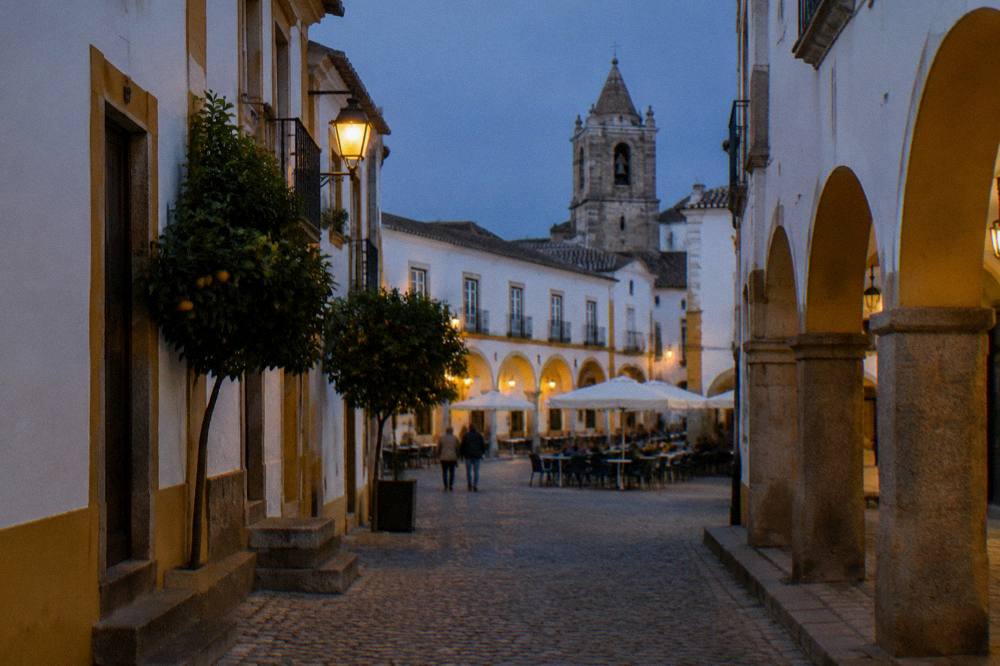
Choosing between them is a matter of character rather than ranking. The streets around Giraldo put a visitor beside the arcades, the cafés and the tourist office, with the whole core on the doorstep, at the price of the most foot traffic by day. The temple hill, around the Sé, the Convento dos Lóios and the Roman temple, is the most monumental slice, granite and cork oak shade, and it climbs, so luggage up cobbled lanes is a real consideration. The university quarter, around the marble courtyard of the University of Évora, feels scholastic and calm, with the Jardim Público at its edge. The Porta de Moura quarter, on the eastern side toward the old Jewish streets and the aqueduct arches, is the most residential and the quietest after dark. More of these guides are collected on Évora Travel Guide.
| Quarter | Character | What sits on the doorstep | Best for |
|---|---|---|---|
| Around Praça do Giraldo | Arcades, cafés, tourist office | Main square, bus links, restaurants | First visits, short stays |
| Sé and temple hill | Granite monuments, terraces | Cathedral, Roman temple, Convento dos Lóios | Photographers, sightseeing on foot |
| University quarter | Colonnaded courtyard, gardens | University of Évora, Jardim Público | Longer stays, quiet mornings |
| Porta de Moura side | Old lanes, aqueduct arches | Roman baths, Jewish quarter streets | Visitors who want local pace |
No figure should be assumed; check with the hotel when booking. For driving visitors, the walls mean restricted access and limited parking inside the core, and the practical options, including the car parks outside the gates, are covered in the Évora parking guide. What lies beyond the gates, from the modern shopping streets outward, is covered in the outside the walls guide.
What Tours Explore The Évora Historic Centre?
Guided options inside the walls run from a free tip-based GuruWalk essential tour of about two hours, through small-group cultural walks from $77.66 and flexible historic-centre walks from $13.51, to private skip-line monument tours from $91.39 and a vintage sidecar tour of the medieval lanes with wine tasting from $61.90, with wine, cork and megalith half-day trips leaving the centre for the surrounding Alentejo.
The free tier is genuinely free, and it is the honest place to start. The Essential Free Tour of Évora on GuruWalk, led by a local guru, runs about two hours on a tip basis and covers the core loop; GuruWalk also carries a free History and Heritage walk and a free "Évora through history" walk of the same shape. At the paid end, the Évora University, Cathedral & Bones Chapel tour is the strongest fit for visitors whose priority is the monuments themselves, because it bundles the university, the Sé and the bone chapel with entry arranged and a tasting at the end, from $91.39 per person and rated 5 from 48 reviews.
| Tour | Shape | From (per person) | Rating |
|---|---|---|---|
| Small-Group Cultural Walking Tour & Chapel of Bones | 2 hours, small group, city core | $77.66 | 4.9 from 141 reviews |
| Personal & Flexible Walking Tour in Historic Center | 3 hours, flexible route | $13.51 | 4.8 from 105 reviews |
| Medieval Tour of Évora on a Sidecar & Wine Tasting | 3 hours, sidecar, medieval lanes | $61.90 | 4.9 from 16 reviews |
| University, Cathedral & Bones Chapel Skip-Line + Wine | 3 hours, private, tickets and tasting | $91.39 | 5 from 48 reviews |
| Evening Food & Wine Crawl | 3 hours, evening, taverns | $83.28 | 4.6 from 19 reviews |
The sidecar tour deserves a word because it suits the geography: the historic centre is compact but hilly, and a vintage sidecar ride along the medieval lanes reaches the viewpoints above the walls without the climb, before a wine tasting rounds it off. The evening food and wine crawl covers a different historic-centre experience, the taverns and tables that fill the lanes after the day-trippers leave, which is the subject of its own discussion in the two days in Évora itinerary.
How To Get To The Évora Historic Centre?
The historic centre is reached from Lisbon by CP Intercidades train from Lisboa Oriente in about 1 hour 40 to 1 hour 45, on the timetable valid since 6 September 2026, with six through trains a day departing at 07:02, 09:02, 09:58, 13:35, 17:02 and 19:02, at a fare of 13.90 EUR second class or 18.50 EUR first class, and the walk from Évora station to the walls takes a visitor into the core within minutes.
The train is the practical default from the capital. CP's current timetable lists six direct Intercidades departures from Lisboa Oriente, calling at Entrecampos, Sete Rios, Pragal, Pinhal Novo, Vendas Novas and Casa Branca before Évora, with arrivals at 08:47, 10:45, 11:40, 15:13, 18:41 and 20:46; no change at Casa Branca is needed on these through trains. Check the timetable's weekday remarks before assuming every listed service runs every day. Coaches from Lisbon also serve Évora, but no fare or timing for them can be stated with confidence, so check the operator's listing directly.
| Train | Lisboa Oriente departure | Évora arrival |
|---|---|---|
| 1 | 07:02 | 08:47 |
| 2 | 09:02 | 10:45 |
| 3 | 09:58 | 11:40 |
| 4 | 13:35 | 15:13 |
| 5 | 17:02 | 18:41 |
| 6 | 19:02 | 20:46 |
Once in the city, the centre needs no transport of its own: it is a walking district, and the station sits a short distance from the walls. Arriving by car means parking outside the gates and walking in, which the Évora parking guide covers in detail. Visitors coming from Lisbon for a single day should read the Lisbon to Évora guide and the Évora day trip from Lisbon itinerary, which build the train times into a realistic one-day plan; the getting there by train guide covers ticketing specifics.
What Lies Just Beyond The Historic Centre?
Beyond the walls the Alentejo plain opens up within minutes: the megalithic monuments of the Almendres Cromlech and the Great Dolmen of Zambujeiro sit a short drive out, the marble towns of Estremoz and Vila Viçosa lie about 45 km and about 60 km away, the walled village of Monsaraz above the Alqueva lake is about 40 to 45 km, and the fortress town of Elvas is about 80 km toward the Spanish border.
The historic centre is the anchor, but the reason many visitors stay two or three nights is the ring of day trips around it. The Almendres Cromlech, the stone circle on the plain west of the city, is reached by the national road toward Lisbon with a turn-off after about 8 km, and the Almendres Interpretation Centre in the village of Guadalupe keeps summer hours of 10:00 to 18:00 from 1 May to 31 October and winter hours of 10:00 to 17:00 from 1 November to 30 April; the Almendres Cromlech guide covers the site itself. The towns each have their own character: Estremoz for its marble and castle, Vila Viçosa for the ducal palace, Monsaraz for the lake views, Elvas for the border fortifications, and the Alqueva lake region for water and stargazing. The full menu of options is gathered in the best day trips from Évora guide.
Common Questions About The Évora Historic Centre
Is the Évora historic centre UNESCO listed?
Yes. The Historic Centre of Évora was inscribed on the World Heritage List in 1986 under criteria (ii) and (iv). Criterion (iv) calls it the finest example of a city of the golden age of Portugal, preserved because Évora was largely spared the 1755 Lisbon earthquake.
Can you walk the Évora historic centre in a day?
Yes, comfortably. The core sights, the Templo Romano, the Sé, the Capela dos Ossos, Praça do Giraldo and the university courtyard, sit within about fifteen minutes of each other, and a full day covers all of them plus the Museu de Évora. Two days allow a slower pace and a day trip.
Does the Évora Ticket cover the Capela dos Ossos and the Sé?
No. The Évora Ticket, at 8 EUR for one day, 10 EUR for two and 12 EUR for three, covers the Cidade-Museu network of municipal sites. The Sé at 5.00 EUR, the Capela dos Ossos museum ticket at 7.00 EUR and the Museu de Évora at 8 EUR are bought separately.
Is the Évora historic centre hilly?
Yes, moderately. The centre rises toward the temple and cathedral hill, and the lanes around the Sé and the Convento dos Lóios climb on cobbles. The main square and the university quarter are gentler, and everything is walkable at an unhurried pace.
What is the best month to visit the Évora historic centre?
April, May and October, on the IPMA 1991 to 2020 normals for the Évora station: mean maxima of 20.7 C, 25.0 C and 24.1 C, with only a handful of days at 30 C or more. July and August average 33.3 C and 33.5 C mean maxima and over 23 days a month at 30 C or more.
How hot does the Évora historic centre get in summer?
IPMA's 1991 to 2020 normals for the Évora station show July and August mean maxima of 33.3 C and 33.5 C, with 31.9 days a year reaching 35 C or more, almost all between June and September. The record maximum is 45.4 C, set on 4 August 2018. Walk early and use the middle of the day indoors.
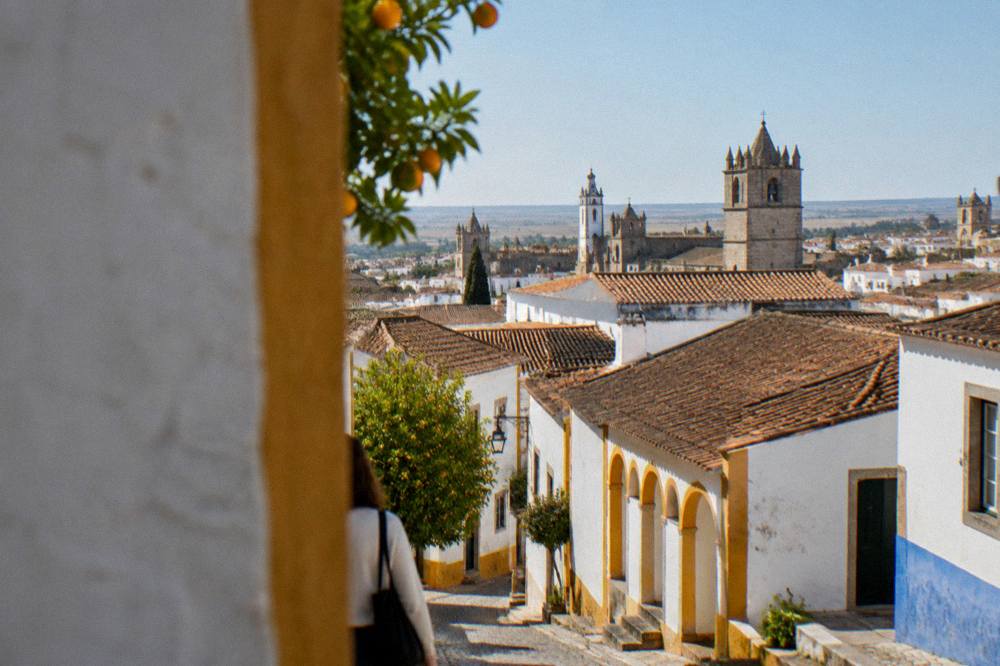
The Évora historic centre rewards exactly the pace the city itself is preparing to celebrate in its Capital of Culture year: slow mornings on marble squares, monuments that open their doors within minutes of each other, and an evening light that turns whitewash to gold. Plan the tickets before arriving, keep the hottest hours for the museums and the taverns, and the walled city does the rest.