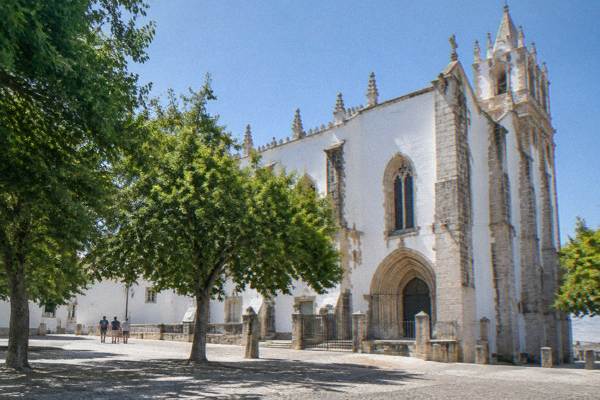
Cartuxa Monastery Évora: The Monastery, The Winery And What To Know Before You Go
The Cartuxa Monastery is one of the most photographed buildings on the edge of Évora, a former Carthusian house whose estate is now the home of the Cartuxa winery run by the Fundação Eugénio de Almeida. This guide explains what the estate is, what the public side of it involves, and how to fit it into a visit to the Alentejo's capital.
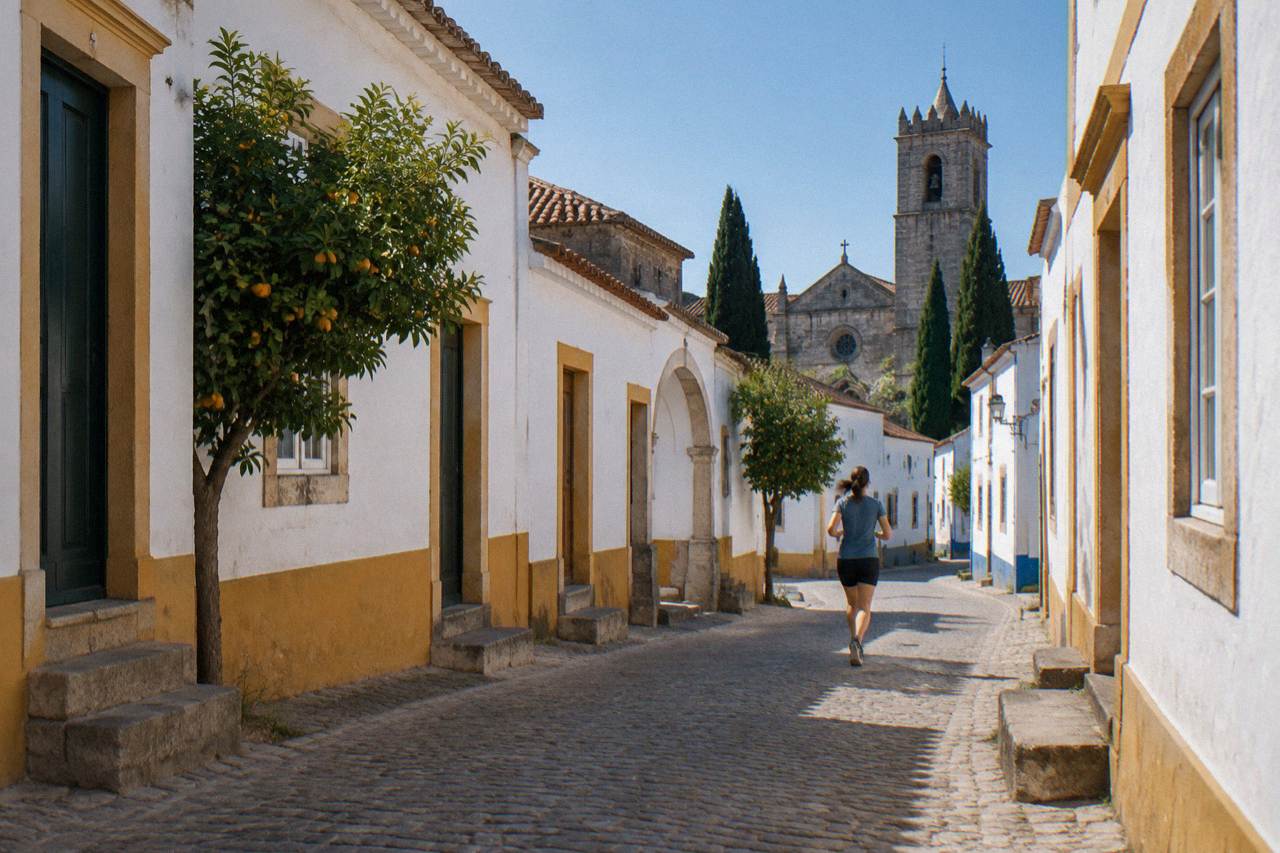
Short answer
The Cartuxa Monastery is a former Carthusian monastery on the edge of Évora, Portugal, whose estate today belongs to the Fundação Eugénio de Almeida and houses the Cartuxa winery. The monastery church and cloister are private foundation property rather than a municipal monument, and the public face of the estate is the winery's own visitor offer: check the winery's page for current tasting arrangements before you go.
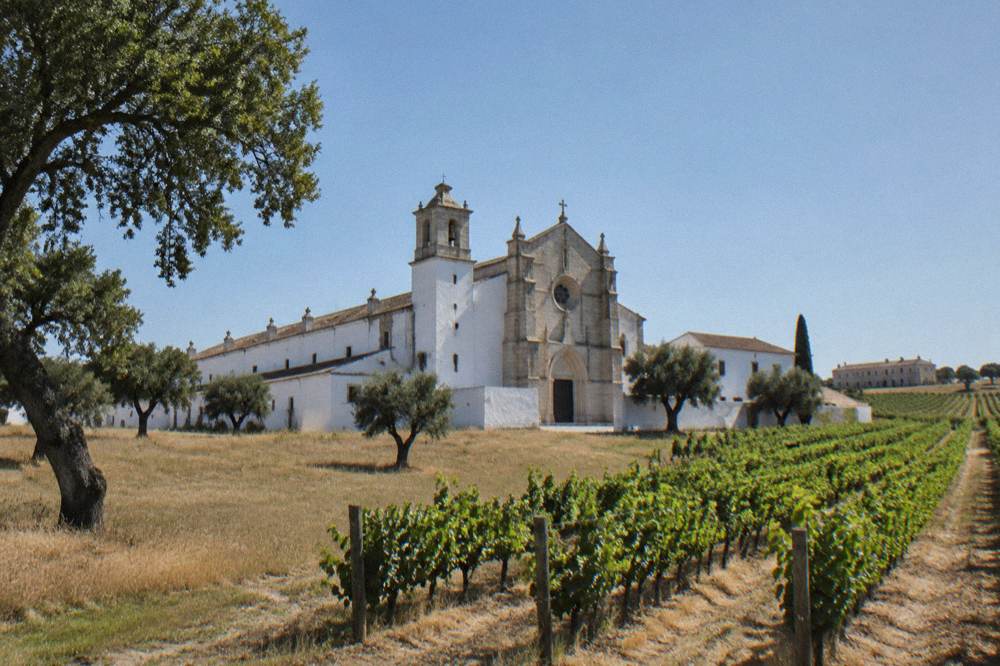
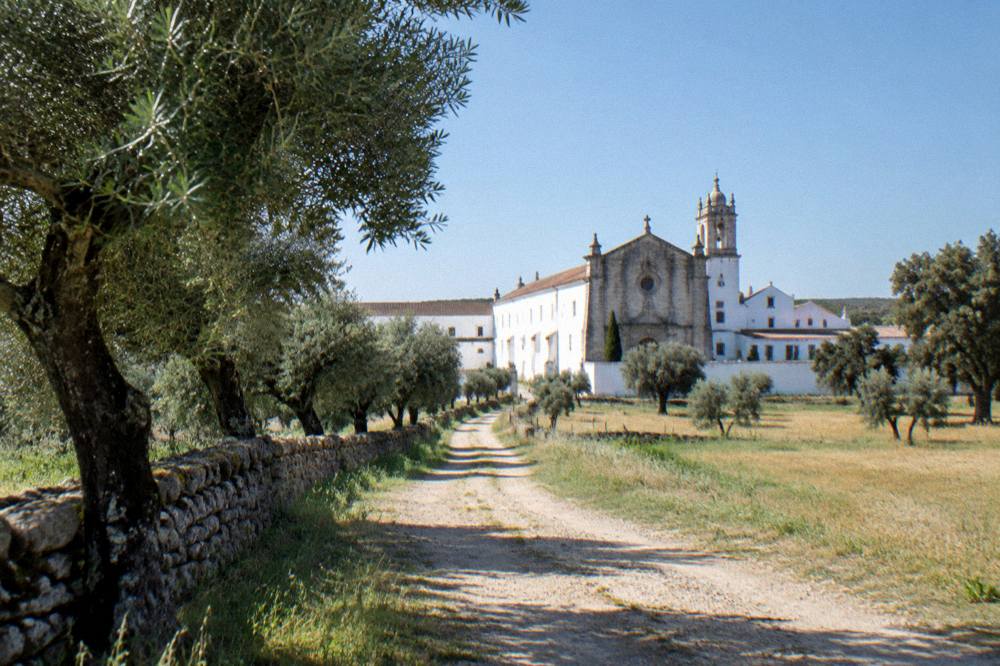
The Cartuxa Monastery stands at the southern edge of Évora, Portugal, the inland capital of the Alentejo, and it is the building that gave one of Portugal's best-known wine brands its name. The order that built it, the Carthusians, chose a site just outside the old walls, and the estate they laid out is still there: a church, cloister buildings, farmland and the vineyards that the Fundação Eugénio de Almeida, the foundation that owns the property, turned into the Cartuxa winery. For most visitors the estate is the winery, and the winery is the reason to walk down from the historic centre, past the Aqueduto da Água de Prata that once carried water into the city along this same direction.
This guide covers the estate as it stands today: what the monastery is, how it relates to the winery that carries its name, what you should check on the winery's own page before setting out, and how the visit fits with the rest of what Évora offers, from the Sé de Évora to the megalithic plain beyond the city. Where a detail such as an opening hour or a tasting price is set by the winery and can change, this page says so plainly rather than printing a number that may not hold.
What Is The Cartuxa Monastery In Évora?
The Cartuxa Monastery is a former Carthusian monastery on the southern edge of Évora, in the Alentejo region of Portugal, whose estate now belongs to the Fundação Eugénio de Almeida and carries the Cartuxa wine brand. The Carthusians were a silent contemplative order, and the estate they built combines a church, cloister ranges and working farmland. Today the name Cartuxa reaches most people through wine rather than through monastic history, and the winery operates from the monastery grounds.
The Carthusian order, formally the Order of Carthusians, was one of the strictest in the Catholic tradition: monks lived largely in silence, in individual cells, meeting for choir only at set hours. That way of life shaped the architecture. A Carthusian house is built around separation, with the lay brothers' quarters and the monks' quarters arranged so the two communities rarely crossed, and the Cartuxa estate follows that logic in its layout of church, cloister and outbuildings around a working landscape.
What makes the place unusual among Évora's monuments is its ownership. The great municipal sights, the Sé, the Museu de Évora, the Roman temple, are public or state institutions with published ticket prices. The Cartuxa estate is not in that category. It is private foundation property, and the public experience of it is organised by the winery on the estate rather than by a monuments body. That single fact changes how you plan the visit, and it is why the practical advice in this guide keeps pointing you to the winery's own page for anything time or money related.
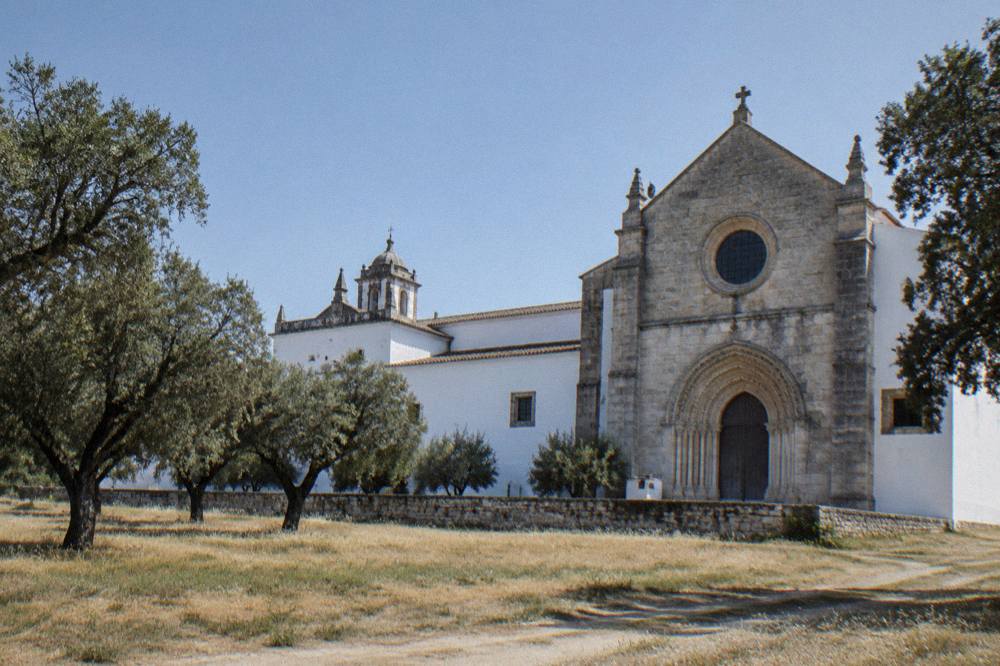
The estate's name also travels. Cartuxa is the Portuguese form of Chartreuse, the French valley where the order was founded, and the connection runs through the language: a cartuxa is a Carthusian house, and the monastery here took that name the way dozens of others in Portugal and Spain did. When you see Cartuxa on a wine label, you are seeing a monastery's name borrowed for the vineyards planted on its land.
How Does The Cartuxa Estate Fit Into A Day In Évora?
The Cartuxa estate sits on the southern edge of Évora, a short walk from the historic centre in the direction of the Água de Prata aqueduct, which makes it a natural last stop on a walking loop through the city. Most itineraries put it after the cathedral, the bone chapel and the Praça do Giraldo, using the winery visit as the point where the city gives way to the Alentejo countryside. Allow a relaxed half day for the combination.
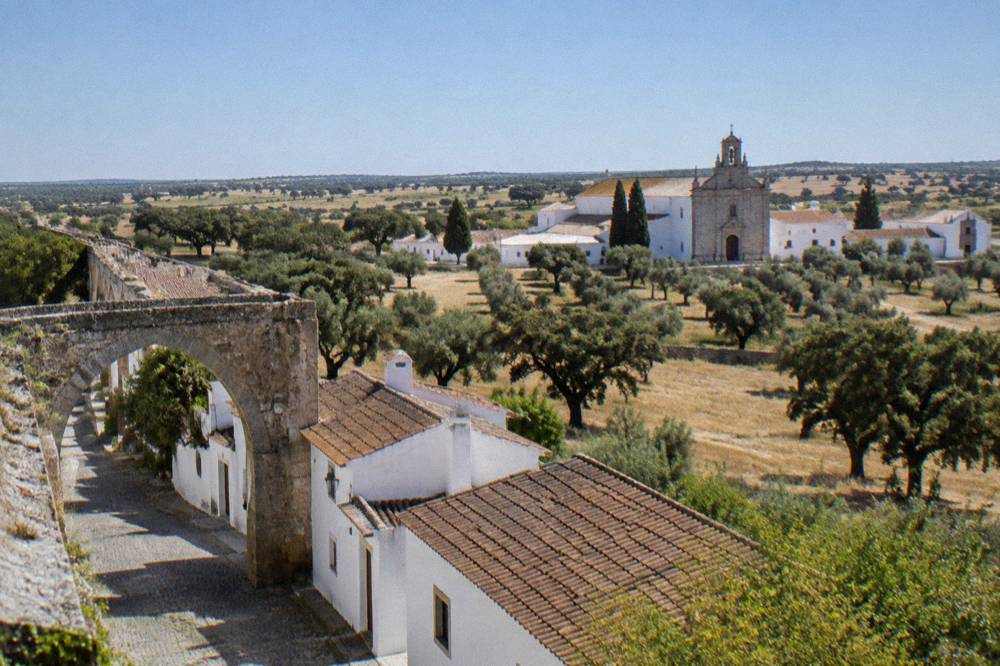
The geography works in the visitor's favour. Évora's walled centre is compact, and the aqueduct runs out of it toward the south-east, its arches marching across what is now open ground. The Cartuxa estate lies in that transition zone, where the city's white walls meet olive groves, cork oaks and vineyards. Walking out to it, you pass through the full thickness of Évora: Roman wall, medieval street, Renaissance square, then farmland, all inside about a kilometre or two of each other. That compression is exactly what UNESCO recognised when it inscribed the Historic Centre of Évora on the World Heritage list in 1986, under criteria (ii) and (iv), the second of which calls the city the finest example of a city of the golden age of Portugal after the 1755 Lisbon earthquake, a quake Évora was largely spared.
For planning, the estate works best as either the start or the finish of a day. Start there in the morning, and you walk back into the centre with the vineyards behind you; finish there in the late afternoon, and the walk out is the wind-down. The one thing not to do is treat it as a quick detour between two monuments in the middle of the centre, because it is not in the centre, and the winery's own schedule, whatever it is on the day you go, may not match the pace of a monument crawl. If your loop takes in the bone chapel, the full guide to the Capela dos Ossos covers its ticket and hours in detail.
If you would rather have someone else arrange the wine side of the day, the guided options below cover the same landscape with a driver and a guide, and several combine the vineyards with the cork oak forests that are the Alentejo's other great crop.
Can You Visit The Cartuxa Monastery Itself?
The monastery church and cloister are private foundation property rather than a public monument, so there is no municipal ticket, no published monument schedule and no state museum regime attached to them. The public side of the estate is the Cartuxa winery, which runs its own visitor arrangements on the grounds. Before you go, check the winery's own page for what is currently open to visitors, what a tasting involves and when it runs, because those details are set by the winery and change with the season.
This is the point where the Cartuxa estate differs most from everything else you will see in Évora, and it is worth being precise about it. The Sé de Évora sells one complete-visit ticket at 5.00 EUR covering the cathedral, cloister, roof terrace and museum, open 9:00 to 17:00 and closed on the afternoon of 24 December, on 25 December and on 1 January. The Igreja de São Francisco, which holds the Capela dos Ossos, sells a single museum ticket at 7.00 EUR for adults, 5.00 EUR for youth up to 25 and seniors over 65, and 15.00 EUR for a family, open daily in summer 9:00 to 18:30 and in winter 9:00 to 17:00 except 1 January, Easter Sunday, the afternoon of 24 December and 25 December. Those are monument regimes with published prices, and this page can state them because they are published.
The Cartuxa estate is not on that list, and nothing equivalent is published for the monastery buildings. What is published is the winery's own material, and that is where every practical question about the estate should be answered: what the current visitor offer is, whether a tasting needs booking, what it costs, and which parts of the grounds it includes. The honest instruction is simple. Check the winery's page, or ask at the door, before you build the estate into a tight schedule.
For comparison, here is how Évora's verified public monuments handle tickets, which is useful context for what the Cartuxa estate is not:
| Monument | Ticket regime | Adult price | Closed |
|---|---|---|---|
| Sé de Évora | One complete-visit ticket: cathedral, cloister, roof terrace, museum | 5.00 EUR, children to 12 free | 24 Dec afternoon, 25 Dec, 1 Jan |
| Igreja de São Francisco and Capela dos Ossos | One museum ticket for all areas | 7.00 EUR, youth to 25 and seniors over 65 at 5.00 EUR, family 15.00 EUR | 1 Jan, Easter Sunday, 24 Dec afternoon, 25 Dec |
| Museu de Évora | Single admission | 8 EUR, youth 13-24, seniors over 65 and family 50% off, free to 12 | Mondays, 1 Jan, Easter Sunday, 1 May, 29 June, 25 Dec |
| Évora Ticket (Cidade-Museu network) | Pass, 1, 2 or 3 days | 8 EUR one day, 10 EUR two days, 12 EUR three days, free to 12 | Does not include the Sé, the Capela dos Ossos or the Museu de Évora |
The Évora Ticket row matters here for a negative reason: the pass covers the Cidade-Museu network, and the Cartuxa estate is not part of that network, so buying the pass does not get you onto the winery's visitor offer. Check the pass's own network list on its page if you are unsure what it includes.
What Is The Cartuxa Winery And The Fundação Eugénio De Almeida?
The Cartuxa winery is the wine operation of the Fundação Eugénio de Almeida, a foundation created by the Almeida family, which owns the former monastery estate and farms its land. The winery makes wine under the Cartuxa name from vineyards on and around the estate, and its public offer, tastings and estate visits, is run by the foundation rather than by a commercial tourism body. The foundation also runs cultural and social projects in Évora beyond wine.
The structure is worth understanding because it explains the estate's character. A family fortune, converted into a foundation, holds the land; the foundation farms it; the wine pays for the foundation's wider work. That is a common pattern in European wine estates attached to old religious houses, and it means the Cartuxa estate is not a theme-park version of a monastery but a working farm with a heritage building at its centre. The vineyards you see from the road are the foundation's own, and the wine that carries the monastery's name is made on the monastery's ground.
For the visitor, the winery is the practical interface. Its own page lists the current wines, the tasting arrangements and whatever estate experiences it offers, and that page is the authority on all of it. This guide deliberately does not repeat a tasting price or a schedule, because those belong to the winery's own published material and move with the seasons and the harvest. What can be said in general terms is the experience itself: Alentejo wine tasting in the region that produces it, on the estate of one of its best-known names, with the monastery buildings as the backdrop.
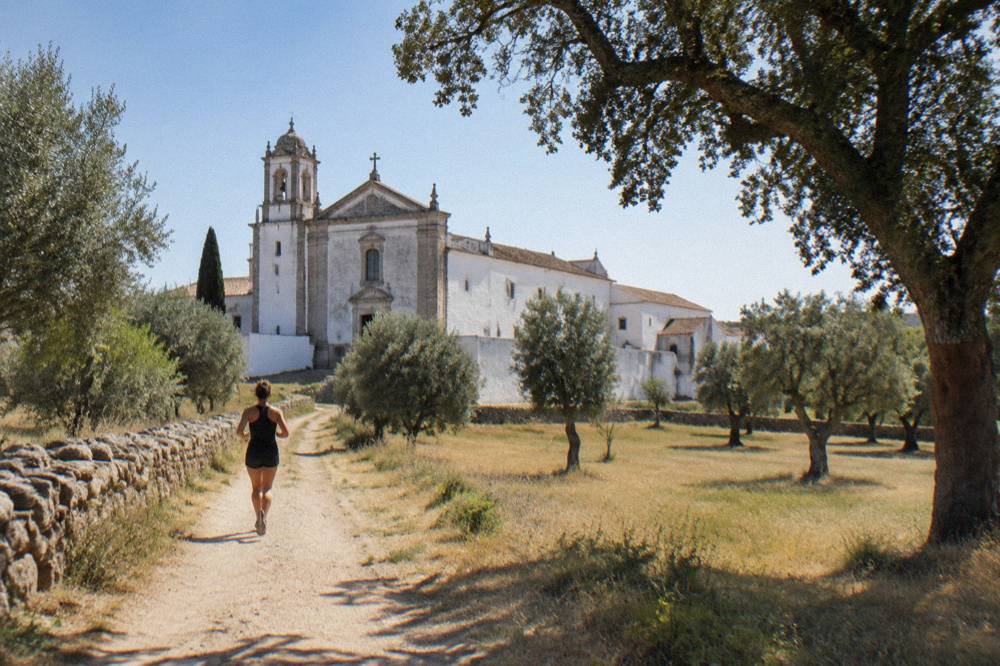
If tasting on the estate itself does not fit your dates, or you want the wider picture, the Alentejo Wine and Cork tour from Évora covers the same landscape with a guide, and it is the natural companion to a Cartuxa visit. The tour runs from Évora, which keeps the day simple if you are staying in the city.
Why Do Wine And Cork Belong Together Around Évora?
Wine and cork are the two great crops of the Alentejo plain around Évora, and they grow in the same landscape: vineyards in the open ground, cork oaks on the poorer soils, often in the same estates. Cork bark is harvested from the trees without felling them, on a long cycle, and the montado, the cork oak pasture, shapes the whole region's look. A visit that covers both, as several Évora tours do, explains the Alentejo countryside better than either crop alone.
The montado is the key idea. It is not a plantation in the neat rows-of-vines sense but a managed woodland of cork oaks, often with grazing or crops beneath, and it covers large parts of the Alentejo. The bark of the cork oak is stripped on a cycle of several years, by hand, and the tree carries on growing; a single tree is harvested many times across its life. That slow rhythm is why cork country looks the way it does, open, park-like, dotted rather than dense, and it is why the region's wine estates so often have cork oaks standing among or beside the vines.
Évora sits in the middle of this. The city's cork museum and cork shops tell the processing side of the story, the factory floor where bark becomes stoppers and goods, while the estates around the city show the growing side. The Cartuxa estate itself is part of that same economy: its farmland is Alentejo farmland, and the vineyards that produce its wine sit inside the montado landscape the region is known for.
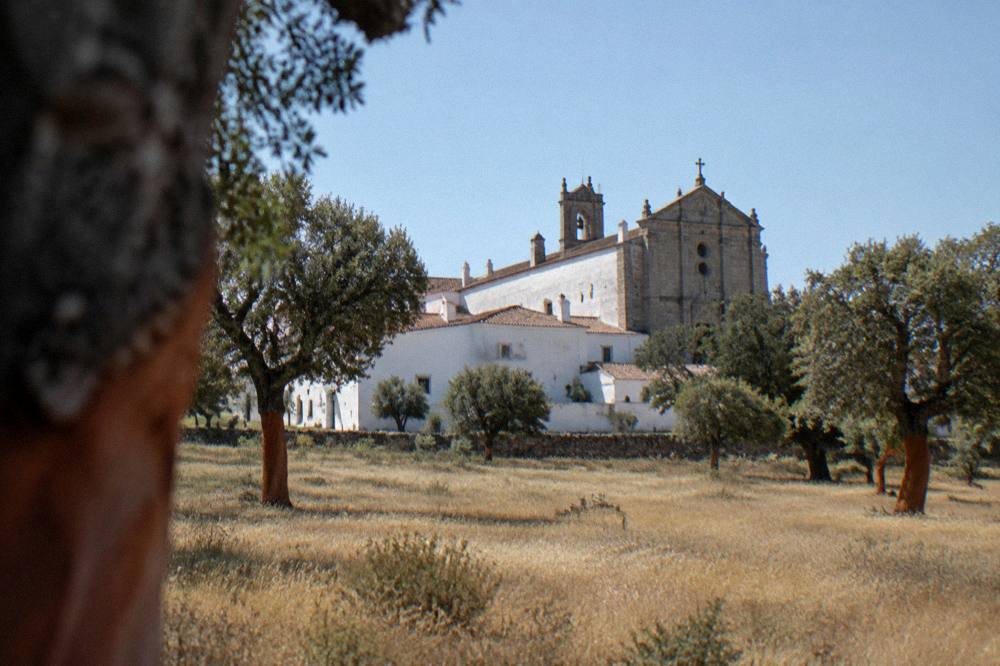
Two guided options make the pairing concrete. takes the forest side on foot, a short, focused walk that suits a morning; the Megalithic and Cork Forest guided tour from Évora, from $50.65 per person and rated 4.9 from 41 reviews over 4 hours, adds the prehistoric stones that share the same countryside. And for the evening, turns the same products into dinner, moving between Évora's tables after dark.
How Does Cartuxa Compare With Évora'S Other Great Buildings?
Cartuxa is Évora's major monastic estate outside the walls, while the city's other great religious buildings, the Sé, the Igreja de São Francisco, the Convento dos Lóios and the University's Jesuit church, all stand inside the historic centre. The Sé is the cathedral and the city's most complete monument visit; São Francisco holds the Capela dos Ossos; the University church and cloister form part of the UNESCO-listed ensemble. Cartuxa is the only one of them whose public identity today is a winery.
Each building answers a different question about Évora. The Sé, whose complete-visit ticket at 5.00 EUR includes the cloister and the roof terrace, is the medieval and Renaissance church at the city's heart. The Igreja de São Francisco, with its 7.00 EUR museum ticket, is the late-Gothic preaching church that became famous for the bone chapel in one of its side spaces. The Jesuit University of the Holy Spirit, whose church and cloister you can see from the Praça do Giraldo end of the centre, belongs to the golden age UNESCO's criterion (iv) praises: the university dates from 1553, and the Jesuits were expelled in 1759. The Convento dos Lóios, next to the Museu de Évora, is a converted convent whose ticket situation is currently listed as temporarily unavailable, so ask at the door rather than expecting a published price.
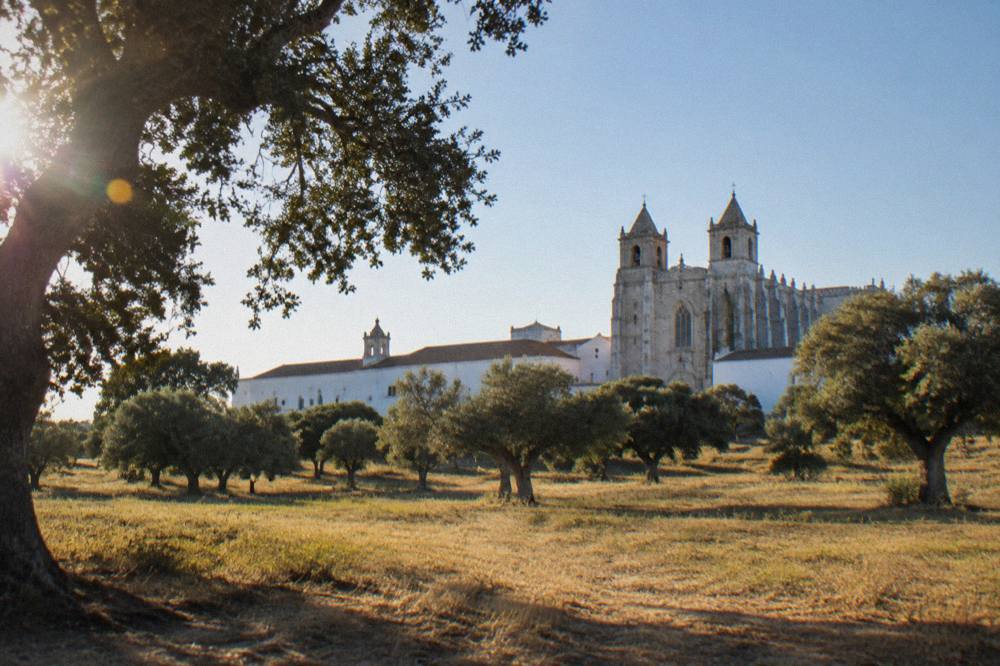
Cartuxa belongs to the same monastic world but on a different footing: outside the walls, privately held, and oriented toward the land rather than toward the city's monument circuit. A good day in Évora can honestly include both, the monument circuit in the morning, the estate in the afternoon, and the contrast between them is part of the point. One shows you the city at its most urban and confident; the other shows you what the Alentejo does with the wealth such a city generated.
| Building | Position | Public status | What defines the visit |
|---|---|---|---|
| Sé de Évora | Historic centre | Cathedral with complete-visit ticket, 5.00 EUR | Cloister, roof terrace view, museum, one ticket |
| Igreja de São Francisco | Historic centre | Church and museum, 7.00 EUR adult | The Capela dos Ossos and the church's museum areas |
| University and its church | Historic centre | Part of the UNESCO ensemble | Jesuit architecture of the city's golden age |
| Convento dos Lóios | Historic centre, beside the Museu de Évora | Ticket temporarily unavailable | Ask at the door for the current situation |
| Cartuxa Monastery estate | Southern edge, outside the walls | Private foundation property; winery visitor offer | Wine estate experience run by the Fundação Eugénio de Almeida |
What Should You Check Before You Go To Cartuxa?
Check the winery's own page for the current visitor offer, the tasting arrangements and any booking requirement, and check it close to your travel date, because those details are seasonal and set by the winery. Confirm what the visit includes, whether the monastery church or cloister forms part of it or only the winery spaces, and whether a tasting needs to be reserved ahead. Then check your transport plan, since the estate sits at the edge of the city rather than in the monument core.
The reason for the repeated instruction is simple: everything on the estate that involves a time or a price is the winery's to set, and a guide that printed a number would be guessing on the winery's behalf. The winery's page is the authority; the door is the backup. If you arrive without checking, the worst case is a short walk and a closed gate, which is a pleasant enough walk past the aqueduct but not the visit you planned.
For the wider trip, Évora's train link is worth knowing in numbers that are published. CP's Intercidades timetable, valid since 6 September 2026, lists six through trains a day from Lisboa Oriente to Évora, departing at 07:02, 09:02, 09:58, 13:35, 17:02 and 19:02 and arriving about 1 hour 40 to 1 hour 45 later, with a second-class fare of 13.90 EUR and first class at 18.50 EUR. Check the timetable's own weekday remarks before assuming every service runs every day. If you are flying in, the Évora Travel Guide pages on getting from Lisbon cover the options in detail.
The climate matters too, because the Alentejo plain is hot in summer and the walk to the estate is in the open. IPMA's 1991-2020 normals for the Évora station show a July mean maximum of 33.3 C and August at 33.5 C, with 31.9 days a year reaching 35 C or more and a record of 45.4 C set on 4 August 2018. Spring and autumn are the comfortable windows; midsummer visits want a morning start and water.
| Month | Mean max (C), 1991-2020 average | Mean min (C) | Days at 35 C or more |
|---|---|---|---|
| April | 20.7 | 8.5 | 0.0 |
| May | 25.0 | 10.9 | 0.7 |
| June | 30.2 | 13.8 | 5.6 |
| July | 33.3 | 15.6 | 11.5 |
| August | 33.5 | 16.0 | 10.9 |
| September | 29.5 | 14.6 | 3.1 |
| October | 24.1 | 12.3 | 0.1 |
What Can You Combine With The Cartuxa Estate?
The estate pairs naturally with three kinds of day: a walking day inside Évora's walls, a wine and cork day among the estates and montado around the city, and a megalithic day out to the Cromeleque dos Almendres and the other prehistoric monuments of the Évora plain. Monsaraz, about 40 to 45 km away, and Estremoz, about 45 km, extend the same landscape into hill villages and marble country. All three combinations start and end in Évora, which keeps the logistics simple.
Inside the walls, the standard loop covers the Sé, the Capela dos Ossos, the Praça do Giraldo and the Roman temple, whose municipal page says the building popularly called the Temple of Diana was probably dedicated to the imperial cult instead, measures 25 by 15 m, was reused for centuries as a municipal butcher's, and had its walls freed in 1870. Add the Almendres Cromlech excursion and you have the two halves of the region's story: the Roman and medieval city, and the far older stones in the countryside around it. The full list of what the city offers is on the things to do in Évora page.
Out in the countryside, the wine and cork theme continues past the Cartuxa estate itself. The Alentejo Wine and Cork tour from Évora, from $78.78 per person and rated 4.7 from 24 reviews over 4 hours, is the direct match for a Cartuxa-oriented day; the 2hr Walk in a Cork Forest, from $71.10 per person and rated 4.7 from 43 reviews, narrows the focus to the montado on foot. The Évora Evening Food and Wine Crawl, from $83.28 per person and rated 4.6 from 19 reviews over 3 hours, is the after-dark version. All three run from Évora, so none of them competes with your walk to the estate; they extend it.
| Guided option from Évora | Duration | From (per person) | Rating |
|---|---|---|---|
| Alentejo Wine and Cork from Évora | 4 hours | $78.78 | 4.7 from 24 reviews |
| 2hr Walk in a Cork Forest | 2 hours | $71.10 | 4.7 from 43 reviews |
| Évora Evening Food and Wine Crawl | 3 hours | $83.28 | 4.6 from 19 reviews |
| Megalithic and Cork Forest guided tour from Évora | 4 hours | $50.65 | 4.9 from 41 reviews |
One further note for anyone building a longer itinerary: Évora is a European Capital of Culture in 2027, promoted by an executive board led by the municipality, with 2026 running as a preparation programme built on the concept of "Vagar". The full 2027 calendar is not yet published, so treat any event date you see for that year with caution and check the official programme pages before locking plans around a festival.
Common Questions About The Cartuxa Monastery
Is the Cartuxa Monastery the same thing as the Cartuxa winery?
The monastery is the historic Carthusian estate on the edge of Évora; the winery is the wine operation that the Fundação Eugénio de Almeida runs on that estate. The wine carries the monastery's name, but the two are not interchangeable: the monastery buildings are foundation property, while the winery is the public-facing part with its own visitor arrangements.
Who owns the Cartuxa estate?
The estate belongs to the Fundação Eugénio de Almeida, a foundation established by the Almeida family. It farms the land, makes the Cartuxa wines from the estate's vineyards and funds cultural and social projects in Évora beyond the wine business.
Is the Cartuxa Monastery included in the Évora Ticket?
No. The Évora Ticket covers the Cidade-Museu network of sites and costs 8 EUR for one day, 10 EUR for two days and 12 EUR for three days, free for children to 12; it does not include the Sé, the Capela dos Ossos or the Museu de Évora, and the Cartuxa estate is not part of that network. Check the pass's own network list for exactly what it covers.
How do I arrange a wine tasting at Cartuxa?
Through the winery's own arrangements. The winery sets its tasting offer, schedule and any booking requirement, and those details change with the season and the harvest, so check the winery's page or ask at the door before you plan the visit around it.
How far is the Cartuxa estate from Évora's historic centre?
The estate sits on the southern edge of the city, just outside the old walls in the direction the Água de Prata aqueduct runs, a short walk from the centre. The exact walking route and time depend on where you start, so treat it as an edge-of-city stop rather than a monument inside the walls.
What else should I see on the same day as Cartuxa?
The natural pairing is the historic centre: the Sé de Évora with its 5.00 EUR complete-visit ticket, the Capela dos Ossos at the Igreja de São Francisco, the Praça do Giraldo and the Roman temple. If you have a full day, add a guided wine and cork tour from Évora to see the estate's landscape in the wider Alentejo context.
The Cartuxa estate is the piece of Évora where the city's monastic past and its agricultural present meet in one place, and that is what makes it worth the walk past the aqueduct arches: a monastery you read about through its vineyards, and a wine you understand better for having seen where its name came from.