Outside The Walls Of Évora: What To See Beyond The Historic Centre
The UNESCO-listed centre of Évora sits inside its walls, but the aqueduct, the gardens, the fairground and the station all lie outside them. This guide covers that other half of the city.
Short answer
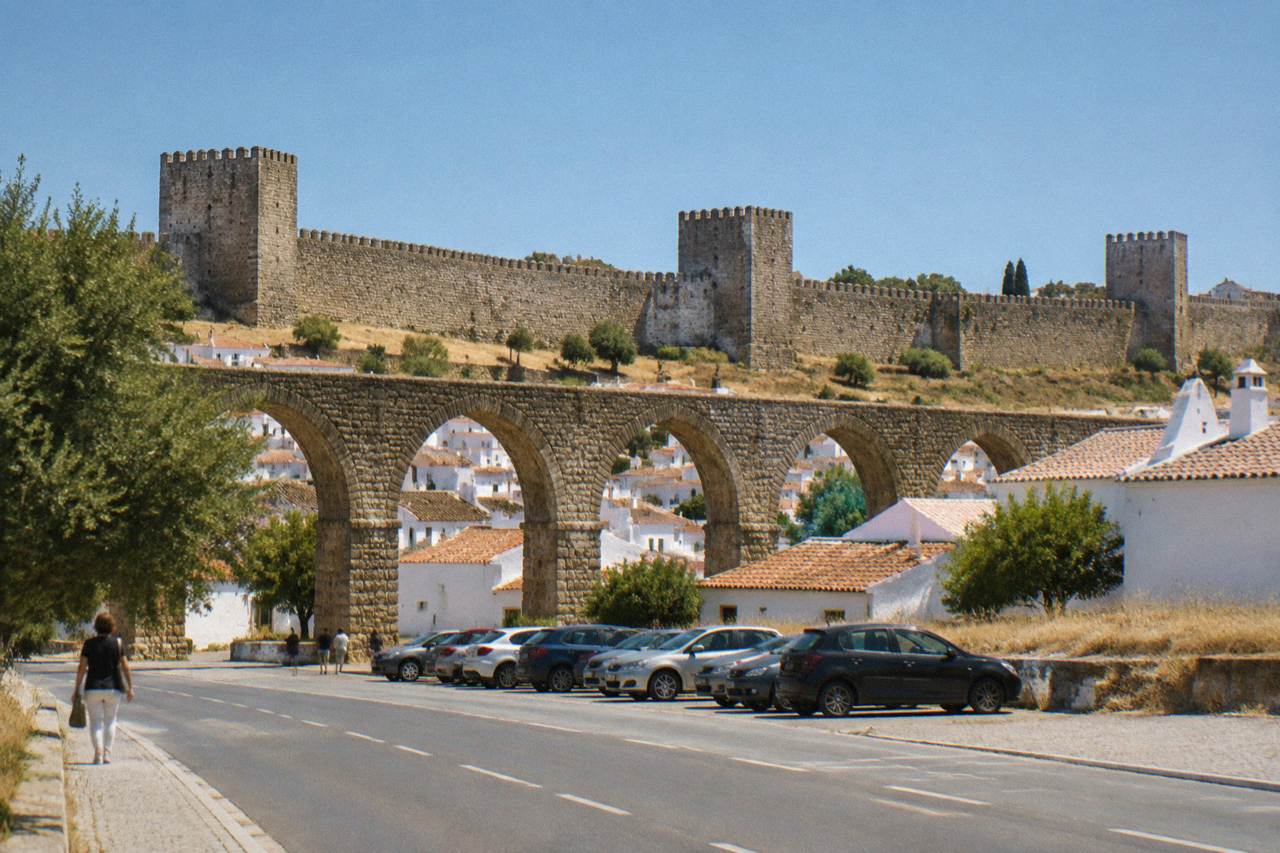
Outside the walls of Évora lie the Água de Prata aqueduct, the Jardim Público, the Rossio de São Brás fairground and the Igreja de São Brás, plus the train and bus stations, the Almendres Interpretation Centre about 8 km away, and the launch points for Alentejo day trips to Monsaraz, Estremoz and Vila Viçosa.
Évora, the inland capital of the Alentejo in Portugal, is famous for the walled historic centre that UNESCO inscribed in 1986, but a large share of the city's daily life happens beyond those walls. The Água de Prata aqueduct strides through the southern edge with houses built between its arches, the Jardim Público spreads west of the old gate, and the Rossio de São Brás, the open fairground where the Feira de São João takes over each June, sits outside the medieval line entirely. This guide covers that other Évora: the monuments, the green spaces, the arrival points and the day trips that begin where the walls end.
The contrast is the point. Inside the walls, the streets are tight, golden and crowded with the Sé de Évora, the Capela dos Ossos and the Praça do Giraldo, all covered in the historic centre guide. Outside them the city opens up: wider avenues, gardens, working neighbourhoods and the long stone spine of the aqueduct. The Évora Travel Guide editorial desk has pulled together what is verified about each of these places, and where a ticket price or an opening hour has not been confirmed on an official page, this guide says so rather than guessing.
What Lies Outside The Walls Of Évora?
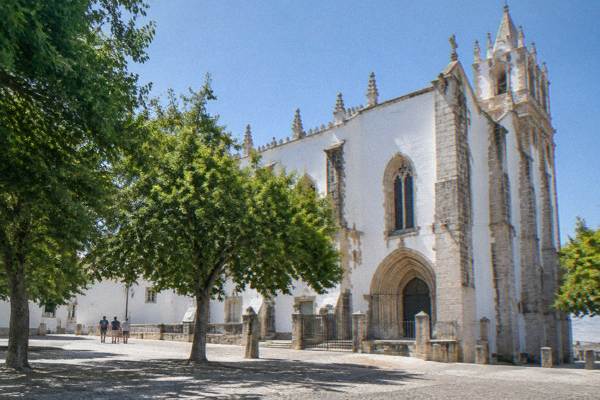
Outside the walls of Évora lie the Água de Prata aqueduct, the Jardim Público, the Palácio de Dom Manuel, the Igreja de São Brás and the Rossio de São Brás fairground, together with the train station, the bus terminal and the modern quarters that grew along the roads to Lisbon. The aqueduct is the most striking structure among them, and unlike the ticketed monuments of the walled centre, almost everything outside the walls is open ground with no entry fee.
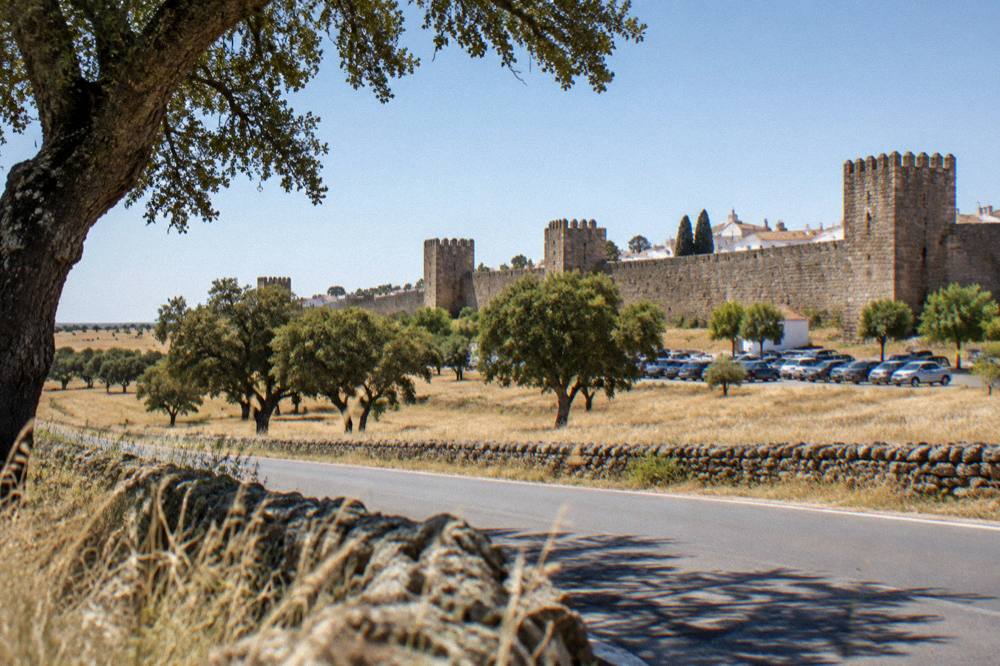
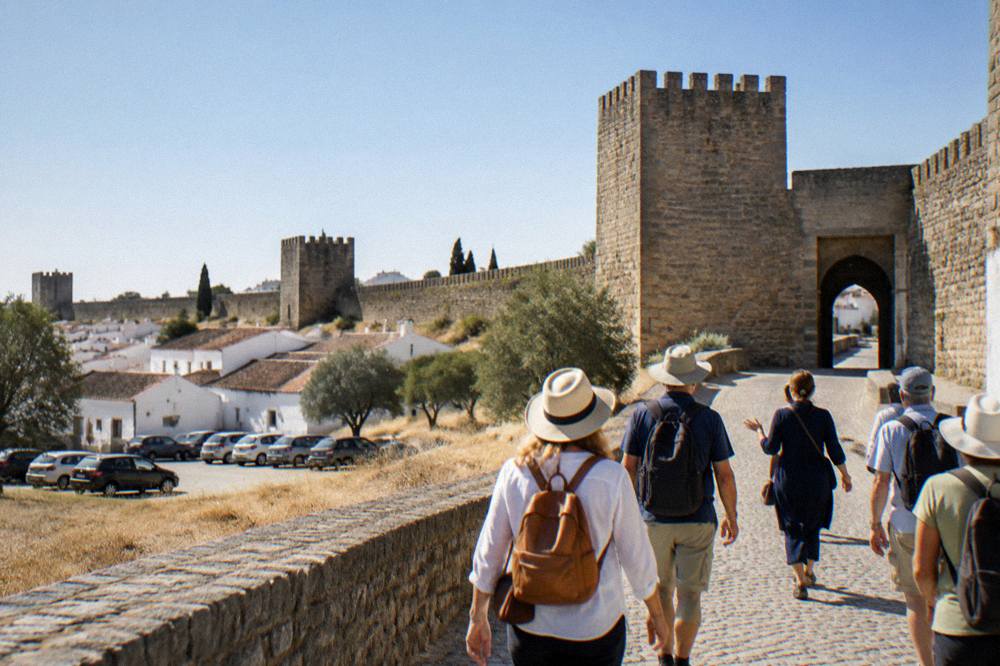
The walls themselves deserve a word first. Évora kept stretches of Roman wall and a full medieval circuit, and the gates still shape how traffic moves; the Roman and medieval walls guide covers them in detail. Every gate leads somewhere different. Leave by the south side and you meet the aqueduct. Leave to the west and you reach the gardens. Leave to the east and you walk toward the Rossio and the station.
| Place | What It Is | What Is Verified |
|---|---|---|
| Água de Prata aqueduct | Stone arches carrying water into the city, houses built between the piers | Open-air structure; no ticket or hours listed on any official page |
| Jardim Público | The city's main public garden west of the walls | Public space; no hours or price verified |
| Palácio de Dom Manuel | Former royal palace by the gardens | No hours or ticket verified |
| Igreja de São Brás | Church facing the Rossio, with a wide forecourt | No hours or price verified |
| Rossio de São Brás | Open fairground outside the east side | Feira de São João 2026 ran 23 June to 5 July |
| Évora railway station | CP terminus outside the walls | Six through trains from Lisboa Oriente, timetable valid since 6 September 2026 |
| Almendres Interpretation Centre | Megaliths visitor centre in Guadalupe village | Summer 10:00-18:00, winter 10:00-17:00 |
None of this is dead ground. The quarters outside the walls hold a large share of the municipality's roughly 53,000 residents, and the fairground, the station square and the garden are where the city behaves like itself rather than like a museum. If your time is short, the one day in Évora itinerary keeps you mostly inside; with a second day, the outside-the-walls half earns its own morning.
How Does The Água De Prata Aqueduct Frame The Southern Edge?
The Água de Prata aqueduct runs along the southern edge of Évora outside the walls, a line of tall stone arches with small whitewashed houses built into and between the piers, and it is one of the few major Évora monuments with no ticket, no queue and no listed hours, because it is simply part of the street. No length, height, construction date or architect has been verified on an official page, so none is stated here.
The name means silver water, and the structure brought water into the city for centuries. Today its arches march through a residential quarter where laundry hangs beside centuries-old masonry, one of the strangest and most photographed streets in the Alentejo. You walk under it, through it and past it without ever buying anything, which makes it the natural first stop for anyone tired of ticket desks.
The best approach is on foot from inside the walls, heading south through the old gates. The street narrows, the arches appear above the roofline, and suddenly the scale becomes clear: the piers are taller than the houses wedged beneath them. Photographers rate this stretch as one of the city's signature frames, and the low evening sun is when the stone glows hardest.
Practical notes are short because the facts are short. There is no visitor centre at the arches themselves, no published hours because the street is always open, and no fee. The things to do in Évora overview places the aqueduct among the free sights, and the Évora rooftop views guide notes where the arches can be seen from above. Treat the aqueduct as a street, not a monument, and it gives more.
What Are The Jardim Público, The Rossio De São Brás And The Igreja De São Brás?
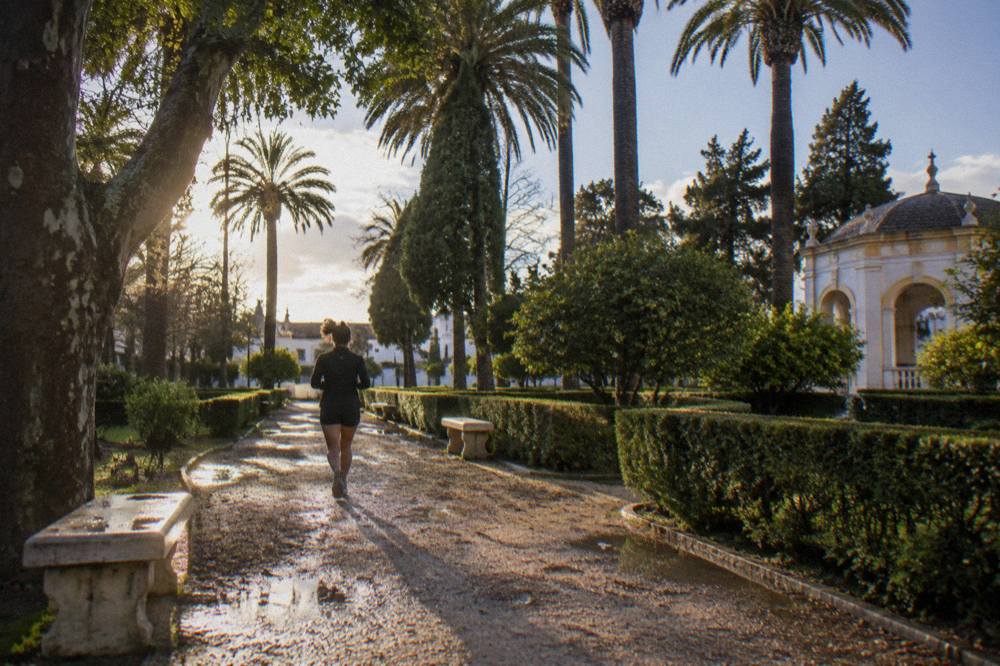
West of the walls lies the Jardim Público, Évora's main public garden, beside the Palácio de Dom Manuel; east of them lies the Rossio de São Brás, the broad fairground outside the old gate, fronted by the Igreja de São Brás with its deep arcaded porch. The garden and the square are free public spaces, and no hours or prices have been verified for the church or the palace, so check locally before planning an interior visit.
The Jardim Público is where the city exhales. Inside the walls the streets are stone and shade; out here there are gravel paths, ponds, ducks and enough lawn that children can actually run. The garden sits next to the Palácio de Dom Manuel, the former royal palace whose surviving fragment faces the green, and the pairing of garden and palace is the closest thing Évora has to a promenade quarter. No opening hours for either have been confirmed on an official page, and a public garden in a Portuguese city is generally usable from morning to dusk, but this guide states no hours it cannot source.
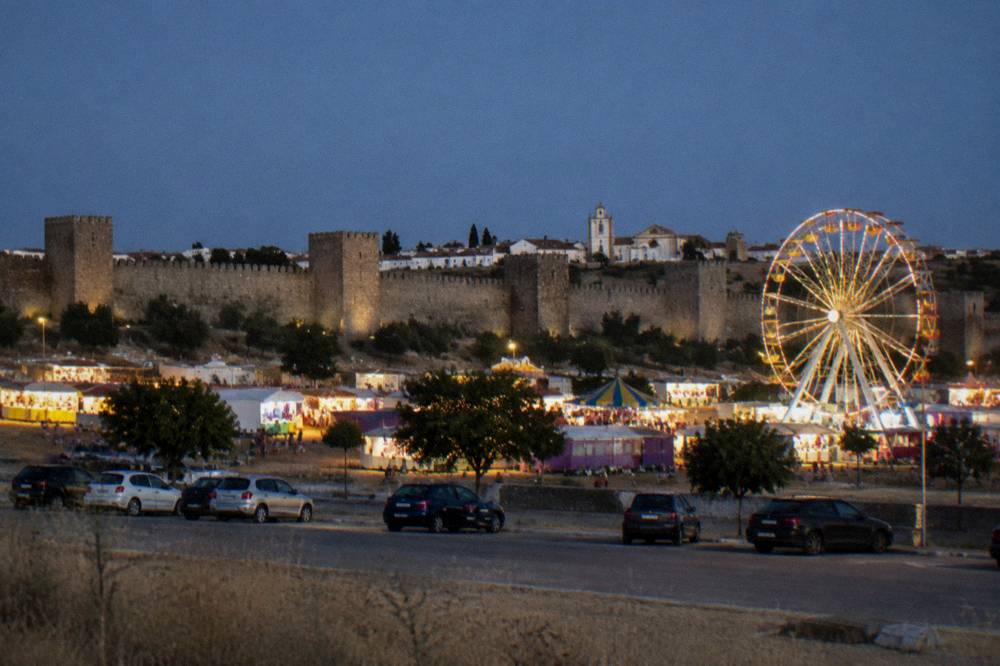
The Rossio de São Brás is the other pole. It is a wide, flat, open space outside the eastern wall, and for most of the year it reads as a parking field and a walkway, but each June it becomes the site of the Feira de São João, the fair covered in the events section below. The Igreja de São Brás stands at its head, a church with a striking Manueline-style arched forecourt that most day visitors never reach because they never leave the walled centre.
A sidecar tour is an unusually good fit for this half of the city, since the open roads outside the walls suit a motorcycle combination far better than the narrow lanes inside them. The Medieval Tour of Évora on a Sidecar & Wine Tasting runs three hours from $61.90 per person, is rated 4.9 from 16 reviews, and finishes with a wine tasting.
If you would rather compare the full range, the three tours below all start in Évora and all spend time on the ground beyond the gates as well as inside them.
Where Do Trains And Buses Arrive, Outside The Walls?
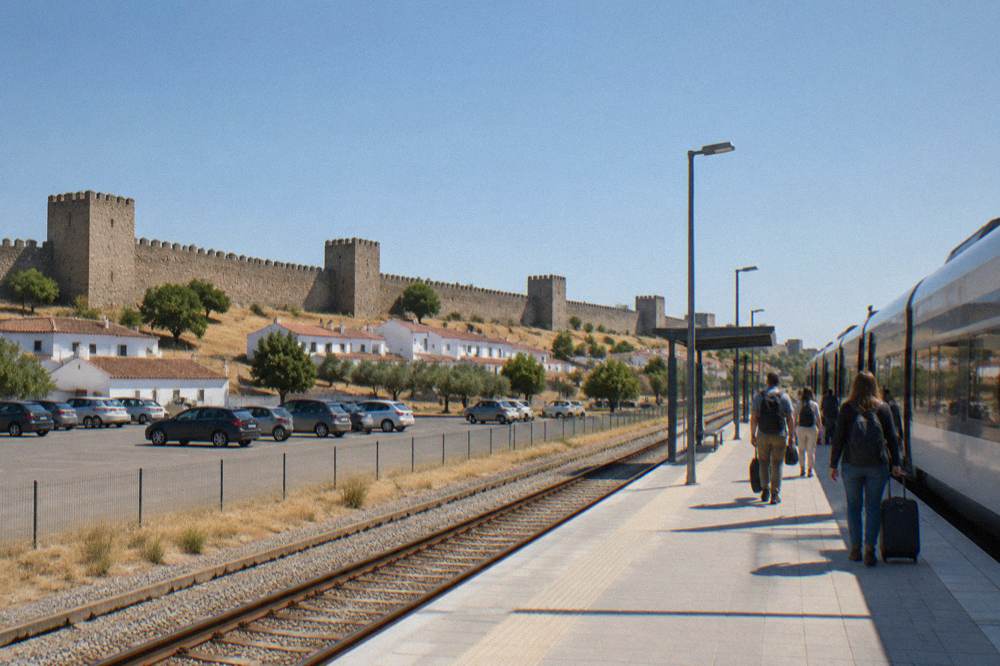
Évora's railway station and its bus terminal both sit outside the historic walls, a short walk or a brief taxi ride from the gates, and CP's timetable valid since 6 September 2026 lists six through Intercidades trains from Lisboa Oriente, taking about 1 hour 40 to 1 hour 45, with a second-class fare of 13.90 EUR and first class at 18.50 EUR. Coach services from Lisbon and the airport also stop at the terminal outside the walls, though no coach fare or journey time is verified.
The train is the civilised way in. The station is a modest terminus north of the centre, and the walk from platform to old gate passes through ordinary Évora streets, a good first lesson in the city's two halves. The table below is the full through-service pattern from the CP timetable valid since 6 September 2026; always check the current PDF before travelling, as the weekday remarks matter.
| Depart Lisboa Oriente | Arrive Évora | Journey Time |
|---|---|---|
| 07:02 | 08:47 | about 1 h 40 to 1 h 45 |
| 09:02 | 10:45 | about 1 h 40 to 1 h 45 |
| 09:58 | 11:40 | about 1 h 40 to 1 h 45 |
| 13:35 | 15:13 | about 1 h 40 to 1 h 45 |
| 17:02 | 18:41 | about 1 h 40 to 1 h 45 |
| 19:02 | 20:46 | about 1 h 40 to 1 h 45 |
Fares on this route are 13.90 EUR in second class and 18.50 EUR in first class, per the CP price table valid for 2026. The trains call at Entrecampos, Sete Rios, Pragal, Pinhal Novo, Vendas Novas and Casa Branca, and the six services listed run through to Évora without a change. The Lisbon to Évora by train guide covers booking, and the Lisbon to Évora guide compares rail with every other option.
Coaches reach the same outside-the-walls zone. Rede Expressos and FlixBus serve the Évora terminal, including links from Lisbon airport, but this guide states no coach fare or journey time because none has been verified on an operator page; the Lisbon to Évora by bus guide explains what to check. Drivers arriving by car face the same geography in reverse: the walls bar through traffic, so the Évora parking guide matters more here than anywhere else in the city, since the car stays outside while you go in.
What Happens On The Rossio: The Feira De São João And Évora 2027?
The Rossio de São Brás hosts the Feira de São João, which in 2026 ran from 23 June to 5 July under the theme "Évora: Capital Europeia ao Sul", an annual event held outside the walls, while the city as a whole is a European Capital of Culture in 2027, with a preparatory 2026 programme built on the concept of "Vagar" and a full 2027 calendar not yet published. The GUADIANA literature festival, 9 to 11 October 2026, brought 28 authors from nine countries.
The Feira de São João is the moment the outside-the-walls half of Évora takes over. For close to two weeks the fairground fills with stalls, rides and crowds, and the theme chosen for 2026, "Évora: Capital Europeia ao Sul", pointed straight at the Capital of Culture title arriving the following year. The Câmara Municipal's edital fixing the 2026 dates is the source for all of this; 2027 fair dates have not been published, so this guide says nothing beyond the late-June-to-early-July pattern that 2026 established.
| Event | Dates | Place | Verified Detail |
|---|---|---|---|
| Feira de São João 2026 | 23 June to 5 July 2026 | Rossio de São Brás | Theme "Évora: Capital Europeia ao Sul" |
| GUADIANA literature festival | 9 to 11 October 2026 | Évora | First edition, 28 authors from nine countries |
| Évora 2027 preparation year | Throughout 2026 | City and Alentejo | Programme built on the concept of "Vagar" |
| European Capital of Culture | 2027 | Évora and the Alentejo | Full programme not yet published |
The Capital of Culture title belongs to Évora and the Alentejo together, promoted by an executive board led by the municipality with the regional culture directorate, the University of Évora and other partners. For a visitor this means the outside-the-walls venues, the Rossio among them, will carry more of the 2027 programme than the cramped walled centre ever could. The Évora events and festivals guide tracks what is confirmed, and the best time to visit guide weighs the festival calendar against the summer heat.
Which Day Trips Begin Where The Walls End?
Every Alentejo day trip from Évora begins outside the walls, at the bus terminal, the station or the road ring, and the verified rounded distances are Arraiolos about 20 km, Monsaraz about 40 to 45 km, Estremoz about 45 km, Vila Viçosa about 60 km, Elvas about 80 km and Marvão about 120 km, with Lisbon about 130 km away. No drive time, timetable or entry fee for any of these towns is verified unless stated, so the distances below are planning figures only.
The roads fan out in every direction, and each carries a different Alentejo. Arraiolos is the carpet town, close enough for a half morning. Estremoz and Vila Viçosa are the marble and ducal pair to the northeast. Monsaraz is the walled hill village above the Alqueva lake. Elvas is the fortress by the Spanish border, Marvão the eagle-nest town at the far edge of a reasonable day.
| Destination | Rounded Distance From Évora | Known For |
|---|---|---|
| Arraiolos | about 20 km | Handmade embroidered carpets |
| Monsaraz | about 40 to 45 km | Walled hill village above the Alqueva lake |
| Estremoz | about 45 km | Marble quarries and a hilltop castle |
| Vila Viçosa | about 60 km | Ducal palace and marble town |
| Elvas | about 80 km | Border fortifications and aqueduct |
| Marvão | about 120 km | Mountain-top walled village |
| Lisbon | about 130 km | The national gateway city |
The best day trips from Évora guide compares them all, and the individual guides to Monsaraz, Estremoz and Vila Viçosa go deeper. One megalithic detour deserves special mention because its visitor infrastructure sits outside the walls of the city in every sense: the Almendres Interpretation Centre in the village of Guadalupe, whose page directs visitors to take the national road toward Lisbon and, after 8 km, follow the turn-off. The centre keeps summer hours of 10:00 to 18:00 from 1 May to 31 October and winter hours of 10:00 to 17:00 from 1 November to 30 April, and the Cromeleque dos Almendres guide covers the stones themselves.
Guided tours remove the driving question entirely. The Monsaraz and Wine guided tour from Évora runs four hours from $78.78 per person, rated 4.6 from 51 reviews, and the Megalithic and Cork Forest guided tour from Évora runs four hours from $50.65 per person, rated 4.9 from 41 reviews; both start in the city and spend their whole route in the countryside beyond.
When Is The Best Time To Walk Outside The Walls?
The best time to walk outside the walls of Évora is spring and autumn, because IPMA's 1991-2020 climate normals for the Évora station show July averaging a maximum of 33.3 C and August 33.5 C, with 31.9 days a year reaching 35 C or more, while April and October average maximums of 20.7 C and 24.1 C with far fewer extreme days, and the record maximum stands at 45.4 C recorded on 4 August 2018.
The outside-the-walls half is the exposed half. Inside the walls, lanes stay in shade most of the day; the aqueduct street, the Rossio and the garden offer long stretches with no cover at all, so the heat numbers matter more here than anywhere in the centre. The table below pulls the months that matter for planning from the IPMA 1991-2020 normals for station Évora, number 558.
| Month | Mean Max (C) | Mean Min (C) | Rain (mm) | Days Max 30 C+ |
|---|---|---|---|---|
| April | 20.7 | 8.5 | 62.1 | 0.3 |
| June | 30.2 | 13.8 | 10.6 | 15.1 |
| July | 33.3 | 15.6 | 2.7 | 23.7 |
| August | 33.5 | 16.0 | 6.0 | 25.0 |
| September | 29.5 | 14.6 | 33.9 | 13.9 |
| October | 24.1 | 12.3 | 81.5 | 2.9 |
Read the columns together. July and August are dry almost to the point of comedy, 2.7 mm and 6.0 mm of rain across the whole month, but they are also the months with 23.7 and 25.0 days at 30 C or above on average. October trades that heat for 81.5 mm of rain spread over 7.7 days with measurable falls. The Évora weather guide carries the full monthly table, and the seasonal guides to spring, summer and autumn translate it into advice. If you do travel in high summer, walk the aqueduct street and the garden before ten in the morning and treat the middle of the day as museum time back inside the walls.
Which Guided Tours Explore Évora Beyond The Historic Centre?
The guided tours that spend real time outside the walls of Évora include the Évora: Tales and Legends Guided Walking Tour at $52.90 per person for 2.5 hours, rated 4.8 from 40 reviews, the Medieval Tour of Évora on a Sidecar & Wine Tasting at $61.90 per person for 3 hours, rated 4.9 from 16 reviews, and the Evora University, Cathedral & Bones Chapel SkipLine + Wine tour at $91.39 per person for 3 hours, rated 5 from 48 reviews, all starting in the city.
A good guide earns their fee out here. The outside-the-walls quarter has no ticket desk and no interpretation panel doing the work for you, so the stories, the dates and the reasons the aqueduct looks the way it does travel better with someone whose job is to know them. The Tales and Legends walk is the natural pick: 2.5 hours, from $52.90 per person, rated 4.8 from 40 reviews, and its route uses the gates and the streets beyond them as its stage. You can also check availability directly on the operator's live listing: Check availability.
The skip-line option suits visitors who want the ticketed monuments of the walled centre handled for them before venturing out. Evora University, Cathedral & Bones Chapel SkipLine + Wine costs from $91.39 per person, runs three hours, carries a perfect 5 rating from 48 reviews, and ends with a wine tasting, a fair reward after the stone.
| Tour | Duration | From (USD) | Rating |
|---|---|---|---|
| Évora: Tales and Legends Guided Walking Tour | 2.5 hours | $52.90 | 4.8 from 40 reviews |
| Medieval Tour of Évora on a Sidecar & Wine Tasting | 3 hours | $61.90 | 4.9 from 16 reviews |
| Evora University, Cathedral & Bones Chapel SkipLine + Wine | 3 hours | $91.39 | 5 from 48 reviews |
| Megalithic and Cork Forest guided tour from Évora | 4 hours | $50.65 | 4.9 from 41 reviews |
| Monsaraz and Wine guided tour from Évora | 4 hours | $78.78 | 4.6 from 51 reviews |
| The Essential Free Tour of Évora on GuruWalk | 2 hours | free, tip based | 4.93 from 774 reviews |
The free option deserves its line. The Essential Free Tour of Évora, run on GuruWalk, is free and tip based, lasts two hours, and holds a 4.93 rating from 774 reviews, the deepest review pool of any walk in the city; GuruWalk's model means you pay the guru what you think the walk was worth at the end. The Évora walking tour guide compares it with the paid options in full.
For a final comparison, here are the three tours this guide rates highest for covering both halves of Évora in one outing.
Common Questions About Outside The Walls Of Évora
What is outside the walls of Évora?
The Água de Prata aqueduct, the Jardim Público, the Palácio de Dom Manuel, the Igreja de São Brás, the Rossio de São Brás fairground, the railway station and the bus terminal all lie outside the historic walls, along with the modern residential quarters and the roads toward Lisbon and the Alentejo towns.
Where is the Feira de São João held?
The Feira de São João is held on the Rossio de São Brás, the fairground outside the eastern wall. The 2026 edition ran from 23 June to 5 July under the theme "Évora: Capital Europeia ao Sul"; 2027 dates have not been published.
How much does the train from Lisbon to Évora cost?
CP's price table for the Intercidades service lists 13.90 EUR in second class and 18.50 EUR in first class for Lisboa Oriente to Évora, with six through trains taking about 1 hour 40 to 1 hour 45 under the timetable valid since 6 September 2026.
How far is the Almendres Interpretation Centre from Évora?
The centre's own page directs visitors to take the national road toward Lisbon from Évora and, after 8 km, follow the turn-off to the village of Guadalupe. The centre is open 10:00 to 18:00 in summer, 1 May to 31 October, and 10:00 to 17:00 in winter, 1 November to 30 April.
Do you need a car to see what is outside the walls of Évora?
No. The aqueduct, the gardens, the Rossio and the stations are all walkable from the gates of the walled centre, and guided tours cover the megalithic sites and the Alentejo towns with transport included. A car widens the day-trip range, but the parking rules around the walls make it a liability inside the city; the Évora parking guide explains the options.
Is the Évora Ticket valid for sites outside the walls?
The Évora Ticket is a multi-site pass for the Cidade-Museu network, priced at 8 EUR for one day, 10 EUR for two days and 12 EUR for three days, free to age 12. It does not include the Sé de Évora, the Capela dos Ossos or the Museu de Évora, and the aqueduct, the gardens and the Rossio are public spaces that need no ticket at all.
The walls of Évora are the city's frame, not its boundary. Spend a morning under the aqueduct's arches, an afternoon in the gardens and an evening on the Rossio, and the UNESCO-listed centre becomes one half of a whole city rather than the whole story.