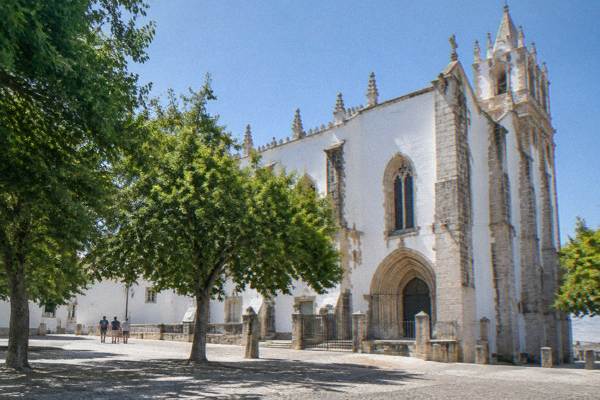
Graça Church In Évora, Portugal: What To See At The Igreja Da Graça
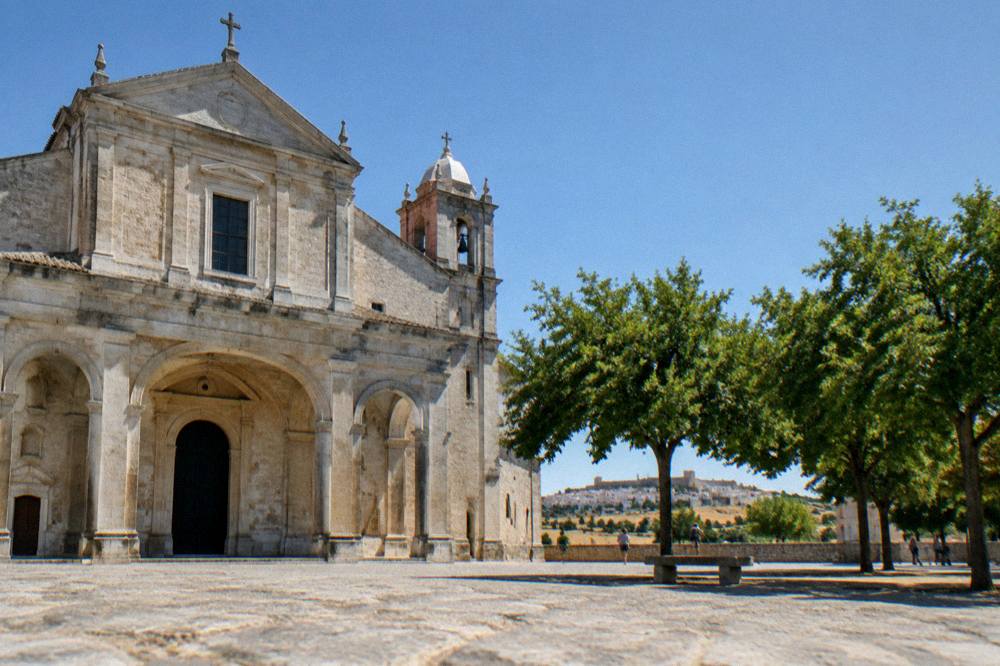
The Igreja da Graça is one of the landmarks of Évora's UNESCO-listed skyline, a city that sits inland on the Alentejo plain about 130 km from Lisbon.
Short answer
The Igreja da Graça stands inside the UNESCO Historic Centre of Évora, Portugal, one of the city's landmark churches. No ticket price or opening hours are published on an official page, so check at the door before planning an interior visit; the church is easiest to reach on foot from Praça do Giraldo, and CP Intercidades trains from Lisboa Oriente cover the run from Lisbon in about 1 hour 40 to 1 hour 45.
The Igreja da Graça is one of the churches that define the skyline of Évora, the capital of the Alentejo region of Portugal and of the district that carries its name. The city sits inland on the Alentejo plain, roughly 90 km from the Atlantic and about 130 km from Lisbon, and its historic centre was inscribed on the UNESCO World Heritage list in 1986 under criteria (ii) and (iv). UNESCO's criterion (iv) calls Évora the finest example of a city of the golden age of Portugal, a status it owes largely to being spared the destruction of the 1755 Lisbon earthquake. The Graça church belongs to that ensemble: a landmark silhouette above the rooftops, best appreciated on foot, slowly, the way the historic centre rewards.
What Is The Igreja Da Graça In Évora?
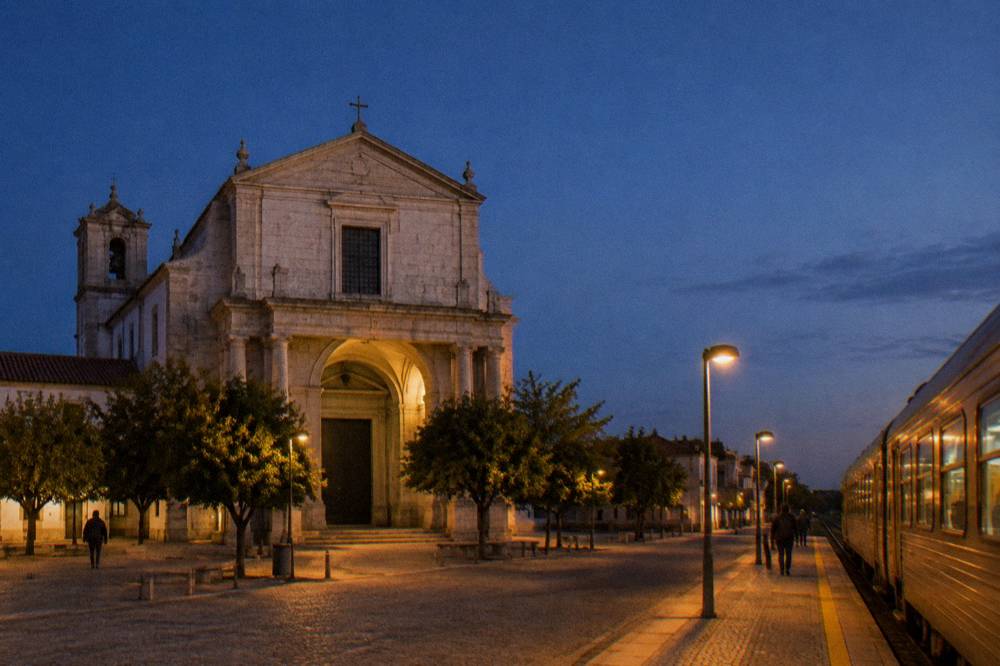
The Igreja da Graça is one of the landmark churches of Évora, Portugal, standing inside the UNESCO-listed historic centre and forming part of the city's celebrated skyline of towers and walls. No official page publishes its opening hours, ticket price or visiting conditions, so the practical answer is to treat the exterior and its place in the cityscape as the guaranteed sight, and to check at the door, or with the tourist office on Praça do Giraldo, before counting on an interior visit.
That is a more useful answer than it might sound. Évora is a compact walled city where the pleasure of a visit comes from the ensemble rather than from single monuments, and the Graça church plays its role in that ensemble. Its tower is one of the vertical accents that make Évora recognisable from a distance, alongside the cathedral, the Templo Romano and the surviving stretches of the medieval wall. The Évora Travel Guide editorial desk's advice for churches like this one is simple: build the walk around the exterior, the surrounding lanes and the nearby sights, and treat the interior as a bonus if the door happens to be open.
A word on names, because Évora's church names repeat across Portugal. The Igreja da Graça here is the Évora one, in the Alentejo; several other Portuguese cities have churches of the same dedication, and "Evora" is also a Lotus sports car model and a surname, so searches that drop the accent or the city can land somewhere else entirely. This page is about the church in Évora, Portugal, and nothing else.
Where Does The Igreja Da Graça Sit Within The Évora Historic Centre?
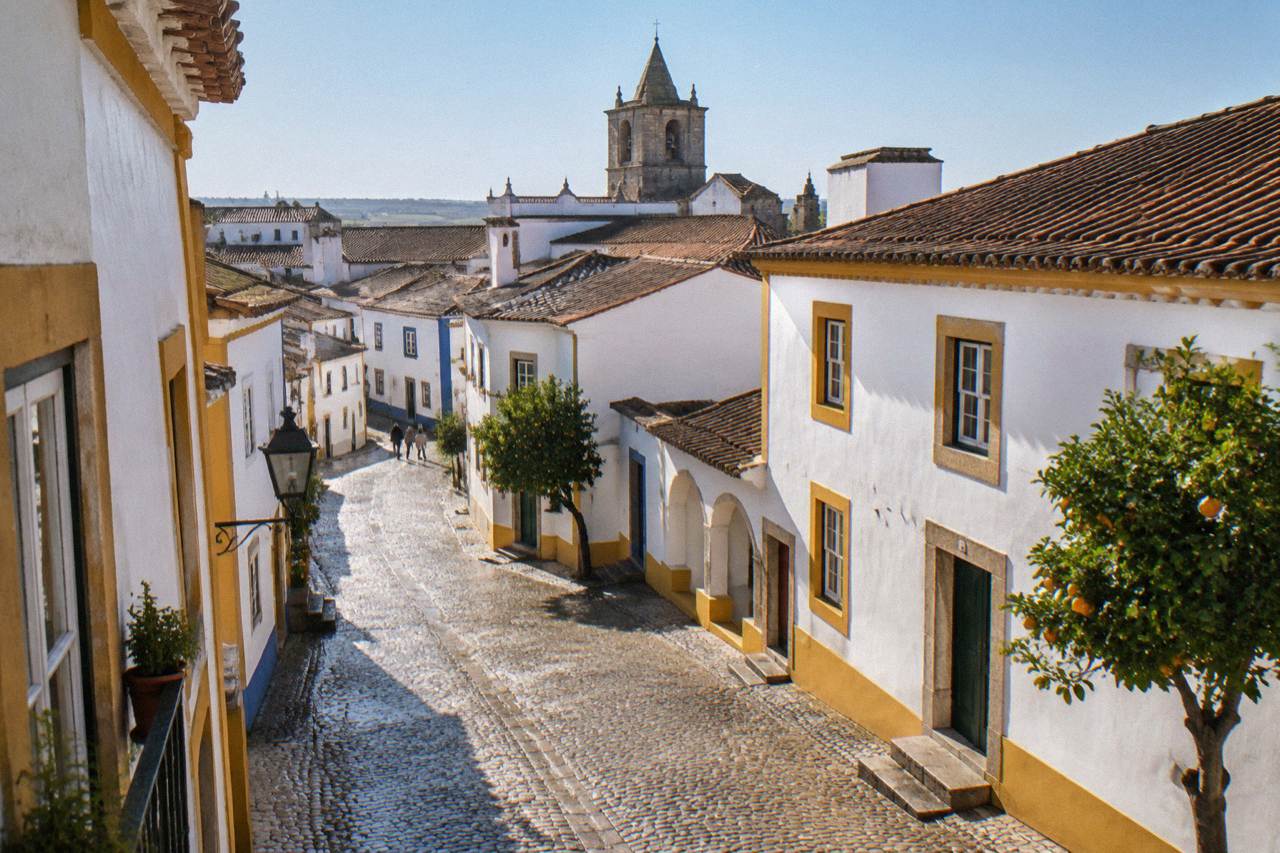
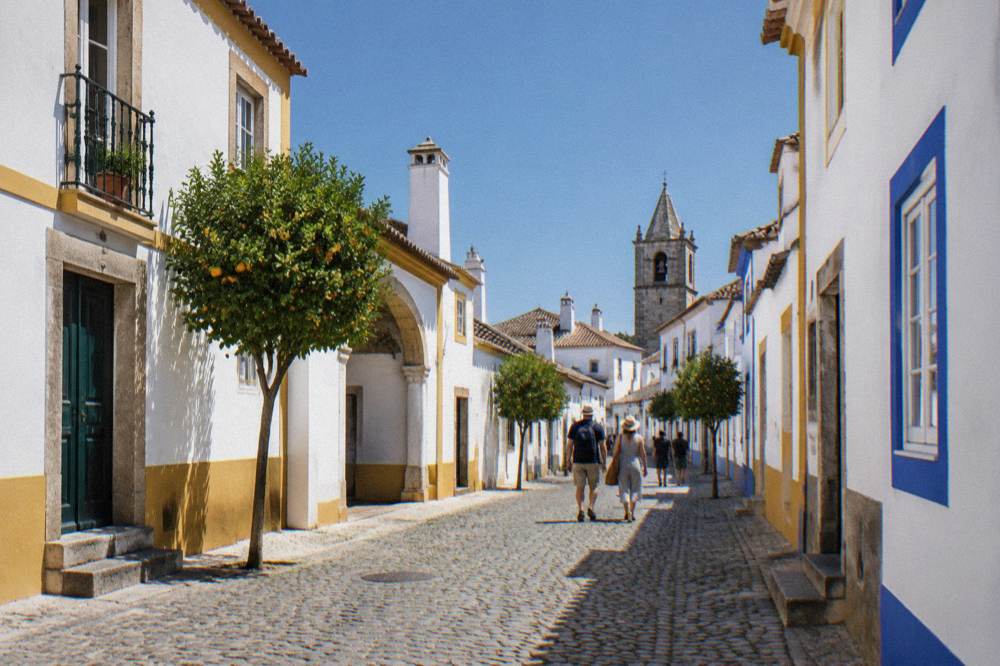
The Igreja da Graça sits inside the walled historic centre of Évora, within the zone UNESCO inscribed in 1986, in the part of the city where the lanes climb away from the low-lying core around Praça do Giraldo. It is a walking city: everything in this article, from the cathedral to the Roman temple, is reached on foot, and no published walking time between the church and any other monument should be trusted as a hard figure. Plan by sightlines, not minutes.
The historic centre of Évora is small enough that a first-time visitor can hold its geography in mind after a single day. Praça do Giraldo is the main square and the natural orientation point; the tourist office sits at number 73 there, reachable on +351 266 777 071. From the square, the streets rise and fall gently toward the walls, and the churches, convents and palaces interlock so tightly that a walk rarely goes more than a few paces without passing something worth slowing down for.
Sights that belong naturally on the same walk as the Graça church include the Sé de Évora cathedral, the Templo Romano, the Igreja de São Francisco and Capela dos Ossos, the Jardim Público and the São Brás chapel outside the walls. The municipal page for the Templo Romano records that the temple, popularly called the Temple of Diana since the 17th century, was probably dedicated to the imperial cult, measures 25 x 15 m, was reused at one point as a municipal butcher's and had its walls freed in 1870. That kind of layered reuse is the story of the whole centre, and it is why a guided walk earns its price in Évora more than in most cities.
A flexible, low-cost way to cover this ground is the Personal and Flexible Walking Tour in the Historic Center, from $13.51 per person, rated 4.8 from 105 reviews, about 3 hours long, which can be steered toward the churches and lanes around the Graça. Check availability if that shape of morning suits.
What Can You See Around The Igreja Da Graça If The Doors Are Shut?
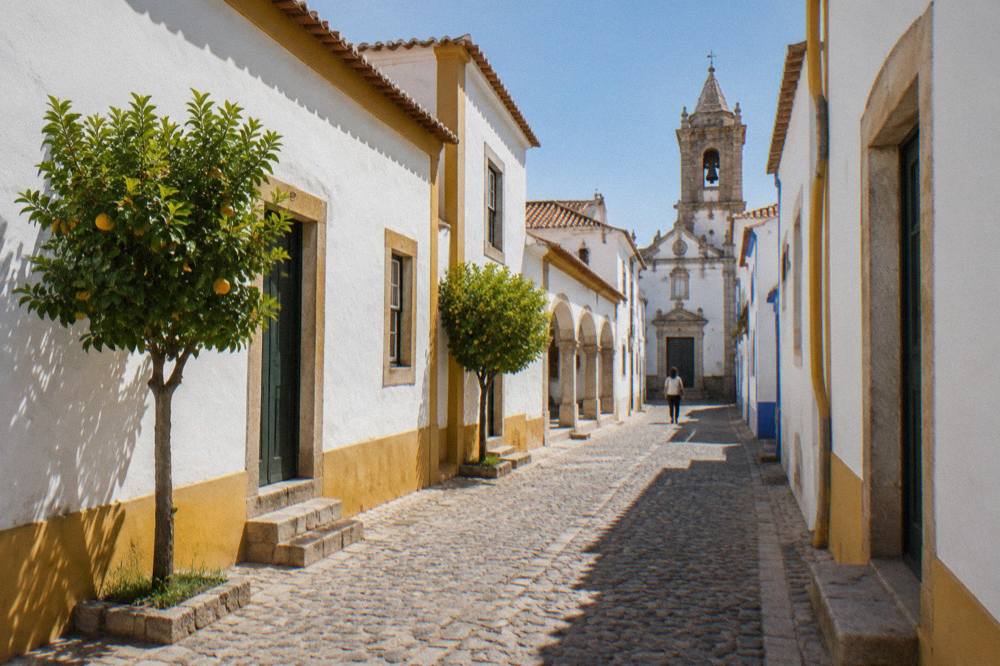
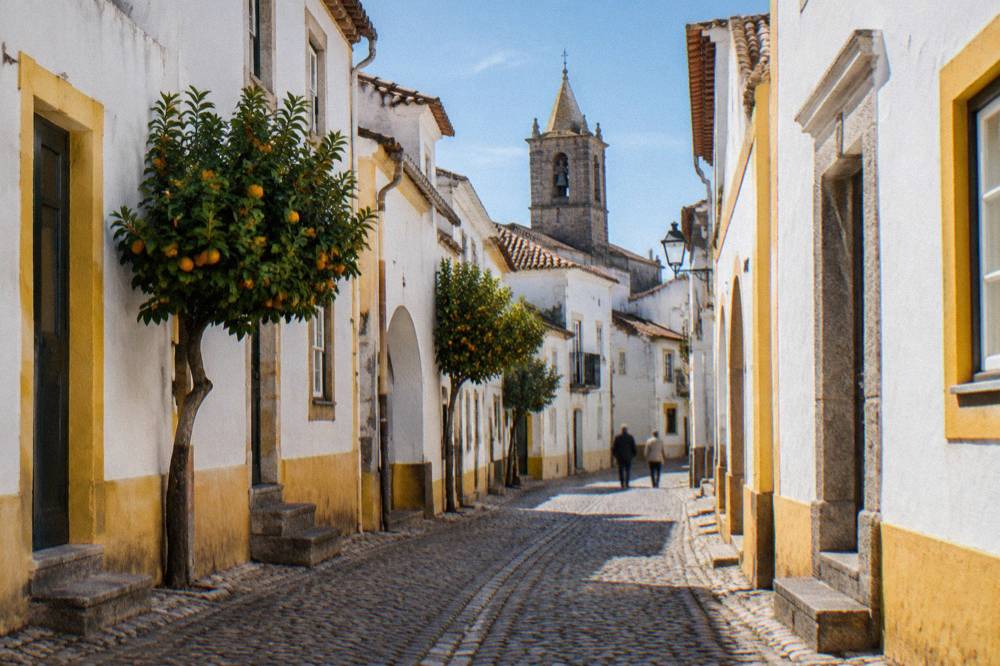
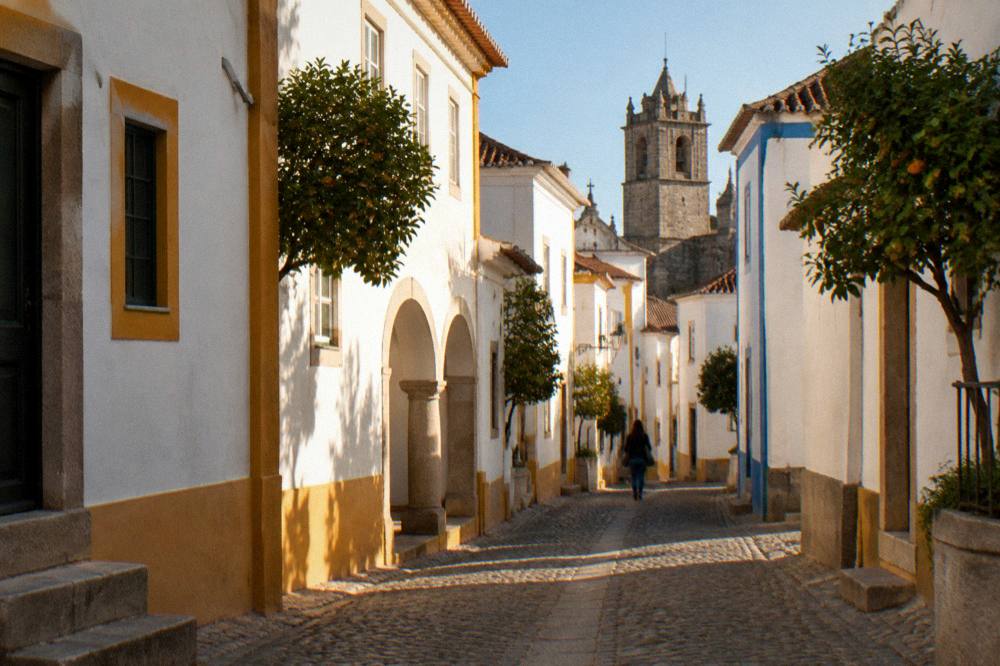
The honest answer is that the exterior, the surrounding lanes and the skyline view are the reliable sights, and they are considerable: the church stands among the whitewashed walls and tiled roofs of a UNESCO city, a short walk from the cathedral, the Roman temple and the public garden. If the interior is closed, nothing about a visit to this part of Évora is wasted, and pairing the church with two or three ticketed monuments nearby fills a full morning without any risk of a locked door.
This is where a little planning pays off. The ticketed monuments of Évora publish their prices, and they are modest by the standards of European heritage cities, so a visitor who budgets for three or four of them and treats the Graça as a free, always-available sight loses nothing.
| Monument | Adult ticket | Concessions | Opening pattern |
|---|---|---|---|
| Sé de Évora (cathedral, cloister, roof, museum) | 5.00 EUR | Children up to 12 free with a guardian | 9:00-17:00; closed 24 Dec afternoon, 25 Dec, 1 Jan |
| Igreja de São Francisco / Capela dos Ossos | 7.00 EUR | Youth to 25 and seniors over 65 5.00 EUR; family 15.00 EUR | Summer 9:00-18:30, winter 9:00-17:00; closed 1 Jan, Easter Sunday, 24 Dec afternoon, 25 Dec |
| Museu de Évora | 8 EUR | Youth 13-24, seniors over 65 and family ticket 50% off; free to age 12; free Sundays and holidays for residents in Portugal | Tue-Sun 9:30-13:00 and 14:00-17:30; closed Mondays, 1 Jan, Easter Sunday, 1 May, 29 June, 25 Dec |
| Évora Ticket (multi-site pass) | 8 EUR one day, 10 EUR two days, 12 EUR three days | Free to age 12 | Sites vary; it does not include the Sé, the Capela dos Ossos or the Museu de Évora |
| Igreja da Graça | No published price | None published | Check at the door or the tourist office on Praça do Giraldo 73 |
The Sé's own ticket page states that one 5.00 EUR ticket covers the cathedral, the cloister, the panoramic roof terrace and the museum, with no cheaper roof-only tier. The Igreja de São Francisco's page lists a single 7.00 EUR museum ticket for all its areas and notes that, as a private religious entity, it does not apply State museum discounts. The Museu de Évora, founded officially in 1915 and housed in the former Archbishop's Palace, closes on Mondays, which matters when planning a Sunday-to-Tuesday stay. The Évora Ticket's own page lists its network; read it before buying, because it does not include the three headline monuments.
Treat those hours as indicative and confirm on the day.
Whichever combination of monuments and walks a visitor chooses, the one thing worth locking in early is a morning slot: the guided walks fill their small groups first, and the ticketed churches thin out before the midday heat arrives in the lanes.
How Do You Get To The Igreja Da Graça From Lisbon?
CP's Intercidades timetable, valid since 6 September 2026, lists six through trains a day from Lisboa Oriente to Évora, taking about 1 hour 40 to 1 hour 45, with the second-class fare at 13.90 EUR and first class at 18.50 EUR. From Évora station the historic centre, and the Graça church with it, is a walk into the walled city. No local bus fare or taxi figure is published, so check the operator's notice before you go.
The train is the comfortable answer and the one this desk recommends for a city visit, because Évora's historic centre is a walking environment and a car buys nothing inside it. The CP PDF lists the six through services with their calls at Entrecampos, Sete Rios, Pragal, Pinhal Novo, Vendas Novas and Casa Branca; on these trains no change is needed.
| Lisboa Oriente departure | Évora arrival | Class | Fare |
|---|---|---|---|
| 07:02 | 08:47 | 2nd / 1st | 13.90 / 18.50 EUR |
| 09:02 | 10:45 | 2nd / 1st | 13.90 / 18.50 EUR |
| 09:58 | 11:40 | 2nd / 1st | 13.90 / 18.50 EUR |
| 13:35 | 15:13 | 2nd / 1st | 13.90 / 18.50 EUR |
| 17:02 | 18:41 | 2nd / 1st | 13.90 / 18.50 EUR |
| 19:02 | 20:46 | 2nd / 1st | 13.90 / 18.50 EUR |
Coach services from Lisbon and from Lisbon airport also serve Évora's terminal, but no fare or timetable is published on an operator page this desk could read, so no figure appears here; check the operator's own listing before booking. The same applies to driving: Lisbon is about 130 km away by road, and the "about" is the honest part of that sentence. For planning the wider picture, the Lisbon to Évora by train question and the things to do in Évora overview carry more detail.
When Is The Best Time Of Year To Visit The Graça Church And Évora?
IPMA's 1991 to 2020 normals for the Évora station show why the shoulder months carry Évora: July averages a maximum of 33.3 C and August 33.5 C, with 31.9 days a year at 35 C or more and a record of 45.4 C set on 4 August 2018. April, May, October and the winter months stay far milder. Évora is inland with no sea breeze, so walk the church lanes before midday in summer and at leisure between autumn and spring.
The full monthly picture, from the IPMA normals for station Évora, number 558, at 38.5365N 7.8880W and altitude 247.6 m:
| Month | Mean max (C) | Mean min (C) | Rain (mm) | Days max 30 C+ |
|---|---|---|---|---|
| Jan | 14.1 | 4.5 | 68.6 | 0.0 |
| Feb | 15.7 | 5.0 | 52.3 | 0.0 |
| Mar | 18.7 | 6.9 | 60.8 | 0.0 |
| Apr | 20.7 | 8.5 | 62.1 | 0.3 |
| May | 25.0 | 10.9 | 46.6 | 5.5 |
| Jun | 30.2 | 13.8 | 10.6 | 15.1 |
| Jul | 33.3 | 15.6 | 2.7 | 23.7 |
| Aug | 33.5 | 16.0 | 6.0 | 25.0 |
| Sep | 29.5 | 14.6 | 33.9 | 13.9 |
| Oct | 24.1 | 12.3 | 81.5 | 2.9 |
| Nov | 17.6 | 7.9 | 86.0 | 0.0 |
| Dec | 14.6 | 5.3 | 85.1 | 0.0 |
Two readings of that table matter for a church walk. First, the rain: November and December average 86.0 and 85.1 mm across roughly 8.8 and 8.7 days of 1 mm or more, so a winter visit needs a backup plan, and Évora's rainy-day options include the Museu de Évora, closed Mondays, and the church of São Francisco, open daily except 1 January, Easter Sunday, the afternoon of 24 December and 25 December. Second, the heat: the 1991 to 2020 normals count 86.5 days a year at 30 C or more, and the record of 45.4 C on 4 August 2018 explains why August afternoons in an unshaded lane are not a leisure activity.
Which Guided Tours Of Évora Pass The Historic Centre'S Churches?
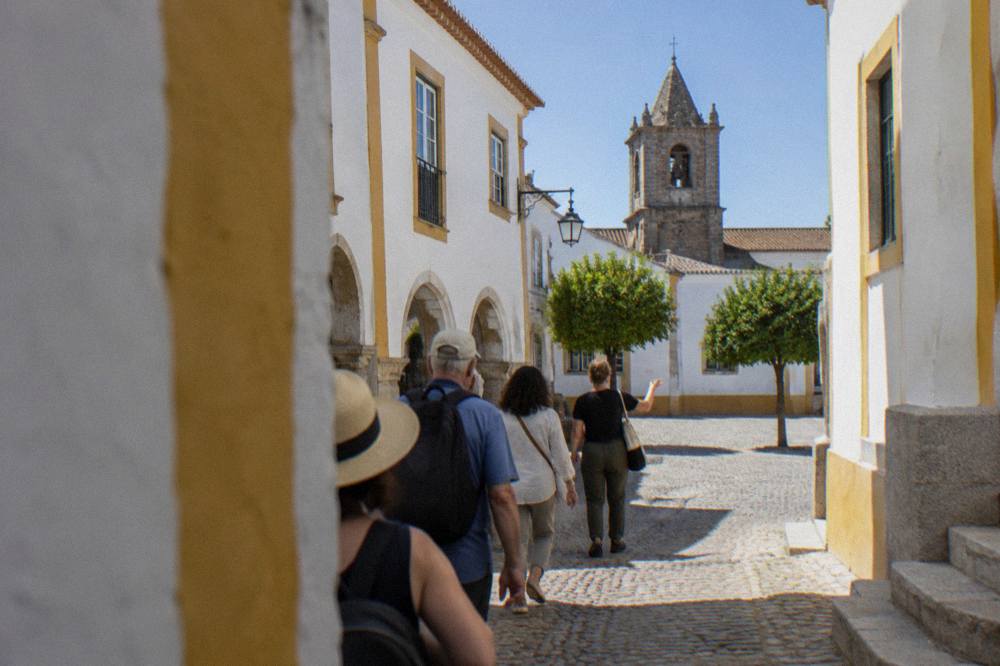
Three guided walking formats cover Évora's historic centre well: a flexible small-group walk from $13.51 per person rated 4.8 from 105 reviews, a private cathedral-and-bones-chapel walk from $113.53 per person rated 5 from 256 reviews, and a 2-hour small-group cultural walk including the Chapel of Bones from $77.66 per person rated 4.9 from 141 reviews. Prices are in US dollars on the operators' live listings, and all three start in Évora itself.
Guided walks solve the exact problem this page keeps returning to: a city whose story is layered, whose church doors are unpredictable, and whose best sights are found between the sights. The small-group cultural walking tour with the Chapel of Bones is the strongest fit for visitors who want the headline monuments explained and one ticketed interior guaranteed, while the private walking tour with cathedral and Chapel of Bones suits families and anyone who wants the pace set for them.
| Guided walk | Format | Price per person | Rating | Length |
|---|---|---|---|---|
| Personal and Flexible Walking Tour in Historic Center | Flexible small-group walk | $13.51 | 4.8 from 105 reviews | 3 hours |
| Private Walking Tour with Cathedral and Chapel of Bones | Private, monument tickets | $113.53 | 5 from 256 reviews | 2.5 hours |
| Small-Group Cultural Walking Tour and Chapel of Bones | Small group, Bones Chapel included | $77.66 | 4.9 from 141 reviews | 2 hours |
| Tales and Legends Guided Walking Tour | Story-led evening-format walk | $52.90 | 4.8 from 40 reviews | 2.5 hours |
| Medieval Tour of Évora on a Sidecar and Wine Tasting | Sidecar ride, tasting | $61.90 | 4.9 from 16 reviews | 3 hours |
For visitors who prefer to pay what they want, GuruWalk lists free, tip-based walks of Évora, including the Essential Free Tour of Évora, rated 4.93 from 774 reviews over 2 hours. These are genuinely free at the point of booking, with the tip set at the end; see the individual guru's page on GuruWalk for meeting points and languages. A free walk is a low-risk first morning in the city, and it pairs neatly with an afternoon at the ticketed monuments in the table above.
What Should You Pair With The Graça Church Beyond The City Walls?
The Alentejo towns around Évora make the church walk part of a bigger day or a second day: Arraiolos lies about 20 km away, Estremoz about 45 km, Vila Viçosa about 60 km, Elvas about 80 km and Marvão about 120 km, all rounded figures, with Monsaraz about 40 to 45 km to the southeast. None of those distances comes with a published drive time, so plan by map rather than by minutes, and pick one town per day rather than racing several.
The pairing logic is simple. Évora's historic centre rewards a slow half-day; the surrounding Alentejo rewards a car, a driver or a guided day tour. The Água de Prata aqueduct, the Roman walls and medieval wall and the Porta de Moura square extend the in-city walk, while the table below shows what the wider region holds.
| Destination | Distance from Évora (about) | Known for | Guided option from Évora |
|---|---|---|---|
| Arraiolos | 20 km | Handmade carpets and hilltop views | Ask at the tourist office, Praça do Giraldo 73 |
| Monsaraz | 40-45 km | Walled village above the Alqueva lake | Monsaraz and Wine guided tour, $78.78, rated 4.6 from 51 reviews |
| Estremoz | 45 km | Marble town and castle | Walking Tour in Estremoz, $28.67, rated 4.8 from 19 reviews |
| Vila Viçosa | 60 km | Ducal palace and marble quarries | Marble Tour in Vila Viçosa, $28.14, rated 4.8 from 82 reviews |
| Elvas | 80 km | Fortified border city, UNESCO listed | No verified guided option from Évora |
| Marvão | 120 km | Mountain-top walled village | No verified guided option from Évora |
The Monsaraz and Wine guided tour from Évora runs about 4 hours from $78.78 per person, rated 4.6 from 51 reviews, and is the natural second-day choice for visitors staying in Évora who want the lake country without driving. Vila Viçosa pairs with the ducal palace for a quieter day. For megaliths, the Cromlech of Almendres and Great Dolmen of Zambujeiro tour from $33.76 per person, rated 5 from 54 reviews, covers the stone circle whose interpretation centre in Guadalupe village opens summer 10:00-18:00 and winter 10:00-17:00, with the stones themselves free to enter.
For visitors who want the second day handled end to end, the same three Évora walking operators also run the small-group and private formats that cover the churches, the squares and the viewpoints in one booked morning.
How Does The Graça Church Fit Into A One-Day Or Two-Day Évora Plan?
On a one-day plan, the Graça church belongs to the morning skyline walk: Praça do Giraldo, the Sé, the Templo Romano, the Graça lanes and the Igreja de São Francisco, with the Capela dos Ossos as the one interior to guarantee. On a two-day plan, the second day goes to Monsaraz, the marble towns or the megaliths at Almendres.
The Évora Ticket, at 8 EUR for one day and 10 EUR for two, excludes the Sé, the Capela dos Ossos and the Museu de Évora, so check its network before buying.
The sequencing matters more than the clock. The Sé opens 9:00-17:00; the Igreja de São Francisco runs summer 9:00-18:30 and winter 9:00-17:00; the Museu de Évora runs 9:30-13:00 and 14:00-17:30 Tuesday to Sunday. A morning that starts at the Sé when it opens, crosses to the Templo Romano's open precinct, wanders the Graça lanes while the light is still low, and ends at the Capela dos Ossos before the midday heat, uses every one of those windows correctly. In July and August, when the 1991 to 2020 normals put the mean maximum at 33.3 C and 33.5 C, that order is not a preference; it is the difference between a walk and an ordeal.
Visitors with questions the church itself cannot answer, such as how many bodies are in the bone church, what religion the bone church serves or whether the Chapel of Bones is worth visiting, will find those answered in detail on the linked pages, alongside the Chapel of Bones guide and the Giraldo Square and university pages that round out the centre.
Common Questions About The Graça Church In Évora
Is the Igreja da Graça in Évora open to visitors?
No official page publishes its hours or visiting conditions, so there is no reliable published answer. Check at the door, or ask at the tourist office at Praça do Giraldo 73, reachable on +351 266 777 071, whose winter hours run weekdays 9:00-18:00 and Sat-Sun 10:00-14:00 and 15:00-18:00.
Does the Igreja da Graça charge an entrance fee?
No ticket price is published for it. The nearby ticketed monuments have published prices: the Sé at 5.00 EUR for the complete visit, the Igreja de São Francisco and Capela dos Ossos at 7.00 EUR adult, and the Museu de Évora at 8 EUR.
Is the Graça church inside the UNESCO area of Évora?
Yes. The Historic Centre of Évora was inscribed by UNESCO in 1986 under criteria (ii) and (iv), and the Graça church stands within that walled centre, part of the skyline UNESCO's criterion (iv) praises as the finest example of a city of the golden age of Portugal.
How do I get to the Igreja da Graça from Lisbon?
CP's Intercidades timetable valid since 6 September 2026 lists six through trains a day from Lisboa Oriente to Évora, about 1 hour 40 to 1 hour 45, at 13.90 EUR second class and 18.50 EUR first class. From Évora station the historic centre is reached on foot.
Can I see the Graça church on a guided tour?
Yes, in the sense that the historic-centre walks cover its lanes: the Personal and Flexible Walking Tour from $13.51 per person, the Small-Group Cultural Walking Tour with the Chapel of Bones from $77.66, and the private cathedral-and-bones walk from $113.53 all start in Évora and cover the centre's churches.
What else is near the Igreja da Graça?
The whole walled centre: the Sé de Évora, the Templo Romano, the Igreja de São Francisco and Capela dos Ossos, the Jardim Público, the Roman walls and the Praça do Giraldo, all within the same compact UNESCO zone and all reached on foot.
The Graça church rewards exactly the kind of visit Évora rewards: unhurried, on foot, with the skyline read as one monument and the ticketed interiors chosen deliberately around it. Build the morning around the lanes and towers, confirm the door with the tourist office on Praça do Giraldo, and let the rest of the historic centre do what it has done since UNESCO inscribed it in 1986.