How Many Bodies Are In The Bone Church?
No reliable count of the bodies in Évora's Capela dos Ossos is published on the church's own page. Here is what is actually known, what the walls contain, and how to visit.
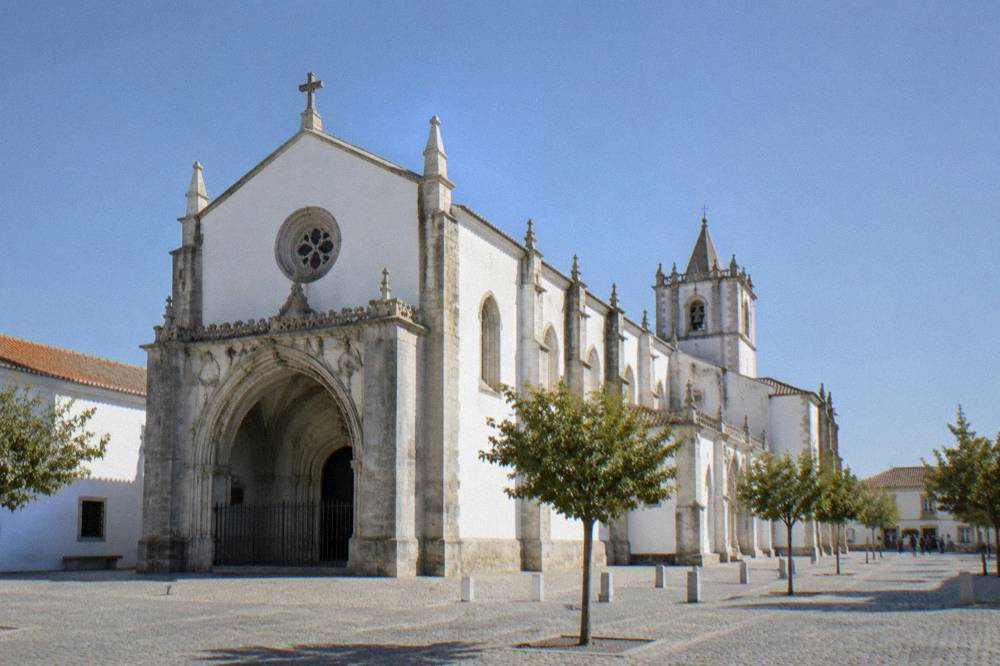
The Bone Church is the Capela dos Ossos, the ossuary chapel attached to the Igreja de São Francisco in Évora, Portugal, the inland capital of the Alentejo. Its walls and pillars are lined with human bones arranged in patterns, and that is what gives the chapel its name, which simply means Chapel of Bones. The question of how many bodies went into it is asked constantly, and the honest answer is that no reliable count is published on the church's own page, so this page does not offer a figure, not even an estimate. What can be stated with confidence is what the chapel contains, where the bones came from, what a ticket costs, and when the doors are open.
How Many Bodies Are In The Bone Church?
No reliable count of the bodies in the Capela dos Ossos in Évora has ever been published by the Igreja de São Francisco itself, and no number appears on the church's own page, so no figure can be stated here, not even an approximation. What is certain is that the chapel's walls and pillars are lined with human bones from Évora's churchyards, arranged in the patterns visitors see today. Anyone who gives you a precise number is repeating a legend rather than a source.
That is a frustrating answer for anyone who wants a clean statistic, but it is the only defensible one. Numbers circulate freely in tourist copy and casual articles, and they disagree with each other, which is the clearest sign that none of them comes from the church. The Igreja de São Francisco, which owns and runs the chapel, publishes its ticket prices, its hours and its mass times, and none of that material states a body count. When the institution that holds the bones declines to count them in public, a travel page that prints a number is inventing it.
What the chapel does not hide is the nature of the material. The bones are human, they came from the city's churchyards, and they were arranged deliberately as a memento mori, an invitation to reflect on mortality rather than a spectacle for its own sake. The scale of the lining is what makes the count question feel urgent: the bones cover the walls so completely that the eye wants to measure them. The Évora Travel Guide editorial desk's advice is to treat the chapel the way the church presents it, as a religious space with an artistic bone lining, and to leave the arithmetic alone.
If the question behind your question is whether the chapel is worth seeing, or whether the bones are real, those have real answers: see is the Chapel of Bones worth visiting and is the Chapel of Bones made of real bones.
What The Walls Of The Capela Dos Ossos Actually Contain
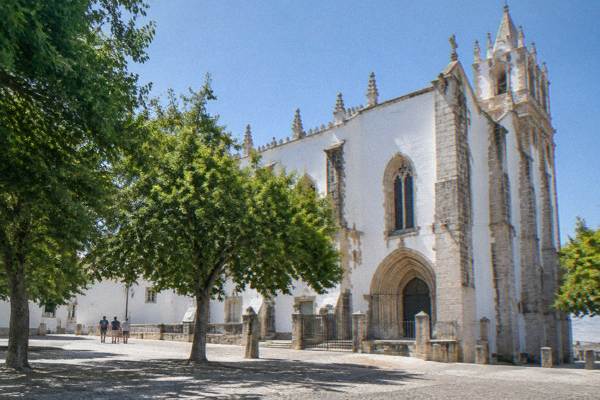
The Capela dos Ossos is a small interior space whose walls and pillars are lined with human bones taken from Évora's churchyards, arranged in decorative patterns and held in place by cement, with further bones stored in the space above the entrance. The chapel is part of the Igreja de São Francisco complex in Évora's historic centre, and it is visited on the church's single museum ticket rather than as a separate attraction.
The church's own material describes the chapel as an ossuary: a place where human remains were gathered, in this case from churchyards in and around Évora that were being cleared as the city grew. The bones were not brought from elsewhere as a curiosity, according to the church's own material, and the chapel turned them into a deliberate work of religious art. The arrangement is ordered rather than heaped: rows of bones run along the walls, and columns and niches are surfaced with the same material, which is why the space reads as a decorated room rather than a pit.
The purpose stated for the chapel is contemplation of death. This is not a hidden message. The chapel is a memento mori in the full sense, a built reminder that mortality is the shared condition of everyone who walks through it, and the church today still treats it as a religious space inside a working place of worship. Masses are held in the Igreja de São Francisco itself, Monday to Saturday at 11:30 and on Sundays at 9:00 and 12:00, and the chapel sits within the same complex.
Visitors who want the full context of the building, including what else the ticket covers, can read the Church of São Francisco guide. For the wider story of ossuary chapels elsewhere in the country, bone chapels in Portugal covers the tradition.
A guided walk is one of the better ways to see the chapel in context, because Évora's historic centre is compact and the stories attach to specific streets. The Tales and Legends walking tour, a 2.5-hour guided walk from $52.90 per person, rated 4.8 from 40 reviews, spends its time on exactly this layer of the city, and Check availability if that framing suits you. The medieval sidecar tour, from $61.90 per person and rated 4.9 from 16 reviews, covers the same monuments from a vehicle, with a wine tasting included.
Where The Bones In The Évora Chapel Came From
The bones in the Capela dos Ossos came from churchyards in and around Évora, gathered as those burial grounds were cleared, and they are the remains of the city's own dead rather than imported or exotic material. The chapel belongs to the Igreja de São Francisco, a working Catholic church in the centre of Évora, and the bone lining was created as a devotional act rather than as a tourist attraction.
Évora in the period when the chapel was built was a crowded walled city, and its churchyards were filling up. Clearing them was a practical necessity, and moving the remains into a dedicated chapel was the dignified solution. The Franciscan choice to line the walls with the bones rather than simply store them beneath the floor turned a practical space into a theological statement, and that statement is the reason the chapel is famous rather than merely macabre. The same logic produced ossuary chapels elsewhere in Portugal and across Catholic Europe, wherever churchyard space ran out.
The identity of the individuals is not recorded in any form the church publishes. These were ordinary dead of the city, not nobility or notables, and no plaque or document in the church's public material names them. For readers asking the natural follow-up question, whose bones are in the Chapel of Bones covers what is and is not known about them, and why the Chapel of Bones is famous covers how the chapel's reputation grew.
How To Visit The Capela Dos Ossos In Évora
The Capela dos Ossos is visited on the Igreja de São Francisco's single museum ticket, which costs 7.00 EUR for an adult, 5.00 EUR for youth up to 25, 5.00 EUR for seniors over 65 and 15.00 EUR for a family of two adults plus youths. The church itself is free to enter; the ticket covers the museum areas, including the chapel. Opening hours are 9:00 to 18:30 in summer legal time and 9:00 to 17:00 in winter.
The single ticket is broader than many visitors expect. It covers the Capela dos Ossos along with the Sala do Capítulo, the Presépio, the Arte Sacra nucleus, the Sala da Tribuna Real, the Terraço da Galilé and the Canha da Silva nativity collection, so the chapel is one room inside a larger museum visit rather than a standalone paid attraction. The church notes on its own page that it is a private religious entity and does not apply State Museum discounts, so holders of national museum passes should not expect them to work here.
| Ticket | Price |
|---|---|
| Adult, all museum areas | 7.00 EUR |
| Youth up to 25 | 5.00 EUR |
| Senior over 65 | 5.00 EUR |
| Family, 2 adults plus youths | 15.00 EUR |
| The church itself | Free to enter |
The chapel is open every day of the year except 1 January, Easter Sunday, the afternoon of 24 December and 25 December. Hours follow legal time, which means the long 9:00 to 18:30 window applies during summer time and the shorter 9:00 to 17:00 window during winter time.
| Period | Hours | Closed |
|---|---|---|
| Summer legal time | 9:00 to 18:30 | 1 Jan, Easter Sunday, 24 Dec afternoon, 25 Dec |
| Winter legal time | 9:00 to 17:00 | 1 Jan, Easter Sunday, 24 Dec afternoon, 25 Dec |
If you prefer to arrive with a guide who handles the context, the guided options above all pass through the historic centre where the chapel sits. For planning the rest of the day around it, what to do in Évora for a day and how much time you need in Évora are the practical pages.
Why Nobody Can Give You A Number For The Bones
No count of the bodies or bones in the Capela dos Ossos appears on the Igreja de São Francisco's own page, and the church, which is the only institution with direct knowledge of the material, publishes no figure. Competing numbers that circulate in tourist copy contradict each other, which is the signature of legend rather than record. The honest position is to describe the chapel and leave the count unstated, and to ask at the ticket window if a number matters to you.
There is a reason the number resists every attempt at it. The bones are not individual skeletons laid out in rows; they are loose material arranged as a surface, mixed and cemented into patterns, and a surface like that cannot be counted by looking at it. Any count would require dismantling the lining, which nobody is going to do to a religious monument. So the figure that tour copy repeats is necessarily a guess made centuries after the fact, and guesses harden into "facts" as they are copied from one page to the next.
The question that does have a clean answer is whether the bones are real, and they are: see is the Chapel of Bones made of real bones. The question of what the chapel means religiously is answered in what religion is the Bone Church, and the story of how it came to exist is covered in the story behind the Chapel of Bones.
Évora rewards this kind of patience with its facts. The city's whole appeal, the reason UNESCO inscribed its historic centre in 1986, is that it is a place where the layers are real and visible: a Roman temple, a medieval cathedral, a Jesuit university, an ossuary chapel, all within walking distance of each other. A fabricated statistic adds nothing to that, and the chapel is no less astonishing for lacking a number.
Common Questions About The Bone Church
How many bodies are in the Bone Church?
No reliable count is published on the Igreja de São Francisco's own page, so no figure can be given, not even an approximation. The walls and pillars of the Capela dos Ossos in Évora are lined with human bones from the city's churchyards, arranged as a surface rather than as countable skeletons. If a number matters to you, ask at the ticket window when you visit.
Is the Bone Church free to enter?
The Igreja de São Francisco itself is free to enter, but the Capela dos Ossos is part of the church's paid museum areas, visited on the single ticket that costs 7.00 EUR for an adult, 5.00 EUR for youth up to 25 and seniors over 65, and 15.00 EUR for a family. The same ticket also covers the Sala do Capítulo, the Presépio, the Arte Sacra nucleus, the Sala da Tribuna Real, the Terraço da Galilé and the Canha da Silva nativity collection.
What are the Bone Church's opening hours in Évora?
The chapel is open 9:00 to 18:30 during summer legal time and 9:00 to 17:00 during winter legal time, every day except 1 January, Easter Sunday, the afternoon of 24 December and 25 December. Masses in the church are held Monday to Saturday at 11:30 and on Sundays at 9:00 and 12:00.
Whose bones are in the Capela dos Ossos?
The bones came from churchyards in and around Évora, cleared as the walled city grew, and they are the remains of the city's ordinary dead. No names or identities are recorded in the church's public material. The chapel was created as a devotional memento mori rather than as a tourist spectacle.
Where is the Bone Church located?
The Capela dos Ossos is attached to the Igreja de São Francisco in the historic centre of Évora, Portugal, the inland capital of the Alentejo, about 130 km from Lisbon. The city is a UNESCO World Heritage site, inscribed in 1986, and the chapel sits within easy walking distance of the Sé, the Templo Romano and the Praça do Giraldo.
Is the Bone Church worth visiting without a count?
Yes. The chapel's impact comes from the completeness of the bone lining and its contemplative purpose, not from any statistic. Visitor reviews of the guided walks that include the historic centre rate them consistently highly, and the chapel is one of the most visited monuments in the Alentejo. Whether it suits you is covered in detail in the page on whether the Chapel of Bones is worth visiting.