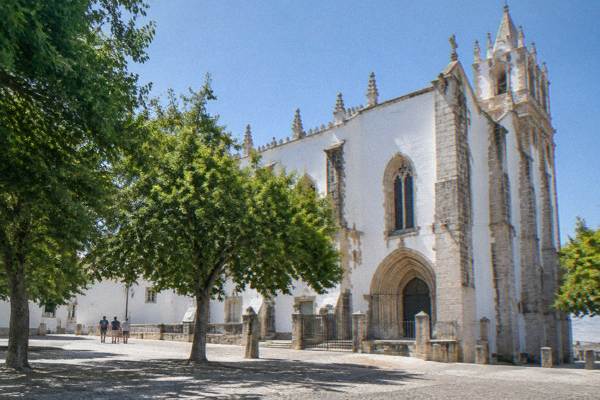
São Brás Chapel In Évora, Portugal: What To See At The Rossio
The São Brás Chapel sits just outside Évora's medieval walls, at the Rossio de São Brás, where the Alentejo plain opens out and the annual Feira de São João takes place. Here is what to expect from the chapel, its square and the streets around it.
Short answer
The São Brás Chapel is a small historic chapel standing at the Rossio de São Brás, the open esplanade just outside Évora's walls in the Alentejo region of Portugal. No ticket price or opening hours are published for it, so treat it as a stop on a walk of the outer city rather than a destination you time your day around.
Évora, the capital of the Alentejo in southern Portugal, keeps its most famous monuments inside a ring of medieval walls, but some of its most interesting ground lies just beyond them. The São Brás Chapel is one of those places: a small, quietly imposing religious building that stands at the edge of the Rossio de São Brás, the broad open square where the Feira de São João sets up its stalls each summer. Visitors who walk out to this corner of Évora trade the tight lanes of the historic centre for a wide esplanade, a stretch of the Água de Prata aqueduct and a view of the Alentejo plain that starts the moment the walls end.
This page gathers what is useful to know before you go: what the chapel is, how it relates to the city around it, what the Rossio de São Brás is used for through the year, and how to fold the visit into a day built around Évora's bigger draws such as the Chapel of Bones and the Roman Temple.
What Is The São Brás Chapel In Évora?
The São Brás Chapel is a small historic chapel of São Brás, Saint Blaise, standing at the Rossio de São Brás on the eastern edge of Évora, Portugal, just outside the line of the old city walls. It belongs to the group of religious buildings that ring the historic centre rather than to the tightly packed core around the Praça do Giraldo, and it is best understood as part of a walk along the outer city rather than as a timed, ticketed monument.
Saint Blaise is the traditional protector of throats, and chapels and parish churches dedicated to him are found across Portugal and the wider Iberian world. Évora's chapel of that name has long stood beside the road that leads east out of the walled city, which is exactly where you would expect a chapel of this kind: at a gate, a crossroads or an esplanade where travellers passed before the walls closed behind them.
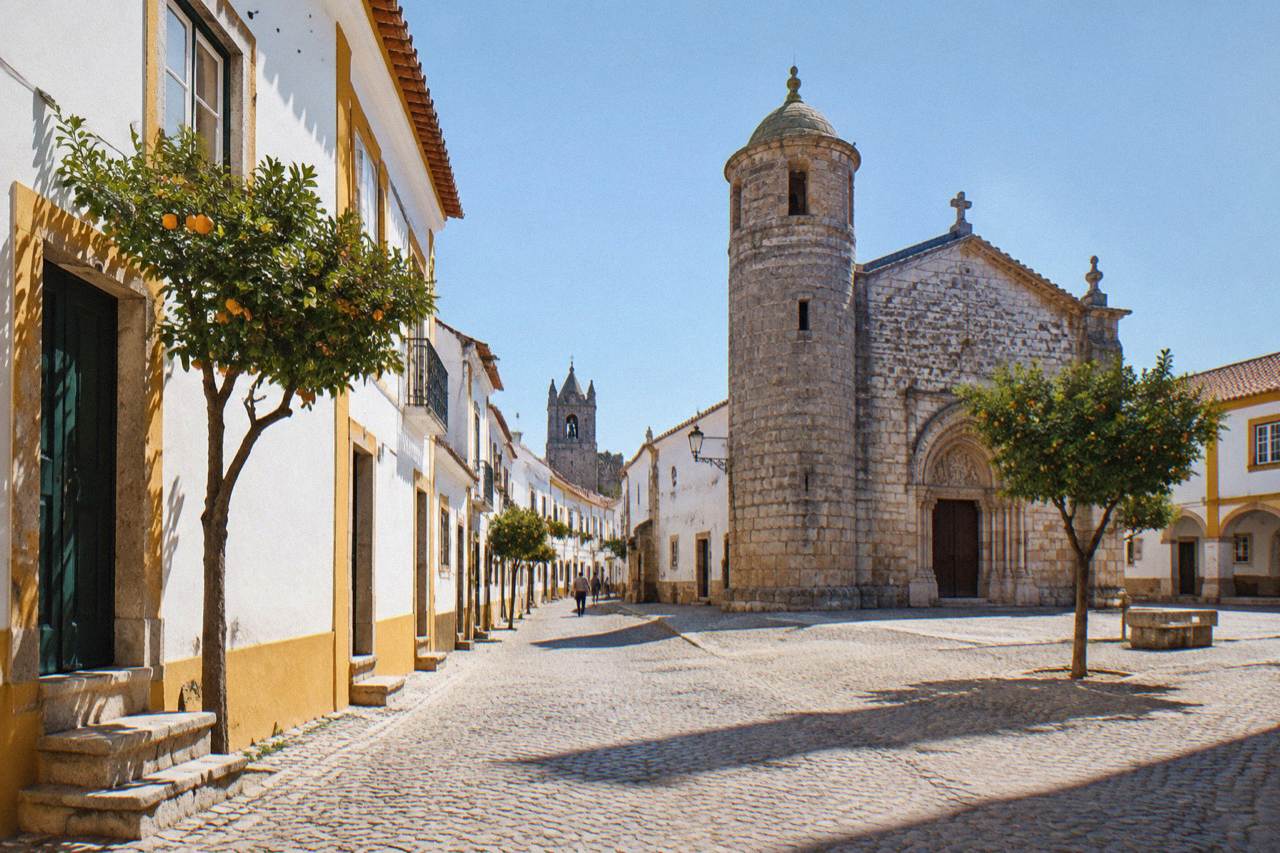
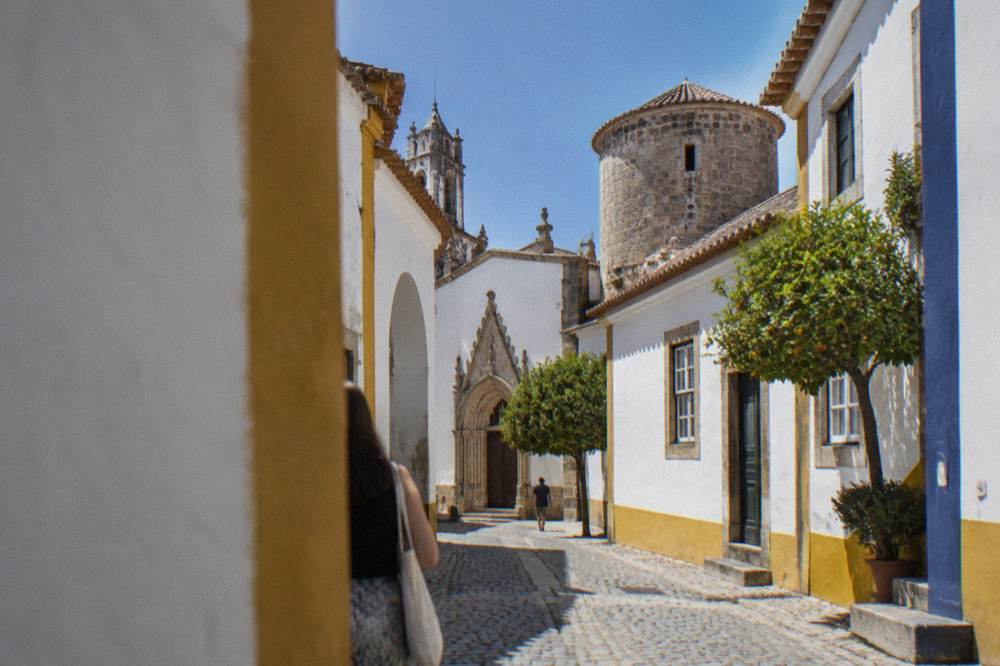
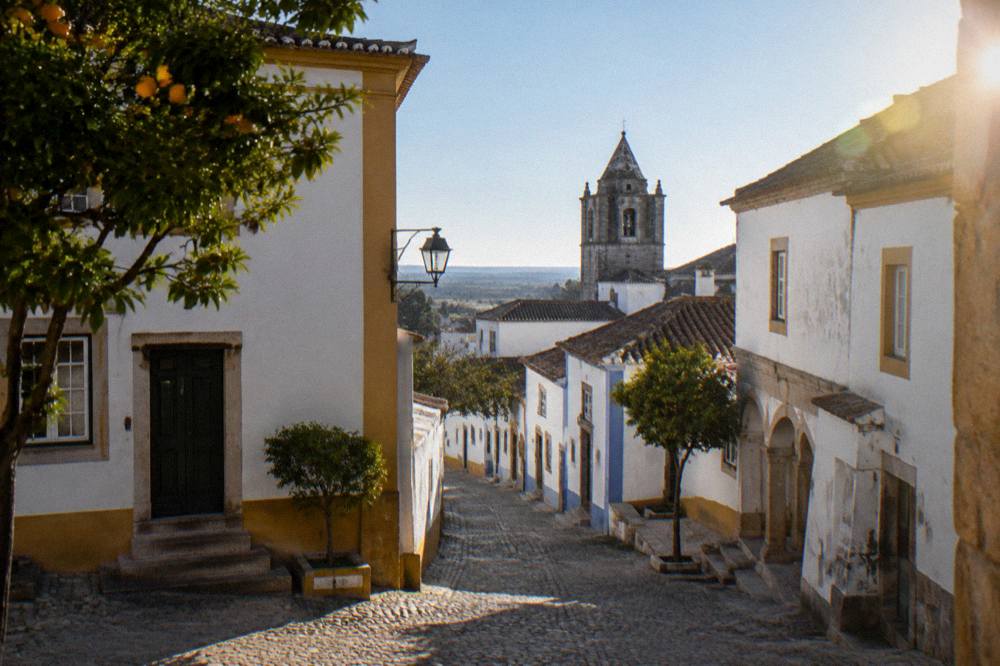
The building's most striking feature is the round, fortress-like tower attached to it, a shape that sets it apart from almost everything else in Évora and makes it one of the city's most recognisable silhouettes after the cathedral and the aqueduct. The stonework is of the region's usual pale granite and marble, materials that Évora shares with towns across the Alentejo such as Estremoz and Vila Viçosa, whose marble heritage is the subject of the Vila Viçosa guide.
What the chapel does not have, at least in anything published by an official source, is a visitor programme. There is no published ticket, no published schedule of hours and no museum room. That shapes how you should plan around it, and the honest advice is simple: walk to it, look at it, photograph it, and check with the tourist office on the Praça do Giraldo if entering the interior matters to you. The Posto de Turismo at Praça do Giraldo 73 can tell you what is open on the day you are there.
Where Is The São Brás Chapel And How Do You Reach It?
The chapel stands at the Rossio de São Brás, the open esplanade on Évora's eastern side, a short walk outside the medieval walls and east of the Praça do Giraldo along the Rua de Vasco da Gama. No bus route, fare or timetable is published for this walk, and none is needed: the whole route is flat, paved and signposted as part of the city's street network.
The walk out is part of the pleasure. Leaving the Praça do Giraldo, the main square described in the Giraldo Square guide, you head east along streets that drop gently toward the line of the old walls, cross where the wall once stood, and arrive at the esplanade. Along the way you pass close to the surviving arches of the Água de Prata aqueduct, the water channel that carried drinking water into the city and whose course is traced in the Água de Prata guide.
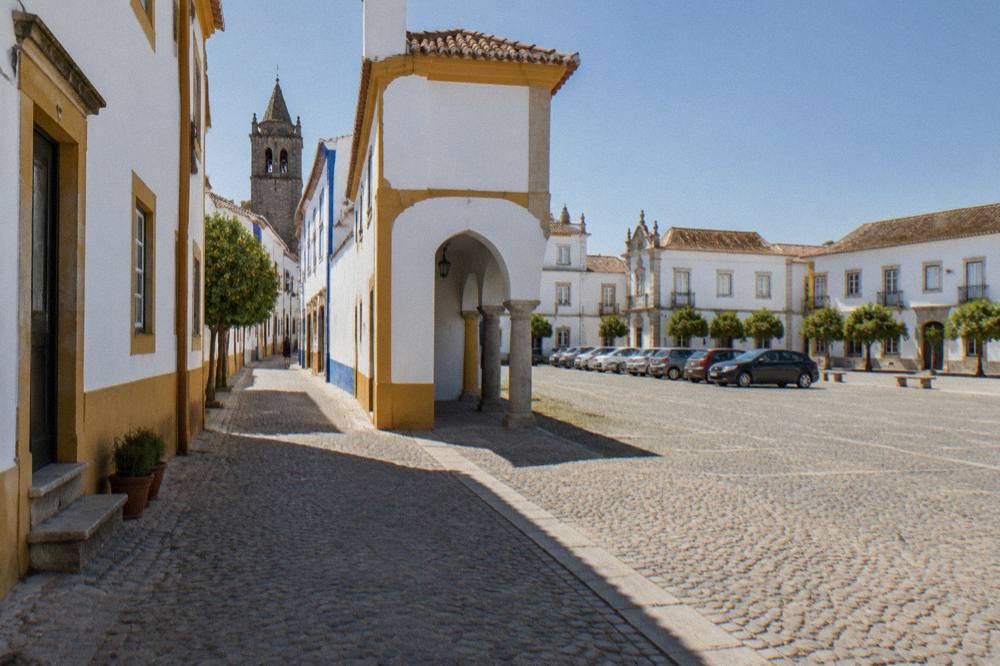
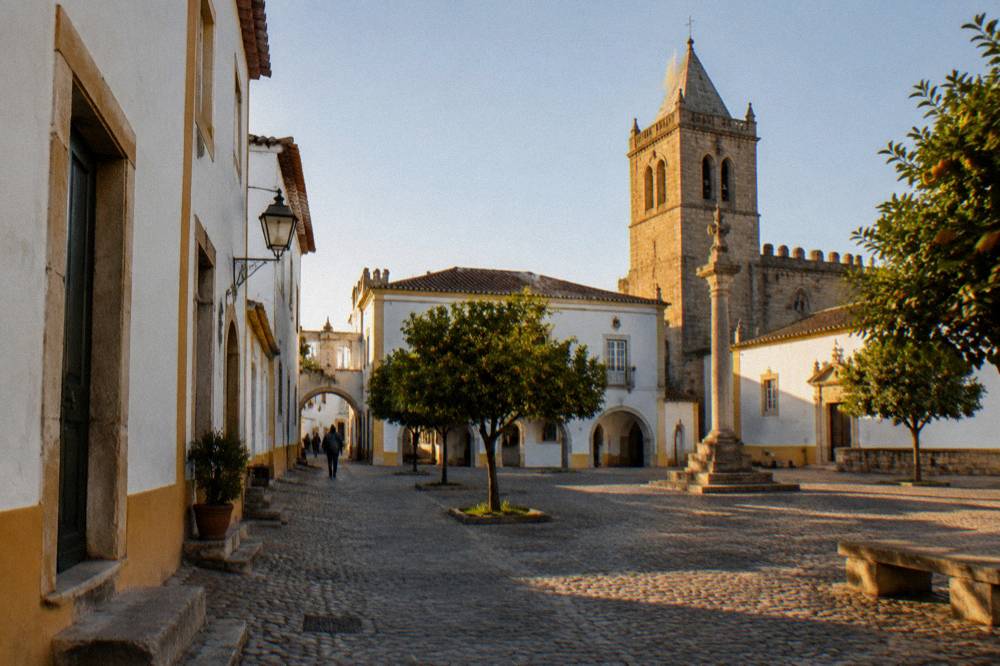
The Rossio de São Brás itself is a genuine public square in the Portuguese sense: a large, open, paved space used for parking, markets, fairs and events, and bounded by a mix of civic buildings, cafés and residential blocks. It is not a manicured piazza. It is working city ground, and that is precisely why the big annual fair lands here, because a fair needs room.
For orientation, the table below places the São Brás area among Évora's main sightseeing zones, using the rounded distances the city's own visitor material works with.
| Zone | Character | Main Draws |
|---|---|---|
| Rossio de São Brás and the eastern edge | Open esplanade, fairs, the chapel, aqueduct arches | São Brás Chapel, Feira de São João, Água de Prata |
| Historic centre inside the walls | Tight lanes, museums, ticketed monuments | Sé, Capela dos Ossos, Museu de Évora, Templo Romano |
| Praça do Giraldo and the main axis | Cafés, the tourist office, city life | Tourist office, banking square atmosphere |
| Western edge and the Jardim Público | Gardens, the Diana temple precinct | Jardim Público, Palácio de Dom Manuel precinct |
A guided walk is the easiest way to cover this ground without route-finding, and the trio below pairs the outer-city walk with the monuments most visitors come for.
What Can You See Around The Rossio De São Brás?
Around the São Brás Chapel you can see the full sweep of the Rossio de São Brás esplanade, the surviving arches of the Água de Prata aqueduct running toward the city, stretches of Évora's medieval wall, and the beginning of the roads that lead out across the Alentejo plain toward Estremoz, Elvas and the Spanish border country. The area rewards a slow loop far more than a quick photo stop.
The aqueduct is the neighbour that steals the show. Its arches march across the shallow valley on this side of the city, and from the Rossio you can follow them on foot. The Água de Prata guide covers the route in detail; here it is enough to say that the chapel, the esplanade and the aqueduct sit close to one another, so they make a natural single walk.
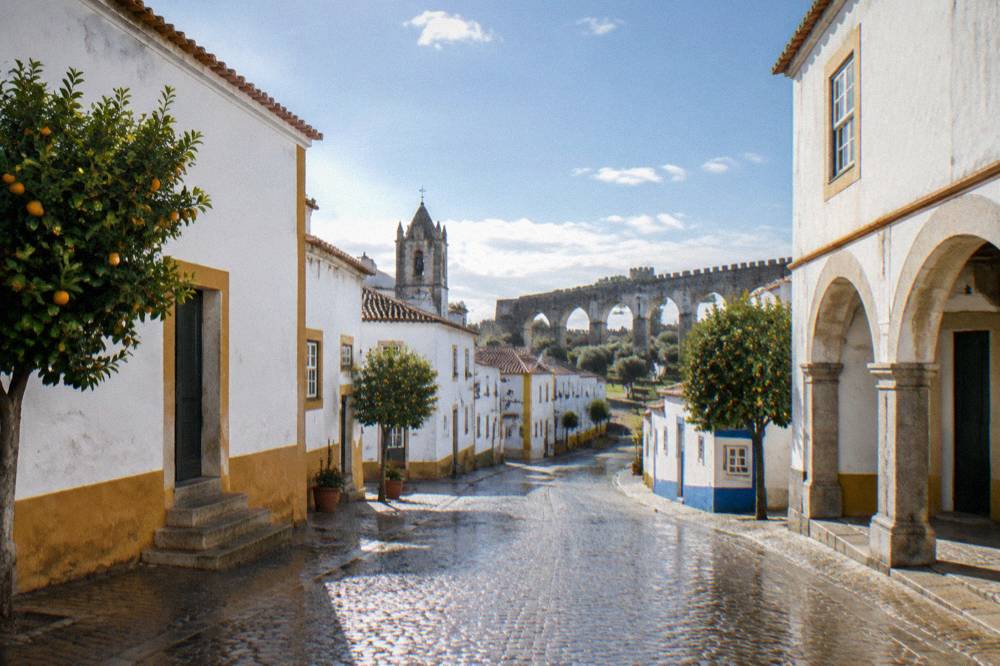
The walls themselves deserve the attention they rarely get. Évora's fortifications are the subject of the walls and medieval wall guide, and the eastern side, where the São Brás Chapel stands, is a good stretch for understanding how the city met its countryside: a gate, a suburb, a chapel, a road. That pattern repeats across Alentejo towns, and once you notice it in Évora you will see it in Estremoz, in Elvas and in Marvão.
For visitors who want the outer city explained rather than merely walked, a private guide is the efficient option. The Évora Private Walking Tour with Cathedral & Chapel of Bones covers the ticketed core with a guide, and the same operators' outer-city walks take in the aqueduct and the São Brás edge.
How Does The São Brás Chapel Compare With Évora'S Other Churches?
The São Brás Chapel differs from Évora's great churches in scale and in visiting style: the Sé de Évora charges 5.00 EUR for a complete visit with cloister, roof terrace and museum, the Igreja de São Francisco's museum ticket, which includes the Chapel of Bones, is 7.00 EUR for an adult, and the Museu de Évora charges 8 EUR, while the São Brás Chapel has no published ticket at all and is visited from the square around it.
The comparison matters because most visitors budget their Évora day around two or three ticketed stops and then fill the gaps with free ones. The chapel at the Rossio is a free gap-filler of the best kind: it costs nothing to see from outside, it sits beside two other free sights, the esplanade and the aqueduct, and it does not need a slot in a schedule.
The table below sets out the ticketed core, with the prices each official page publishes, so you can see at a glance where the São Brás stop sits in a day's spending.
| Site | Adult Ticket | What It Covers | Published Hours |
|---|---|---|---|
| Sé de Évora | 5.00 EUR | Cathedral, cloister, roof terrace, museum | 9:00-17:00, closed 24 Dec afternoon, 25 Dec, 1 Jan |
| Igreja de São Francisco and Capela dos Ossos | 7.00 EUR | All museum areas including the Chapel of Bones | Summer 9:00-18:30, winter 9:00-17:00, closed 1 Jan, Easter Sunday, 24 Dec afternoon, 25 Dec |
| Museu de Évora | 8 EUR | Former Archbishop's Palace collections | Tue-Sun 9:30-13:00 and 14:00-17:30, closed Mondays |
| São Brás Chapel | No published ticket | Exterior from the Rossio | None published, check at the tourist office |
There is also the Évora Ticket, the multi-site pass for the Cidade-Museu network, which is worth understanding before you buy anything, because it does not cover the three sites above.
| Évora Ticket | Price | Notes |
|---|---|---|
| One day | 8 EUR | Cidade-Museu network sites only |
| Two days | 10 EUR | Same network, two consecutive days |
| Three days | 12 EUR | Same network, three consecutive days |
| Children to 12 | Free | With a paying adult |
The pass does not include the Sé, the Capela dos Ossos or the Museu de Évora, so read the network list on the pass's own page before deciding whether it fits your plans. For a one-day visitor whose priorities are the cathedral and the bones chapel, separate tickets are usually the simpler arithmetic.
When Is The Best Time To Visit The São Brás Area?
The best months to visit the São Brás area are April, May, June, September and October, when the 1991-2020 IPMA normals for the Évora station show mean daily maximum temperatures between 20.7 C and 30.2 C and monthly rainfall between 2.7 mm and 62.1 mm; July and August, with mean maxima of 33.3 C and 33.5 C, are the months to avoid for a walk across an open, unshaded esplanade.
The esplanade is the point. The Rossio de São Brás is a wide, flat, largely unshaded square, and the Alentejo summer is serious about heat. IPMA's 1991-2020 normals for the Évora station record 31.9 days a year with a maximum of 35 C or more, with the record maximum of 45.4 C set on 4 August 2018. In those conditions, the outer-city walk that includes the chapel is best done early in the morning or pushed to the evening, when the stones give back their heat and the light turns the colour photographers come to the Alentejo for.
The monthly picture, from the same normals, is the honest basis for choosing a date.
| Month | Mean Max (C) | Mean Min (C) | Rain (mm) | Days At 30 C Or More |
|---|---|---|---|---|
| April | 20.7 | 8.5 | 62.1 | 0.3 |
| May | 25.0 | 10.9 | 46.6 | 5.5 |
| June | 30.2 | 13.8 | 10.6 | 15.1 |
| July | 33.3 | 15.6 | 2.7 | 23.7 |
| August | 33.5 | 16.0 | 6.0 | 25.0 |
| September | 29.5 | 14.6 | 33.9 | 13.9 |
| October | 24.1 | 12.3 | 81.5 | 2.9 |
Spring and autumn carry the trade-off of occasional rain, with October the wettest of the months listed at 81.5 mm across the 1991-2020 window, but the Alentejo's rainy days are nothing like northern Europe's: the same normals count 7.7 days with 1 mm or more of rain in October. For a fuller treatment, including winter, see the city's seasonal pages, and for rainy-day alternatives indoors, the Museu de Évora and the cathedral's museum rooms are the obvious refuges.
What Events Happen At The Rossio De São Brás?
The Rossio de São Brás is the home of the Feira de São João, Évora's great annual fair, which ran from 23 June to 5 July in 2026 under the theme "Évora: Capital Europeia ao Sul", and the square also serves through the year as the city's main open-air event ground, since its size is what the historic centre's small squares cannot offer.
The Feira de São João is an annual fair that the Câmara Municipal runs by formal edital, the 2026 edition being set by a resolution of 19 February 2026. For its two weeks the esplanade fills with fairground rides, stalls selling everything from kitchenware to Alentejo cheese and wine, livestock showing, concerts and the crowds that come with all of it. If you are in Évora in late June or early July, the São Brás area stops being a quiet walk and becomes the loudest, busiest part of the city.
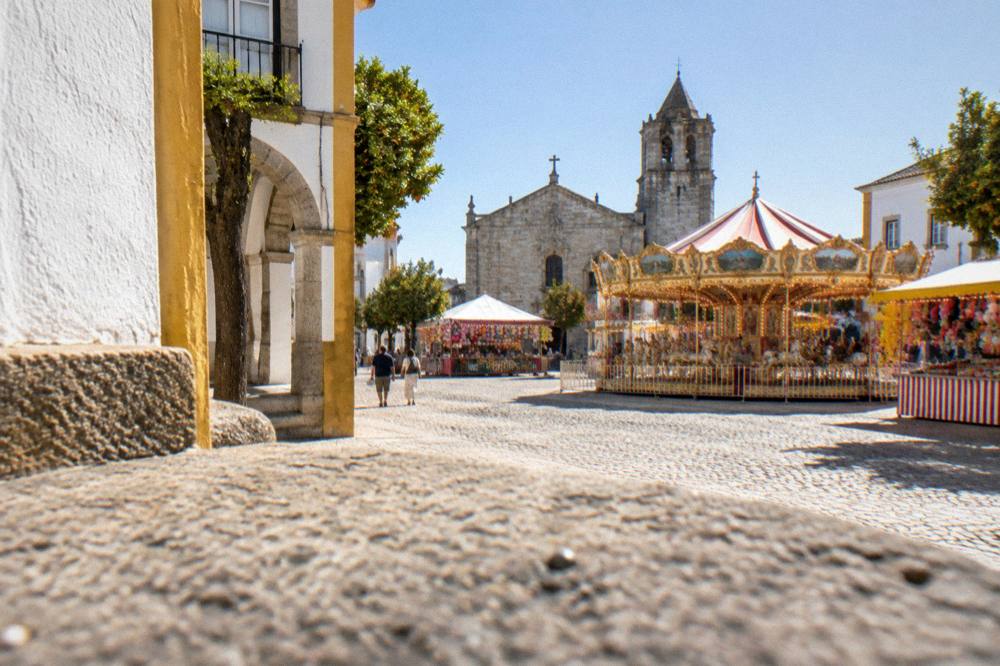
Beyond the fair, the square hosts the travelling circuses, funfairs and markets that tour regional Portugal, and it functions as overflow ground for the events of the Évora 2027 European Capital of Culture programme. Évora and the Alentejo hold the title in 2027, with 2026 running as a preparation year built on the concept of "Vagar", and one confirmed 2026 event, the GUADIANA festival of Afro-Ibero-American literatures, brought 28 authors from nine countries to the city over 9 to 11 October 2026.
The verified event picture for the São Brás area is small but solid.
| Event | When | Where | Status |
|---|---|---|---|
| Feira de São João 2026 | 23 June to 5 July 2026 | Rossio de São Brás | Confirmed by municipal edital |
| GUADIANA literature festival | 9 to 11 October 2026 | Évora, venues across the city | First edition, part of Évora 2027 |
| Évora 2027 Capital of Culture | Full year 2027 | City-wide, programme not yet fully published | Preparation year 2026 under way |
Can You Visit The São Brás Area On A Guided Tour?
Yes, the São Brás area can be covered on a guided tour of Évora, most efficiently on a private or small-group walking tour that takes in the outer city, the aqueduct and the walls alongside the ticketed core, with guided options starting from $13.51 per person for a flexible historic-centre walk and rising to $111.42 and above for private tours with monument tickets included.
The value of a guide on this particular ground is context. Inside the walls, the monuments explain themselves through tickets and panels; out here, at the Rossio, the story is in the shape of the ground, and a guide who knows the city can read it for you: why the chapel stands where it does, what the aqueduct was for, how the fairground relates to the road network.
For a lighter, story-led version of the same streets, the Tales and Legends walk runs 2.5 hours of the city's darker and stranger history, and the budget-friendly flexible historic-centre walk covers the core at a lower price point.
The flexible historic-centre option suits travellers who want the route adapted to what they most want to see, and it is the cheapest guided way to get a first sense of the city before striking out to the outer edges on your own.
There is also a free option. GuruWalk lists a free, tip-based Essential Tour of Évora, rated 4.93 from 774 reviews over two hours, alongside free walks on history and heritage and on how the city was shaped over time. A free GuruWalk tour will not usually reach the outer esplanade, but it is a sound first pass at the city before you walk out to São Brás on your own.
How Does The São Brás Area Fit Into A Day In Évora?
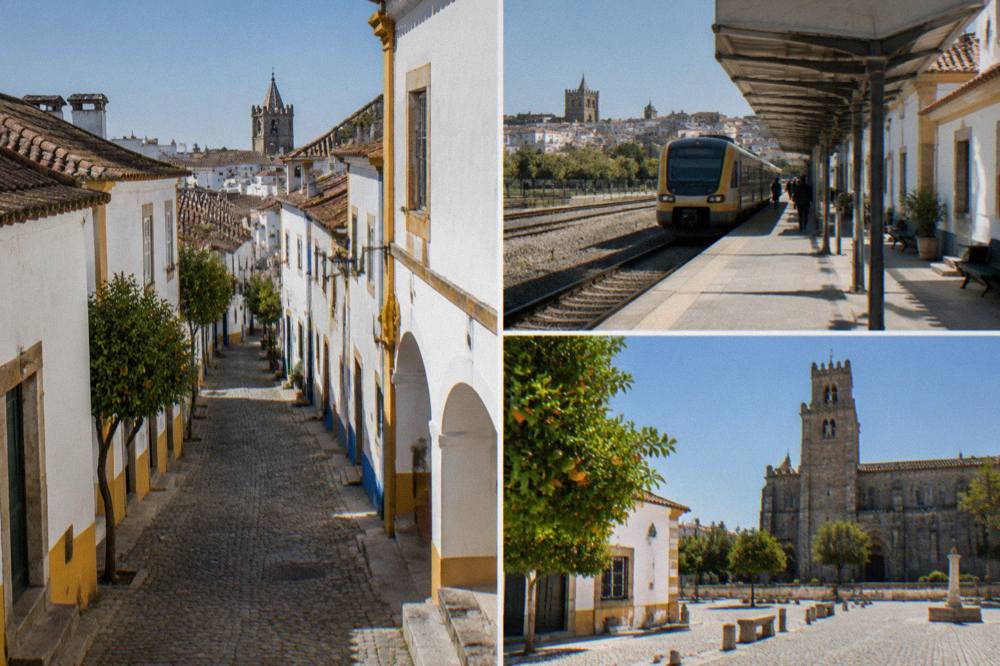
The São Brás area fits best at the start or the end of a day in Évora: arrive by train, walk from the station through the outer city past the aqueduct and the chapel, enter the walled centre, spend the middle of the day on the Sé, the Capela dos Ossos and the Praça do Giraldo, and finish back out at the Rossio for the evening light, a sequence that covers the city's full spread without backtracking.
The station sits outside the walls, which makes the outer-city walk a natural arrival route rather than a detour. Coming from Lisbon, the CP Intercidades service runs six through trains a day from Lisboa Oriente, taking about 1 hour 40 to 1 hour 45 and costing 13.90 EUR in second class or 18.50 EUR in first class, under the timetable valid since 6 September 2026.
| Train From Lisboa Oriente | Arrives Évora | Journey |
|---|---|---|
| 07:02 | 08:47 | About 1 h 40 to 1 h 45 |
| 09:02 | 10:45 | About 1 h 40 to 1 h 45 |
| 09:58 | 11:40 | About 1 h 40 to 1 h 45 |
| 13:35 | 15:13 | About 1 h 40 to 1 h 45 |
| 17:02 | 18:41 | About 1 h 40 to 1 h 45 |
| 19:02 | 20:46 | About 1 h 40 to 1 h 45 |
For a fuller day-by-day structure, the one-day and half-day itineraries on Évora Travel Guide lay out the sequence in detail, and the things to do in Évora page places the São Brás walk among the city's other options. The general shape, though, is simple: outer city in the soft light, inner city in the middle hours, outer city again for the last photographs.
If you are staying only for the afternoon or you are passing through on a Lisbon day trip, cut the outer walk and keep the chapel as a drive-by or a short detour, because the ticketed core is where Évora's time demand really sits. The trio below covers the core with guides.
Common Questions About The São Brás Chapel In Évora
Is the São Brás Chapel in Évora free to visit?
No ticket price is published for the São Brás Chapel, and it is normally seen from the Rossio de São Brás around it, which is a public square and costs nothing. If entering the interior matters to you, ask at the tourist office on the Praça do Giraldo, which can tell you what is open on the day of your visit.
What is the São Brás Chapel in Évora, Portugal?
It is a small historic chapel dedicated to Saint Blaise, standing at the Rossio de São Brás on the eastern edge of Évora, just outside the medieval walls. Its round tower makes it one of the city's most recognisable minor landmarks.
How far is the São Brás Chapel from the Praça do Giraldo?
The chapel sits a short, flat walk east of the Praça do Giraldo, just beyond the line of the old city walls, on the esplanade where the Feira de São João is held each June and July. The whole route is on ordinary city pavements and needs no transport.
What else is near the São Brás Chapel?
The Água de Prata aqueduct's arches, stretches of Évora's medieval wall, and the open Rossio de São Brás esplanade itself. The Igreja da Graça, covered in the Graça Church guide, and the city's other outer monuments round out a walk of the edges.
When is the Feira de São João held at the Rossio de São Brás?
The 2026 edition ran from 23 June to 5 July 2026 at the Rossio de São Brás, confirmed by municipal edital, under the theme "Évora: Capital Europeia ao Sul". The fair is an annual late-June institution, so expect a similar window in future years, and check the municipal pages for the next dates.
Is the São Brás area worth visiting if you have only one day in Évora?
Only after the ticketed core. With one day, the Sé, the Capela dos Ossos, the Templo Romano and the Praça do Giraldo come first; the São Brás walk is a fine addition if you finish early or if you are staying for the evening, when the esplanade and the aqueduct arches are at their best.
The São Brás Chapel will never top a list of Évora's monuments, and it does not need to: it anchors a corner of the city that most visitors never reach, beside a square that hosts the Feira de São João every summer, and it costs nothing but the walk to see it.