What Religion Is The Bone Church?
The Bone Church in Évora, Portugal, is Roman Catholic: the Capela dos Ossos inside the Igreja de São Francisco, a working church with daily Masses and a single museum ticket.
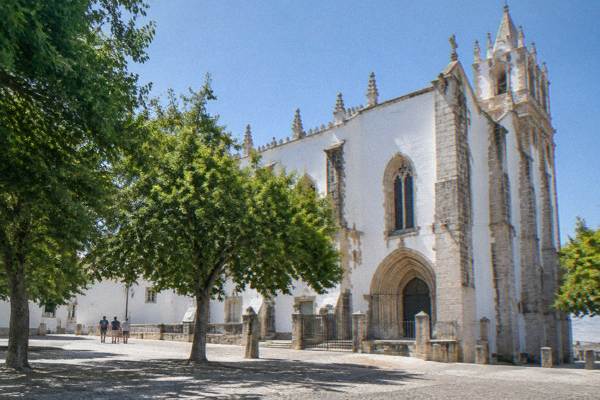
Évora, Portugal, a UNESCO-listed city in the Alentejo plain, holds one of the most photographed religious spaces in the country: the Capela dos Ossos, the chapel whose walls are lined with human bones, inside the Igreja de São Francisco complex. Visitors often arrive expecting something outside ordinary religion, a crypt, a cult site, a curiosity detached from any living faith. The opposite is true. The chapel belongs to an ordinary working Catholic church, one that rings its bells, says Mass every day and welcomes worshippers free of charge at the door.
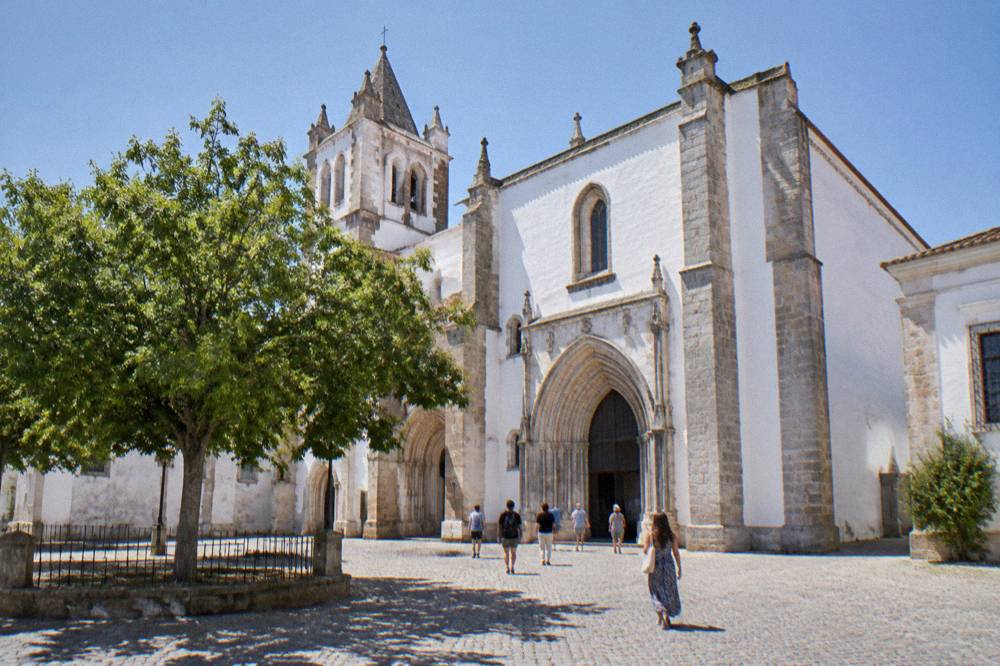
alt="The Igreja de São Francisco in Évora seen from across the square, its whitewashed walls and stone portal in bright daylight" width="1000" height="667" loading="lazy">
What Religion Is The Bone Church?
The Bone Church in Évora is Roman Catholic. The Capela dos Ossos sits inside the Igreja de São Francisco complex, a working Catholic church that holds Masses Monday to Saturday at 11:30 and on Sunday at 9:00 and 12:00. The church itself is free to enter, while the chapel belongs to the paid museum areas, covered by a single adult ticket of 7.00 EUR. The parish describes itself as a private religious entity.
That single sentence answers the question most searchers type, but the details matter for anyone planning a visit. The Igreja de São Francisco is not a museum with a religious theme; it is a functioning parish church in the heart of Évora's historic centre, a short walk from the Praça do Giraldo. The Capela dos Ossos is one part of a larger museum circuit that the church itself operates, alongside the Sala do Capítulo, the Presépio, the Arte Sacra nucleus, the Sala da Tribuna Real, the Terraço da Galilé and the Canha da Silva nativity collection. One ticket covers all of them.
Because the church is a private religious entity, it does not apply State Museum discounts. That is stated plainly on its own information page, and it surprises visitors who arrive expecting the concessions offered at state-run monuments such as the Museu de Évora. The pricing structure reflects the church's status: it funds its own upkeep.
| Area | Access | Price |
|---|---|---|
| Igreja de São Francisco, the church itself | Free to enter | 0.00 EUR |
| Capela dos Ossos and all museum areas | Single combined ticket, adult | 7.00 EUR |
| Same ticket, youth up to 25 | Single combined ticket | 5.00 EUR |
| Same ticket, senior over 65 | Single combined ticket | 5.00 EUR |
| Family ticket, 2 adults plus youths | Single combined ticket | 15.00 EUR |
The distinction between the free church and the paid chapel confuses many first-time visitors, and it is worth being clear about it before you stand at the ticket window. If your question is whether the bone chapel can be seen without paying, the answer sits in that table: the chapel is inside the museum circuit, and the church nave is the free part.
Is The Capela Dos Ossos Still A Working Church In Évora?
Yes. The Igreja de São Francisco holds Mass every day of the week: Monday to Saturday at 11:30, and Sunday at 9:00 and 12:00, according to the church's own published schedule. The building opens to visitors every day except 1 January, Easter Sunday, the afternoon of 24 December and 25 December, with summer hours of 9:00 to 18:30 and winter hours of 9:00 to 17:00.
So the site operates on two clocks at once. On one clock it is a parish, with weekday Masses said in the nave while tourists file past towards the chapel entrance. On the other it is one of Évora's busiest visitor attractions, open roughly nine hours a day in summer and eight in winter. The two functions coexist, and the church's own pages present them side by side without comment, which is itself the clearest sign that nothing about the arrangement is unusual locally.
The closure calendar follows the religious year rather than the tourist year. The church closes on Easter Sunday, one of the holiest days in the Catholic calendar, and on Christmas Day, and on the afternoon of Christmas Eve. A visitor planning a trip around those dates should plan around them, because no alternative viewing exists that afternoon.
| Day | Mass times at the Igreja de São Francisco |
|---|---|
| Monday to Saturday | 11:30 |
| Sunday | 9:00 and 12:00 |
A walking tour is the most reliable way to place the chapel in its religious context, because a guide can point out the surrounding parish geography as you move. The Évora Walking Tour covers the historic centre's churches and the street stories between them, and Check availability if you want the context rather than just the doorway. For a different angle entirely, the guided options below include a sidecar tour and a flexible historic-centre walk.
Why Does A Catholic Church In Évora Display Bones?
Because Catholic tradition has a long history of memento mori, the meditation on mortality, and bone chapels are one of its expressions rather than a departure from it. The walls of the Capela dos Ossos are lined with human bones, which is what the Portuguese name means. Nothing about the display marks the site as non-Catholic or post-religious; it remains inside a church that says daily Mass.
The instinct that bones and faith cannot mix is a modern one, and mostly a northern European and North American instinct at that. Catholic Europe produced several of these chapels, in Portugal and elsewhere, and Évora's is simply the best known of them. The tradition they belong to treats the visible remains of the dead as a prompt to reflection, an argument made in architecture rather than in words. The bone chapels of Portugal form a small but real family of sites, and Évora's is the one most visitors see first.
What the chapel is not is a pagan holdover, a Templar mystery or anything of the sort. It is a chapel, attached to a Franciscan church, in a Catholic country whose religious architecture spans Roman temples and medieval synagogues and Jesuit universities. Évora's own history makes the point: the city's Igreja de São Francisco sits inside a UNESCO-listed historic centre where a Roman temple, a cathedral and a chapel of bones stand within a few minutes of one another.
For readers who want to go deeper into the chapel itself, the questions of whose bones are in the Chapel of Bones and why the Chapel of Bones is famous are covered in their own pages. This page stays on the religious question, and the short version of that answer has not changed: Roman Catholic, working church, daily Mass.
How Do You Visit The Bone Church In Évora?
Buy the single museum ticket, 7.00 EUR for an adult, 5.00 EUR for youth up to 25 or seniors over 65, or 15.00 EUR for a family of two adults plus youths, and enter through the church. Hours run 9:00 to 18:30 in summer legal time and 9:00 to 17:00 in winter, every day except 1 January, Easter Sunday, the afternoon of 24 December and 25 December. Ask at the window about age limits for children.
The visit itself is short. The chapel is a small space, and the museum circuit around it, the chapter room, the sacred art nucleus, the nativity collection, fills out an hour or so comfortably. Arriving early in the morning or later in the afternoon avoids the coach groups that reach the historic centre around midday, and the church's long summer hours make a late visit easy between May and October.
One practical note on timing: the 11:30 weekday Mass means the nave functions as a place of worship while visitors move through. A little patience around that hour goes a long way, and it is also the most vivid demonstration this page can offer that the building is exactly what it claims to be.
For visitors who want a guide to handle the monument visits and the storytelling together, a private walking option pairs the cathedral and the chapel with a local guide.
How Does The Évora Bone Church Compare With Other Catholic Sites In The City?
It does not stand apart from them. The Capela dos Ossos sits in the same Catholic landscape as the Sé de Évora, the city's cathedral with its 5.00 EUR complete-visit ticket, and the Museu de Évora, housed in the former Archbishop's Palace, at 8 EUR for an adult. All three are religious institutions or religious foundations first and visitor attractions second, and all three sit within the same walled centre.
That framing helps with planning. A day in Évora can move from the cathedral's roof terrace to the bone chapel to the museum without ever leaving the fabric of the church-owned and church-founded city, and the distances between them are a few minutes on foot. The must-see attractions in Évora and a plan for what to do in Évora for a day cover the full circuit, but the religious core of the city is compact enough that the bone church never feels like a detour.
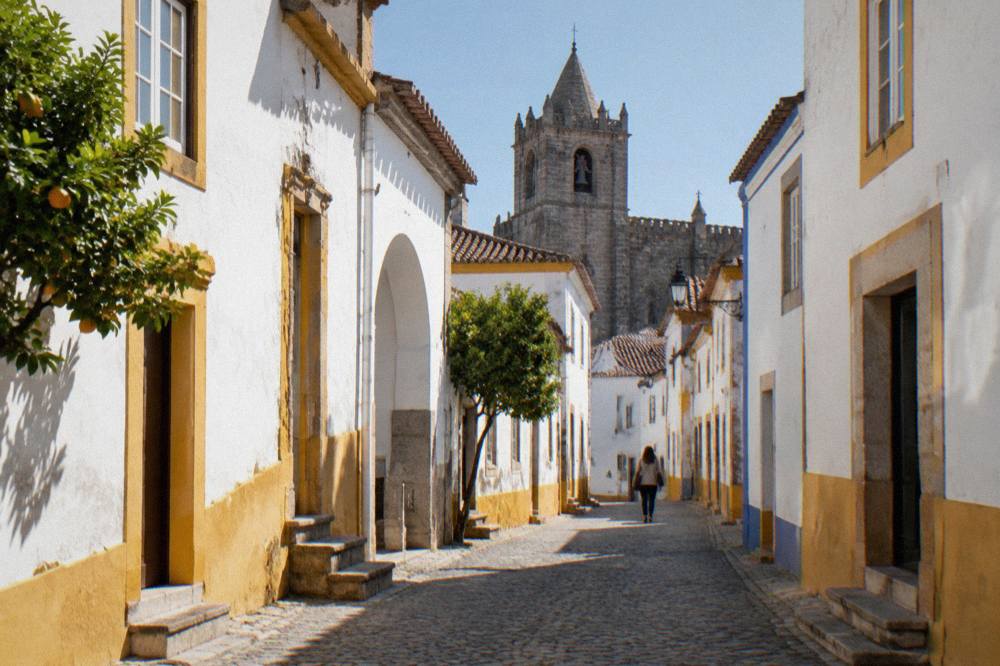
The comparison also corrects a common misreading. Visitors sometimes assume the bone chapel must be the city's strangest religious building, and that everything else is conventional by contrast. In truth the whole centre is layered in the same way: a Roman temple reused as a butcher's shop, a synagogue turned church, an aqueduct running through later houses. The chapel is the most dramatic instance of a pattern, not an exception to it, and the Évora Travel Guide covers the rest of that pattern site by site.
| Site in Évora | Religious character | Adult entry |
|---|---|---|
| Igreja de São Francisco and Capela dos Ossos | Working Catholic church, chapel in museum areas | 7.00 EUR |
| Sé de Évora, cathedral, cloister, roof and museum | Catholic cathedral | 5.00 EUR |
| Museu de Évora | National museum in the former Archbishop's Palace | 8 EUR |
| Évora Ticket, one day, city network pass | Multi-site pass, excludes the three sites above | 8 EUR |
Note the last row carefully. The Évora Ticket covers its own network of sites and does not include the Sé, the Capela dos Ossos or the Museu de Évora, so it does not replace the tickets in the rows above. Budget for the church ticket separately, and check the pass's own site list before assuming coverage.
For anyone building a trip around the religious architecture rather than around the bones alone, the guided options below are the three that fit the historic centre best.
Common Questions About The Bone Church In Évora
What religion is the Bone Church?
The Bone Church in Évora, Portugal, is Roman Catholic. The Capela dos Ossos belongs to the Igreja de São Francisco, a working Catholic church that holds Mass Monday to Saturday at 11:30 and Sunday at 9:00 and 12:00.
Is the Bone Church free to enter?
The church itself is free. The Capela dos Ossos is part of the paid museum areas, covered by a single ticket of 7.00 EUR for an adult, 5.00 EUR for youth up to 25 and seniors over 65, or 15.00 EUR for a family of two adults plus youths.
Does the Bone Church still hold Masses?
Yes. The Igreja de São Francisco says Mass at 11:30 from Monday to Saturday and at 9:00 and 12:00 on Sunday, per the church's own published schedule.
When is the Bone Church closed?
The site closes on 1 January, Easter Sunday, the afternoon of 24 December and 25 December. Otherwise it opens daily, 9:00 to 18:30 in summer legal time and 9:00 to 17:00 in winter.
Why are there bones in a Catholic church in Évora?
Catholic tradition includes memento mori, the meditation on mortality, and bone chapels are an architectural expression of it. The walls of the chapel are lined with human bones, which is what the Portuguese name Capela dos Ossos means, and the site remains a functioning part of a Catholic church.
Does the Bone Church accept museum discount cards?
No. The church states that it is a private religious entity and does not apply State Museum discounts to its ticket.
The religious answer is the simple one: the Bone Church of Évora is Roman Catholic, and it has never been anything else.