Is Évora Safe
Évora is a small, walkable inland city in the Alentejo, and the safety questions visitors ask are mostly about heat, distances and practical planning rather than anything dramatic. Here is what the official sources and the climate record actually say.
Short answer
Évora is a small inland UNESCO-listed city where the main planning issues are summer heat, long distances in the Alentejo and a few practical details like closing days at monuments. 112 is the emergency number, the EU Entry/Exit System is live since 10 April 2026, and ETIAS has no confirmed start date.
Évora, the capital of Portugal's Alentejo region and of the district of the same name, is a small inland city of roughly 53,000 people whose entire historic core has been UNESCO-listed since 1986. The safety questions visitors actually ask about it are rarely dramatic ones. They are about summer heat, about walking back to a hotel after dinner, about driving empty rural roads to a megalithic site, and about what paperwork applies at the border. This page answers those questions using official sources: the municipal pages, the monument sites, the rail operator's own timetable and the national weather service's climate record for the Évora station.
Is Évora Safe For Tourists?
Yes, in the ordinary sense that a small, inland, UNESCO-listed regional city is safe: it is compact, walkable, and built around a historic centre where the main streets stay busy through the evening. No official source publishes a safety ranking for Évora, and none is quoted here. What the sources do show is a city where the real planning issues are heat, opening hours and distance, and where ordinary city precautions, the same ones you would take anywhere, are the whole of the story.
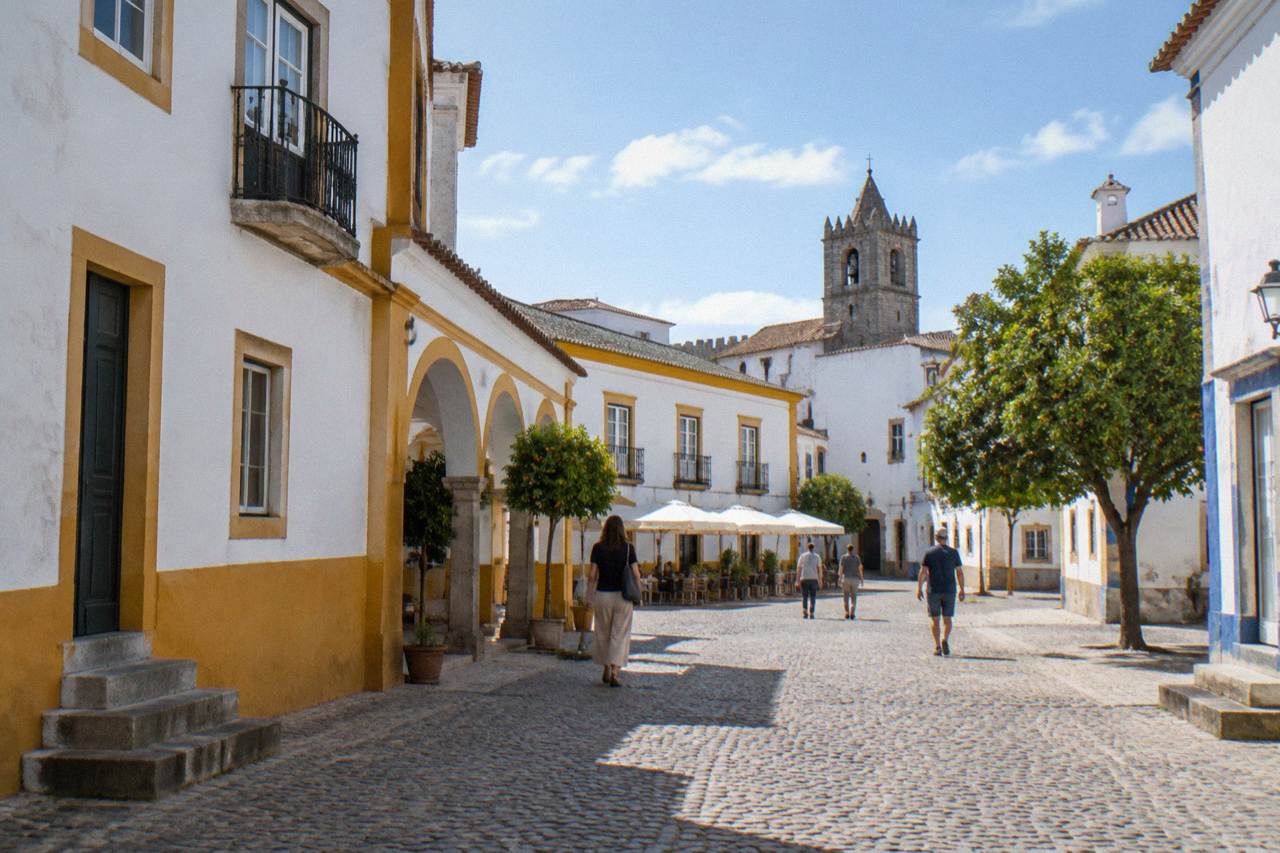
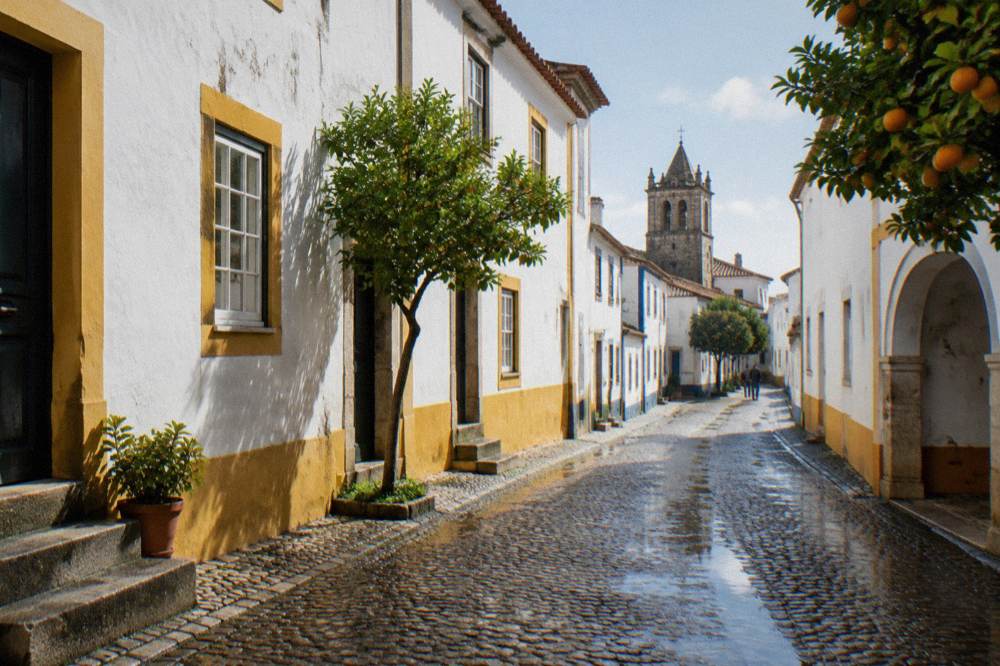
The city's character matters here. Évora is not a resort and not a metropolis. The historic centre inside the medieval wall is a network of narrow streets where cars move slowly and most journeys are made on foot. The Praça do Giraldo is a public square, open at all hours, and the main monuments sit within a few minutes' walk of one another. A visitor deciding whether the city merits the trip may find the is Évora worth visiting question more useful than any safety framing, and the where is Évora page explains the geography: inland, on the Alentejo plain, with the Atlantic roughly 90 km away and no coast of any kind.
One point worth stating plainly: nothing on this page is a crime statistic, because no official source for Évora crime figures was read for it. General advice follows the same lines as for any European city of this size. Keep valuables out of back pockets in crowded spots, watch bags at the market and the bus terminal, and lock the car in the public car parks. The Évora parking guide covers where the car parks sit relative to the walls.
What Are The Main Safety Concerns In Évora?
The three concerns that genuinely shape a trip to Évora are heat, distance and schedule: summer temperatures that regularly pass 35 C, day-trip drives of 40 to 120 km across the Alentejo with few services en route, and monuments that close on specific days, Mondays in the museum's case, that can strand an unplanned itinerary. None of these is a danger in the dramatic sense. All of them are planning problems, and all of them are solved with water, a timetable and a little timing.
Heat first, because it is the one with numbers behind it. The IPMA 1991 to 2020 normals for the Évora station show a July mean maximum of 33.3 C and an August mean maximum of 33.5 C, with 31.9 days a year reaching 35 C or more. The record for the station is 45.4 C, set on 4 August 2018. That is serious heat, and it argues for the standard Alentejo rhythm: sights in the morning, a long shaded lunch, and the streets again in the early evening. The best time to visit Évora and Évora weather pages break the year down month by month.
Distance is the second. Évora is a hub for the Alentejo, and the classic excursions are not suburbs. Monsaraz is about 40 to 45 km away, Estremoz about 45 km, Vila Viçosa about 60 km, Elvas about 80 km and Marvão about 120 km, all rounded figures. Rural roads between them can run long stretches without fuel or food, so a full tank and water in the car matter more than any city precaution. The Almendres Interpretation Centre's own page, for the cromlech route, says to take the national road toward Lisbon and after 8 km follow the turn-off, which gives a sense of how signposted these routes are.
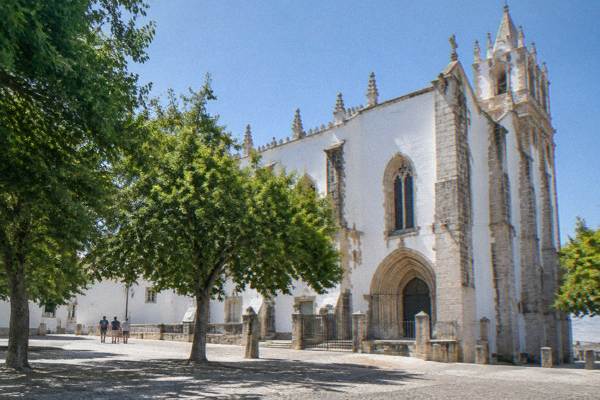
Schedule is the third. The Museu de Évora is closed Mondays. The Sé de Évora closes on the afternoon of 24 December, on 25 December and on 1 January. The Igreja de São Francisco, which holds the Capela dos Ossos, opens daily except 1 January, Easter Sunday, the afternoon of 24 December and 25 December. An itinerary that ignores these days loses a morning, which in high summer is the best part of the day.
How Hot Does Évora Actually Get?
The 1991 to 2020 normals for the Évora station show mean maximums of 33.3 C in July and 33.5 C in August, with 23.7 and 25.0 days respectively reaching 30 C or more, and 11.5 and 10.9 days reaching 35 C or more. June and September are cooler but still serious, at 30.2 C and 29.5 C mean maximums. Rain almost disappears in summer: 2.7 mm in July and 6.0 mm in August across the whole month.
The full picture from the station record, which is the only climate dataset quoted on this page:
| Month | Mean max (C) | Mean min (C) | Days at 30 C+ | Days at 35 C+ | Rain (mm) |
|---|---|---|---|---|---|
| May | 25.0 | 10.9 | 5.5 | 0.7 | 46.6 |
| June | 30.2 | 13.8 | 15.1 | 5.6 | 10.6 |
| July | 33.3 | 15.6 | 23.7 | 11.5 | 2.7 |
| August | 33.5 | 16.0 | 25.0 | 10.9 | 6.0 |
| September | 29.5 | 14.6 | 13.9 | 3.1 | 33.9 |
| October | 24.1 | 12.3 | 2.9 | 0.1 | 81.5 |
Every figure in that table is a 1991 to 2020 average for the Évora station, number 558, at 247.6 m altitude. The station record also holds the two extremes: 45.4 C on 4 August 2018, and a low of -4.2 C on 4 December 1998 and again on 23 January 2000. Winters are mild on average, with January mean maximums of 14.1 C, but the record shows the plain can freeze.
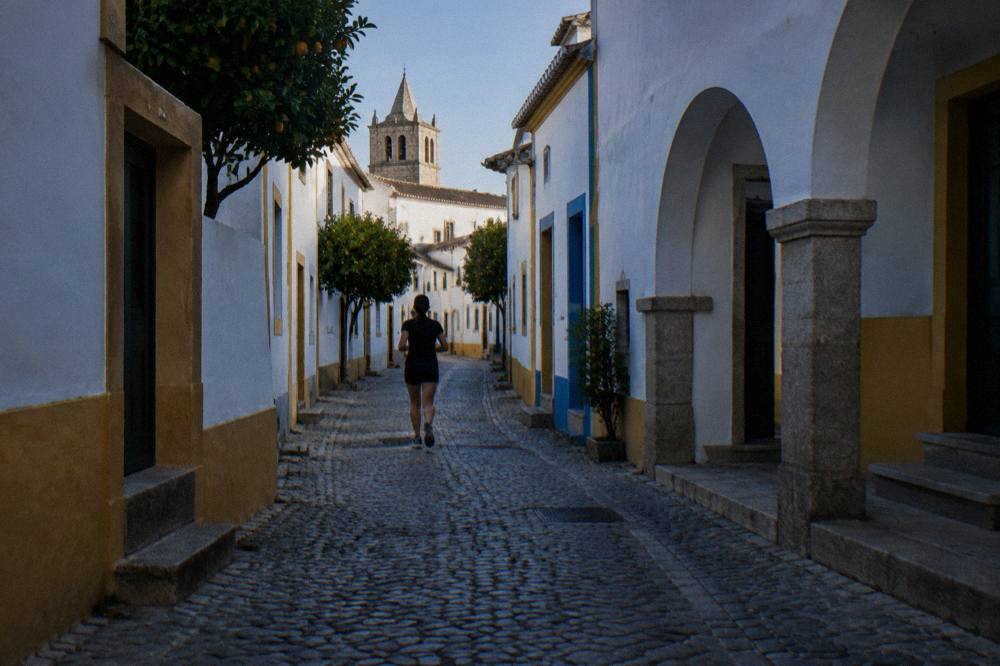
The practical reading is straightforward. From late June to early September, treat the middle of the day as indoor time: the Sé's cloister, the Museu de Évora's galleries, a long lunch. The Capela dos Ossos keeps summer hours of 9:00 to 18:30, which means an early or late visit avoids both the heat and the busiest stretch. Carry water, because the streets inside the walls offer shade unevenly and the open squares, the Praça do Giraldo among them, offer almost none.
Is It Safe To Walk Around Évora At Night?
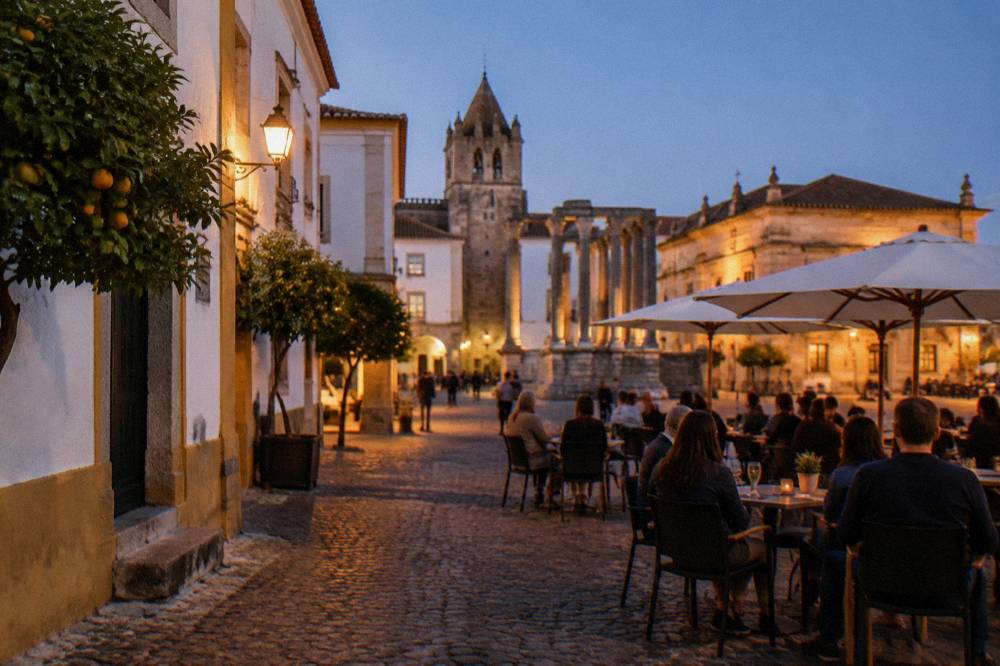
The historic centre of Évora is a small, enclosed, largely pedestrian environment where restaurants and squares stay active into the evening in the usual southern European pattern, and walking back to a hotel inside the walls is a short, ordinary journey rather than a crossing of a big city. The same caveats apply as anywhere: stick to streets you know, keep a phone charged, and take a taxi rather than improvise a long walk to an out-of-centre hotel.
No official source was read for a specific claim about Évora after dark, and none is invented here. What can be said from the sources is structural: the centre is compact, the main squares are public and central, and the evening economy is real, with the Évora at night page covering what stays open and where the evening is spent. The tourist office sits on the Praça do Giraldo itself, at number 73, with the phone number +351 266 777 071 published on the municipal page, which is a useful contact to hold on any trip.
For visitors who would rather not navigate the streets alone in the dark, an evening food and wine crawl is a structured way to spend the night hours with a local host: the Évora evening food and wine crawl runs about three hours with a guide leading between stops. That is the pattern to lean on: guided evening options exist, and they remove the guesswork from the hours when an unfamiliar city is at its least familiar.
What Should You Do In An Emergency In Évora?
The number to call anywhere in Portugal and across the EU is 112, free from any phone, for police, fire and medical services. The municipal tourist office at Praça do Giraldo 73, reachable on +351 266 777 071, is the walk-in point for lost documents and practical help during its published hours, which run 9:00 to 18:00 on weekdays in winter with shorter weekend hours. For health, the ordinary rule applies: pharmacies handle minor problems first.
The winter hours for the tourist office, published on the municipal page and described there as indicative, are 9:00 to 18:00 on weekdays and 10:00 to 14:00 and 15:00 to 18:00 on Saturday and Sunday. Summer hours are listed on the same page. No pharmacy hours or hospital details were read from a primary source for this page, so none are stated; a pharmacy with a green cross is the first stop for minor illness anywhere in Portugal, and the staff at your hotel or the tourist office can point to the nearest one. The rest of the planning pages sit on Évora Travel Guide.
One border point belongs in any safety discussion. The EU Entry/Exit System has been fully live across the Schengen area since 10 April 2026, so non-EU visitors now have their entry and exit recorded digitally at the border. ETIAS, the travel authorisation for visa-exempt visitors, is not confirmed as started: no start date and no fee appear on this page, because none was read on an official source. Check the current position on the official EU pages before travel rather than relying on second-hand summaries.
Is Évora Safe For Solo Travellers And Families?
Évora suits both solo travellers and families for the same structural reasons: the centre is small enough that a child, or a solo visitor, is rarely more than a few minutes from a main square, the distances between sights are short, and the main risks are environmental, chiefly heat, rather than social. Families should plan around monument closing days and the midday sun; solo travellers should do the same and can lean on small-group tours to add company.
For families, the practical notes are concrete. Children up to 12 enter the Sé de Évora free with a parent or guardian, and the Évora Ticket multi-site pass is free to age 12. The Capela dos Ossos charges a family ticket of 15.00 EUR for two adults plus youths. That is a museum of decorated bones, which some children find thrilling and some find unsettling, so it is worth a conversation beforehand. The things to do in Évora overview helps sequence a family day around the heat.
For solo travellers, the free GuruWalk walks are a natural first move. The Essential Free Tour of Évora, a GuruWalk tip-based walk rated 4.93 from 774 reviews over about two hours, covers the centre with a local guru and costs nothing up front, and GuruWalk is the platform to book it on. It is a way to learn the street layout on day one, which is itself a safety measure in any unfamiliar city.
Is It Safe To Drive And Park In Évora?
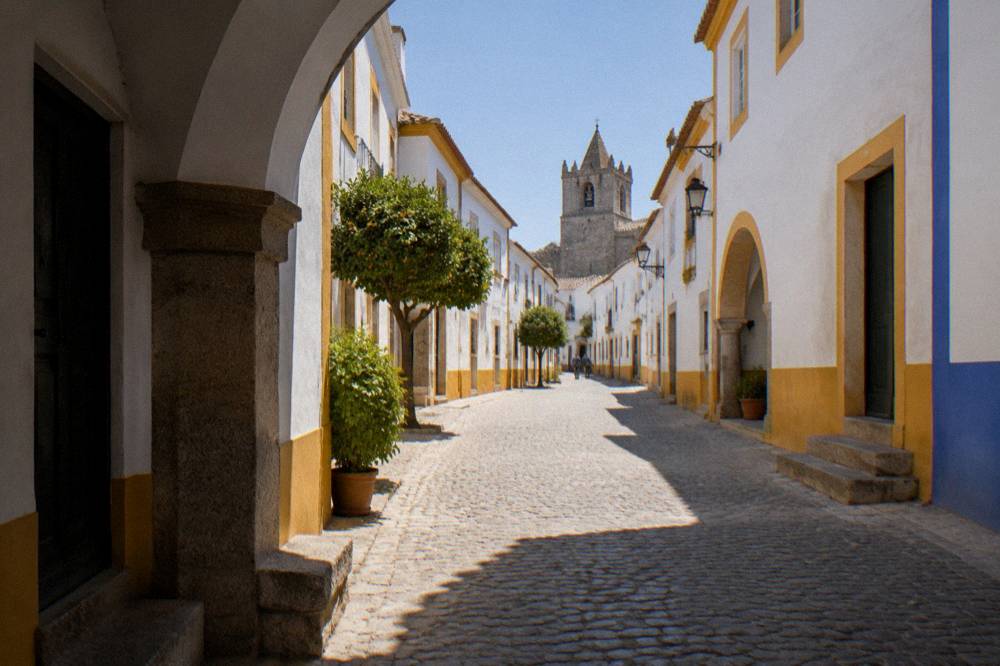
Driving to and around Évora is safe in the normal sense, with the real attention points being heat inside a parked car, the narrow streets inside the medieval walls that are best avoided by car entirely, and long rural stretches on Alentejo day trips where fuel and water are sparse. The practical pattern is to park outside or at the edge of the centre and walk in, which the city's layout makes easy.
The Évora parking page covers the car parks and their relation to the walls in detail. The general rule for a walled city applies: streets built for carts do not suit rental cars, and the stress of squeezing through one is avoidable. Park, walk, and let the centre be pedestrian, which is what it was built for.
On the day-trip routes, the distances are the thing. Arraiolos is about 20 km away, Monsaraz about 40 to 45 km, Estremoz about 45 km, Vila Viçosa about 60 km, Elvas about 80 km and Marvão about 120 km, all rounded. In July and August, with mean maximums above 33 C, a car parked at a cromlech or a viewpoint becomes an oven within an hour, so never leave a child, a pet or electronics in it, and carry more water than seems reasonable. The road to the Almendres cromlech, per the interpretation centre's page, leaves the national road toward Lisbon after 8 km at a marked turn-off.
For anyone who would rather not drive at all, the train is the calm option. CP's timetable, valid since 6 September 2026, lists six through Intercidades trains from Lisboa Oriente to Évora, taking about 1 hour 40 to 1 hour 45, with a second-class fare of 13.90 EUR and first class at 18.50 EUR. The Lisbon to Évora and Lisbon to Évora by train pages cover the full picture.
| Lisboa Oriente departure | Évora arrival | Notes |
|---|---|---|
| 07:02 | 08:47 | Through Intercidades train |
| 09:02 | 10:45 | Through Intercidades train |
| 09:58 | 11:40 | Through Intercidades train |
| 13:35 | 15:13 | Through Intercidades train |
| 17:02 | 18:41 | Through Intercidades train |
| 19:02 | 20:46 | Through Intercidades train |
Those six pairings come from the CP PDF itself, timetable valid since 6 September 2026, and the fare table from the same operator. Check the PDF's weekday remarks before assuming a service runs every day of the week.
What Should You Watch For At The Monuments?
The monument risks in Évora are schedule risks, not safety risks: the Museu de Évora closes Mondays, the Sé closes on 25 December and 1 January plus the afternoon of 24 December, the Capela dos Ossos closes on 1 January, Easter Sunday, the afternoon of 24 December and 25 December, and each site has one ticket covering everything, so there is no cheaper partial tier to fall back on. Planning around these days is the whole task.
The ticket structure is simple and worth knowing before arrival:
| Site | Ticket | Price | Key conditions |
|---|---|---|---|
| Sé de Évora | One complete-visit ticket | 5.00 EUR | Cathedral, cloister, roof terrace, museum; children to 12 free |
| Igreja de São Francisco / Capela dos Ossos | One museum ticket | 7.00 EUR adult | Youth to 25 and seniors over 65 pay 5.00 EUR; family 15.00 EUR |
| Museu de Évora | Adult ticket | 8 EUR | Tue to Sun, 9:30 to 13:00 and 14:00 to 17:30; closed Mondays |
| Évora Ticket | Multi-site pass | 8 EUR one day | 10 EUR two days, 12 EUR three days; free to 12; excludes the Sé, the Capela dos Ossos and the Museu de Évora |
The Évora Ticket exclusion matters: the pass covers the Cidade-Museu network, not the three headline sites, so it complements rather than replaces those tickets. The Convento dos Lóios currently shows its price as temporarily unavailable on the municipal page, so ask at the tourist office or the door rather than budgeting a figure.
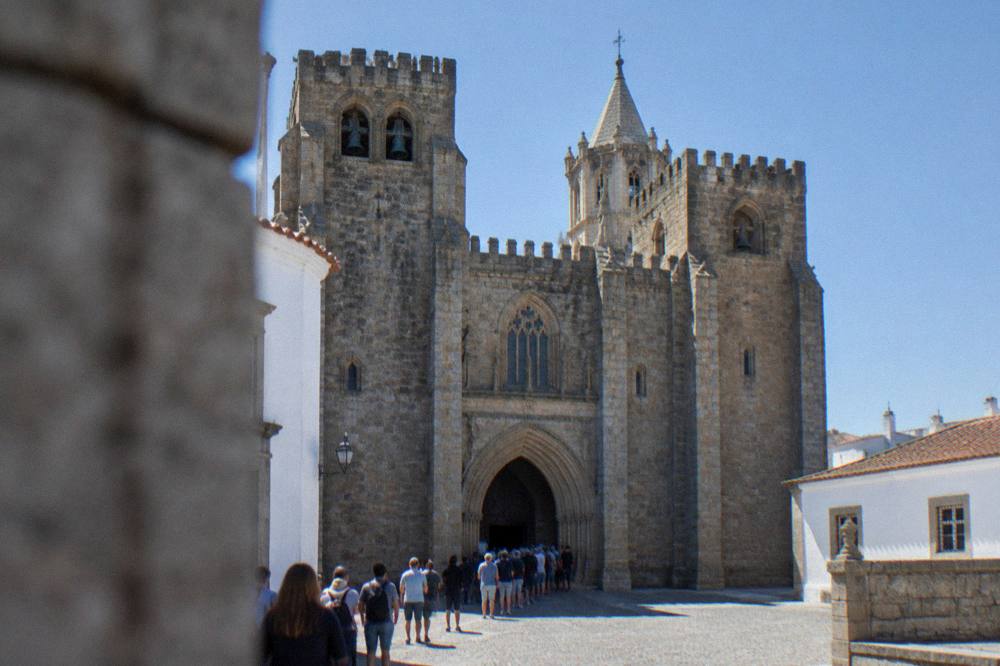
The roof terrace at the Sé is the one spot where physical care is part of the visit: it is a panoramic viewpoint reached by the ticket, and in summer the terrace itself will be hot by late morning. The chapel keeps summer hours of 9:00 to 18:30 and winter hours of 9:00 to 17:00, which gives late risers a window, and masses at the Igreja de São Francisco run at 11:30 Monday to Saturday and at 9:00 and 12:00 on Sunday, times when the working church takes precedence over sightseeing.
Should You Take A Guided Tour In Évora?
A guided walk is the most efficient safety measure available in Évora, because it hands the street knowledge, the timing and the monument logistics to a local in a single booking: a guide knows which streets stay busy, which hours to avoid in August, and where the entrances actually are. The guided options include a classic walking tour, a flexible historic-centre walk from about $13.51, and a sidecar tour that covers the medieval city by motorbike with a driver.
Check availability if that pattern suits your first day.
The budget end is the flexible historic-centre walk, and the premium end is the sidecar:
The Medieval Tour of Évora on a sidecar with wine tasting, rated 4.9 from 16 reviews and from $61.90 per person over about three hours, is a different animal entirely: a passenger ride through the medieval streets with a driver-guide, ending in a tasting. It suits visitors who want the centre covered without the walking.
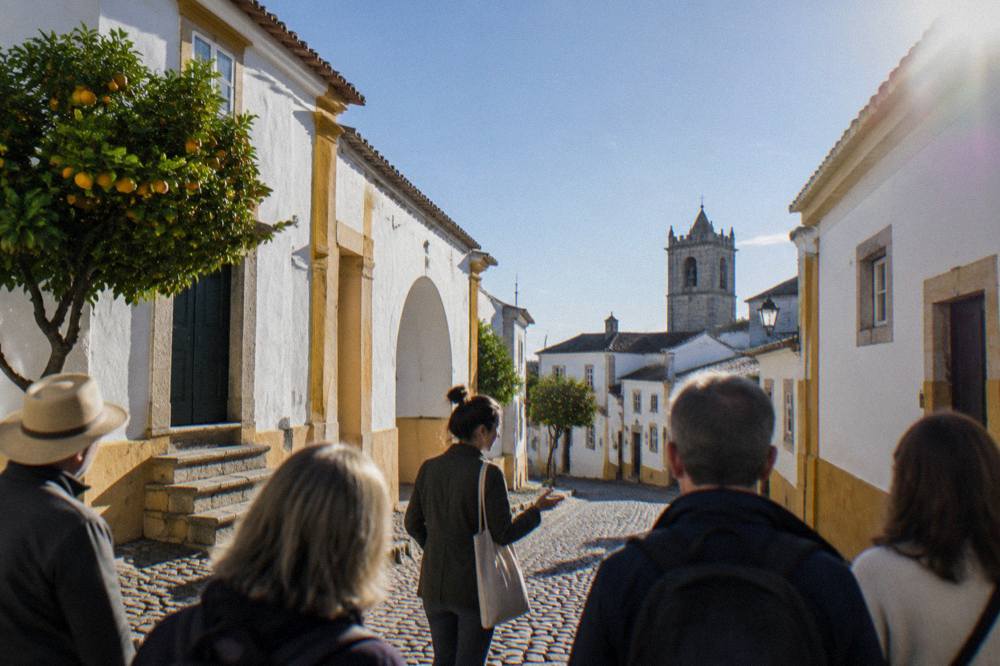
For the fuller comparison, the Évora tours page lists the guided options across walking, food, wine, megaliths and day trips, with prices and ratings on each card. A guided first morning plus free afternoons is the pattern many visitors settle into, and it front-loads the orientation.
What About Day Trips Outside The City?
Day trips from Évora are safe and are mostly a matter of distance management: Monsaraz sits about 40 to 45 km away, Estremoz about 45 km, Vila Viçosa about 60 km, Elvas about 80 km and Marvão about 120 km, all rounded figures, on quiet Alentejo roads where the hazards are heat, fatigue and sparse services rather than anything else. Guided small-group versions exist for every major route and remove the driving entirely.
The classic excursions, with the rounded distances from the facts:
| Destination | Distance from Évora | What it is known for |
|---|---|---|
| Arraiolos | about 20 km | Arraiolos embroidery and a hilltop round church |
| Monsaraz | about 40-45 km | Walled village above the Alqueva lake |
| Estremoz | about 45 km | Marble and a medieval castle |
| Vila Viçosa | about 60 km | Ducal palace and marble quarries |
| Elvas | about 80 km | Star forts and aqueduct |
| Marvão | about 120 km | Mountain-top walled village |
Guided options cover the same ground. The Monsaraz and Wine guided tour from Évora runs about four hours from $78.78 per person, rated 4.6 from 51 reviews, and the Megalithic and Cork Forest guided tour from Évora, rated 4.9 from 41 reviews and from $50.65 per person, pairs the cromlech landscape with the cork oak country that defines the region. Both are small-group products that start in Évora, and both put a local driver between the visitor and the rural roads.
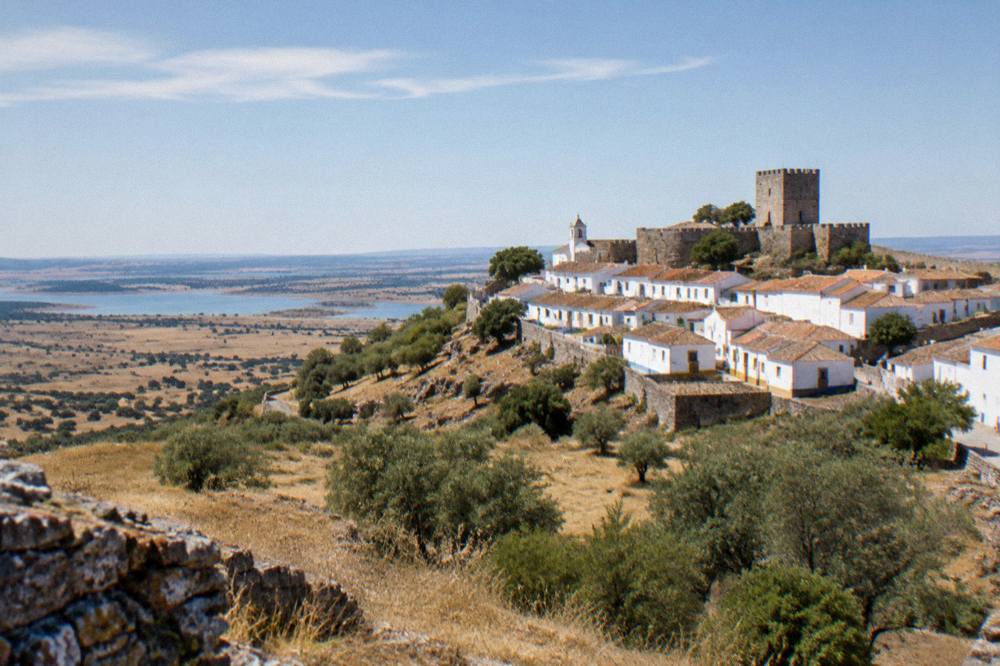
The Alentejo is a region of long horizons and short shade. On any excursion between June and September, carry water in the car, start early, and treat the middle of the day as lunch rather than exploration. That single habit does more for a safe trip than any precaution taken inside the city walls.
Common Questions About Safety In Évora
Is Évora safe at night?
The historic centre stays active into the evening in the usual southern European pattern, and the centre is compact enough that a walk back to a hotel inside the walls is short. Take the ordinary precautions you would take in any city, keep a phone charged, and use a taxi for an out-of-centre hotel rather than a long walk.
Is Évora safe for solo female travellers?
No official source publishes a safety ranking for Évora, and this page prints none. Structurally it is a small, walkable regional city whose real hazards are environmental, chiefly summer heat. The free GuruWalk walks, including the Essential Free Tour of Évora rated 4.93 from 774 reviews, are a good way to learn the streets with company on a first day.
Is the tap water safe in Évora?
No primary source on Évora's water supply was read for this page, so no claim is made either way. Bottled water is cheap and everywhere, and in summer heat the practical point is volume: the 1991 to 2020 normals show July averaging a 33.3 C maximum, so drink more than feels natural.
What is the emergency number in Évora?
112, the EU-wide emergency number, free from any phone, for police, fire and medical services. The municipal tourist office at Praça do Giraldo 73, on +351 266 777 071, is the walk-in point for practical help during its published hours.
Is Évora too hot to visit in summer?
Not too hot, but hot enough to plan around. The 1991 to 2020 station normals show 33.3 C and 33.5 C mean maximums in July and August, with 31.9 days a year at 35 C or more. Sightsee in the morning, take a long shaded lunch, and return to the streets in the evening.
Do I need ETIAS to visit Évora?
ETIAS is not confirmed as started, and no start date or fee is stated here. The EU Entry/Exit System has been fully live across the Schengen area since 10 April 2026, so non-EU entries are recorded digitally. Check the official EU pages for the current ETIAS position before you travel.
The honest summary is that Évora rewards preparation more than vigilance: know the closing days, respect the heat, park outside the walls, hold the number 112, and the city inside them takes care of itself.