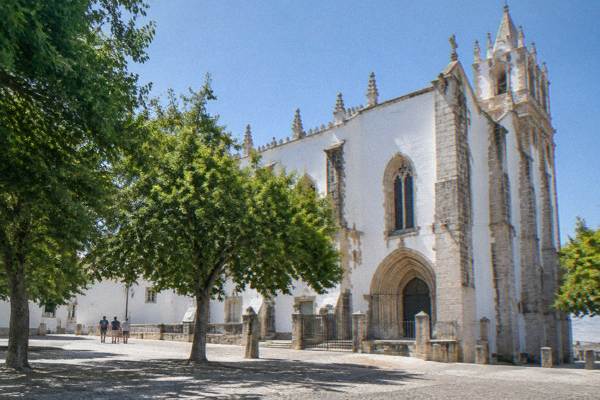
Évora Facts: Population, Climate, Distances And Key Numbers For Portugal's Alentejo Capital
Évora, Portugal, is a small inland city of about 53,000 residents that carries a UNESCO World Heritage old town, Roman remains and the capital role of the Alentejo. Here are the numbers that matter.
Short answer
Évora is a city and municipality in the Alentejo region of southern Portugal with about 53,000 residents at the 2021 Census. It is the capital of the Évora district and of the Central Alentejo sub-region, its historic centre has been UNESCO World Heritage since 1986, and it will be a European Capital of Culture in 2027.
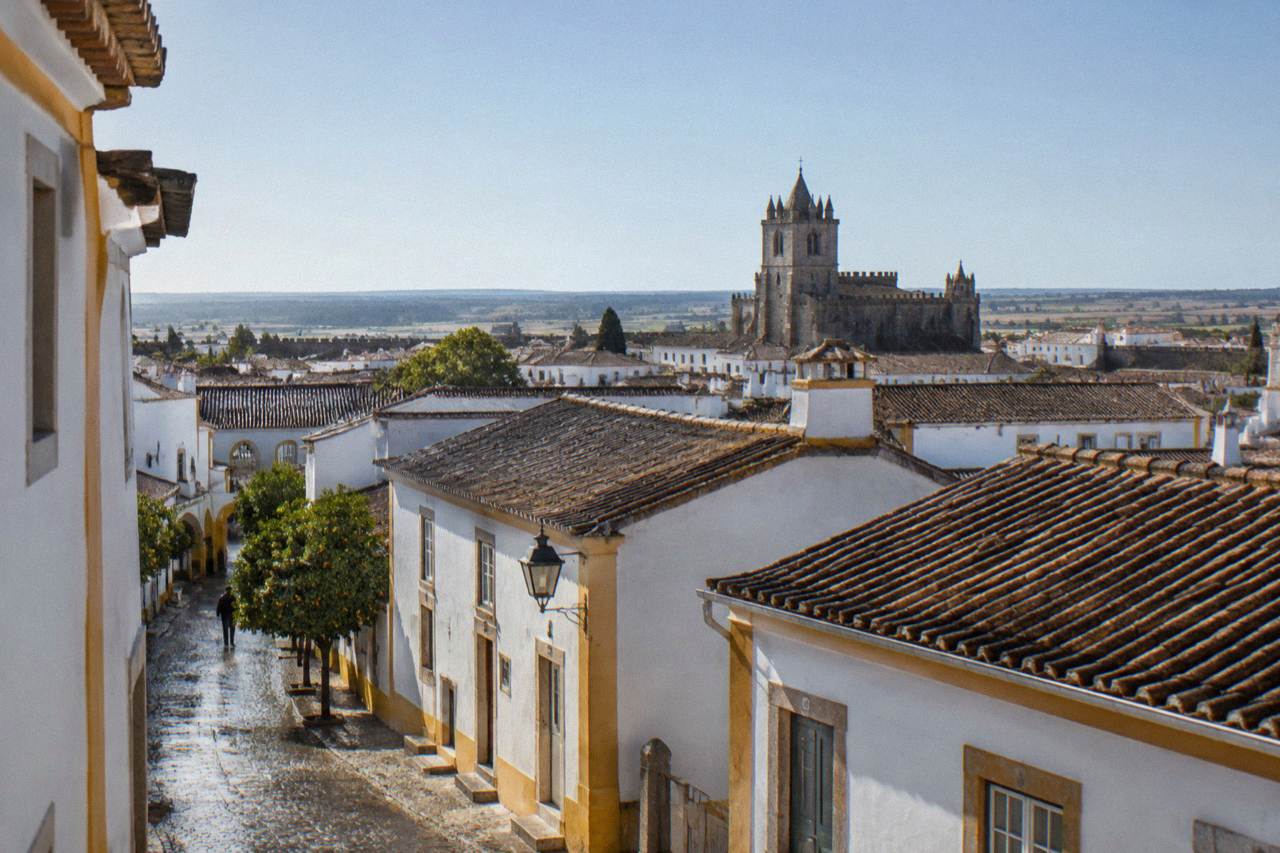
Évora, Portugal, is a city and municipality in the Alentejo region of southern Portugal, the capital both of the Évora district and of the Central Alentejo sub-region. It is a small city by any measure: the municipality counted 53,577 residents at the 2021 Census, which rounds to about 53,000, and the whole historic core sits inside a medieval wall that a walker can cross in well under an hour. Yet the place carries a weight far beyond its size. Its historic centre has been on the UNESCO World Heritage list since 1986, it holds a Roman temple in the middle of town, and it is one of the four Portuguese cities named a European Capital of Culture, an honour it takes up in 2027. This page gathers the numbers and dates that describe the city: who lives here, where it sits, what its climate actually does, what the main monuments cost and how the year ahead shapes up. The Évora Travel Guide editorial desk keeps each figure tied to the subject it belongs to, so a ticket price is never borrowed from a different monument.
What Is The Population Of Évora, Portugal?
The municipality of Évora had 53,577 residents at the 2021 Census, which is best quoted as about 53,000. That figure covers the whole municipality, not just the walled centre, and no separate city-only or district-wide count is published here because the census figure attaches to the municipality alone. Évora is also the seat of the Évora district and of the Central Alentejo sub-region, so its administrative reach is far larger than its resident count.
The number matters for what it says about scale. Évora is a university town and a market town, and the daytime population of the historic centre swells with visitors, students and people from the surrounding villages who come in to work, shop and use services. The 2021 Census figure is the most recent official count, and it is the one worth quoting when comparing Évora with anywhere else.
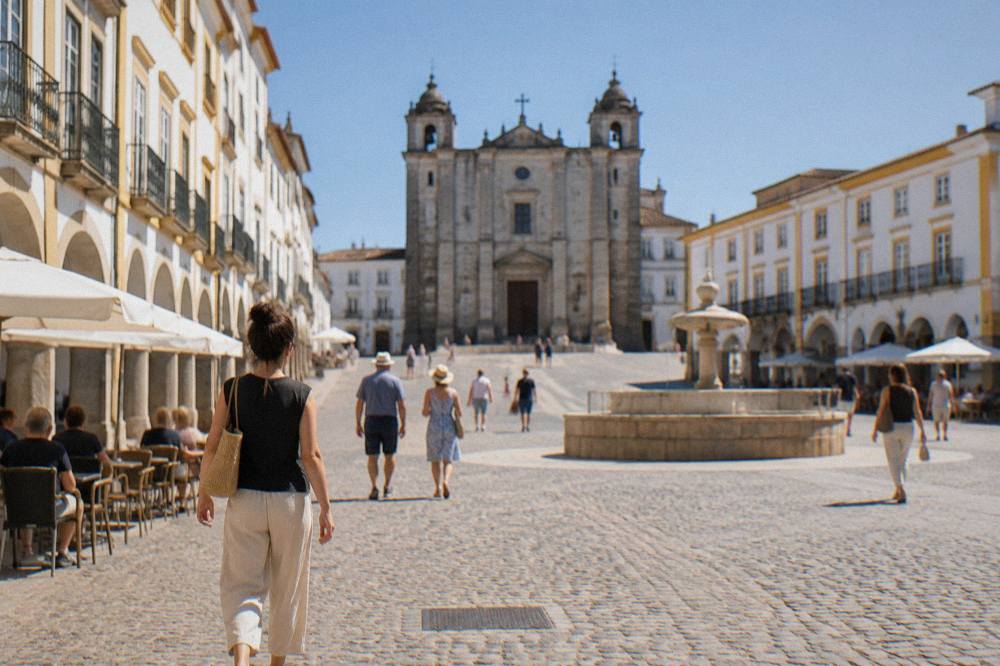
What the population figure does not capture is density of history. A city of about 53,000 people holds a Roman temple, a medieval cathedral with a roof terrace, a bone chapel, a Roman aqueduct marching through back gardens, and one of the largest stone circles in the Iberian peninsula about 15 km outside town. The ratio of monuments to residents is the reason the city punches above its demographic weight, and it is the reason the old town feels busy in summer even though the resident count is modest.
For context on what that population lives alongside, the what Évora is known for guide walks through the sights that define the city, and the practical question of whether the city justifies the journey is covered in is Évora worth visiting.
Where Is Évora And Why Does Its Inland Location Matter?
Évora sits on the Alentejo plain in southern Portugal, roughly 130 km by road from Lisbon, and it is an inland city: the Atlantic coast is roughly 90 km away, so there is no beach, no sea view and no coastal breeze to soften the summer. The city is the capital of the Évora district and of the Central Alentejo sub-region, positioned among rolling cork oak country rather than on any river of note.
The inland position shapes everything about the place, from its climate to its economy. The Alentejo name is usually explained as meaning "beyond the Tagus", the great river that Lisbon sits on, and Évora sits well beyond it, in the middle of a wide, gently undulating plain. Cork oaks, holm oaks, vineyards and wheat fields dominate the landscape around the city, and the horizon in most directions is flat or softly rounded rather than mountainous.
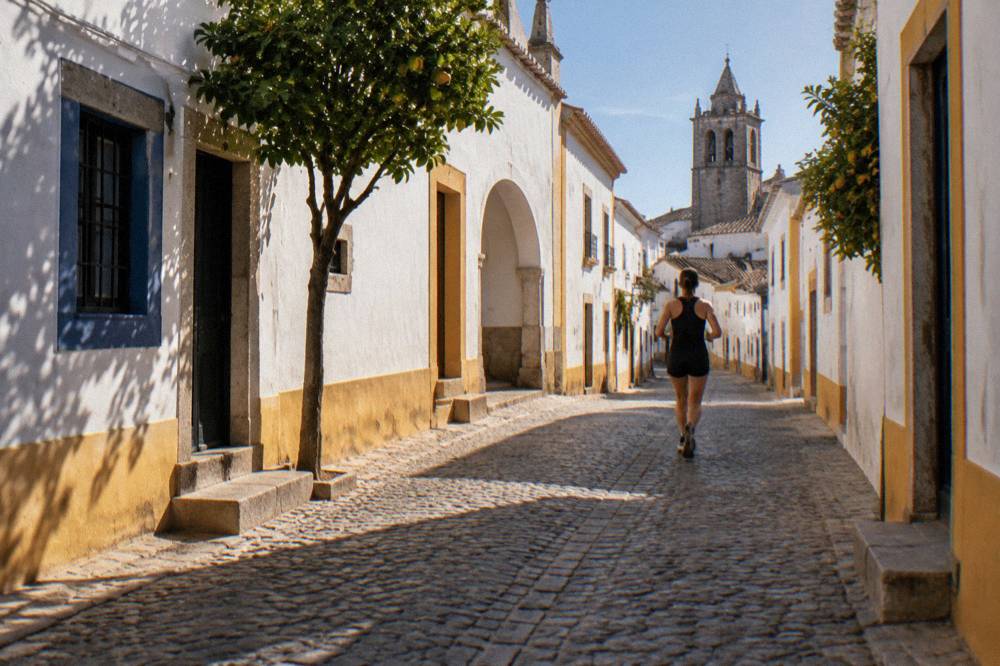
For visitors, the geography has practical consequences. There is no reason to pack for the coast, and no reason to plan a beach afternoon: the sea is a separate trip, toward Setúbal or the Alentejo coast. What the plain offers instead is space, quiet roads and a cluster of small towns within easy reach. Arraiolos, famous for its carpets, is about 20 km away. Estremoz is about 45 km, Vila Viçosa about 60 km, Elvas about 80 km and Marvão about 120 km, with Monsaraz on the Alqueva reservoir about 40 to 45 km to the southeast. All of these are rounded distances, and drive times depend on the road and the season.
The full geography of the city, its walls and its surroundings is covered in the where is Évora guide, and the wider region is mapped out in the Alentejo travel guide.
Why Is Évora A UNESCO World Heritage City?
Évora's historic centre was inscribed on the UNESCO World Heritage list in 1986, under criteria (ii) and (iv). Criterion (iv) calls it the finest example of a city of the golden age of Portugal, a quality that survived because Évora was largely undamaged by the 1755 Lisbon earthquake that destroyed so much of the capital. Moorish rule in the city ended in 1165, and the Jesuit University of the Holy Spirit dates from 1553.
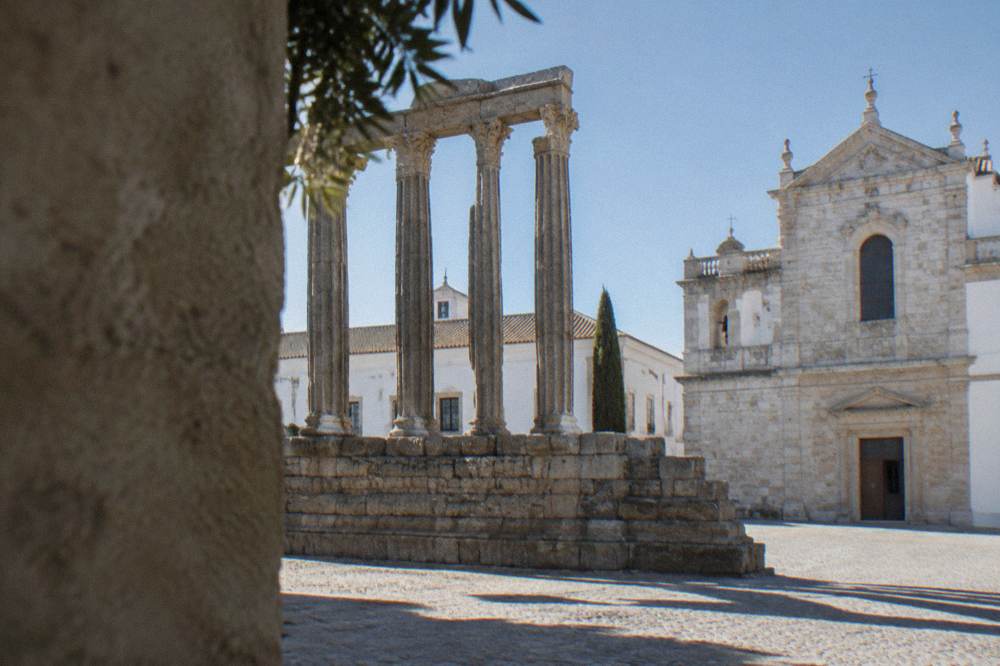
That inscription is the single most important fact about the modern city, because it protects an unusually complete old town. The streets inside the walls preserve building styles from Roman through Moorish, medieval, Manueline and baroque periods, layered rather than erased. The Roman temple, popularly called the Temple of Diana, stands in the middle of it: the municipal page says it was probably dedicated to the imperial cult rather than to the goddess Diana, measures 25 by 15 metres, was reused for centuries as a municipal butcher's shop, and had its walls freed in 1870.
The Jesuit thread runs deep. The university's founding in 1553 made Évora a serious intellectual centre for two centuries, until the Jesuits were expelled in 1759. The building survives as the University of Évora, and its granite cloister with schist detailing is one of the most photographed spots in the city. The 1755 earthquake spared Évora largely intact, which is precisely why UNESCO's criterion (iv) language singles it out: the golden-age city is still there to walk through.
The best way to take that history in is on foot, and the guided options range wide in style and price. The Évora Walking Tour, a street-stories walk from $53.90 per person rated 4.8 from 37 reviews, covers the core in a couple of hours, and Check availability before committing to a date. For a different angle entirely, the Medieval Tour of Évora on a Sidecar & Wine Tasting puts two riders in a vintage motorcycle sidecar for three hours from $61.90 per person, rated 4.9 from 16 reviews, and ends with a wine tasting. The full range of guided options is collected in the Évora tours overview.
What Is The Climate Like In Évora?
Évora has a hot-summer Mediterranean climate on an inland plain: IPMA's 1991 to 2020 normals for the Évora station show a July mean maximum of 33.3 C and an August mean maximum of 33.5 C, with 31.9 days a year reaching 35 C or more. Winters are mild by day, with a January mean maximum of 14.1 C, and nights can drop to a mean minimum of 4.5 C. Annual rainfall averages 596.1 mm, concentrated from October to December.
The numbers come from the IPMA climate normals for station Évora, number 558, at 38.5365 N, 7.8880 W, altitude 247.6 metres, covering the 1991 to 2020 period. Every figure below carries that window. The station's record high is 45.4 C, set on 4 August 2018, and its record low is -4.2 C, recorded on 4 December 1998 and again on 23 January 2000.
| Month | Mean max (C) | Mean min (C) | Rain (mm) | Days 30 C+ |
|---|---|---|---|---|
| January | 14.1 | 4.5 | 68.6 | 0.0 |
| February | 15.7 | 5.0 | 52.3 | 0.0 |
| March | 18.7 | 6.9 | 60.8 | 0.0 |
| April | 20.7 | 8.5 | 62.1 | 0.3 |
| May | 25.0 | 10.9 | 46.6 | 5.5 |
| June | 30.2 | 13.8 | 10.6 | 15.1 |
| July | 33.3 | 15.6 | 2.7 | 23.7 |
| August | 33.5 | 16.0 | 6.0 | 25.0 |
| September | 29.5 | 14.6 | 33.9 | 13.9 |
| October | 24.1 | 12.3 | 81.5 | 2.9 |
| November | 17.6 | 7.9 | 86.0 | 0.0 |
| December | 14.6 | 5.3 | 85.1 | 0.0 |
Read the table before planning. July and August combine the highest temperatures with the lowest rainfall, 2.7 mm and 6.0 mm respectively, which makes them dry but punishing at midday. May, June, September and October offer the best trade between warmth and comfort, and the 30 C-plus days fall from 25.0 in August to 2.9 in October. Rain arrives properly in October and stays through the winter, with November the wettest month at 86.0 mm. None of this says anything about sunshine hours or wind, which the normals sheet does not carry.
The month-by-month detail, including what to do when the heat peaks, is in the best time to visit Évora and Évora weather guides.
How Far Is Évora From Lisbon And Other Places?
Lisbon is about 130 km from Évora by road, and the CP Intercidades timetable valid since 6 September 2026 lists six through trains a day from Lisboa Oriente, taking about 1 hour 40 to 1 hour 45 and costing 13.90 EUR in second class or 18.50 EUR in first class. Within the region, Arraiolos is about 20 km away, Estremoz about 45 km, Vila Viçosa about 60 km, Elvas about 80 km and Marvão about 120 km.
The train is the reference journey for most visitors. The six daily departures from Lisboa Oriente run at 07:02, 09:02, 09:58, 13:35, 17:02 and 19:02, arriving in Évora at 08:47, 10:45, 11:40, 15:13, 18:41 and 20:46, with calls at Entrecampos, Sete Rios, Pragal, Pinhal Novo, Vendas Novas and Casa Branca along the way. These are through trains, so no change is needed. Check CP's current PDF before travelling, because the weekday remarks in the timetable govern exceptions.
| Lisboa Oriente departure | Évora arrival | Second class | First class |
|---|---|---|---|
| 07:02 | 08:47 | 13.90 EUR | 18.50 EUR |
| 09:02 | 10:45 | 13.90 EUR | 18.50 EUR |
| 09:58 | 11:40 | 13.90 EUR | 18.50 EUR |
| 13:35 | 15:13 | 13.90 EUR | 18.50 EUR |
| 17:02 | 18:41 | 13.90 EUR | 18.50 EUR |
| 19:02 | 20:46 | 13.90 EUR | 18.50 EUR |
The regional distances are rounded figures, not measurements to the metre, and drive times vary with road and season. What they show is the shape of the region: Évora sits close enough to Arraiolos for a morning trip, close enough to Estremoz and Vila Viçosa for a full day of marble towns and wineries, and far enough from Marvão that a visit there is a day in itself.
| Place | Distance from Évora | Character |
|---|---|---|
| Arraiolos | about 20 km | Carpet-making hill town |
| Monsaraz | about 40-45 km | Walled village above the Alqueva reservoir |
| Estremoz | about 45 km | Marble town with a castle keep |
| Vila Viçosa | about 60 km | Ducal palace and marble quarries |
| Elvas | about 80 km | Star-fortress border city |
| Marvão | about 120 km | Mountain-top walled village |
| Lisbon | about 130 km | Capital and main gateway |
For the journey itself, the Lisbon to Évora by train guide carries the full rail detail, the Lisbon to Évora page compares the options, and the return leg is covered in Évora to Lisbon.
What Do Évora'S Main Monuments Cost To Visit?
The Sé de Évora charges 5.00 EUR for one complete-visit ticket covering the cathedral, cloister, roof terrace and museum, with children up to 12 free. The Capela dos Ossos museum ticket is 7.00 EUR for adults, 5.00 EUR for youth to 25 and seniors over 65, and 15.00 EUR for a family. The Museu de Évora charges 8 EUR, closed Mondays. The Évora Ticket pass costs 8 EUR for one day, 10 EUR for two and 12 EUR for three.
Each price belongs to the monument it is attached to, and none of them transfers. The Sé's 5.00 EUR is a complete visit with no cheaper roof-only tier on the official page. The Capela dos Ossos ticket covers all the museum areas of the Igreja de São Francisco complex, including the chapter room, the nativity collections and the terrace. The church notes on its own page that it is a private religious entity and does not apply State Museum discounts.
| Monument | Adult ticket | Concessions | Closed |
|---|---|---|---|
| Sé de Évora | 5.00 EUR | Children up to 12 free | 24 Dec afternoon, 25 Dec, 1 Jan |
| Capela dos Ossos / Igreja de São Francisco | 7.00 EUR | Youth to 25 and seniors over 65: 5.00 EUR; family 15.00 EUR | 1 Jan, Easter Sunday, 24 Dec afternoon, 25 Dec |
| Museu de Évora | 8 EUR | Youth 13-24, seniors over 65 and family 50% off; free to age 12 | Mondays, 1 Jan, Easter Sunday, 1 May, 29 June, 25 Dec |
| Évora Ticket (1 day) | 8 EUR | Free to age 12 | Varies by site |
| Évora Ticket (2 days) | 10 EUR | Free to age 12 | Varies by site |
| Évora Ticket (3 days) | 12 EUR | Free to age 12 | Varies by site |
One trap worth knowing: the Évora Ticket does not include the Sé, the Capela dos Ossos or the Museu de Évora, the three monuments most visitors come to see. It is a pass for the Cidade-Museu network of municipal sites, so read the network list on the pass's own page before assuming coverage. The Convento dos Lóios currently shows no ticket price at all: its official page lists the price as temporarily unavailable, so ask at the door rather than trusting a figure quoted anywhere else.
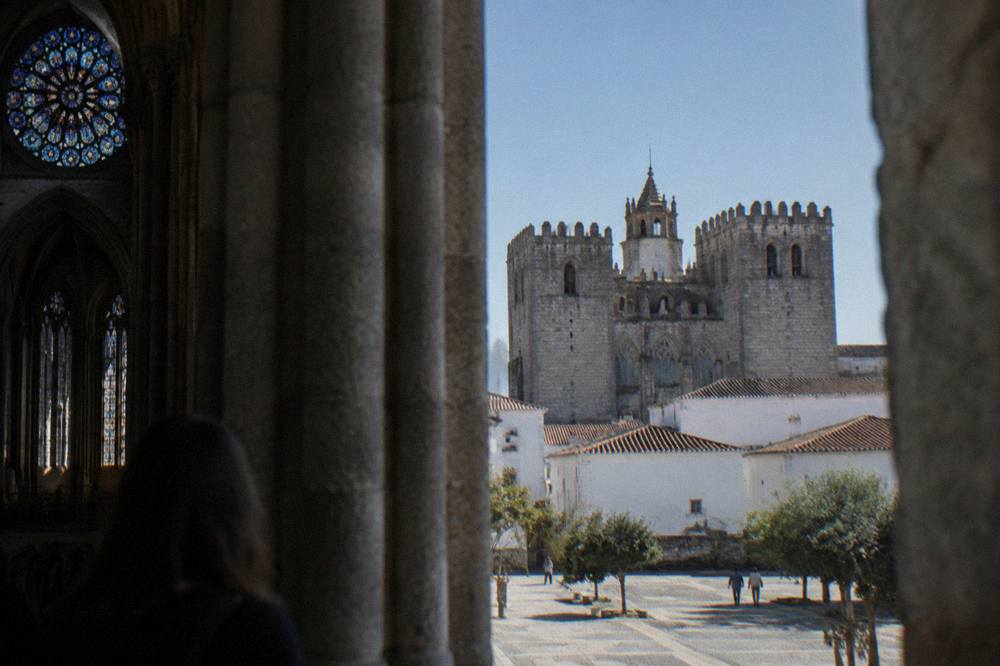
Opening hours follow the seasons. The Capela dos Ossos runs 9:00 to 18:30 in summer legal time and 9:00 to 17:00 in winter, open daily apart from the four closing days in the table. The Sé is 9:00 to 17:00 with museum admission closing 30 minutes earlier. The Museu de Évora splits its day, 9:30 to 13:00 and 14:00 to 17:30, Tuesday to Sunday. Budget planning is covered in the Évora cost and budget guide, and the full sightseeing picture is in things to do in Évora.
What Practical Facts Should Every Visitor Know About Évora?
Évora uses the euro, speaks Portuguese and sits in the same time zone as the rest of mainland Portugal. A municipal tourist tax applies to overnight stays, and the amount should be confirmed with the hotel at booking. The EU's Entry Exit System has been fully deployed across the Schengen area since 10 April 2026, so non-EU visitors should expect biometric checks at the border. Évora is inland, so no coastal planning applies.
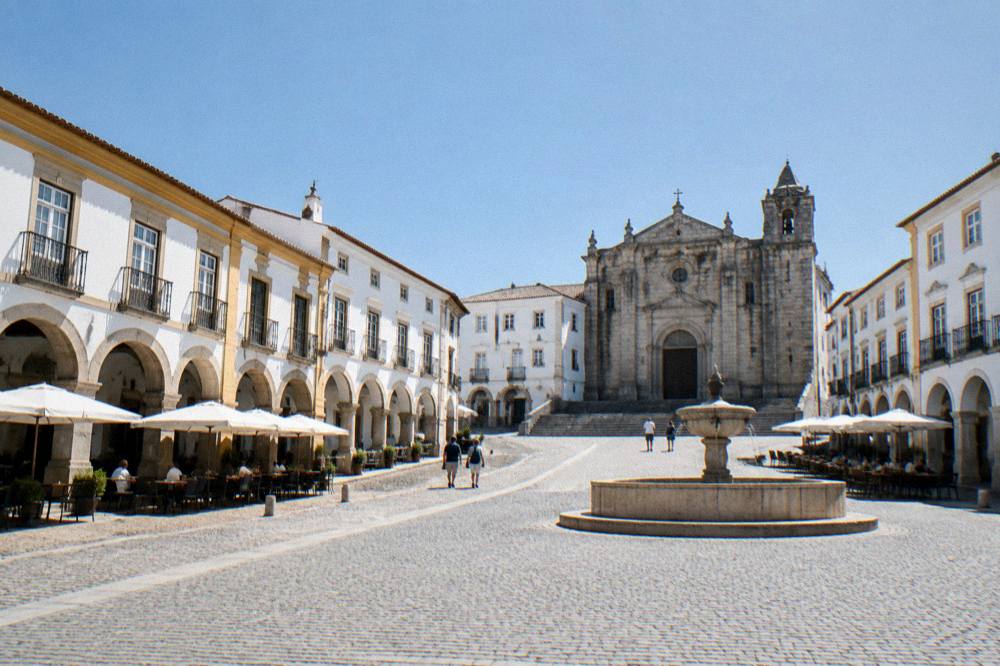
The tourist office sits at Praça do Giraldo 73, in the arcaded main square, phone +351 266 777 071, and its published hours run 9:00 to 18:00 on weekdays in winter, with shorter weekend hours; the page carrying them dates from 2023, so treat the weekend hours as indicative and confirm anything time-critical by phone. A municipal tourist tax applies to stays in the city, and because the current amount should be checked rather than assumed, ask the accommodation directly at booking.
The language question is a simple one. Portuguese is the language of the city, and English is widely enough used in tourism that a visitor with no Portuguese will manage in hotels, restaurants and monuments. Menus outside the most touristed streets can be Portuguese-only, which is part of the charm rather than an obstacle.
Getting around is easy on foot inside the walls, and the Évora parking guide handles the car question for those driving in. For a first visit structured around the sights, the Évora walking tour page explains what a guided walk adds, and the Golden Era of Évora walking & the Portuguese wine tasting tour, from $23.92 per person and rated 4.4 from 33 reviews over 2.5 to 3 hours, pairs the old town with a tasting of regional wine.
What Events Shape The Évora Calendar Toward 2027?
Évora and the Alentejo will be a European Capital of Culture in 2027, the fourth Portuguese city to hold the title, and the full 2027 programme had not been published as of October 2026. The 2026 calendar is a preparation year built on the concept of "Vagar". The GUADIANA festival of Afro-Ibero-American literatures runs 9 to 11 October 2026 with 28 authors from nine countries, and the Feira de São João ran 23 June to 5 July 2026 at the Rossio de São Brás.
The project is promoted by an executive board led by the Municipality of Évora together with the Alentejo Regional Directorate for Culture, the University of Évora and regional partners, and it extends across the Alentejo rather than staying inside the city walls. Anyone planning a 2027 visit should expect both a richer cultural calendar and busier accommodation, and should book early once the programme is announced.
| Event | Dates | Detail |
|---|---|---|
| GUADIANA literature festival | 9 to 11 October 2026 | First edition, 28 authors from nine countries, an Évora 2027 project |
| Évora 2027 preparation programme | Through 2026 | Built on the concept of "Vagar" |
| Feira de São João 2026 | 23 June to 5 July 2026 | At the Rossio de São Brás, theme "Évora: Capital Europeia ao Sul" |
| European Capital of Culture year | 2027 | Full programme not yet published |
The Feira de São João is the city's traditional summer fair, filling the Rossio de São Brás for close to two weeks each year, and the 2026 edition carried a theme that looked ahead to the Capital of Culture year. For the 2027 edition, only the late June into early July pattern can be stated from the 2026 example, so check the municipal notice closer to the time. Beyond these, dates for the city's Christmas programme, Semana Santa and other annual events are published by the municipality each year and should be checked on its pages rather than assumed.
Common Questions About Évora Facts
What is the population of Évora, Portugal?
The municipality of Évora had 53,577 residents at the 2021 Census, best quoted as about 53,000. The figure covers the whole municipality, including areas outside the medieval walls. Évora is also the capital of the Évora district and of the Central Alentejo sub-region.
Is Évora a big city?
No. With about 53,000 residents in the municipality, Évora is a small city by European standards, but its historic centre is unusually dense with major monuments, including a Roman temple, a UNESCO-listed old town and a university founded in 1553.
How far is Évora from the sea?
Évora is an inland city on the Alentejo plain, with the Atlantic roughly 90 km away. There is no beach or sea view in or near the city, and coastal destinations such as Setúbal or the Alentejo coast are separate trips.
What is the hottest month in Évora?
By IPMA's 1991 to 2020 normals for the Évora station, August edges July as the hottest month, with a mean maximum of 33.5 C against July's 33.3 C. August also averages 25.0 days at 30 C or more. The station record is 45.4 C, set on 4 August 2018.
Does the Évora Ticket include the cathedral and the Capela dos Ossos?
No. The Évora Ticket, at 8 EUR for one day, 10 EUR for two and 12 EUR for three, covers the municipal Cidade-Museu network and does not include the Sé de Évora, the Capela dos Ossos or the Museu de Évora. Those three are ticketed separately.
Why is Évora famous?
Évora is famous for its UNESCO World Heritage historic centre, inscribed in 1986, its Roman temple, the Capela dos Ossos bone chapel, and its role as the capital of the Alentejo. It will be a European Capital of Culture in 2027.
Taken together, the numbers describe a city that is small in population, large in protected heritage, hot in summer and on the edge of its biggest cultural moment. Anyone arriving before 2027 gets the monuments at their current scale, with the Capital of Culture year still ahead of them.