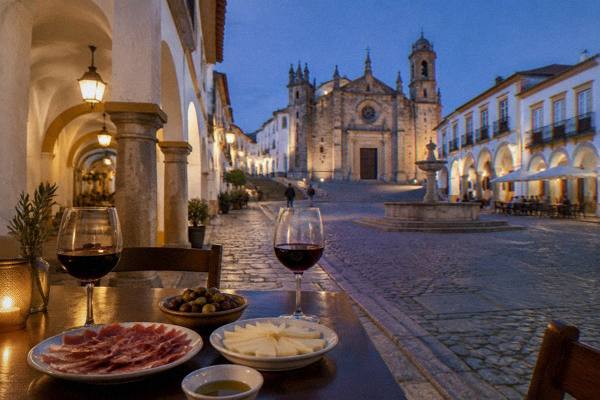
Évora Markets And Shopping
Évora, the inland capital of Portugal's Alentejo, shops small and regional: cork, marble, embroidered rugs and wine, all inside a UNESCO-listed historic centre you can cross on foot.
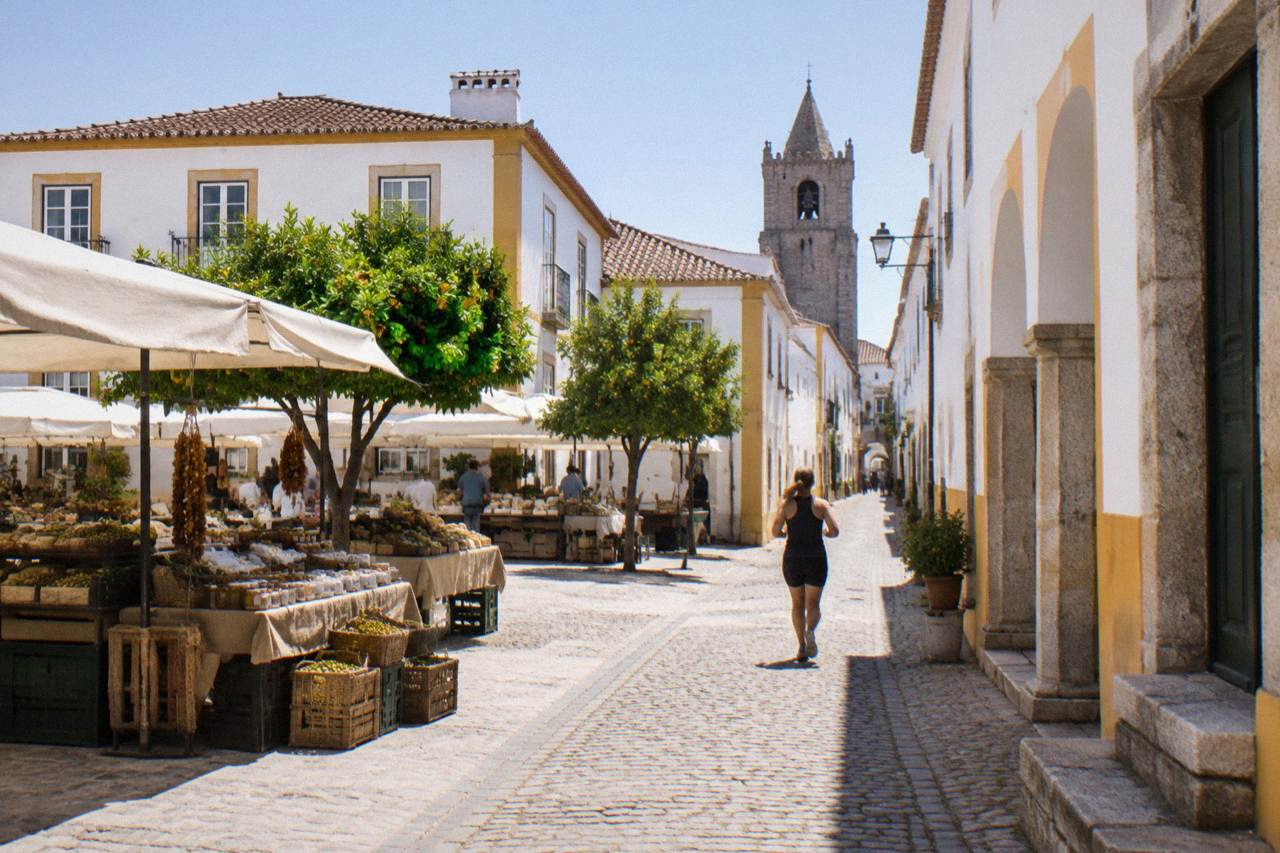
Short answer
Évora's shopping is concentrated inside the UNESCO historic centre around Praça do Giraldo. The signature buys are Alentejo cork goods, Arraiolos embroidered rugs, marble from the Estremoz and Vila Viçosa quarries, regional wine and olive oil. The city's big market event is the Feira de São João, which ran from 23 June to 5 July 2026 on the Rossio de São Brás.
Évora, the capital of the Alentejo region of Portugal, is a city of roughly 53,000 people whose entire historic centre has been UNESCO-listed since 1986, and whose shopping reflects the plain it sits on: cork oak forests, marble quarries, wool embroidery and wine. There is no coast here, no port and no resort strip of souvenir stalls. The Atlantic is roughly 90 km away, and what the shops sell is what the land around produces. That makes Évora an unusually honest place to shop: the handbag in the window is made from bark grown in the region, the rug is stitched in a town about 20 km away, and the marble on the counter top comes from quarries you can drive to in under an hour.
What Can You Buy In Évora'S Markets And Shops?
The classic Évora shopping list is Alentejo cork in every form, Arraiolos embroidered wool rugs, marble from the Estremoz and Vila Viçosa quarries, regional wine and olive oil, sheep's cheese, painted ceramics and leather, all of it produced in the wider region rather than imported for visitors. Nothing about the range is coastal: Évora sits inland, and the goods reflect the plains, the cork forests and the quarry belt around it. Individual shops set their own prices.
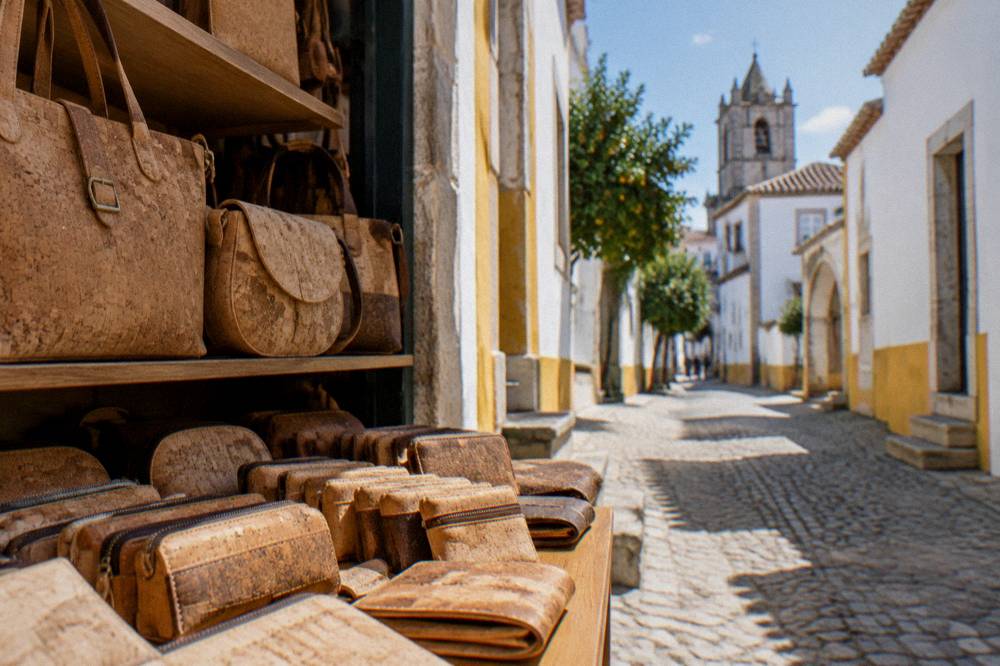
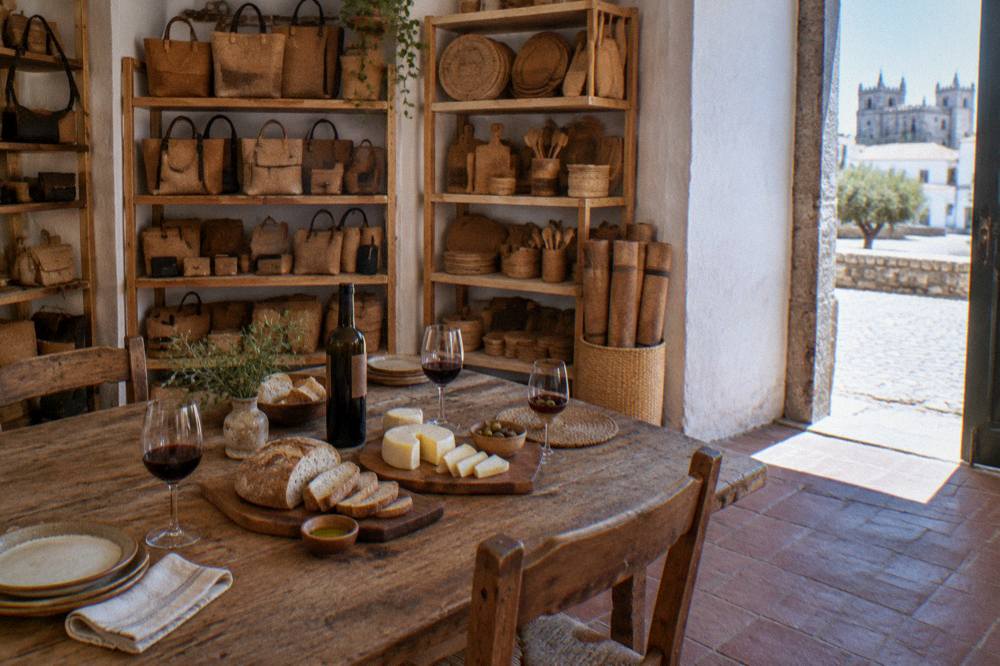
The cork trade is the one that surprises most visitors. Portugal's south is the heart of the world's cork country, and in Évora the material shows up as handbags, wallets, hats, belts, coasters and floor tiles, all cut and finished from the bark of the cork oak. The bark is harvested without felling the tree, which is why the industry has survived here for so long, and why the landscape around the city is dotted with the open, low-crowned woodlands the Alentejo is known for. No shop price is published centrally, so no figure is quoted here.
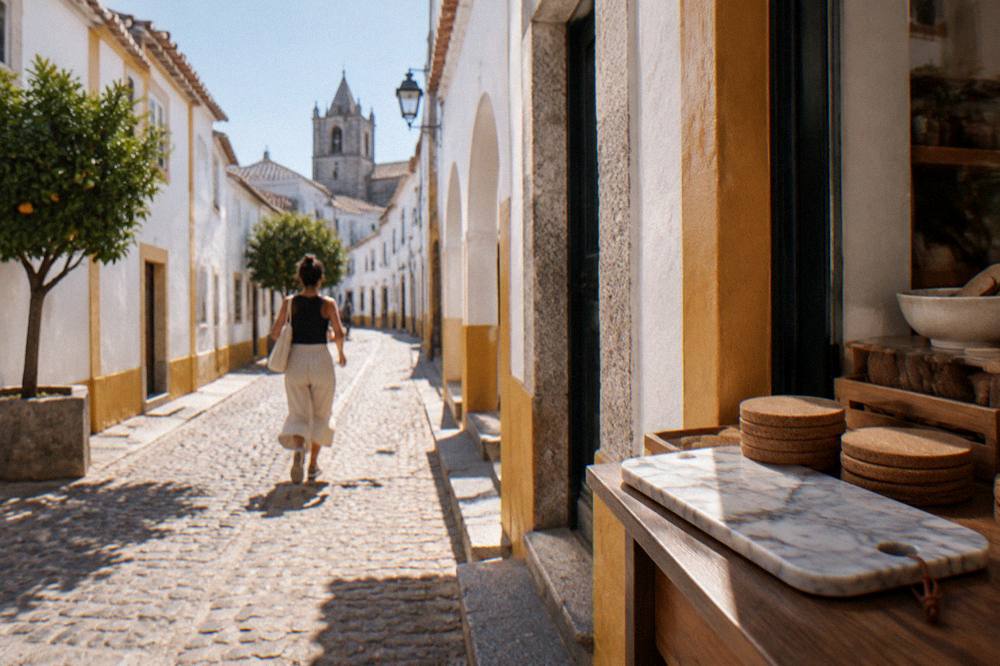
Marble is the second signature. The towns of Estremoz and Vila Viçosa, about 45 km and 60 km from Évora respectively, sit on a marble belt that has supplied building stone and decorative pieces for centuries. In Évora itself you buy the small end of that trade: kitchen boards, cheese plates, lamps and carved objects. The rugs are the third. Arraiolos, about 20 km away, gives its name to a needlework rug tradition of embroidered wool on a canvas grid, and pieces from small to room-sized are sold in the city.
Food rounds out the list. Alentejo wine, olive oil, cheese, honey and preserved sausages travel well and are sold by weight or by bottle in shops around the centre. For what to look for in the glass, the Alentejo wine guide covers the styles; for eating rather than buying, start with the Évora restaurants guide.
Where Do You Shop In Évora?
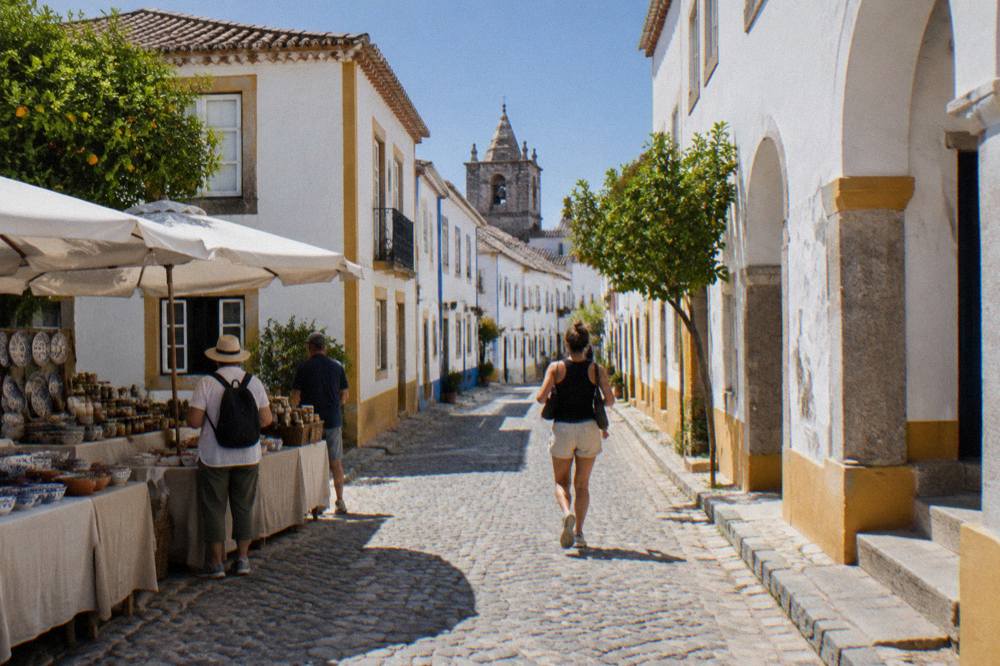
The shopping district is the UNESCO-listed historic centre itself: a compact web of lanes inside the medieval walls, with Praça do Giraldo, a public square, as the natural reference point. The municipal tourist office sits at Praça do Giraldo 73, open 9:00 to 18:00 on weekdays in winter with shorter weekend hours, and it is the right place to ask about current shop and market information, because no individual shop's hours are published centrally.
Everything is walkable. The centre is small enough that a slow loop from the Praça do Giraldo past the Sé, the Templo Romano and the Rua de Alcáçova de Cima takes in nearly every shop worth a detour, and the whole thing can be done between breakfast and lunch. The walls that enclose it are Roman in origin and medieval in their present line, which means the shopping streets are narrow, shaded and, in July, mercifully cool in the early hours.
Because the centre is also the monument, a guided walk is a genuinely efficient way to shop: you learn which lane holds the cork workshops and which square the food shops cluster around while the guide explains the architecture above the awnings. The 2.5-hour Tales and Legends walking tour, from $52.90 per person, is rated 4.8 from 40 reviews and threads the historic centre's stories through exactly these streets, and the operator's live listing shows current departure times.
For visitors who prefer to eat their way through the same lanes after the shops close, the evening food and wine crawl, from $83.28 per person over about three hours, moves between food stops with a local guide; it is rated 4.6 from 19 reviews and can be Check availability alongside the full tour page at the evening food and wine crawl.
What Is The Feira De São João?
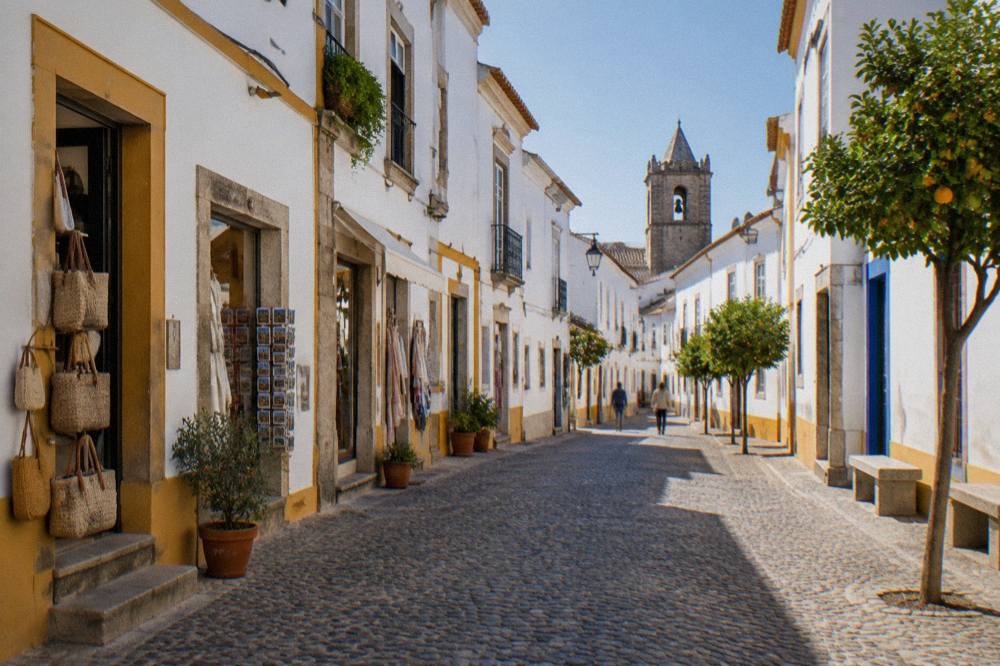
The Feira de São João is Évora's big annual fair, held on the Rossio de São Brás, the open ground beside the Igreja de São Brás. The 2026 edition ran from 23 June to 5 July under the theme "Évora: Capital Europeia ao Sul", dates fixed by a municipal edital of 19 February 2026. It is the closest thing the city has to a traditional market fair, mixing trade stalls, food and entertainment over roughly two weeks.
The fair is the one moment in the Évora calendar when shopping becomes the city's main event. The Rossio fills with stalls selling everything from regional products to household goods, plus fairground rides and food stands, and the atmosphere runs late into the evening. It is an old institution: the fair's connection to the city's June calendar is long-standing, and the municipal council publishes the edital, the official notice that fixes each year's dates, well in advance. The 2027 edition follows the same late-June pattern, but its dates are not yet published.
| Feira de São João 2026 | Detail |
|---|---|
| Dates | 23 June to 5 July 2026 |
| Venue | Rossio de São Brás |
| Theme | "Évora: Capital Europeia ao Sul" |
| Fixed by | Municipal edital of 19 February 2026 |
| 2027 edition | Late June into early July expected; dates not yet published |
If you are planning a trip around the fair, treat the published 2026 dates as the pattern rather than a promise, and check the municipal notice before booking anything for 2027. The theme of the 2026 edition pointed forward to the city's bigger story: Évora and the Alentejo are a European Capital of Culture in 2027, with 2026 running as a preparation year built on the concept of "Vagar", a word that means moving slowly and taking one's time.
Which Alentejo Towns Near Évora Are Worth A Shopping Trip?
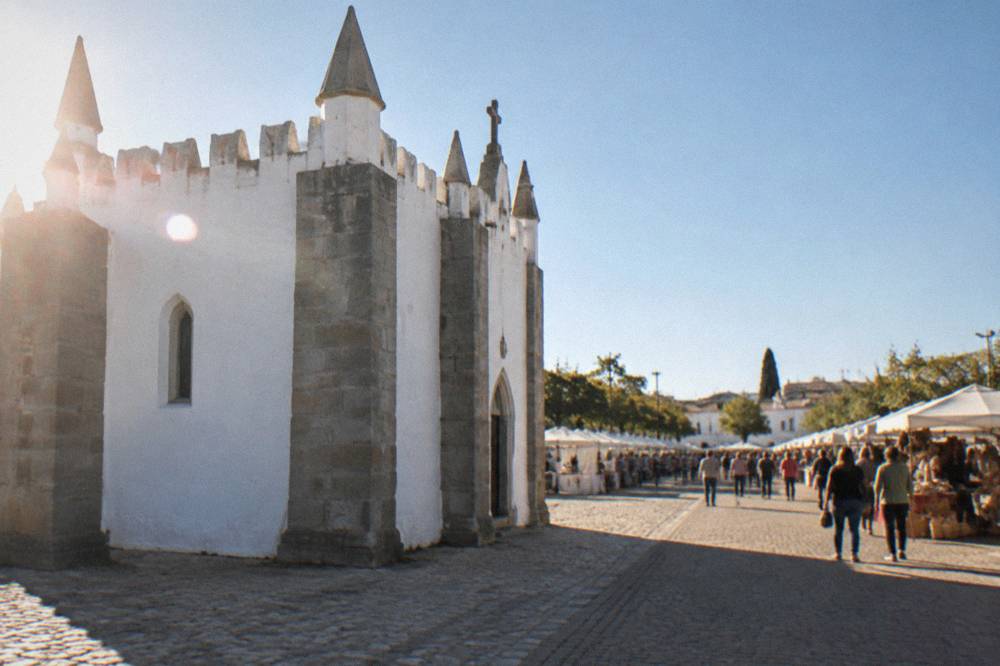
The quarry and craft towns around Évora are short drives away: Arraiolos, about 20 km, for the embroidered rugs that carry its name; Estremoz, about 45 km, for marble; Vila Viçosa, about 60 km, for marble and a ducal town's worth of craft shops; Monsaraz, about 40 to 45 km, for a walled village above the Alqueva lake; Elvas, about 80 km; and Marvão, about 120 km, for hilltown pottery and wool. Each is a day trip, not an afternoon errand.
The marble pair is the most rewarding for shoppers. Estremoz is a working quarry town where the stone is cut, polished and sold, and where a walking tour, from $28.67 per person and rated 4.8 from 19 reviews, covers the heritage of the place. Vila Viçosa adds the aristocratic setting: it was the seat of the dukes of Bragança, and the marble there frames shopfronts and doorways as much as it fills them. A two-hour marble tour in Vila Viçosa runs from $28.14 per person and is rated 4.8 from 82 reviews.
| Town | Distance From Évora | Known For |
|---|---|---|
| Arraiolos | About 20 km | Embroidered wool rugs |
| Monsaraz | About 40 to 45 km | Walled village above the Alqueva lake |
| Estremoz | About 45 km | Marble quarries and stonework |
| Vila Viçosa | About 60 km | Marble and ducal heritage |
| Elvas | About 80 km | Fortified border town |
| Marvão | About 120 km | Hilltop village on the Serra de São Mamede |
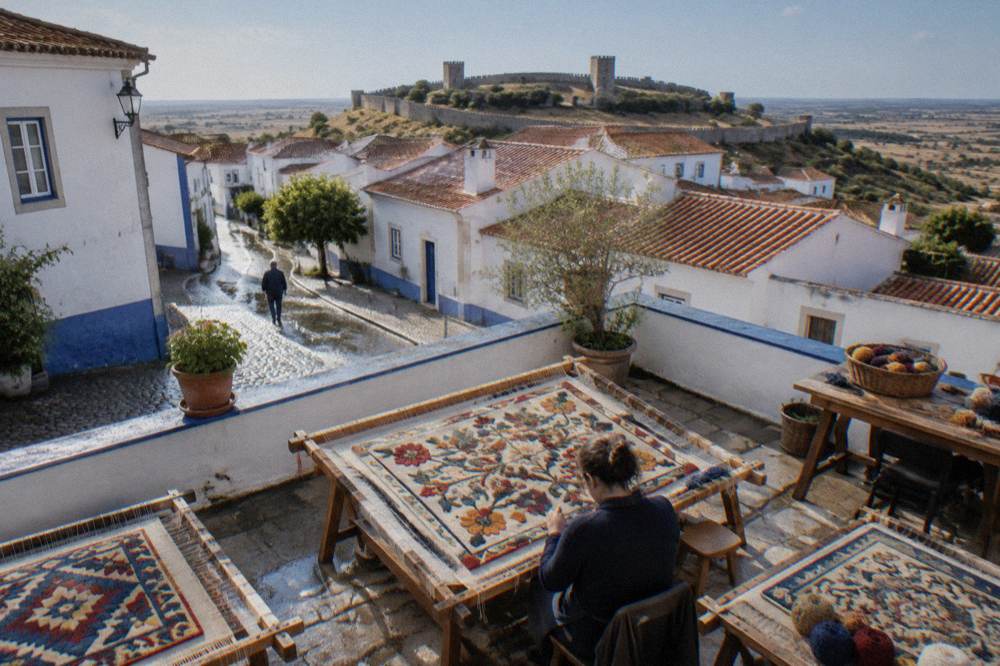
Arraiolos deserves the drive even if you never buy a rug. The town sits below a round hilltop castle, the embroidery tradition is visible in workshops around the main square, and watching a rug grow row by row on its frame explains why the good pieces cost what they do. For planning the wider loop, the Alentejo travel guide puts the towns in order, and things to do in Évora covers the days you stay in the city itself.
What Should You Know About Cork, Marble And Arraiolos Rugs?
Cork, marble and Arraiolos rugs are the three signature purchases of the Alentejo, and each is a regional craft rather than an Évora invention. Cork is the bark of the cork oak, harvested without felling the tree and worked into everything from handbags to floor tiles. Marble comes from the quarry belt around Estremoz and Vila Viçosa. Arraiolos rugs are embroidered wool carpets named for the town about 20 km from Évora, where the stitch technique is still taught and worked by hand.
Cork is the most practical buy and the easiest to judge. Look at the seams and the finish on the edges: good cork leather is supple, evenly grained and stitched like fabric, and it ages the way leather does. The Alentejo's cork oak woodlands, called montados, are the source, and the same landscape produces the wine, the pigs and the honey, which is why a cork tour is as much a landscape tour as a shopping trip. The eight-hour cork factory and cork farm tour from Évora, from $112.55 per person with lunch included, rated 4.8 from 26 reviews, takes you from factory floor to montado with a meal in between, and it is the fullest version of the experience; the cork factory tour page has the details.
Marble buying is simpler: small objects are cheap to ship and hard to break, and the stone's colour runs from white to pink and grey depending on the seam. Rugs are the considered purchase. An Arraiolos piece is embroidered, not woven, so the density of the stitching is what you are paying for, and a large rug represents months of work. Ask about the wool, ask about the dye, and expect a genuine piece to be priced accordingly, because the stitch is done by hand. The wider set of guides lives on Évora Travel Guide.
How Much Does A Day Of Shopping In Évora Cost?
No individual shop price in Évora is published in a verifiable central source, so no figure is quoted here for goods. The fixed costs around a shopping day are solid, though: the Intercidades train from Lisboa Oriente costs 13.90 EUR second class and 18.50 EUR first class, the Sé complete-visit ticket is 5.00 EUR, the Capela dos Ossos museum ticket 7.00 EUR, the Museu de Évora 8 EUR, and the Évora Ticket 8 EUR for one day.
The Évora Ticket is worth understanding before you buy anything, because it is not an everything pass. It covers the city's Cidade-Museu network of sites, but it does not include the Sé, the Capela dos Ossos or the Museu de Évora, so the three biggest names in the centre each need their own ticket. The two-day ticket costs 10 EUR and the three-day ticket 12 EUR, and children up to 12 pay nothing on the pass. The budgeting logic is on the Évora cost and budget guide, and the sightseeing side is on the Évora tours guide.
| Ticket | Price | Notes |
|---|---|---|
| Sé de Évora complete visit | 5.00 EUR | Cathedral, cloister, roof terrace, museum; children up to 12 free |
| Capela dos Ossos museum ticket | 7.00 EUR adult | Youth to 25 and seniors over 65 pay 5.00 EUR; family 15.00 EUR |
| Museu de Évora | 8 EUR | Closed Mondays; 50% off for youth 13 to 24 and seniors |
| Évora Ticket, 1 day | 8 EUR | Does not include the Sé, the Capela dos Ossos or the Museu de Évora |
| Évora Ticket, 2 days | 10 EUR | Same exclusions; free to age 12 |
| Évora Ticket, 3 days | 12 EUR | Same exclusions; free to age 12 |
Getting there is the other fixed cost. CP's Intercidades service, on the timetable valid since 6 September 2026, runs six through trains a day from Lisboa Oriente to Évora, taking about 1 hour 40 to 1 hour 45. The Lisbon to Évora guide compares train, bus and car; the rail option in brief:
| Lisboa Oriente Departure | Évora Arrival | Fare |
|---|---|---|
| 07:02 | 08:47 | 13.90 EUR second class, 18.50 EUR first |
| 09:02 | 10:45 | Same fares |
| 09:58 | 11:40 | Same fares |
| 13:35 | 15:13 | Same fares |
| 17:02 | 18:41 | Same fares |
| 19:02 | 20:46 | Same fares |
For the guided side of the day, the tour cards carry their own prices in dollars, and those are the only tour figures worth quoting:
| Tour | From Price | Duration |
|---|---|---|
| Evening food and wine crawl | $83.28 per person | About 3 hours |
| Tales and Legends guided walking tour | $52.90 per person | 2.5 hours |
| Cork factory and cork farm tour, lunch included | $112.55 per person | 8 hours |
| Alentejo cooking class | $166.29 per person | Varies by session |
When Is The Best Time Of Year For Shopping In Évora?
On the IPMA 1991-2020 climate normals for the Évora station, the comfortable shopping months are April, May, October and early November: May averages a 25.0 C daily maximum and October 24.1 C. July and August average 33.3 C and 33.5 C respectively, and the station records 31.9 days a year reaching 35 C or more, so midsummer shopping means early mornings and shade. Late June brings the Feira de São João, which is a reason in itself to accept the heat.
The Alentejo summer is a real planning factor, not a footnote. The station's record maximum is 45.4 C, set on 4 August 2018, and even the averages put July and August afternoons in the mid-thirties. The shops inside the walled centre are shaded and thick-walled, but the fairground and the quarry towns are not. Spring and autumn are when the walking, the driving and the fair-going all feel reasonable.
| Month | Mean Max (C) | Mean Min (C) | Days With 1 mm+ Rain |
|---|---|---|---|
| April | 20.7 | 8.5 | 8.0 |
| May | 25.0 | 10.9 | 6.0 |
| June | 30.2 | 13.8 | 1.7 |
| July | 33.3 | 15.6 | 0.6 |
| August | 33.5 | 16.0 | 0.7 |
| September | 29.5 | 14.6 | 3.6 |
| October | 24.1 | 12.3 | 7.7 |
| November | 17.6 | 7.9 | 8.8 |
All figures are 1991-2020 averages for the Évora station. The seasonal detail, month by month, is on the best time to visit Évora guide and the Évora weather guide. If the Feira de São João is the draw, late June is hot but dry, with an average of just 1.7 rain days in the month.
Can You Learn To Cook What You Buy In Évora?
Yes, and it is the natural end point of a market trip. A cooking class in Évora turns the market's raw materials, the bread, the pork, the olive oil and the wine, into a meal you cook yourself under instruction, and the Alentejo cuisine class with Andre runs from $166.29 per person. The class sits at the top of the guided price range in the city, but it is the only product that ends with you eating your own shopping.
The Alentejo kitchen is a bread-and-pork tradition built around the region's staples: slow-cooked meats, soups thickened with bread, cheese, and olive oil from the surrounding groves. A class is the way to understand why those ingredients, and not others, define the region; the Alentejo food guide sets out the dishes, and the Évora food guide maps them to the city.
Common Questions About Évora Markets And Shopping
When does the Feira de São João take place?
The 2026 edition ran from 23 June to 5 July on the Rossio de São Brás, with dates fixed by a municipal edital of 19 February 2026. The 2027 edition is expected to follow the late-June pattern, but its dates are not yet published, so check the municipal notice before you book around it.
Where can I get tourist information about markets in Évora?
The municipal tourist office, the Posto de Turismo, is at Praça do Giraldo 73. In winter, from 1 November to 31 March, it opens 9:00 to 18:00 on weekdays and 10:00 to 14:00 plus 15:00 to 18:00 on weekends. Summer hours are published on the municipal page and should be treated as indicative.
Can I buy wine in Évora to take home?
Yes, regional wine is one of the city's standard purchases and shops sell it by the bottle for wrapping or shipping. Prices are set by each shop, so no figure is quoted here. The Alentejo wine guide explains the styles, and guided tastings are listed on the tour pages.
How far is Estremoz from Évora?
About 45 km, making it an easy half-day or full-day trip for the marble quarries and stonework. Vila Viçosa, the other marble town, is about 60 km, and both can be combined in one long day by car.
Are the museums open on Mondays in Évora?
The Museu de Évora is closed on Mondays, along with 1 January, Easter Sunday, 1 May, 29 June and 25 December. The Sé de Évora and the Capela dos Ossos follow their own schedules, and individual shop hours vary, so check with the tourist office before planning a Monday around shopping.
Shopping in Évora is really an argument for the region: the cork, the rugs, the marble and the wine all come from within a short drive of the walls, and every purchase points back to the plain that produced it. Pick your month from the climate table, book the fair or the quiet season accordingly, and let the historic centre do the rest on foot.