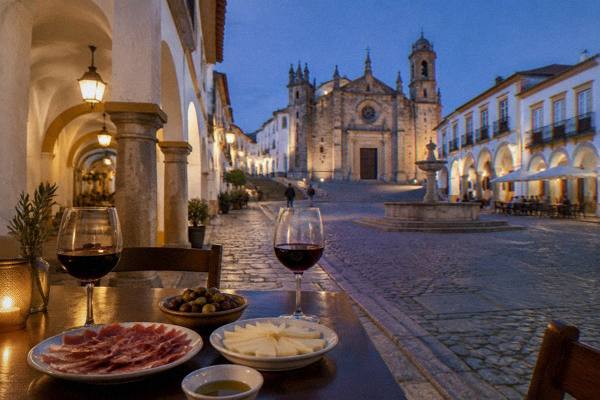
Évora Cheese Bread And Pastries
Évora, the inland capital of Portugal's Alentejo, is a city where the food is simple, old and taken seriously. This guide covers the cheese the region is named for, the bread that anchors every meal, the convent sweets that end them, and the guided tastings and cooking classes that let you try all three in an afternoon.
Short answer
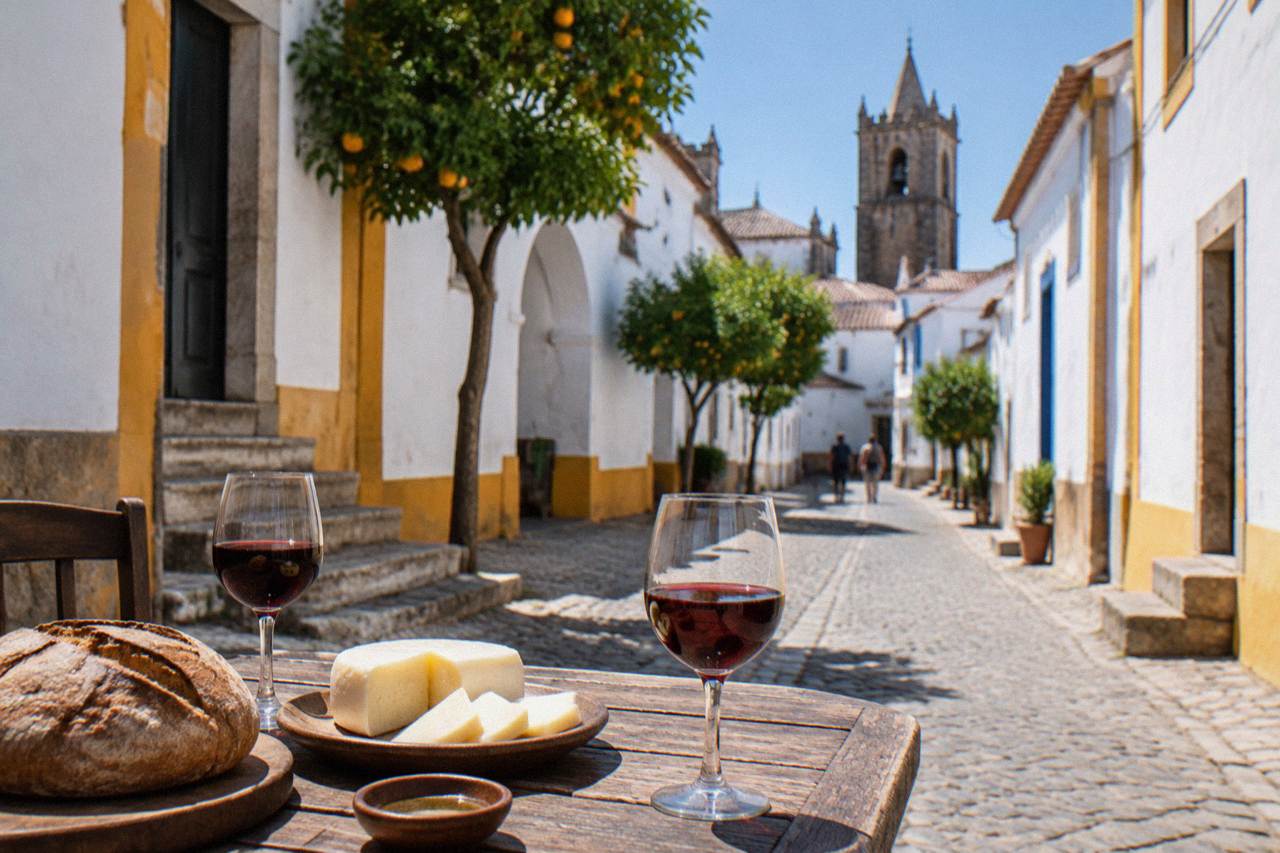
Évora's food identity rests on three pillars: queijo de Évora, a small, intense sheep's milk cheese; the dense wheat bread of the Alentejo, served with olive oil and pork; and convent-style pastries such as sericaia and encharcada. None of it needs a fancy venue. A market stall, a bakery counter and a guided evening crawl cover the whole range.
Évora, Portugal, is a walled city of about 53,000 people in the middle of the Alentejo plain, and its food is a direct expression of that geography. There is no coast here, roughly 90 kilometres from the Atlantic, so the kitchen is built on wheat, sheep, pigs, olives and cork-oak pasture rather than fish. The Historic Centre of Évora has been on the UNESCO World Heritage list since 1986, inscribed under criteria (ii) and (iv), and the same golden-age prosperity that built the Sé and the Igreja de São Francisco also built the convent kitchens that gave the city its pastry tradition. The editorial desk of Évora Travel Guide has assembled this page from official sources and the verified destination record, not from a single visit, and it says so plainly wherever a figure comes from a named source.
The page is organised as a walk through the three staples. First the cheese the city gave its name to, then the bread, then the sweets, and finally the practical layer: where the buying happens, what a guided tasting or cooking class adds, when to come, and what it costs. Nothing here recommends a named restaurant, bakery or cheese maker, because no individual venue in Évora was verified for this build. What is verified is the shape of the cuisine, the climate that produces it, the trains that get you here and the bookable experiences whose prices sit on their own listings.
What Is Évora Cheese And Why Is It Famous?
Évora's namesake cheese, queijo de Évora, is a small, firm sheep's milk cheese with a sharp, slightly spicy finish, made in the traditional dairying country around the city and aged until it can be crumbled over bread or eaten in wedges with red wine. It belongs to a wider Alentejo family of ewe's milk cheeses, and it is the single product most likely to appear on every table in the region, from market stalls to hotel breakfasts.
The cheese takes its name from the city but is made in the surrounding pastureland, where sheep graze the same open montado landscape that produces cork and wheat. The Alentejo is sheep country first and cattle country hardly at all, and that single fact explains most of the regional plate: the cheese is ewe's milk, the lamb dishes that appear on menus are a byproduct of the dairy flock, and the intensity of the cheese, sharper and saltier than a mild continental style, is what makes it distinctive rather than decorative.
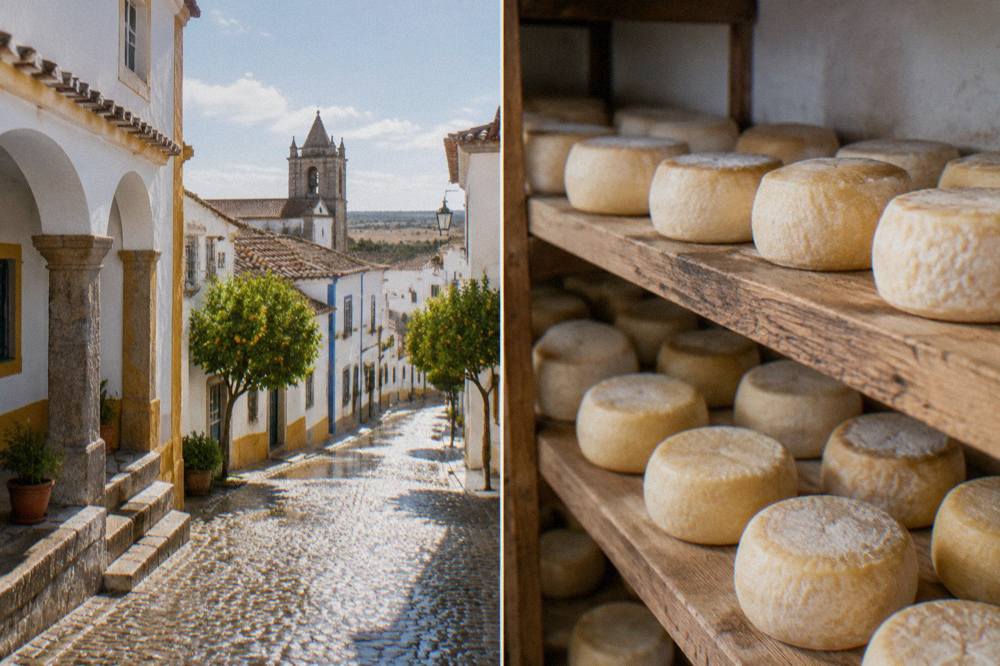
How it is served matters as much as what it is. In the Alentejo a cheese course is not a course at all: wedges arrive with bread and olive oil before or alongside the main dish, and a mild cheese is considered almost pointless. The local preference runs to cheese with bite, aged long enough to develop a piquant edge, and visitors used to buttery northern European styles sometimes find the first wedge surprising and the second one habitual. If you want to understand the region's palate in one bite, this is the bite.
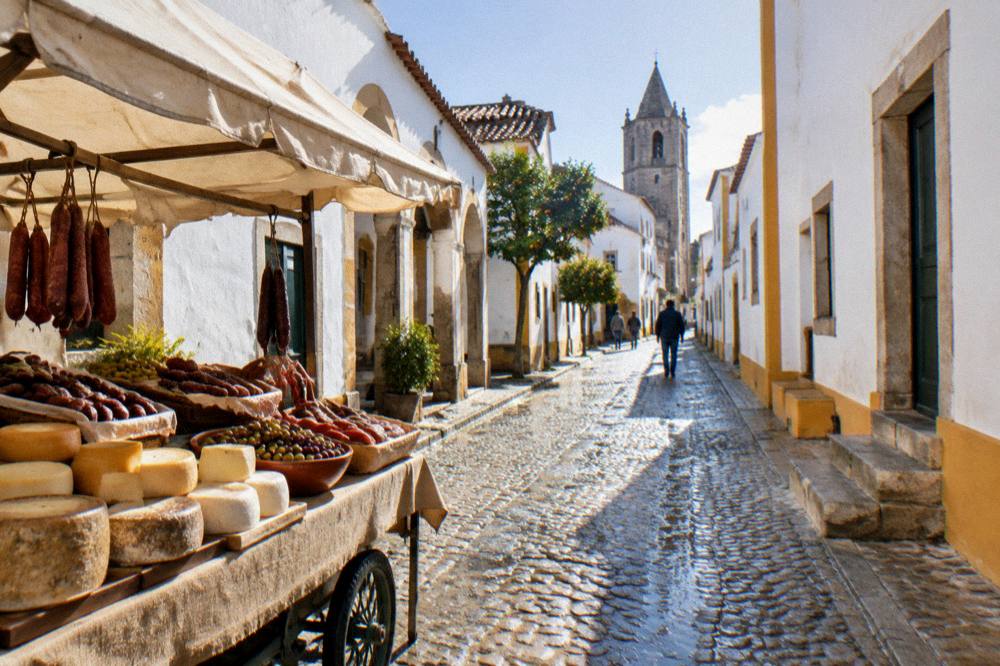
The practical way to taste a range is the municipal market and the food shops of the historic centre, where counters sell wedges by weight and will cut you a sliver before you commit. No specific stall, price or opening hour is published on a verified official page for this build, so check the board at the market entrance when you arrive. For a guided version with a local explaining each cheese, the evening crawl described later in this page pairs cheese with wine at several stops across the old town.
What Breads Anchor The Alentejo Table?
Bread in the Alentejo is a dense, moist wheat loaf, usually baked in large rounds or in the wood-fired ovens that village bakeries still run, and it appears at every meal as the base for olive oil, cheese, soups and pork dishes. It is heavier and more sour than a French baguette, holds together when dipped, and is treated as food rather than an accompaniment. The pig-slaughter season that runs through the winter turns it into the base of the region's most famous dishes.
Alentejo bread is traditionally a wheat bread, which surprises visitors who assume all of Portugal eats the cornbread of the north. The Alentejo grows wheat, so wheat is the bread, and the loaf is typically pale-crusted, thick-walled and slightly sour from a slow dough. The canonical way to eat it is torn by hand, dipped in the region's olive oil, and topped with whatever the table offers: cheese, cured pork, tomato, or simply salt.
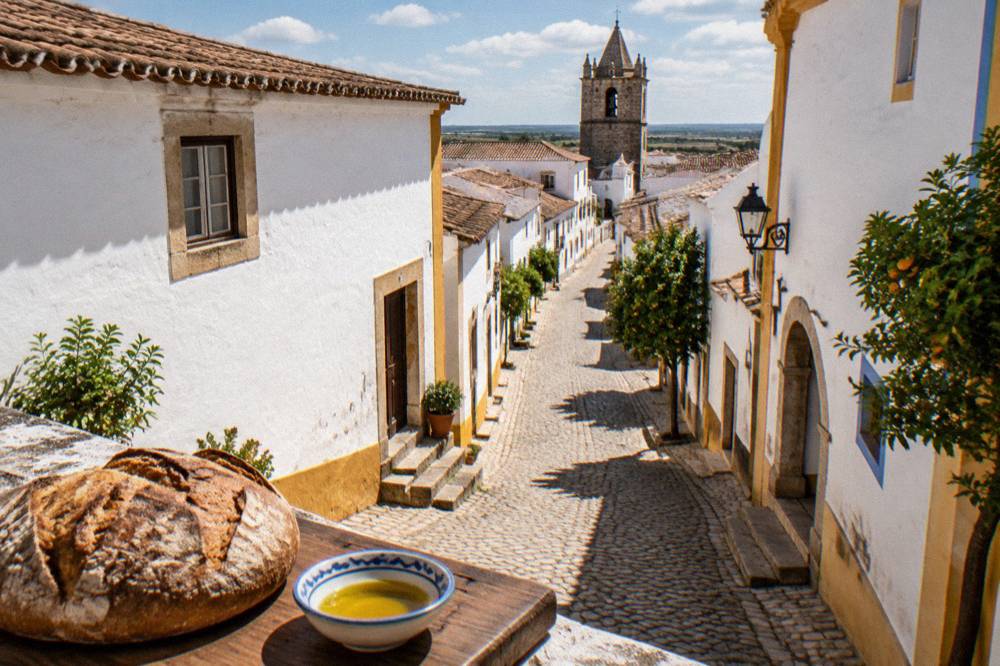
Two bread-based dishes define the regional repertoire. Açorda is a soup in name but a paste in practice: bread, garlic, olive oil, coriander and sometimes an egg, pounded into something you eat with a spoon. It began as a way to use yesterday's loaf and became the definitive taste of the Alentejo kitchen. The migas family, bread fried slowly with garlic and fat until it forms a soft cake, sits alongside grilled pork in the winter months. Both dishes are on menus year-round in Évora, and both are the reason a bakery counter in this city is a supply shop rather than an afterthought.
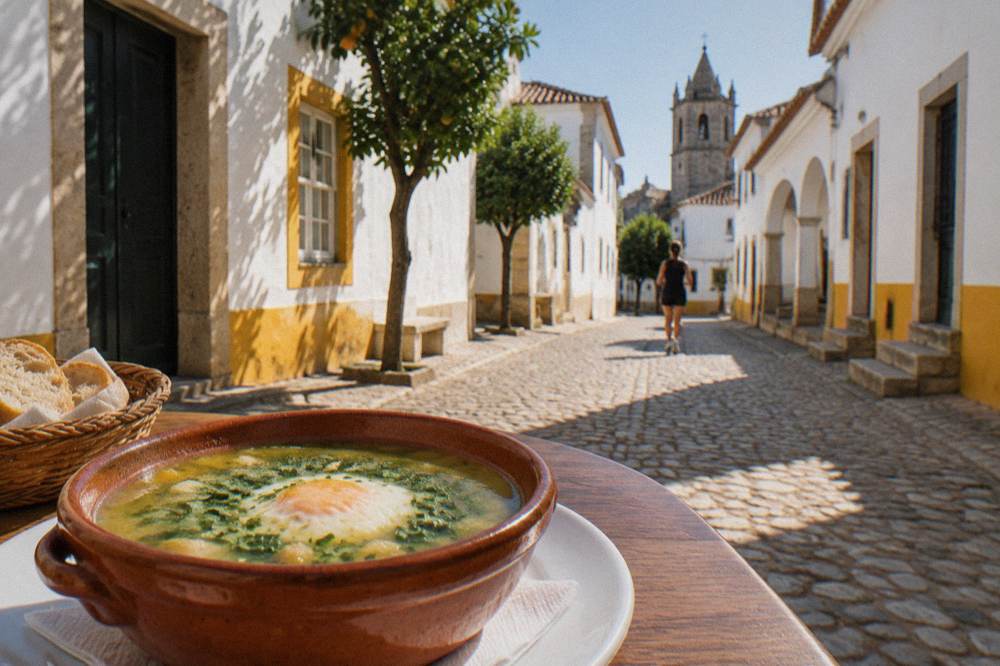
| Bread or bread dish | What it is | How it is eaten |
|---|---|---|
| Pão alentejano | A dense, moist wheat loaf with a pale crust | Torn by hand, dipped in olive oil, served with cheese |
| Carcaça | A small everyday wheat roll | Breakfast, split with butter or cheese |
| Açorda | Bread, garlic, coriander and olive oil pounded into a soup | As a starter or a light meal, often with egg |
| Migas | Bread fried slowly with garlic into a soft cake | Alongside grilled pork or fish |
| Bolo do tacho | A steamed bread-and-pork mixture | Cut in wedges, eaten warm |
The Alentejo food guide covers the wider regional kitchen, and the Évora food guide covers the city's restaurant scene in general terms.
Which Pastries And Sweets Should You Try In Évora?
Évora's pastry counter is a convent legacy: egg-yolk-heavy sweets such as sericaia, a baked egg custard dusted with cinnamon, and encharcada, candied egg yolk in sugar syrup, were developed in the region's religious houses and still define dessert here. Around them sit simpler items, cheese-based pastries and the small queijadas found across central and southern Portugal. The thread running through all of them is eggs, sugar and cinnamon rather than cream or chocolate.
The story is structural rather than romantic. The Alentejo produced eggs and, in the golden age that UNESCO's criterion (iv) describes as the finest example of a city of that period after the 1755 Lisbon earthquake, which Évora was largely spared, its convents had both kitchens and a reason to make spectacular food. Egg yolks thickened with sugar became the region's dessert grammar, and the names survive on bakery counters today. Sericaia is the flagship: a soft, baked, cinnamon-dusted custard that appears on menus across the city. Encharcada is its denser cousin, egg yolk candied in syrup until it glows.
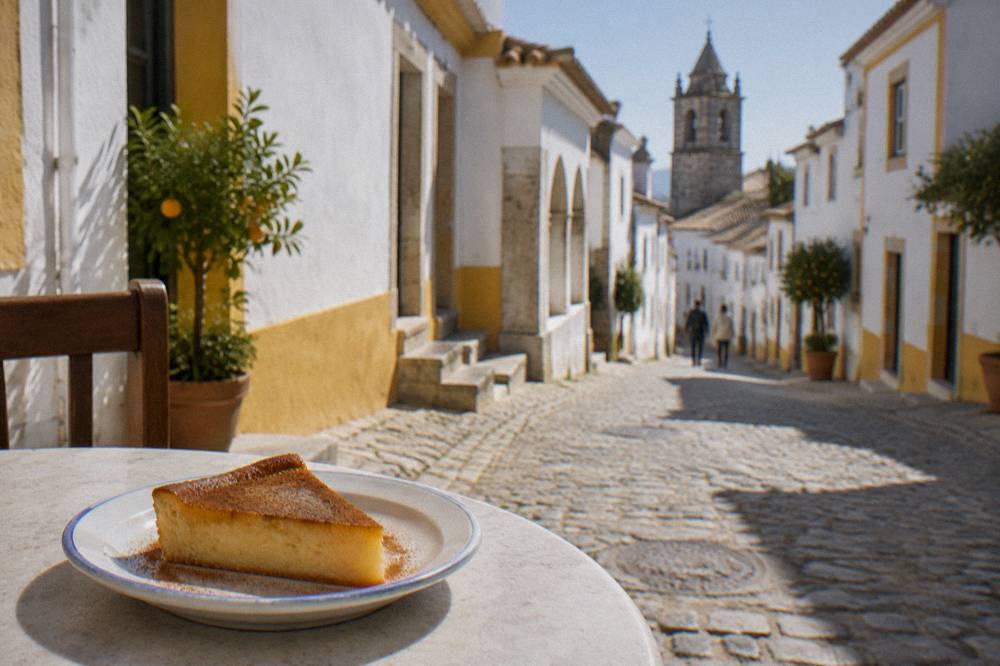
Alongside the convent sweets sit the plainer ones. Queijadas are small, sweet cakes found across Portugal in local variations, and in this region some are made with the same sheep's milk cheese that gives the city's cheese its name, which folds the pastry counter back into the dairy story. Almond sweets, reflecting the almond groves of the southern Alentejo, appear in the same display cases. None of this needs a guide to enjoy: any pastelaria in the historic centre will have a counter, and pointing at what looks good is a fully functioning strategy.
| Sweet | What it is | When it is eaten |
|---|---|---|
| Sericaia | Baked egg custard with cinnamon | Restaurant dessert, often with regional dessert wine |
| Encharcada | Egg yolk candied in sugar syrup | Restaurant dessert, in small portions |
| Queijadas | Small sweet cakes, some made with sheep's milk cheese | With coffee, any time of day |
| Almond sweets | Marzipan-style almond confections | With coffee, festive seasons |
| Bolo rançoso | A regional cake made with lard and sugar | Sliced with coffee |
One honest caveat: no bakery, café or pastry shop in Évora was verified for this build, so this page names no address and prints no opening hour for any of them. What a visitor can rely on is density: the historic centre inside the walls is small and walkable, and a counter selling sericaia is never more than a few minutes away on foot. The Évora restaurants guide describes the dining scene in the same general terms.
Where Do You Buy Bread, Cheese And Pastries In Évora?
The honest answer is the municipal market and the independent counters of the historic centre: Évora has no verified single food hall or named market institution that this page can recommend with hours and prices, so the working method is to buy wedges of cheese by weight at the market, bread from any busy bakery, and pastries from the pastelaria nearest your walking route. The tourist office at Praça do Giraldo 73 can point you to the market on the day you arrive.
The market culture here is a morning culture. The Alentejo heats up early in summer, and the shopping happens before it. IPMA's 1991 to 2020 normals for the Évora station show a July mean maximum of 33.3 C and an August mean of 33.5 C, with 31.9 days a year reaching 35 C or more, so a food walk that starts at 9:00 is not a suggestion in July, it is the difference between a pleasant morning and a punishing one. In October, when the mean maximum drops to 24.1 C on the same 1991 to 2020 normals, the same walk can happen at any hour.
A municipal tourist tax applies to stays in the city, so check your hotel bill rather than expecting a published figure here; the amount is not part of the verified record for this page. That is the only cost surprise most visitors report in general terms. Everything else, from a wedge of cheese to a coffee and a queijada, is bought at counter prices that vary by shop, and the honest advice is to ask before you commit to a large purchase, because nothing stops you comparing two stalls ten metres apart.
The Câmara Municipal's visitor pages list the tourist office at Praça do Giraldo 73, with winter hours of 9:00 to 18:00 on weekdays and shorter weekend hours, and the page itself warns that its hours are indicative, so treat them as a planning aid and check locally. The office sits in the main square, which is the natural starting point for any food walk through the old town.
How Do Cheese, Bread And Wine Work Together At An Alentejo Table?
The Alentejo table runs on a fixed trio: sheep's milk cheese, wheat bread and red wine, served together at the start of a meal rather than as separate courses. The cheese provides the intensity, the bread the substance, and the wine, typically the full-bodied reds the Alentejo is known for, the balance. It is a working combination built for farm labour, and it survives in the city as the standard opening move of a long lunch.
The wine deserves its own sentence or two even on a cheese-and-bread page, because the three are never really separate here. The Alentejo is one of Portugal's most productive wine regions, and the reds that dominate it are rich enough to stand up to aged sheep's milk cheese in a way lighter wines are not. The Alentejo wine guide covers the wines in depth. What matters for this page is the pairing logic: sharp cheese, dense bread, generous red, and no hurry.
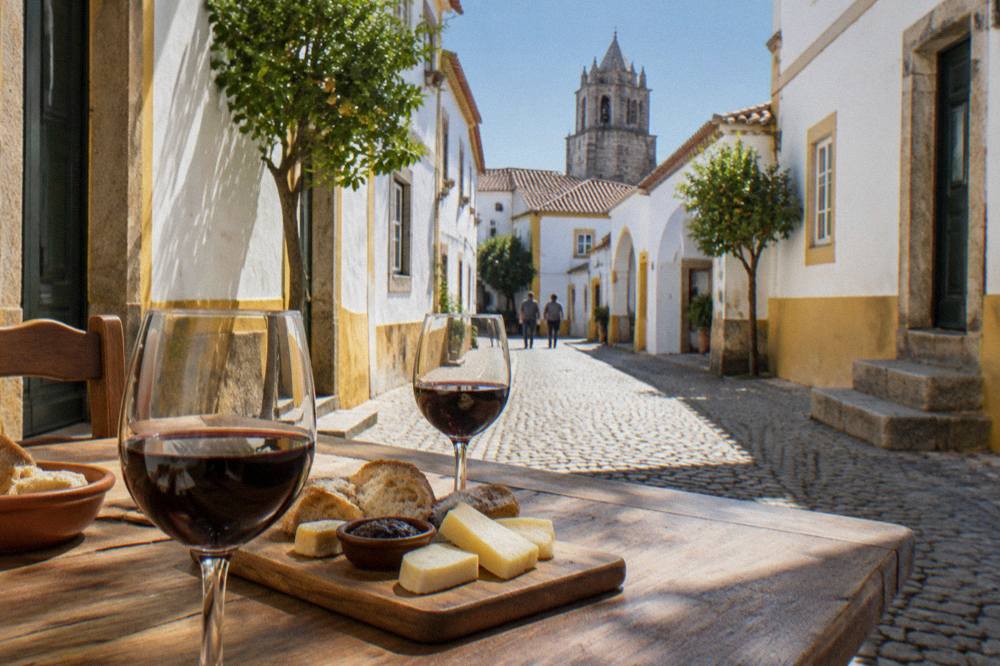
The guided version of this trio is the evening food and wine crawl, a three-hour walk that moves between stops in the old town with a local host. The listing shows it from $83.28 per person, rated 4.6 from 19 reviews, and it is the page's featured experience because it puts cheese, bread, pastries and wine in one evening without any planning on your part. Read more about it and check the evening food crawl's live listing, or Check availability if the date is already decided.
Can You Learn To Cook Alentejo Food In Évora?
Yes, and the cooking-class route is the deepest way into the cuisine: a class built around Alentejo home cooking teaches the bread-based dishes, the pork preparations and the egg sweets in a single session, and Évora has a bookable class whose listing shows it from $166.29 per person. It is a bigger commitment of money and time than a tasting, and it suits visitors who want to take the cuisine home rather than just eat it.
The class in question, Learn the Art of Alentejo Cuisine with Andre, runs with a local cook and is listed from $166.29 per person, with a modest review base shown on its own listing. The rating on the card is low because the review count is small, and the honest way to read that is to check the current reviews rather than treat the card number as a settled verdict. What the class offers that a restaurant cannot is the mechanics: how açorda is actually assembled, why the bread matters, what the fat does in migas.
For a lighter version, the Golden Era of Évora walking tour pairs a historic-centre walk with a Portuguese wine tasting, from $23.92 per person and rated 4.4 from 33 reviews on its listing. It is not a food tour, but it ends at a table, and it is the cheapest structured way to combine the city's story with a taste of its wine. The Évora tours overview compares the full range of guided options.
When Is The Best Time To Visit Évora For Its Food?
The food calendar has two peaks: the pig-slaughter season of the winter months, when the bread-and-pork dishes are at their freshest and the city is cool enough for long lunches, and the early summer, when the Feira de São João fills the Rossio de São Brás. IPMA's 1991 to 2020 normals for the Évora station show a July mean maximum of 33.3 C, which is why midsummer is the hardest window. Spring and autumn are the comfortable middle path.
The winter kitchen is the regional kitchen at its most authentic. The traditional matança, the family pig slaughter that stocks the larder with cured pork, runs through the cold months, and the dishes built around it, migas and grilled pork above all, are at their best then. The same months bring the lowest temperatures: the same 1991 to 2020 normals show a January mean maximum of 14.1 C and a mean minimum of 4.5 C, cold enough for a fireplace and a slow lunch.
| Month | Mean maximum (C), 1991-2020 normals | Days with 1 mm+ rain, 1991-2020 normals | Food reason to come |
|---|---|---|---|
| January | 14.1 | 8.6 | Pig-slaughter dishes, fireplace lunches |
| March | 18.7 | 7.5 | Mild walking weather, full menus |
| June | 30.2 | 1.7 | Feira de São João season begins |
| July | 33.3 | 0.6 | Very hot; shop mornings only |
| September | 29.5 | 3.6 | Grape harvest, wine-country energy |
| October | 24.1 | 7.7 | Comfortable food-walking weather |
The Feira de São João is the city's big annual fair: the 2026 edition ran from 23 June to 5 July at the Rossio de São Brás, under the theme "Évora: Capital Europeia ao Sul", per the Câmara Municipal's own edital. The 2027 dates were not published at the time of this page, so treat the fair as a late-June-into-early-July event and check the municipal pages before planning around it. The best time to visit guide and the Évora weather guide carry the full seasonal picture.
How Much Does Food Cost In Évora?
Food in Évora is inexpensive by western European standards, but no verified venue price exists for this page, so the honest figures are the guided ones: the evening food and wine crawl from $83.28 per person, the cooking class from $166.29, and the wine-tasting walk from $23.92, all in US dollars straight from the listings. For everything you buy at a counter, ask the price before you order, because shop-level prices are not part of the verified record.
The cost structure of a food day in Évora is simple. The cheap layer is the market and the pastelaria: a wedge of cheese, a loaf, a coffee and a queijada, bought at counter prices that vary by shop. The mid layer is lunch, which in the Alentejo is the main meal of the day and is priced accordingly by each restaurant. The top layer is the guided layer, and those are the only prices this page can print with a source behind them.
| Experience | From price (US dollars, per person) | Rating | Length |
|---|---|---|---|
| Golden Era of Évora walk with wine tasting | $23.92 | 4.4 from 33 reviews | 2.5 to 3 hours |
| Évora evening food and wine crawl | $83.28 | 4.6 from 19 reviews | 3 hours |
| Alentejo cooking class with a local cook | $166.29 | 3 from 3 reviews | Listed on the page |
Read each price as a floor rather than a promise: listings move with season and demand, and the number that matters is the one on the live page on the day you book. The Évora cost and budget guide puts food in the context of the whole trip, including accommodation and transport.
How Do You Get To Évora For A Food Weekend?
The train is the straightforward route: CP's timetable valid since 6 September 2026 lists six through Intercidades services a day from Lisboa Oriente to Évora, taking about 1 hour 40 to 1 hour 45, with a second-class fare of 13.90 EUR and first class at 18.50 EUR. The first train leaves Lisboa Oriente at 07:02 and reaches Évora at 08:47, which lands you in the city before the market has wound down.
That morning train is the food visitor's train. It calls at Entrecampos, Sete Rios, Pragal, Pinhal Novo, Vendas Novas and Casa Branca, and the timetable's weekday remarks should be checked before you plan around a specific departure, because this page does not assert that every listed train runs every day. The last return departs are in the evening, so a full food day is possible without a car. The Lisbon to Évora by train guide has the complete rail picture, and the Lisbon to Évora overview compares train, bus and car.
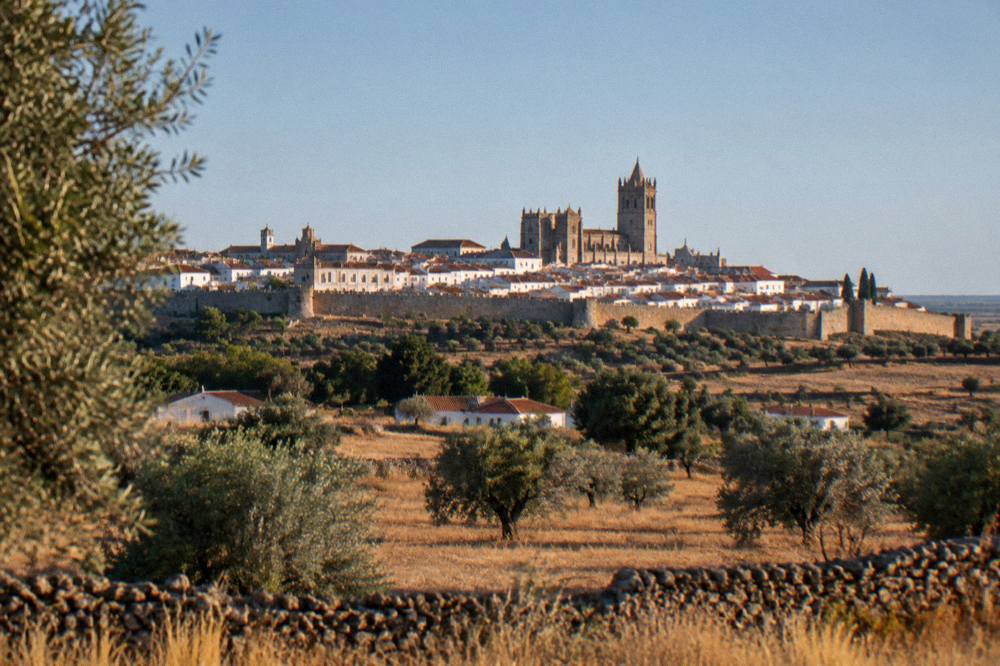
Once you are inside the walls, everything on this page is walkable. The old centre is compact, the market and the main square sit within a few minutes of each other, and the food stops of an evening crawl are strung along streets you will cross anyway between the Templo Romano and the Praça do Giraldo. The getting around guidance covers the practical side if you arrive by car instead.
Common Questions About Évora Cheese, Bread And Pastries
What cheese is Évora known for?
Queijo de Évora, a small, firm sheep's milk cheese with a sharp, slightly spicy finish. It is made in the dairy country around the city from the same flocks that graze the cork-oak pastureland, and it appears on tables across the Alentejo in wedges served with bread and olive oil.
What bread do they eat in the Alentejo?
A dense, moist wheat loaf, usually baked in large rounds, with a pale crust and a slight sourness from a slow dough. It is eaten torn by hand and dipped in olive oil, and it is also the base of açorda, the bread-and-coriander soup, and migas, the fried bread cake served with pork.
What is the most famous pastry in Évora?
Sericaia, a baked egg custard dusted with cinnamon, is the flagship of the city's convent-sweet tradition. Encharcada, egg yolk candied in sugar syrup, is its richer cousin, and small queijadas, some made with sheep's milk cheese, fill the everyday counter alongside almond sweets.
Can you do a food tour in Évora?
Yes. The evening food and wine crawl runs about three hours across stops in the historic centre, from $83.28 per person, and a cooking class teaches the bread-based dishes from $166.29. A lighter option pairs a historic walk with a wine tasting from $23.92.
Is food in Évora expensive?
No, by western European standards it is modest, but this page prints no venue prices because none were verified. The guided experiences are the only prices with a listed source: from $23.92 for a walk with tasting up to $166.29 for a cooking class. For counter purchases, ask the price before you order.
When should I visit Évora for the food?
Winter brings the pig-slaughter dishes and cool fireplace lunches; late June into early July brings the Feira de São João fair, whose 2026 edition ran 23 June to 5 July at the Rossio de São Brás. Spring and autumn are the comfortable middle, with October's mean maximum at 24.1 C on the 1991 to 2020 normals.
The cheese, the bread and the pastries of Évora are three expressions of one landscape: wheat, sheep and the convent kitchens of a golden-age city that the 1755 earthquake left standing. Taste them in that order, at a counter, with no hurry, and you have understood the Alentejo plate about as well as any visitor can.